From Surf Wiki (app.surf) — the open knowledge base
Dominion of New Zealand
Period of New Zealand's history from 1907 to 1947

Period of New Zealand's history from 1907 to 1947
| Field | Value |
|---|---|
| conventional_long_name | Dominion of New Zealand |
| common_name | New Zealand |
| status | Dominion of the British Empire |
| status_text | Dominion of the British Empire |
| government_type | Unitary parliamentary constitutional monarchy |
| year_start | 1907 |
| year_end | 1947Whether New Zealand's status as a British dominion ended in 1947 with the enactment of the Statute of Westminster Adoption Act 1947 is unclear. See the discussion in the "Dominion in disuse" section of this article. |
| life_span | 1907–1947 |
| event_start | Declared a dominion |
| date_start | 26 September |
| event_end | Statute of Westminster |
| adopted | |
| date_end | 25 November |
| p1 | Colony of New Zealand |
| flag_p1 | Flag of New Zealand.svg |
| p2 | German Samoa |
| flag_p2 | Reichskolonialflagge.svg |
| s1 | New Zealand |
| flag_s1 | Flag of New Zealand.svg |
| s2 | Territory of Western SamoaTrust Territory of Western Samoa |
| flag_s2 | Flag of the Samoa Trust Territory.svg |
| s3 | Cook Islands |
| flag_s3 | Flag of the Cook Islands.svg |
| s4 | Niue |
| flag_s4 | Flag of Niue.svg |
| image_flag | Flag of New Zealand.svg |
| image_coat | Coat of arms of New Zealand (1911–1956).svg |
| symbol_type | Coat of arms |
| (1911–1956) | |
| image_map | New Zealand (orthographic projection) 2.svg |
| capital | Wellington |
| national_motto | "Onward" |
| national_anthem | "God Save the King" |
| <div style | "display:inline-block;margin-top:0.4em;"[[File:God_Save_The_Queen_(Band_of_the_Grenadier_Guards,_1952_instrumental).oga]] |
| common_languages | English, Māori |
| currency | New Zealand poundBefore 1933 British and Australian coins circulated in New Zealand. |
| leader1 | Edward VII |
| leader2 | George V |
| leader3 | Edward VIII |
| leader4 | George VI |
| year_leader1 | 1907–1910 |
| year_leader2 | 1910–1936 |
| year_leader3 | 1936 |
| year_leader4 | 1936–1947 |
| title_leader | Monarch |
| representative1 | The 5th Baron Plunket (first) |
| representative2 | Sir Bernard Freyberg (last) |
| year_representative1 | 1907–1910 |
| year_representative2 | 1946–1947 |
| title_representative | Governor/Governor-General |
| deputy1 | Sir Joseph Ward (first) |
| deputy2 | Peter Fraser (last) |
| year_deputy1 | 1907–1912 |
| year_deputy2 | 1940–1947 |
| demonym | British, New Zealander |
| title_deputy | Prime Minister |
| legislature | General Assembly (Parliament) |
| house1 | Legislative Council |
| type_house1 | Upper house |
| house2 | House of Representatives |
| type_house2 | Lower house |
adopted](statute-of-westminster-adoption-act-1947) (1911–1956)](coat-of-arms-of-new-zealand) The Dominion of New Zealand was the historical successor to the Colony of New Zealand. It was a constitutional monarchy with a high level of self-government within the British Empire.
New Zealand became a separate British Crown colony in 1841 and received responsible government with the Constitution Act in 1852. New Zealand chose not to take part in the Federation of Australia and became the Dominion of New Zealand on 26 September 1907, Dominion Day, by proclamation of King Edward VII. Dominion status was a public mark of the political independence that had evolved over half a century through responsible government.
Just under one million people lived in New Zealand in 1907 and cities such as Auckland and Wellington were growing rapidly. The Dominion of New Zealand allowed the British Government to shape its foreign policy, and it followed Britain into the First World War. The 1923 and 1926 Imperial Conferences decided that New Zealand should be allowed to negotiate its own political treaties, and the first commercial treaty was ratified in 1928 with Japan. When the Second World War broke out in 1939 the New Zealand Government made its own decision to enter the war.
In the post-war period, the term 'dominion' has fallen into disuse. Sovereignty on external affairs was granted with the Statute of Westminster in 1931 and adopted by the New Zealand Parliament in 1947. The 1907 royal proclamation of dominion status has never been revoked, although legal academics differ as to whether the proclamation can be said to be in force.
Dominion status
Debate
The alteration in status was stirred by a sentiment on the part of the prime ministers of the self-governing colonies of the British Empire that a new term was necessary to differentiate them from the non-self-governing colonies. At the 1907 Imperial Conference, it was argued that self-governing colonies that were not styled 'dominion' (like Canada) or 'commonwealth' (like Australia) should be designated by some such title as 'state of the empire'. After much debate over lexicon, the term 'dominion' was decided upon.
Following the 1907 conference, the New Zealand House of Representatives passed a motion requesting that King Edward VII "take such steps as he may consider necessary" to change the designation of New Zealand from the Colony of New Zealand to the Dominion of New Zealand.
The adoption of the designation of dominion would, "raise the status of New Zealand" stated Prime Minister Sir Joseph Ward and "… have no other effect than that of doing the country good". Ward also had regional imperial ambitions. He hoped the new designation would remind the world that New Zealand was not part of Australia. It would dignify New Zealand, a country he thought was "the natural centre for the government of the South Pacific".
Dominion status was strongly opposed by Leader of the Opposition William Massey, an ardent British imperialist, who suspected that the change would lead to demands for increases in viceregal and ministerial salaries.
Royal proclamation
A royal proclamation granting New Zealand the designation of 'dominion' was issued on 9 September 1907. On 26 September the Prime Minister, Sir Joseph Ward, read the proclamation from the steps of Parliament:
. Whereas We have on the Petition of the Members of the Legislative Council and House of Representatives of Our Colony of New Zealand determined that the title of Dominion of New Zealand shall be substituted for that of the Colony of New Zealand as the designation of the said Colony, We have therefore by and with the advice of Our Privy Council thought fit to issue this Our Royal Proclamation and We do ordain, declare and command that on and after the twenty-sixth day of September, one thousand nine hundred and seven, the said Colony of New Zealand and the territory belonging thereto shall be called and known by the title of the Dominion of New Zealand. And We hereby give Our Commands to all Public Departments accordingly. Given at Our Court at Buckingham Palace, this ninth day of September, in the year of Our Lord one thousand nine hundred and seven, and in the seventh year of Our Reign. save the See [:wikisource:Proclamation of the Dominion of New Zealand
Proclamation of the Dominion of New Zealand]] (London, 9 September 1907), archived on [[WikiSource]]</ref>
|File:Dominion Day New Zealand.jpg|[Lord Plunket declaring New Zealand a dominion, Wellington, 26 September 1907 |File:Dominion-day-gazette.jpg|The New Zealand Gazette published the royal proclamation.
Effect and reception
The Surprise Packet:
Canada: "Rather large for him, is it not?"
Australia: "Oh his head is swelling rapidly. The hat will soon fit."]]
With the attaining of dominion status, the colonial treasurer became the minister of finance and the Colonial Secretary's Office was renamed the Department of Internal Affairs. The proclamation of 10 September also designated members of the House of Representatives as "M.P." (Member of Parliament). Previously they were designated "M.H.R." (Member of the House of Representatives).
Letters patent were issued to confirm New Zealand's change in status, declaring that: "there shall be a Governor and Commander-in-Chief in and over Our Dominion of New Zealand".
Joseph Ward had thought that New Zealanders would be "much gratified" with the new title. Dominion status was in fact received with limited enthusiasm or indifference from the general public, who were unable to discern any practical difference. Dominion status symbolised New Zealand's shift to self-governance, but this change had been practically accomplished with the first responsible government in the 1850s.
Historian Keith Sinclair later remarked:
According to Dame Silvia Cartwright, 18th Governor-General of New Zealand, in a 2001 speech:
The national flag, depicting the British Union Flag, remained the same. Until 1911 New Zealand used the royal coat of arms of the United Kingdom on all official documents and public buildings, but following its new status a new coat of arms for New Zealand was designed. A royal warrant granting armorial ensigns and supports was issued on 26 August 1911 and published in the New Zealand Gazette on 11 January 1912.
For a further decade, until 1917, the viceroy retained the title 'governor'; letters patent were issued re-designating the viceroy as 'governor-general' (as in other dominions). The new title better reflected New Zealand's prestige within the British Empire. The 1917 letters patent constituted the office, with the officeholder described as 'Governor-General and Commander-in-Chief in and over Our Dominion of New Zealand'.
Despite the new status, there was some apprehension in 1919 when Prime Minister Bill Massey signed the Treaty of Versailles (giving New Zealand membership of the League of Nations). This act was a turning point in New Zealand's diplomatic history, indicating that the dominion had a degree of control over its foreign affairs. Massey himself did not view it as a symbolic act and would have preferred New Zealand to maintain a deferential role within the empire.
Dominion Day
Main article: Dominion Day#New Zealand
To mark the granting of dominion status, 26 September was declared Dominion Day.
Today, it is observed only as a Provincial Anniversary Day holiday in South Canterbury. There is support in some quarters for the day to be revived as an alternative New Zealand Day, instead of renaming Waitangi Day, New Zealand's current national day.
Territorial expansion
The Antarctic territory of the Ross Dependency, previously under the sovereignty of the United Kingdom, is today regarded by New Zealand as having become part of the Dominion of New Zealand on 16 August 1923. The legality of that contemporary assertion has been questioned but is nonetheless the position of New Zealand.
The Cook Islands and Niue each already formed part of the Dominion of New Zealand on the date it was proclaimed. Both had become part of the Colony of New Zealand on 11 June 1901. Western Samoa was never part of New Zealand, having instead been the subject of a League of Nations mandate and subsequently a United Nations Trusteeship agreement. In 1982 the Judicial Committee of the Privy Council allowed Samoans born under New Zealand administration (i.e. prior to 1962) to claim New Zealand citizenship.
Changes to dominion status
Balfour Declaration
Main article: Balfour Declaration of 1926
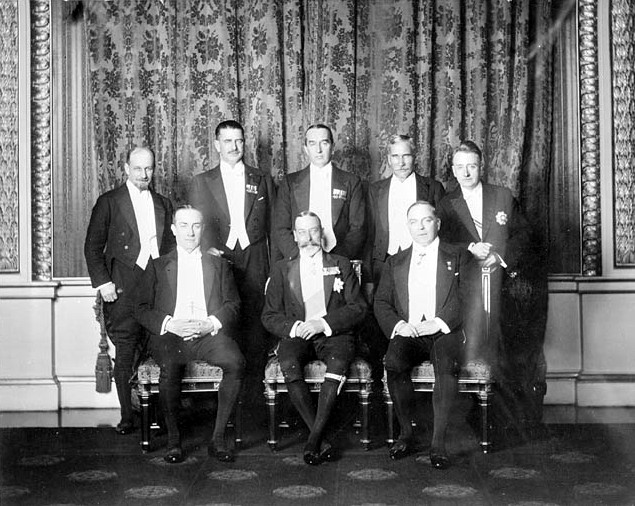
The 1926 Imperial Conference devised the 'Balfour formula' of dominion status, stating that: The Balfour Report further resolved that each respective governor-general occupied "the same position in relation to the administration of public affairs in the Dominion" as was held by the monarch in the United Kingdom. Consequently, the only advisers to the governor-general (and the monarch in New Zealand) were his New Zealand ministers.
Prime Minister Gordon Coates, who led the New Zealand delegation to the conference, called the Balfour Declaration a "poisonous document" that would weaken the British Empire as a whole.
Statute of Westminster
In 1931, the British (Imperial) Parliament passed the Statute of Westminster, which repealed the imperial Colonial Laws Validity Act 1865 and gave effect to resolutions passed by the imperial conferences of 1926 and 1930. It essentially gave legal recognition to the "de facto sovereignty" of the dominions by removing Britain's ability to make laws for the dominions without their consent:
New Zealand initially viewed the Statute of Westminster as an "unnecessary legal complication that it perceived would weaken imperial relations." The New Zealand Government only allowed the Dominion of New Zealand to be cited in the statute provided that the operative sections did not apply unless adopted by the New Zealand Parliament. Preferring the British Government to handle most of its foreign affairs and defence, New Zealand held back from adopting the Statute of Westminster Act.

The First Labour Government (1935–1949) pursued a more independent path in foreign affairs, in spite of the statute remaining unadopted. In 1938 Deputy Prime Minister Peter Fraser told Parliament, "this country has to make up its own mind on international problems as a sovereign country – because under the Statute of Westminster ours is a sovereign country". In the 1944 Speech from the Throne the Governor-General announced the government's intention to adopt the Statute of Westminster. It was forced to abandon the proposal when the opposition accused the government of being disloyal to Britain at a time of need. Ironically, the National opposition prompted the adoption of the statute in 1947 when its leader, and future prime minister, Sidney Holland introduced a member's bill to abolish the Legislative Council. Because New Zealand required the consent of the British Parliament to make the necessary amendments to the New Zealand Constitution Act 1852, Peter Fraser, now Prime Minister, had a reason to finally adopt the statute. It was formally adopted on 25 November 1947 with the Statute of Westminster Adoption Act 1947, along with consenting legislation from the British Parliament.
New Zealand was the last dominion listed in the statute to adopt it.
'Dominion' in disuse
After the Second World War, the country joined the United Nations as simply "New Zealand". A year later in 1946, Prime Minister Peter Fraser instructed government departments not to use the term 'dominion' any longer.
One of the first marks of New Zealand's sovereignty was the alteration of the monarch's title by the Royal Titles Act 1953. For the first time, the monarch's official New Zealand title mentioned New Zealand separately from the United Kingdom and the other dominions, now called Realms:
Elizabeth the Second, by the Grace of God of the United Kingdom, New Zealand and Her Other Realms and Territories Queen, Head of the Commonwealth, Defender of the Faith.
The name of the state in official usage was also changed to the Realm of New Zealand.In 1952 the Realm comprised New Zealand and its dependent territories, the Cook Islands, Niue, Tokelau, and the Ross Dependency in Antarctica. The Cook Islands and Niue later became self-governing states associated with New Zealand, in 1965 and 1974 respectively. The term 'dominion' largely fell into disuse over the next decade. The term persisted the longest in the names of institutions (for instance, the Dominion Museum was not renamed the National Museum until 1972), businesses, and in the constitutions of clubs and societies. The Dominion Post, a newspaper formed by a merger of The Dominion (first published on 26 September 1907, the day New Zealand achieved dominion status) and The Evening Post, dropped "Dominion" to become The Post as late as April 2023.
The change in style did not otherwise affect the legal status of New Zealand or its Government; the 1907 royal proclamation of dominion status has never been revoked and remains in force today. As such, the term 'dominion' may be included in the formal title of New Zealand.
Nevertheless, the opinion of the New Zealand Government is that New Zealand became sovereign on foreign issues in 1947: "…both in terms of gaining formal legal control over the conduct of its foreign policy and the attainment of constitutional and plenary powers by its legislature". In passing the Constitution Act 1986 (effective 1 January 1987), New Zealand "unilaterally revoked all residual United Kingdom legislative power". Legal academics Dame Alison Quentin-Baxter and Janet McLean argue the 1907 proclamation should be regarded as "spent", albeit not revoked.
References
Notes
Citations
Bibliography
- {{cite journal
References
- (1907). "The New Zealand Official Year-Book 1907". [[Statistics New Zealand]].
- McIntyre, W. David. (20 June 2012). "Self-government and independence – Political independence".
- "Research papers". New Zealand Government/New Zealand Parliament.
- (2001). "A guide to the contemporary Commonwealth". Palgrave.
- Report on the Inquiry into New Zealand's Constitutional Arrangements
- "Becoming a dominion". Ministry for Culture and Heritage.
- See [[:wikisource:Proclamation of the Dominion of New Zealand. Proclamation of the Dominion of New Zealand]] (London, 9 September 1907), archived on [[WikiSource]]
- Scholefield, G. H.. (1932). "Who's Who in New Zealand". Reed.
- (September 2023}} Dominion status allowed New Zealand to become virtually independent, while retaining the British monarch as [[head of state]], represented by a [[Governor-General of New Zealand). "Dominion Day – From colony to dominion". Ministry for Culture and Heritage.
- (5 August 2014). "Dominion status". Ministry for Culture and Heritage.
- [https://web.archive.org/web/20061016173822/http://gg.govt.nz/media/speeches.asp?type=constitutional&ID=229 "The Role of the Governor-General,"] speech by Governor-General Dame Silvia Cartwright, New Zealand Centre for Public Law, Victoria University, Wellington, 2 October 2001.
- "Flags of New Zealand – Flags of New Zealand". Ministry for Culture and Heritage.
- "Coat of Arms". Ministry for Culture and Heritage.
- "Letters Patent Constituting the Office of Governor-General of New Zealand (SR 1983/225) (as at 22 August 2006) – New Zealand Legislation". New Zealand Government.
- "William Massey". Ministry for Culture and Heritage.
- "Editorial: Dominion Day debate needless – National – NZ Herald News". [[The New Zealand Herald]].
- "Ross Dependency Boundaries and Government Order in Council 1923 (SR 1923/974) (as at 17 August 1923), Imperial Contents". Parliamentary Counsel Office.
- See "New Zealand's Claims in the Antarctic" by Ivor L. M. Richardson, New Zealand Law Journal, Vol. 33, No. 9, p. 133
- ''"Commonwealth and Colonial Law"'' by [[Kenneth Roberts-Wray]], London, Stevens, 1966. P. 891 and 897
- (5 July 2017). "Privy Council rules on Samoan citizenship". [[Ministry for Culture and Heritage]].
- "Balfour Declaration of 1926". [[National Archives of Australia]].
- (1 January 1937). "Review of The King and His Dominion Governors: A Study of the Reserve Powers of the Crown in Great Britain and the Dominions". The Canadian Journal of Economics and Political Science.
- "Statute of Westminster". The Commonwealth.
- (1931). "Statute of Westminster, 1931". Government of the United Kingdom.
- Harshan Kumarasingham, 'The "New Commonwealth" 1947–49: A New Zealand Perspective on India Joining the Commonwealth', The Round Table, Vol. 95(385), July 2006, pp. 441–454.
- (20 June 2012). "Self-government and independence: Statute of Westminster".
- "Statute of Westminster passed". Ministry for Culture and Heritage.
- [[Michael Bassett]] and [[Michael King (historian). (2001). "Tomorrow Comes the Song: A Life of Peter Fraser". Penguin Books.
- Dame Silvia Cartwright. (2001). "The Role of the Governor-General". [[Governor-General of New Zealand]].
- "What changed? – Dominion status". Ministry for Culture and Heritage.
- "Former National/Dominion Museum and National Art Gallery". Massey University.
- "The Dominion". National Library of New Zealand.
- (13 April 2023). "'Evolving with its community': New name for The Dominion Post". [[Stuff (website).
- (30 September 2007). "New Zealand 'still a colony'". [[Stuff (website).
- Philip A. Joseph, ''Constitutional and Administrative Law in New Zealand'', Brookers, Wellington, 2001, p. 459.
This article was imported from Wikipedia and is available under the Creative Commons Attribution-ShareAlike 4.0 License. Content has been adapted to SurfDoc format. Original contributors can be found on the article history page.
Ask Mako anything about Dominion of New Zealand — get instant answers, deeper analysis, and related topics.
Research with MakoFree with your Surf account
Create a free account to save articles, ask Mako questions, and organize your research.
Sign up freeThis content may have been generated or modified by AI. CloudSurf Software LLC is not responsible for the accuracy, completeness, or reliability of AI-generated content. Always verify important information from primary sources.
Report