From Surf Wiki (app.surf) — the open knowledge base
Dogger Bank incident
1904 Russian attack on British trawlers
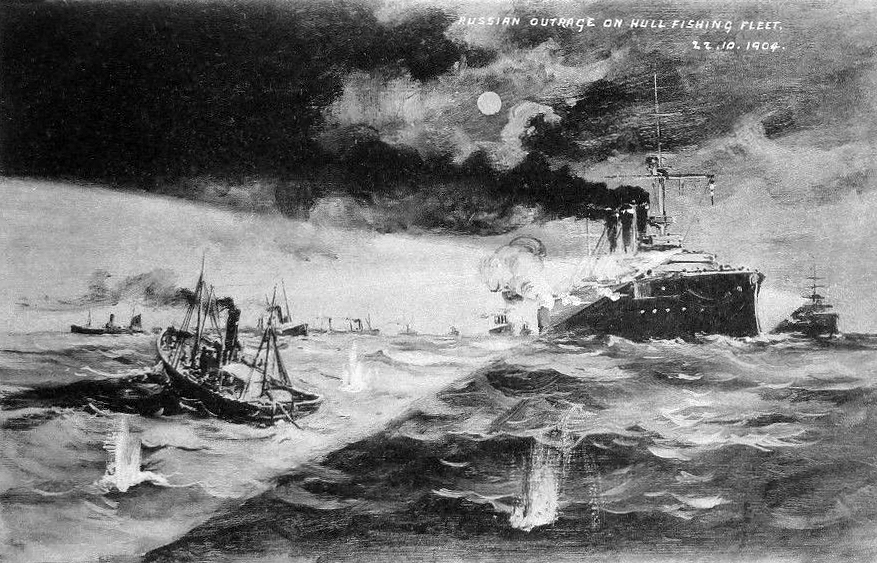
1904 Russian attack on British trawlers
a 1904 Russian attack on British fishermen
Two British fishermen died, six more were injured, one fishing vessel was sunk, and five more boats were damaged. On the Russian side, one sailor and a Russian Orthodox priest aboard the cruiser Aurora were killed by friendly fire. The incident almost led to war between the United Kingdom and the Russian Empire. An international commission of inquiry based on the Hague Convention was set up and Russia voluntarily paid compensation of £66,000 to the fishermen.
Prelude

Because of the fleet's alleged sightings of balloons and four enemy cruisers the day previously, coupled with "the possibility that the Japanese might surreptitiously have sent ships around the world to attack" them, Russian Admiral Zinovy Rozhestvensky called for increased vigilance and issued an order that "no vessel of any sort must be allowed to get in among the fleet".


Similar accidents and rumours affected the Russian fleet. There was a general fear of attack, with widespread rumours that a fleet of Japanese torpedo boats were stationed off the Danish coast, talk of the Japanese having mined the seas, and alleged sightings of Japanese submarines. Before the Dogger Bank incident, the nervous Russian fleet had fired on fishermen carrying consular dispatches from Russia to them near the Danish coast. No damage was caused because of the Russian fleet's poor gunnery.
After navigating a non-existent minefield, the Russian fleet sailed into the North Sea. The disaster of 21 October began in the evening, when the captain of the supply ship Kamchatka (Камчатка), which was last in the Russian line, took a passing Swedish ship for a Japanese torpedo boat and radioed that he was being attacked.
Incident
On 22 October 0:55am, during fog, Rozhestvensky spotted unlit boats. As the trawlers had their nets down, they were unable to flee. The British trawler Crane was sunk, and its captain and boatswain were killed. Four other trawlers were damaged, and six other fishermen were wounded, one of whom died a few months later.
In the general chaos, Russian ships began to shoot at each other. The cruisers Aurora and Dmitrii Donskoi were taken for Japanese warships and bombarded by seven battleships sailing in formation, damaging both ships and killing a chaplain and at least one sailor and severely wounding another. During the pandemonium, several Russian ships signalled torpedoes had hit them, and on board the battleship Borodino, rumours spread that the ship was being boarded by the Japanese, with some crews donning life vests and lying prone on the deck and others drawing cutlasses. More serious losses to both sides were avoided only because of the extremely low quality of Russian gunnery, with the battleship Oryol reportedly firing more than 500 shells without hitting anything.
After ten minutes of gunfire, the fishermen finally saw a blue light signal on one of the warships, the order to cease firing.
Aftermath
The incident led to a serious diplomatic conflict between Russia and Britain, which was particularly dangerous because of the Anglo-Japanese Alliance. In the aftermath, some British newspapers called the Russian fleet 'pirates', and Admiral Rozhestvensky was heavily criticised for not leaving the British fishermen lifeboats. The editorial of the morning's Times was particularly scathing:
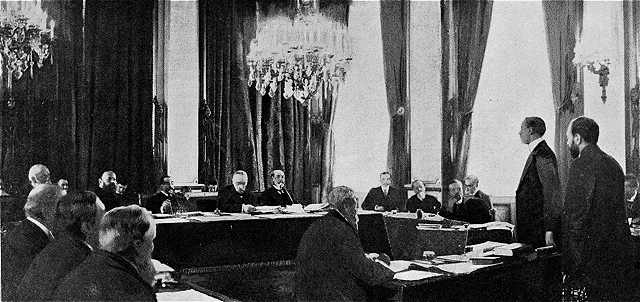
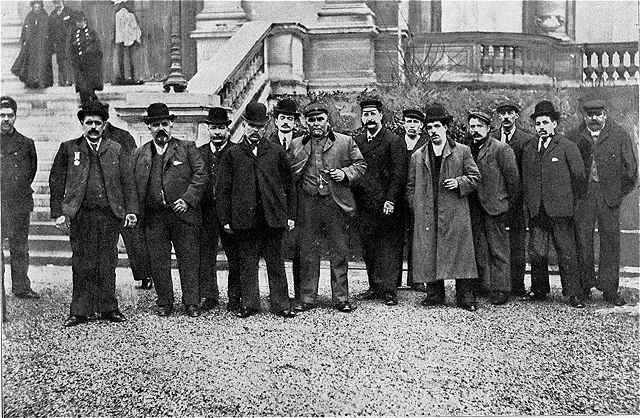
The Royal Navy prepared for war, with 28 battleships of the Home Fleet being ordered to raise steam and prepare for action, while British cruiser squadrons shadowed the Russian fleet as it made its way through the Bay of Biscay and down the coast of Portugal. Rozhestvensky's initial defence in part relied on reports by some of the fishermen that they had seen a torpedo destroyer loitering in the area until dawn.
Under diplomatic pressure, the Russian government agreed to investigate the incident, and Rozhestvensky was ordered to dock in Vigo, Spain, where he left behind those officers considered responsible (as well as at least one officer who had been critical of him) before leaving on 1 November.
From Vigo, the main Russian fleet then approached Tangier, Morocco, and lost contact with the Kamchatka for several days. The Kamchatka eventually rejoined the fleet and claimed that she had engaged three Japanese warships and fired over 300 shells. The ships she had actually fired at were a Swedish merchantman, a German trawler, and a French schooner. As the fleet left Tangiers on 5 November, one ship accidentally severed the city's underwater telegraph cable with her anchor, preventing communications with Europe for four days. The British Government sent instructions to the Royal Navy that crisis had come to an end on 11 November.
Concerns that the draught of the newer battleships, which had proven to be considerably greater than designed, would prevent their passage through the Suez Canal caused the fleet to separate after leaving Tangiers on 3 November 1904. These concerns though may have been an excuse to hide worries over passing through British controlled waters. The newer battleships and a few cruisers proceeded around the Cape of Good Hope under Rozhestvensky while the older battleships and lighter cruisers passed through the Suez Canal under the command of Admiral Dmitry Gustavovich von Fölkersahm. Both sections of the fleet then rendezvoused at Madagascar as planned. The fleet then proceeded to the Sea of Japan, where it was later soundly defeated in the Battle of Tsushima in May 1905.
On 25 November 1904, the British and Russian governments signed a joint agreement in which they agreed to submit the issue to an international commission of inquiry whose proceedings were to be based on the Hague Convention. The International Commission met in Paris from 9 January to 25 February 1905. The report produced by the International Commission concluded that "the commissioners declare that their findings, which are therein formulated, are not, in their opinion, of a nature to cast any discredit upon the military qualities or the humanity of Admiral Rozhestvensky, or of the personnel of his squadron". It also concluded that "the commissioners take pleasure in recognising, unanimously, that Admiral Rozhestvensky personally did everything he could, from beginning to end of the incident, to prevent trawlers, recognised as such, from being fired upon by the squadron".
"Damage to the Aurora was concealed ... and only discovered by the deciphering of a wireless message intercepted at [the British] Felixstowe station. It was also considered highly significant that no officer from that ship appeared before the [international commission of inquiry], nor were their logs produced." [[File:North Sea Incident 1904 - Memorial - geograph.org.uk - 264822.jpg|thumb|Fisherman's Memorial]] Russia voluntarily paid compensation of £66,000 to the fishermen. In 1906, the Fisherman's Memorial was unveiled in Hull to commemorate the deaths of the three British sailors. The memorial, approximately 18 feet high, shows the dead fisherman George Henry Smith and carries the following inscription:
References
Sources
References
- {{harvp. Wood. 1911
- {{harvp. Connaughton. 1988
- Pleshakov, Constantine. (2002). "The Tsar's Last Armada". Basic Books.
- Pleshakov, Constantine. (2002). "The Tsar's Last Armada". Basic Books.
- {{harvp. Busch. 1969
- {{harvp. Busch. 1969
- Pleshakov, Constantine. (2002). "The Tsar's Last Armada". Basic Books.
- Pleshakov, Constantine. (2002). "The Tsar's Last Armada". Basic Books.
- [http://www.scarboroughsmaritimeheritage.org.uk/adoggerbank.php The dogger bank incident in 1904 – The Russian fleet attacks Hull trawlers] – [[Scarborough Maritime Heritage Centre]]
- Pleshakov, Constantine. (2002). "The Tsar's Last Armada". Basic Books.
- [http://www.hullwebs.co.uk/content/l-20c/disaster/dogger-bank/voyage-of-dammed.htm Dogger Bank – Voyage of the Damned] ('Hullwebs – History of Hull' website. Retrieved 8 September 2007.)
- Pleshakov, Constantine. (2002). "The Tsar's Last Armada". Basic Books.
- Pleshakov, Constantine. (2002). "The Tsar's Last Armada". Basic Books.
- Great Britain Committee of Imperial Defence. (1920). "Official history, naval and military, of the Russo-Japanese War. Prepared by the Historical section of the Committee of Imperial Defence". His Majesty's Stationery Office.
- Pleshakov, Constantine. (2002). "The Tsar's Last Armada". Basic Books.
- (April 1980). "British Assistance to the Japanese Navy during the Russo-Japanese War of 1904-5". Australian Association for Maritime History.
- (27 November 2023). "Battle of Tsushima {{!}} Russo-Japanese war".
- [http://www.worldcourts.com/ici/eng/decisions/1904.11.25_doggerbank/index.htm Joint British-Russian declaration] {{webarchive. link. (13 October 2008)
- {{harvp. Jackson. 1974
- "Dogger Bank Incident Final Report".
- {{harvp. Merills. 1999
This article was imported from Wikipedia and is available under the Creative Commons Attribution-ShareAlike 4.0 License. Content has been adapted to SurfDoc format. Original contributors can be found on the article history page.
Ask Mako anything about Dogger Bank incident — get instant answers, deeper analysis, and related topics.
Research with MakoFree with your Surf account
Create a free account to save articles, ask Mako questions, and organize your research.
Sign up freeThis content may have been generated or modified by AI. CloudSurf Software LLC is not responsible for the accuracy, completeness, or reliability of AI-generated content. Always verify important information from primary sources.
Report