From Surf Wiki (app.surf) — the open knowledge base
Dodecagon
Polygon with 12 edges
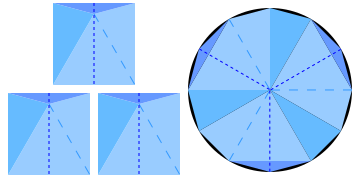
Polygon with 12 edges
In geometry, a dodecagon, or 12-gon, is any twelve-sided polygon.
Regular dodecagon
A regular dodecagon is a figure with sides of the same length and internal angles of the same size. It has twelve lines of reflective symmetry and rotational symmetry of order 12. A regular dodecagon is represented by the Schläfli symbol {12} and can be constructed as a truncated hexagon, t{6}, or a twice-truncated triangle, tt{3}. The internal angle at each vertex of a regular dodecagon is 150°.
Area
The area of a regular dodecagon of side length a is given by: \begin{align} A & = 3 \cot\left(\frac{\pi}{12} \right) a^2 = 3 \left(2+\sqrt{3} \right) a^2 \ & \simeq 11.19615242,a^2 \end{align}
And in terms of the apothem r (see also inscribed figure), the area is: \begin{align} A & = 12 \tan\left(\frac{\pi}{12}\right) r^2 = 12 \left(2-\sqrt{3} \right) r^2 \ & \simeq 3.2153903,r^2 \end{align}
In terms of the circumradius R, the area is: A = 6 \sin\left(\frac{\pi}{6}\right) R^2 = 3 R^2
The span S of the dodecagon is the distance between two parallel sides and is equal to twice the apothem. A simple formula for area (given side length and span) is: A = 3aS This can be verified with the trigonometric relationship: S = a(1+ 2\cos{30^{\circ}} + 2\cos{60^{\circ}})
Perimeter
The perimeter of a regular dodecagon in terms of circumradius is: \begin{align} p & = 24R \tan\left(\frac{\pi}{12}\right) = 12R \sqrt{2 - \sqrt{3}}\ & \simeq 6.21165708246,R \end{align}
The perimeter in terms of apothem is: \begin{align} p & = 24r \tan\left(\frac{\pi}{12}\right) = 24r(2-\sqrt{3})\ & \simeq 6.43078061835,r \end{align} This coefficient is double the coefficient found in the apothem equation for area.
Dodecagon construction
As 12 = 22 × 3, regular dodecagon is constructible using compass-and-straightedge construction:
at a given side length, animation. (The construction is very similar to that of octagon at a given side length.)
Dissection
| 12-cube | 60 rhomb dissection | ||
|---|---|---|---|
| [[File:12-cube t0 A11.svg | 80px]] | [[File:12-gon rhombic dissection-size2.svg | 80px]] |
| [[File:12-gon rhombic dissection3-size2.svg | 80px]] | [[File:12-gon rhombic dissection4-size2.svg | 80px]] |

Coxeter states that every zonogon (a 2m-gon whose opposite sides are parallel and of equal length) can be dissected into m(m-1)/2 parallelograms. In particular this is true for regular polygons with evenly many sides, in which case the parallelograms are all rhombi. For the regular dodecagon, m=6, and it can be divided into 15: 3 squares, 6 wide 30° rhombs and 6 narrow 15° rhombs. This decomposition is based on a Petrie polygon projection of a 6-cube, with 15 of 240 faces. The sequence OEIS sequence defines the number of solutions as 908, including up to 12-fold rotations and chiral forms in reflection.
| [[File:Rhombic dissected dodecagon12.svg | 80px]] | [[File:Rhombic dissected dodecagon6.svg | 80px]] | [[File:Rhombic dissected dodecagon7.svg | 80px]] | [[File:Rhombic dissected dodecagon8.svg | 80px]] | [[File:Rhombic_dissected_dodecagon13.svg | 80px]] | [[File:Rhombic_dissected_dodecagon15.svg | 80px]] |
|---|
One of the ways the mathematical manipulative pattern blocks are used is in creating a number of different dodecagons. They are related to the rhombic dissections, with 3 60° rhombi merged into hexagons, half-hexagon trapezoids, or divided into 2 equilateral triangles.
| [[File:Hexagonal cupola flat.svg | 120px]] | [[File:dissected dodecagon.svg | 120px]] | [[File:dissected dodecagon2.svg | 120px]]Socolar tiling | [[File:Wooden pattern blocks dodecagon.JPG | 120px]]Pattern blocks |
|---|
Symmetry

John Conway labels these lower symmetries with a letter and order of the symmetry follows the letter. He gives d (diagonal, diasymmetry) with mirror lines through vertices, p with mirror lines through edges (perpendicular, persymmetry) i with mirror lines through both vertices and edges (isosymmetry), and g for rotational (gyrosymmetry). a1 labels asymmetry. These lower symmetries allows degrees of freedoms in defining irregular dodecagons. ]] The regular dodecagon has Dih12 symmetry, order 24. There are 15 distinct subgroup dihedral and cyclic symmetries. Each subgroup symmetry allows one or more degrees of freedom for irregular forms. Only the g12 subgroup has no degrees of freedom but can be seen as directed edges.
| Example dodecagons by symmetry | [[File:full_symmetry_dodecagon.png | 60px]]r24 | [[File:Hexagonal_star_dodecagon.png | 60px]]d12 | [[File:Gyrated_dodecagon.png | 60px]]g12 | [[File:Truncated_hexagon_dodecagon.png | 60px]]p12 | [[File:Cross_dodecagon.png | 60px]]i8 | [[File:Hexagonal_star_d6_dodecagon.png | 60px]]d6 | [[File:Twisted_hexagonal_star_dodecagon.png | 60px]]g6 | [[File:Truncated_triangular_star_dodecagon.png | 60px]]p6 | [[File:D4_star_dodecagon.png | 60px]]d4 | [[File:twisted_cross_dodecagon.png | 60px]]g4 | [[File:H-shape-dodecagon.png | 60px]]p4 | [[File:Twisted_triangle_star_dodecagon.png | 60px]]g3 | [[File:D2_star_dodecagon.png | 60px]]d2 | [[File:Distorted_twisted_cross_dodecagon.png | 60px]]g2 | [[File:Distorted_H-shape-dodecagon.png | 60px]]p2 | [[File:No_symmetry_dodecagon.png | 60px]]a1 |
|---|
Occurrence
Tiling
A regular dodecagon can fill a plane vertex with other regular polygons in 4 ways:
| 3.12.12 | 4.6.12 | 3.3.4.12 | 3.4.3.12 |
|---|
Here are 3 example periodic plane tilings that use regular dodecagons, defined by their vertex configuration:
| 1-uniform | 2-uniform | |
|---|---|---|
| [[File:1-uniform n4.svg | 205px | Tile 3bb.svg]] |
| 3.12.12 | [[File:1-uniform n3.svg | 205px]] |
| 4.6.12 |
Skew dodecagon

A skew dodecagon is a skew polygon with 12 vertices and edges but not existing on the same plane. The interior of such a dodecagon is not generally defined. A skew zig-zag dodecagon has vertices alternating between two parallel planes.
A regular skew dodecagon is vertex-transitive with equal edge lengths. In 3-dimensions it will be a zig-zag skew dodecagon and can be seen in the vertices and side edges of a hexagonal antiprism with the same D5d, [2+,10] symmetry, order 20. The dodecagrammic antiprism, s{2,24/5} and dodecagrammic crossed-antiprism, s{2,24/7} also have regular skew dodecagons.
Petrie polygons
The regular dodecagon is the Petrie polygon for many higher-dimensional polytopes, seen as orthogonal projections in Coxeter planes. Examples in 4 dimensions are the 24-cell, snub 24-cell, 6-6 duoprism, 6-6 duopyramid. In 6 dimensions 6-cube, 6-orthoplex, 221, 122. It is also the Petrie polygon for the grand 120-cell and great stellated 120-cell.
| Regular skew dodecagons in higher dimensions | E6 | F4 | 2G2 (4D) | A11 | D7 | B6 | 4A2 |
|---|---|---|---|---|---|---|---|
| [[File:E6 graph.svg | 80px]] | ||||||
| 221 | [[File:Gosset 1 22 polytope.png | 80px]] | |||||
| 122 | [[File:24-cell_t0_F4.svg | 80px]] | |||||
| 24-cell | [[File:24-cell h01 F4.svg | 80px]] | |||||
| Snub 24-cell | [[File:6-6_duopyramid_ortho-3.png | 80px]]6-6 duopyramid | [[File:6-6_duoprism_ortho-3.png | 80px]]{6}×{6} | |||
| [[File:11-simplex_t0.svg | 80px]] | ||||||
| 11-simplex | [[File:7-cube_t6_B6.svg | 80px]] | |||||
| (411) | [[File:7-demicube_t0_D7.svg | 80px]] | |||||
| 141 | [[File:6-cube_t5.svg | 80px]] | |||||
| 6-orthoplex | [[File:6-cube_t0.svg | 80px]] | |||||
| 6-cube | [[File:3-generalized-4-cube.svg | 80px]]{3}×{3}×{3}×{3} |
Examples in use
In block capitals, the letters E, H and X (and I in a slab serif font) have dodecagonal outlines. A cross is a dodecagon, as is the logo for the Chevrolet automobile division.
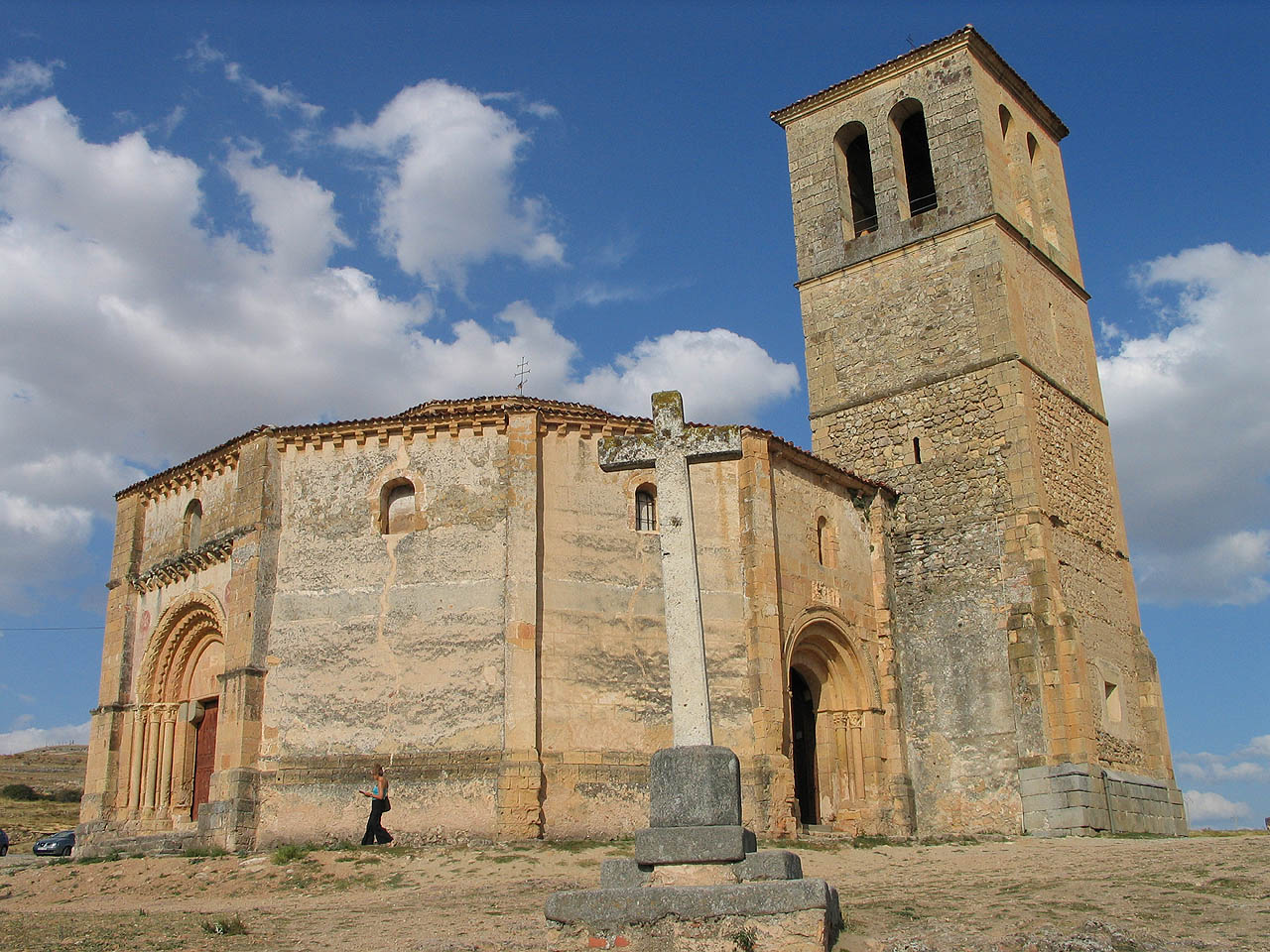
The regular dodecagon features prominently in many buildings. The Torre del Oro is a dodecagonal military watchtower in Seville, southern Spain, built by the Almohad dynasty. The early thirteenth century Vera Cruz church in Segovia, Spain is dodecagonal. Another example is the Porta di Venere (Venus' Gate), in Spello, Italy, built in the 1st century BC has two dodecagonal towers, called "Propertius' Towers".

Regular dodecagonal coins include:
- British threepenny bit from 1937 to 1971, when it ceased to be legal tender.
- British One Pound Coin, introduced in 2017.
- Australian 50-cent coin
- Fijian 50 cents
- Tongan 50-seniti, since 1974
- Solomon Islands 50 cents
- Croatian 25 kuna
- Romanian 5000 lei, 2001–2005
- Canadian penny, 1982–1996
- South Vietnamese 20 đồng, 1968–1975
- Zambian 50 ngwee, 1969–1992
- Malawian 50 tambala, 1986–1995
- Mexican 20 centavos, 1992-2009
- Israeli 5 new shekel
Notes
References
- "Wolfram Demonstrations Project".
- Willis, Clarence Addison. (1922). "Plane Geometry: Experiment, Classification, Discovery, Application ...". B. Blakiston's Son & Company.
- Playfair, John. (1814). "Elements of Geometry". Bell & Bradfute.
- [[Coxeter]], Mathematical recreations and Essays, Thirteenth edition, p.141
- "Doin' Da' Dodeca'" on [http://mathforum.org/shelly/berman/patternblocks/classics/responses/chal2/response_doin_da_dodeca.html mathforum.org]
- John H. Conway, Heidi Burgiel, [[Chaim Goodman-Strauss]], (2008) The Symmetries of Things, {{ISBN. 978-1-56881-220-5 (Chapter 20, Generalized Schaefli symbols, Types of symmetry of a polygon pp. 275–278)
- The Lighter Side of Mathematics: Proceedings of the Eugène Strens Memorial Conference on Recreational Mathematics and its History, (1994), ''Metamorphoses of polygons'', [[Branko Grünbaum]]
This article was imported from Wikipedia and is available under the Creative Commons Attribution-ShareAlike 4.0 License. Content has been adapted to SurfDoc format. Original contributors can be found on the article history page.
Ask Mako anything about Dodecagon — get instant answers, deeper analysis, and related topics.
Research with MakoFree with your Surf account
Create a free account to save articles, ask Mako questions, and organize your research.
Sign up freeThis content may have been generated or modified by AI. CloudSurf Software LLC is not responsible for the accuracy, completeness, or reliability of AI-generated content. Always verify important information from primary sources.
Report