From Surf Wiki (app.surf) — the open knowledge base
Dock Ellis
American baseball player (1945–2008)
American baseball player (1945–2008)
| Field | Value |
|---|---|
| image | Dock Ellis.jpg |
| caption | Ellis with the Pirates |
| name | Dock Ellis |
| position | Pitcher |
| bats | Switch |
| throws | Right |
| birth_date | |
| birth_place | Los Angeles, California, U.S. |
| death_date | |
| death_place | Los Angeles, California, U.S. |
| debutleague | MLB |
| debutdate | June 18 |
| debutyear | 1968 |
| debutteam | Pittsburgh Pirates |
| finalleague | MLB |
| finaldate | September 29 |
| finalyear | 1979 |
| finalteam | Pittsburgh Pirates |
| statleague | MLB |
| stat1label | Win–loss record |
| stat1value | 138–119 |
| stat2label | Earned run average |
| stat2value | 3.46 |
| stat3label | Strikeouts |
| stat3value | 1,136 |
- Pittsburgh Pirates (–)
- New York Yankees (–)
- Oakland Athletics ()
- Texas Rangers (–)
- New York Mets ()
- Pittsburgh Pirates ()
- All-Star (1971)
- World Series champion ()
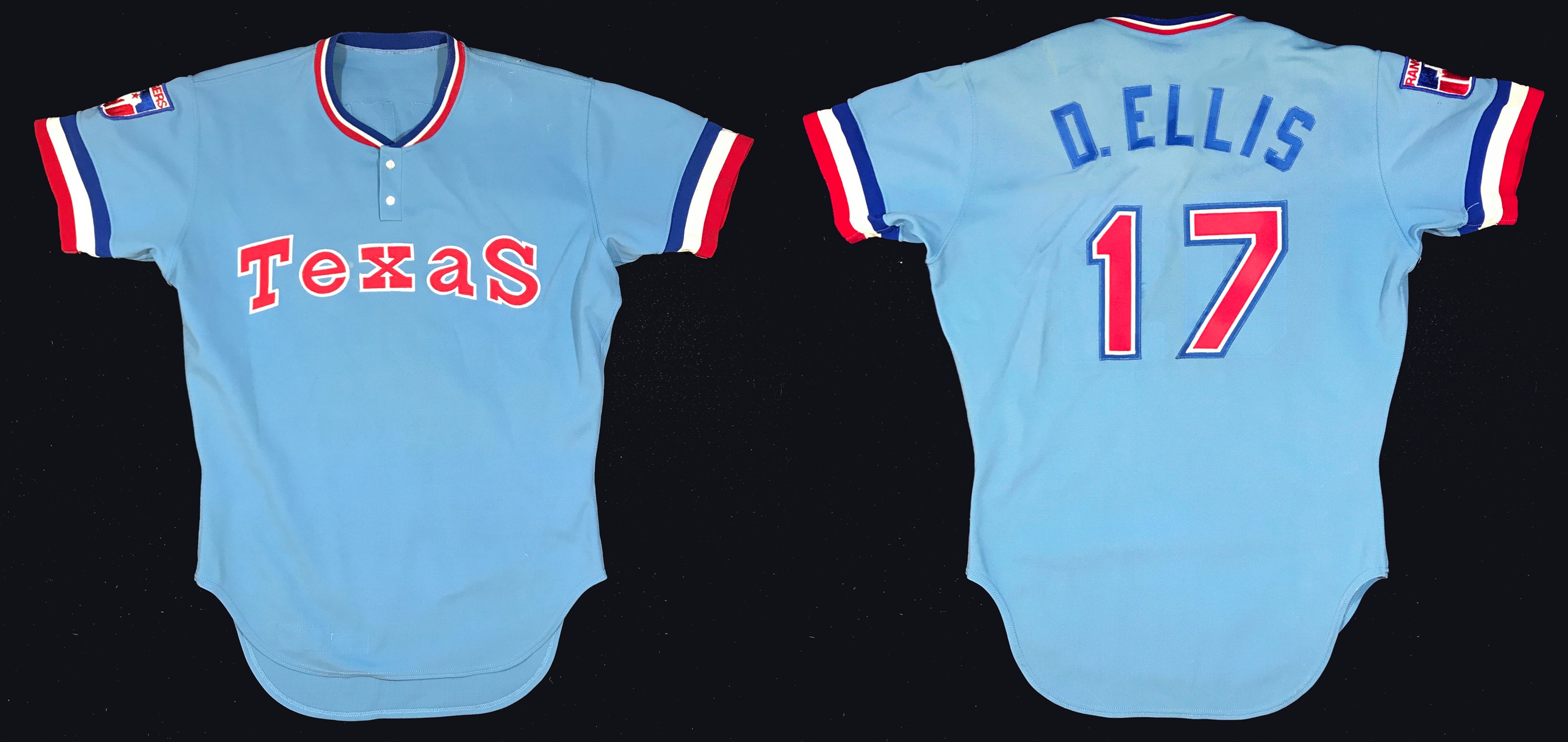
- Pitched a no-hitter on June 12, 1970 Dock Phillip Ellis Jr. (March 11, 1945 – December 19, 2008) was an American professional baseball player. He played in Major League Baseball as a right-handed pitcher from through , most notably as a member of the Pittsburgh Pirates teams that won five National League Eastern Division titles in six years between and and won the World Series in . Ellis also played for the New York Yankees, Oakland Athletics, Texas Rangers and New York Mets. In his MLB career, Ellis accumulated a record, a 3.46 earned run average, and 1,136 strikeouts.
Ellis threw a no-hitter on June 12, 1970, and later stated that he accomplished the feat under the influence of LSD. Ellis was the starting pitcher for the National League in the All-Star Game in 1971. Joining the Yankees in 1976, he helped lead the team to the American League pennant, and was named the Sporting News Comeback Player of the Year Award.
Ellis was an outspoken advocate for the rights of players and African Americans.
He had a substance abuse problem, and acknowledged after his retirement that he had never pitched without the use of drugs. After going into treatment, Ellis remained sober and devoted the remainder of his life to counseling others with substance use disorder in treatment centers and prisons. He died of a liver ailment at age 63 in 2008.
Early life
Born in Los Angeles, California, Ellis attended Gardena High School in Gardena. At age 14, he began drinking alcohol and using drugs.
Ellis played for the school's basketball team, recording 21 assists in one game. He played baseball as an infielder for a local semi-professional team called the Pittsburgh Pirates Rookies, along with future major leaguers Willie Crawford, Bill Rohr, Tom Harrison, Bobby Tolan, Roy White, Ron Woods, Reggie Smith, Don Wilson, Bob Watson and Dave Nelson. The team was managed by Chet Brewer. However, Ellis refused to play for the Gardena High School baseball team because a baseball player referred to him as a "spearchucker".
When Ellis was caught drinking and smoking marijuana in a high school bathroom during his senior year, the school agreed not to expel him if he agreed to play for the school's baseball team. He appeared in four games and was named all-league. Ellis then attended Los Angeles Harbor College (LAHC), a junior college.
Ellis was diagnosed with sickle cell anemia at age 17; the diagnosis was later changed to sickle cell trait.
Playing career
Minor league career (1964–1968)
While Ellis attended LAHC, various Major League Baseball teams attempted to sign him to a professional contract, but as he heard the Pittsburgh Pirates gave out signing bonuses of $60,000, he held out until the Pirates made him an offer. He was arrested for stealing a car, and given probation. Brewer, working as a scout for the Pirates, signed Ellis to the Pirates; as a result of the arrest, the Pirates offered Ellis $500 a month and a $2,500 signing bonus.
Ellis played for the Batavia Pirates of the Class A New York–Pennsylvania League in 1964. The next season, he played for the Kinston Eagles of the Class A Carolina League and the Columbus Jets of the Class AAA International League. Ellis pitched in an exhibition game for the Pirates against the Cleveland Indians in July, earning the win. After the season, the Pirates added Ellis to their 40-man roster.
In 1966, Ellis played for the Asheville Tourists of the Class AA Southern League, pitching to a 10–9 win–loss record, a 2.77 earned run average (ERA), The Pirates called Ellis up to the majors near the end of the season, but the team did not use him in a game that year.
Ellis started the 1967 season with Columbus. He believed that he was not on the major league club because the Pirates already had a number of African American players; he felt that the team did not want to alienate white fans. Ellis was sent down to the Macon Peaches of the Southern League, which Ellis believed was because of the length of his hair. Ellis said that he was promoted back to Columbus after shaving his head. He had a 2–0 win–loss record with Macon and a 5–7 record with Columbus.
During his minor league career, Ellis once chased a heckler in the stands with a baseball bat. He also used pills when he pitched, specifically the amphetamines Benzedrine and Dexamyl. Stressed by the pressure of his "can't-miss" status as a prospect, Ellis became addicted. He later said that he never pitched a game without using amphetamines. He eventually needed 70 to(-) per game, or between five and twelve capsules, depending on their strength. Ellis acknowledged that he began to use cocaine in the late 1960s.
Ellis held out from the Pirates in February 1968; he came to terms with the team in March. The Pirates optioned Ellis to Columbus, who moved Ellis from the starting rotation to the bullpen. At Columbus, Ellis credited his work with manager Johnny Pesky and pitching coach Harvey Haddix for improving his performance.
Pittsburgh Pirates
Ellis made his MLB debut in June 1968, beginning as a relief pitcher, but the Pirates moved Ellis into the starting rotation later that season and he started 10 games. Ellis pitched his first complete game in September. He had a 6–5 win–loss record with a 2.51 ERA with the Pirates in 1968. In 1969, Ellis made the team's starting rotation for Opening Day. The struggles of Steve Blass kept Ellis in the starting rotation, as Blass was moved to the bullpen.
June 12, 1970 no-hitter
On June 12, 1970, Ellis no-hit the San Diego Padres, 2–0, in the first game of a two-game doubleheader at San Diego Stadium, while reportedly under the influence of LSD. After the Pirates had flown to San Diego on Thursday, June 11, Ellis visited a friend in Los Angeles and used LSD "two or three times". Thinking it was still Thursday, he took a hit of LSD on Friday at noon, and his friend's girlfriend reminded him at 2:00 p.m. that he was scheduled to pitch that night. Ellis flew from Los Angeles to San Diego at 3:00 p.m. and arrived at the stadium at 4:30 p.m.; the game started at 6:05 p.m.
Ellis said that he threw the no-hitter despite being unable to feel the ball or see the batter or catcher clearly. He also said that his catcher Jerry May wore reflective tape on his fingers, which helped Ellis see May's signals. Ellis walked eight batters and struck out six, and he was aided by excellent fielding plays by second baseman Bill Mazeroski and centerfielder Matty Alou.
As Ellis recounted:
Ellis reported that he never used LSD during the season again, though he continued to use amphetamines. After the story was made public, Ellis said that he regretted taking LSD that day because it "robbed him of his greatest professional memory".
Assessments of LSD claim
Bob Smizik of the Pittsburgh Press, who first broke the story in 1984, believes Ellis' version of events that day, although Smizik did not witness the game in person. Bill Christine, also of the Pittsburgh Press, does not believe Ellis' claim and was at the game that day. Christine was a beat reporter who "practically lived with the team that year". Christine had said that he did not notice anything unusual and that if Ellis had reported to the stadium only 90 minutes before his scheduled start, reporters would have been told. John Mehno, a reporter who had "extensive interactions" with Ellis over his career, was skeptical about many stories told by Ellis, including the LSD no-hitter. Mehno said that he has not found a teammate who would corroborate the story. However, Ellis' close friend Scipio Spinks, a pitcher for the Houston Astros, has said that he has no doubt that Ellis was telling the truth about his LSD use, as he was very familiar with Ellis' drug habits, including the use of LSD.
The no-hitter in pop culture
Ellis collaborated with future United States Poet Laureate Donald Hall on a book, Dock Ellis in the Country of Baseball, published in 1976. The first edition of the book reported that Ellis had been drinking vodka on the day of his no-hitter. Hall updated the 1989 edition to reveal the LSD use. Singer-songwriter Barbara Manning paid tribute to Ellis and his no-hitter in the psychedelic pop song "Dock Ellis", as did folk singer Todd Snider with "America's Favorite Pastime" on his 2009 album The Excitement Plan. "Dock Ellis" is also a song by beatmaker Blazo and hip-hop duo The 49ers that talks about "musical addiction". A 2009 animated short film by James Blagden about the game, Dock Ellis and the LSD No-No, features narration in Ellis' own voice, taken from a 2008 NPR interview. The no-hitter is featured in the documentary about Ellis' life, No No: A Dockumentary (2014), directed by Jeffrey Radice. Robin Williams riffed on Ellis and his no-hitter as part of a segment on performance-enhancing drugs in sports, during his 2009 HBO special Weapons of Self-Destruction. In a season 2 episode of Poker Face, a player laces another's gum with LSD in an attempt at sabotage, but inadvertently "Dock Ellis-ed him."
1970–1971
Ellis struggled for the remainder of the 1970 season, and finished the year with a 13–10 win–loss record as he experienced elbow and shoulder pain. However, he finished second in the NL with four shutouts and seventh with a 3.21 ERA. The Pirates won the National League (NL) East division championship. Ellis started Game 1 of the 1970 National League Championship Series (NLCS) to the Cincinnati Reds. Ellis took the loss, and the Pirates lost the series to the Reds in three games.
Ellis worked on his changeup for the season. He was rewarded by being named the Pirates' Opening Day starting pitcher; he defeated the Philadelphia Phillies by a score of 4–2. After a strong start to the 1971 season, posting a 13–3 win–loss record, Ellis was named to appear in the 1971 Major League Baseball All-Star Game, held at Tiger Stadium in Detroit. The AL selected Vida Blue of the Oakland Athletics as their starter, and Ellis publicly stated that National League All-Star Team manager Sparky Anderson would "never start two brothers against each other". Ellis was the losing pitcher in the game. During the game, Reggie Jackson hit a towering home run off of Ellis. The home run, estimated to have traveled 600 ft, tied a 1926 home run hit by Babe Ruth for the longest measured home run on record. The next time the two opposed each other, Ellis beaned Jackson in the face in retaliation for his earlier home run.
Ellis started Game 2 of the 1971 NLCS, earning the victory over the San Francisco Giants. During the series, Ellis created a stir by complaining about the Pirates' lodgings, complaining that the organization was "cheap". He changed hotels because he said the hotel rooms were too small. Ellis started Game 1 of the 1971 World Series against the Baltimore Orioles. In a losing effort, he lasted only innings. He allowed four hits and four runs, including two home runs. Though Ellis denied being in pain before the game,
Ellis finished the season with a 19–9 win–loss record and a 3.06 ERA. He placed fourth in the Cy Young Award balloting. His 19 wins were fifth best in the league, and his .679 winning percentage was fourth best.
Macing incident
On May 5, 1972, Ellis, Willie Stargell, and Rennie Stennett missed the team bus to Riverfront Stadium. A security guard asked the three for identification; Stargell and Stennett complied and were allowed in, but Ellis did not have identification with him. The guard said that Ellis did not identify himself, appeared drunk, and "made threatening gestures with a clenched fist." Ellis showed his World Series ring as evidence of his affiliation with the Pirates, but in response, the guard maced Ellis. Ellis was arrested and charged with disorderly conduct.
The Reds sued Ellis for assault and Ellis countersued. Before going to trial, the Reds dropped the suit and wrote Ellis a letter of apology. The municipal court dropped the charges against Ellis, though Ellis stated that this incident made him "hate better".
Ellis finished the 1972 season ninth in the NL in ERA (2.70), sixth in winning percentage (.682), fourth in walks per nine innings pitched (1.818) and first in home runs per nine innings ratio (0.331). The Pirates won the NL East that year and faced the Reds in the 1972 NLCS. The Pirates pitched Ellis with a sore arm, but the Reds won the series.
1973
Ellis said that the scariest moment of his career was when he attempted to pitch while sober in a 1973 game. During pregame warmups, he could not recreate his pitching mechanics. Ellis went to his locker, took some amphetamines with coffee, and returned to pitch.
In August 1973, pictures circulated of Ellis wearing hair curlers in the bullpen during pregame warmups. The Pirates told him not to wear curlers on the field again. Ellis agreed, but charged that the Pirates were displaying racism. Ebony devoted a spread to Ellis about his hairstyles, which was inspired by the hair-curler incident.
After Ellis defeated the Reds in a 1973 game, Joe Morgan claimed that Ellis had thrown a spitball. Anderson had the umpire check Ellis, but found no evidence. In his 1980 book, Ellis admitted that wearing hair curlers produced sweat on his hair, which he used to throw a modified version of a spitball.
Ellis missed most of the last month of the season because of tendinitis in his elbow, and the Pirates lost the division to the New York Mets. Ellis again led the league in home runs allowed per nine innings pitched ratio (0.328).
1974
Ellis attempted to hit every batter in the Cincinnati Reds lineup with a pitch on May 1, 1974, as he was angry that the Pirates were intimidated by the Big Red Machine. Ellis hit Rose, Joe Morgan, and Dan Driessen in the top of the first inning, with his first six pitches all aimed at the batters. With the bases loaded, Ellis attempted to throw strikes to cleanup hitter Tony Pérez but walked him, forcing home a run. After Ellis aimed two pitches at the head of Johnny Bench, he was removed from the game by manager Danny Murtaugh. Ellis' box score for the game reads as follows: 0 IP, 0 H, 1 R, 1 ER, 1 BB, 0 K. Ellis tied eight other players for the MLB record with the three hit batsmen in the inning.
Ellis struggled at the start of the 1974 season, with a 3–8 win–loss record and 4.54 ERA through July 10. He then won eight consecutive games and nine out of ten, pitching seven complete games in that ten-game stretch. A line drive off the bat of Willie Montañez fractured the fifth metacarpal bone in Ellis' pitching hand on September 10, prematurely ending his season. Ellis had the seventh-best walks plus hits per inning pitched ratio (1.155) that season. The Pirates won the NL East but lost the 1974 NLCS, three games to one, to the Los Angeles Dodgers.
1975
Healthy to begin the 1975 season, Ellis continued to perform well. In August, the Pirates asked Ellis to pitch in the bullpen; he refused on consecutive nights. On August 15, 1975, Ellis refused assignment to the bullpen again; as a result, the Pirates suspended him for one day. Ellis called for a team meeting the next day, at which he was expected to apologize. Instead, he berated Murtaugh, who responded by cursing at Ellis, ordering the pitcher out of the clubhouse and attempting to fight him. Reportedly, coach Don Leppert also tried to fight Ellis. The Pirates suspended Ellis for 30 days and fined him $2,000 . The suspension was lifted on August 30 when Ellis apologized to Murtaugh.
Ellis finished with an 8–9 record and 3.79 ERA during the 1975 season.
New York Yankees
Ellis sensed that he would be traded that offseason due to the fallout from his suspension. Tired of Ellis' behavior, Pittsburgh general manager Joe L. Brown insisted that the Yankees take Ellis as part of the deal.
With the Yankees, Ellis pitched to a 17–8 win–loss record with a 3.15 ERA during the 1976 regular season. His 17 wins were eighth in the AL, while his .680 winning percentage was third best. After the season, he was voted the AL Comeback Player of the Year by the United Press International.
The Yankees won the AL East division championship in 1976. Ellis started in Game 3 of the 1976 American League Championship Series (ALCS), getting the win. The Reds defeated the Yankees in four games.
Oakland Athletics and Texas Rangers
Before the season, Ellis publicly criticized Yankees owner George Steinbrenner for giving him a raise that was inadequate given his 1976 performance and for interfering with manager Billy Martin. Torrez emerged as a top starting pitcher for the Yankees that season, while Ellis struggled. While pitching for Oakland, the team asked him to keep charts. Defiant, Ellis set the charts on fire in the clubhouse, setting off sprinklers. Ellis ranked this as the "craziest" thing he did during his career.
On June 15, 1977, the Rangers purchased Ellis from the Oakland Athletics. Ellis had a resurgent second half of the 1977 season, going 10–6 with a 2.90 ERA. Ellis complained about manager Billy Hunter's liquor policy in 1978. Hunter, responding to a raucous team flight, banned liquor on team flights; Ellis vowed that he would bring liquor on the plane to Toronto anyway. Ellis led a player insurrection against Hunter's authoritarian style, declaring that Hunter "may be Hitler, but he ain't making no lampshade out of me". The Rangers organization blamed Ellis for the team's disappointing finish in 1978 and indicated that they would look to trade Ellis. However, owner Brad Corbett sided with Ellis over Hunter, firing Hunter after the season.
New York Mets and return to Pittsburgh
After starting the 1979 season with a 1–5 win–loss record, Ellis was traded to the New York Mets on June 15, 1979, for minor league pitchers Mike Bruhert and Bob Myrick. The Mets, seeking to upgrade their pitching staff due to poor performances and injuries to Pat Zachry and Skip Lockwood, acquired Andy Hassler from the Boston Red Sox on the same day. Ellis went 3–7 with a 6.04 ERA with the Mets.
Ellis requested the Mets send him back to the Pirates. Seeking more pitching in their pennant race, the Pirates purchased Ellis from the Mets on September 21, 1979, for an undisclosed sum of money; the price was later revealed to be "something in excess of the waiver price of $20,000". Ellis made three relief appearances with the Pirates that year, retiring after that season. Because he returned to the Pirates after the waiver trade deadline, he was ineligible to play in the postseason and is not considered a winner of the 1979 World Series.
Ellis finished his career with a lifetime win–loss record of 138–119 and an ERA of 3.46.
Pitching style
Ellis threw five distinct pitches: a fastball, a curveball, a changeup, a palmball, and what Ellis called a "sliding fastball". The latter pitch was distinct from a slider. Ellis trusted his catcher to call pitches, and he rarely asked for a new sign.
Ellis kept a notebook, called "The Book", with detailed information about each hitter's strengths and weaknesses. He often asked teammates and members of other teams, including pitchers Bob Gibson and Juan Marichal, for advice on how to pitch opposing batters.
Personal life
Ellis was married four times. His first wife was Paula; they divorced in 1972. Ellis' second wife was Austine, and they divorced in 1980. His third wife was Jacquelyn, and the fourth was Hjordis. Trey fathered Ellis' first grandchild, Dock Phillip Ellis IV (Dru). Ellis' youngest daughter Simone, who mothered Ellis' second grandchild, died of cancer in December 2012. Ellis stopped using alcohol and other drugs in 1980, when his son was an infant.
Ellis fought for players' rights, including the right to free agency. Jackie Robinson credited him with trying to further the rights of African American players, but warned him that he said too much. and later worked with people who had the disease and raised money for sickle cell research.
Retirement
Ellis retired from baseball in the spring of , saying that he lost interest in the game. That year, Ellis entered drug treatment, staying for 40 days at The Meadows in Wickenburg, Arizona. In 1984, he revealed that he had pitched his no-hitter under the influence of LSD.
Ellis lived in Apple Valley, California. including Pascual Perez, whom he counseled for drug problems.
In 1989, Ellis served as player/coach for the St. Petersburg Pelicans of the Senior Professional Baseball Association and went 0–2 with a 1.76 ERA and seven saves as a part of the team's bullpen. In 1990, he allowed no earned runs and recorded two saves for the Pelicans before the league folded. He continued to play in the Los Angeles Veterans League.
Ellis was inducted into the Baseball Reliquary's Shrine of the Eternals in 1999.
Ellis was diagnosed with cirrhosis in 2007 and was placed on the list for a liver transplant. Although he had no health insurance, friends from his baseball career helped pay his medical bills. However, Ellis suffered heart damage in his last weeks of life, which made a transplant impossible.
Ellis died on December 19, 2008, at Los Angeles County-USC Medical Center due to his liver ailment. Services were held at the Angelus Funeral Home. He is interred at Inglewood Park Cemetery in Inglewood, California.
His life was the subject of the 2014 documentary film No No: A Dockumentary.
Bibliography
References
References
- (April 8, 1984). "Ellis: No-hitter while on LSD". Eugene Register-Guard.
- McAlester, Keven. (June 23, 2005). "High Times". Houston Press.
- Wolf, Bob. (July 18, 1990). "Remember When: Ellis' No-Hitter Against Padres Was High Drama". Los Angeles Times.
- (July 26, 1965). "Bucs, Phils Battle For Fifth Place". Beaver County Times.
- (October 5, 1965). "Bucs Acquire Trio From Columbus Farm". Pittsburgh Post-Gazette.
- (August 9, 1966). "Mobile's League Leaders Rap Southern All-Stars". Times Daily.
- (September 6, 1966). "Bucs Call Dock Ellis". The News-Dispatch.
- {{Harvnb. Hall. Ellis. 1989
- (June 21, 1967). "Evansville, Rebs Battle For Lead". Gadsden Times.
- {{Harvnb. Hall. Ellis. 1989
- (February 22, 1968). "Dock Ellis First Holdout For Brown: Pirate Rookie Dissatisfied, Stays Home". [[The Pittsburgh Press]].
- (March 2, 1968). "Clemente Reports". The Morning Record.
- (March 28, 1968). "Bucs Send 3 to Minors". St. Joseph News-Press.
- Keyes, Tom. (April 23, 1968). "Jets Not Set For Quick Takeoff Because of Hurling Problems". [[Toledo Blade]].
- {{Harvnb. Hall. Ellis. 1989
- (June 26, 1968). "Pirates Outlast Cards, 3-2; Triple By Wills Key Blow". The Lewiston Daily Sun.
- Feeney, Charley. (July 5, 1968). "Mets, Bucs Split Pair, 3-2 and 4-3: New Yorkers End Seven-Game Win Skein in Second". Pittsburgh Post-Gazette.
- "Dock Ellis".
- (September 17, 1968). "Ellis Pitches 1st Complete Contest". Beaver County Times.
- Abrams, Al. (March 14, 1969). "Larry Talks of Good Points". Pittsburgh Post-Gazette.
- (May 9, 1969). "Blass Taken From Rotation". Beaver County Times.
- Salading, Tom. (June 13, 1970). "Pirates' Dock Ellis gets no-hitter". Eugene Register-Guard.
- {{YouTube. _vUhSYLRw14. No Mas Presents: Dock Ellis & The LSD No-No by James Blagden
- Goldaper, Sam. (June 12, 1970). "Roundup: Ellis of Pirates Stops Padres on No-Hitter". The New York Times.
- (8 April 1984). "Ellis Says He Used LSD Before Hurling '70 No-Hitter". St. Petersburg Times.
- Barnes, Mike (UPI). (21 June 1989). "Dock Ellis: The Muhammad Ali of Baseball; Pitched Most Days High On 'Uppers'". The Ottawa Citizen.
- Getlen, Larry. (31 August 2014). "How Dock Ellis dropped acid and threw a no-hitter". New York Post.
- Daulerio, A.J.. (7 November 2011). "The Long, Strange Trip Of The Dock Ellis LSD No-Hitter Story". Deadspin.
- Mikkelson, David. (June 13, 2013). [http://www.snopes.com/sports/baseball/ellis.asp "Dock Ellis Pitched a No-Hitter on LSD?,"] Snopes. Retrieved on March 5, 2017.
- Citron, Rodger. (December 22, 2008). [http://historynewsnetwork.org/article/58622 "Another Reason for Remembering Dock Ellis,"] History News Network. Retrieved on March 5, 2017.
- Sobsey, Adam. (October 29, 2014). [https://www.theparisreview.org/blog/2014/10/29/future-eligibles/ "Future Eligibles,"] ''The Paris Review''. Retrieved on March 4, 2017.
- Witz, Billy. (September 4, 2010). [https://www.nytimes.com/2010/09/05/sports/baseball/05nohitter.html "For Ellis, a Long, Strange Trip to a No-Hitter,"] ''The New York Times''. Retrieved on March 4, 2017.
- Vanderbilt, Mike. (June 12, 2015). [http://www.avclub.com/article/45-years-ago-today-dock-ellis-pitched-no-hitter-wh-220797 "45 years ago today, Dock Ellis pitched a no-hitter while high on LSD,"] ''The A.V. Club''. Retrieved on March 4, 2017.
- Gold, Daniel M. (September 4, 2014). [https://www.nytimes.com/2014/09/05/movies/no-no-a-dockumentary-looks-at-dock-ellis.html "A Lightning Rod in a Game With Bats: 'No No: A Dockumentary' Looks at Dock Ellis,"] ''The New York Times''. Retrieved on March 4, 2017.
- (2025-05-22). "Poker Face — Hometown Hero — Season 2, Episode 5 Spoiler Recap and Review".
- (2012-07-10). "1970 National League Pitching Leaders". Baseball-Reference.com.
- (September 28, 1970). "No-pitch Pirates win title with pitching". The Miami News.
- (October 3, 1970). "Ellis, Nolan Mound Foes In Opener". The Milwaukee Sentinel.
- "1970 League Championship Series — Cincinnati Reds over Pittsburgh Pirates (3-0)". Baseball-Reference.com.
- Christine, Bill. (March 4, 1971). "Dock Ellis Accepts Help From Coach". The Pittsburgh Press.
- (April 7, 1971). "Ellis Ace In Bucs' Win". The Milwaukee Sentinel.
- Carnicelli, Joe. (July 2, 1971). "Dock Ellis Gets 13th Win, May Be First All-Star Choice". Middlesboro Daily News.
- (July 13, 1971). "Anderson Names Dock Ellis to Face Vida Blue in Major League All-Star Game: NL Pilot Disregards Buc Hurler's Blast". The Lewiston Daily Sun.
- Smizik, Bob. (May 14, 1972). "Dock Ellis Simply Speaks His Mind". The Pittsburgh Press.
- (July 15, 1971). "Reggie's Wallop Tied The Babe's". The Calgary Herald.
- Madden, Bill. (December 22, 2008). "From no-hitter on LSD to hair curlers to feuds, Dock Ellis was free spirit". New York Daily News.
- Gaudiosi, John A.. (September 30, 1971). "Murtaugh Maintaining His Cool". Beaver County Times.
- Schuyler, Jr., Ed. (October 5, 1971). "Pittsburgh, Giants Each Own Win: Orioles Can Sweep AL Playoffs Today". Warsaw Times-Union.
- Christine, Bill. (March 1, 1972). "Dock Ellis: The One Who Cried Wolf". The Pittsburgh Press.
- (October 5, 1971). "Dock Ellis Labels Bucs 'Cheap'". Tri City Herald.
- Rathet, Mike. (October 8, 1971). "Dock Ellis' Elbow Clouds Pirates' Series Picture". Harlan Daily Enterprise.
- (October 18, 1976). "Pat Zachry vs. Dock Ellis in third game of Series". St. Petersburg Times.
- "1971 World Series — Pittsburgh Pirates over Baltimore Orioles (4-3)". Baseball-Reference.com.
- Durso, Joseph. (November 4, 1971). "Cubs' Jenkins Voted Cy Young Award". [[The New York Times]].
- "1971 National League Pitching Leaders". Baseball-Reference.com.
- (May 25, 1972). "Ellis to file suit after mace incident with stadium guard". [[Jet Magazine]].
- (May 6, 1972). "Dock Ellis arrested in Cincy". The Bryan Times.
- (1972-07-11). "Charges against Dock Ellis dropped". Tri-City Herald.
- (October 10, 1972). "Pirates Attempt To Close Playoffs With Dock Ellis". Sarasota Journal.
- Silver, Michael. (July 2, 2007). "Notorious for baseball's trippiest mound exploit, he turned his experiences to the good by helping substance abusers".
- (August 14, 1973). "Pirate pair feuds as Ellis cools down". Eugene Register-Guard.
- (August 18, 1973). "Ellis Throws Spitter: Morgan". St. Petersburg Times.
- Gurney, Jack. (March 7, 1974). "Pirates' Dock Ellis Isn't All Bad". [[Sarasota Herald-Tribune]].
- (October 2, 1973). "Didn't Play Well Enough Say Pirates". The Spartanburg Herald.
- "1973 National League Pitching Leaders". Baseball-Reference.com.
- Crowe, Jerry. (June 30, 1985). "When Hit by Ellis, Rose Didn't Get Mad, He Got Even His Own Way". Los Angeles Times.
- "Urban Legends Reference Pages: Dock Ellis LSD No-Hitter". Snopes.com.
- (May 2, 1974). "Ellis Hits Wrong Targets". The Milwaukee Journal.
- (April 4, 1975). "Dock Ellis may be big healer in Pittsburgh". The Calgary Herald.
- (September 12, 1974). "Pirates walk plank while losing Ellis". The Miami News.
- (2012-07-10). "1974 National League Pitching Leaders". Baseball-Reference.com.
- "1974 League Championship Series — Los Angeles Dodgers over Pittsburgh Pirates (3-1)". Baseball-Reference.com.
- (April 1, 1975). "Dock Ellis maintains form to beat White Sox". Tri City Herald.
- (August 16, 1975). "Ellis (Dock) acts up". The Day.
- Feeney, Charley. (December 5, 1975). "Dock Ellis... Going... Going.. Gone". Pittsburgh Post-Gazette.
- Crowe, Jerry. (June 30, 1985). "Dock Ellis: The Man Who Pitched a No-Hitter While Under the Influence of LSD Has Found a New Delivery: He Coordinates a Substance-Abuse Rehabilitation Program : Ellis: 'I Couldn't Pitch Without Pills'". Los Angeles Times.
- "1975 League Championship Series – Cincinnati Reds over Pittsburgh Pirates (3–0)". Baseball-Reference.com.
- (March 26, 1976). "Faded Bronx Bombers May Become Bandits". Schenectady Gazette.
- (December 12, 1975). "Yankees wheel, deal at baseball meetings". The Gadsden Times.
- Rubin, Bob. (April 7, 1977). "Dock Is Unhappy". The Evening Independent.
- (November 4, 1976). "AL's comeback award given to Dock Ellis". The Montreal Gazette.
- (October 12, 1976). "Yankees Count on Dock Ellis". The Evening News.
- (October 20, 1976). "It's Nolan against Figueroa: Cincy shooting for series sweep". Boca Raton News.
- "1976 World Series — Cincinnati Reds over New York Yankees (4-0)". Baseball-Reference.com.
- "1976 World Series – Cincinnati Reds over New York Yankees (4–0)". Baseball-Reference.com.
- (1977-04-28). "Yanks Trade Ellis, 2 Others to Oakland". Milwaukee Sentinel.
- McMane, Fred. (May 9, 1977). "Dock Ellis makes Yanks' trade look good". Beaver County Times.
- (August 19, 1977). "Ellis and Leonard Boost Their Teams". The Milwaukee Journal.
- (May 27, 1978). "Ranger Dock Ellis Disputes Manager's Liquor Policy". The Pittsburgh Press.
- McHugh, Roy. (June 1, 1978). "Dock: Break Out The Booze And Have A Ball". The Pittsburgh Press.
- (May 27, 1978). "Dock Ellis ready to break rules". The Modesto Bee.
- Rabun, Mike. (September 13, 1978). "Rangers would prefer common bond with Cowboys". The Morning Record and Journal.
- (October 2, 1978). "Texas Rangers fire Billy Hunter". Beaver County Times.
- (June 16, 1979). "Pitcher-hungry Mets get Dock Ellis, Hassler". St. Petersburg Times.
- (September 22, 1979). "Dock Ellis Back With Pirates". Ocala Star-Banner.
- Feeney, Charley. (September 22, 1979). "Bucs Lose to Chicago, 2-0". Pittsburgh Post-Gazette.
- (September 24, 1979). "Ellis Goes To Pirates For $20,000". The Virgin Islands Daily News.
- {{Harvnb. Hall. Ellis. 1989
- {{Harvnb. Hall. Ellis. 1989
- (1972-05-08). "Bucs' Ellis May Sue Over Fracas". [[Milwaukee Sentinel]].
- {{Harvnb. Hall. Ellis. 1989
- (March 4, 1978). "Dock Ellis of Rangers has to check with wife". Lodi News-Sentinel.
- Elliott, Helene. (December 21, 2008). "Dock Ellis, former major league pitcher who counseled drug addicts, dies at 63". [[Los Angeles Times]].
- Mauch, Rich. (1999-03-04). "Ex-Martin star shines brightly for Bakersfield". Fort Worth Star-Telegram.
- [http://www.baseballreliquary.org/awards/shrine-of-the-eternals/shrine-of-the-eternals-electees "Shrine of the Eternals – Inductees"] {{Webarchive. link. (2020-09-19 . Baseball Reliquary. Retrieved 2019-08-14.)
- Elliot, Helene. (May 13, 2008). "Dock Ellis is trying to strike back at a tough foe". Los Angeles Times.
- Crasnick, Jerry. (December 19, 2008). "Former major league pitcher Dock Ellis dies at 63". ESPN.com.
- [https://www.rottentomatoes.com/m/no_no_a_dockumentary/ ''No No: A Dockumentary''], Rotten Tomatoes. Retrieved on March 4, 2017.
This article was imported from Wikipedia and is available under the Creative Commons Attribution-ShareAlike 4.0 License. Content has been adapted to SurfDoc format. Original contributors can be found on the article history page.
Ask Mako anything about Dock Ellis — get instant answers, deeper analysis, and related topics.
Research with MakoFree with your Surf account
Create a free account to save articles, ask Mako questions, and organize your research.
Sign up freeThis content may have been generated or modified by AI. CloudSurf Software LLC is not responsible for the accuracy, completeness, or reliability of AI-generated content. Always verify important information from primary sources.
Report