From Surf Wiki (app.surf) — the open knowledge base
Division of Bendigo
Australian federal electoral division
Australian federal electoral division
| Field | Value |
|---|---|
| federal | yes |
| name | Bendigo |
| image | |
| caption | Interactive map of electorate boundaries from the 2025 federal election |
| created | 1901 |
| mp | Lisa Chesters |
| mp-party | Labor |
| namesake | Bendigo, Victoria |
| electors | 120140 |
| electors_year | 2025 |
| area | 6178 |
| class | Provincial |
| near-n | Nicholls |
| near-ne | Nicholls |
| near-nw | Mallee |
| near-e | Nicholls |
| near-w | Mallee |
| near-s | Ballarat |
| near-se | McEwen |
| near-sw | Ballarat |
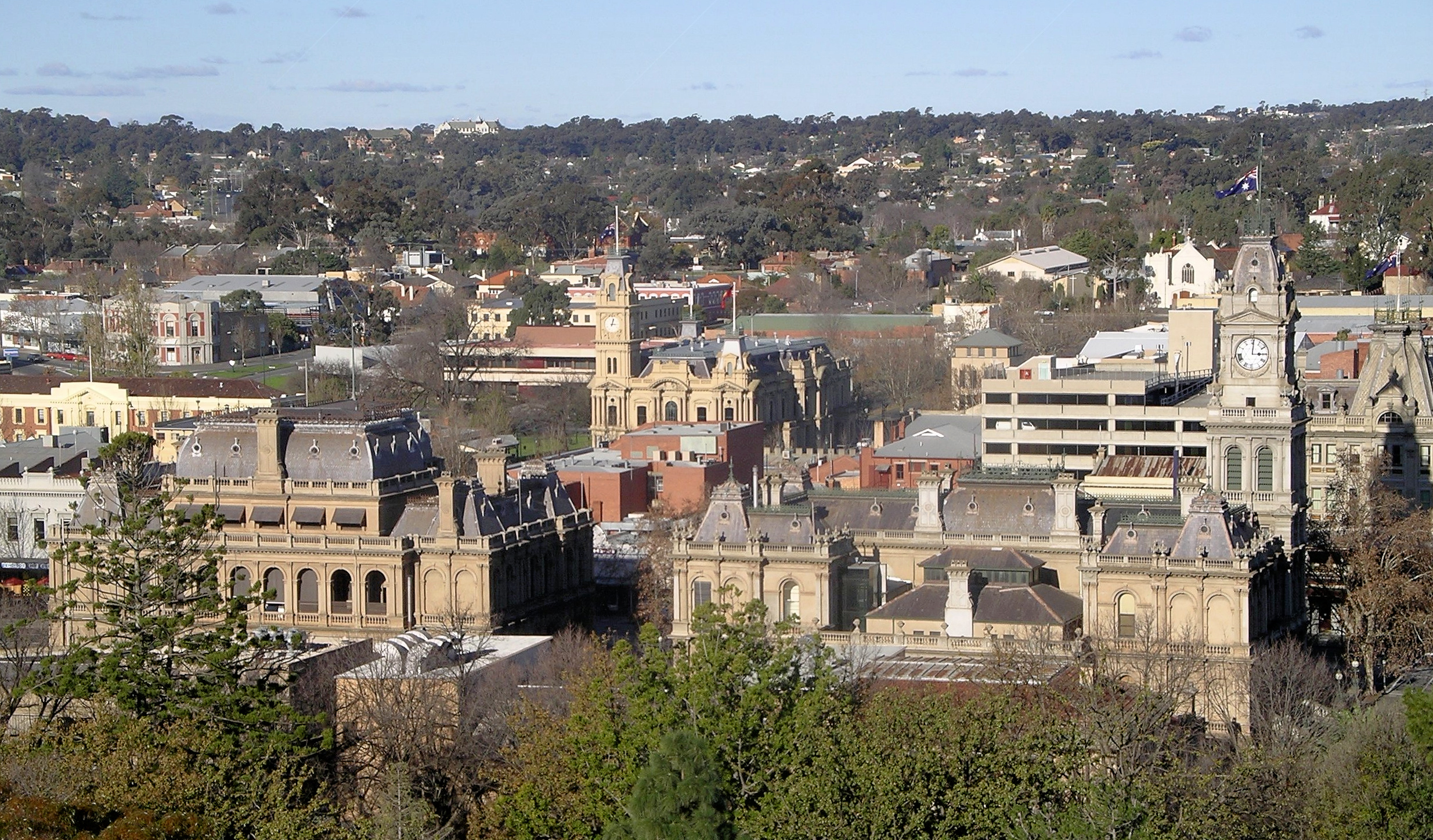
| mp-party = Labor |near-n = Nicholls |near-ne = Nicholls |near-nw = Mallee |near-e = Nicholls |near-w = Mallee |near-s = Ballarat |near-se = McEwen |near-sw = Ballarat The Division of Bendigo is an Australian electoral division in the state of Victoria. The division was proclaimed in 1900, and was one of the original 65 divisions to be contested at the first federal election. It is named for the city of Bendigo.
The division is situated on the northern foothills of the Great Dividing Range in North Central Victoria. It covers an area of approximately 5496 km2 and provides the southern gateway to the Murray–Darling basin. In addition to the city of Bendigo, other large population centres in the division include , and Kyneton.
The current Member for the Division of Bendigo, since the 2013 federal election, is Lisa Chesters, a member of the Australian Labor Party.
Geography
Since 1984, federal electoral division boundaries in Australia have been determined at redistributions by a redistribution committee appointed by the Australian Electoral Commission. Redistributions occur for the boundaries of divisions in a particular state, and they occur every seven years, or sooner if a state's representation entitlement changes or when divisions of a state are malapportioned.
In 1913, it gained Maldon and Castlemaine from the abolished Division of Laanecoorie, but lost Heathcote. In 1937, with the abolition of the Division of Echuca, the division expanded north to the state border with New South Wales to include Echuca and Rochester. 12 years later in 1949, this was reversed with the creation of the Division of Murray around those areas.
In 1955, the division expanded east to include Seymour. In 1968, it expanded towards the south-east into other towns along the Calder Highway, such as Gisborne and Lancefield, and other towns along the Hume Highway, such as Kilmore and Wandong. The expansion replaced the northern part of Division of Lalor. Kilmore and Lancefield were lost to Division of Burke in 1977. In 1984, the division was significantly shifted west, losing all areas along the Hume Highway (Seymour, Kilmore and Wandong) to the new Division of McEwen.
In the 2024 redistribution, it was proposed in May 2024 that the division be expanded southwards towards the Shire of Hepburn and replacing parts of Division of Ballarat. However, in the final redistribution in October 2024, the division was instead expanded northwards into Shire of Campaspe and included the town of Rochester, which was previously in Division of Nicholls. A proposed expansion to the east into the towns of Toolborac and Pyalong also went ahead.
History
In the early years of federation the seat consisted of little more than Bendigo itself, but on later boundaries the seat has included towns such as Echuca, Castlemaine, Maryborough and Seymour.
Bendigo has been a marginal seat, changing hands regularly between the Labor Party and the conservative parties; typically mirroring voting patterns in state elections. However, it has remained a Labor seat since the 1998 federal election.
Unlike most marginal seats, Bendigo is not a barometer for winning government. Since 1949, all but one of its members has spent at least one term in opposition. Indeed, during two elections that saw a change of government, it elected an opposition MP.
Its most notable members include its first representative, Sir John Quick, who was a leading federalist, and Prime Minister Billy Hughes who, although from Sydney, represented Bendigo for two terms at a time when the federal Parliament met in Melbourne, and who moved to the seat after leaving the Labor Party over conscription, holding the seat as the leader of the Nationalist Party.
John Brumby, who held the seat from 1983 to 1990, would subsequently be elected to the Victorian Legislative Council in 1993. He then transferred to the Victorian Legislative Assembly seat of Broadmeadows a few months later, after being elected Victorian Opposition Leader, a position he would hold until 1999. After serving as a senior state minister under Steve Bracks, Brumby went on to become Premier of Victoria from 2007 to 2010.
Brumby was defeated in Bendigo at the 1990 election by a former state Legislative Councillor, Bruce Reid, who retained the seat narrowly in 1993 and 1996, before retiring at the 1998 election, when a 4.3% swing delivered the seat to Labor's Steve Gibbons. Reid has a minor claim to fame through being the third candidate in the contest for Liberal leadership between John Hewson and John Howard after the party's 1993 election defeat. Reid attracted one vote, presumably his own.
Members
| Image | Member | Party | Term | Notes | |
|---|---|---|---|---|---|
| [[File:John Quick - W. Vincent Kelly (cropped).jpg | 100px]] | Sir John Quick | |||
| (1852–1932) | Protectionist | nowrap | 29 March 1901 – | ||
| 1906 | |||||
| nowrap | Independent Protectionist | nowrap | 1906 – | ||
| 26 May 1909 | |||||
| nowrap | Liberal | nowrap | 26 May 1909 – | ||
| 23 April 1913 | |||||
| [[File:John Arthur - Swiss Studios (cropped).jpg | 100px]] | John Arthur | |||
| (1875–1914) | Labor | nowrap | 31 May 1913 – | ||
| 9 December 1914 | |||||
| [[File:Alfred Hampson.png | 100px]] | Alfred Hampson | |||
| (1864–1924) | nowrap | 6 February 1915 – | |||
| 5 May 1917 | Previously held the Victorian Legislative Assembly seat of Bendigo East. Lost seat | ||||
| [[File:Billy Hughes 1919.jpg | 100px]] | Billy Hughes | |||
| (1862–1952) | Nationalist | nowrap | 5 May 1917 – | ||
| 16 December 1922 | |||||
| [[File:Geoffry Hurry.jpg | 100px]] | Geoffry Hurry | |||
| (1868–1951) | nowrap | 16 December 1922 – | |||
| 12 October 1929 | Lost seat | ||||
| [[File:Richard Keane 1931-02 (cropped).jpg | 100px]] | Richard Keane | |||
| (1881–1946) | Labor | nowrap | 12 October 1929 – | ||
| 19 December 1931 | |||||
| [[File:Eric Fairweather Harrison.jpg | 100px]] | Eric Harrison | |||
| (1880–1948) | United Australia | nowrap | 19 December 1931 – | ||
| 21 September 1937 | |||||
| [[File:George Rankin.jpg | 100px]] | George Rankin | |||
| (1887–1957) | Country | nowrap | 23 October 1937 – | ||
| 31 October 1949 | |||||
| [[File:Percy_Clarey.png | 100px]] | Percy Clarey | |||
| (1890–1960) | Labor | nowrap | 10 December 1949 – | ||
| 17 May 1960 | |||||
| [[File:NoelBeaton1961.jpg | 100px]] | Noel Beaton | |||
| (1925–2004) | nowrap | 16 July 1960 – | |||
| 9 April 1969 | Resigned to retire from politics | ||||
| [[File:David Kennedy 1973 (cropped).jpg | 100px]] | David Kennedy | |||
| (1940–) | nowrap | 7 June 1969 – | |||
| 2 December 1972 | Lost seat. Later elected to the Victorian Legislative Assembly seat of Bendigo. First person from an Indigenous background to be elected to the House of Representatives | ||||
| [[File:John_Bourchier 1974 (cropped).jpg | 100px]] | John Bourchier | |||
| (1929–2017) | Liberal | nowrap | 2 December 1972 – | ||
| 5 March 1983 | |||||
| [[File:John Brumby.jpg | 100px]] | John Brumby | |||
| (1953–) | Labor | nowrap | 5 March 1983 – | ||
| 24 March 1990 | |||||
| [[File:Liberal Party of Australia placeholder portrait.svg | 100px]] | Bruce Reid | |||
| (1935–2020) | Liberal | nowrap | 24 March 1990 – | ||
| 31 August 1998 | |||||
| [[File:Steve Gibbons.jpg | 100px]] | Steve Gibbons | |||
| (1949–2022) | Labor | nowrap | 3 October 1998 – | ||
| 5 August 2013 | |||||
| [[File:Lisa_Chesters_with_volunteers.jpg | 100px]] | Lisa Chesters | |||
| (1980–) | nowrap | 7 September 2013 – | |||
| present | Incumbent |
Election results
Main article: Electoral results for the Division of Bendigo
References
References
- (1 October 2013). "Profile of the electoral division of Bendigo (Vic)". [[Australian Electoral Commission]].
- (14 November 2017). "The process of federal redistributions: a quick guide".
- "Laanecoorie".
- "Echuca".
- "Bendigo".
- "Murray".
- "Lalor".
- "Burke".
- (May 2024). "Map of Proposed Commonwealth Electoral Division of Bendigo". Austrlaian Electoral Commission.
- (October 2024). "Map of Commonwealth Electoral Division of Bendigo". Austrlaian Electoral Commission.
- (October 2024). "Report of the augmented Electoral Commission for Victoria - Redistribution of Victoria into electoral divisions". Australian Electoral Commission.
- Green, Antony. (11 October 2013). "Federal election 2013: Bendigo results". [[Australian Broadcasting Corporation.
This article was imported from Wikipedia and is available under the Creative Commons Attribution-ShareAlike 4.0 License. Content has been adapted to SurfDoc format. Original contributors can be found on the article history page.
Ask Mako anything about Division of Bendigo — get instant answers, deeper analysis, and related topics.
Research with MakoFree with your Surf account
Create a free account to save articles, ask Mako questions, and organize your research.
Sign up freeThis content may have been generated or modified by AI. CloudSurf Software LLC is not responsible for the accuracy, completeness, or reliability of AI-generated content. Always verify important information from primary sources.
Report