From Surf Wiki (app.surf) — the open knowledge base
District of Columbia Public Schools
American public school system

American public school system
| Field | Value |
|---|---|
| name | District of Columbia Public Schools |
| logo | DCPSlogo.png |
| type | Public |
| grades | PK–12 |
| established | |
| region | Mid-Atlantic, Southeast |
| country | United States |
| location | 1200 First Street, NE, Washington, D.C. 20002 |
| superintendent_type | Chancellor |
| superintendent | Lewis Ferebee |
| accreditations | |
| schools | 117 |
| budget | $701,344,630 |
| us_nces_district_id | |
| students | 50,839 |
| teachers | 4,564.64 |
| staff | 3,767.57 |
| ratio | 11.14 |
| website |
| vice-president =
The District of Columbia Public Schools (DCPS) is the local public school system for the District of Columbia, in the United States. It is distinct from the District of Columbia Public Charter Schools (DCPCS), which governs public charter schools in the district.
Student body
Enrollment
DCPS schools offer education from pre-kindergarten to 12th grade, as well as education for adults. During the 2023–2024 school year, there were 50,839 students enrolled in DCPS, and 4,564.64 FTE teachers, with a student–teacher ratio of 11.14.
Enrollment in D.C. public schools previously reached a peak of 150,000 students in the 1960s before declining over the following decades. In 1996, the first public charter schools opened in the district, drawing more students away from DCPS schools. During the COVID-19 pandemic, public school enrollment decreased in the district as many families chose homeschooling or enrolled their children in private schools.
Demographics
The racial and ethnic breakdown of students enrolled in the 2023–2024 school year was 55% Black, 22% Hispanic, 18% White, and 5% other races. DCPS schools have seen a steady increase in White and Hispanic students since the 2013–2014 school year, due to more White students enrolling in pre-kindergarten and elementary schools, and more Hispanic students enrolling in middle and high schools. By contrast, in 2000, the racial and ethnic breakdown of public school students was 84% Black, 9% Hispanic, 5% White, and 2% other races.
As of the 2023–2024 school year, 16% of students were enrolled in special education, 16% were English-language learners, and 46% were deemed "at risk of academic failure".
Attendance
School is compulsory in Washington, D.C. for students between the ages of 5 and 17. As of the 2024–2025 school year, 38% of DCPS students from kindergarten to 12th grade were chronically absent, meaning a student missed 10% or more of the school year. During the same school year, DCPS referred 4,956 students ages 5 to 13 to the district's Child and Family Services Agency for educational neglect. DCPS referred an additional 1,495 students ages 14 to 17 to the district's Court Social Services Division for truancy.
Graduation rate
As of 2024, 77% of DCPS students graduated high school within four years, an increase from 54% in 2012. The 2024 data shows that 73% of Black students and 76% of Hispanic students graduated in four years, compared to 96% of White students.
In 2017, a report by WAMU and NPR called into question Ballou High School for graduating students that should have failed due to frequent absences. In response, the District's Office of the State Superintendent of Education commissioned an audit that found that 1 in 3 graduates of DCPS high schools that year should not have graduated based on their attendance records.
Teachers
Under Teacher Leadership Innovation (TLI), experienced teachers can apply for specialized positions in which they spend at least 50% of their time teaching in the classroom and the rest of the time coaching other teachers and leading school teams.
DCPS has more than 4,000 teachers as of July 2024.
Governance
Within DCPS, schools are classified as either a "neighborhood school" or a "destination school". Neighborhood schools are elementary or secondary schools assigned to students based on their address. Destination schools are feeder-schools for elementary or secondary institutions from a school a student is already attending. Since the fall of 2009, students may choose a destination school, regardless of their neighborhood location. Locations of all schools and the neighborhood divides can be found on the DCPS website.
For the school year ending in spring 2007, the DCPS was governed by the District of Columbia State Board of Education, with eleven members, including two students who had the right to debate but not to vote. Five members were elected, and the Mayor appointed four. The board established DCPS policies and employed a superintendent to serve as chief executive officer of the school district, responsible for day-to-day operations. Four board members represented specific geographical boundaries, and the Board President was elected at large. One condition of the District of Columbia Public Education Reform Amendment Act of 2007 was creating DCPS as a separate cabinet-level agency from the D.C. Board of Education. This moved DCPS within the executive branch of the District of Columbia government—specifically, under Mayoral control. Currently, DCPS is subordinate to District of Columbia Mayor Muriel Bowser. D.C. Mayor Adrian Fenty proposed putting the public schools under the direct control of the Mayor's Office upon taking office in January 2007. However, this reform to District of Columbia Public Schools was encouraged by his predecessor and constituents at large. It also placed all of the District of Columbia public charter schools under the care of a new board—the District of Columbia Public Charter School Board (PCSB). Although these schools were previously a part of DCPS, they are now considered a separate district controlled by the D.C. Public Charter School Board (PCSB).
The D.C. Council passed the Mayor's proposal into law, but since the change amended the Home Rule Act, the change needed to gain federal approval before taking effect. D.C. Delegate Eleanor Holmes Norton introduced H.R. 2080, a bill to amend the D.C. Home Rule Charter Act to provide for the Mayor's proposal. H.R. 2080 was passed by the United States House of Representatives under an expedited procedure on May 8, 2007, by a voice vote. After three U.S. Senators (Ben Cardin of Maryland, Mary Landrieu of Louisiana, and Carl Levin of Michigan) initially placed "holds" on the bill to prevent its consideration in the United States Senate, the Senate agreed to pass H.R. 2080 without amendment on May 22, 2007, by unanimous consent. On May 31, 2007, the bill was presented to the President, and President Bush signed H.R. 2080 into law on June 1, 2007. After the standard Congressional review period expired on June 12, 2007, the Mayor's office had direct control of the Superintendent and the school budget. On June 12, Mayor Fenty appointed Michelle Rhee the new Chancellor, replacing Superintendent Clifford B. Janey.
D.C. School Choice Incentive Act of 2003
Main article: D.C. Opportunity Scholarship Program
In January 2004, Congress passed the D.C. School Choice Incentive Act of 2003. The law established a federally-funded private school voucher program known as the D.C. Opportunity Scholarship Program (OSP). The OSP distributes vouchers to low-income families to cover private school tuition. Because there are more eligible applicants than available vouchers, they are distributed by lottery. In 2010, a randomized controlled trial conducted under the auspices of the Department of Education examined the impacts of the OSP students, finding that it raised graduation rates. Students who were offered vouchers had a graduation rate of 82%, while those who used their vouchers had a graduation rate of 91%. By comparison, the rate for students who did not receive vouchers was only 70%. The study received the Department of Education's highest rating for scientific rigor. Over 90% of the study's participants were African American, and most of the remainder were Latino American. Further research found that students who received vouchers were 25% more likely to enroll in college than students with similar demographic characteristics who did not receive vouchers.
Marian Anderson controversy
In 1939, writing on behalf of the Board of Education of the District of Columbia now the District of Columbia State Board of Education, Ballou denied a request by contralto Marian Anderson to sing at the auditorium of the segregated white Central High School. As justification, he cited a federal law from 1906 requiring separate schools for the District. Meanwhile, the Daughters of the American Revolution had rejected a similar application. When Eleanor Roosevelt resigned from that organization in protest, author Zora Neale Hurston criticized her for remaining silent about the fact that the board had also excluded Anderson. "As far as the high-school auditorium is concerned," Hurston declared "to jump the people responsible for racial bias would be to accuse and expose the accusers themselves. The District of Columbia has no home rule; it is controlled by congressional committees, and Congress at the time was overwhelmingly Democratic. It was controlled by the very people who were screaming so loudly against the DAR. To my way of thinking, both places should have been denounced, or neither." Although Anderson later performed at an open-air concert at the Lincoln Memorial, the board retained its policy of exclusion.
D.C. Public Education Reform Amendment Act of 2007
The Council of the District of Columbia enacted the DC Public Education Reform Amendment Act of 2007. This act established a DC public school agency based on authority given to the council in the District of Columbia Home Rule Act of 1973. The Department of Education that was established under the Mayor triggered several changes. The largest was already discussed—DCPCS gained sole authority over chartering and chartered schools, DCPS became subordinate to the Mayor's office. Secondly, many more minor authoritative changes took place. The first is that the State Education Office (SEO) became the State Superintendent of Education (OSSE). The four subsections of the District were reaffirmed through location-based State Board of Education selectees. In addition, the smaller eight school election wards were reaffirmed. Finally, the commission was established through this legislature. The "Commission" is the Interagency Collaboration and Services Integration Commission, which includes the Mayor, Chair of the Council of the District of Columbia, Chief Judge of the D.C. Superior Family Court, Superintendent of Education, Chancellor of DCPS, Chair of DCPCSB, and fourteen others.
After the 2007–2008 school year, about one-fifth of the teachers and one-third of the principals resigned, retired, or were terminated from DCPS. DCPS initially experienced a powerful negative impact due to the loss. A GAO-conducted study recommended that the Mayor direct DCPS to establish planning processes for strikes and look to performance reviews from central offices to strengthen accountability. These recommendations were followed, and accountability has increased through academic and financial report generation. Increased accountability made way for other small reforms. One example is implementing a requirement that students entering ninth grade sit down with a school counselor and construct a course plan to reach graduation.
River Terrace Elementary School and Shaed Education Campus shut their doors at the end of the 2010–2011 and 2011–2012 school years, respectively. Students attending River Terrace and Emery Education Campus moved to the Langley Building. In 2019, a proposal was submitted to close Metropolitan High School, an alternative school.
No Child Left Behind compliance
In accordance with Section 1116, a provision of the No Child Left Behind Act (NCLB), entitled "Academic Assessment and Local Education Agency and School Improvement", the Office of the State Superintendent of Education (OSSE) of the District of Columbia oversees compliance with Adequate Yearly Progress (AYP). A large portion of meeting AYP is based on standardized-tests performance; the District used the summative assessment called the District of Columbia Comprehensive Assessment System ("DC CAS") through the 2013–2014 school year, after which it switched to tools from the Partnership for Assessment of Readiness for College and Careers (PARCC) and the National Center and State Collaborative (NCSC).
Many schools fail to meet AYP, even though DCPS educators offer support and tools to students to be academically successful. DCPS has created an evaluation tool to assess schools by more than their standardized test scores. They call this a Quality School Review, which uses the Effective Schools Framework to assess schools through rubrics on topics such as classroom observations, interviews with parents, students, teachers, and school leadership, staff surveys and reviewing artifacts (i.e., handbooks, student work). In 2007, Karin Hess of the National Center for the Improvement of Educational Assessment conducted an analysis that has also gone into the alignment of DCPS standards and the "DC CAS Alt", the assessment for students with cognitive disabilities.
Budget
According to the U.S. Census Bureau, DCPS had a budget of $1.2 billion and spent $29,409 per pupil in FY 2009–10.
In 1989–90, DCPS reported spending $10,200 (1999 adj. dollars) per pupil. A decade later, in 1999–2000, its reported per-pupil expenditures had increased to $11,500. However, those figures likely underreport DCPS's actual total per-pupil expenditures. In 2012, the Cato Institute's Andrew J. Coulson showed that DCPS's reported per-pupil expenditures figures were based on incomplete data. That year, the U.S. Census Bureau had reported that DCPS's 2008–09 per-pupil expenditures were $18,181, but DCPS officials had neglected to include about $400 million in spending. Informed by Coulson's observations, the U.S. Census Bureau revised its data collection methods and reported that per-pupil expenditures were $28,170. Those revisions are reflected in the Bureau's 2009–10 reports.
In FY 2009–2010, the District received 6.7% of its total elementary and secondary education revenues from federal sources.
Statistics
In 2008, in terms of testing 36% of students demonstrated proficiency in mathematics and 39% demonstrated proficiency in reading.
The average educator was paid $67,000 in 2010. A contract signed in 2010 was expected to raise that figure to $81,000 in 2012.
List of schools
As of the 2023–2024 school year, DCPS consisted of 117 schools, out of a total of 245 schools in Washington, D.C. Most DCPS schools are "in-boundary" schools, meaning that students are eligible to enroll in them if their home address falls within certain boundaries. Students can participate in a lottery for a chance to enroll in out-of-boundary schools, selective high schools, alternative high schools, and citywide schools, as well as D.C. public charter schools outside of the DCPS system.
High schools


Traditional high schools
| School name | Students | class="unsortable" | Low grade | class="unsortable" | High grade | |||
|---|---|---|---|---|---|---|---|---|
| Anacostia High School | ||||||||
| Ballou High School | ||||||||
| Coolidge High School | ||||||||
| Dunbar High School | ||||||||
| Eastern High School | ||||||||
| H.D. Woodson Senior High School | ||||||||
| Jackson-Reed High School | ||||||||
| MacArthur High School | ||||||||
| Roosevelt High School |
Selective high schools
| School name | Students | class="unsortable" | Low grade | class="unsortable" | High grade | |||
|---|---|---|---|---|---|---|---|---|
| Bard High School Early College | ||||||||
| Benjamin Banneker Academic High School | ||||||||
| Duke Ellington School of the Arts | ||||||||
| McKinley Technology High School | ||||||||
| Phelps Architecture, Construction and Engineering High School | ||||||||
| School Without Walls High School |
Alternative high schools
| School name | Students | class="unsortable" | Low grade | class="unsortable" | High grade | |||
|---|---|---|---|---|---|---|---|---|
| Ballou STAY High School | ||||||||
| Garnet-Patterson STAY High School | ||||||||
| Luke C. Moore High School |
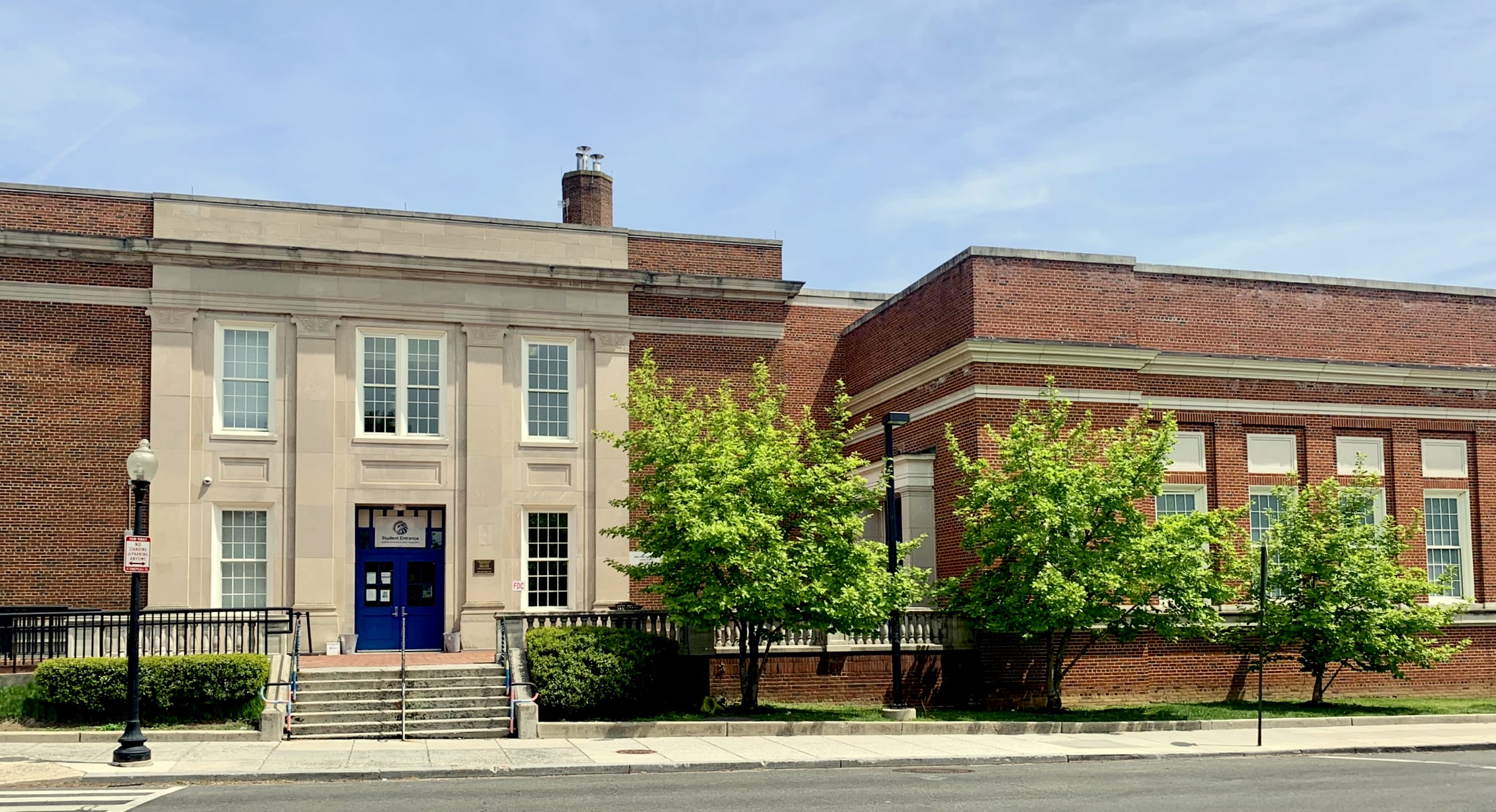
Middle schools

| School name | Students | class="unsortable" | Low grade | class="unsortable" | High grade | |||
|---|---|---|---|---|---|---|---|---|
| Brookland Middle School | ||||||||
| Deal Middle School | ||||||||
| Eliot-Hine Middle School | ||||||||
| Hardy Middle School | ||||||||
| Hart Middle School | ||||||||
| Ida B. Wells Middle School | ||||||||
| Jefferson Middle School Academy | ||||||||
| Johnson Middle School | ||||||||
| Kelly Miller Middle School | ||||||||
| Kramer Middle School | ||||||||
| MacFarland Middle School | ||||||||
| McKinley Middle School | ||||||||
| Sousa Middle School | ||||||||
| Stuart-Hobson Middle School |
Elementary schools


| School name | Students | class="unsortable" | Low grade | class="unsortable" | High grade | |||
|---|---|---|---|---|---|---|---|---|
| Amidon-Bowen Elementary School | ||||||||
| Bancroft Elementary School | ||||||||
| Barnard Elementary School | ||||||||
| Beers Elementary School | ||||||||
| Brent Elementary School | ||||||||
| Brightwood Elementary School | ||||||||
| Bruce-Monroe Elementary School at Park View | ||||||||
| Bunker Hill Elementary School | ||||||||
| Burroughs Elementary School | ||||||||
| Burrville Elementary School | ||||||||
| C.W. Harris Elementary School | ||||||||
| Cleveland Elementary School | ||||||||
| Drew Elementary School | ||||||||
| Eaton Elementary School | ||||||||
| Garfield Elementary School | ||||||||
| Garrison Elementary School | ||||||||
| H.D. Cooke Elementary School | ||||||||
| Hearst Elementary School | ||||||||
| Hendley Elementary School | ||||||||
| Houston Elementary School | ||||||||
| Hyde-Addison Elementary School | ||||||||
| J.O. Wilson Elementary School | ||||||||
| Janney Elementary School | ||||||||
| John Lewis Elementary School | ||||||||
| Ketcham Elementary School | ||||||||
| Key Elementary School | ||||||||
| Kimball Elementary School | ||||||||
| King Elementary School | ||||||||
| Lafayette Elementary School | ||||||||
| Langdon Elementary School | ||||||||
| Langley Elementary School | ||||||||
| LaSalle-Backus Elementary School | ||||||||
| Lawrence E. Boone Elementary School | ||||||||
| Lorraine H. Whitlock Elementary School | ||||||||
| Ludlow-Taylor Elementary School | ||||||||
| Malcolm X Elementary School | ||||||||
| Mann Elementary School | ||||||||
| Marie Reed Elementary School | ||||||||
| Maury Elementary School | ||||||||
| Miner Elementary School | ||||||||
| Moten Elementary School | ||||||||
| Murch Elementary School | ||||||||
| Nalle Elementary School | ||||||||
| Noyes Elementary School | ||||||||
| Patterson Elementary School | ||||||||
| Payne Elementary School | ||||||||
| Peabody Elementary School | ||||||||
| Plummer Elementary School | ||||||||
| Powell Elementary School | ||||||||
| Randle Highlands Elementary | ||||||||
| Raymond Elementary School | ||||||||
| Ross Elementary School | ||||||||
| Savoy Elementary School | ||||||||
| Seaton Elementary School | ||||||||
| Shepherd Elementary School | ||||||||
| Shirley Chisholm Elementary School | ||||||||
| Simon Elementary School | ||||||||
| Smothers Elementary School | ||||||||
| Stanton Elementary School | ||||||||
| Stoddert Elementary School | ||||||||
| Takoma Elementary School | ||||||||
| Thomas Elementary School | ||||||||
| Thomson Elementary School | ||||||||
| Truesdell Elementary School | ||||||||
| Tubman Elementary School | ||||||||
| Turner Elementary School | ||||||||
| Van Ness Elementary School | ||||||||
| Watkins Elementary School | ||||||||
| Whittier Elementary School |
Education campuses
| School name | Students | class="unsortable" | Low grade | class="unsortable" | High grade | |||
|---|---|---|---|---|---|---|---|---|
| Browne Education Campus | ||||||||
| Cardozo Education Campus | ||||||||
| Columbia Heights Education Campus | ||||||||
| John Francis Education Campus | ||||||||
| Leckie Education Campus | ||||||||
| Oyster-Adams Bilingual School | ||||||||
| River Terrace Education Campus | ||||||||
| Walker-Jones Education Campus | ||||||||
| Wheatley Education Campus |
Citywide schools
| School name | Students | class="unsortable" | Low grade | class="unsortable" | High grade | |||
|---|---|---|---|---|---|---|---|---|
| Capitol Hill Montessori School @ Logan | ||||||||
| Dorothy I. Height Elementary School | ||||||||
| Excel Academy | ||||||||
| Military Road Early Learning Center | ||||||||
| Ron Brown College Preparatory High School | ||||||||
| School-Within-School @ Goding | ||||||||
| Thaddeus Stevens Early Learning Center |
Leaders
Below is a partial list of superintendents, and chancellors of the D.C. Public School system. The head of the school system was known as "Superintendent" until June 2007, when the post was renamed "Chancellor".
| Leader | date-sort-type=date | In office | data-sort-type=string | Acting or interim | data-sort-value="string" | Sources | |||
|---|---|---|---|---|---|---|---|---|---|
| Hugh J. Scott | |||||||||
| Floretta D. McKenzie | |||||||||
| Barbara A. Sizemore | |||||||||
| Vincent E. Reed | |||||||||
| James Guinness | |||||||||
| Floretta D. McKenzie | |||||||||
| Andrew E. Jenkins | |||||||||
| Franklin L. Smith | |||||||||
| Julius W. Becton Jr. | |||||||||
| Arlene Ackerman | |||||||||
| Paul L. Vance | |||||||||
| Elfreda W. Massie | |||||||||
| Robert C. Rice | |||||||||
| Clifford B. Janey | |||||||||
| Michelle Rhee | |||||||||
| Kaya Henderson | |||||||||
| John Davis | |||||||||
| Antwan Wilson | |||||||||
| Amanda Alexander | |||||||||
| Lewis Ferebee |
Notes
References
References
- Stein, Perry. (2018-11-08). "D.C. Public Schools reports enrollment rise of 2 percent". The Washington Post.
- (March 25, 2025). "What Trends are we Seeing in Enrollment?".
- "Public School Enrollment by Race and Ethnicity". Office of the Deputy Mayor for Education, Government of the District of Columbia.
- (September 2021). "Black Students Remain the Majority But Account for a Small Fraction of Public School Enrollment Growth". Office of the Deputy Mayor for Education, Government of the District of Columbia.
- "Table 90.—Selected statistics on enrollment, teachers, graduates and dropouts in public school districts enrolling more than 15,000 students, by state: 1990, 1999, and 2000". National Center for Education Statistics.
- "Public School Students by Special Need Categories". Office of the Deputy Mayor for Education, Government of the District of Columbia.
- (October 2025). "SY2024-25 Annual Attendance Report".
- "DCPS Data Set - Graduation Rates".
- McGee, Kate. (2017-11-28). "What Really Happened At The School Where Every Graduate Got Into College". NPR.
- (2018-01-30). "Report calls into question validity of hundreds of diplomas". The Washington Post.
- "District of Columbia Public Schools--School Locator". The Government of the District of Columbia.
- Wolf, Patrick. "Evaluation of the DC Opportunity Scholarship Program: Final Report". U.S. Department of Education -- Institute of Education Sciences.
- "WWC Quick Review of the Report "Evaluation of the DC Opportunity Scholarship Program: Final Report"". U.S. Department of Education -- Institute of Education Sciences.
- "Funding Cuts for Programs That Send More Kids to Graduation AND College?". Friedman Foundation for Educational Choice.
- Beito, David. (November 15, 2023). "Zora and Eleanor: Toward a Fuller Understanding of the First Lady's Civil Rights Legacy". Independent Institute.
- (June 2009). "District of Columbia Public Schools: Important Steps Taken to Continue Reform Efforts, But Enhanced Planning Could Improve Implementation and Sustainability". United States Government Accountability Office (GAO).
- (2019-11-27). "DC Proposes Closing Metropolitan High School". The Washington Post.
- "DC CAS". Washington, DC.
- "How Students Are Assessed".
- "Assessment Glossary".
- "DCPS Effective Schools Framework".
- (10 January 2012). "Race to the Top: District of Columbia Report Year 1: School Year 2010–2011". U.S. Department of Education.
- "Public Education Finances: 2010". U.S. Census Bureau.
- Coulson, Andrew. "Census Bureau Confirms: DC Spends $29,409 / pupil". Cato.org.
- Coulson, Andrew. "DC Vouchers Solved? Generous Severance for Displaced Workers". Cato.org.
- Ripley, Amanda. (December 8, 2008). "Can She Save Our Schools".
- Turque, Bill. (8 April 2010). "Fenty, teachers union promote deal". Washington Post.
- "District of Columbia Demographics (2023-2024)". National Center for Education Statistics.
- "Find Your In-Boundary School".
- "Trends in Enrollment by Sector". Office of the Deputy Mayor for Education, Government of the District of Columbia.
- "School Profiles".
- Feinberg, Lawrence. (September 1, 1970). "Detroit Administrator Hugh J. Scott Named D.C. School Superintendent". The Washington Post.
- (June 5, 1973). "D.C. Names Woman, 38, Acting Superintendent". The Washington Post.
- Prince, Richard E.. (August 8, 1973). "D.C. School Board Names Mrs. Sizemore by 7-3 Vote". The Washington Post.
- Hamilton, Martha M.. (October 10, 1975). "City School Board Fires Sizemore, 7 to 4". The Washington Post.
- Hamilton, Martha M.. (October 12, 1975). "Supt. Reed Seen as a Strong Leader". The Washington Post.
- Feinberg, Lawrence. (January 4, 1981). "Acting Head of City's Schools Is a Man of Verse in Adversity". The Washington Post.
- Valente, Judith. (June 18, 1981). "McKenzie Named D.C. School Chief". The Washington Post.
- (January 29, 1988). "Acting D.C. School Chief Named". The Washington Post.
- (May 25, 1988). "Insider Jenkins to Head D.C. Schools". The Washington Post.
- Richardson, Lynda. (May 16, 1991). "D.C. Schools Chief to Make $131,000". The Washington Post.
- Vise, David. (November 6, 1996). "D.C. Control Board to Oust Superintendent, Sources Say". The Washington Post.
- (March 27, 1998). "D.C. Schools Chief Resigns". The Washington Post.
- Williams, Vanessa. (March 28, 1998). "Ladner Optimistic On School Shake-Up". The Washington Post.
- (July 19, 2000). "Control Board Signs Contract With Vance". The Washington Post.
- (November 15, 2003). "Vance Resigns as Chief of D.C. Schools". The Washington Post.
- (November 20, 2003). "Metro: In Brief". The Washington Post.
- Blum, Justin. (April 2, 2004). "Temporary Chief Of Schools Named". The Washington Post.
- Chan, Sewell. (September 12, 2004). "Acting Superintendent Made an Impression in the Interim". The Washington Post.
- (September 16, 2004). "Janey Takes Reins at Schools". The Washington Post.
- Nakamura, David. (June 12, 2007). "Fenty To Oust Janey Today". The Washington Post.
- Stewart, Nikita. (July 11, 2007). "D.C. Council Approves Rhee as Schools Chief". The Washington Post.
- (October 13, 2010). "Rhee to resign as schools chancellor". The Washington Post.
- (June 22, 2011). "Ratings up for District schools". The Washington Post.
- (June 29, 2016). "D.C. Schools Chancellor Kaya Henderson to step down, leaving legacy of progress". The Washington Post.
- Matos, Alejandra. (December 20, 2016). "Antwan Wilson confirmed as chancellor of D.C. Public Schools".
- (February 20, 2018). "D.C. Schools Chancellor Antwan Wilson Resigns After School-Transfer Scandal". WAMU.
- (December 3, 2018). "Mayor Bowser Announces Dr. Lewis D. Ferebee as DCPS Chancellor". DCPS.
- (March 5, 2019). "Statements on the Confirmation of DC Public Schools Chancellor Lewis D. Ferebee". District of Columbia Public School Official Home Page.
- Andrew J. Cosentino. (17 November 1983). "The Capital Image: Painters in Washington, 1800–1915". Smithsonian.
This article was imported from Wikipedia and is available under the Creative Commons Attribution-ShareAlike 4.0 License. Content has been adapted to SurfDoc format. Original contributors can be found on the article history page.
Ask Mako anything about District of Columbia Public Schools — get instant answers, deeper analysis, and related topics.
Research with MakoFree with your Surf account
Create a free account to save articles, ask Mako questions, and organize your research.
Sign up freeThis content may have been generated or modified by AI. CloudSurf Software LLC is not responsible for the accuracy, completeness, or reliability of AI-generated content. Always verify important information from primary sources.
Report