From Surf Wiki (app.surf) — the open knowledge base
Disinflation
Economic term
Economic term
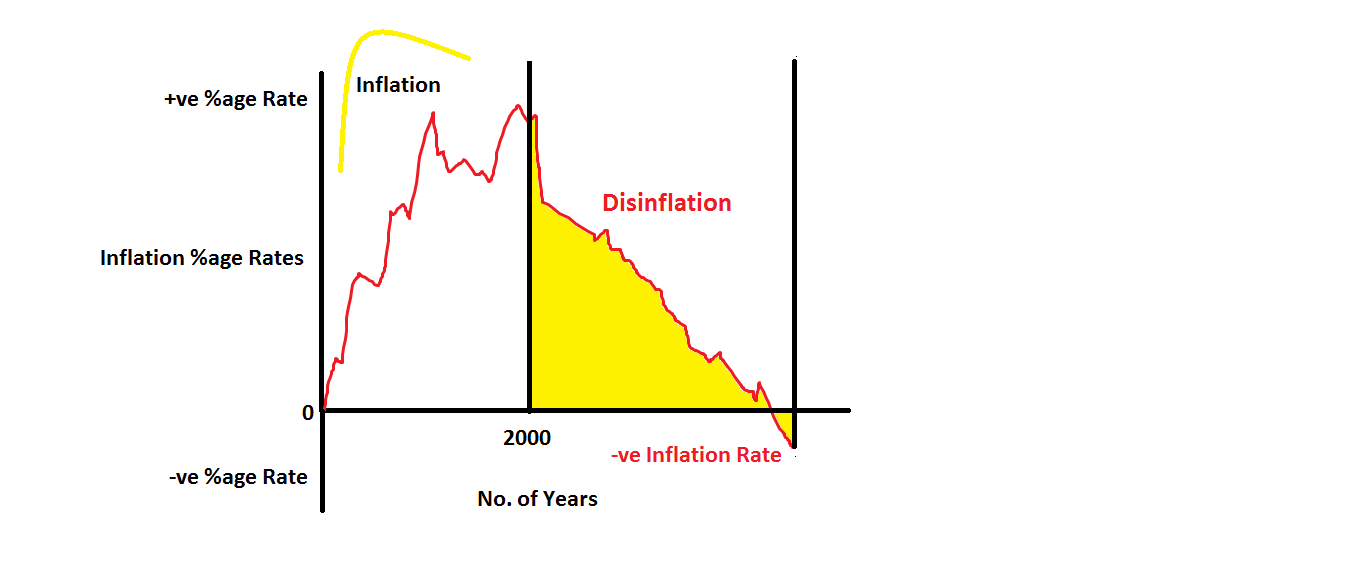
Disinflation is a decrease in the rate of inflation – a slowdown in the relative rate of increase of the general price level of goods and services in a nation's gross domestic product over time. It is the opposite of reflation.
If the inflation rate is not very high to start with, disinflation can lead to deflation – decreases in the general price level of goods and services. For example if the annual inflation rate one month is 5% and it is 4% the following month, prices disinflated by 1% but are still increasing at a 4% annual rate. If the current rate is 1% and it is -2% the following month, prices disinflated by 3% and are decreasing at a 2% annual rate.
References
This article was imported from Wikipedia and is available under the Creative Commons Attribution-ShareAlike 4.0 License. Content has been adapted to SurfDoc format. Original contributors can be found on the article history page.
Ask Mako anything about Disinflation — get instant answers, deeper analysis, and related topics.
Research with MakoFree with your Surf account
Create a free account to save articles, ask Mako questions, and organize your research.
Sign up freeThis content may have been generated or modified by AI. CloudSurf Software LLC is not responsible for the accuracy, completeness, or reliability of AI-generated content. Always verify important information from primary sources.
Report