From Surf Wiki (app.surf) — the open knowledge base
Discalced Carmelites
Catholic religious order
Catholic religious order
| Field | Value |
|---|---|
| name | Order of the Discalced Brothers of the Blessed Virgin Mary of Mount Carmel |
| image | Coat of Arms of Discalced Carmelites Order.svg |
| size | 200px |
| caption | Coat of arms of the order |
| abbreviation | OCD |
| formation | |
| native name | Ordo Fratrum Carmelitarum Discalceatorum Beatae Mariae Virginis de Monte Carmelo |
| native_name_lang | la |
| founder | Teresa of Ávila |
| John of the Cross | |
| type | Mendicant Order of Pontifical Right (for Men) |
| status | Institute of Consecrated Life |
| membership | 3,978 members (includes 2,897 priests) |
| membership_year | 2022 |
| headquarters | Casa Generalizia dei Carmelitani Scalzi, Corso d’Italia 38, 00198 Rome, Italy |
| leader_title | Superior General |
| leader_name | Miguel Márquez |
| affiliations | Catholic Church |
| website |
John of the Cross
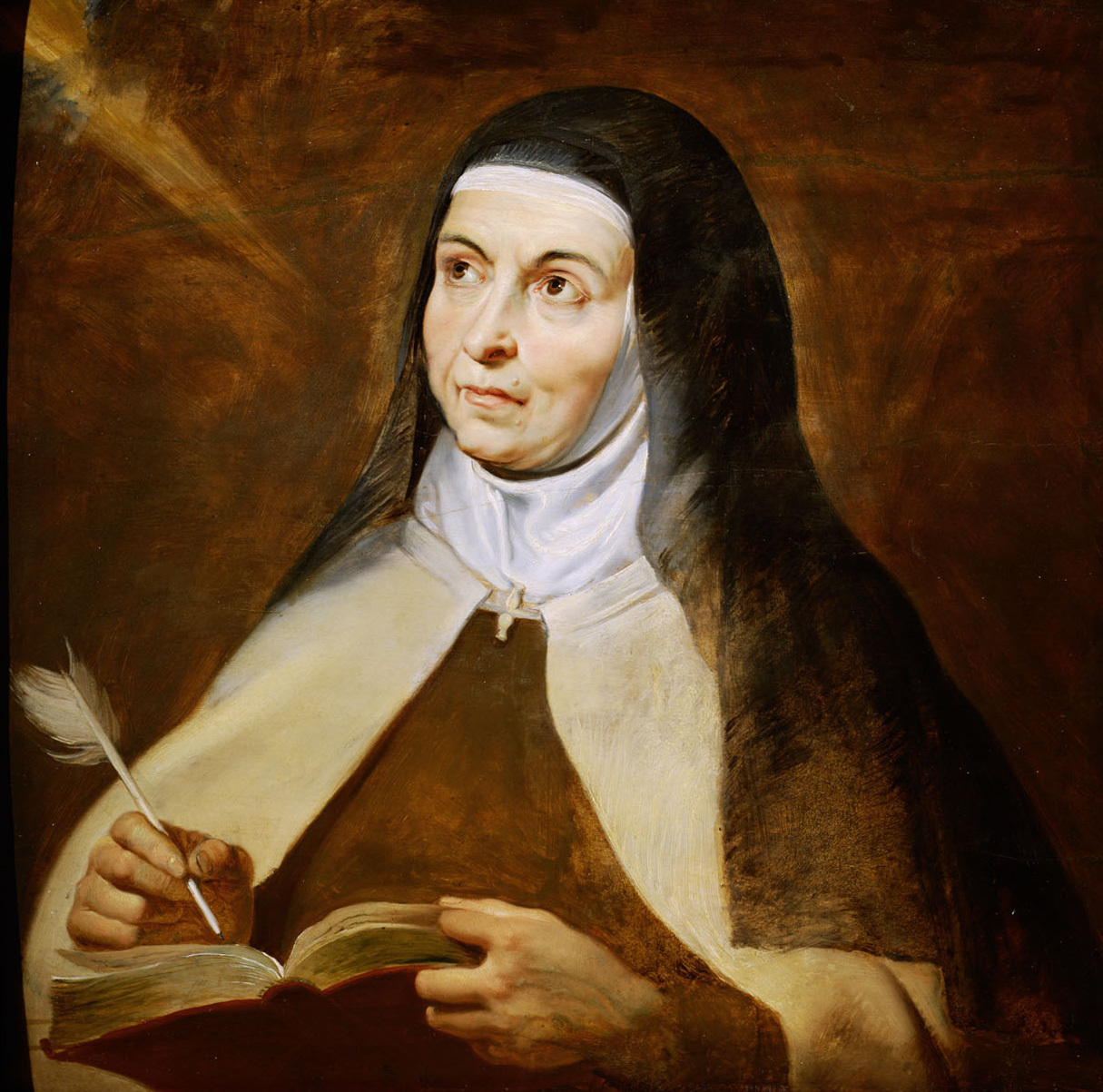
The Discalced Carmelites, formally the Order of the Discalced Brothers of the Blessed Virgin Mary of Mount Carmel () or the Order of Discalced Carmelites (; abbrev.: OCD; sometimes called in earlier times ), is a mendicant order in the Roman Catholic Church with roots in the eremitic tradition of the Desert Fathers. The order was established in the 16th century, pursuant to the reform of the Carmelites of the Ancient Observance, by two Spanish saints, Teresa of Ávila and John of the Cross. Discalced is derived from Latin, meaning "without shoes".
The third order, which is affiliated to the Discalced Carmelites, is the Secular Order of Discalced Carmelites.
The Discalced Carmelites are friars and nuns who dedicate themselves to a life of prayer. The Carmelite nuns live in cloistered (enclosed) monasteries and follow a completely contemplative life. The Carmelite friars, while following a contemplative life, also engage in the promotion of spirituality through their retreat centres, parishes, and churches. Lay people, known as the Secular Order, follow their contemplative call in their everyday activities. Devotion to the Virgin Mary is a characteristic of Carmelites and is symbolised by wearing the brown scapular.
Background
The Carmelite Order, from which the Discalced Carmelites branched off, is also referred to as the Carmelites of the Ancient Observance to distinguish them from their discalced offshoot. It was established in the 13th century in the Holy Land during the Crusades.
All Carmelites, including the Discalced, trace their roots and their name to Mount Carmel in the Holy Land. There, in the 13th century, a band of European men gathered together to live a simple life of prayer. Their first chapel was dedicated to the Blessed Virgin Mary and they called themselves the Brothers of the Blessed Virgin Mary of Mount Carmel.
The Muhraka monastery on the summit of Mount Carmel near Haifa in Israel is a historic Carmelite monastery. The monastery was erected on the place where St. Elijah the Prophet is said to have lived and vanquished the prophets of Baal.
The first Carmelites were pilgrims to Mount Carmel who settled there in solitude. These early hermits were mostly laity who lived a life of poverty, penance, and prayer. Between 1206 and 1214, St. Albert Avogadro, the Patriarch of Jerusalem, brought the hermits on Mount Carmel together into community. At their request he wrote them a rule that expressed their intention and reflected the spirit of the pilgrimage to the Holy Land and of the early community of Jerusalem. They were also inspired by St. Elijah. The words of Elijah, "with zeal have I been zealous for the Lord God of hosts" (1 Kings, 19:10) form the motto on the Carmelite coat of arms, which also depicts his arm bearing a flaming sword in reference to his defeat of the false prophets of Baal. Around 1238, within 50 years of receiving their rule, the Saracens forced the Carmelite hermits to leave Mount Carmel, and they migrated to Europe.
Foundation of the Discalced Carmelites
A combination of political and social conditions that prevailed in Europe in the fourteenth to sixteenth centuries, including the Hundred Years' War, Black Plague, Protestant Reformation, and Humanist Revival, adversely affected the Order. Many Carmelites, including whole communities, succumbed to contemporary attitudes and conditions that were diametrically opposed to their original vocation. To accommodate this situation their rule of life was "mitigated" several times. Consequently, the Carmelites less and less resembled the first hermits of Mount Carmel.
St. Teresa of Jesus (of Avila) considered contemplative prayer to be the surest means to restore the authentic mission of the Carmelite Order. She wrote that God communicated to her the command to establish a new reformed monastery. A group of nuns assembled in her cell one September evening in 1560, taking their inspiration from the primitive tradition of Carmel and the discalced reform of St. Peter of Alcantara, a controversial movement within Spanish Franciscanism, proposed to found a monastery of an eremitical kind.
With few resources and often bitter opposition, Teresa succeeded in 1562 in establishing a small monastery with the austerity of desert solitude within the heart of the city of Ávila, Spain, combining eremitical and community life. On 24 August 1562, the new Convent of St. Joseph was founded. Teresa's rule, which retained a distinctively Marian character, contained exacting prescriptions for a life of continual prayer, safeguarded by strict enclosure and sustained by the asceticism of solitude, manual labor, perpetual abstinence, fasting, and fraternal charity. In addition to this, Teresa envisioned an order fully dedicated to poverty.
Working in close collaboration with Teresa was John of the Cross, who with Anthony of Jesus founded the first convent of Discalced Carmelite friars in Duruelo, Spain on 28 November 1568.
The Discalced Carmelites were established as a separate province of the Carmelite Order by the decree Pia consideratione of Pope Gregory XIII on 22 June 1580. By this decree the Discalced Carmelites were still subject to the Prior General of the Carmelite Order in Rome, but were otherwise distinct from the Carmelites in that they could elect their own superiors and author their own constitutions for their common life. The following Discalced Carmelite Chapter at Alcala de Henares, Spain in March 1581 established the constitutions of the Discalced Carmelites and elected the first provincial of the Discalced Carmelites, Jerome Gratian. This office was later translated into that of Superior General of the Discalced Carmelites.
Carmelite charism
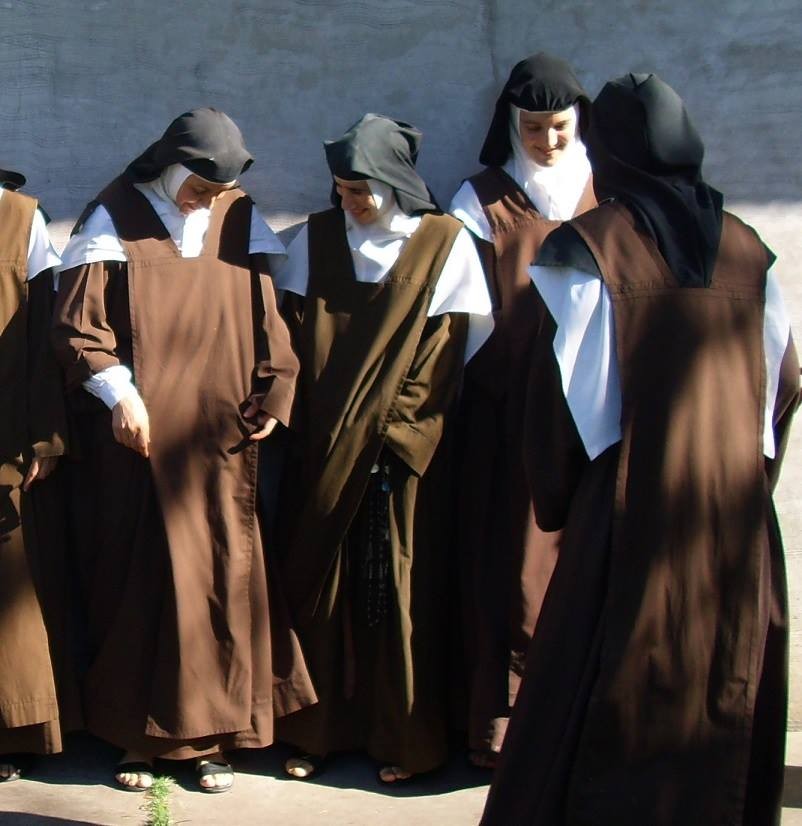


The heart of the Carmelite charism is prayer and contemplation. The quality of prayer determines the quality of the community life and the quality of the service which is offered to others. Prayer and contemplation for the Carmelite are not private matters between the individual and God but are to be shared with others since the charism is given for the whole world. Therefore, there is an emphasis in the order on the ministry of teaching prayer and giving spiritual direction.
For a Carmelite, prayer is guided by the teachings and experience of Teresa of Jesus (of Ávila) and John of the Cross, as well as the saints who have followed in their steps, such as Thérèse of the Child Jesus and of the Holy Face, Elizabeth of the Trinity, Teresa of Jesus of the Andes, and martyrs such as Teresa Benedicta of the Cross, and the sixteen Martyrs of Compiegne. Other lights include Br. Lawrence of the Resurrection and Père Jacques de Jesus. Fraternity, service, and contemplation are essential Carmelite principles.
When the Carmelites were forced to leave Mount Carmel, they changed their practice from being hermits to friars. The major difference is that friars are called to serve the People of God in some active apostolate. Some congregations were founded for a specific work, but the Carmelite Order tries to respond to what it sees as the needs of the Church and the world – which differ according to time and place. Many friars work in such institutions as parishes, schools, universities, retreat centres, prisons, and hospitals. Each individual friar will serve in roles depending on the perceived spiritual needs of the people with whom he lives and his particular talents.
Each day is marked by silent, mental prayer. In addition to the daily celebration of the full Liturgy of the Hours, two hours (one in the morning and one in the evening) are dedicated to mental prayer. Communities ordinarily have a maximum of 21 members. The friars practice a broad-based discipline of study.
Bishops
Living bishops (4 archbishops, 18 bishops)
| [[File:Escocd.gif | 40px]] Current bishops [[File:Composition évèque.svg | 40px]] | Former and actual episcopal see or assignment | Current residency | Date of birth |
|---|---|---|---|---|---|
| (current age) | Appointed to episcopacy | ||||
| Anders Arborelius | Sweden Bishop of Stockholm | ||||
| (1998–Incumbent) | |||||
| Sweden Stockholm, Sweden | 17 November 1998 | ||||
| Pope John Paul II | |||||
| Cástor Oswaldo Azuaje Pérez | Venezuela Bishop of Trujillo | ||||
| (2012–Incumbent) | Venezuela Trujillo, Venezuela | 30 June 2007 | |||
| Pope Benedict XVI | |||||
| Silvio José Báez Ortega | Nicaragua Auxiliary Bishop of Managua | ||||
| (2009–Incumbent) | Nicaragua Managua, Nicaragua | 9 April 2009 | |||
| Pope Benedict XVI | |||||
| Philip Boyce | Ireland Bishop of Raphoe | ||||
| (1995–2017) | Ireland Letterkenny, Ireland | 29 June 1995 | |||
| Pope John Paul II | |||||
| Peter Chung Soon-taick | South Korea North Korea Metropolitan Archbishop of Seoul | ||||
| (2021–Incumbent) | South Korea Seoul, South Korea | 30 December 2013 | |||
| Pope Francis | |||||
| Paul Dahdah | Lebanon Archbishop-Vicar Apostolic of Beirut | ||||
| (1999–Incumbent) | Lebanon Beirut, Lebanon | 30 May 1983 | |||
| Pope John Paul II | |||||
| Brig. Gen. Gonzalo de Jesús María del Castillo Crespo | Bolivia Military Bishop Emeritus of Bolivia | ||||
| (2012–Incumbent) | Bolivia La Paz, Bolivia | 3 November 1983 | |||
| Pope John Paul II | |||||
| Amancio Escapa Aparicio | Dominican Republic Auxiliary Bishop of Santo Domingo | ||||
| (1996–2016) | Dominican Republic Santo Domingo, Dominican Republic | 31 May 1996 | |||
| Pope John Paul II | |||||
| Guy Étienne Germain Gaucher | France Auxiliary Bishop Emeritus of Bayeux-Lisieux | ||||
| (2005–Incumbent) | France Venasque, France | 27 August 1986 | |||
| Pope John Paul II | |||||
| Gustavo Girón Higuita | Colombia Bishop of Tumaco | ||||
| (1999–Incumbent) | Colombia Tumaco, Colombia | 8 February 1990 | |||
| Pope John Paul II | |||||
| Greg Homeming | Australia Bishop of Lismore | ||||
| (2017-Incumbent) | Australia Australia | 22 February 2017 | |||
| Pope Francis | |||||
| Zdenko Križić | Croatia Bishop of Roman Catholic Diocese of Gospić-Senj | ||||
| (2016-Incumbent) | Croatia Croatia | 25 May 2016 | |||
| Pope Francis | |||||
| Gonzalo López Marañon | Ecuador Vicar Apostolic Emeritus of San Miguel de Sucumbíos | ||||
| (2010–Incumbent) | Ecuador Nueva Loja, Ecuador | 2 July 1984 | |||
| Pope John Paul II | |||||
| Luis Alberto Luna Tobar | Ecuador Archbishop Emeritus of Cuenca | ||||
| (2000–Incumbent) | Ecuador Cuenca, Ecuador | 17 August 1977 | |||
| Pope Paul VI | |||||
| Aníbal Nieto Guerra | Ecuador Bishop of San Jacinto de Yaguachi | ||||
| (2009–Incumbent) | Ecuador Yaguachi, Ecuador | 10 June 2006 | |||
| Pope Benedict XVI | |||||
| Marie Fabien Raharilamboniaina | Madagascar Bishop of Morondava | ||||
| (2010–Incumbent) | Madagascar Morondava, Madagascar | 26 February 2010 | |||
| Pope Benedict XVI | |||||
| Braulio Sáez Garcia | Bolivia Auxiliary Bishop of Santa Cruz de la Sierra | ||||
| (2003–Incumbent) | Bolivia Santa Cruz de la Sierra, Bolivia | 18 February 1987 | |||
| Pope John Paul II | |||||
| Rubens Sevilha | Brazil Auxiliary Bishop of Vitória | ||||
| (2011–Incumbent) | Brazil Vitória, Brazil | 21 December 1987 | |||
| Pope Benedict XVI | |||||
| Jean Benjamin Sleiman | Iraq Archbishop of Baghdad | ||||
| (2001–Incumbent) | Iraq Baghdad, Iraq | 29 November 2000 | |||
| Pope John Paul II | |||||
| Jusztin Nándor Takács | Hungary Bishop Emeritus of Székesfehérvár | ||||
| (2003–Incumbent) | Hungary Székesfehérvár, Hungary | 23 December 1988 | |||
| Pope John Paul II | |||||
| Rolando Joven Tria Tirona | Philippines Metropolitan Archbishop of Caceres | ||||
| (2012–Incumbent) | Philippines Naga, Philippines | 15 November 1994 | |||
| Pope John Paul II |
Deceased Bishops (7 cardinals, 14 archbishops, 52 bishops)
| [[File:Template-Cardinal.svg | 40px]] Name | Episcopal see or assignment | Date of birth and death | Appointed to bishopric |
|---|---|---|---|---|
| Francis George Adeodatus Micallef | Kuwait Vicar Apostolic Emeritus of Kuwait | |||
| (2005–Incumbent) | – | 5 November 1981 | ||
| Pope John Paul II | ||||
| Anastasio Alberto Ballestrero | Italy Metropolitan Archbishop Emeritus of Turin | |||
| (1989–1998) | – | 21 December 1973 | ||
| Pope Paul VI | ||||
| Girolamo Maria Gotti | Vatican City Prefect of Sacred Congregation of the Propagation of the Faith | |||
| (1902–1916) | ||||
| – | 22 March 1892 | |||
| Pope Leo XIII | ||||
| Giovanni Antonio Guadagni | ||||
| (Nephew of pope Pope Clement XII) | Italy Vicar General of His Holiness for the Diocese of Rome | |||
| (1732–1759) | ||||
| – | 20 December 1724 | |||
| Pope Benedict XIII | ||||
| Daniel Acharuparambil | India Metropolitan Archbishop of Verapoly | |||
| (1996–2009) | – | 14 June 1996 | ||
| Pope John Paul II | ||||
| Antônio do Carmo Cheuiche | Brazil Auxiliary Bishop Emeritus of Porto Alegre | |||
| (2001–2009) | – | 2 April 1969 | ||
| Pope Paul VI | ||||
| Paul Bassim | Lebanon Vicar Apostolic Emeritus of Beirut | |||
| (1999–2012) | – | 8 September 1974 | ||
| Pope Paul VI |
Communities of Discalced Carmelite tradition
- Byzantine Discalced Carmelites
- Carmelites of Mary Immaculate
- Monks of the Most Blessed Virgin Mary of Mount Carmel
- Secular Order of Discalced Carmelites
- Sisters of the Apostolic Carmel
- Episcopal Carmel of Saint Teresa
References
References
- . (2022). "Annuario Pontificio per l'Anno 2022". *Libreria Editrice Vaticana*.
- "Who are the Discalced Carmelites?". Discalcedcarmelites.ie.
- ""History", Discalced Carmelite Friars of the Carmelite-Arizona Province".
- (2018-11-10). "40 Major Holy Sites in Israel: Jerusalem Holy Sites & Beyond".
- "Hermits on Mount Carmel". Carmelite.com.
- ocd. "Carmelite History -from the OCD General House in Rome". Ocd.pcn.net.
- Her written words on this point are well known, but precise citation needs to be identified; probably the ''Book of Her Life'', her autobiography.
- "Storia del Carmelo Scalzo".
- Otilio Rodriguez, OCD, Appendix I: "The Third Order of the Teresian Carmel; Its Origin and History", page 129, in Michael D. Griffin, OCD, ''Commentary on the Rule of Life'' (superseded) (The Growth in Carmel Series; Hubertus, Wisconsin: Teresian Charism Press, 1981), pages 127-36
- Peter-Thomas Rohrbach, OCD ''Journey to Carith: The Sources and Story of the Discalced Carmelites'', Chapter 6: "The Struggle for Existence", pages 200-1 (Washington, DC: ICS Publications)
- [http://www.carmelites.ie/Spirituality/charism.htm The Carmelite Charism -from the Irish Province] {{webarchive. link. (30 July 2012)
This article was imported from Wikipedia and is available under the Creative Commons Attribution-ShareAlike 4.0 License. Content has been adapted to SurfDoc format. Original contributors can be found on the article history page.
Ask Mako anything about Discalced Carmelites — get instant answers, deeper analysis, and related topics.
Research with MakoFree with your Surf account
Create a free account to save articles, ask Mako questions, and organize your research.
Sign up freeThis content may have been generated or modified by AI. CloudSurf Software LLC is not responsible for the accuracy, completeness, or reliability of AI-generated content. Always verify important information from primary sources.
Report