From Surf Wiki (app.surf) — the open knowledge base
Digitalis
Genus of flowering plants in the family Plantaginaceae
Genus of flowering plants in the family Plantaginaceae


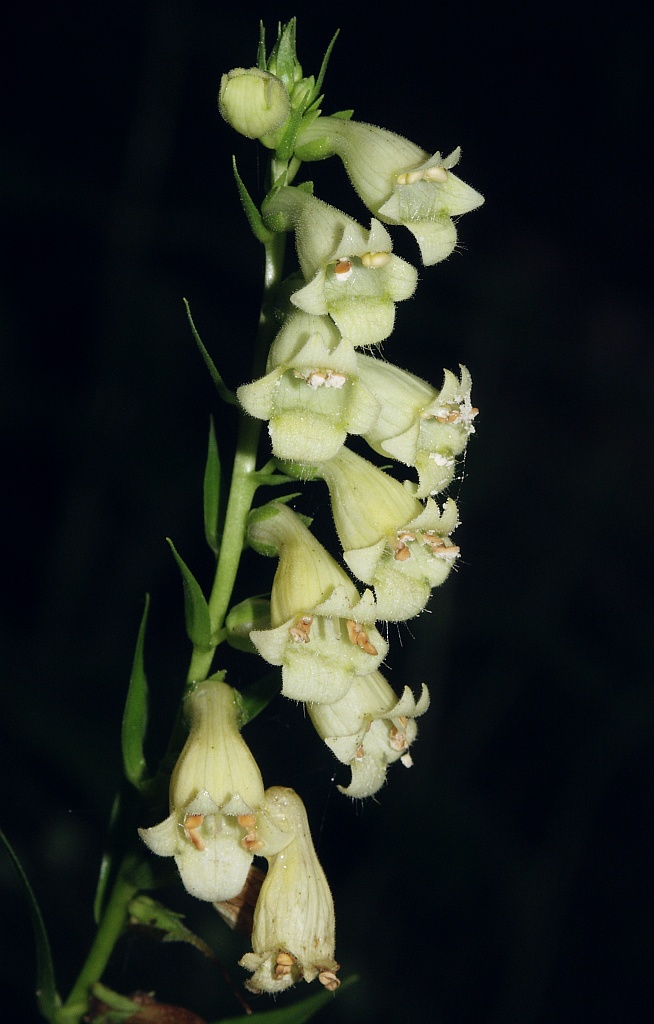
Digitalis ( or ) is a genus of about 20 species of herbaceous perennial plants, shrubs, and biennials, commonly called foxgloves.
Digitalis is native to Europe, Western Asia, and northwestern Africa. The flowers are tubular in shape, produced on a tall spike, and vary in colour with species, from purple to pink, white, and yellow. The name derives from the Latin word for "finger". The genus was traditionally placed in the figwort family, Scrophulariaceae, but phylogenetic research led taxonomists to move it to the Veronicaceae in 2001. More recent phylogenetic work has placed it in the much enlarged family Plantaginaceae.
The best-known species is the common foxglove, Digitalis purpurea. This biennial is often grown as an ornamental plant due to its vivid flowers, which range in colour from various purple tints through pink and pure white. The flowers can also possess various marks and spottings. Other garden-worthy species include D. ferruginea, D. grandiflora, D. lutea, and D. parviflora.
The term digitalis is also used for drug preparations that contain cardiac glycosides, particularly one called digoxin, extracted from various plants of this genus. Foxglove has medicinal uses but is also very toxic to humans and other mammals, such that consumption can cause serious illness or death.
Etymology

The generic epithet Digitalis is from the Latin digitus (finger). Leonhart Fuchs first invented the name for this plant in his 1542 book De historia stirpium commentarii insignes (Notable comments on the history of plants), based upon the German vernacular name Fingerhut, which translates literally as 'finger hat', but actually means 'thimble'.
The name is recorded in Old English as 'foxes glofe/glofa' or 'fox's glove'. Over time, folk myths obscured the literal origins of the name, insinuating that foxes wore the flowers on their paws to silence their movements as they stealthily hunted their prey. The woody hillsides where the foxes made their dens were often covered with the toxic flowers. Some of the more menacing names, such as "witch's glove", reference the toxicity of the plant.
Henry Fox Talbot (1847) proposed 'folks' glove', where 'folk' means fairy. Similarly, R. C. A. Prior (1863) suggested an etymology of 'foxes-glew', meaning 'fairy music'. However, neither of these suggestions account for the Old English form foxes glofa.
Taxonomy
It was published by Carl Linnaeus in 1753. The lectotype species Digitalis purpurea L. was designated in 1930.
Species
The Flora Europaea originally recognised a number of species now seen as synonyms of Digitalis purpurea, or others: D. dubia, D. leucophaea, D. micrantha and D. trojana. As of 2017, Plants of the World Online recognises the following 27 species (and a number of hybrids):
- Digitalis atlantica Pomel
- Digitalis canariensis L.
- Digitalis cariensis Boiss. ex Jaub. & Spach
- Digitalis cedretorum (Emb.) Maire
- Digitalis chalcantha (Svent. & O'Shan.) Albach, Bräuchler & Heubl
- Digitalis ciliata Trautv.
- Digitalis davisiana Heywood
- Digitalis ferruginea L.
- Digitalis fuscescens Waldst. & Kit.
- Digitalis grandiflora Mill.
- Digitalis ikarica (P.H.Davis) Strid
- Digitalis isabelliana (Webb) Linding.
- Digitalis laevigata Waldst. & Kit.
- Digitalis lamarckii Ivanina
- Digitalis lanata Ehrh.
- Digitalis lutea L.
- Digitalis mariana Boiss.
- Digitalis minor L.
- Digitalis nervosa Steud. & Hochst. ex Benth.
- Digitalis obscura L.
- Digitalis parviflora Jacq.
- Digitalis purpurea L.
- Digitalis sceptrum L.f.
- Digitalis subalpina Braun-Blanq.
- Digitalis thapsi L.
- Digitalis transiens Maire
- Digitalis viridiflora Lindl.
Hybrids
- Digitalis × coutinhoi Samp.
- Digitalis × fulva Lindl.
- Digitalis × macedonica Heywood
- Digitalis × media Roth
- Digitalis × pelia Zerbst & Bocquet
- Digitalis × purpurascens Roth
- Digitalis × sibirica (Lindley) Werner had been considered a valid species since it was first described by the English botanist and gardener John Lindley in 1821, but it was considered a hybrid of D. grandiflora and D. laevigata by the German botanist in 1960.
Systematics
The first full monograph regarding this genus was written by Lindley in 1821. He included two sections, a section Isoplexis including two species, and the main section Digitalis with three subsections, including 2Y species, a number of which are now seen as synonyms or hybrids.
In the last full monograph of the genus in 1965, Werner classified the 19 recognised species in five sections (four species from Macaronesia were separated in the genus Isoplexis at the time):
- In the section Digitalis, along with the type species D. purpurea, four other species (as recognised as the time) were placed: D. thapsi, D. dubia, D. heywoodii and D. mariana.
- The monotypic section Frutescentes contained only D. obscura.
- The section Grandiflorae, which was also called section Macranthae by Vernon Hilton Heywood. It included, along with the type species D. grandiflora, also D. atlantica, D. ciliata and D. davisiana.
- Globiflorae included five species: D. laevigata, D. nervosa, D. ferruginea, D. cariensis and D. lanata.
- Tubiflorae included four species: D. subalpina, D. lutea, D. viridiflora and D. parviflora.
In their 2000 book about Digitalis, Luckner and Wichtl continued to uphold Werner's classification of the 19 species, but molecular studies into the phylogeny of the genus published in 2004 found that although four of Werner's sections were supported by the genetics, the section Tubiflorae was polyphyletic, and that the species D. lutea and D. viridiflora should be placed in the section Grandiflorae. This study, as well as a number of other studies published around that time, reunited the genus Isoplexis with Digitalis, increasing the number of species to 23.
Peter Hadland Davis, an expert on the flora of Turkey, had used a different circumscription than Werner in his works, and recognised eight species in the country. A 2016 molecular phylogenetic study into the relationships of the Turkish species in the section Globiflorae aimed to reconcile this discrepancy, finding that the classification as proposed by Davis was largely correct: Globiflorae contained as distinct species D. cariensis, D. ferruginea, D. lamarckii, D. lanata and D. nervosa, and D. trojana was subsumed at the infraspecific rank as D. lanata subsp. trojana. This study listed 23 species: D. transiens, D. cedretorum, D. ikarica and D. fuscescens were not mentioned. D. parviflora and D. subalpina were not tested in this study, but the 2004 study found these two species situated within the section Globiflorae.
Ecology

Larvae of the foxglove pug, a moth, consume the flowers of the common foxglove for food. Other species of Lepidoptera eat the leaves, including the lesser yellow underwing. The shape of the foxglove's flowers makes it especially attractive to long-tongued bees, such as the common carder bee. The bright flowers attract the bee, which lands on the lower lip of the bloom before climbing up the tube. This means that the bee is likely to drop any pollen it may have collected from other foxgloves, thereby facilitating propagation.
Uses
Historical uses
Nicholas Culpeper included Foxglove in his 1652 herbal medicine guide, The English Physician. He cited its use for healing wounds (both fresh and old), as a purgative, for "the King's Evil" (mycobacterial cervical lymphadenitis), for "the falling sickness" (epilepsy), and for "a scabby head". There is no empirical evidence for these claims, and it is not used for these conditions in modern medicine, only for slowing excessive heart rate in certain circumstances and/or strengthening heart muscle contraction in heart failure.
Medicinal uses
Digitalis is an example of a drug derived from a plant that was formerly used by herbalists; herbalists have largely abandoned its use because of its narrow therapeutic index and the difficulty of determining the amount of active drug in herbal preparations. Once the usefulness of digitalis in regulating the human pulse was understood, it was employed for a variety of purposes, including the treatment of epilepsy and other seizure disorders, which are now considered to be inappropriate treatments.
A group of medicines extracted from foxglove plants are called digitalin. The use of D. purpurea extract containing cardiac glycosides for the treatment of heart conditions was first described in the English-speaking medical literature by William Withering, in 1785, which is considered the beginning of modern therapeutics. In contemporary medicine, digitalis (usually digoxin) is obtained from D. lanata. It is used to increase cardiac contractility (it is a positive inotrope) and as an antiarrhythmic agent to control the heart rate, particularly in the irregular (and often fast) atrial fibrillation. Digitalis is hence often prescribed for patients in atrial fibrillation, especially if they have been diagnosed with congestive heart failure. Digoxin was approved for heart failure in 1998 under current regulations by the Food and Drug Administration on the basis of prospective, randomized study and clinical trials. It was also approved for the control of ventricular response rate for patients with atrial fibrillation. American College of Cardiology/American Heart Association guidelines recommend digoxin for symptomatic chronic heart failure for patients with reduced systolic function, preservation of systolic function, and/or rate control for atrial fibrillation with a rapid ventricular response. Heart Failure Society of America guidelines for heart failure provide similar recommendations. Despite its relatively recent approval by the Food and Drug Administration and the guideline recommendations, the therapeutic use of digoxin is declining in patients with heart failure—likely the result of several factors. The main factor is the more recent introduction of several drugs shown in randomised controlled studies to improve outcomes in heart failure. Safety concerns regarding a proposed link between digoxin therapy and increased mortality seen in observational studies may have contributed to the decline in therapeutic use of digoxin, however a systematic review of 75 studies including four million patient years of patient follow-up showed that in properly designed randomised controlled studies, mortality was no higher in patients given digoxin than in those given placebo.
Romani people use foxglove to treat eczema.
Variations

A group of pharmacologically active compounds are extracted mostly from the leaves of the second year's growth, and in pure form are referred to by common chemical names, such as digitoxin or digoxin, or by brand names such as Crystodigin and Lanoxin, respectively. The two drugs differ in that digoxin has an additional hydroxyl group at the C-3 position on the B-ring (adjacent to the pentane). This results in digoxin having a half-life of about one day (and increasing with impaired kidney function), whereas digitoxin's is about 7 days and not affected by kidney function. Both molecules include a lactone and a triple-repeating sugar called a glycoside.
Mechanism of action
Digitalis works by inhibiting sodium-potassium ATPase. This results in an increased intracellular concentration of sodium ions and thus a decreased concentration gradient across the cell membrane. This increase in intracellular sodium causes the Na/Ca exchanger to reverse potential, i.e., transition from pumping sodium into the cell in exchange for pumping calcium out of the cell, to pumping sodium out of the cell in exchange for pumping calcium into the cell. This leads to an increase in cytoplasmic calcium concentration, which improves cardiac contractility. Under normal physiological conditions, the cytoplasmic calcium used in cardiac contractions originates from the sarcoplasmic reticulum, an intracellular organelle that stores calcium. Human newborns, some animals, and patients with chronic heart failure lack well developed and fully functioning sarcoplasmic reticula and must rely on the Na/Ca exchanger to provide all or a majority of the cytoplasmic calcium required for cardiac contraction. For this to occur, cytoplasmic sodium must exceed its typical concentration to favour a reversal in potential, which naturally occurs in human newborns and some animals primarily through an elevated heart rate; in patients with chronic heart failure it occurs through the administration of digitalis. As a result of increased contractility, stroke volume is increased. Ultimately, digitalis increases cardiac output (cardiac output = stroke volume x heart rate). This is the mechanism that makes this drug a popular treatment for congestive heart failure, which is characterized by low cardiac output.
Digitalis also has a vagal effect on the parasympathetic nervous system, and can be used to slow the ventricular rate during atrial fibrillation (unless there's an accessory pathway, when it can paradoxically increase the heart rate). The dependence on the vagal effect means digitalis is not effective when a patient has a high sympathetic nervous system drive, which is the case with acutely ill persons, and also during exercise.
Molecular probes
Digoxigenin (DIG) is a steroid found in the flowers and leaves of Digitalis species, and is extracted from D. lanata. Digoxigenin can be used as a molecular probe to detect mRNA in situ and label DNA, RNA, and oligonucleotides. It can easily be attached to nucleotides such as uridine by chemical modifications. DIG molecules are often linked to nucleotides; DIG-labelled uridine can then be incorporated into RNA via in vitro transcription. Once hybridisation occurs, RNA with the incorporated DIG-U can be detected with anti-DIG antibodies conjugated to alkaline phosphatase. To reveal the hybridised transcripts, a chromogen can be used which reacts with the alkaline phosphatase to produce a coloured precipitate.
Toxicity
Main article: Digoxin poisoning

Depending on the species, the digitalis plant may contain several deadly physiological and chemically related cardiac and steroidal glycosides. Thus, the digitalis plants have earned several, more sinister, names: dead man's bells and witch's gloves. The toxins can be absorbed via the skin or ingestion.
Digitalis intoxication, known as digitalism, results from an overdose of digitalis and can cause gastrointestinal, cardiac and neurological effects. The former include appetite loss, nausea, vomiting and diarrhoea; the cardiac symptoms include both tachycardia, and bradycardia (either of which, if severe enough, can result in syncope—see below); and the neurological effects include fatigue, delirium, and rarely xanthopsia (jaundiced or yellow vision). Other oculotoxic effects of digitalis include generalized blurry vision, as well as the appearance of blurred outlines ('halos'). Other things mentioned are dilated pupils, drooling, weakness, collapse, seizures, and even death.
Digitalis poisoning can cause indirect inhibition of the atrioventricular node via a direct effect on the vagal nucleus. This results in bradycardia (decreased heart rate) or if severe enough, heart block. The direct effect of cardiac glycosides on heart muscle cells is to increase contraction of the cells, both in force and frequency, tending to produce tachycardia (increased heart rate), depending on the dose, the condition of one's heart, and the prevailing chemistry of the blood (specifically any of: low potassium, high calcium and low magnesium). Electrical cardioversion (to "shock" the heart) is generally not indicated in ventricular fibrillation in digitalis toxicity, as it can make the rhythm disturbance more complicated or sustained. Furthermore, the classic drug of choice for ventricular fibrillation in emergency setting, amiodarone, can worsen the dysrhythmia caused by digitalis, therefore, the second-choice drug lidocaine is more commonly used. Mild toxicity is treated by stopping the medication and general supportive measures; severe toxicity is treated with anti-digoxin antibody fragments.
The entire plant is toxic (including the roots and seeds). Mortality is rare, but case reports do exist. Most plant exposures occur in children younger than six years and are usually unintentional and without associated significant toxicity. More serious toxicity occurs with intentional ingestion by adolescents and adults.
In some instances, people have confused foxglove with the relatively harmless comfrey (Symphytum) plant, which is sometimes brewed into a tea, with fatal consequences. Other fatal accidents involve children drinking the water in a vase containing digitalis plants. Drying does not reduce the toxicity of the plant. The plant is toxic to animals, including all classes of livestock and poultry, as well as felines and canines.
In popular culture
According to 1981 speculation, Vincent van Gogh's "Yellow Period" may have been influenced by digitalis, because it had been proposed as a therapy to control epilepsy around this time, and there are two paintings by the artist where the plant is present. Other studies immediately questioned this: there are a large number of other possible explanations for van Gogh's choice of palette, there is no concrete evidence that van Gogh was ever given the drug or that his physician prescribed it, and in his many letters of the time he makes it clear that he simply liked using the colour yellow, but it has remained a popular theory.
References
References
- (2017). "''Digitalis'' Tourn. ex L.". [[Royal Botanic Gardens, Kew]].
- Missouri Botanical Garden. (n.d.-p). ''Digitalis'' L. Tropicos. Retrieved 19 February 2025, from https://www.tropicos.org/name/40030988
- ''[[Oxford English Dictionary]]:'' "Digitalis"
- . ["Digitalis"](http://dictionary.reference.com/browse/digitalis).
- "Definition of DIGITALIS".
- (2001). "Disintegration of the Scrophulariaceae". American Journal of Botany.
- (2008). "The Royal Horticultural Society A-Z Encyclopedia of Garden Plants". Dorling Kindersley.
- Trust, Woodland. (7 January 2020). "Foxglove and other poisonous plants".
- (September 1985). "Plants and cardiac glycosides". British Heart Journal.
- Fuchs, Leonhart. (1542). "De historia stirpium commentarii insignes". In officina Isingriniana.
- Klingaman, Gerald. (17 May 2002). "Plant of the Week: Foxglove".
- Liberman, Anatoly. (10 November 2010). "Etymologists at War with a Flower: Foxglove".
- Linné, Carl von, & Salvius, Lars. (1753). Caroli Linnaei ... Species plantarum :exhibentes plantas rite cognitas, ad genera relatas, cum differentiis specificis, nominibus trivialibus, synonymis selectis, locis natalibus, secundum systema sexuale digestas... (Vol. 2, p. 621). Impensis Laurentii Salvii. https://www.biodiversitylibrary.org/page/358642
- "''Flora Europaea'': ''Digitalis'' species list".
- Lindley, John. (1821). "Digitalium monographia: sistens historiam botanicam generis, tabulis omnium specierum hactenus cognitarum illustratam ut plurimum confectis ad icones". Arthur Taylor for J.H. Bohte.
- (January 2016). "Phylogeny of Anatolian (Turkey) species in the ''Digitalis'' sect. ''Globiflorae'' (Plantaginaceae)". Phytotaxa.
- (1965). "Taxonomie und Phylogenie der Gattungen ''Isoplexis'' (Lindl.) Benth. und ''Digitalis'' L.". Feddes Repertorium.
- (2017). "The Foxgloves (''Digitalis'') Revisited". Planta Medica.
- (2001). "''Digitalis'' L. -Fingerhut (Scrophulariaceae) - eine wichtige Arzneipflanzengattung". Stapfia.
- (2000). "''Digitalis'': Geschichte, Biologie, Chemie, Physiologie, Molekularbiologie, medizinische Anwendung. Handbuch für Ärzte, Apotheker und andere Naturwissenschaftler". Wissenschaftliche Verlagsgesellschaft.
- (2004). "Molecular phylogeny of the genera ''Digitalis'' L. and ''Isoplexis'' (Lindley) Loudon (Veronicaceae) based on ITS- and trnL-F sequences". Plant Systematics and Evolution.
- (2010). "''Digitalis''". [[Natural History Museum, London.
- Trust, Woodland. "Foxglove (Digitalis purpurea) – British Plants".
- (1652). "The English Physician, Etc". William Bentley.
- "BNF (only available in the UK)". BMJ & Pharmaceutical Press.
- (1985). "Two Hundred Years of the Foxglove". Medical History, Supplement.
- (1785). "An Account of the Foxglove and some of its Medical Uses". M. Swinney.
- (2009). "Medical Classics: An Account of the Foxglove and Some of its Medicinal Uses by William Withering, published 1785". British Medical Journal.
- (2001). "Economic Botany". Mc Graw Hill.
- (April 1996). "Drugs for atrial fibrillation. Digoxin comes from ''Digitalis lanata''". BMJ (Clinical Research Ed.).
- (January 2010). "A Fond Farewell to the Foxglove? The Decline in the Use of Digitalis". Journal of Cardiac Failure.
- "Medications Used to Treat Heart Failure". American Heart Association.
- (30 August 2015). "Safety and efficacy of digoxin: systematic review and meta-analysis of observational and controlled trial data". British Medical Journal.
- (2 May 2007). "Dictionary of Plant Lore". Elsevier.
- (1985). "Sodium ion and the cardiac actions of digitalis". Trends in Pharmacological Sciences.
- (23 October 2001). "ACC/AHA/ESC Guidelines for the Management of Patients With Atrial Fibrillation: Executive Summary A Report of the American College of Cardiology/American Heart Association Task Force on Practice Guidelines and the European Society of Cardiology Committee for Practice Guidelines and Policy Conferences (Committee to Develop Guidelines for the Management of Patients With Atrial Fibrillation) Developed in Collaboration With the North American Society of Pacing and Electrophysiology". Circulation.
- (1 May 1985). "Digitalis and the autonomic nervous system". Journal of the American College of Cardiology.
- (December 1977). "Effects of digitalis on the exercise electrocardiogram in normal adult subjects". Chest.
- Glick, Bernard R.. (4 May 2018). "Methods in Plant Molecular Biology and Biotechnology". CRC Press.
- (4 July 2011). "Two-color fluorescent in situ hybridization in the embryonic zebrafish brain using differential detection systems". BMC Developmental Biology.
- "GRECIAN FOXGLOVE". Minnesota Department of Agriculture.
- Lewis, Robert Alan. (1998). "Lewis Dictionary of Toxicology". CRC Press.
- "Digoxin Toxicity".
- (23 August 2015). "Spectrum of digoxin-induced ocular toxicity: a case report and literature review.". BMC Research Notes.
- (2006). "Goldfrank's Toxicologic Emergencies". McGraw-Hill.
- (2022). "Digitalis Toxicity". StatPearls Publishing.
- Abou-Donia, Mohamed. (2015). "Mammalian Toxicology". John Wiley & Sons.
- (August 2006). "ACC/AHA/ESC 2006 Guidelines for the Management of Patients With Atrial Fibrillation—Executive Summary". Journal of the American College of Cardiology.
- (December 2008). "European Resuscitation Council}}{{Verify source".
- Lee Lopez, Orchid. (2011). "Back to Basics: Critical Care Transport Certification Review". Xlibris Corporation.
- "Cardiac Glycoside Plant Poisoning: Medscape reference".
- Anon. "Notes on poisoning:''Digitalis purpura''". Canadian Biodiversity Information Facility.
- (20 February 1981). "Van Gogh's vision. ''Digitalis'' intoxication?". JAMA.
- (October 1989). "[Van Gogh's xanthopsia]". Bulletin des Sociétés d'Ophtalmologie Française.
- (1 September 1991). "Xanthopsia and van Gogh's yellow palette". Eye.
- (July 2013). "Vincent van Gogh's yellow vision". British Journal of General Practice.
- (October 2020). "Vincent van Gogh and his illness. A reflection on a posthumous diagnostic exercise". Epilepsy & Behavior.
- Harkup, Kathryn. (10 August 2017). "It was all yellow: did digitalis affect the way Van Gogh saw the world?". The Guardian (UK).
This article was imported from Wikipedia and is available under the Creative Commons Attribution-ShareAlike 4.0 License. Content has been adapted to SurfDoc format. Original contributors can be found on the article history page.
Ask Mako anything about Digitalis — get instant answers, deeper analysis, and related topics.
Research with MakoFree with your Surf account
Create a free account to save articles, ask Mako questions, and organize your research.
Sign up freeThis content may have been generated or modified by AI. CloudSurf Software LLC is not responsible for the accuracy, completeness, or reliability of AI-generated content. Always verify important information from primary sources.
Report