From Surf Wiki (app.surf) — the open knowledge base
Diet Coke
Diet cola brand
Diet cola brand
| Field | Value |
|---|---|
| name | Diet Coke |
| logo | Diet Coke logo.svg |
| logo_caption | Logo used since December 25, 2017 |
| logo_size | 200 |
| image | Diet coke 1.jpg |
| image_size | 200 |
| caption | A 20oz bottle of Diet Coke |
| type | Diet cola |
| manufacturer | The Coca-Cola Company |
| origin | United States |
| introduced | |
| color | Caramel |
| related | Coca-Cola |
| Coca-Cola C2 | |
| Coca-Cola Zero Sugar | |
| Tab | |
| Diet Pepsi | |
| Pepsi Max | |
| variants | See below |
| website |
Coca-Cola C2 Coca-Cola Zero Sugar Tab Diet Pepsi Pepsi Max Diet Coke, also branded as Coca-Cola Light or Diet Coca-Cola, is a sugar-free and low-calorie diet soda produced and distributed by the Coca-Cola Company. It is a cola drink containing artificial sweeteners, primarily aspartame, instead of sugar. Diet Coke is based on a different recipe from the flagship Coca-Cola drink, with a distinct taste of its own.
Unveiled on July 8, 1982, it was the first new brand since the Coca-Cola Company's creation in 1886 to use the Coca-Cola trademark. Following its launch, Diet Coke/Coca-Cola Light became wildly successful and a cultural status symbol to some. It has since been a core product and brand for the company, leading worldwide diet soda sales for most of its existence.
History
When diet colas first entered the market, beginning with No-Cal in 1958, the Coca-Cola Company had a long-standing policy to use the Coca-Cola name only on its flagship cola, and so its diet cola was named Tab when it was released in 1963. Its rival Pepsi had no such qualms, and after the long-term success of its sugar-free Diet Pepsi (launched in 1964) became clear, Coca-Cola decided to develop a competing sugar-free brand under the Coca-Cola name that could be marketed more easily than Tab. The new product was years in the making, and it was based on Tab's recipe instead of the Coca-Cola formula. Internally, the secret development was known as Project Harvard.
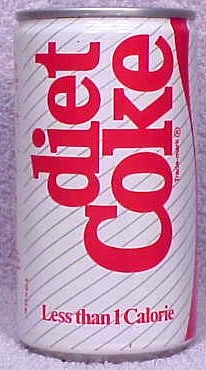
Diet Coke was launched in 1982, debuting in New York City in July and rolling out to most of the rest of the United States by end of 1982, and some Canadian markets. Coca-Cola referred to it as "the Company's most significant new product entry in 96 years". It quickly overtook Tab in sales by a wide margin (though Tab would remain on the market for decades to come) to become the top selling low-calorie soft drink in America. Diet Coke's domestic success was swift, by the end of 1983 overtaking 7UP to become the third highest selling soft drink overall in the United States, a position it would hold on to for decades to come. According to the company, Diet Coke was the "fastest-growing major soft drink in history."
In 1983, Diet Coke was launched in 28 international markets to a high degree of success. In many markets, the drink was branded as Coca-Cola Light instead or Coke Light. Diet Coke/Coca-Cola Light was launched in a further ten major markets in 1984, including Japan. The Coca-Cola Company then used the Diet Coke recipe to develop the controversial New Coke with high-fructose corn syrup and with a slightly different balance of ingredients, released in 1985.
.jpg)
The company launched the first Diet Coke variety product, Caffeine-free Diet Coke, in 1983, which is a diet/sugarless version of Caffeine-Free Coca-Cola. In 1986, Coca-Cola introduced Diet Cherry Coke (later known as Diet Coke Cherry) in American markets, a diet version of Coca-Cola Cherry which itself became the first flavored cola drink the company had released.
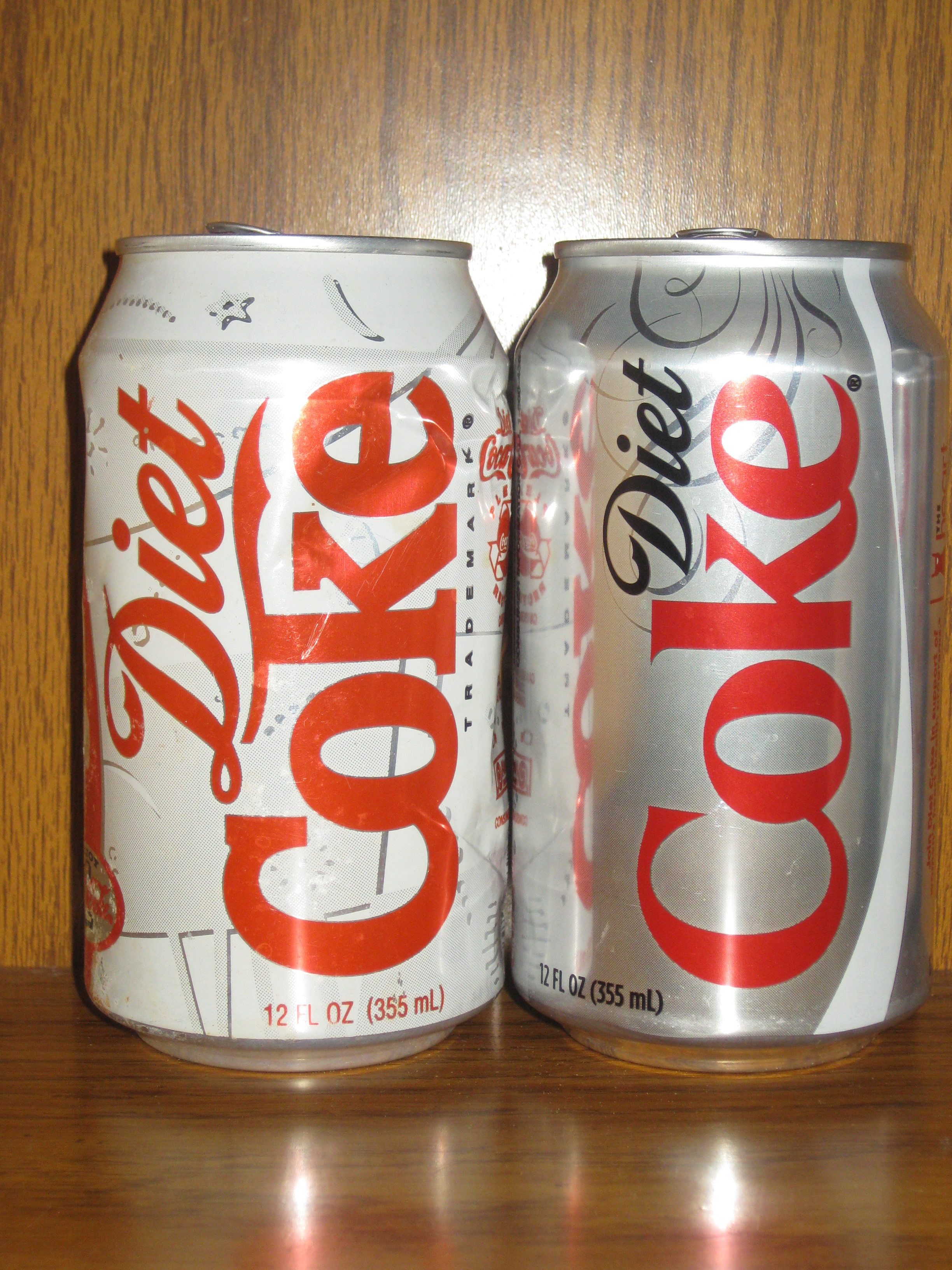
In the United States, Diet Coke held a market share of 11.7% in 1991 according to Beverage Digest (this compares to 20.0% for Coca-Cola Classic and 18.4% for Pepsi-Cola). In the year 1992, the product was available in 117 markets worldwide with a unit case volume of 1.25 billion. In some countries, including Australia, Belgium, Germany, Great Britain and Norway, it was the second most sold carbonated soft drink, all behind Coca-Cola. At the start of 1994, Diet Coke was redesigned for the first time since in eight years, and the logo most notably added a scripted "Diet" in place of the simple italic letters it previously bore. Later, the drink was relaunched as Coca-Cola Light in some countries where Diet Coke underperformed, with a slightly sweeter taste to suit local preferences.
In the 2000s when cola manufacturers were increasingly diversifying products, Coca-Cola launched Diet Coke with Lemon in 2001, a type of Diet Coke with lemon flavor, as well as Diet Vanilla Coke in 2002 (a sugarless version of Coca-Cola Vanilla) and then in 2004 launched Diet Coke with Lime and Diet Coke Plus, with more vitamins and minerals, in 2007. The company also launched a separate second sugar-free cola drink in 2005 called Coca-Cola Zero, now known as Coca-Cola Zero Sugar, which is more closely based on original Coca-Cola.
In 2005, under pressure from retailer Walmart (which was impressed with the over-the-counter popularity of Splenda sweetener), the company released a new formulation called "Diet Coke sweetened with Splenda". Sucralose and acesulfame potassium replaced aspartame in this version. As the formulation was done to mollify one retailer, this variety had little advertising and promotion, as the company preferred to market Coca-Cola Zero instead.
In 2010, Diet Coke surpassed Pepsi in sales for the first time to become the second most popular soda in the United States after Coca-Cola. Diet Coke dropped below Pepsi again in 2014. In 2018, the Diet Coke brand was significantly revamped and "relaunched" in its biggest change since it launched. A new wave of bold Diet Coke flavors were launched, including Ginger Lime, Feisty Cherry, Zesty Blood Orange and Twisted Mango, and then Blueberry Acai and Strawberry Guava in 2019.
Marketing and impact

Diet Coke (and rivals like Diet Pepsi) have capitalized on the markets of people who require low sugar regimens, such as diabetics and people concerned with calorie intake. For example, a 330 ml can of Diet Coke contains around 1.3 kilocalories (5 kJ) compared to 142 kilocalories (595 kJ) for a regular can of Coca-Cola (exact values may vary by region).
Coca-Cola used the slogan "Just for the taste of it!" for almost all years between its 1982 launch and at least 1997, and has been accompanied with an iconic jingle. A version of the song was also performed by Elton John and Paula Abdul in an ad at Super Bowl XXIV. A famous advert of the brand was "Diet Coke Break" in 1994 featuring Lucky Vanous, from which point on the brand became targeted primarily at women. In 1996, Coca-Cola tied in with TV sitcom Friends to advertize Diet Coke, at a time when soda sales had been struggling. The ads began to emphasize the "Coke" and taste of the product instead of its health connotations. Beginning in 2011, in many countries around the world Coca-Cola swapped the logo of their cola products including Diet Coke with 150 of the local country's most popular names, as part of campaigns called "Share a Coke". In an effort to be more appealing to millennials, Diet Coke in 2018 was packaged in a taller, more slender can (of the same volume), although the cans reverted to the conventional shape a year later.
The drink's all-silver can color, which has been in use since 1997, has been considered iconic and a distinctive design. Diet Coke has had a significant cultural impact, including links with healthiness and wellness but also negative connotations in regards to body image. It has achieved high popularity in certain circles with loyal fans, including in popular culture. Victoria Beckham, Dua Lipa and Bill Clinton are known fans of the drink, and Donald Trump notably has a dedicated button for Diet Coke in his presidential office. The drink has been known to be the choice of "it girls", and has been popular in the fashion scene. Designers Karl Lagerfeld and Jean Paul Gaultier have previously served as the brand's creative director. Kate Moss became creative director in 2022 at the drink's 40th anniversary.
Partly because of marketing reasons, connected to the public perception of the word "diet" and what it stands for, Coca-Cola launched Coca-Cola Zero as another sugarless cola product in 2005. "Zero sugar" has become increasingly trendy in the early 2020s. While the company have attempted to sideline Diet Coke in favor of Zero Sugar, loyal customers have kept Diet Coke alive and still selling in higher numbers in the US, as of 2025. Although Diet Coke continues to be one of the most popular soft drinks, diet sodas in general have increasingly dipped by target consumers choosing non-soda beverages like water or coffee. Consumption of soda drinks overall among Americans has been in decline after the 2000s.
Naming

Since its inception in 1982, Diet Coke has been the product name in Coca-Cola's home country the United States and a number of other countries. Other countries, such as Germany (then West Germany) have used the Coca-Cola Light name since the beginning. This name is now most common in most of Europe, the Middle East, Latin America and Asia. In Canada's Quebec, the drink is sold as Coke Diète.

In many countries including Italy, Mexico and the Netherlands, the product originally launched in 1983–84 under the "Diet Coke" name, but would later switch to the "Coca-Cola Light" name in the early 1990s. Similarly in Australia, it renamed some time from its original name to "Diet Coca-Cola". In Japan, it was known as "No Calorie Coca-Cola" from 2007. In Germany and the Netherlands, the name was changed from Coca-Cola Light to "Coca-Cola Light Taste" as part of the 2018 rebranding, but reverted back by 2021.
Advertising slogans
Coca-Cola has used various slogans throughout Diet Coke's history to advertize the product, both in the United States and internationally. "Just for the taste of it!" was the brand's first tagline and has been used continuously off and on since 1982. Another tagline Diet Coke used in the 1980s was "The one of a kind".
In the 1990s, a number of different slogans were used including: "Taste it all!", "This is Refreshment", and "You are what you drink". This was followed by "Live Your Life" in 1999. In the 2000s, slogans used for Diet Coke include: "Do what feels good", "Must be a Diet Coke thing", "Life is how you take it", "Light it up!", and "Yours". In 2009, Diet Coke was part of Coca-Cola's Open Happiness campaign which lasted for several years. There was also the "Hello You..." campaign in Britain in 2009, and "I light it" in Spain 2010 (a reference to Coca-Cola Light).
From 2010 to 2014, "Stay Extraordinary" was the main slogan in use. Coca-Cola launched the "You're on" campaign in 2014. However it was soon dropped after it was mocked, due to its unintentional drug reference (cocaine). Later that year, "Get a Taste" was introduced, asking the question "what if life tasted this good?". This campaign lasted until 2018. In 2018, Diet Coke launched the "Because I can." slogan and campaign at the same time as a major rebrand and the addition of new flavors. The campaign had a lukewarm reception. In 2020, a new campaign was launched in Britain, "Give yourself a Diet Coke break".
In 2021, Diet Coke launched the slogan and campaign "Just because", along with a remixed version of their "Just for the taste of it!" jingle. "This Is My Taste" was launched for the brand in Britain and Ireland in 2024.
Ingredients
The ingredients and taste of Diet Coke has slight variations between different bottling countries. According to the Coca-Cola Company, the sweetener blend is "formulated for each country based on consumer preference". Diet Coke in the U.S. was sweetened with aspartame, an artificial sweetener that became available in the United States in 1983. Early on, to reduce costs, this was blended with saccharin. After Diet Rite cola advertised its 100 percent use of aspartame, and the manufacturer of NutraSweet (then G. D. Searle & Company) warned that the NutraSweet trademark would not be made available to a blend of sweeteners, Coca-Cola switched the formula to 100 percent aspartame. Diet Coke from fountain dispensers still contains some saccharin to extend shelf life.
Cyclamates were banned in the U.S. in 1970 after Canadian laboratory tests found it could pose health risks. In countries where they are permitted Diet Coke/Coca-Cola Light may be sweetened with a blend containing aspartame, cyclamates, and acesulfame potassium (Ace-K), which reportedly would give a sweeter taste compared to the original American product. The use of sodium cyclamates depends, for example in Hong Kong, Coca-Cola Light contains it in its ingredients whereas in Singapore it does not because the substance is banned. In Canada, Ace-K was added to the Diet Coke recipe sold locally in 1995. In 2008, Coca-Cola removed the sodium benzoate preservative from Diet Coke specifically in the British market due to health risks associated with it.
Other than sweeteners, Diet Coke differs from Coca-Cola by having a higher amount (approximately 33% more) of caffeine. A 12 oz serving of Diet Coke contains 46 mg of caffeine compared to 34 mg in the equivalent Coca-Cola or Coca-Cola Zero Sugar. 99% of a diet soda like Diet Coke is water compared to 90% in a full calorie soda like Coca-Cola.
Health assessment
The most commonly distributed version of Diet Coke uses aspartame as a sweetener. As one of the most intensively scrutinized food additives, the safety of aspartame has been studied since its discovery. Aspartame has been deemed safe for human consumption by the regulatory agencies of many countries. Nevertheless, since its inception the drink has been scrutinised by some with claims that it is harmful in various ways, such as that it can dehydrate and increase food cravings. Such claims have also been scientifically countered.
Brand portfolio
| Name | Launched | Discontinued | Notes |
|---|---|---|---|
| Diet Coke | 1982 | The original variety. It was the first variant of Coca-Cola to be produced without sugar. | |
| Caffeine-Free Diet Coke | 1983 | Diet Coke without the caffeine. It was the first extension of the Diet Coke formula. | |
| Diet Cherry Coke/Diet Coke Cherry | 1986 | Diet Coke with a cherry flavor. | |
| Diet Coke with Lemon | 2001 | Diet Coke with a lemon flavor. | |
| Diet Vanilla Coke/Diet Coke Vanilla | 2002 | Diet Coke with a vanilla flavor. Currently only available as a selection in Coca-Cola Freestyle machines. | |
| Diet Coke with Lime | 2004 | Diet Coke with a lime flavor. | |
| Diet Coke Raspberry | June 1, 2005 | End of 2005 | Diet Coke with a raspberry flavor. |
| Coca-Cola Light Citra/Diet Coke with Citrus Zest | 2005 | 2018 | Diet Coke with a lemon and lime flavor. |
| Diet Coke Sweetened with Splenda | 2005 | 2024 | A version that was sweetened with Splenda (sucralose) and acesulfame potassium. Diet Coke with Splenda contained 2.83 mgs of caffeine per fluid ounce. |
| Diet Coke Black Cherry Vanilla | 2006 | 2007 | Diet Coke with a combination of black cherry and Vanilla flavors. |
| Coca-Cola Light Sango | 2005 | 2010's | Coca-Cola Light with a blood orange flavor. |
| Diet Coke Plus Vitamins | 2007 | 2011 | Diet Coke with a combination of vitamins and minerals. |
| Diet Coke Plus Antioxidant | 2007 | unknown | Diet Coke with a combination of antioxidants and a Green Tea flavor. |
| Diet Coke Plus | 2007 | 2011 | Diet Coke with a combination of vitamins and minerals. |
| Coca-Cola Light Lemon-C | 2008 | 2017 | Lemon-flavored Coca-Cola Light with a combination of vitamins and minerals. |
| Diet Coke Feisty Cherry | 2018 | 2020 | Diet Coke with a "spicy" cherry flavor. |
| Diet Coke Ginger Lime | 2018 | 2020 | Diet Coke with a combination of Ginger and Lime flavors. It was sold in the United States and Canada (replacing Diet Coke with Lime) and in a number of European countries. |
| Diet Coke Twisted Mango / Exotic Mango | 2018 | 2020 | Diet Coke with a Mango flavor. It was sold in the United States and Canada, and as "Exotic Mango" in a number of European countries. |
| Diet Coke Zesty Blood Orange | 2018 | 2020 | Diet Coke with a Blood Orange flavor, similar to Coca-Cola Light Sango. It was sold in the United States, Canada, Great Britain and Ireland. |
| Diet Coke Ginger Lemon | 2018 | 2020 | Diet Coke with a combination of Ginger and Lemon flavors. Exclusively sold in the United States from Coca-Cola Freestyle machines. |
| Diet Coke Strawberry Guava | 2019 | 2020 | Diet Coke with a Psidium cattleyanum flavor, sold in the United States. |
| Diet Coke Blueberry Acai | 2019 | 2020 | Diet Coke with an Açaí Blueberry flavor, sold in the United States. |
| Diet Coke Twisted Strawberry | 2019 | 2020 | Diet Coke with a Strawberry flavor, only sold in Great Britain and Ireland. |
| Coca-Cola Light Taste Pineapple | 2019 | 2020 | Coca-Cola Light with a Pineapple flavor, only sold in Belgium and Luxembourg. |
| Coca-Cola Light Taste Goji Berry Lime | 2019 | 2020 | Coca-Cola Light with a Goji and lime flavor, only sold in the Netherlands, Belgium and Luxembourg. |
References
References
- (July 9, 1982). "Diet Coke introduced". Wilmington Morning Star.
- (1988-03-14). "Coke's Intensified Attack Abroad (Published 1988)". The New York Times.
- Lanigan, Roisin. (8 July 2022). "Make Diet Coke chic again".
- Tourjée, Diana. (2016-04-22). "End of an Era: Diet Coke to Lose its Distinctive Silver Can".
- Ramsey, Douglas K.. (1987-04-05). "VIEWPOINTS : Military Classics Useful in Waging Corporate Combat".
- "The Extraordinary Story of How Diet Coke Came to Be".
- The Coca-Cola Company. "Annual Report 1983".
- The Coca-Cola Company. "1982 Annual Report".
- "PBS NewsHour Weekend Full Episode December 19, 2020".
- "The Extraordinary Story of How Diet Coke Came to Be".
- (1985-02-20). "NOW, CHERRY COKE IN A CAN (Published 1985)". The New York Times.
- The Coca-Cola Company. "Annual Report 1983".
- (1984-11-11). "The Problems of Passing Customs". The Washington Post.
- "Three Decades of Delicious: Diet Coke® Through the Years".
- The Coca-Cola Company. "Annual Report 1984".
- "Three Decades of the Timeless Taste of Cherry Coke".
- (1992-02-14). "THE MEDIA BUSINESS: ADVERTISING; Pepsi-Cola Plans Big Effort To Exploit 'Uh-huh' Theme (Published 1992)". The New York Times.
- The Coca-Cola Company. "Annual Report 1992".
- (1994-02-23). "Diet Coke's Redesign; A Splashy New Look, With a Hint of Nostalgia (Published 1994)". The New York Times.
- "Foreign markets develop taste for Coke Light - 1999-05-10 - Atlanta Business Chronicle".
- "[http://www.dietcoke.com/about-diet-coke/our-story.jsp The Diet Coke Story] {{Webarchive. link. (July 21, 2009." Diet Coke. *2010 – The Coca-Cola Company, Web. January 29, 2010.)
- "[http://www.solarnavigator.net/sponsorship/coca_cola.htm Cola Marketing History] {{Webarchive. link. (January 25, 2010." Solar Navigator. 2008. Max Energy Limited, Web. January 29, 2010.)
- "[http://www.thecoca-colacompany.com/presscenter/newproducts_dietcoke_splenda.html Diet Coke Sweetened with Splenda] {{webarchive. link. (January 11, 2010." The Coca-Cola Company. 2009. Web. February 9, 2010.)
- (2006-03-03). "Wal-Mart Extending Dominance of the Grocery Business (Published 2006)". The New York Times.
- "Top-10 CSD Companies and Brands for 2010". John Sicher, Editor & Publisher, Beverage Digest Company L.L.C..
- Peterson, Hayley. "Pepsi surpasses Diet Coke in huge soda shift".
- "You've Got Questions, We've Got Answers: Diet Coke Relaunch FAQ". The Coca-Cola Company.
- Meyer, Zlati. (January 10, 2018). "Big changes coming to Diet Coke with 4 new flavors". [[USA Today]].
- "Diet Coke Unveils New Flavors and Marketing as Brand Refresh Enters Second Year".
- "How many calories are there in a 330ml can of Diet Coke?".
- (1997-05-14). "Coca-Cola will take a new tack to appeal to diet-soda drinkers. (Published 1997)". The New York Times.
- (2004-01-12). "Coke jingle voted catchiest advertising tune".
- "Diet Coke - Just One Reason Duet".
- "Diet Coke Is Turning 40. Long Live Diet Coke.". BuzzFeed News.
- (1996-01-12). "THE MEDIA BUSINESS: ADVERTISING;New Diet Coke ads emphasize the 'Coke' rather than the 'Diet.' (Published 1996)". The New York Times.
- (2025-06-09). "Get to know Coca-Cola's iconic Share a Coke campaign".
- Klara, Robert. (January 10, 2018). "Can Diet Coke's New Skinny, Rainbow-Colored Cans Attract the Millennials It Covets?".
- "Comeback einer Ikone: Coca-Cola Light bringt stylische Dose zurück".
- Norman, Ellie. (2025-06-13). "Diet Coke and Diet Culture: A Perfectly Artificial Pairing".
- (2022-11-28). "Elon Musk and the hardcore cult of Diet Coke". The Washington Post.
- (2007). "Woman Drinks 12 Diet Cokes a Day".
- Dazed. (2023-05-24). "Dua Lipa: from pop princess to Versace collaborator".
- Cranley, Ellen. "Diet Coke, McDonald's, and meatloaf: These are Trump's favorite foods".
- (2025-02-25). "Diet Coke, longtime favorite of 'it girls,' is new symbol of masculinity".
- D'Souza, Christa. (2013-01-12). "How Diet Coke became fashion's favourite fizz". The Guardian.
- Enten, Harry. (2022-06-05). "A die-hard diet soda drinker investigates the zero sugar trend".
- (2025-06-09). "Diet Coke is making a comeback in US after four years and internet can't keep calm". The Economic Times.
- Thompson, Derek. (2018-01-14). "Diet Coke's Moment of Panic".
- (2023-07-27). "Opinion {{!}} A Requiem for Diet Soda (Published 2023)". The New York Times.
- (2015-10-02). "The Decline of 'Big Soda' (Published 2015)". The New York Times.
- (2007-07-09). "The world's best-selling sugar-free soft drink has anniversary".
- (27 September 2023). "De teloorgang van een fenomeen: hoe Coca-Cola Light uit de markt wordt geduwd".
- Arthur, Rachel. (2017-09-25). "Coca-Cola Plus Coffee launches in Australia".
- (2019-05-09). "Coca-Cola herintroduceert Coca-Cola light taste".
- "Aus für Coca-Cola Light? Nach 35 Jahren verschwindet Name aus dem Supermarkt-Regal".
- "Rebranding: Coca-Cola Light feiert Comeback - auch in der Werbung - HORIZONT".
- Schultz., E.J.. (January 10, 2018). "Diet Coke Gets a New Look, Adds Flavors In Move to Overcome Slump".
- (2005). "Made in the Twentieth Century: A Guide to Contemporary Collectibles". Scarecrow Press.
- (January 13, 1994). "Advertising; Coke Adds Life to Its Diet Coke Ads". The New York Times.
- (29 May 2008). "YOU ARE WHAT YOU DRINK CAMPAIGN".
- (2013). "For God, Country, and Coca-Cola". Basic Books.
- Street Journal, Betsy McKayStaff Reporter of The Wall. (2001-03-23). "New Diet Coke Ads Play Up Sex To Attract Both Men and Women - WSJ". Wall Street Journal.
- (March 26, 2012). "COKE UNVEILS NEW SLOGAN, ADS FOR OLYMPICS".
- "Mannequins in compromising positions in Diet Coke ad".
- (2007). "Customer Be-aware report".
- (June 15, 2009). "Diet Coke: Light It Up – Print (image) – Creativity Online".
- "Dear Oscar, Got Glitter? Yours, Diet Coke".
- "Coca-Cola Animated Short Reveals the Secrets to Happiness".
- (26 May 2010). "Chorlton Media Box: Coke Zero and Diet Coke print ads".
- "I light it".
- (7 September 2011). "TIFF: Diet Coke launches an 'extraordinary' look".
- (2014-05-07). "Coke drops "You're on" campaign amid mockery - CBS News".
- (March 4, 2014). "Is Diet Coke Dabbling in Drug References in Its Ads?".
- (2014-09-26). "Taylor Swift Joins the Diet Coke "Get a Taste" Campaign Offering Fans an Exclusive Taste of Her New Album, 1989".
- Ellison, Jo. (April 4, 2018). "How Diet Coke opened a can of correctness — and went flat".
- "Turkey of the week: Diet Coke's joyless 'Because I can' ad doesn't make you feel good".
- Wells, Liz. (2020-06-25). "Diet Coke unveils new campaign".
- "Thundercat remixes classic Diet Coke jingle 'just because' {{!}} Advertising".
- "Celebrating Authenticity with Diet Coke's "This Is My Taste" Campaign".
- "FAQs". The Coca-Cola Company.
- (August 18, 1983). "Coke Beginning Aspartame Use". New York Times.
- Ordoñez, Franco. (March 3, 2005). "Suit Alleges Deceit in Fountain Diet Cola Drinks". Boston Globe.
- (1987-03-29). "THE BITTERSWEET HISTORY OF SUGAR SUBSTITUTES (Published 1987)". The New York Times.
- "Aspartame and Other Sweeteners in Food".
- (2009-01-01). "Food Chemistry". Infobase.
- (2001-04-18). "Cancer-fear chemical in new soft drink".
- Summerfield, Patti. (February 6, 1995). "Diet Coke releases new formulation".
- Crowley, Laura. (2008-05-26). "Sodium benzoate removed from Diet Coke".
- Andersen, James. (2025-04-08). "Why Does Diet Coke Have More Caffeine Than Regular Coke?".
- (2024-04-14). "Diet Coke or Coke Zero? Dietitian reveals healthiest option".
- (2010-05-04). "Soda In America: Taxes And A Debate Over Health". NPR.
- EFSA National Experts. (May 2010). "Report of the meetings on aspartame with national experts". EFSA.
- Kincaid, Ellie. "Don't believe that viral Diet Coke infographic".
- (2022-12-01). "Why Diet Coke addicts like Elon Musk can't quit".
This article was imported from Wikipedia and is available under the Creative Commons Attribution-ShareAlike 4.0 License. Content has been adapted to SurfDoc format. Original contributors can be found on the article history page.
Ask Mako anything about Diet Coke — get instant answers, deeper analysis, and related topics.
Research with MakoFree with your Surf account
Create a free account to save articles, ask Mako questions, and organize your research.
Sign up freeThis content may have been generated or modified by AI. CloudSurf Software LLC is not responsible for the accuracy, completeness, or reliability of AI-generated content. Always verify important information from primary sources.
Report