From Surf Wiki (app.surf) — the open knowledge base
Di Rupo Government
Belgium cabinet of 2011–2014
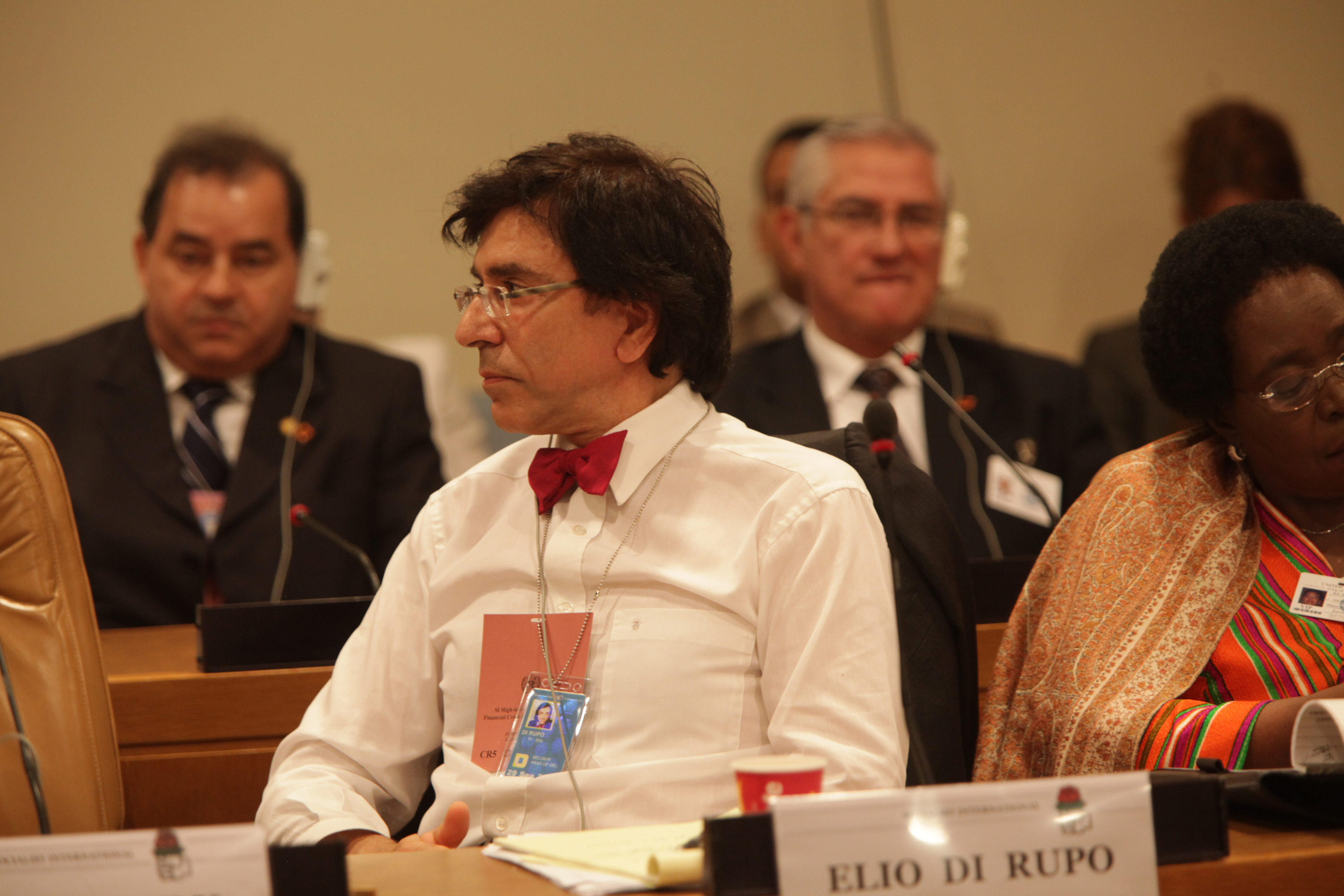
Belgium cabinet of 2011–2014
| Field | Value |
|---|---|
| cabinet_name | Di Rupo Government |
| cabinet_number | 93rd |
| jurisdiction | Belgium (since 1830) |
| flag | Flag_of_Belgium.svg |
| image | Elio Di Rupo 2012.jpg |
| date_formed | 6 December 2011 |
| date_dissolved | 11 October 2014 |
| government_head | Elio Di Rupo |
| deputy_government_head | |
| state_head | Albert II of Belgium |
| Philippe of Belgium | |
| political_party | SP.A |
| PS | |
| CD&V | |
| cdH | |
| Open Vld | |
| MR | |
| legislature_status | Majority (coalition) |
| election | 2010 |
| incoming_formation | 2010–11 Belgian government formation |
| outgoing_formation | 2014 Belgian government formation |
| previous | Leterme II |
| successor | Michel |
Philippe of Belgium PS CD&V cdH Open Vld MR
The Di Rupo Government was the federal cabinet of Belgium sworn in on 6 December 2011, after a record-breaking 541 days of negotiations following the June 2010 elections. The government included social democrats (sp.a/PS), Christian democrats (CD&V/cdH) and liberals (Open Vld/MR), respectively of the Dutch and French language groups. The government notably excluded the New Flemish Alliance (N-VA), the Flemish nationalist party which achieved a plurality and became the largest party. Its absence, together with the unwillingness of Open Vld to enter into an eight-party coalition that included the green parties, caused the government coalition to lack a majority in the Dutch language group. It was the first time that the Belgian prime minister had been openly gay, as Di Rupo became the world's first male openly gay head of government (and second of any gender, after Iceland's Jóhanna Sigurðardóttir). Elio Di Rupo also became the first native French-speaking prime minister since 1979 and the first prime minister from Wallonia since 1974 and first socialist prime minister since 1974.
The negotiations aimed to put an end to the 2007–2011 Belgian political crisis and included a sixth state reform, including the partition of the electoral and judicial arrondissement of Brussels-Halle-Vilvoorde and the transfer of new powers from the federal level to the regions. Because a state reform requires a two-thirds majority, the green parties (Groen/Ecolo) participated in these negotiations but were not part of the government coalition.
Formation
Main article: 2010–11 Belgian government formation
Following issues regarding the Brussels-Halle-Vilvoorde electoral district, the Open Flemish Liberals and Democrats quit the Leterme II Government, leading to early elections on 13 June 2010. In Flanders, the New Flemish Alliance (N-VA) became the biggest party while the Socialist Party (PS) prevailed in Wallonia. King Albert II appointed various politicians as mediators, including Bart De Wever, André Flahaut, Danny Pieters, Johan Vande Lanotte, Didier Reynders and Wouter Beke. Ultimately, Elio Di Rupo made a proposition which was refused by The New Flemish Alliance, but accepted by all other parties and as such they continued without the N-VA.
On 13 October 2011, it was decided that the green parties would not be part of the government but would support it in matters of confidence to achieve the two-thirds majority needed for state reform.
On 26 November 2011, the six remaining parties agreed on the national budget and agreed to the coalition on 3 December.
After more than 19 hours of negotiation, the parties involved came to an agreement on the allocation of ministries on 5 December 2011. The government was sworn in the next day. With 13 ministers and 6 secretaries of state, this government is one of the smallest by the number of ministers, not taking into account the secretaries of state.

Composition
| Minister | Name | Party | Secretary of State | Name | Party |
|---|---|---|---|---|---|
| Prime Minister | Elio Di Rupo | PS | |||
| Deputy Prime Minister – Minister of Defence | Pieter De Crem | CD&V | |||
| Deputy Prime Minister – Minister of Foreign Affairs, Foreign Trade and European Affairs | Didier Reynders | MR | |||
| Deputy Prime Minister – Minister of Economy, Consumer Affairs and the North Sea | Johan Vande Lanotte | sp.a | |||
| Deputy Prime Minister – Minister of Pensions | Alexander De Croo | Open Vld | |||
| Deputy Prime Minister – Minister of the Interior | Melchior Wathelet, Jr. | cdH | |||
| Deputy Prime Minister – Minister of Social Affairs and Health | Laurette Onkelinx | PS | |||
| Minister of the Middle Class, SMEs, Self-employed and Agriculture | Sabine Laruelle | MR | |||
| Minister of Finance and Sustainable Development | Koen Geens | CD&V | |||
| Minister of Public Enterprises and Development Cooperation | PS | ||||
| Minister of Justice | Maggie De Block | Open Vld | |||
| Minister of Budget and Administrative Simplification | Olivier Chastel | MR | |||
| Minister of Employment | Monica De Coninck | sp.a | |||
| Secretary of State for Environment, Energy and Mobility | Catherine Fonck | cdH | |||
| Secretary of State for Institutional Reform | CD&V | ||||
| Secretary of State for Civil Service and Modernisation of Public Services | Hendrik Bogaert | CD&V | |||
| Secretary of State for Combating Fraud | John Crombez | SP.a | |||
| Secretary of State for Social Affairs | Philippe Courard | PS |
Changes in composition
Following the 2012 Belgian provincial and municipal elections, ministers Paul Magnette (PS) and Vincent Van Quickenborne (Open VLD) were both elected as mayor, of Charleroi and Kortrijk respectively. As a result, Van Quickenborne resigned on 17 October 2012 and was replaced as Deputy Prime Minister and Minister of Pensions by Alexander De Croo (Open VLD), who took the oath of office on 22 October 2012. Magnette remained in his position as Minister of Public Enterprises, Scientific Policy and Development Cooperation until 17 January 2013, when he formally resigned and his successor Jean-Pascal Labille (PS) became Minister of Public Enterprises and Development Cooperation. Secretary of state Philippe Courard (PS) took over the competence of Scientific Policy from Magnette.
On 5 March 2013 Steven Vanackere (CD&V) resigned as Deputy-Prime Minister and Minister of Finance after he was accused of lying to parliament about his knowledge regarding the financial agreements between the Algemeen Christelijk Werknemersverbond and Belfius. He was succeeded as Deputy Prime minister by Minister of Defense Pieter De Crem (CD&V) and as Minister of Finance by Koen Geens (CD&V).
After the 2014 elections on 22 July 2014 Joelle Milquet (CDh) resigned to become minister of Lower education and Culture in the Government of the French Community. She was replaced as Deputy-Prime Minister and Minister of the interior by Melchior Wathelet, Jr., who in turn was succeeded as state secretary of Environment, Energy, Mobility and Institutional Reforms by Catherine Fonck (CDh).
On 25 July 2014 Annemie Turtelboom (Open VLD) resigned as Minister of Justice to become Viceminister-president and Flemish minister of Finances, Budget and Energy. She was succeeded as minister of Justice by Maggie De Block (Open VLD).
On 12 September 2014 Philippe Courard (PS) resigned as Secretary of State for Social Affairs, Families, Disabled Persons and Scientific Policy in order to become leader of the PS faction in the Walloon Parliament. His competences were taken over by Minister Laurette Onkelinx (PS).
On 16 September 2014 John Crombez (SP.a) resigned as Secretary of State for Combating Social and Fiscal Fraud, effective 22 September, to become leader of the SP.a faction in the Flemish Parliament. His competences were taken over by Minister Johan Vande Lanotte (SP.a).
References
References
- (6 December 2011). "Regering Di Rupo I legt de eed af". [[De Standaard]].
- (1 December 2011). "Belgium close to governing coalition after 18-month gap". BBC.
- Jackson, Patrick. "Profile: Belgium's Elio Di Rupo". BBC.
- {{in lang. fr [http://www.lalibre.be/actu/crise-politique/article/704555/la-composition-officielle-du-gouvernement-di-rupo-ier.html La composition officielle du gouvernement Di Rupo Ier ], La Libre Belgique, 5 December 2011
- (5 December 2011). "13 ministers en 6 staatssecretarissen in Di Rupo I". deredactie.be.
This article was imported from Wikipedia and is available under the Creative Commons Attribution-ShareAlike 4.0 License. Content has been adapted to SurfDoc format. Original contributors can be found on the article history page.
Ask Mako anything about Di Rupo Government — get instant answers, deeper analysis, and related topics.
Research with MakoFree with your Surf account
Create a free account to save articles, ask Mako questions, and organize your research.
Sign up freeThis content may have been generated or modified by AI. CloudSurf Software LLC is not responsible for the accuracy, completeness, or reliability of AI-generated content. Always verify important information from primary sources.
Report