From Surf Wiki (app.surf) — the open knowledge base
Dhu al-Qarnayn
Figure in the Quran
_builds_a_wall_against_Gog_and_Magog_(CBL_Per._395.1).jpg)
Figure in the Quran
ar, (, ; "The Owner of Two-Horns") is a leader who appears in the Qur'an, Surah al-Kahf (18), Ayahs 83–101, as one who travels to the east and west and sets up a barrier between a certain people and Gog and Magog (). Elsewhere, the Qur'an tells how the end of the world will be signaled by the release of Gog and Magog from behind the barrier. Other apocalyptic writings predict that their destruction by God in a single night will usher in the Day of Resurrection ().
Dhu al-Qarnayn has most popularly been identified by Western and traditional Muslim scholars as Alexander the Great. Historically, some tradition has parted from this identification in favor of others, like pre-Islamic Arabian kings such as the (mythical) Sa'b Dhu Marathid of Himyar or the historical figure al-Mundhir III ibn al-Nu'man of the Lakhmid kingdom (d. 554). Cyrus the Great has also gained popularity among modern Muslim commentators.
Quran 18:83–101
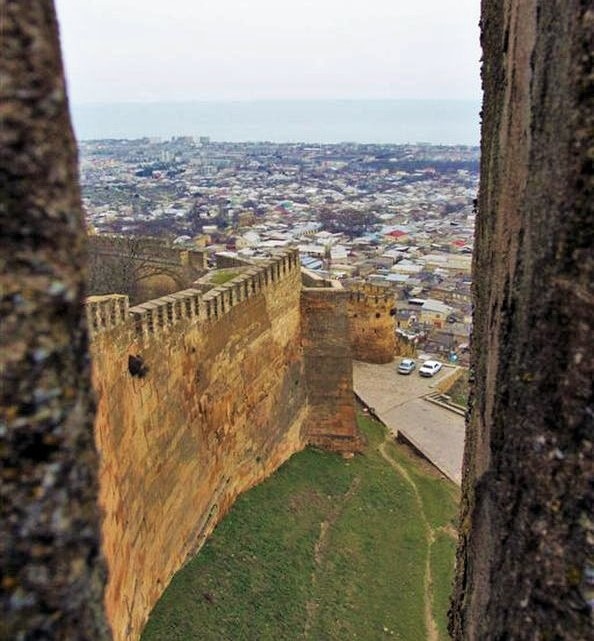
| Verse Number | Arabic (Uthmani script) | English (Marmaduke Pickthall) | 18:83 | 18:84 | 18:85 | 18:86 | 18:87 | 18:88 | 18:89 | 18:90 | 18:91 | 18:92 | 18:93حَتَّىٰٓ إِذَا بَلَغَ بَيْنَ ٱلسَّدَّيْنِ وَجَدَ مِن دُونِهِمَا قَوْمًا لَّا يَكَادُونَ يَفْقَهُونَ قَوْلًا | 18:94 | 18:95 | 18:96 | 18:97 | 18:98 | 18:99 | 18:100 | 18:101 |
|---|---|---|---|---|---|---|---|---|---|---|---|---|---|---|---|---|---|---|---|---|---|
| وَيَسْـَٔلُونَكَ عَن ذِى ٱلْقَرْنَيْنِ ۖ قُلْ سَأَتْلُوا۟ عَلَيْكُم مِّنْهُ ذِكْرًا | |||||||||||||||||||||
| إِنَّا مَكَّنَّا لَهُۥ فِى ٱلْأَرْضِ وَءَاتَيْنَٰهُ مِن كُلِّ شَىْءٍ سَبَبًا | |||||||||||||||||||||
| فَأَتْبَعَ سَبَبًا | |||||||||||||||||||||
| حَتَّىٰٓ إِذَا بَلَغَ مَغْرِبَ ٱلشَّمْسِ وَجَدَهَا تَغْرُبُ فِى عَيْنٍ حَمِئَةٍ وَوَجَدَ عِندَهَا قَوْمًا ۗ قُلْنَا يَٰذَا ٱلْقَرْنَيْنِ إِمَّآ أَن تُعَذِّبَ وَإِمَّآ أَن تَتَّخِذَ فِيهِمْ حُسْنًا | |||||||||||||||||||||
| قَالَ أَمَّا مَن ظَلَمَ فَسَوْفَ نُعَذِّبُهُۥ ثُمَّ يُرَدُّ إِلَىٰ رَبِّهِۦ فَيُعَذِّبُهُۥ عَذَابًا نُّكْرًا | |||||||||||||||||||||
| وَأَمَّا مَنْ ءَامَنَ وَعَمِلَ صَٰلِحًا فَلَهُۥ جَزَآءً ٱلْحُسْنَىٰ ۖ وَسَنَقُولُ لَهُۥ مِنْ أَمْرِنَا يُسْرًا | |||||||||||||||||||||
| ثُمَّ أَتْبَعَ سَبَبًا | |||||||||||||||||||||
| حَتَّىٰٓ إِذَا بَلَغَ مَطْلِعَ ٱلشَّمْسِ وَجَدَهَا تَطْلُعُ عَلَىٰ قَوْمٍ لَّمْ نَجْعَل لَّهُم مِّن دُونِهَا سِتْرًا | |||||||||||||||||||||
| كَذَٰلِكَ وَقَدْ أَحَطْنَا بِمَا لَدَيْهِ خُبْرًا | |||||||||||||||||||||
| ثُمَّ أَتْبَعَ سَبَبًا | |||||||||||||||||||||
| قَالُوا۟ يَٰذَا ٱلْقَرْنَيْنِ إِنَّ يَأْجُوجَ وَمَأْجُوجَ مُفْسِدُونَ فِى ٱلْأَرْضِ فَهَلْ نَجْعَلُ لَكَ خَرْجًا عَلَىٰٓ أَن تَجْعَلَ بَيْنَنَا وَبَيْنَهُمْ سَدًّا | |||||||||||||||||||||
| قَالَ مَا مَكَّنِّى فِيهِ رَبِّى خَيْرٌ فَأَعِينُونِى بِقُوَّةٍ أَجْعَلْ بَيْنَكُمْ وَبَيْنَهُمْ رَدْمًا | |||||||||||||||||||||
| ءَاتُونِى زُبَرَ ٱلْحَدِيدِ ۖ حَتَّىٰٓ إِذَا سَاوَىٰ بَيْنَ ٱلصَّدَفَيْنِ قَالَ ٱنفُخُوا۟ ۖ حَتَّىٰٓ إِذَا جَعَلَهُۥ نَارًا قَالَ ءَاتُونِىٓ أُفْرِغْ عَلَيْهِ قِطْرًا | |||||||||||||||||||||
| فَمَا ٱسْطَٰعُوٓا۟ أَن يَظْهَرُوهُ وَمَا ٱسْتَطَٰعُوا۟ لَهُۥ نَقْبًا | |||||||||||||||||||||
| قَالَ هَٰذَا رَحْمَةٌ مِّن رَّبِّى ۖ فَإِذَا جَآءَ وَعْدُ رَبِّى جَعَلَهُۥ دَكَّآءَ ۖ وَكَانَ وَعْدُ رَبِّى حَقًّا | |||||||||||||||||||||
| وَتَرَكْنَا بَعْضَهُمْ يَوْمَئِذٍ يَمُوجُ فِى بَعْضٍ ۖ وَنُفِخَ فِى ٱلصُّورِ فَجَمَعْنَٰهُمْ جَمْعًا | |||||||||||||||||||||
| وَعَرَضْنَا جَهَنَّمَ يَوْمَئِذٍ لِّلْكَٰفِرِينَ عَرْضًا | |||||||||||||||||||||
| ٱلَّذِينَ كَانَتْ أَعْيُنُهُمْ فِى غِطَآءٍ عَن ذِكْرِى وَكَانُوا۟ لَا يَسْتَطِيعُونَ سَمْعًا |
Quranic exegesis
Occasion of revelation
The story of Dhu al-Qarnayn is related in chapter 18 of the Qur'an, al-Kahf, revealed to Muhammad when his tribe, Al-Quraysh, sent two men to discover whether the Jews, with their superior knowledge of the scriptures, could advise them on whether Muhammad was truly a prophet of God. The rabbis told the Quraysh to ask Muhammad about three things, one of them "about a man who travelled and reached the east and the west of the earth, ask what his story was. If he tells you about these things, then he is a prophet, so follow him, but if he does not tell you, then he is a man who is making things up, so deal with him as you see fit." (Qur'an 18:83-98).
''Qarnayn''
A well known narration from a Companion of Muhammad, Ali denies that the term "Qarnayn" literally meant horns. He instead narrates that the term "Dhul Qarnayn" was not a literal term but instead referred to injuries that took place on the two sides of the head of the ruler.Musnaf Ibn Abi Shaybah: 6/346
Al Ahaad wal Mathani by Ibn Abi Asim: 141
Jami' Bayan al Ilm by Ibn Abd al Barr: 464
Al Mashyakha al Baghadadiyya by Abi Tahrir al Silafi: 27
Cyril Glasse writes that the reference to "He of the two horns" also has a symbolical interpretation: “He of the two Ages”, which reflects the eschatological shadow that Alexander casts from his time, which preceded Islam by many centuries, until the end of the world. The Arabian word qarn means both "horn" and “period” or “century”. Classical commentary from Al-Qurtubi has reported the narration from Al-Suhayli commentaries that he favored the identification that Dhu al-Qarnayn were actually two different persons, where one lived during the time of Abraham, while the other has lived during the time of Jesus.
Gog and Magog
Main article: Gog and Magog
Regarding the Gog and Magog, a minority of Muslim commentators argue that Gog and Magog here refers to some barbaric North Asian tribes from pre-Biblical times which have been free from Dhu al-Qarnayn's wall for a long time. Modern Islamic apocalyptic writers put forward various explanations for the absence of the wall from the modern world, such as "not everything in existence can be seen", similar to human intelligence and angels, or that God has concealed the Gog and Magog from human eyes.
People identified as {{Transliteration|ar|Dhu al-Qarnayn|italic=no}}
Alexander the Great
Main article: Theories about Alexander the Great in the Quran
According to most historians, the story of ar has its origins in legends of Alexander the Great current in the Middle East, namely the Syriac Alexander Legend. The first century Josephus repeats a legend whereby Alexander builds an iron wall at a mountain pass (potentially at the Caucasus Mountains) to prevent an incursion by a barbarian group known as the Scythians, whom elsewhere he identified as Magog. The legend went through much further elaboration in subsequent centuries before eventually finding its way into the Quran through a Syrian version. However, some have questioned whether the Syriac Legend influenced the Quran on the basis of dating inconsistencies and missing key motifs, although others have in turn rebutted these arguments.
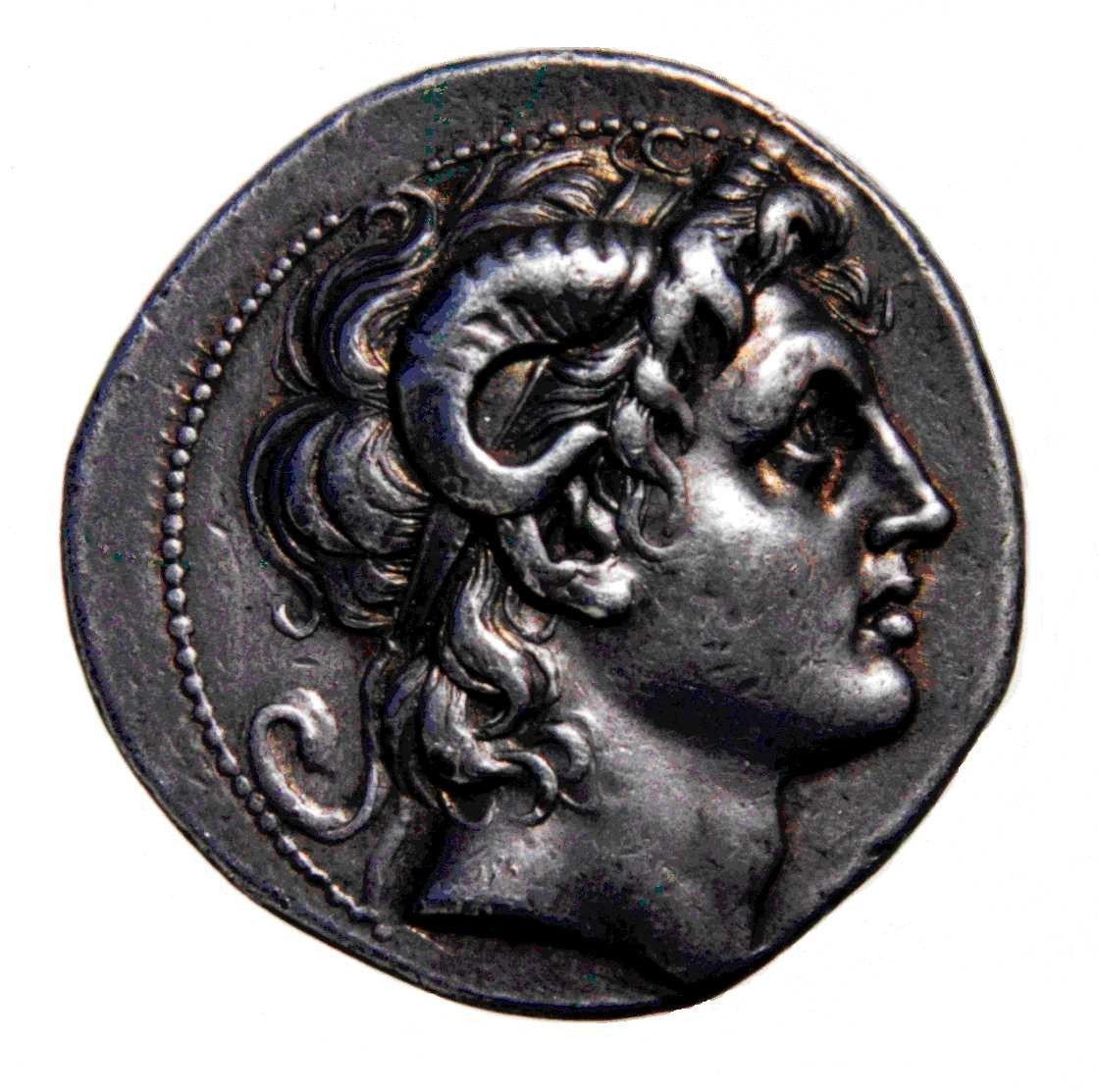
While the Syriac Alexander Legend references the horns of Alexander, it consistently refers to the hero by his Greek name, not using a variant epithet. The use of the Islamic epithet ar "Two-Horned", first occurred in the Quran. The reasons behind the name "Two-Horned" are somewhat obscure: the scholar al-Tabari (839-923 CE) held it was because he went from one extremity ("horn") of the world to the other, but it may ultimately derive from imagery of the horns of Alexander, inspired by the tradition of his descent from the ram-god Zeus-Ammon, as popularised on coins throughout the Hellenistic Near East.
The wall ar builds on his northern journey may have reflected a distant knowledge of the Great Wall of China (the 12th-century scholar Muhammad al-Idrisi drew a map for Roger II of Sicily showing the "Land of Gog and Magog" in Mongolia), or of various Sasanian walls built in the Caspian Sea region against the northern barbarians, or a conflation of the two.
_of_Ferdowsi_MET_cropped.jpg)
ar also journeys to the western and eastern extremities ("qarns", tips) of the Earth. Ernst claims that ar finding the sun setting in a "muddy spring" in the West is equivalent to the "poisonous sea" found by Alexander in the Syriac legend. In the Syriac story Alexander tested the sea by sending condemned prisoners into it, while the Quran refers to this as an administration of justice. In the East both the Syrian legend and the Quran, according to Ernst, have Alexander/ar find a people who live so close to the rising sun that they have no protection from its heat.
Some exegetes believed that Dhu al-Qarnayn lived near the time of Abraham following accounts by al-Azraqi and Ibn Abi Hatim. To avoid this chronological discrepancy, several medieval exegetes and historians did not identify Dhu al-Qarnayn with Alexander. Al-Tabari inferred that there were two Dhu al-Qarnayn's: the earlier one, called Dhu al-Qarnayn al-Akbar, who lived in the time of Abraham, and the later one, who was Alexander. In one account concerning Abraham building a well at Beersheba, Dhu al-Qarnayn seems to have been placed in the role of Abimelech as described in Gen 21:22–34.
Other notable Muslim commentators, including ibn Kathir,:100-101 ibn Taymiyyah,:101 Naser Makarem Shirazi, and Ebrahim Desai, have used theological arguments to reject the Alexander identification: Alexander lived only a short time whereas ar (according to some traditions) lived for 700 years as a sign of God's blessing, though this is not mentioned in the Quran, and Dhu al-Qarnayn worshipped only one God, while Alexander was a polytheist.
Ṣaʿb Dhu-Marāthid
Main article: Sa'b Dhu Marathid
The various campaigns of ar mentioned in Q:18:83-101 have also been attributed to the South Arabian Himyarite King Ṣaʿb Dhu-Marāthid (also known as al-Rāʾid). Ibn Hisham gives an extensive forty-five page account of King Ṣaʿb in his work The Book of Crowns on the Kings of Himyar, relying on the Yemeni author Wahb ibn Munabbih (b. 655 CE). In this account, King Ṣaʿb was a conqueror who was given the epithet Dhu al-Qarnayn after meeting a figure named Musa al Khidr in Jerusalem. He then travels to the ends of the earth, conquering or converting people until being led by al Khidr through the Land of Darkness. Other elements include a journey to a valley of diamonds, a castle with glass walls, and a campaign as far as the Andalusia region (classical era Spain). However, according to Al-Qurtubi, the original opinion of Wahb ibn Munabbih identified the legendary conqueror as a Roman, contradicting Ibn Hisham's commentary. Al-Tabari also reports that Wahb believed Dhu al-Qarnayn was a man from Byzantium named Iskandar.
Academic scholars consider the Sa'b story to be an appropriation of the Syriac Alexander Legend. While Ibn Hisham's book made use of Wahb's material, Tilman Nagel doubts that Wahb's text included this particular story given Ibn Hisham's sceptical attitude to the claims of Southern Arabians, and notes that al-Tabari relied on Wahb's Alexander story yet included no Himyarite (South Arabian) elements. Following a detailed analysis, Nagel instead defines the milieu in which this version emerged as that of South Arabians in early eighth-century Egypt, and observes that Southern Arabs were one of two factions who vied for power in the Umayyad empire.
Richard Stoneman notes that Wahb was known for the composition of qisas, in which folklore is served up as history. According to Stoneman, the South Arabian legend was composed within the context of the division between the South Arabs and North Arabs that began with the Battle of Marj Rahit in 684 AD and consolidated over two centuries. He too dates the story to the 8th century CE, intended to give a parallel for, and to justify, the Islamic conquests in the west, representing a glorification of the South Arabian traditions and their conquests in Egypt. Anna Akasoy agrees with Alfred Beeston that Sa'b's entire existence is fictional and a product of Yemeni chauvinism, noting that later Yemeni Kings whose existence is confirmed were assigned similar exploits borrowed from legends of Alexander. According to Wheeler, it is possible that some elements of these accounts that were originally associated with Ṣaʿb have been incorporated into stories which identify Dhu al-Qarnayn with Alexander.
Cyrus the Great
In modern times, some Muslim scholars have argued in favour of ar being actually Cyrus the Great, the founder of the Achaemenid Empire and conqueror of Persia and Babylon. Proponents of this view cite Daniel's vision in the Old Testament where he saw a two-horned ram that represents "the kings of Media and Persia" (). They also cite the Hemhem crown (a type of ancient Egyptian crown mounted on a pair of long spiral ram's horns) of the Pasargadae winged genie, once thought by some to be a representation of Cyrus, though this is no longer accepted.
This theory was proposed in 1855 by the German philologist G. M. Redslob, but it did not gain followers in the west. Among Muslim commentators, it was first promoted by Sayyed Ahmad Khan (d. 1889), then by Maulana Abul Kalam Azad, whose commentary became popular in 1970s Pahlavi Iran, and generated wider acceptance over the years.
Brannon Wheeler argues that it would be possible to make that identification based on what is known of the conquests of Cyrus. However, the Arabic histories did not view Cyrus as a conqueror in the sense described in Q 18:83-102, and the early Quran commentaries did not identify Cyrus with Dhu al-Qarnayn.
Others
Other persons who either were identified with the Quranic figure or given the title ar:
- Afrīqish al-Ḥimyarī, king of Himyar. Al-Biruni in his book, The Remaining Signs of Past Centuries, listed a number of figures whom people thought to be Dhu al-Qarnayn. He favoured the opinion that Dhu al-Qarnayn was the Yamani prince Afrīqish, who conquered the Mediterranean and established a city called Afrīqiah. He was called ar because he ruled the lands of the rising and setting sun. To support his argument, al-Biruni cited Arabic onomastics, noting that compound names beginning with ar, such as ar and ar, were common among the kings of Himyar.
- Fereydun. According to al-Tabari's Tarikh, some say Dhu al-Qarnayn the Elder (al-akbar), who lived in the era of Abraham, was the mythical Persian king Fereydun, who al-Tabari rendered as Afrīdhūn ibn Athfiyān.
- In an account attributed to Umar bin Khattab, Dhu al-Qarnayn is said to be an angel or part angel.
- Imru'l-Qays (died 328 CE), a prince of the Lakhmids of southern Mesopotamia, an ally first of Persia and then of Rome, celebrated in romance for his exploits.
- Messiah ben Joseph, a fabulous military saviour expected by Yemenite Jews.
- Darius the Great.
- Kisrounis, Parthian king.
In later literature
Dhu al-Qarnayn, the traveller, proved a popular subject for later writers. In Al-Andalus, for instance, an Arabic translation of the Syriac Alexander Legend appeared, entitled Qissat Dhulqarnayn. This work explores Dhu al-Qarnayn's life – his upbringing, journeys, and eventual death. The text identifies Dhu al-Qarnayn with Alexander the Great and portrays him as the first person to complete the Hajj pilgrimage.
Another Hispano-Arabic legend featuring Dhu al-Qarnayn, representing Alexander, is the Hadith Dhulqarnayn (or the Leyenda de Alejandro). In one of the many Arabic and Persian versions depicting Alexander's encounter with Indian sages, the Persian Sunni Sufi theologian al-Ghazali (1058–1111) describes a scene where Dhu al-Qarnayn meets a people who own nothing but dig graves outside their homes. Their king explains that death is life's only certainty, a reason for their practices. Ghazali's interpretation found its way into the One Thousand and One Nights.
The esteemed medieval Persian poet Rumi (1207-1273) wrote about Dhu al-Qarnayn's eastward travels. Here, the hero climbs Mount Qaf, the emerald 'mother' of all mountains encircling the Earth, its veins spreading below every land. Upon Dhu al-Qarnayn's request, the mountain reveals how earthquakes occur: when God wills it, one of its veins pulsates, triggering a tremor. Atop this grand mountain, Dhu al-Qarnayn encounters Israfil (archangel Raphael), prepared to sound the trumpet on Judgement Day.
The Malay epic Hikayat Iskandar Zulkarnain links several Southeast Asian royal lines to Iskandar Zulkarnain; this includes the Minangkabau royalty of Central Sumatra and the Cholan emperor Rajendra I in the Malay Annals.
References
Sources
References
- (2021). "The Latin Qur'an, 1143–1500: Translation, Transition, Interpretation". Walter de Gruyter GmbH & Co KG.
- {{harvnb. Watt. 1960–2007: "It is generally agreed both by Muslim commentators and modéra [sic] occidental scholars that Dhu ’l-Ḳarnayn [...] is to be identified with Alexander the Great." {{harvnb. Cook. 2013: "[...] {{Transliteration. ar. Dhū al-Qarnayn
- Maududi, Syed Abul Ala. "Tafhim al-Qur'an".
- Hämeen-Anttila, Jaakko. (2018-04-17). "Khwadāynāmag The Middle Persian Book of Kings". BRILL.
- (2018). "Al-Maqrīzī's al-Ḫabar ʻan al-bašar: vol. V, section 4: Persia and its kings, part I". Brill.
- (2002). "Moses in the Quran and Islamic Exegesis". Psychology Press.
- Zadeh, Travis. (2017-02-28). "Mapping Frontiers Across Medieval Islam: Geography, Translation and the 'Abbasid Empire". Bloomsbury Publishing.
- Tabatabai, Muhammad Hussein. "Al-mizan." ''Beirut: Academic Press Co'' 1403 (1995): 353.
- (2022-01-23). "A study in matching the time and the names of Cyrus and Dhu al-Qarnayn".
- "Quran in English - Clear and Easy to Read".
- Ghamidi, Javed Ahmed. "Al-Bayan".
- Van Bladel, Kevin. (2008). "The Qurʼān in Its Historical Context". Routledge.
- (2009). "Gog and Magog in early syriac and islamic sources: Sallam's quest for Alexander's wall". Brill.
- Bøe, Sverre. (2001). "Gog and Magog: Ezekiel 38 - 39 as pre-text for Revelation 19,17 - 21 and 20,7 - 10". Mohr Siebeck.
- {{harvnb. Wheeler. 1998
- Klar, Marianna. (September 2023). "The Oxford Handbook of Qur'anic Studies".
- Tesei, Tommaso. (2023-10-19). "The Syriac Legend of Alexander's Gate". Oxford University Press.
- Zadeh, Travis. (2017-02-28). "Mapping Frontiers Across Medieval Islam: Geography, Translation and the 'Abbasid Empire". Bloomsbury Publishing.
- Faustina Doufikar-Aerts. (2016). "Alexander the Great in the Middle Ages: Transcultural Perspectives". University of Toronto Press.
- Rubanovich, Julia. (2016-10-10). "Fictional Storytelling in the Medieval Eastern Mediterranean and Beyond". BRILL.
- Seoharwi, Muhammad Hifzur Rahman. "Qasas-ul-Qur'an".
- Ibn Taymiyyah. "الفرقان - بین اولیاء الرحمٰن و اولیاء الشیطٰن". Idara Ahya-us-Sunnah.
- Shirazi, Naser Makarem. "Tafseer-e-Namoona".
- IslamQA. (2012-07-29). "Alexander the Great, is he the Dhul Qarnayn mentioned in the Qur'aan?".
- Canova, Giovvani. (1998). "Encyclopedia of Arabic Literature". Taylor & Francis.
- {{Wikisourcelang-inline. ar
- Akasoy, Anna. (2017). "Locating Religions". Brill.
- (2013). "The Ten Lost Tribes A World History". OUP USA.
- (2002). "Prophets in the Quran An Introduction to the Quran and Muslim Exegesis". Bloomsbury Academic.
- Akasoy, Anna. (2009). "Alexander in the Himalayas: Competing Imperial Legacies in Medieval Islamic History and Literature". The University of Chicago Press.
- Stronach, David. (1978). "Pasargadae: a report on the excavations conducted by the British Institute of Persian Studies from 1961 to 1963". Oxford University Press.
- Cool Root, Margaret. (2021-08-31). "A Companion to the Achaemenid Persian Empire". John Wiley & Sons.
- Stronach, David. (2003). "HERZFELD, ERNST ii. HERZFELD AND PASARGADAE". Encyclopædia Iranica.
- Stronach, David. (2009). "PASARGADAE". Encyclopædia Iranica.
- Tatum, James. (1994). "The Search for the ancient novel". Johns Hopkins University Press.
- Sirry, Mun'im A.. (2014). "Scriptural polemics: the Qur'an and other religions". Oxford University Press.
- (2016-06-10). "The Qur'an in the Malay-Indonesian World: Context and Interpretation". Routledge.
- {{The History of al-Tabari
- Hämeen-Anttila, Jaakko. (2022-10-31). "Al-Maqrīzī's al-Ḫabar ʿan al-bašar: Vol. V, Section 4: Persia and Its Kings, Part II". BRILL.
- Pearls from Surah Al-Kahf: Exploring the Qur'an's Meaning, Yasir Qadhi Kube Publishing Limited, 4 Mar 2020, {{ISBN. 9781847741318
- [[Agapius of Hierapolis. Agapius]], ''Kitab al-'Unvan'' [Universal History], [https://archive.org/details/PatrologiaOrientalis5-Agapius/page/n76/mode/1up p. 653]
- Emily Cottrell. "Alexander the Great and the East: History, Art, Tradition".
- (2022). "Teaching the global Middle Ages". Modern Language Association of America.
- Balai Seni Lukis Negara (Malaysia). (1999). "Seni dan nasionalisme: dulu & kini". Balai Seni Lukis Negara.
- Early Modern History {{ISBN. 981-3018-28-3 page 60
- (2005). "Sejarah Melayu: sebagai karya sastra dan karya sejarah : sebuah antologi". Pusat Bahasa, Departemen Pendidikan Nasional.
- Radzi Sapiee. (2007). "Berpetualang Ke Aceh: Membela Syiar Asal". Wasilah Merah Silu Enterprise.
- (1980). "Dewan bahasa". Dewan Bahasa dan Pustaka.
This article was imported from Wikipedia and is available under the Creative Commons Attribution-ShareAlike 4.0 License. Content has been adapted to SurfDoc format. Original contributors can be found on the article history page.
Ask Mako anything about Dhu al-Qarnayn — get instant answers, deeper analysis, and related topics.
Research with MakoFree with your Surf account
Create a free account to save articles, ask Mako questions, and organize your research.
Sign up freeThis content may have been generated or modified by AI. CloudSurf Software LLC is not responsible for the accuracy, completeness, or reliability of AI-generated content. Always verify important information from primary sources.
Report