From Surf Wiki (app.surf) — the open knowledge base
Dhaka Medical College Hospital
Medical College and Hospital in Dhaka, Bangladesh
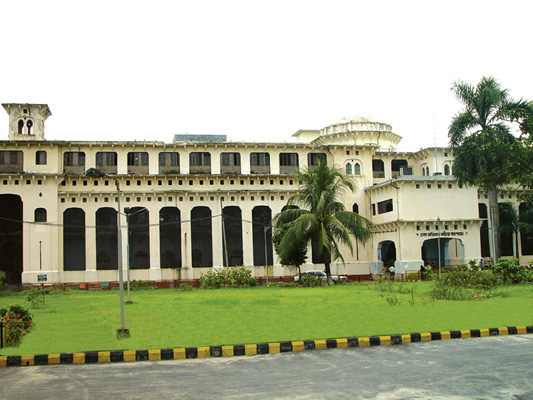
Medical College and Hospital in Dhaka, Bangladesh
| Field | Value | |
|---|---|---|
| name | Dhaka Medical College | |
| native_name | ঢাকা মেডিকেল কলেজ | |
| image | Morogram of Dhaka Medical College.svg | |
| image_size | 150px | |
| caption | Emblem of Dhaka Medical College | |
| established | ||
| type | Public Medical College & Hospital | |
| academic_affiliation | University of Dhaka | |
| Bangladesh Medical University | ||
| principal | Md. Kamrul Alam | |
| head_label | Director of Hospital | |
| head | Brig. Gen. Md. Asaduzzaman | |
| address | Secretariat Road | |
| city | Shahbagh, Dhaka | |
| country | Bangladesh | |
| coor | ||
| campus | Urban, 85 acres | |
| language | English | |
| other_name | DMCH | |
| website | {{plainlist |
Bangladesh Medical University
Dhaka Medical College Hospital (DMCH) is a public medical college and hospital located in Dhaka, Bangladesh. Established in 1946, the college houses a medical school as well as a tertiary care hospital on its campus.
History

Site during pre-college years
The college's original building was built prior to the Partition of Bengal of 1905. In 1904, the building was being used as the secretariat (headquarters) of the newly formed provinces of East Bengal and Assam.
In 1921, it was turned over to the University of Dhaka, which was founded that year. Part of the building was used as the university's medical center, another as the students' dormitory, and the rest as the office of the administrative wing of the Arts faculty.
In 1939, the Dhaka University Council requested the British government to establish a separate medical college in Dhaka. The proposal was postponed because of the onset of the Second World War.
During World War II, the medical center building became an American armed forces hospital. The Americans vacated the building at the end of the war.
Establishment of the college
In 1946, due to the partition of India, all the advanced students (from K-4 to K-1) as well as many lecturers and professors were transferred from Calcutta Medical College to start academic studies and maintain hospital facilities in the newly established Dhaka Medical College. Academic classes started on 10 July, which is celebrated as DMC Day.
Major William John Virgin, the head of the committee formed to establish the Dhaka Medical College, was the first principal. In the beginning, there were only four departments: medicine, surgery, gynecology and otolaryngology (ENT).
Since the college did not initially have anatomy or physiology departments, the students at first attended those classes at Mitford Medical School (now the Sir Salimullah Medical College), also in Dhaka; but after a month, Professor of Anatomy Pashupati Basu and Professor of Physiology Hiralal Saha joined the staff, and their specialties were taught in ward no. 22 of the hospital.
Expansion
After the construction of new academic buildings in 1955, a lecture hall and a dissection gallery were built in the college. The college and hospital premises were expanded with temporary sheds, some of which were built for outdoor services of the hospital and some for student housing. New buildings for housing, college, and hospital were constructed in phases: a dormitory for girls in 1952, a dormitory for male students in 1954–55, a new complex of academic buildings in 1955, and a dormitory for internee doctors in 1974–75. The new academic and hospital building, Dhaka Medical College Hospital-2, was inaugurated by Prime Minister Sheikh Hasina on 3 October 2013. The country's first ever autologous bone marrow transplant took place in its bone marrow transplant unit.
Origin of 'K'
Every student batch, or class, of Dhaka Medical College is tagged with the prefix K along with a number. The first year, the beginning batch of the college, was named K-1, likewise the second year as K-2, the third year as K-3, the fourth year as K-4, and the fifth year as K-5. In 2021, DMC hosted its 78th batch, hence branded as K-78. Many theories exist about the origin of the letter K, the most popular being that K stands for Kolkata, as many students of DMC's earlier batches migrated from Calcutta Medical College. Although Kolkata was officially known as Calcutta until 2001, the city was widely pronounced as Kolkata/Kolikata in Bengali. Though the first ten medical schools did not follow this tradition, yet another theory proposes that, as the institute was the 11th medical school in the Indian subcontinent, K, the 11th letter of the English alphabet, is used to represent that.
Undergraduate course

A countrywide combined medical admission test for the MBBS course is held every year under the supervision of DGHS. 139,217 eligible students sat for the entrance exams in 2023. Students after passing Higher Secondary School Certificate or equivalent examinations with the required grades can apply for the admission test. In 2023, a total of 230 seats, 226 general seats and 4 seats for the freedom fighter quota, were allocated for the MBBS course in Dhaka Medical College.
The qualified candidates, according to their preferences, get the opportunity to study at Dhaka Medical College. Foreign candidates from both SAARC and non-SAARC countries are selected by DGHS and MOHFW as per required qualifications.
The college runs a 5-year MBBS course according to the curriculum developed by BMDC. A student studies anatomy, physiology, biochemistry, pathology, pharmacology, microbiology, forensic medicine, community medicine, medicine & allied subjects, surgery & allied subjects and gynecology and oObstetrics during the course period.
The course is divided into 4 phases. Four professional examinations, one at the end of each phase, are held under the University of Dhaka. After passing the fourth or final professional examination, a student is awarded an MBBS degree. Course curriculum follows percentage system grading. Pass mark for the college's internal as well as professional examinations is 60 percent. Students shall have to pass written (MCQ + SAQ + formative), oral, practical and clinical examinations separately.
Postgraduate courses
The college offers MD, MS, Diploma, MPhil in 50 different subjects in affiliation with University of Dhaka and Bangabandhu Sheikh Mujib Medical University.
The college also runs three fellowship courses of the Bangladesh College of Physicians and Surgeons in different disciplines.
Principals
| Name | Duration in office | Ref. | From | To | |||||
|---|---|---|---|---|---|---|---|---|---|
| Major William John Virgin | |||||||||
| Lt. Col. Edward George Montgomery | |||||||||
| T. Ahmed | |||||||||
| Colonel M. K. Afridi | |||||||||
| Nawab Ali | |||||||||
| A. K. M. Abdul Wahed | |||||||||
| Nawab Ali | |||||||||
| Md. Refat Ullah | |||||||||
| Habib Uddin Ahmed | |||||||||
| Lt. Col. M. M. Haque | |||||||||
| A. K. S. Ahmed | |||||||||
| G. Kibria | |||||||||
| Lt. Col. Borhanuddin | |||||||||
| K. A. Khaleque | |||||||||
| Saifullah | |||||||||
| M. R. Chowdhury | |||||||||
| M. A. Jalil | |||||||||
| M. A. Kashem | |||||||||
| Md. Shahidullah | |||||||||
| Mazharul Imam | |||||||||
| M. A. Mazed | |||||||||
| M. I. Chowdhury | |||||||||
| Mirza Mazharul Islam | |||||||||
| Waliullah | |||||||||
| M. Kabiruddin Ahmed | |||||||||
| Zwahurul Moula Chaudhury | |||||||||
| Md. Shofiullah | |||||||||
| M. A. Hadi | |||||||||
| A. B. M. Ahsan Ullah | |||||||||
| A. K. Md. Shahidul Islam | |||||||||
| Md. Abdul Kadir Khan | |||||||||
| Tofayel Ahmed | |||||||||
| Md. Fazlul Haque | |||||||||
| Hosne Ara Tahmin (Charu) | |||||||||
| Syed Mahbubul Alam | |||||||||
| M. Abul Faiz | |||||||||
| Quazi Deen Mohammad | |||||||||
| Md. Ismail Khan | |||||||||
| Md. Shafiqul Alam Chowdhury (Acting) | |||||||||
| Khan Abul Kalam Azad | |||||||||
| Md. Titu Miah | title=Government appoints new principals to Dhaka, Mugda medical colleges | url=https://bdnews24.com/campus/2020/12/10/government-appoints-new-principals-to-dhaka-mugda-medical-colleges | archive-url= | archive-date= | access-date=6 January 2021 | work=bdnews24.com}} | |||
| Md. Shafiqul Alam Chowdhury | August 2024 | ||||||||
| Md. Kamrul Alam | Present |
File:Maj. W. J. Virgin.jpg|Major William John Virgin, first principal of DMC File:M.K. Afridi. Photograph by L.J. Bruce-Chwatt. Wellcome V0027917.jpg|Colonel M. K. Afridi, malariologist File:Dr Nawab Ali.jpg|Nawab Ali, served as the college principal twice File:Prof. M A Hadi.jpg|M. A. Hadi, 28th principal of DMCH
Hospital wing

Facilities and services
Dhaka Medical College has a 2600-bed teaching hospital as Dhaka Medical College Hospital (DMCH) within the same compound, with 92 wards. It is a tertiary referral hospital. It has a 300-bed facility dedicated for burn and plastic surgery. It was the largest burn unit of the country until Sheikh Hasina National Institute of Burn and Plastic Surgery was set.
With over 500 admissions per day, 1300 emergency visits per day and 5000 patients at OPD per day at the hospital, it has an occupancy rate of 133%. It also includes about 50 Operation Theatres that perform about 50,000 major operations and about 35,000 minor operations per year.
In 2015, the Hospital's Out-Patient Department provided services to 799,896 patients. More 346,580 patients attended at the emergency and 149,122 patients got admitted in different facilities of the hospital in 2015. The surgical staffs performed 58,355 surgeries in 2015. Expansion plan to turn the hospital into a 5000-bed facility has been contemplated.

Country's first bone marrow transplant center was set in this hospital in October 2013 in collaboration with Massachusetts General Hospital. This unit conducted first ever successful autologous bone marrow transplant in the country in March 2014. The unit also introduced allogeneic bone marrow transplant on 3 July 2019, the first in the country.
Clinical teaching
It is one of the major teaching hospitals in the country. Bedside teaching and clinical examinations of the undergraduate as well as postgraduate students take place at the hospital wing.
Dhaka Medical College Hospital is a recognized clinical examination centre for fellowship examination of Bangladesh College of Physicians and Surgeons.
Hospital administration
Director of the hospital is the administrative chief of the hospital service. Deputy director, assistant directors and other officials give him assistance in this regard. Faculties from different departments of the college act as clinical and administrative superiors of the respective department. They actively supervise the clinical services as well as clinical training of the trainee doctors.
Student life
Students' accommodation

In the past, Ramesh Chandra Majumdar, the then vice chancellor of University of Dhaka, arranged accommodation for the medical college students. Muslim students were accommodated in Salimullah Muslim Hall, Hindus were accommodated in the then Dhaka Hall (now Dr. Muhammad Shahidullah Hall). Baptist mission hostel at Sadarghat accommodated the Christian students. Nursing Hostel was allocated for the female students. Later, 20 medical barracks were built and students were accommodated there. As of 2019, there are four hostels for accommodation of the students as well as interns.
- Shaheed Dr. Fazle Rabbee Hall (established in 1955) - For male students (named after martyred intellectual Mohammed Fazle Rabbee)
- Dr. Alim Chowdhury Hall - For female students (named after martyred intellectual AFM Alim Chowdhury)
- Shaheed Dr. Shamsul Alam Khan Milon Intern Doctors' hostel (Male) (named after the martyred activist of anti-autocracy movement in 1990, Shamsul Alam Khan Milon)
- Shaheed Dr. Shamsul Alam Khan Milon Intern Doctors' Hostel (Female)
Dr. Fazle Rabbee Hall and Dr. Milon Intern Doctors' hostel (for male) share the same compound at Bakshibazar, Lalbagh, Dhaka. Dr. Alim Chowdhury hall and Dr. Milon Intern doctors' hostel (for female) share the same compound inside the territory of the college.
Sports facility
DMC has a sports ground inside Fazle Rabbee Hall. It is used for football, cricket, and other athletics. Fazle Rabbee Hall also houses a basketball ground and a tennis ground. Besides, college building and hostels have students' common rooms with indoor game facility
Cultural activities
College has an auditorium with 1200 sitting capacity. DMC day is celebrated each year on 10 July, the foundation day of the college.
Role in national politics
Bengali Language Movement (1948-1952)
The college dormitories that were known as barracks were at the heart of the Bengali language movement from 1948 to 1952. The barracks were formerly situated at the current location of the Shaheed Minar.
There were about 20 tin shed barracks where the medical students resided. Because they were close to the Parliament of East Pakistan (presently Jagannath Hall of Dhaka University), the medical dormitories were chosen as the center of the student movement.
In the early hours of 21 February 1952, all the students of Dhaka Medical College gathered in front of the medical college dormitories. In the afternoon the group headed for the parliament which was in session. No procession was allowed due to the imposition of Section 144 (a section of the penal code that prohibited unlawful assembly). The students decided to defy Section 144 at 4:00 PM at the historic Aam-tola (which was situated beside the present day Emergency gate).
The police fired at the procession, resulting in the deaths of Salam, Barkat, Rafique, Jabbar and Shafiur. After sunset on 21 February, at the site of the deaths, the students of Dhaka Medical College decided to build a monument. Badrul Alam and Sayed Haider the then students of Dhaka Medical College planned and designed the structure. They worked continuously on 22 and 23 February and finished the construction, using bricks, gravel and cement reserved for the hospital. A paper with Shaheed Smritistambha written on it was attached on the monument. It was inaugurated by the father of Shofiur Rahman, a martyr of language movement. However, the monument was demolished by government forces on 26 February 1952.
Independence War (1971)
Many staff and students took part in the 1971 Bangladesh War of Independence, as fighters or in treating the injured. DMC's doctors, teachers and students laid their lives in the war. Many eminent physicians and academics were abducted from home and killed during the war.
Notable alumni
- Rashiduddin Ahmad, neurosurgeon
- Badrul Alam, activist in the Bengali language movement, designer of first Shaheed Minar, Ekushey Padak awardee (2014)
- A K M Ahsan Ali, pulmonologist, pioneer of the DOTS method of treating tuberculosis, awardee of Independence Day Award in 2018
- Syed Modasser Ali, former health advisor to Prime Minister Sheikh Hasina
- M Iqbal Arslan, President of Swadhinata Chikitshak Parishad
- Kanak Kanti Barua, neurosurgeon, vice-chancellor of BSMMU
- Sitara Begum, doctor and army officer awarded the Bir Protik
- AFM Alim Chowdhury, ophthalmologist, intellectual killed during the Bangladesh Liberation War
- AHM Touhidul Anowar Chowdhury, obstetrician/gynecologist, awardee of Independence Day Award in 2017
- A. Q. M. Badruddoza Chowdhury, former President of Bangladesh, Independence Day Award awardee in 1993
- Meerjady Sabrina Flora, epidemiologist, former Director of IEDCR
- Sayed Haider, activist in the Bengali language movement, designer of Shaheed Minar, Ekushey Padak awardee (2016)
- A F M Ruhul Haque, former Health and Family Welfare Minister, orthopedic surgeon, former President of Swadhinata Chikitshak Parishad
- AKM Fazlul Haque, pioneer colorectal surgeon
- Mirza Mazharul Islam, surgeon, language movement veteran, Ekushey Padak awardee (2018)
- Shahla Khatun, National Professor award winner, obstetrician/gynecologist
- Abdul Malik, cardiologist, National Professor award winner, founder of National Heart Foundation, and National Institute of Cardiovascular Diseases, awarded Independence Day Award (2004)
- Shamsul Alam Khan Milon, activist killed during the 1990 Mass Uprising in Bangladesh
- Quazi Deen Mohammad, neurologist, Founding director of NINS, President of Bangladesh College of Physicians and Surgeons
- Mostofa Jalal Mohiuddin, President of Bangladesh Medical Association, former President of Bangladesh Chhatra League
- Dipu Moni, Education Minister, former Minister of Foreign Affairs
- Golam Moula, activist in the Bengali language movement, Eksushey Padak awardee (2010) (posthumous)
- Mohammed Fazle Rabbee, cardiologist, intellectual killed during the Bangladesh War of Independence
- Ahmed Rafiq, activist in the Bengali language movement, writer, researcher, Ekushey Padak awardee (1995)
- Lutfor Rahman, cardiac surgeon
References
References
- (11 December 2024). "Constituent Colleges / Institutes".
- "Affiliated Institutes".
- link. [[Prothom Alo]]. (29 August 2024)
- "DMCH director changed". [[Prothom Alo]].
- "History of Dhaka Medical College".
- link. [[Prothom Alo]]. (20 October 2016)
- {{Cite Banglapedia
- (3 October 2013). "PM inaugurates second phase of DMCH". [[Dhaka Tribune]].
- (23 November 2015). "The bone marrow transplant: first time in Bangladesh". [[The Independent (Bangladesh).
- "Bangladesh begins bone-marrow transplant". [[bdnews24.com]].
- Zaman, Habibuz. (1999). "Seventy Years in a Shaky Subcontinent". Janus Publishing Company.
- "Bengal House passes law legalising 'Kolkata'". [[The Times of India]].
- "Why Is Calcutta Now Kolkata? What Other Names in India Are Changing?". NPR.
- (24 August 2018). "When Kolkata began as Calcutta: The history of the first capital of British India".
- (19 July 2009). "Sixty Three Years of Dhaka Medical College". The Daily Star.
- (29 January 2024). "Medical Admission Circular 2024 in Bangladesh - Doctors Gang".
- (27 August 2019). "Medical Admission Test Circular 2019-20। dghs.teletalk.com.bd".
- (18 September 2019). "Lekhapora BD".
- "List of foreign students selected for admission in Government Medical Colleges".
- "BM&DC".
- link
- "History of Dhaka Medical College".
- Zaman, Habibuz. (1999). "Seventy Years in a Shaky Subcontinent". Janus Publishing Company.
- (8 October 2019). link
- "Government appoints new principals to Dhaka, Mugda medical colleges". [[bdnews24.com]].
- link
- "Local Health Bulletin- 2020".
- (17 January 2019). "DMCH will be turned into a 5,000-bed hospital". The Daily Star.
- (20 October 2013). "Country's first Bone Marrow Transplant unit opens at DMCH". Dhaka Tribune.
- "DMCH bone marrow transplant to start". bdnews24.com.
- link. Prothom Alo. (17 October 2013)
- "Bone-marrow transplant in Bangladesh". bdnews24.com.
- link. Samakal
- link. Prothom Alo. (11 March 2014)
- link. Prothom Alo. (10 March 2014)
- (10 March 2014). "First ever bone marrow transplant carried out in the country". Dhaka Tribune.
- (21 July 2019). "Country's first successful allogeneic bone marrow transplant at DMC". The Business Standard.
- (7 July 2008). "DMC foundation day celebration on 10 July". [[The Daily Star (Bangladesh).
- "Martyrs of Language Movement". Daily Sun (Bangladesh).
- {{Cite Banglapedia
- (21 February 2015). "It's True!". The Daily Star.
- {{Cite Banglapedia
- (19 March 2016). "Bangladesh's first neurosurgeon Rashiduddin Ahmad dies". [[bdnews24.com]].
- link. [[Bhorer Kagoj]]
- link
- (27 May 2017). "Dr. Ahsan Ali—a pioneer in TB treatment in Bangladesh". [[The Independent (Bangladesh)]].
- (18 November 2018). "Arslan made president, Aziz secy general". [[Banglanews24.com]].
- (16 March 2018). "BSMMU gets Prof Kanak Kanti Barua as new vice-chancellor". [[bdnews24.com]].
- (16 December 2016). "The women in our Liberation War".
- {{Cite Banglapedia
- (6 July 2015). "Professor T A Chowdhury, Bangladesh". South East Asia Journal of Public Health.
- {{Cite Banglapedia
- link. [[bdnews24.com]]
- (21 February 2016). "Uphold dignity of mother tongue". The Daily Star.
- "Language Movement hero Dr Mirza Mazharul Islam dies of COVID-19". [[bdnews24.com]].
- "National Professor Shahla Khatun".
- ".:: About NHFB {{!}} National Heart Foundation of Bangladesh ::.".
- "Language martyrs honoured". [[bdnews24.com]].
- (19 February 2019). "Golam Mowla, the Language Movement's forgotten hero". [[Dhaka Tribune]].
- Rabbee, Nusrat. "Remembering a Martyr". The Daily Star.
- link. [[Bangladesh Pratidin]]. (14 March 2014)
- Ahmed, Hana Shams. (23 June 2006). "A Life-saving Innovator". The Daily Star.
This article was imported from Wikipedia and is available under the Creative Commons Attribution-ShareAlike 4.0 License. Content has been adapted to SurfDoc format. Original contributors can be found on the article history page.
Ask Mako anything about Dhaka Medical College Hospital — get instant answers, deeper analysis, and related topics.
Research with MakoFree with your Surf account
Create a free account to save articles, ask Mako questions, and organize your research.
Sign up freeThis content may have been generated or modified by AI. CloudSurf Software LLC is not responsible for the accuracy, completeness, or reliability of AI-generated content. Always verify important information from primary sources.
Report