From Surf Wiki (app.surf) — the open knowledge base
Derek Jarman
British film director and artist (1942–1994)

British film director and artist (1942–1994)
| Field | Value |
|---|---|
| name | Derek Jarman |
| image | Derek Jarman.jpg |
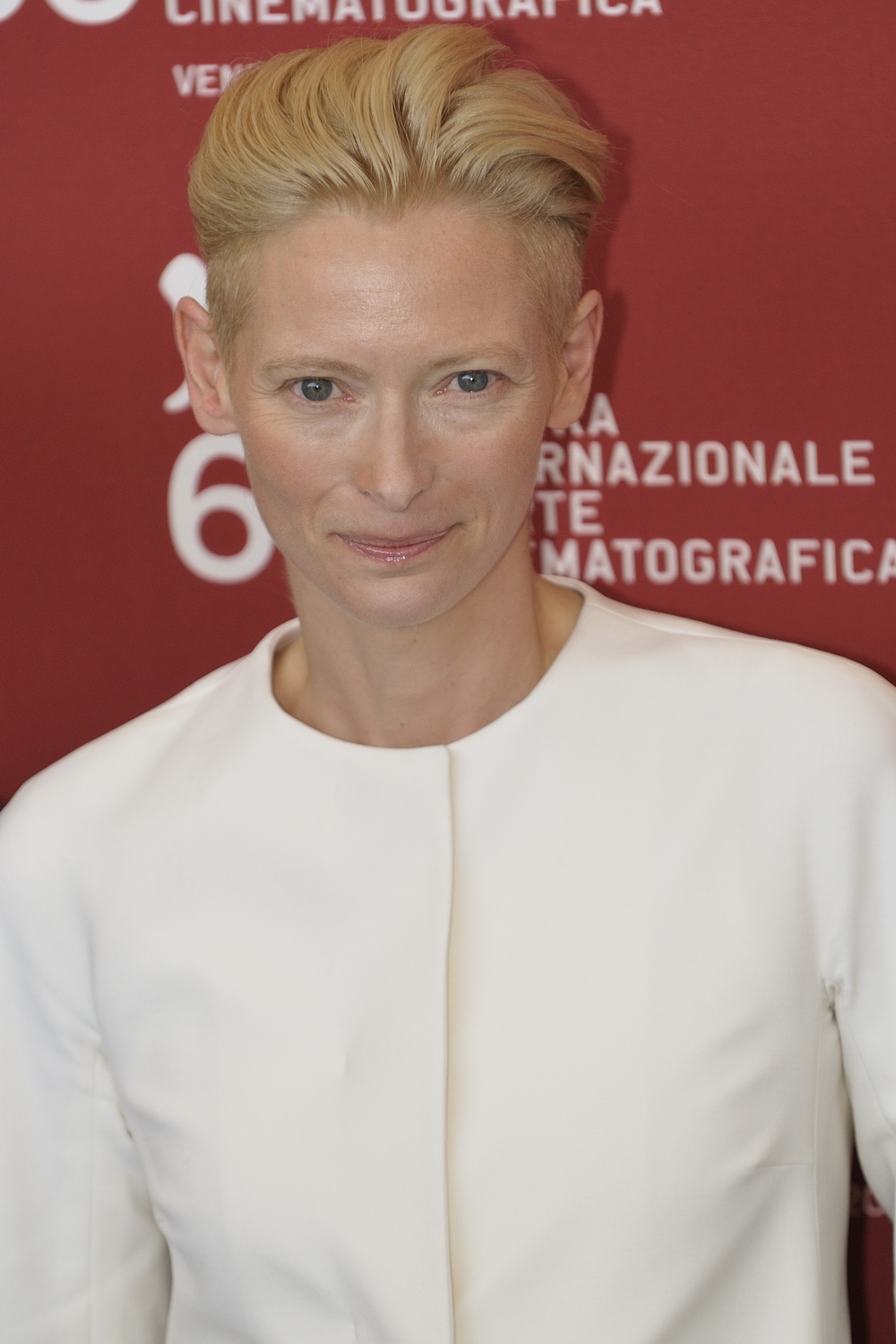
| caption | Jarman during the 1991 Venice Film Festival |
| birth_date | |
| birth_place | Northwood, Middlesex, England |
| death_date | |
| death_place | St Bartholomew's Hospital, London, England |
| resting_place | St Clement Churchyard, Old Romney, Kent |
| partner | Keith Collins |
| (1987–1994; his death) | |
| education | Canford School, Dorset |
| alma_mater | King's College London |
| Slade School of Fine Art (UCL) | |
| occupation | |
| years_active | 1970–1994 |
| style | New Queer Cinema |
| notable_works | Sebastiane (1976) |
| Jubilee (1977) | |
| The Tempest (1979) | |
| Caravaggio (1986) | |
| The Last of England (1988) | |
| War Requiem (1989) | |
| Edward II (1991) | |
| Wittgenstein (1993) | |
| Blue (1993) |
(1987–1994; his death) Slade School of Fine Art (UCL) Jubilee (1977) The Tempest (1979) Caravaggio (1986) The Last of England (1988) War Requiem (1989) Edward II (1991) Wittgenstein (1993) Blue (1993)
Michael Derek Elworthy Jarman (31 January 1942 – 19 February 1994) was an English artist, film maker, stage designer, writer, gardener, and gay rights activist, regarded as one of the most influential figures associated with the new queer cinema. Trained originally as a painter, he moved into stage and production design in the late 1960s, including work on Ken Russell’s controversial historical 1971 film The Devils, before turning to filmmaking as a director.
Jarman made his directorial debut with Sebastiane (1976), a Latin-language film depicting the martyrdom of Saint Sebastian through overt homoerotic imagery. The film established many of the characteristics of his work: an openly queer perspective, historical and literary source material treated anachronistically, and a willingness to court controversy. He went on to direct a body of unconventional films including the punk-inflected Jubilee (1978), the stylised biographical drama Caravaggio (1986), and the politically charged adaptation Edward II (1991).
Consistently working outside mainstream British film production, Jarman often struggled to secure financing and developed a distinctive low-budget, experimental practice, frequently using Super 8 film and video. He worked repeatedly with a close circle of collaborators, including actor Tilda Swinton, production designer Christopher Hobbs, costume designer Sandy Powell, producer James Mackay and composer Simon Fisher Turner.
Diagnosed with HIV in 1986, Jarman became one of the first public figures in Britain to speak openly about living with the disease. Throughout his career, Jarman was outspoken about homosexuality, his public fight for gay rights, and his personal struggle with HIV. His final feature film, Blue (1993), consisting of an unchanging blue screen accompanied by a layered soundtrack, was released four months before his death from an AIDS-related illness.
Early Life
Jarman was born at the Royal Victoria Nursing Home in Northwood, Middlesex, England, the son of Elizabeth Evelyn (née Puttock) and Lancelot Elworthy Jarman. His father was a Royal Air Force officer, born in New Zealand.
After a prep school education at Hordle House School, Jarman went on to board at Canford School in Dorset, and experience he found stifling. Under the guidance of the school’s art master, Robin Noscoe, Jarman developed a lasting interest in painting, which he later characterised as a form of “self-defence”. Although he had been offered a place at the Slade School of Fine Art, Jarman deferred entry after agreeing with his father that he would first pursue an academic degree. He studied English, History and the History of Art at King's College London between 1960 and 1963. This was followed by four years at the Slade.
From 1966 to 1969, Jarman rented a two-room flat on the top floor of 60 Liverpool Road, London, sharing rooms during the last year with fellow artist Keith Milow. In August 1969, he moved to Upper Ground, opposite Blackfriars Bridge, the first of a series of warehouses in the London Docklands. In his own words:
In the 1970s, Jarman had a studio at Butler's Wharf, a riverside complex that housed a number of artists and designers. Among them was the sculptor and performance artist Andrew Logan, whose studio hosted the Alternative Miss World contest. Jarman took part in the event and, appearing as Miss Crêpe Suzette, won the 1975 contest before a judging panel that included the painter David Hockney.
Career
Film
Jarman began his career as a designer for the stage. His first major professional commission was designing sets and costumes for Jazz Calendar (1968), a ballet choreographed by Frederick Ashton, whose cast included Rudolf Nureyev. A chance meeting brought Jarman to the attention of the filmmaker Ken Russell, who invited him to design the sets for The Devils (1971) and Savage Messiah (1972), marking his entry into film production design.
At roughly the same period, Jarman began making films after being lent a camera by a friend. His earliest works were experimental Super 8 short films, made largely with friends. These films explored recurring interests in ritual and magic, documented aspects of gay subculture, and experimented formally. One of the first of these films was Studio Bankside, an experimental documentation of Jarman’s warehouse studio and the community that inhabited it. At the space, Jarman also hosted informal film screenings and parties, at which feature films, underground cinema and Super 8 works — including his own — were shown.
Jarman made his mainstream narrative filmmaking debut with Sebastiane (1976), about the martyrdom of Saint Sebastian. This was one of the first British films to feature positive images of gay sexuality; its dialogue was entirely in Latin. Music for the film was composed by Brian Eno. Sebastiane premiered at the Locarno Film Festival and subsequently opened at the Gate Cinema in London, where it enjoyed a well-attended run.
Inspired by meeting the punk icon Jordan, Jarman's next film was Jubilee (1978), in which Queen Elizabeth I of England is seen to be transported forward in time to a desolate and brutal wasteland ruled by her twentieth-century namesake. Jubilee has been described as "Britain's only decent punk film", and featured punk groups and figures such as Jayne County of Wayne County & the Electric Chairs, Toyah Willcox, Adam and the Ants and The Slits.
This was followed in 1979 by an adaptation of Shakespeare's The Tempest. The film was shot largely inside Stoneleigh Abbey in Warwickshire, and Jarman made changes to Shakespeare’s text. Then 75-year-old singer Elisabeth Welch, credited only as “A Goddess”, appears performing her signature song “Stormy Weather”.
Jarman’s next major project was a film on the life of the Italian painter Caravaggio, a screenplay he first began writing in 1978. The project proved difficult to finance, and its development extended over several years. In the intervening period, Jarman continued to produce short and medium-length films, including Imagining October (1984), which drew parallels he perceived between Stalin’s Russia and Thatcher’s Britain. The film ran for eight weeks as an installation at Tate Britain. During this period Jarman met James Mackay, who became a key collaborator and producer on his subsequent work.
At the same time, Jarman began making music videos, approaching the form in a characteristically idiosyncratic way. His first was Broken English: Three Songs by Marianne Faithfull, which comprised visual interpretations of “Witch’s Song”, “The Ballad of Lucy Jordan” and the title track “Broken English”. At a time when music videos were still relatively uncommon, the production of a single twelve-minute work spanning three songs was highly unusual. Jarman would go on to make music videos for artists including the Smiths and Pet Shop Boys.
Frustrated by the formality of 35mm film production and by the prolonged periods of inactivity associated with institutional funding — the production of Caravaggio would ultimately span eight years — Jarman and Mackay produced The Angelic Conversation (1985) as a means of circumventing conventional production methods. The film was shot on Super 8 and video formats and later blown up to 35mm for exhibition. Its imagery is accompanied by the voice of Judi Dench reciting Shakespeare's sonnets. The film featured Toby Mott and other members of the Grey Organisation, a radical artist collective.
At the end of 1985, the critic Michael O’Pray organised a touring retrospective of Jarman’s work entitled Of Angels and Apocalypse. Shortly afterwards, Jarman’s three feature films to date were broadcast on Channel 4 as part of a season presented by the critic David Robinson. The screenings generated considerable controversy. Mary Whitehouse petitioned the Director of Public Prosecutions to bring charges against the Independent Broadcasting Authority (IBA) for permitting the broadcasts, while Jubilee and Sebastiane were repeatedly cited in relation to the so-called “video nasties” bill. Winston Churchill wrote to The Times criticising the IBA, and the film director Michael Winner publicly accused Jarman of making pornography.
Funding for Caravaggio finally materialised in the mid-1980s, marking Jarman’s return to the narrative period film, though the work retained the experimentation and anachronism characteristic of his earlier features. The film includes overt depictions of homosexual love, narrative ambiguity, and staged recreations of Caravaggio’s best-known paintings. Caravaggio also marked the beginning of Jarman’s collaboration with Tilda Swinton, who would next work with him on the “Depuis le Jour” segment of the opera anthology film Aria and appear in all of his subsequent feature films. The film was entered into the 36th Berlin International Film Festival, where it won the Silver Bear for an outstanding single achievement.
Released in 1986, Caravaggio attracted a comparatively wide audience and remains, alongside the cult success Jubilee, one of Jarman’s most widely known works. This was partly due to the involvement, for the first time on a Jarman feature, of Channel 4 in funding and distribution. Funded by the British Film Institute and produced by Colin MacCabe, the film marked the beginning of a new phase in Jarman’s career, in which all of his subsequent features would receive partial funding from television companies and prominent broadcast exhibition.
In December 1986, Jarman learned that he was HIV positive. Against medical advice, he informed friends of his diagnosis and soon afterwards publicly disclosed his HIV status, becoming one of the first public figures in Britain to do so. From this point he adopted a more outspoken role in addressing the impact of the AIDS epidemic on the gay community. Already angered by what he regarded as the inadequacy of the government’s response to the crisis, Jarman became increasingly involved in gay rights activism following the Thatcher government’s proposed Clause 28, which sought to prohibit the “promotion” of homosexuality in schools. Passed into law in 1988 as Section 28, the legislation became a catalyst for a period of active political engagement that continued for the remainder of his life.
Jarman’s reinvigorated political fury was already visible in his next feature, The Last of England (1987). As with The Angelic Conversation — but on a larger and more ambitious scale — the film was made without a script and shot primarily on Super 8 film. The Last of England told the death of a country, ravaged by its own internal decay and the economic restructuring of Thatcher's government.
In 1989, Jarman's film War Requiem, produced by Don Boyd, brought Laurence Olivier out of retirement for what would be Olivier's last screen performance. The film uses Benjamin Britten's eponymous anti-war requiem as its soundtrack and juxtaposes violent footage of war with the mass for the dead and the passionate humanist poetry of Wilfred Owen.
Jarman’s next feature, The Garden (1990), was shot largely around his garden on the shingle beach at Dungeness. Loosely structured around the Passion of Jesus, the film was conceived as a collaborative project and shot on a mixture of 16mm and Super 8 film. During production Jarman became seriously ill; the film was largely edited without his direct involvement. The Garden was entered into the 17th Moscow International Film Festival, which Jarman described as “the first official performance of a gay movie in the Soviet Union”.
This was followed by an adaptation of Christopher Marlowe’s play Edward II, which recounts the reign of the English king and the political crisis that follows his relationship with his favourite, Piers Gaveston. Jarman emphasised the play’s queer dimensions, explicitly depicting Edward and Gaveston as lovers and framing the conspiracy against them as the actions of a hostile and homophobic establishment. Produced by Working Title and the BBC for the latter's Screen Two series, Edward II (1991) was made on the largest budget of Jarman’s career to that point.

Jarman’s next film, Wittgenstein (1993), was commissioned as part of a series of films on the lives and ideas of philosophers, produced by Tariq Ali for Channel 4. The original screenplay based on the life of the philosopher Ludwig Wittgenstein, written by the literary critic Terry Eagleton, was extensively rewritten by Jarman during pre-production and filming, resulting in a radical shift in tone and structure, although much of Eagleton’s dialogue was retained. Rather than unfolding in a naturalistic setting, the film is staged against a black backdrop, with actors and symbolic props arranged in an abstract, theatrical space, reflecting a consciously Brechtian approach.
By the time of his 1993 film Blue, Jarman was losing his sight and dying of AIDS-related complications. Blue consists of a single shot of International Klein Blue filling the screen, as background to a soundtrack composed by Simon Fisher Turner, and featuring original music by Coil and other artists, in which Jarman describes his life and vision. When it was shown on British television, Channel 4 carried the image whilst the soundtrack was broadcast simultaneously on BBC Radio 3. Blue was unveiled at the 1993 Venice Biennale with Jarman in attendance and subsequently entered the collections of the Walker Art Institute; Centre Georges Pompidou, MoMA and Tate. His final work as a film-maker was the film Glitterbug, made for the Arena slot on BBC Two, and broadcast shortly after Jarman's death.
Other works

Jarman's work broke new ground in creating and expanding the fledgling form of "the pop video" in England (eg. using his father's WWII archival footage (one of the first people to use a colour home movie camera which included the director as a toddler) on the early version of Wang Chung's "Dance Hall Days"), and in gay rights activism.
Jarman also directed the 1989 tour by Pet Shop Boys. By pop concert standards, this was a highly theatrical event, with costume and specially shot films accompanying the individual songs. Jarman was the stage director of Sylvano Bussotti's opera L'Ispirazione, first staged in Florence in 1988.
Jarman is also remembered for his shingle cottage-garden at Prospect Cottage, created in the latter years of his life, in the shadow of Dungeness nuclear power station. The cottage is built in vernacular style in timber, with tar-based weatherproofing, like others nearby. Raised wooden text on the side of the cottage is the first stanza and the last five lines of the last stanza of John Donne's 1633 poem, The Sun Rising. The cottage garden was made by arranging flotsam washed up nearby, interspersed with endemic salt-loving beach plants, both set against the bright shingle. The garden has been the subject of several books. At this time, Jarman also began painting again.
In 2020 the Garden Museum in London held an exhibition called "Derek Jarman: my Garden's Boundaries are the Horizon" parts of the garden and Prospect Cottage were recreated for the exhibition as well as artifacts from Jarman's estate.
Jarman was the author of several books including his autobiography Dancing Ledge (1984), which details his life until the age 40. He provides his own insight on the history of gay life in London (1960s-1980s), discusses his own acceptance of his homosexuality at age 16 and accounts of the financial and emotional hardships of a life devoted to filmmaking. A collection of poetry A Finger in the Fishes Mouth, two volumes of diaries Modern Nature and Smiling In Slow Motion and two treatises on his work in film and art The Last of England (also published as Kicking the Pricks) and Chroma.
Other notable published works include film scripts (Up in the Air, Blue, War Requiem, Caravaggio, Queer Edward II and Wittgenstein: The Terry Eagleton Script/The Derek Jarman Film), a study of his garden at Dungeness Derek Jarman's Garden, and At Your Own Risk, a defiant celebration of gay sexuality.
Death

On 22 December 1986, Jarman was diagnosed as HIV positive and discussed his condition in public. His illness prompted him to move to Prospect Cottage, Dungeness, in Kent, near the nuclear power station. In 1994, he died of an AIDS-related illness in London, aged 52. He was an atheist. He is buried in the graveyard at St Clement's Church, Old Romney, Kent.
In his last years, Jarman was emotionally and practically supported by the companionship of Keith Collins (1963–2018), a young man whom he had met in 1987. While they were not lovers (Collins had his own partner), the friendship became essential for both of them. Jarman left Prospect Cottage to him.
A blue plaque commemorating Jarman was unveiled at Butler's Wharf in London on 19 February 2019, the 25th anniversary of his death.
Musical tributes
After his death, the band Chumbawamba released "Song for Derek Jarman" in his honour. Andi Sexgang released the CD Last of England as a Jarman tribute. The ambient experimental album The Garden Is Full of Metal by Robin Rimbaud included Jarman speech samples.
Manic Street Preachers' bassist Nicky Wire recorded a track titled "Derek Jarman's Garden" as a b-side to his single "Break My Heart Slowly" (2006). On his album In the Mist, released in 2011, ambient composer Harold Budd features a song titled "The Art of Mirrors (after Derek Jarman)".
Coil, which in 1985 contributed a soundtrack for Jarman's The Angelic Conversation released the 7" single "Themes for Derek Jarman's Blue" in 1993. In 2004, Coil's Peter Christopherson performed his score for the Jarman short The Art of Mirrors as a tribute to Jarman live at L'étrange Festival in Paris. In 2015, record label Black Mass Rising released a recording of the performance. In 2018, composer Gregory Spears created a work for chorus and string quartet, titled "The Tower and the Garden", commissioned by conductors Donald Nally, Mark Shapiro, Robert Geary and Carmen-Helena Téllez, setting a poem by Keith Garebian from his collection "Blue: The Derek Jarman Poems" (2008).
The French musician and composer Romain Frequency released his first album Research on a nameless colour in 2020 as a tribute to Jarman's final collection of Essays “Chroma” released in 1994, the year he died and written while struggling with illness (facing the irony of an artist going blind). The songs are devoted to an unexisting colour and their attendant emotion as a transposition of a certain contemplative state into sound. The album received a positive response from the press.
At the time of his death, Jarman was slated to direct the Annie Lennox music video for "Every Time We Say Goodbye" from her Red Hot + Blue project (1990). As a tribute, the video features family film footage of Jarman's childhood.
Filmography
Feature films
| Year | Title | Notes |
|---|---|---|
| 1976 | Sebastiane | |
| 1978 | Jubilee | |
| 1979 | The Tempest | |
| 1985 | The Angelic Conversation | |
| 1986 | Caravaggio | Awarded Silver Bear at Berlin International Film Festival |
| 1987 | The Last of England | |
| 1989 | War Requiem | |
| 1990 | The Garden | |
| 1991 | Edward II | |
| 1993 | Wittgenstein | |
| Blue |
Short films
| Year | Title | Notes | Ref. |
|---|---|---|---|
| 1971 | Studio Bankside | ||
| Electric Fairy | |||
| A Journey to Avebury | |||
| 1972 | Garden of Luxor (aka Burning the Pyramids) | ||
| Burning the Pyramids | |||
| Miss Gaby | |||
| Andrew Logan Kisses the Glitterati | |||
| At Low Tide | |||
| Tarot (aka the Magician) | |||
| 1973 | Art of Mirrors | ||
| Sulphur | |||
| Stolen Apples for Karen Blixen | |||
| Ashden's Walk on Møn | |||
| Miss World | |||
| 1974 | The Devils at the Elgin (aka Reworking the Devils) | ||
| Fire Island | |||
| Duggie Fields | |||
| In the Shadow of the Sun | Throbbing Gristle was commissioned to provide a new soundtrack for this 54-minute film in 1981 | ||
| 1975 | Ulla's Fete (aka Ulla's Chandelier) | ||
| Picnic at Ray's | |||
| Sebastiane Wrap | |||
| The Making of Sebastiane | |||
| 1976 | Sea of Storms | ||
| Sloane Square: A Room of One's Own | |||
| Gerald's Film | |||
| Art and the Pose | |||
| Houston Texas | |||
| 1977 | Jordan's Dance | ||
| Every Woman for Herself and All for Art | |||
| 1978 | The Pantheon | ||
| 1981 | T.G.: Psychic Rally in Heaven | ||
| Jordan's Wedding | |||
| 1982 | Waiting for Waiting for Godot | ||
| Pontormo and Punks at Santa Croce | |||
| 1983 | B2 Tape | ||
| The Dream Machine | Consists of multiple short vignettes of previous works: | ||
| 1984 | Imagining October | ||
| 1987 | Pirate Tape | William S. Burroughs film | |
| Aria | Segment: Depuis le Jour | ||
| 1988 | L'Ispirazione | ||
| 1993 | Coil: Egyptian Basses | ||
| 1994 | Glitterbug | One-hour compilation film of various Super-8 shorts with music by Brian Eno | |
| 2014 | Will You Dance With Me? | Filmed in 1984 but released posthumously |
Jarman's early Super-8mm work has been included on some of the DVD releases of his films.
Music videos
| Year | Song | Band | Notes | Ref. | |||||||
|---|---|---|---|---|---|---|---|---|---|---|---|
| 1977 | The Sex Pistols Number One | The Sex Pistols | url=https://greg.org/archive/2008/03/04/derek_jarmans_music_videos.html | title=the making of: Derek Jarman's Music Videos | publisher=greg.org | date=4 March 2008 | access-date=15 July 2012}} | ||||
| 1979 | "Broken English", "Witches' Song", and "The Ballad of Lucy Jordan" | Marianne Faithfull | |||||||||
| 1981 | "TG Psychic Rally in Heaven" | Throbbing Gristle | |||||||||
| 1983 | "Dance With Me" | The Lords of the New Church | url=https://www.johncoulthart.com/feuilleton/2012/02/04/derek-jarmans-music-videos/ | title=Derek Jarman's music videos | publisher=Johncoulthart.com | date=4 February 2012 | access-date=15 July 2012}} | ||||
| "Willow Weep for Me" | Carmel | ||||||||||
| "Dance Hall Days" (first version) | Wang Chung | ||||||||||
| 1984 | "Catalan" | Psychic TV: Jordi Valls | |||||||||
| "Touch The Radio Dance" | Language | Shown at the Museum of Modern Art, New York City | page=312}} | ||||||||
| Billy Hyena | Wide Boy Awake | ||||||||||
| "What Presence?!" | Orange Juice | ||||||||||
| "Tenderness Is a Weakness" | Marc Almond | ||||||||||
| 1985 | "Windswept" | Bryan Ferry | |||||||||
| 1986 | The Queen Is Dead | The Smiths | last1=Schneider | first1=Martin | title=Derek Jarman's Videos for the Smith and Pet Shop Boys | url=https://dangerousminds.net/comments/derek_jarmans_videos_for_the_smiths_and_pet_shop_boys | website=12 March 2013 | date=3 December 2013 | publisher=dangerousminds.net | access-date=20 August 2018}} "Panic", and "There Is a Light That Never Goes Out" The "Panic" sequence from | |
| "Ask" | |||||||||||
| 1986 | "1969" and | Easterhouse | |||||||||
| "Avatar" | Matt Fretton | ||||||||||
| 1987 | "Out of Hand" | The Mighty Lemon Drops | |||||||||
| "I Cry Too" and | Bob Geldof | ||||||||||
| "It's a Sin" | Pet Shop Boys | ||||||||||
| "Rent" | |||||||||||
| 1993 | Several concert projections (released as Projections) | ||||||||||
| 1995 | "Violence" | ||||||||||
| 1993 | "The Next Life" | Suede | |||||||||
| 1993 | "Memorial Tribute" | Patti Smith |
As actor
- Ostia (as Pier Paolo Pasolini, 1987, dir. Julian Cole)
- Dead Cat (as Medicine Man, 1989, dir. David Lewis)
- The Clearing (1994, dir. Alexis Bisticas)
Scenic design
Ballet
- Jazz Calendar (Royal Opera House, London, 1968, choreo. Frederick Ashton)
- Throughway (Jeannetta Cochrane Theatre, London, 1968, choreo. Stere Popescu)
- Silver Apples of the Moon (New Theatre, Oxford, 1973, choreo. Tim Spain)
- One (London Contemporary Dance Theatre on tour, 1980, choreo. Tom Jobe)
Film
- The Devils (1971, dir. Ken Russell)
- Savage Messiah (1972, dir. Ken Russell)
Opera
- Don Giovanni (Coliseum, London, 1968, dir. John Gielgud)
- The Rake's Progress (Teatro della Pergola, Florence, 1982, dir. Ken Russell)
Theatre
- Poet of the Anemones (Royal Court Theatre Upstairs, London, 1969, dir. Nicholas Wright)
- The Secret of the Universe (ICA, London, 1980, dir. Ian Kellgren) [with Steven Meaha]
- Waiting for Godot (Queens Theatre, London, 1991, dir. Les Blair)
- The Maids (Edinburgh Festival, 1992 & Heaven, London, 1993, dir. Christopher Payton)
Bibliography
- A Finger in the Fishes Mouth (1972; reissued 2014, 2024)
- Dancing Ledge (1984)
- Derek Jarman's Caravaggio (1986)
- The Last of England (1987; reissued 1996 as Kicking the Pricks)
- War Requiem (1989)
- Modern Nature: Journals, 1989–1990 (1991)
- Queer Edward II (1991)
- At Your Own Risk: A Saint's Testament (1992)
- Wittgenstein: The Terry Eagleton Script (1993)
- Blue: Text of a Film by Derek Jarman (1993)
- Chroma: A Book of Colour – June '93 (1994)
- Derek Jarman's Garden (1995)
- Up in the Air: Collected Film Scripts (1995)
- Smiling in Slow Motion: Journals, 1991–1994 (2000)
- Through The Billboard Promised Land Without Ever Stopping (2022; written 1971)
- The Assassination of Pier Paolo Pasolini in the Garden of Earthly Delights (2025; written 1984)
In pop culture
- The Last Paintings of Derek Jarman (Mark Jordan, Granada TV 1995). Broadcast by Granada TV and shown at the San Francisco Frameline Film Festival. Includes footage of Jarman producing his final works. Guests included Margi Clarke, Toyah Willcox, Brett Anderson, and Jon Savage. To coincide with the broadcast the exhibition, Evil Queen was premiered at the Whitworth Art Gallery, Manchester. (Contact BFI for footage).
- Derek Jarman: Life as Art (2004): a film exploring Derek Jarman's life and films by 400Blows Productions/Andy Kimpton-Nye, featuring Tilda Swinton, Simon Fisher Turner, Chris Hobbs and narrated by John Quentin. Broadcast on Sky Arts and screened at film festivals around the world, including Buenos Aires, Cork, London, Leeds, Philadelphia and Turin.
- Derek (2008): a biography of Jarman's life and work, directed by Isaac Julien and written and narrated by Tilda Swinton.
- Red Duckies (2006): Short film directed by Luke Seomore and Joseph Bull, featuring a voice-over from Simon Fisher Turner commissioned by Dazed & Confused for World Aids Day 2006.
- Delphinium: A Childhood Portrait of Derek Jarman (2009): a "stylized and lyrical coming-of-age" short film combining narrative and documentary elements directed by Matthew Mishory depicting Jarman's "artistic, sexual, and political awakening in postwar England". Jarman's surviving muse Keith Collins and Siouxsie and the Banshees founder Steven Severin both participated in the making of the film, which had its world premiere at the 2009 Reykjavik International Film Festival in Iceland, its UK premiere at the Raindance Film Festival in London, and its California premiere at the 2010 Frameline International Film Festival in San Francisco. In 2011, the film was installed permanently in the British Film Institute's National Film Archive in London.
- The Gospel According to St Derek (Andy Kimpton-Nye/400Blows Productions, 2014): screened at the King's College Early Modern Exhibition, the Pacific Film Archive - Berkeley Art Museum, the Australian cinematheque and on the Guardian website, this 40 mins documentary bears witness to Derek Jarman’s unique approach to low-budget film-making and his near-alchemical ability to turn the base components of film-making in to artistic gold.
- Saintmaking: Derek Jarman and the Sisters of Perpetual Indulgence (2021): a documentary by Marco Alessi, commissioned by The Guardian to commemorate the 30th anniversary of Jarman's canonisation into the first British living gay saint by the group of queer activist nuns, the Sisters of Perpetual Indulgence.
- Blue Now (2023): a live performance adaptation of Jarman's film Blue, with direction by Neil Bartlett and music by Simon Fisher-Turner, who scored the original film as well. The show has toured around the UK.
Notes
References
References
- Ellis, Jim (2009), ''Derek Jarman's Angelic Conversations'' (Minneapolis: [[University of Minnesota Press]]), pp. 200–1.
- "Jarman, Derek".
- (2025). "Derek Jarman". Allison & Busby.
- Parsons, Alexandra. (2021). "Luminous presence: Derek Jarman's life-writing". Manchester University Press.
- Balboni, Francesca. (2019). "Burning Through: Derek Jarman?s Realism in The Last of England (1987)". Oxford Art Journal.
- (2004). "Jarman, (Michael) Derek Elworthy (1942–1994), film-maker, painter, and campaigner for homosexual rights".
- "Obituary: Derek Jarman".
- "Jarman, (Michael) Derek Elworthy".
- Jarman, Derek. (1984). "Dancing Ledge". Quartet Books. London, Melbourne, New York.
- "Jarman, Derek".
- [https://www.criterion.com/current/posts/6909-turning-to-derek-jarman Turning to Derek Jarman. Current. The Criterion Collection]
- (1991). "The Extended Derek Jarman Interview". BFI.
- (2019-02-09). "Derek Jarman".
- (1991). "The Extended Derek Jarman Interview". BFI.
- [https://www.criterion.com/films/736-jubilee Jubilee (1978). The Criterion Collection]
- "A right royal knees-up".
- [http://brightlightsfilm.com/anarchy-uk-derek-jarmans-jubilee-1978-revisited/#.VKU_aZOClQI ''Anarchy in the UK: Derek Jarman’s Jubilee (1978) Revisited'', Julian Upton, Bright Lights Film Journal, Portland, OR, 1 October 2000].Retrieved: 1 January 2015.
- adamscovell. (2015-06-01). "Alchemical Magic in Derek Jarman's The Tempest (1979)".
- (2009). "Derek Jarman's Angelic Conversations". University of Minnesota Press.
- "Guest Writer: James Mackay on “The Angelic Conversation”".
- "Watch Derek Jarman’s unafraid short film for Marianne Faithfull’s ‘Broken English’".
- "Guest Writer: James Mackay on “The Angelic Conversation”".
- "Toby Mott". IMDb.com.
- (1996). "Derek Jarman: A Biography". University of Minnesota Press.
- "Revisiting Derek Jarman's Caravaggio". Bfi.
- "Berlinale: 1986 Prize Winners". berlinale.de.
- (1996). "Derek Jarman: A Biography". University of Minnesota Press.
- (1996). "Derek Jarman: A Biography". University of Minnesota Press.
- "17th Moscow International Film Festival (1991)". MIFF.
- (1996). "Derek Jarman: A Biography". University of Minnesota Press.
- (1996). "Derek Jarman: A Biography". University of Minnesota Press.
- "'Blue', Derek Jarman, 1993".
- "6 Things You Need To Know About Derek Jarman".
- [https://walkerart.org/calendar/2021/blue-2 Blue. Walker Art Center]
- [https://www.centrepompidou.fr/en/ressources/oeuvre/cXb465x Blue - Centre Pompidou]
- [https://www.moma.org/calendar/events/8132 Blue. 1993. Directed by Derek Jarman. MoMA]
- "Glitterbug :: Zeitgeist Films".
- [https://mubi.com/notebook/posts/soundtrack-mix-28-forever-blue-an-ode-to-derek-jarman Soundtrack Mix #28: Forever Blue: An Ode to Derek Jarman on Notebook. MUBI]
- ''Evil Queen: The Last Paintings'', 1994.
- Garden Museum. (4 July 2020). "DEREK JARMAN: MY GARDEN'S BOUNDARIES ARE THE HORIZON".
- Wainwright, Oliver. (21 July 2020). "Blooms with a view: Derek Jarman's magical garden gets a transplant". The Guardian.
- Higgie, Jennifer. (3 September 2020). "The Worlds of Derek Jarman's Garden".
- Jarman, Derek, and Shaun Allen. ''Dancing Ledge''. Minneapolis: Minn., 2010. Print.
- "Deaths England and Wales 1984–2006".
- (2012-08-05). "A Second Look: Derek Jarman's 'The Last of England' still potent".
- William Pencak. (2002). "The films of Derek Jarman". McFarland.
- Dean, Tacita. (2 September 2018). "Keith Collins obituary". The Guardian.
- (19 February 2019). "Derek Jarman Blue Plaque unveiled in London today".
- (1997). "Robin Rimbaud – The Garden Is Full of Metal – Homage To Derek Jarman".
- (26 October 2013). "Harold Budd – The Art of Mirrors (after Derek Jarman)". youtube.com.
- (17 February 2015). "The Quietus {{!}} Reviews {{!}} Peter".
- (1993). "Coil – Themes For Derek Jarman's Blue (1993, Blue, Vinyl)".
- "Peter "Sleazy" Christopherson* - Live At L' Etrange Festival 2004 - The Art Of Mirrors (Homage To Derek Jarman)".
- (2020-03-03). "Video premiere: Romain Frequency - 'Perfect Blue'".
- Frank, Paula. (2020-02-17). "Romain Frequency: Research on a Nameless Colour".
- "International Jury 1986".
- (4 August 2016). "Review: Dim All the Lights, Again: 'Will You Dance With Me?'". The New York Times.
- (4 March 2008). "the making of: Derek Jarman's Music Videos". greg.org.
- (6 April 2017). "Watch Derek Jarman's Daring 12-Minute Promo Film for Marianne Faithfull's 1979 Comeback Album Broken English (NSFW)". openculture.com.
- "Throbbing Gristle – "T.G. psychic rally in Heaven"". mvdbase.com.
- (4 February 2012). "Derek Jarman's music videos". Johncoulthart.com.
- (12 November 1983). ["Wang Chung – "Dance hall days version 1: home movie footage]"". mvdbase.com.
- "Marc Almond – "Tenderness is a weakness"". mvdbase.com.
- "Bryan Ferry – "Windswept"". mvdbase.com.
- (3 December 2013). "Derek Jarman's Videos for the Smith and Pet Shop Boys". dangerousminds.net.
- ["the Smiths – "The Queen is dead version 2: film]"". mvdbase.com.
- ["the Smiths – "Ask version 1]"". mvdbase.com.
- "Pet Shop Boys – "Violence"". mvdbase.com.
- (29 March 1993). "Suede – "The next life"". mvdbase.com.
- "Patti Smith – "Memorial tribute"". mvdbase.com.
- "Ostia".
- "Dead Cat".
- "The Clearing".
- [https://books.google.com/books?id=VB24DwAAQBAJ&dq=red+duckies+derek+jarman+2006&pg=PA147 Queer Cinema in America: An Encyclopedia of LGBTQ Films, Characters and Stories - Google Books (pg.147)]
- (11 October 2009). "Delphinium: A Childhood Portrait of Derek Jarman | Raindance Film Festival 2009". Raindance.co.uk.
- (22 September 2021). "Saintmaking: Derek Jarman and the Sisters of Perpetual Indulgence". theguardian.com.
- Tate. "BLUE NOW {{!}} Tate Modern".
This article was imported from Wikipedia and is available under the Creative Commons Attribution-ShareAlike 4.0 License. Content has been adapted to SurfDoc format. Original contributors can be found on the article history page.
Ask Mako anything about Derek Jarman — get instant answers, deeper analysis, and related topics.
Research with MakoFree with your Surf account
Create a free account to save articles, ask Mako questions, and organize your research.
Sign up freeThis content may have been generated or modified by AI. CloudSurf Software LLC is not responsible for the accuracy, completeness, or reliability of AI-generated content. Always verify important information from primary sources.
Report