From Surf Wiki (app.surf) — the open knowledge base
Delphic maxims
Set of maxims inscribed on the Temple of Apollo at Delphi

Set of maxims inscribed on the Temple of Apollo at Delphi
The Delphic maxims are a set of moral precepts that were inscribed on the Temple of Apollo in the ancient Greek precinct of Delphi. The three best known maxims – "Know thyself", "Nothing in excess", and "Give a pledge and trouble is at hand" – were prominently located at the entrance to the temple, and were traditionally said to have been authored by the legendary Seven Sages of Greece, or even by Apollo. In fact, they are more likely to have simply been popular proverbs. Each maxim has a long history of interpretation, although the third of the set has received comparatively little attention.
A further 147 maxims, documented by Stobaeus in the 5th century AD, were also located somewhere in the vicinity of the temple. The antiquity and authenticity of these maxims was once in doubt, but recent archaeological discoveries have confirmed that some of the sayings quoted by Stobaeus were current as early as the 3rd century BC.
Entrance maxims
Three maxims are known to have been inscribed on the Temple of Apollo at Delphi at least as early as the 5th century BC, and possibly earlier. These inscriptions are routinely referenced and discussed by ancient authors; Plato, for example, mentions them in six of his dialogues. Their exact location is uncertain; they are variously stated to have been on the wall of the pronaos (forecourt), on a column, on a doorpost, on the temple front, or on the propylaea (gateway).
Although the temple was destroyed and rebuilt several times over the years, the maxims appear to have persisted into the Roman era (1st century AD), at which time, according to Pliny the Elder, they were written in letters of gold.
The maxims are as follows:
| No. | Greek | Romanized transliteration | English | |||
|---|---|---|---|---|---|---|
| 001 | ||||||
| 002 | ||||||
| 003 |
These sayings were traditionally said to have originated with the Seven Sages, a legendary group of philosophers and statesmen who flourished in the 6th century BC. The first known reference to the Seven Sages is in Plato's Protagoras, where they are said to have collectively authored the first two maxims. The names of the sages are given by Plato as Thales, Pittacus, Bias, Solon, Cleobulus, Myson and Chilon; but in the works of later writers, some of these names are dropped and others added in their place. Each of the maxims was often attributed to a particular sage, and some authors, such as Demetrius of Phalerum, assigned additional sayings to the four remaining sages. There was no general agreement over which maxim belonged to which sage, but "Know thyself" was most commonly attributed to Chilon.
Another popular theory held that the maxims were first spoken by the Delphic oracle, and therefore represented the wisdom of the god Apollo. In all likelihood, however, the sayings were simply common proverbs of much earlier date, which gained a new significance from their prominent position on the temple.
First maxim
Main article: know thyself
The first maxim, "know thyself", has been called "by far the most significant of the three maxims, both in ancient and modern times". In its earliest appearances in ancient literature, it was interpreted to mean that one should understand one's limitations and know one's place in the social scale. The first application of the phrase to self-knowledge in the modern sense occurs in Plato's Phaedrus, in which Socrates says that he has no leisure to investigate the truth behind common mythological beliefs while he has not yet discovered the truth about his own nature. Many authors throughout history have considered knowledge of the self to involve knowledge of other people, knowledge of the universe, and/or knowledge of God; consequently, alongside its metaphysical, self-reflexive sense, the maxim has been applied in a host of different ways to problems of science, ethics, and theology.
Second maxim
In ancient Greece, the maxim "nothing too much" was only rarely understood to mean that one should place limits on one's physical appetites, being far more commonly invoked as a reminder to avoid excessive emotion, particularly excessive grief. It was also quoted by ancient authors as a warning against pride,
The maxim has been said to have received its "ultimate expression" in Aristotle's theory of ethics, according to which every classical virtue occupies a middle place between the two extremes of excess and deficiency. It is uncertain, however, whether the maxim was a direct influence on Aristotle, as it is not explicitly referenced in his Nicomachean Ethics (although it does occur twice in another of his works, the Rhetoric). Several other phrases of similar import were current among Greek writers, such as "The half is more than the whole" and "Due measure is best", both of which are found in Hesiod's Works and Days (c. 700 BC).
Interest in "nothing too much" dropped off during the medieval era, but it was frequently cited in the literature of the 16th and 17th centuries (often in its Latin form, ne quid nimis). From this time onward, the rule of moderation enjoined by the maxim has been more frequently applied to physical pleasures than to emotional states. In John Milton's Paradise Lost, for example, the archangel Michael advises Adam to "observe the rule of not too much ... in what thou eat'st and drink'st, seeking from thence due nourishment, not gluttonous delight".
Some authors, such as 16th-century humanist Sperone Speroni, have criticized the maxim for its apparent endorsement of mediocrity. Such criticism may be traced back as far as Pindar (5th century BC), who claimed that the philosophers of his day were excessive in their praise of the Delphic saying. Similarly, 20th‑century essayist Paul Elmer More has argued that a too-rigorous adherence to the principle of moderation may have been the downfall of ancient Greek civilization.
Third maxim
The third maxim, "give a pledge and trouble is at hand", has been variously interpreted. The Greek word ἐγγύα, here translated "pledge", can mean either (a) surety given for a loan; (b) a binding oath given during a marriage ceremony; or (c) a strong affirmation of any kind. Accordingly, the maxim may be a warning against any one of these things.
The correct interpretation of the maxim was being debated as early as the 1st century BC, when Diodorus Siculus discussed the question in his Bibliotheca historica. In Plutarch's Septem sapientium convivium, the ambiguity of the phrase is said to have "kept many from marrying, and many from trusting, and some even from speaking". Diogenes Laërtius (3rd century AD) also makes reference to the maxim in his account of the life of Pyrrho, the founder of Pyrrhonism. Exploring the origins of the Pyrrhonean doctrine of philosophical skepticism, Diogenes claims that the Delphic maxims are skeptical in nature, and interprets the third maxim to mean: "Trouble attends him who affirms anything in strong terms and confidently".
Analysing the various appearances of the maxim in Greek literature, Eliza Wilkins finds the opinion of the ancient authors on the meaning of ἐγγύα split between the two rival interpretations of "commit yourself emphatically" and "become surety". Among Latin authors, however, the maxim is universally interpreted in the latter sense, as advice against giving surety.
147 maxims of Stobaeus
In the 5th-century anthology of Stobaeus, there is a list of a further 147 maxims attributed to the Seven Sages of Greece.
| No. | Greek | Romanized transliteration | English | |||
|---|---|---|---|---|---|---|
| 001 | ||||||
| 002 | ||||||
| 003 | ||||||
| 004 | ||||||
| 005 | ||||||
| 006 | ||||||
| 007 | ||||||
| 008 | ||||||
| 009 | ||||||
| 010 | ||||||
| 011 | ||||||
| 012 | ||||||
| 013 | ||||||
| 014 | ||||||
| 015 | ||||||
| 016 | ||||||
| 017 | ||||||
| 018 | ||||||
| 019 | ||||||
| 020 | ||||||
| 021 | ||||||
| 022 | ||||||
| 023 | ||||||
| 024 | ||||||
| 025 | ||||||
| 026 | ||||||
| 027 | ||||||
| 028 | ||||||
| 029 | ||||||
| 030 | ||||||
| 031 | ||||||
| 032 | ||||||
| 033 | ||||||
| 034 | ||||||
| 035 | ||||||
| 036 | ||||||
| 037 | ||||||
| 038 | ||||||
| 039 | ||||||
| 040 | ||||||
| 041 | ||||||
| 042 | ||||||
| 043 | ||||||
| 044 | ||||||
| 045 | ||||||
| 046 | ||||||
| 047 | ||||||
| 048 | ||||||
| 049 | ||||||
| 050 | ||||||
| 051 | ||||||
| 052 | ||||||
| 053 | ||||||
| 054 | ||||||
| 055 | ||||||
| 056 | ||||||
| 057 | ||||||
| 058 | ||||||
| 059 | ||||||
| 060 | ||||||
| 061 | ||||||
| 062 | ||||||
| 063 | ||||||
| 064 | ||||||
| 065 | ||||||
| 066 | ||||||
| 067 | ||||||
| 068 | ||||||
| 069 | ||||||
| 070 | ||||||
| 071 | ||||||
| 072 | ||||||
| 073 | ||||||
| 074 | ||||||
| 075 | ||||||
| 076 | ||||||
| 077 | ||||||
| 078 | ||||||
| 079 | ||||||
| 080 | ||||||
| 081 | ||||||
| 082 | ||||||
| 083 | ||||||
| 084 | ||||||
| 085 | ||||||
| 086 | ||||||
| 087 | ||||||
| 088 | ||||||
| 089 | ||||||
| 090 | ||||||
| 091 | ||||||
| 092 | ||||||
| 093 | ||||||
| 094 | ||||||
| 095 | ||||||
| 096 | ||||||
| 097 | ||||||
| 098 | ||||||
| 099 | ||||||
| 100 | ||||||
| 101 | ||||||
| 102 | ||||||
| 103 | ||||||
| 104 | ||||||
| 105 | ||||||
| 106 | ||||||
| 107 | ||||||
| 108 | ||||||
| 109 | ||||||
| 110 | ||||||
| 111 | ||||||
| 112 | ||||||
| 113 | ||||||
| 114 | ||||||
| 115 | ||||||
| 116 | ||||||
| 117 | ||||||
| 118 | ||||||
| 119 | ||||||
| 120 | ||||||
| 121 | ||||||
| 122 | ||||||
| 123 | ||||||
| 124 | ||||||
| 125 | ||||||
| 126 | ||||||
| 127 | ||||||
| 128 | ||||||
| 129 | ||||||
| 130 | ||||||
| 131 | ||||||
| 132 | ||||||
| 133 | ||||||
| 134 | ||||||
| 135 | ||||||
| 136 | ||||||
| 137 | ||||||
| 138 | ||||||
| 139 | ||||||
| 140 | ||||||
| 141 | ||||||
| 142 | ||||||
| 143 | ||||||
| 144 | ||||||
| 145 | ||||||
| 146 | ||||||
| 147 |
Archaeological evidence
Stobaeus cites a certain Sosiades as his source, but the identity of Sosiades is unknown, and it was once thought that this collection of maxims was of no great antiquity. In 1901, however, a parallel collection was discovered at Miletopolis in modern-day Turkey, inscribed on a stele dating from the 3rd or 4th century BC. The stele is broken in two places; the surviving portion carries a list of 56 maxims which closely correspond to those given by Stobaeus, and it is probable that the original text contained all 147.
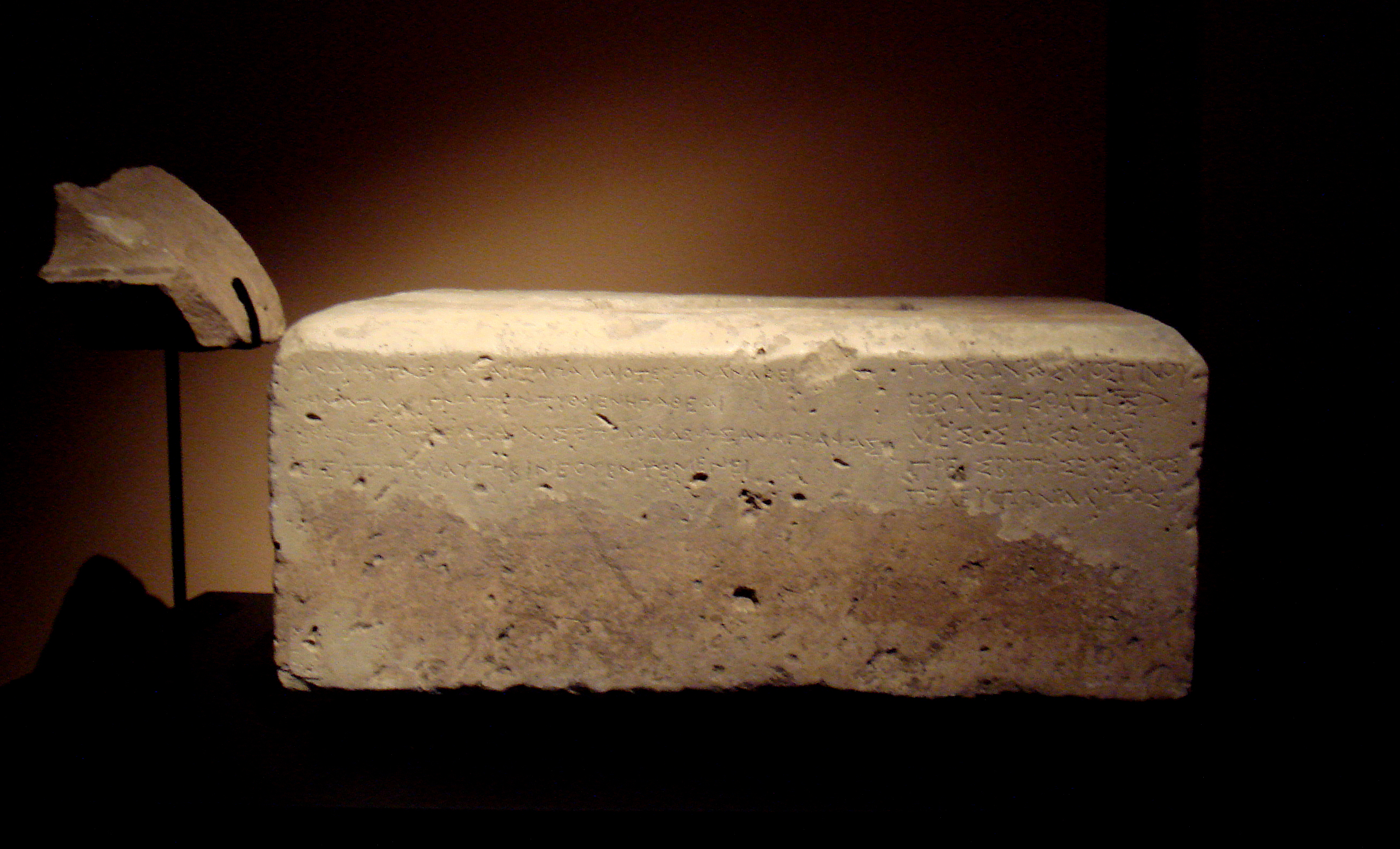
Another inscription, discovered in 1966 at Ai-Khanoum in modern-day Afghanistan, presents the final five maxims of Stobaeus, and reports that these maxims were originally found at "holy Pytho", i.e. Delphi. The inscription, dating from the 3rd century BC, reads as follows:
|ἀνδρῶν τοι σοφὰ ταῦτα παλαιοτέρων ἀνάκει[τα]ι ῥήματα ἀριγνώτων Πυθοὶ ἐν ἠγαθέαι· ἔνθεν ταῦτ[α] Κλέαρχος ἐπιφραδέως ἀναγράψας εἵσατο τηλαυγῆ Κινέου ἐν τεμένει.
παῖς ὢν κόσμιος γίνου, ἡβῶν ἐγκρατής, μέσος δίκαιος, πρεσβύτης εὔβουλος, τελευτῶν ἄλυπος. |These wise sayings of men of former times, the words of famous men, are consecrated at holy Pytho; from there Klearchos copied them carefully, to set them up, shining afar, in the precinct of Kineas.
When a child, show yourself well-behaved; When a young man, self controlled; In middle age, just; As an old man, a good counsellor; At the end of your life, free from sorrow.}}
The stone which bears this inscription formed the base of a stele, and a small fragment of the stele itself survives. The legible text on the stele, as reconstructed by Louis Robert, reads "Ε[ὐλόγει πάντας], Φιλόσοφ[ος γίνου]", which corresponds to Stobaeus no. 47 and 48 ("Speak well of everyone; Be a seeker of wisdom"). Robert suggested that the stele and base together bore the full list of 147 maxims, with the final five having been appended to the base due to the stonecutter running out of room. On the evidence of these inscriptions, it is now regarded as certain that the sayings preserved by Stobaeus were once inscribed at Delphi, and that their influence was felt not only in Greece, but throughout the wider Hellenistic world.
References
Notes
Citations
References
- Wilkins, Eliza G.. (1929). "The Delphic Maxims in Literature". University of Chicago Press.
- Jowett, Benjamin. (1892). "The Dialogues of Plato". Macmillan and Co.
- {{harvnb. Wilkins. 1929
- Pliny the Elder. "Natural History".
- (2020). "Calling Philosophers Names: On the Origin of a Discipline". Princeton University Press.
- (2016). "The Oxford Dictionary of Philosophy". Oxford University Press.
- (1956). "The Delphic Oracle". Basil Blackwell.
- Plato. "Protagoras".
- {{harvnb. Wilkins. 1929
- Verhasselt, Gertjan. (2022). "Clearchus of Soli: Text, Translation and Discussion". Routledge.
- [[Clearchus of Soli]], among others, attempted to reconcile the two accounts by claiming that Chilon, enquiring of the oracle what was best to be learnt, received the answer "Know thyself", and subsequently adopted the maxim as his own.{{harvnb. Verhasselt. 2022
- {{harvnb. Wilkins. 1929
- {{harvnb. Wilkins. 1929
- Plato. "Phaedrus".
- {{harvnb. Wilkins. 1929
- {{harvnb. Wilkins. 1929
- Nilsson, Martin P.. (1949). "A History of Greek Religion". Oxford University Press.
- Castro, David Hernández. (2019). "Empedocles without Horseshoes: Delphi's Criticism of Large Sacrifices". Symposion.
- More, Paul Elmer. (1905). "Shelburne Essays". Houghton Mifflin Company.
- {{harvnb. Wilkins. 1929
- {{harvnb. Wilkins. 1929
- {{harvnb. Wilkins. 1929
- {{harvnb. Wilkins. 1929
- Milton, John. (1674). "Paradise Lost".
- {{harvnb. Wilkins. 1929
- {{harvnb. Wilkins. 1929
- {{harvnb. More. 1905
- Wilkins, Eliza G.. (April 1927). "Ἐγγύα πάρα δ' Ἄτα in literature". Classical Philology.
- Diodorus Siculus. "Bibliotheca historica".
- Plutarch. "Septem sapientium convivium".
- Diogenes Laërtius. "Lives of the Eminent Philosophers".
- {{harvnb. Wilkins. 1927
- {{harvnb. Wilkins. 1927
- (1894). "Joannis Stobaei Anthologium". Berolini apud Weidmannos.
- Oikonomides, A. N.. (Summer 1987). "Records of 'The Commandments of the Seven Wise Men' in the 3rd c. B.C.". The Classical Bulletin.
- Petzl, Georg. (2017). "Ancient Philosophy: Textual Paths and Historical Explorations". Routledge.
- Judge, E. A.. (1998). "Ancient History in a Modern University". William B. Eerdmans.
- Oikonomides, A. N.. (1980). "The Lost Delphic Inscription with the Commandments of the Seven and P. Univ. Athen 2782". Zeitschrift für Papyrologie und Epigraphik.
- Wallace, Shane. (October 2016). "Greek Culture in Afghanistan and India: Old Evidence and New Discoveries". Greece & Rome.
- {{harvnb. Wallace. 2016
- Robert, Louis. (1968). "De Delphes à l'Oxus, inscriptions grecques nouvelles de la Bactriane". Comptes rendus des séances de l'Académie des Inscriptions et Belles-Lettres.
- Kurke, Leslie. (2011). "Aesopic Conversations". Princeton University Press.
This article was imported from Wikipedia and is available under the Creative Commons Attribution-ShareAlike 4.0 License. Content has been adapted to SurfDoc format. Original contributors can be found on the article history page.
Ask Mako anything about Delphic maxims — get instant answers, deeper analysis, and related topics.
Research with MakoFree with your Surf account
Create a free account to save articles, ask Mako questions, and organize your research.
Sign up freeThis content may have been generated or modified by AI. CloudSurf Software LLC is not responsible for the accuracy, completeness, or reliability of AI-generated content. Always verify important information from primary sources.
Report