From Surf Wiki (app.surf) — the open knowledge base
Decommunization
Process of purging former communist high officials and eliminating communist symbols

Process of purging former communist high officials and eliminating communist symbols
Decommunization in former communist states is the process of purging former communist high officials and eliminating communist symbols.
It is sometimes referred to as political cleansing. Although the term has been occasionally used during the Cold War, it is most commonly applied to the former countries of the Eastern Bloc, those countries that were considered being close to the Eastern Bloc and the Soviet Union to describe a number of legal and social changes during their periods of postcommunism during the post–Cold War era.
In some states, decommunization includes bans on communist symbols. While sharing common traits, the processes of decommunization have run differently in different states.
Responsible institutions
- Czechia – The Office of the Documentation and the Investigation of the Crimes of Communism
- Estonia – The Estonian International Commission for Investigation of Crimes Against Humanity
- Hungary – The Committee of National Remembrance
- Latvia – The Centre for the Documentation of the Consequences of Totalitarianism ()
- Lithuania – The Lithuanian Center for the Research of Genocide and Resistance
- Moldova – The Commission for the Study of the Communist Dictatorship in Moldova
- Poland – The Institute of National Remembrance — Commission for the Prosecution of Crimes against the Polish Nation
- Romania – The Institute for the Investigation of Communist Crimes in Romania
- Slovakia – The Institute of National Memory – Ústav pamäti národa (Sk)
- Ukraine – The Ukrainian Institute of National Remembrance
- Bulgaria - The Institute for Study of Communist Crimes in Bulgaria
Purging and prosecution of former communist officials
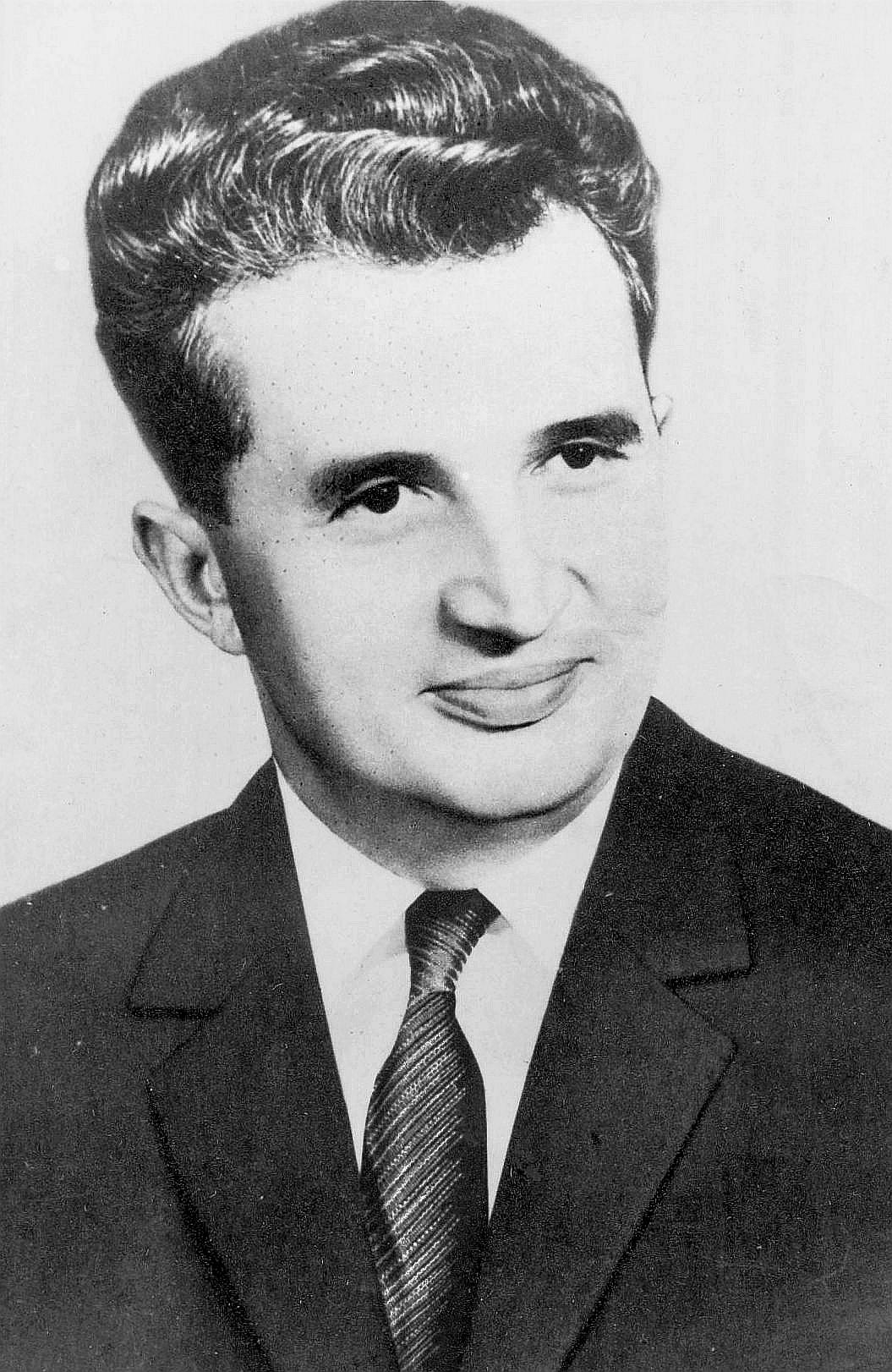
Decommunization came to refer to government policies of limiting the participation of former communist officials in politics. This should not be confused with lustration which is the procedure of scrutinizing holders or candidates for public offices in terms being former informants of the communist secret police.
According to a 1992 constitutional amendment in the Czech Republic, a person who publicly denies, puts in doubt, approves, or tries to justify Nazi or Communist genocide or other crimes of Nazis or Communists will be punished with a prison term of six months to three years. In 1992, Barbara Harff wrote that no Communist country or governing body had been convicted of genocide.
In August 2007, Arnold Meri, an Estonian Red Army veteran and cousin of former Estonian president Lennart Meri, faced charges of genocide by Estonian authorities for participating in the deportations of Estonians in Hiiumaa during 1949. Meri denied the accusation, characterizing them as politically motivated defamation, stating: "I do not consider myself guilty of genocide." The trial was halted when Meri died on 27 March 2009 at the age of 89.
State leaders
- Bulgaria – Todor Zhivkov was initially sentenced to seven years in prison, but transferred to house arrest for health reasons. He was later declared innocent by the Supreme Court of Bulgaria in 1996 and was released from house arrest shortly thereafter. He died as a free man one year later.
- Cambodia – Kang Kek Iew, Nuon Chea, and Khieu Samphan are Khmer Rouge leaders convicted by the UN-backed Khmer Rouge Tribunal.
- East Germany – Erich Honecker was arrested, but soon released and the proceedings against him were abandoned due to his ill health. He died in 1994. Several other members of the former East German government, such as Egon Krenz, were nonetheless convicted.
- Ethiopia – Mengistu Haile Mariam was sentenced to death but later commuted to life imprisonment after being found guilty in absentia.{{Cite web|url=https://www.reuters.com/article/world/ethiopias-ex-ruler-mengistu-sentenced-to-life-idUSL1153568/|title=Ethiopia's ex-ruler Mengistu sentenced to life |access-date=2024-09-06}}
- Poland – Wojciech Jaruzelski avoided most court appearances, citing poor health, and was never convicted. He died as a free man in 2014 and was buried with full military honors at the Powązki Military Cemetery, attended by the incumbent president of Poland, as well as two former presidents.
- Romania – Nicolae Ceaușescu and his wife, Elena Ceaușescu were sentenced to death and executed by firing squad.
Elimination of communist symbols
Ukraine
Main article: Decommunization in Ukraine
_after_destruction1_29.09.2014.jpg)
The process of decommunization and de-sovietization in Ukraine started soon after dissolution of the Soviet Union in the early 1990s, led by President Leonid Kravchuk, a former high-ranking party official. In April 2015, a formal decommunization process started in Ukraine after laws were approved which outlawed communist symbols, among other things. On 15 May 2015, President Petro Poroshenko signed a set of laws that started a six-month period for the removal of communist monuments (excluding World War II monuments) and renaming of public places named after communist-related themes. At the time, this meant that 22 cities and 44 villages would need to be renamed. In 2016, 51,493 streets and 987 cities and villages were renamed, and 1,320 Lenin monuments and 1,069 monuments to other communist figures were removed.
Poland
Since 1989, Poland has taken down hundreds of Soviet monuments due to the negative reputation the Soviet Union has in Poland. Although some Poles see the memorials as justified in honouring those who died fighting against Nazi Germany, others seek the removal of Soviet memorials because of the decades of totalitarianism that resulted from Soviet occupation, and also because of the 1939 Nazi-Soviet pact and the Katyn massacre. Historian Lukasz Kaminski of the Institute of National Remembrance said, "Memorials in city centers and villages can send the wrong historical signal... What do you think we got, when the Soviets liberated Poland from Hitler, if not a new yoke?"
In the 2010s, Poland continued to demolish remaining Soviet monuments, some of which have been relocated to museums. The removals have attracted criticism from Russian Foreign Minister Sergey Lavrov, who has lashed out at Warsaw officials for opposing the monuments, as has Maria Zakharova, a spokesperson for the Russian foreign ministry.
Finland
Since the collapse of the USSR there was active debate regarding the fate of the Soviet symbols that were received as gifts. For example, the World peace sculpture, gifted to Finland by the USSR in 1990, has been vandalized several times during its existence. Since Russia attacked Ukraine in 2022 the discussion of removing these symbols started to intensify. Statues of Lenin were removed from Turku and Kotka supposedly as "a gesture of solidarity" for Ukraine. The World Peace sculpture was also removed from Helsinki (the official reason was that it needed to be relocated due to roadworks). The name of Lenin Park will be changed in the future. Critics have considered the latest moves as harmful since history will be erased by these actions. It can also be asked if the erasure can be logically argued as Lenin and Putin representing different ideologies. There has been some criticism from the political right-wing regarding the history of the elderly Social Democrats who some accuse of spying for the Stasi. The so-called Tiitinen list has been discussed and the right-wing has demanded it be declassified.
Czech Republic
In April 2020, a statue of Soviet Marshal Ivan Konev was removed from Prague, which prompted criminal investigation by Russian authorities who considered it an insult. The Mayor of Prague's sixth municipal district, Ondřej Kolář, announced on Prima televize that he would be under police protection after a Russian man made attempts on his life. Prime Minister Andrej Babiš condemned that as foreign interference, while Kremlin Press Secretary Dmitry Peskov dismissed allegations of Russian involvement as "another hoax".
Bulgaria
In December 2023, the Monument to the Soviet Army in downtown Sofia was partially dismantled and set to be put in the Museum of Socialist Art. As of March 2024, it has yet to be put in the museum or replaced with a new monument.
Armenia
In 1991, the Lenin monument was removed from Republic Square in Yerevan, after he was beheaded. The pedestal of the monument remained standing until 1996.
Kyrgyzstan
On 7 June 2025, Kyrgyz authorities took down a statue of Lenin in the second largest city of Osh, which is also the tallest Lenin statue in Central Asia.
Results
Communist parties outside of Poland, Ukraine and the Baltic states were not outlawed and their members were not prosecuted. Just a few places attempted to exclude even members of communist secret services from decision-making. In a number of countries, the communist party simply changed its name and continued to function.
Stephen Holmes of the University of Chicago argued in 1996 that after a period of active decommunization, it was met with a near-universal failure. After the introduction of lustration, demand for scapegoats has become relatively low, and former communists have been elected for high governmental and other administrative positions. Holmes notes that the only real exception was former East Germany, where thousands of former Stasi informers have been fired from public positions.
Holmes suggests the following reasons for the turnoff of decommunization:
- After 45–70 years of Communist state rule, nearly every family has members associated with the state. After the initial desire "to root out the reds" came a realization that massive punishment is wrong and finding only some guilty is hardly justice.
- The urgency of the current economic problems of postcommunism makes the crimes of the communist past "old news" for many citizens.
- Decommunization is believed to be a power game of elites.
- The difficulty of dislodging the social elite makes it require a totalitarian state to disenfranchise the "enemies of the people" quickly and efficiently and a desire for normalcy overcomes the desire for punitive justice.
- Very few people have a perfectly clean slate and so are available to fill the positions that require significant expertise.
Similar concepts
Decommunization has been compared to denazification in post-World War II Europe, and the de-Ba'athification in post-Saddam Hussein Iraq.
References
References
- "German zastąpi działacza komunistycznego". radiopoznan.fm.
- Jennifer A. Yoder (1999) "From East Germans to Germans?: The New Postcommunist Elites", {{ISBN. 0-8223-2372-9,, pp. 95–97
- (1968). "The Current Digest of the Soviet Press". American Association for the Advancement of Slavic Studies.
- (17 Jun 2008). "Lithuanian ban on Soviet symbols". BBC News.
- Shevchenko, Vitaly. (14 April 2015). "Goodbye, Lenin: Ukraine moves to ban communist symbols". [[BBC News]].
- "Greetings".
- "The Centre for the Documentation of the Consequences of Totalitarianism".
- Whine, Michael (27 April 2008). "Expanding Holocaust Denial and Legislation". ''Jewish Political Studies Review''. Jerusalem: Jerusalem Center for Public Affairs. '''20''' (1/2): 57–77. {{JSTOR. 25834777.
- Harff, Barbara (1992). "Recognizing Genocides and Politicides". In Fein, Helen (ed.). ''Genocide Watch''. '''27'''. pp. 37–38.
- [https://web.archive.org/web/20090402154538/http://www.balticguide.ee/index.php/a641 "Entisen presidentin serkkua syytetään neuvostoajan kyydityksistä"] (in Finnish) ["Former President's cousin accused of Soviet-era raids"]. Baltic Guide. Archived from [https://web.archive.org/web/20090402154538/https://www.balticguide.ee/index.php/a641 the original] on 2 April 2009.
- [https://web.archive.org/web/20110607181514/http://www.b92.net/eng/news/globe-article.php?yyyy=2007&mm=08&dd=23&nav_category=117&version=print "Estonian charged with Communist genocide"]. ''International Herald Tribune''. 23 August 2007. Archived from [https://www.b92.net/eng/news/globe-article.php?yyyy=2007&mm=08&dd=23&nav_category=117&version=print the original] on 7 June 2011. Retrieved 17 November 2020.
- [https://news.bbc.co.uk/2/hi/europe/7978111.stm "Estonian war figure laid to rest"]. BBC News. 2 April 2009. Retrieved 17 November 2020.
- "BBC News {{!}} Europe {{!}} Bulgaria's ex-communist leader dies".
- "Three presidents to attend Jaruzelski funeral".
- Khotin, Rostyslav (26 November 2009). [https://news.bbc.co.uk/2/hi/europe/8380433.stm "Ukraine tears down controversial statue"]. BBC Ukrainian Service. BBC News. Retrieved 6 February 2020.
- Motyl, Alexander J.. (28 April 2015). "Decommunizing Ukraine".
- [http://www.pravda.com.ua/news/2015/05/15/7068057/ Poroshenko signed the laws about decomunization]. [[Ukrayinska Pravda]]. 15 May 2015
[http://en.interfax.com.ua/news/general/265988.html Poroshenko signs laws on denouncing Communist, Nazi regimes], [[Interfax-Ukraine]]. 15 May 2015 - {{in lang. uk [http://www.pravda.com.ua/news/2015/06/4/7070191 In Ukraine rename 22 cities and 44 villages], [[Ukrayinska Pravda]] (4 June 2015)
- {{in lang. uk [http://poltava.depo.ua/ukr/poltava/komsomolsk-u-bud-yakomu-vipadku-pereymenuyut-01102015183700 Komsomolsk in any case be renamed] {{Webarchive. link. (29 November 2022 , [[depo.ua]] (1 October 2015))
- [https://www.ukrinform.net/rubric-society_and_culture/2147127-decommunization-reform-25-districts-and-987-populated-areas-in-ukraine-renamed-in-2016.html Decommunization reform: 25 districts and 987 populated areas in Ukraine renamed in 2016], [[Ukrinform]] (27 December 2016)
- Sieradzka, Monika. (13 April 2016). "Poland plans to tear down hundreds of Soviet memorials".
- (13 July 2018). "Poles apart: the bitter conflict over a nation's communist history".
- (31 March 2016). "Poland Set to Demolish 500 Soviet Monuments".
- (4 April 2022). "Kotka removes Finland's last remaining Lenin statue".
- (8 August 2022). "Helsinki removes monument gifted by Soviet Union".
- (29 April 2020). "Prague district mayor says he is under police protection against Russian threat".
- (7 June 2025). "Central Asia's tallest Lenin statue taken down". [[BBC News]].
- (7 June 2025). "Kyrgyzstan Dismantles Central Asia's Tallest Lenin Statue". [[Moscow Times]].
- [http://www.icer.it/docs/wp2000/Pejovich162000.pdf After socialism: where hope for individual liberty lies]. Svetozar Pejovich.
- Michael Mandelbaum (Ed., 1996) "Post-Communism: Four Perspectives", ''Council on Foreign Relations'' {{ISBN. 0876091869
- [http://www.beyondintractability.org/essay/lustration Eric Brahm, "Lustration"], Beyond Intractability.org, June 2004, 8 Sep 2009
This article was imported from Wikipedia and is available under the Creative Commons Attribution-ShareAlike 4.0 License. Content has been adapted to SurfDoc format. Original contributors can be found on the article history page.
Ask Mako anything about Decommunization — get instant answers, deeper analysis, and related topics.
Research with MakoFree with your Surf account
Create a free account to save articles, ask Mako questions, and organize your research.
Sign up freeThis content may have been generated or modified by AI. CloudSurf Software LLC is not responsible for the accuracy, completeness, or reliability of AI-generated content. Always verify important information from primary sources.
Report