From Surf Wiki (app.surf) — the open knowledge base
Decapod anatomy
Entire structure of a decapod crustacean
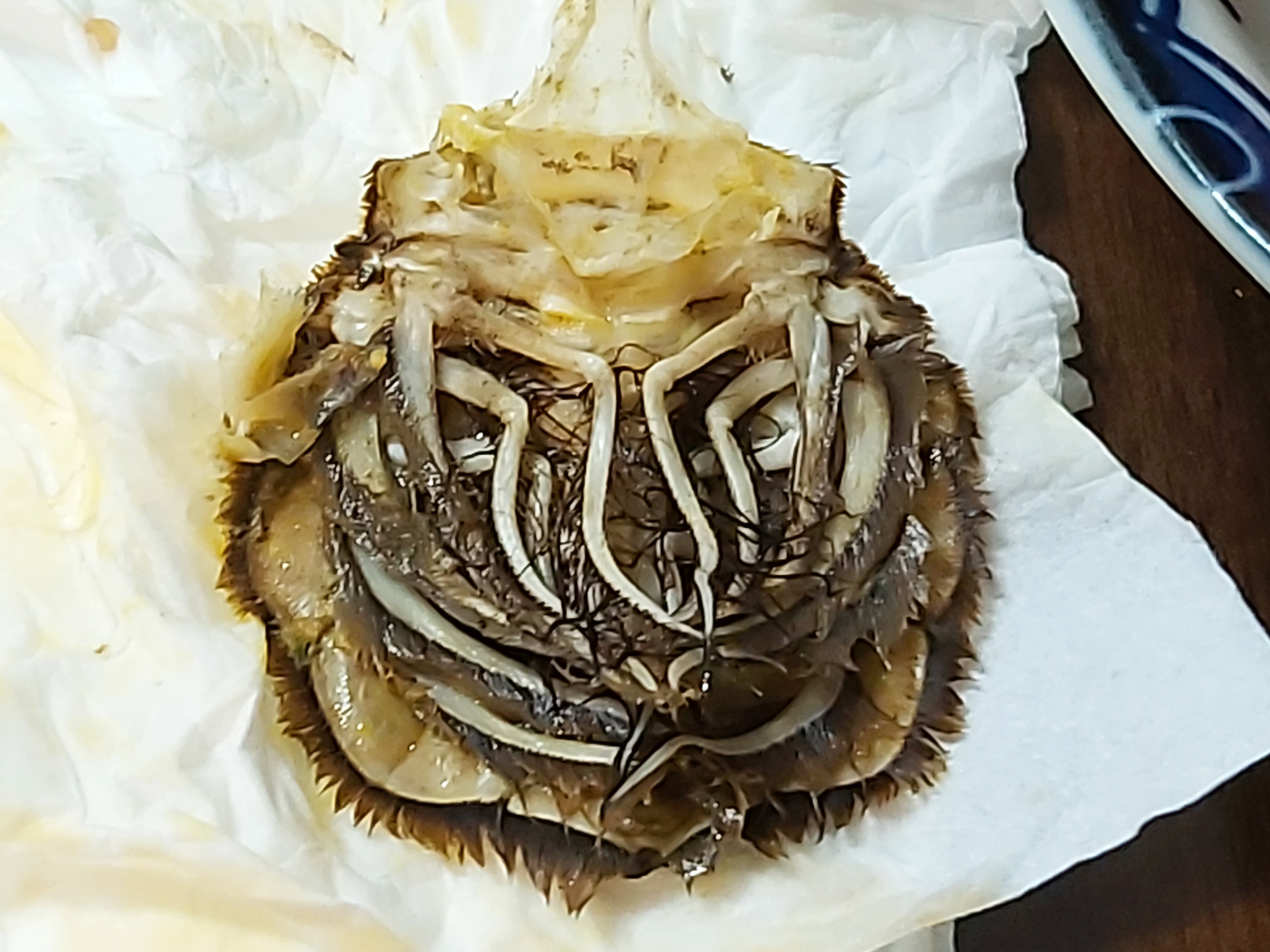
Entire structure of a decapod crustacean
The anatomy of a decapod consists of 20 body segments grouped into two main body parts: the cephalothorax and the pleon (abdomen). Each segment – often called a somite – may possess one pair of appendages, although in various groups these may be reduced or missing.
Cephalothorax
Head
- antennules
- antennae
- mandibles
- first maxillae
- second maxillae The head also bears the (usually stalked) compound eyes. The distal portion of a mandible or maxilla which has a sensory function is known as a palp.
Thorax / pereon
- first maxillipeds
- second maxillipeds
- third maxillipeds
- first pereiopods
- second pereiopods
- third pereiopods
- fourth pereiopods
- fifth pereiopods
Maxillipeds are appendages modified to function as mouthparts. Particularly in the less advanced decapods, these can be very similar to the pereiopods. Pereiopods are primarily walking legs and are also used for gathering food. They are also the ten legs from which decapods take their name. Those pereiopods which are armed with a claw (chela) may be referred to as chelipeds. The moveable fingers of a claw are known as dactyli. The pereiopods bear the sexual organs, which are the third pereiopod in the female and the fifth pereiopod in the male. Each appendage from the second maxilla to the fifth pereiopod also bears a gill. In the Anomura (hermit crabs and related animals), the fifth pair of pereiopods is often hidden inside the branchial chamber, where they are used to clean the gills. The cephalothorax is covered by a carapace which protects the internal organs and the gills; the section of the carapace that projects in front of the eyes is called the rostrum.
Abdomen / pleon
- first pleopods
- second pleopods
- third pleopods
- fourth pleopods
- fifth pleopods
- uropods
Pleopods (also called swimmerets) are primarily swimming legs, and are also used for brooding the eggs (except in prawns), catching food (then swept to the mouth), and can sometimes bear their own gills. In some taxa, the first one or two pairs of pleopods are specialised in the males for fertilisation, and are referred to as the gonopods.
Telson
At the end of the pleon is the tail fan, comprising a pair of biramous uropods and the telson, which bears the anus. Together, they are used for steering while swimming, and in the caridoid escape reaction.
In crabs and some other carcinised decapods, the abdomen is folded under the cephalothorax.
References
References
- Poore. (2004). "Marine Decapod Crustacea of Southern Australia: A Guide to Identification". [[CSIRO Publishing]].
- Robert P. D. Crean. (November 14, 2004). "Characters and Anatomy". [[University of Bristol]].
This article was imported from Wikipedia and is available under the Creative Commons Attribution-ShareAlike 4.0 License. Content has been adapted to SurfDoc format. Original contributors can be found on the article history page.
Ask Mako anything about Decapod anatomy — get instant answers, deeper analysis, and related topics.
Research with MakoFree with your Surf account
Create a free account to save articles, ask Mako questions, and organize your research.
Sign up freeThis content may have been generated or modified by AI. CloudSurf Software LLC is not responsible for the accuracy, completeness, or reliability of AI-generated content. Always verify important information from primary sources.
Report