From Surf Wiki (app.surf) — the open knowledge base
David Wilmot (politician)
American politician and judge (1814–1868)
American politician and judge (1814–1868)
| Field | Value |
|---|---|
| name | David Wilmot |
| image | David Wilmot.png |
| office | Judge of the Court of Claims |
| term_start | March 7, 1863 |
| term_end | March 16, 1868 |
| appointer | Abraham Lincoln |
| predecessor | Seat established by 12 Stat. 765 |
| successor | Samuel Milligan |
| jr/sr1 | United States Senator |
| state1 | Pennsylvania |
| term_start1 | March 14, 1861 |
| term_end1 | March 3, 1863 |
| predecessor1 | Simon Cameron |
| successor1 | Charles R. Buckalew |
| state2 | Pennsylvania |
| district2 | 12th |
| term_start2 | March 4, 1845 |
| term_end2 | March 3, 1851 |
| predecessor2 | George Fuller |
| successor2 | Galusha A. Grow |
| birth_date | |
| birth_place | Bethany, Pennsylvania, U.S. |
| death_date | |
| death_place | Towanda, Pennsylvania, U.S. |
| resting_place | Riverside Cemetery |
| Towanda, Pennsylvania | |
| party | Democratic (until 1848) |
| Free Soil (1848–1854) | |
| Republican (1854–1868) | |
| spouse | |
| children | 3 |
| signature | David Wilmot signature.png |
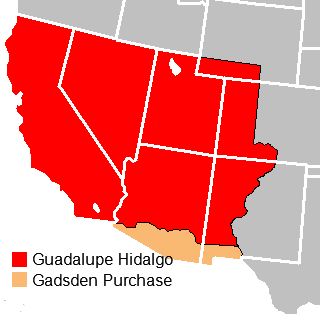
| jr/sr1 = United States Senator Towanda, Pennsylvania Free Soil (1848–1854) Republican (1854–1868) David Wilmot (January 20, 1814 – March 16, 1868) was an American politician and judge from Pennsylvania who served in the U.S. House of Representatives and U.S. Senate, and as a judge of the Court of Claims. He is best known for being the prime sponsor and eponym of the Wilmot Proviso, a failed legislative proposal to ban the expansion of slavery into western territories gained in the Mexican Cession. A northern Democrat when he introduced and supported the Proviso, he subsequently became a notable member of the anti-slavery Free Soil Party. Later, Wilmot was instrumental in establishing the Pennsylvania Republican Party.
Early life and education
Wilmot was born on January 20, 1814, in Bethany, Pennsylvania. He completed preparatory studies at the local Beech Woods Academy and the Cayuga Lake Academy in Aurora, Cayuga County, New York. He then read law with Pennsylvania state judge William Jessup in Montrose, Pennsylvania, and with George Washington Woodward in Wilkes-Barre, Pennsylvania, in August 1834. Wilmot was admitted to the bar of Bradford County, Pennsylvania, and entered private practice in Towanda, from 1834 to 1844.
Congressional service
Wilmot was elected as a Democrat from Pennsylvania's 12th congressional district to the United States House of Representatives of the 29th, 30th, and 31st United States Congresses, serving from March 4, 1845 to March 3, 1851.
Introducing the Wilmot Proviso
Upon taking his seat in Congress, Wilmot initially supported the policies of Democratic president James K. Polk. He also became part of an informal group of anti-slavery Democrats led by New York Congressman Preston King, who was a protégé of New York governor Silas Wright and an ally of former president Martin Van Buren. Although Wilmot opposed the extension of slavery into the territories, he was generally considered to be a Democratic Party loyalist; he supported Polk in the initiation of the Mexican–American War and was the lone House Democrat from Pennsylvania to vote for the Walker tariff. However, during Polk's presidency, anti-slavery Northern Democrats increasingly came to view Polk as unduly favorable to Southern interests. They were specifically disappointed by Polk's decision to compromise with Britain over the partition of Oregon, as well as Polk's veto of an internal improvements bill. As James G. Blaine later wrote:
In August 1846, an appropriations bill for $2 million to be used by the President in negotiating a treaty of peace with Mexico was introduced in the House. Wilmot immediately offered the following amendment:
:"Provided, That, as an express and fundamental condition to the acquisition of any territory from the Republic of Mexico by the United States, by virtue of any treaty which may be negotiated between them, and to the use by the Executive of the moneys herein appropriated, neither slavery nor involuntary servitude shall ever exist in any part of said territory, except for crime, whereof the party shall first be duly convicted."
Wilmot modeled the language for what would usually be referred to as the Wilmot Proviso after the Northwest Ordinance of 1787. Unlike some Northern Whigs, Wilmot and other anti-slavery Democrats were largely unconcerned by the issue of racial equality, and instead opposed the expansion of slavery because they believed the institution was detrimental to the "laboring white man". Historian Sean Wilentz writes that it is unclear why Wilmot, an "unremarkable" first-term Congressman, was the one to introduce the measure. Wilmot would later claim that he had introduced the proviso independent of any other members of Congress, while Congressman Jacob Brinkerhoff claimed that he was the true author of the proviso. Wilentz speculates that the proviso was jointly drafted by Wilmot and other anti-slavery Democrats, and that the drafters agreed that whoever had the first opportunity to introduce the proviso would do so.
In a February 1847 debate over the Proviso, Wilmot explained that he was not an abolitionist, and was not seeking to abolish slavery in the Southern states, but simply wanted to preserve the integrity of free territories that did not have slavery and did not want it:
In an 1848 speech, Wilmot responded to critics who called him a radical abolitionist by pointing to Thomas Jefferson's proposed Land Ordinance of 1784, which would have banned slavery in a large portion of western territory slated for federal expansion.
The House, after first voting down a counter-proposal simply to extend the Missouri Compromise line across the Mexican Cession, passed the proviso by a vote of 83–64. This led to an attempt to table the entire appropriations bill rather than pass it with "the obnoxious proviso attached", but this effort was defeated "in an ominously sectional vote, 78–94". The U.S. Senate adjourned rather than approve the bill with the proviso.
Free Soil movement
A measure to the Wilmot Proviso was brought forward at the next session of Congress, with the appropriation amount increased to $3 million, and the scope of the amendment expanded to include all future territory which might be acquired by the United States. This was passed in the House by a vote of 115 to 105, but the Senate refused to concur and passed a bill of its own without the amendment. The House acquiesced, owing largely to the influence of general Lewis Cass. As the 1848 presidential election took shape, the Democrats rejected the Wilmot Proviso in their platform and selected Cass as their candidate to run on a popular sovereignty platform. The new Free Soil Party rallied around the Wilmot Proviso, and nominated Van Buren on a platform calling for "No more slave states and no more slave territory."
By 1848 Wilmot was thoroughly identified as a Free Soiler, but, like many other Free Soilers, he did not oppose the expansion of slavery based on a legal rejection of the short-term existence of the institution itself, but rather because he felt slavery was detrimental to the interests of whites. In fact, he sometimes referred to the Wilmot proviso as the "White Man's Proviso". In a speech in the House, Wilmot said, "I plead the cause and the rights of white freemen [and] I would preserve to free white labor a fair country, a rich inheritance, where the sons of toil, of my own race and own color, can live without the disgrace which association with negro slavery brings upon free labor." Around the same time, however, Wilmot, in a New York speech, spoke of the ultimate demise of slavery when he argued, "Keep it within given limits ...and in time it will wear itself out. Its existence can only be perpetuated by constant expansion. ... Slavery has within itself the seeds of its own destruction."
Wilmot was presented as the Free Soil candidate for speaker of the United States House of Representatives in 1849 and was soon at odds with the mainstream Pennsylvania Democratic Party led by James Buchanan. Wilmot was forced to withdraw from the 1850 congressional elections in favor of the more moderate Galusha A. Grow.
State judicial service
Wilmot was president judge of the Pennsylvania courts of common pleas for the thirteenth district from 1851 to 1861. He took a leading part in the founding of the Republican Party in 1854. He was the chairman of the Republican Party platform committee, was a delegate to the 1856 Republican National Convention, and worked vigorously for the first Republican presidential candidate, John C. Frémont, in the 1856 election. He was an unsuccessful Republican candidate for governor of Pennsylvania in 1857, losing to Democrat William F. Packer.
Later congressional service
Wilmot was elected as a Republican to the U.S. Senate to fill the vacancy caused by the resignation of Simon Cameron. He served from March 14, 1861 to March 3, 1863. He was not a candidate for reelection in 1862. He was a member of the Peace Conference of 1861, held in Washington, D.C., in an effort to devise means to prevent the impending American Civil War.
Federal judicial service
Wilmot was nominated by president Abraham Lincoln on March 6, 1863, to the Court of Claims, to a new seat authorized by 12 Stat. 765. He was confirmed by the U.S. Senate on March 7, 1863, and received his commission the same day.
Wilmot died on March 16, 1868. He was interred in Riverside Cemetery in Towanda.
Family

Wilmot was the son of Randall (1792–1876) and Mary (née Grant) Wilmot (1792–1820). His father was a well-to-do merchant. In 1836, he married Anna Morgan. The couple had three children, none of whom survived childhood.
Legacy and honors
- A Pennsylvania State historical marker is placed at Williams Street at the Riverside Cemetery, Towanda, identifying the cemetery as his resting place.
- The Wilmot House was added to the National Register of Historic Places in 1974, and David Wilmot School in 1988.
References
Sources
- Berwanger, Eugene H. The Frontier Against Slavery: Western Anti-Negro Prejudice and the Slavery Extension Controversy. (1967) .
- Duff, James H. “DAVID WILMOT, THE STATESMAN AND POLITICAL LEADER.” Pennsylvania History: A Journal of Mid-Atlantic Studies 13, no. 4 (1946): 283–89. http://www.jstor.org/stable/27766732.
- Foner, Eric. Free Soil, Free Labor, Free Men: The Ideology of the Republican Party Before the Civil War. (1970) .
- Levine, Bruce. Half Slave and Half Free: The Roots of Civil War. (1992).
- McKnight, Brian D., article on David Wilmot in Encyclopedia of the American Civil War, edited by David S. Heidler and Jeanne T. Heidler, 2000, .
- Morrison, Michael A. Slavery and the American West: The Eclipse of Manifest Destiny and the Coming of the Civil War. (1997) .
- Persinger, Clark E. “The ‘Bargain of 1844’ as the Origin of the Wilmot Proviso.” The Quarterly of the Oregon Historical Society 15, no. 3 (1914): 137–46. http://www.jstor.org/stable/20609962.
- Woodson, C. G. “DAVID WILMOT, A MAN OF VISION.” Negro History Bulletin 7, no. 4 (1944): 76–76. http://www.jstor.org/stable/44212094.
References
- "Wilmot, David – Federal Judicial Center".
- {{CongBio. W000566
- Wilentz (2005), pp. 593–595
- Blaine, James Gillespie. "Twenty Years of Congress, Vol. 1 / From Lincoln to Garfield, with a Review of the Events Which Led to the Political Revolution of 1860".
- Wilentz (2005), p. 596
- {{EB1911
- Wilentz (2005), pp. 597–598
- "David Wilmot Argues for a Free California, 1847".
- (1924). "David Wilmot, Free-soiler".
- Morrison, p. 41
- Levine p. 183
- "Archived copy".
- Berwanger pp. 125–126
- Foner, p. 116
- McKnight p. 2121
- [http://www.waymarking.com/waymarks/WM8BT_David_Wilmot "David Wilmot"], Waymarking
- {{NRISref
This article was imported from Wikipedia and is available under the Creative Commons Attribution-ShareAlike 4.0 License. Content has been adapted to SurfDoc format. Original contributors can be found on the article history page.
Ask Mako anything about David Wilmot (politician) — get instant answers, deeper analysis, and related topics.
Research with MakoFree with your Surf account
Create a free account to save articles, ask Mako questions, and organize your research.
Sign up freeThis content may have been generated or modified by AI. CloudSurf Software LLC is not responsible for the accuracy, completeness, or reliability of AI-generated content. Always verify important information from primary sources.
Report