From Surf Wiki (app.surf) — the open knowledge base
Darjeeling district
District in West Bengal, India

District in West Bengal, India
| Field | Value |
|---|---|
| name | Darjeeling district |
| settlement_type | District |
| image_skyline | {{Photomontage |
| photo1a | Tea Estate, Darjeeling.jpg |
| photo1b | Darjeeling Toy Train at Batasia Loop.jpg |
| photo2a | Siliguri view 2.jpg |
| photo3a | Darjeeling & Mt Kangjenjunga (8131820332).jpg |
| size | 300 |
| foot_montage | Clockwise from top-left: Tea estate in Darjeeling, Darjeeling Himalayan Railway, View of Kangchenjunga from Tiger Hill, View of Siliguri |
| image_map1 | Darjeeling in West Bengal (India).svg |
| mapsize | 300 |
| map_caption1 | Location of Darjeeling district in West Bengal |
| coordinates | |
| subdivision_type | Country |
| subdivision_name | India |
| subdivision_type1 | State |
| subdivision_name1 | West Bengal |
| subdivision_type2 | Division |
| subdivision_name2 | Jalpaiguri |
| seat_type | Headquarters |
| seat | Darjeeling |
| leader_title | Subdivisions |
| leader_name | Darjeeling Sadar, Mirik, Siliguri, Kurseong |
| leader_title1 | CD Blocks |
| leader_name1 | Darjeeling Pulbazar, Jorebunglow Sukhiapokhri, Rangli Rangliot, Mirik, Naxalbari, Kharibari, Phansidewa, Matigara, Kurseong |
| leader_title2 | Lok Sabha constituencies |
| leader_name2 | Darjeeling |
| leader_title3 | Vidhan Sabha constituencies |
| leader_name3 | Darjeeling, Kurseong, Matigara-Naxalbari, Siliguri, Phansidewa |
| total_type | Total |
| area_total_km2 | 3149 |
| area_footnotes | |
| population_as_of | 2011 |
| population_total | 1,595,181 |
| population_urban | 727963 |
| population_density_km2 | auto |
| demographics_type1 | Demographics |
| demographics1_title1 | Literacy |
| demographics1_info1 | 79.56 per cent |
| demographics1_title2 | Sex ratio |
| demographics1_info2 | 970 ♂/♀ |
| demographics_type2 | Languages |
| demographics2_title1 | Official |
| demographics2_info1 | Bengali, Nepali |
| demographics2_title2 | Additional official |
| demographics2_info2 | English |
| timezone1 | IST |
| utc_offset1 | +05:30 |
| website |
Darjeeling District is the northernmost district of the state of West Bengal in eastern India in the foothills of the Himalayas, in the eastern Sivalik Hills.The district is famous for its hill station and Darjeeling tea. Darjeeling is the district headquarters. Kurseong, Siliguri and Mirik, three major towns in the district, are the subdivisional headquarters of the district. Kalimpong was one of the subdivisions but on 14 February 2017, it officially became a separate Kalimpong district.
Geographically, the district can be divided into two broad divisions: the hills and the plains. The entire hilly region of the district comes under the Gorkhaland Territorial Administration, a semi-autonomous administrative body under the state government of West Bengal. This body covers the three hill subdivisions of Darjeeling, Kurseong and Mirik and the district of Kalimpong. The foothills of Darjeeling Himalayas, which comes under the Siliguri subdivision, is known as the Terai. The district is bounded on the north by Sikkim, on the south by Uttar Dinajpur district of West Bengal, southwest by Kishanganj district of Bihar state, on the southeast by Panchagarh district of Bangladesh, on the east by Kalimpong and Jalpaiguri districts, and on the west by easternmost Koshi Province of Nepal. Darjeeling district has a length from north to south of 18 mi and a breadth from east to west of 16 mi. As of 2011, it was the second least populous district of West Bengal (out of 19), after Dakshin Dinajpur.
Name
The etymological term of Darjeeling is denoted "Tajenglung", a Limbu language terminology that means the stones that "talk to each other", according to the historian Sankarhang Subba of Darjeeling. The name Darjeeling acclaimed from the Tibetan words Dorje, which is the thunderbolt sceptre of the Hindu deity Indra, and ling, which means "a place" or "land".
History
The ancient inhabitants of Darjeeling are the Lepcha and Limbu.
Most of Darjeeling formed a part of dominions of the Chogyal of Sikkim, who had been engaged in an unsuccessful warfare against the Gorkhas of Nepal. From 1780, the Gorkhas made several attempts to capture the entire region of Darjeeling. By the beginning of the 19th century, they had overrun Sikkim as far eastward as the Teesta River and had conquered and annexed the entire Terai.
In the meantime, the British were engaged in preventing the Gorkhas from over-running the whole of the northern frontier. The Anglo-Gorkha war broke out in 1814, which resulted in the defeat of the Gorkhas and subsequently led to the signing of the Sugauli Treaty in 1815. According to the treaty, Nepal had to cede all those territories which the Gorkhas had annexed from the Chogyal of Sikkim to the British East India Company (i.e., the area between Mechi River and Teesta River). In 1817, through the Treaty of Titalia, the British East India Company reinstated the Chogyal of Sikkim, restored all the tracts of land between the Mechi and the Teesta rivers to the Chogyal of Sikkim and guaranteed his sovereignty. In 1835, the hill of Darjeeling, including an enclave of 138 sqmi, was given to the British East India Company by Sikkim.
In November 1864, the Treaty of Sinchula was executed in which the Bhutan Dooars with the passes leading into the hills and Kalimpong were ceded to the British by Bhutan. The Darjeeling district can be said to have assumed its present shape and size in 1866 with an area of 1234 sq. miles.
Before 1861 and from 1870 to 1874, Darjeeling District was a "Non-Regulated Area" (where acts and regulations of the British Raj did not automatically apply in the district in line with rest of the country, unless specifically extended). From 1862 to 1870, it was considered a "Regulated Area". The phrase "Non-Regulated Area" was changed to "Scheduled District" in 1874 and again to "Backward Tracts" in 1919. The status was known as "Partially Excluded Area" from 1935 until the independence of India.
On 14 February 2017, Kalimpong district was carved out of Darjeeling district.
Gorkhaland Movement
Main article: Gorkhaland movement
During the 1980s, the Gorkha National Liberation Front led an intensive and often violent campaign for the creation of a separate Gorkhaland state within India, across the Nepali-speaking areas in northern West Bengal. The movement reached its peak around 1986–1988 but ended with the establishment of the Darjeeling Gorkha Hill Council in 1988.
The hill areas of Darjeeling enjoyed some measure of autonomy under the Darjeeling Gorkha Hill Council. However, the demand for full statehood within India has emerged once again, with the Gorkha Janmukti Morcha as its chief proponent. The Gorkhaland Territorial Administration replaced the DGHC in August 2012 after the GJM signed an agreement with the government.
Geography


The Darjeeling hill area is formed of comparatively recent rock structure that has a direct bearing on landslides. Heavy monsoon precipitation contributes to the landslides. Soils of Darjeeling hill areas are extremely varied, depending on elevation, degree of slope, vegetative cover and geolithology.
The Himalayas serve as the source of natural resources for the population residing in the hills as well as in the plains. As human population expands in the hills, forests are being depleted for the extension of agricultural lands, introduction of new settlements, roadways, etc. The growing changes coming in the wake of urbanisation and industrialisation leave deep impressions on the hill ecosystem.[[File:Bridge at Teesta.jpg|thumb|right|200px|[[Coronation Bridge]] over [[Teesta River]].]]
The economy of Darjeeling hill area depends on tea production, horticulture, agriculture, forestry and tourism. The major portions of the forests are today found at elevations of 2000 m and above. The area in between 1000 and 2000 m is cleared either for tea plantation or cultivation. About 30 per cent of the forest covers found in the lower hills are deciduous. Evergreen forest constitutes only about 6 per cent of the total forest coverage. Shorea robusta remains the most prominent species of tropical moist deciduous forest along with heavy undergrowth.
Teesta, Rangeet, Mechi, Balason, Mahananda and Rammam are the important rivers of the district.
Climate
| Jan record high C = 16 | Feb record high C = 17 | Mar record high C = 23 | Apr record high C = 24 | May record high C = 25 | Jun record high C = 24 | Jul record high C = 25 | Aug record high C = 25 | Sep record high C = 25 | Oct record high C = 23 | Nov record high C = 19 | Dec record high C = 17 | year record high C = 25 | Jan record low C = −3 | Feb record low C = −2 | Mar record low C = −1 | Apr record low C = 1 | May record low C = 6 | Jun record low C = 8 | Jul record low C = 9 | Aug record low C = 11 | Sep record low C = 10 | Oct record low C = 4 | Nov record low C = 2 | Dec record low C = −1 | year record low C = −3
Area

Subdivisions
Darjeeling District comprises four subdivisions:
- Darjeeling Sadar subdivision
- Kurseong subdivision
- Mirik subdivision
- Siliguri subdivision
Assembly constituencies

The district was previously divided into six assembly constituencies. As per the order of the Delimitation Commission in respect of the delimitation of constituencies in West Bengal, the district had been divided into six assembly constituencies. Kalimpong has become a separate district from 14 February 2017, so the number of assembly constituencies in Darjeeling district is now five.
| No. | Name | Lok Sabha | MLA | 2021 Winner | 2024 Lead |
|---|---|---|---|---|---|
| 23 | Darjeeling | Darjeeling | Neeraj Zimba | ||
| 24 | Kurseong | Bishnu Prasad Sharma | |||
| 25 | Matigara-Naxalbari (SC) | Anandamoy Barman | |||
| 26 | Siliguri | Shankar Ghosh | |||
| 27 | Phansidewa (ST) | Durga Murmu |
Phansidewa constituency is reserved for Scheduled Tribes (ST) candidates. Matigara-Naxalbari constituency is reserved for Scheduled Castes (SC) candidates. Along with one assembly constituency from Kalimpong district and one assembly constituency from Uttar Dinajpur district, the five assembly constituencies of this district form the Darjeeling Lok Sabha constituency.
Demographics

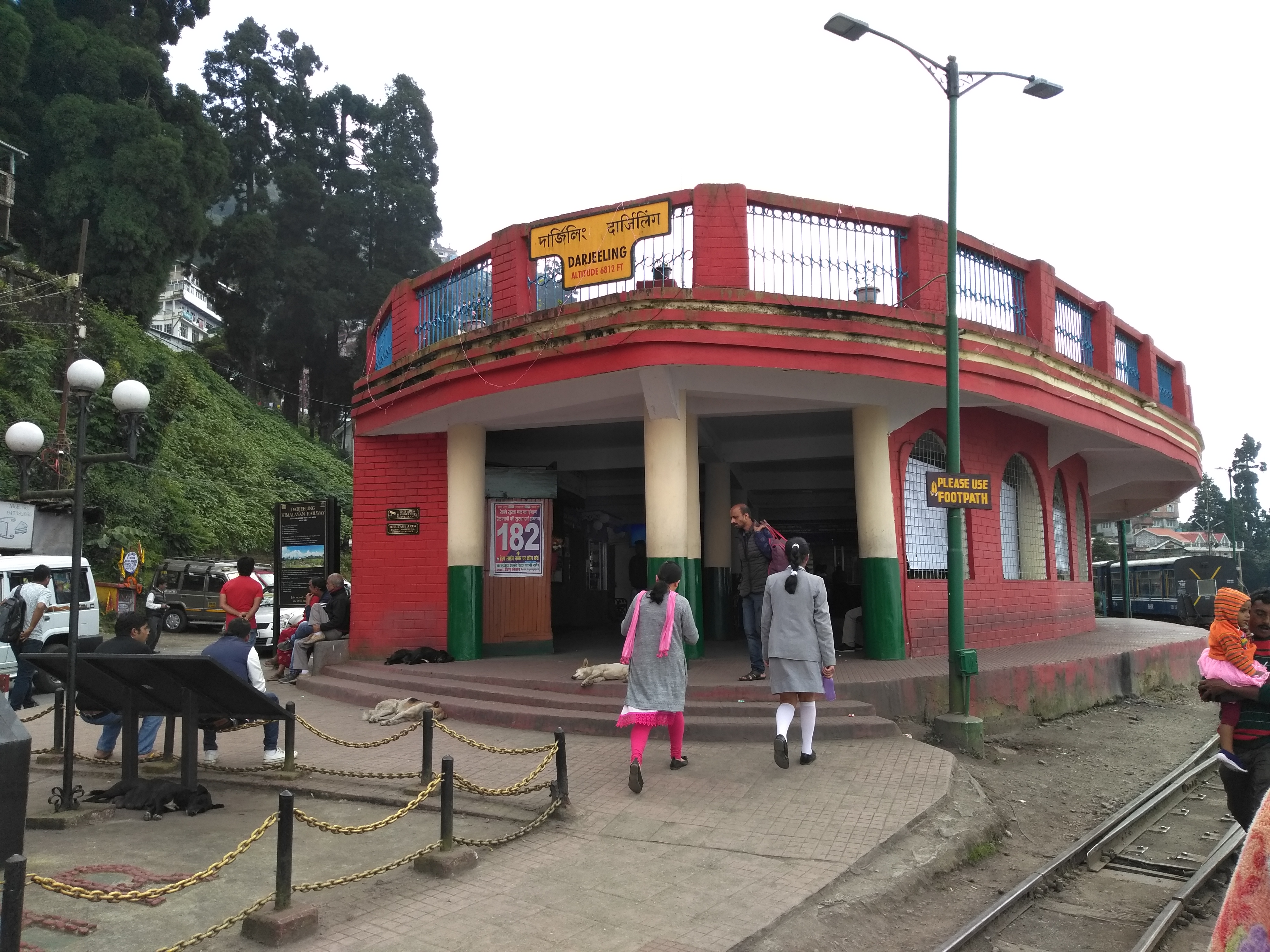

According to the 2011 census Darjeeling district has a population of 1,846,823, roughly equal to the population of Kosovo. This gives it a ranking of 257th in India (out of a total of 640). After Kalimpong district was separated its population was 1,595,181, of which 671,1771 (42.11%) live in urban areas. The residual district has a sex ratio of 972 females per 1000 males. Scheduled Castes and Scheduled Tribes make up 18.86% and 20.21% of the population respectively.
In 2001, the population of the district was 1,609,172. The rural population was 1,088,740 and urban population was 520,432. Total males were 830,644 and females were 778,528. The density of population was 511 per km2. The decennial population growth rate (1991–2001) was 23.79%.
The hills have a population of 624,061 which is nearly 40% of the population. The original inhabitants of the Darjeeling Hills were the Lepcha and Limbu (the ravine people, as they prefer themselves to be known as). Other communities with a long history in the district include the Tamang, Yakkha, Rai, Gurung, Magar, Newar, Thami, Chettri, Bahun, Kami, and Damai. There is also a sizeable population of Tibetans who arrived from Tibet since the 1950s. Over time, the ethnic distinctions between the hill people have blurred and today most identify as Gorkha and speak Nepali only as mother tongue.
In the plains, the Bengalis and Rajbongshis are in majority while there are large numbers of Gorkhas and Adivasis, the latter of which migrated from Chotanagpur and Santhal Parganas during British rule as tea garden workers. Both in the hills and plains are various migrants from other regions including Biharis, Marwaris and Punjabis.
Religion
| Religion | title=Census of India, 1941 Volume VI Bengal Province | url=https://dspace.gipe.ac.in/xmlui/bitstream/handle/10973/37365/GIPE-020591.pdf?sequence=3&isAllowed=y | access-date=13 August 2022 | archive-date=9 December 2017 | archive-url=https://web.archive.org/web/20171209142042/http://dspace.gipe.ac.in/xmlui/bitstream/handle/10973/37365/GIPE-020591.pdf?sequence=3&isAllowed=y | url-status=live }} | Percentage (1941) | date=2011 | title=Table C-01 Population by Religion: West Bengal | url=https://censusindia.gov.in/nada/index.php/catalog/11396/download/14509/DDW19C-01%20MDDS.XLS | website=censusindia.gov.in | publisher=Registrar General and Census Commissioner of India | access-date=17 August 2022 | archive-date=5 April 2023 | archive-url=https://web.archive.org/web/20230405063030/https://censusindia.gov.in/nada/index.php/catalog/11396/download/14509/DDW19C-01%20MDDS.XLS | url-status=live }} | Percentage (2011) |
|---|---|---|---|---|---|---|---|---|---|---|---|---|---|---|---|---|---|
| Hinduism [[File:Om.svg | 16x16px]] | 142,568 | 47.95% | 1,213,326 | 76.06% | ||||||||||||
| Tribal religion [[File:Kirat flag-02.jpg | 15x15px]] | 109,627 | 36.87% | 12,460 | 0.78% | ||||||||||||
| Islam [[File:Star_and_Crescent.svg | 15x15px]] | 8,801 | 2.96% | 101,088 | 6.34% | ||||||||||||
| Christianity [[File:Christian_cross.svg | 21x21px]] | 1,885 | 0.63% | 104,395 | 6.54% | ||||||||||||
| Buddhism [[File:Dharma Wheel (2).svg | 15x15px]] | --- | --- | 156,552 | 9.81% | ||||||||||||
| Others | 34,446 | 11.59% | 7,360 | 0.47% | |||||||||||||
| Total Population | 297,327 | 100% | 1,595,181 | 100% |
Hinduism is the majority religion in both the hills and plains. Buddhism and Kirat Mudhum are almost entirely present in the hills. Christianity is primarily in the hills, although there are significant numbers among the tea tribes in the plains. Islam is almost entirely found in the plains.
Languages
At the time of the 2011 census, 39.88% of the population spoke Nepali, 26.51% Bengali, 10.95% Hindi, 6.17% Rajbongshi, 5.38% Sadri, 2.52% Kurukh, 1.50% Bhojpuri and 1.15% Santali as their first language. 1.04% of the population recorded their language as 'Others' under Bengali. According to 1951 Census, about 26% of the population in the three hill sub-divisions of Darjeeling district (including Kalimpong) spoke Nepali as mother language. Other languages formerly spoken in the hills included Limbu, Tamang, Magar, Gurung, Rai, Sunuwar, Yakkha and Newar.
Bengali is the official language of the district, with Nepali declared as co-official only in Darjeeling and Kurseong subdivisions.
Nepali is the dominant language in the hill divisions, spoken by more than 90% of the people in Darjeeling, Kurseong and Mirik subdivisions, although most hill inhabitants are not from Khas communities. Several hundred of the original hill inhabitants still speak their original languages although the vast majority now speak only Nepali.
The main language of the Siliguri subdivision is Bengali. It is followed by a sizeable number of Kamatpuri or Rajbongshi speakers. Among the Adivasis, Sadri is the main language although some still speak their original languages like Kurukh, Mundari and Santali.
Flora and fauna
Darjeeling district is home to Singalila National Park, which was set up in 1986 as a wildlife sanctuary and converted to a national park in 1992. It has an area of 78.60 km2.
Darjeeling district has three wildlife sanctuaries: Jorepokhri, Mahananda, and Senchal.
Geographical indication
Kalonunia rice was awarded the Geographical Indication (GI) status tag from the Geographical Indications Registry under the Union Government of India on 2 January 2024 (valid until 11 March 2034). It is a common and widely cultivated crop in districts of Cooch Behar, Jalpaiguri and Alipurduar along with some parts of Darjeeling and Kalimpong districts of West Bengal.
State Agricultural Management & Extension Training Institute (SAMETI) from Narendrapur, proposed the GI registration of Kalonunia rice. After filing the application in March 2021, the rice was granted the GI tag in 2024 by the Geographical Indication Registry in Chennai, making the name "Kalonunia rice" exclusive to the rice grown in the region. It thus became the third rice variety from West Bengal after Tulaipanji rice and the 26th type of goods from West Bengal to earn the GI tag.
The GI tag protects the rice from illegal selling and marketing, and gives it legal protection and a unique identity.
Notable people
- Taslimuddin Ahmad (1852-1927), lawyer, author and philanthropist
- Sonia Jabbar, wildlife conservationist
References
References
- "About District - Darjeeling".
- "Fact and Figures".
- "52nd Report of the Commissioner for Linguistic Minorities in India". [[Ministry of Minority Affairs]].
- Konar, Debashis. (14 February 2017). "West Bengal CM congratulates people of Kalimpong district". The Times of Indial.
- (2011). "District Census Handbook: Darjeeling". [[Registrar General and Census Commissioner of India]].
- Subba U.,( 'Sabdatitma Tajenglung' (Title) by Sankarhang Subba,) (Editor) Yuma Manghim Udghatan Samaroha Smarika 2017, Nalichour, Sonada, published by Limbu/ Subba Tribal Society, Darjeeling.
- "Pre-Independence [Darjeeling]". Government of Darjeeling.
- (15 May 2004). "Gorkhaland State a distinct possibility". [[The Hindu]].
- (5 August 2012). "Gorkha Territorial Administration members sworn in; Shinde, Mamata assure support". The Times of India.
- "General election to the Legislative Assembly, 2001 – List of Parliamentary and Assembly Constituencies". Election Commission of India.
- "Press Note, Delimitation Commission". Delimitation Commission.
- "Decadal Variation In Population Since 1901".
- US Directorate of Intelligence. "Country Comparison:Population".
- "Census of India : Provisional Population Totals Paper 1 of 2011 : West Bengal". Censusindia.gov.in.
- "Census 2001".
- "People and Culture - Language".
- "Census of India, 1941 Volume VI Bengal Province".
- (2011). "Table C-01 Population by Religion: West Bengal". [[Registrar General and Census Commissioner of India]].
- "Table C-16 Population by Mother Tongue: West Bengal". [[Registrar General and Census Commissioner of India]].
- "Lok Sabha Debates - Nepali-speaking People in Darjeeling".
- "Report of the Commissioner for Linguistic Minorities in India: 50th report (delivered to the Lokh Sabha in 2014)". National Commissioner for Linguistic Minorities, Ministry of Minority Affairs, Government of India.
- "National Parks". ENVIS Centre on Wildlife & Protected Areas.
- "Wildlife Sanctuaries". ENVIS Centre on Wildlife & Protected Areas.
- (2 January 2024). "Bengal's own Gobindabhog and Tulaipanji soon to get a distinct stand on world map". The Indian Express.
- (1996). "Rice Genetics III: Proceedings of the Third International Rice Genetics Symposium, Manila, Philippines, 16-20 October 1995". Int. Rice Res. Inst..
- (29 July 2020). "Rice Research for Quality Improvement: Genomics and Genetic Engineering: Volume 2: Nutrient Biofortification and Herbicide and Biotic Stress Resistance in Rice". Springer Nature.
- (1 January 2015). "Perspective of dietetic and antioxidant medicinal plants". Notion Press.
- "Kalonunia Rice".
This article was imported from Wikipedia and is available under the Creative Commons Attribution-ShareAlike 4.0 License. Content has been adapted to SurfDoc format. Original contributors can be found on the article history page.
Ask Mako anything about Darjeeling district — get instant answers, deeper analysis, and related topics.
Research with MakoFree with your Surf account
Create a free account to save articles, ask Mako questions, and organize your research.
Sign up freeThis content may have been generated or modified by AI. CloudSurf Software LLC is not responsible for the accuracy, completeness, or reliability of AI-generated content. Always verify important information from primary sources.
Report