From Surf Wiki (app.surf) — the open knowledge base
Cyanobacteria
Phylum of photosynthesising prokaryotes

Phylum of photosynthesising prokaryotes
- "Sericytochromatia"
- Vampirovibrionophyceae
- †Archaeosphaeroides
- †Collenia
- †Gunflintia
- †Obruchevella
- †Ozarkcollenia
- †Rothpletzella | Chloroxybacteria Margulis & Schwartz, 1982 | "Cyanobacteria" Woese et al., 1985 | "Cyanophycota" Parker, Schanen & Renner, 1969 | "Cyanophyta" Steinecke, 1931 | "Diploschizophyta" Dillon, 1963 | "Endoschizophyta" Dillon, 1963 | "Exoschizophyta" Dillon, 1963 | Gonidiophyta Schaffner, 1909 | "Phycobacteria" Cavalier-Smith, 1998 | Phycochromaceae Rabenhorst, 1865 | Prochlorobacteria Jeffrey, 1982 | Prochlorophycota Shameel, 2008 | Prochlorophyta Lewin, 1976 | Chroococcophyceae Starmach, 1966 | Chamaesiphonophyceae Starmach, 1966 | Cyanobacteriia | Cyanophyceae Sachs, 1874 | Cyanophyta Steinecke, 1931 | Hormogoniophyceae Starmach, 1966 | Myxophyceae Wallroth, 1833 | Nostocophyceae Christensen, 1978 | Pleurocapsophyceae Starmach, 1966 | Prochlorophyceae Lewin, 1977 | Scandophyceae Vologdin, 1962 | Phycochromaceae Rabenhorst, 1865 | Oxyphotobacteria Gibbons & Murray, 1978 | Schizophyceae Cohn, 1879
Cyanobacteria ( ) are a group of autotrophic gram-negative bacteria of the phylum Cyanobacteriota They are probably the most numerous taxon to have ever existed on Earth. The name "cyanobacteria" () refers to their bluish green (cyan) color, which forms the basis of cyanobacteria's informal common name, blue-green algae.
Cyanobacteria are the first organisms known to have produced oxygen. Their photopigments can absorb the red- and blue-spectrum frequencies of sunlight (thus reflecting a greenish color) to split water molecules into hydrogen ions and oxygen. The hydrogen ions are used to react with carbon dioxide to produce complex organic compounds such as carbohydrates (a process known as carbon fixation), and the oxygen is released as a byproduct. By continuously producing and releasing oxygen over billions of years, cyanobacteria are thought to have converted the early Earth's anoxic, weakly reducing prebiotic atmosphere, into an oxidizing one with free gaseous oxygen (which previously would have been immediately removed by various surface reductants), resulting in the Great Oxidation Event and the "rusting of the Earth" during the early Proterozoic, dramatically changing the composition of life forms on Earth. The subsequent adaptation of early single-celled organisms to survive in oxygenous environments likely led to endosymbiosis between anaerobes and aerobes, and hence the evolution of eukaryotes during the Paleoproterozoic.
Cyanobacteria use photosynthetic pigments such as various forms of chlorophyll, carotenoids and phycobilins to convert the photonic energy in sunlight to chemical energy. Unlike heterotrophic prokaryotes, cyanobacteria have internal membranes. These are flattened sacs called thylakoids where photosynthesis is performed. Photoautotrophic eukaryotes such as red algae, green algae and plants perform photosynthesis in chlorophyllic organelles that are thought to have their ancestry in cyanobacteria, acquired long ago via endosymbiosis. These endosymbiont cyanobacteria in eukaryotes then evolved and differentiated into specialized organelles such as chloroplasts, chromoplasts, etioplasts, and leucoplasts, collectively known as plastids.
The cyanobacteria Synechocystis and Cyanothece are important model organisms with potential applications in biotechnology for bioethanol production, food colorings, as a source of human and animal food, dietary supplements and raw materials. Cyanobacteria produce a range of toxins known as cyanotoxins that can cause harmful health effects in humans and animals. Sericytochromatia, the proposed name of the paraphyletic and most basal group, is the ancestor of both the non-photosynthetic group Melainabacteria and the photosynthetic cyanobacteria, also called Oxyphotobacteria.
Overview
Cyanobacteria are a large and diverse phylum of photosynthetic prokaryotes. They are defined by their unique combination of pigments and their ability to perform oxygenic photosynthesis. They often live in colonial aggregates that can take on a multitude of forms. Of particular interest are the filamentous species, which often dominate the upper layers of microbial mats found in extreme environments such as hot springs, hypersaline water, deserts and the polar regions, but are also widely distributed in more mundane environments as well. They are evolutionarily optimized for environmental conditions of low oxygen. Some species are nitrogen-fixing and live in a wide variety of moist soils and water, either freely or in a symbiotic relationship with plants or lichen-forming fungi (as in the lichen genus Peltigera).

Cyanobacteria are globally widespread photosynthetic prokaryotes and are major contributors to global biogeochemical cycles. They are among the oldest organisms on Earth with fossil records dating back at least 2.1 billion years. Since then, cyanobacteria have been essential players in the Earth's ecosystems. Planktonic cyanobacteria are a fundamental component of marine food webs and are major contributors to global carbon and nitrogen fluxes. Some cyanobacteria form harmful algal blooms causing the disruption of aquatic ecosystem services and intoxication of wildlife and humans by the production of powerful toxins (cyanotoxins) such as microcystins, saxitoxin, and cylindrospermopsin. Nowadays, cyanobacterial blooms pose a serious threat to aquatic environments and public health, and are increasing in frequency and magnitude globally.
Cyanobacteria are ubiquitous in marine environments and play important roles as primary producers. They are part of the marine phytoplankton, which currently contributes almost half of the Earth's total primary production. About 25% of the global marine primary production is contributed by cyanobacteria.
Within the cyanobacteria, only a few lineages colonized the open ocean: Crocosphaera and relatives, cyanobacterium UCYN-A, Trichodesmium, as well as Prochlorococcus and Synechococcus. From these lineages, nitrogen-fixing cyanobacteria are particularly important because they exert a control on primary productivity and the export of organic carbon to the deep ocean, While some planktonic cyanobacteria are unicellular and free living cells (e.g., Crocosphaera, Prochlorococcus, Synechococcus); others have established symbiotic relationships with haptophyte algae, such as coccolithophores.
Marine cyanobacteria include the smallest known photosynthetic organisms. The smallest of all, Prochlorococcus, is just 0.5 to 0.8 micrometres across. In terms of numbers of individuals, Prochlorococcus is possibly the most plentiful genus on Earth: a single millilitre of surface seawater can contain 100,000 cells of this genus or more. Worldwide there are estimated to be several octillion (1027, a billion billion billion) individuals. Prochlorococcus is ubiquitous between latitudes 40°N and 40°S, and dominates in the oligotrophic (nutrient-poor) regions of the oceans. The bacterium accounts for about 20% of the oxygen in the Earth's atmosphere.
Morphology
Main article: Cyanobacterial morphology
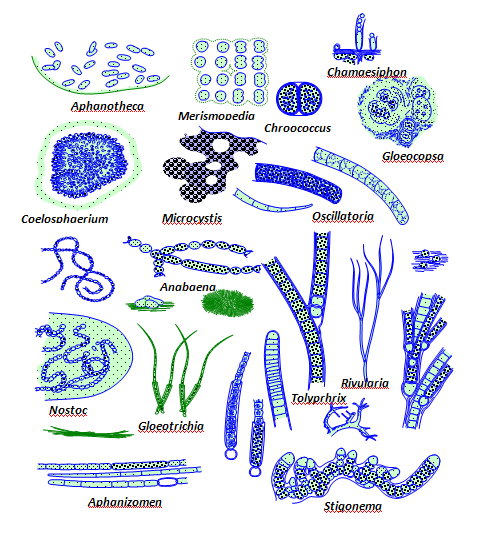
(scale bars about 10 μm)
Cyanobacteria are variable in morphology, ranging from unicellular and filamentous to colonial forms. Filamentous forms exhibit functional cell differentiation such as heterocysts (for nitrogen fixation), akinetes (resting stage cells), and hormogonia (reproductive, motile filaments). These, together with the intercellular connections they possess, are considered the first signs of multicellularity.
Many cyanobacteria form motile filaments of cells, called hormogonia, that travel away from the main biomass to bud and form new colonies elsewhere. The cells in a hormogonium are often thinner than in the vegetative state, and the cells on either end of the motile chain may be tapered. To break away from the parent colony, a hormogonium often must tear apart a weaker cell in a filament, called a necridium.

Some filamentous species can differentiate into several different cell types:
- Vegetative cells – the normal, photosynthetic cells that are formed under favorable growing conditions
- Akinetes – climate-resistant spores that may form when environmental conditions become harsh
- Thick-walled heterocysts – which contain the enzyme nitrogenase vital for nitrogen fixation in an anaerobic environment due to its sensitivity to oxygen.
Each individual cell (each single cyanobacterium) typically has a thick, gelatinous cell wall. They lack flagella, but hormogonia of some species can move about by gliding along surfaces. Many of the multicellular filamentous forms of Oscillatoria are capable of a waving motion; the filament oscillates back and forth. In water columns, some cyanobacteria float by forming gas vesicles, as in archaea. These vesicles are not organelles as such. They are not bounded by lipid membranes, but by a protein sheath.
Nitrogen fixation
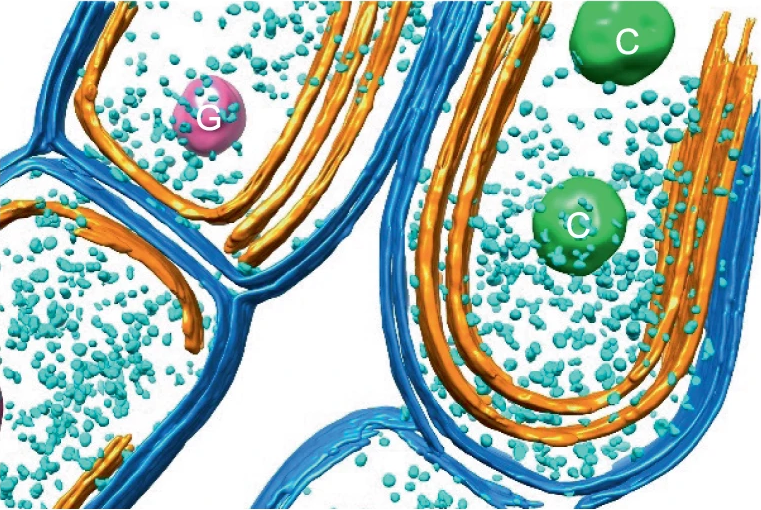
Some cyanobacteria can fix atmospheric nitrogen in anaerobic conditions by means of specialized cells called heterocysts. Heterocysts may also form under the appropriate environmental conditions (anoxic) when fixed nitrogen is scarce. Heterocyst-forming species are specialized for nitrogen fixation and are able to fix nitrogen gas into ammonia (), nitrites () or nitrates (), which can be absorbed by plants and converted to protein and nucleic acids (atmospheric nitrogen is not bioavailable to plants, except for those having endosymbiotic nitrogen-fixing bacteria, especially the family Fabaceae, among others). Nitrogen fixation commonly occurs on a cycle of nitrogen fixation during the night because photosynthesis can inhibit nitrogen fixation.
Free-living cyanobacteria are present in the water of rice paddies, and cyanobacteria can be found growing as epiphytes on the surfaces of the green alga, Chara, where they may fix nitrogen. Cyanobacteria such as Anabaena (a symbiont of the aquatic fern Azolla) can provide rice plantations with biofertilizer.
Photosynthesis
Carbon fixation
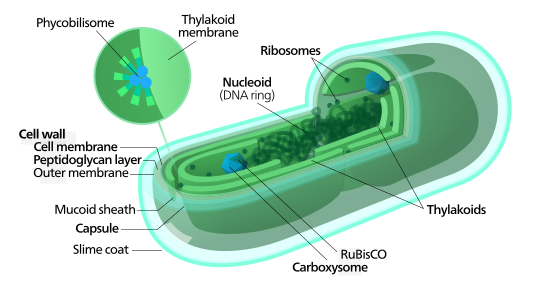
The thylakoids of cyanobacteria use the energy of sunlight to drive photosynthesis, a process where the energy of light is used to synthesize organic compounds from carbon dioxide. Because they are aquatic organisms, they typically employ several strategies which are collectively known as a " concentrating mechanism" to aid in the acquisition of inorganic carbon ( or bicarbonate). Among the more specific strategies is the widespread prevalence of the bacterial microcompartments known as carboxysomes, which co-operate with active transporters of CO2 and bicarbonate, in order to accumulate bicarbonate into the cytoplasm of the cell. Carboxysomes are icosahedral structures composed of hexameric shell proteins that assemble into cage-like structures that can be several hundreds of nanometres in diameter. It is believed that these structures tether the -fixing enzyme, RuBisCO, to the interior of the shell, as well as the enzyme carbonic anhydrase, using metabolic channeling to enhance the local concentrations and thus increase the efficiency of the RuBisCO enzyme.
Electron transport
In contrast to purple bacteria and other bacteria performing anoxygenic photosynthesis, thylakoid membranes of cyanobacteria are not continuous with the plasma membrane but are separate compartments. The photosynthetic machinery is embedded in the thylakoid membranes, with phycobilisomes acting as light-harvesting antennae attached to the membrane, giving the green pigmentation observed (with wavelengths from 450 nm to 660 nm) in most cyanobacteria.
While most of the high-energy electrons derived from water are used by the cyanobacterial cells for their own needs, a fraction of these electrons may be donated to the external environment via electrogenic activity.
Respiration
Respiration in cyanobacteria can occur in the thylakoid membrane alongside photosynthesis, with their photosynthetic electron transport sharing the same compartment as the components of respiratory electron transport. While the goal of photosynthesis is to store energy by building carbohydrates from CO2, respiration is the reverse of this, with carbohydrates turned back into CO2 accompanying energy release.
Cyanobacteria appear to separate these two processes with their plasma membrane containing only components of the respiratory chain, while the thylakoid membrane hosts an interlinked respiratory and photosynthetic electron transport chain. Cyanobacteria use electrons from succinate dehydrogenase rather than from NADPH for respiration.
Cyanobacteria only respire during the night (or in the dark) because the facilities used for electron transport are used in reverse for photosynthesis while in the light.
Electron transport chain
Many cyanobacteria are able to reduce nitrogen and carbon dioxide under aerobic conditions (using different methods to circumvent the deleterious effect of dioxygen on nitrogenases), a fact that may be responsible for their evolutionary and ecological success. The water-oxidizing photosynthesis is accomplished by coupling the activity of photosystem (PS) II and I (Z-scheme). In contrast to green sulfur bacteria which only use one photosystem, the use of water as an electron donor is energetically demanding, requiring two photosystems.
Attached to the thylakoid membrane, phycobilisomes act as light-harvesting antennae for the photosystems. The phycobilisome components (phycobiliproteins) are responsible for the blue-green pigmentation of most cyanobacteria. The variations on this theme are due mainly to carotenoids and phycoerythrins that give the cells their red-brownish coloration. In some cyanobacteria, the color of light influences the composition of the phycobilisomes. In green light, the cells accumulate more phycoerythrin, which absorbs green light, whereas in red light they produce more phycocyanin which absorbs red. Thus, these bacteria can change from brick-red to bright blue-green depending on whether they are exposed to green light or to red light. This process of "complementary chromatic adaptation" is a way for the cells to maximize the use of available light for photosynthesis.
A few genera lack phycobilisomes and have chlorophyll b instead (Prochloron, Prochlorococcus, Prochlorothrix). These were originally grouped together as the prochlorophytes or chloroxybacteria, but appear to have developed in several different lines of cyanobacteria. For this reason, they are now considered as part of the cyanobacterial group.
Metabolism
In general, photosynthesis in cyanobacteria uses water as an electron donor and produces oxygen as a byproduct, though some may also use hydrogen sulfide a process which occurs among other photosynthetic bacteria such as the purple sulfur bacteria.
Carbon dioxide is reduced to form carbohydrates via the Calvin cycle. The large amounts of oxygen in the atmosphere are considered to have been first created by the activities of ancient cyanobacteria. They are often found as symbionts with a number of other groups of organisms such as fungi (lichens), corals, pteridophytes (Azolla), angiosperms (Gunnera), etc. The carbon metabolism of cyanobacteria include the incomplete Krebs cycle, the pentose phosphate pathway, and glycolysis.
Many cyanobacteria are mixotrophic, capable of growth on organic carbon as well as photosynthesis. In addition, some cyanobacteria are capable of fermentation under anoxic conditions. Others are parasitic, causing diseases in invertebrates or algae (e.g., the black band disease).
Ecology
Cyanobacteria can be found in almost every terrestrial and aquatic habitat – oceans, fresh water, damp soil, temporarily moistened rocks in deserts, bare rock and soil, and even Antarctic rocks. They can occur as planktonic cells or form phototrophic biofilms. They are found inside stones and shells (in endolithic ecosystems). A few are endosymbionts in lichens, plants, various protists, or sponges and provide energy for the host. Some live in the fur of sloths, providing a form of camouflage.
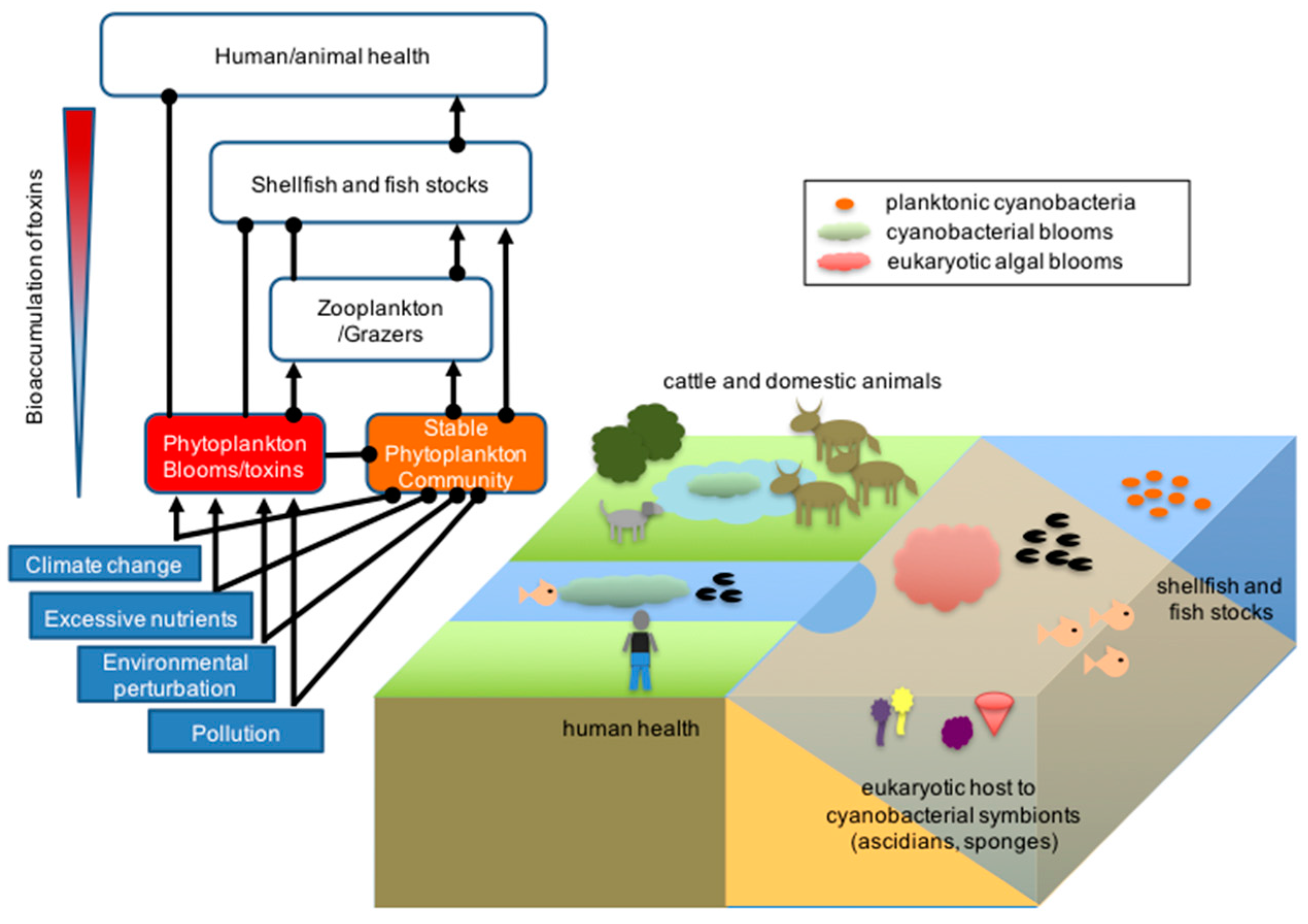
Aquatic cyanobacteria are known for their extensive and highly visible blooms that can form in both freshwater and marine environments. The blooms can have the appearance of blue-green paint or scum. These blooms can be toxic, and frequently lead to the closure of recreational waters when spotted. Marine bacteriophages are significant parasites of unicellular marine cyanobacteria.
Cyanobacterial growth is favoured in ponds and lakes where waters are calm and have little turbulent mixing. Their lifecycles are disrupted when the water naturally or artificially mixes from churning currents caused by the flowing water of streams or the churning water of fountains. For this reason blooms of cyanobacteria seldom occur in rivers unless the water is flowing slowly. Growth is also favoured at higher temperatures which enable Microcystis species to outcompete diatoms and green algae, and potentially allow development of toxins.
Based on environmental trends, models and observations suggest cyanobacteria will likely increase their dominance in aquatic environments. This can lead to serious consequences, particularly the contamination of sources of drinking water. Researchers including Linda Lawton at Robert Gordon University, have developed techniques to study these. Cyanobacteria can interfere with water treatment in various ways, primarily by plugging filters (often large beds of sand and similar media) and by producing cyanotoxins, which have the potential to cause serious illness if consumed. Consequences may also lie within fisheries and waste management practices. Anthropogenic eutrophication, rising temperatures, vertical stratification and increased atmospheric carbon dioxide are contributors to cyanobacteria increasing dominance of aquatic ecosystems.

Cyanobacteria have been found to play an important role in terrestrial habitats and organism communities. It has been widely reported that cyanobacteria soil crusts help to stabilize soil to prevent erosion and retain water. An example of a cyanobacterial species that does so is Microcoleus vaginatus. M. vaginatus stabilizes soil using a polysaccharide sheath that binds to sand particles and absorbs water. M. vaginatus also makes a significant contribution to the cohesion of biological soil crust.
Some of these organisms contribute significantly to global ecology and the oxygen cycle. The tiny marine cyanobacterium Prochlorococcus was discovered in 1986 and accounts for more than half of the photosynthesis of the open ocean. Circadian rhythms were once thought to only exist in eukaryotic cells but many cyanobacteria display a bacterial circadian rhythm.
"Cyanobacteria are arguably the most successful group of microorganisms on earth. They are the most genetically diverse; they occupy a broad range of habitats across all latitudes, widespread in freshwater, marine, and terrestrial ecosystems, and they are found in the most extreme niches such as hot springs, salt works, and hypersaline bays. Photoautotrophic, oxygen-producing cyanobacteria created the conditions in the planet's early atmosphere that directed the evolution of aerobic metabolism and eukaryotic photosynthesis. Cyanobacteria fulfill vital ecological functions in the world's oceans, being important contributors to global carbon and nitrogen budgets." – Stewart and Falconer{{cite book | veditors = Walsh PJ, Smith S, Fleming L, Solo-Gabriele H, Gerwick WH
Cyanobionts
Main article: Cyanobiont
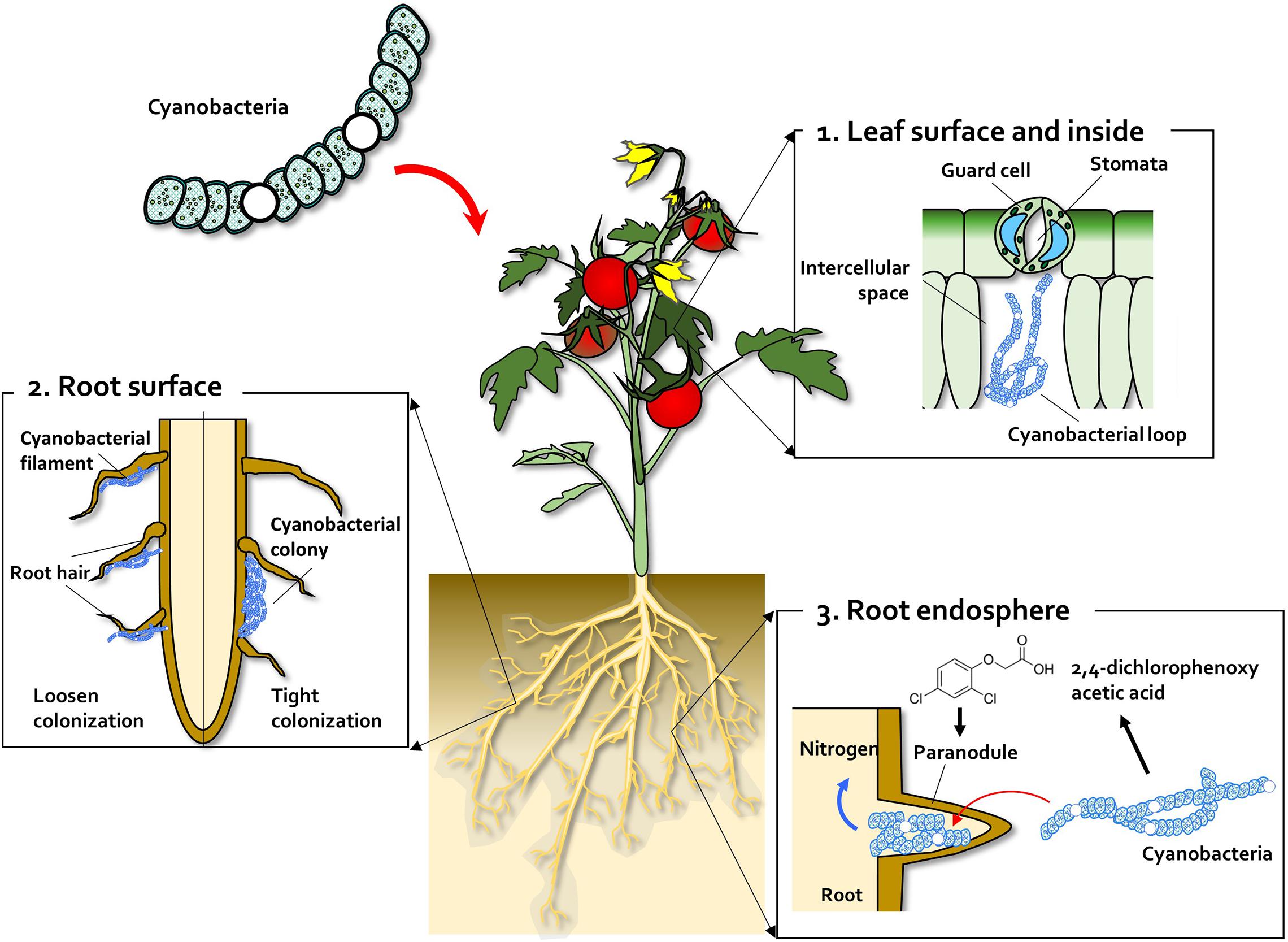
Some cyanobacteria, the so-called cyanobionts (cyanobacterial symbionts), have a symbiotic relationship with other organisms, both unicellular and multicellular. Cyanobacteria can enter the plant through the stomata and colonize the intercellular space, forming loops and intracellular coils. Anabaena spp. colonize the roots of wheat and cotton plants. Calothrix sp. has also been found on the root system of wheat. In 1991, Ganther and others isolated diverse heterocystous nitrogen-fixing cyanobacteria, including Nostoc, Anabaena and Cylindrospermum, from plant root and soil. Assessment of wheat seedling roots revealed two types of association patterns: loose colonization of root hair by Anabaena and tight colonization of the root surface within a restricted zone by Nostoc.


The relationships between cyanobionts (cyanobacterial symbionts) and protistan hosts are particularly noteworthy, as some nitrogen-fixing cyanobacteria (diazotrophs) play an important role in primary production, especially in nitrogen-limited oligotrophic oceans. Cyanobacteria, mostly pico-sized Synechococcus and Prochlorococcus, are ubiquitously distributed and are the most abundant photosynthetic organisms on Earth, accounting for a quarter of all carbon fixed in marine ecosystems. In contrast to free-living marine cyanobacteria, some cyanobionts are known to be responsible for nitrogen fixation rather than carbon fixation in the host. However, the physiological functions of most cyanobionts remain unknown. Cyanobionts have been found in numerous protist groups, including dinoflagellates, tintinnids, radiolarians, amoebae, diatoms, and haptophytes. Among these cyanobionts, little is known regarding the nature (e.g., genetic diversity, host or cyanobiont specificity, and cyanobiont seasonality) of the symbiosis involved, particularly in relation to dinoflagellate host.
Collective behaviour

Some cyanobacteria – even single-celled ones – show striking collective behaviours and form colonies (or blooms) that can float on water and have important ecological roles. For instance, billions of years ago, communities of marine Paleoproterozoic cyanobacteria could have helped create the biosphere as we know it by burying carbon compounds and allowing the initial build-up of oxygen in the atmosphere. On the other hand, toxic cyanobacterial blooms are an increasing issue for society, as their toxins can be harmful to animals. Extreme blooms can also deplete water of oxygen and reduce the penetration of sunlight and visibility, thereby compromising the feeding and mating behaviour of light-reliant species.
As shown in the diagram on the right, bacteria can stay in suspension as individual cells, adhere collectively to surfaces to form biofilms, passively sediment, or flocculate to form suspended aggregates. Cyanobacteria are able to produce sulphated polysaccharides (yellow haze surrounding clumps of cells) that enable them to form floating aggregates. In 2021, Maeda et al. discovered that oxygen produced by cyanobacteria becomes trapped in the network of polysaccharides and cells, enabling the microorganisms to form buoyant blooms. It is thought that specific protein fibres known as pili (represented as lines radiating from the cells) may act as an additional way to link cells to each other or onto surfaces. Some cyanobacteria also use sophisticated intracellular gas vesicles as floatation aids.


The diagram on the left above shows a proposed model of microbial distribution, spatial organization, carbon and O2 cycling in clumps and adjacent areas. (a) Clumps contain denser cyanobacterial filaments and heterotrophic microbes. The initial differences in density depend on cyanobacterial motility and can be established over short timescales. Darker blue color outside of the clump indicates higher oxygen concentrations in areas adjacent to clumps. Oxic media increase the reversal frequencies of any filaments that begin to leave the clumps, thereby reducing the net migration away from the clump. This enables the persistence of the initial clumps over short timescales; (b) Spatial coupling between photosynthesis and respiration in clumps. Oxygen produced by cyanobacteria diffuses into the overlying medium or is used for aerobic respiration. Dissolved inorganic carbon (DIC) diffuses into the clump from the overlying medium and is also produced within the clump by respiration. In oxic solutions, high O2 concentrations reduce the efficiency of CO2 fixation and result in the excretion of glycolate. Under these conditions, clumping can be beneficial to cyanobacteria if it stimulates the retention of carbon and the assimilation of inorganic carbon by cyanobacteria within clumps. This effect appears to promote the accumulation of particulate organic carbon (cells, sheaths and heterotrophic organisms) in clumps.
It has been unclear why and how cyanobacteria form communities. Aggregation must divert resources away from the core business of making more cyanobacteria, as it generally involves the production of copious quantities of extracellular material. In addition, cells in the centre of dense aggregates can also suffer from both shading and shortage of nutrients. So, what advantage does this communal life bring for cyanobacteria?

New insights into how cyanobacteria form blooms have come from a 2021 study on the cyanobacterium Synechocystis. These use a set of genes that regulate the production and export of sulphated polysaccharides, chains of sugar molecules modified with sulphate groups that can often be found in marine algae and animal tissue. Many bacteria generate extracellular polysaccharides, but sulphated ones have only been seen in cyanobacteria. In Synechocystis these sulphated polysaccharide help the cyanobacterium form buoyant aggregates by trapping oxygen bubbles in the slimy web of cells and polysaccharides.
Previous studies on Synechocystis have shown type IV pili, which decorate the surface of cyanobacteria, also play a role in forming blooms. The formation of blooms may require both type IV pili and Synechan – for example, the pili may help to export the polysaccharide outside the cell. Indeed, the activity of these protein fibres may be connected to the production of extracellular polysaccharides in filamentous cyanobacteria. A more obvious answer would be that pili help to build the aggregates by binding the cells with each other or with the extracellular polysaccharide. As with other kinds of bacteria, certain components of the pili may allow cyanobacteria from the same species to recognise each other and make initial contacts, which are then stabilised by building a mass of extracellular polysaccharide.
The bubble flotation mechanism identified by Maeda et al. joins a range of known strategies that enable cyanobacteria to control their buoyancy, such as using gas vesicles or accumulating carbohydrate ballasts. Type IV pili on their own could also control the position of marine cyanobacteria in the water column by regulating viscous drag. Extracellular polysaccharide appears to be a multipurpose asset for cyanobacteria, from floatation device to food storage, defence mechanism and mobility aid.
Cellular death
One of the most critical processes determining cyanobacterial eco-physiology is cellular death. Evidence supports the existence of controlled cellular demise in cyanobacteria, and various forms of cell death have been described as a response to biotic and abiotic stresses. However, cell death research in cyanobacteria is a relatively young field and understanding of the underlying mechanisms and molecular machinery underpinning this fundamental process remains largely elusive. Different forms of cell demise have been observed in cyanobacteria under several stressful conditions, and cell death has been suggested to play a key role in developmental processes, such as akinete and heterocyst differentiation, as well as strategy for population survival.
| Programmed cell death and microcystins | |||
|---|---|---|---|
| [[File:Toxins-11-00706-g001.png | right | thumb | upright=1.5]] |
Cyanophages
Main article: Cyanophage
Cyanophages are viruses that infect cyanobacteria. Cyanophages can be found in both freshwater and marine environments. Marine and freshwater cyanophages have icosahedral heads, which contain double-stranded DNA, attached to a tail by connector proteins. The size of the head and tail vary among species of cyanophages. Cyanophages, like other bacteriophages, rely on Brownian motion to collide with bacteria, and then use receptor binding proteins to recognize cell surface proteins, which leads to adherence. Viruses with contractile tails then rely on receptors found on their tails to recognize highly conserved proteins on the surface of the host cell.
Cyanophages infect a wide range of cyanobacteria and are key regulators of the cyanobacterial populations in aquatic environments, and may aid in the prevention of cyanobacterial blooms in freshwater and marine ecosystems. These blooms can pose a danger to humans and other animals, particularly in eutrophic freshwater lakes. Infection by these viruses is highly prevalent in cells belonging to Synechococcus spp. in marine environments, where up to 5% of cells belonging to marine cyanobacterial cells have been reported to contain mature phage particles.
The first cyanophage, LPP-1, was discovered in 1963.
Movement

It has long been known that filamentous cyanobacteria perform surface motions, and that these movements result from type IV pili. Additionally, Synechococcus, a marine cyanobacteria, is known to swim at a speed of 25 μm/s by a mechanism different to that of bacterial flagella. Formation of waves on the cyanobacteria surface is thought to push surrounding water backwards. Cells are known to be motile by a gliding method and a novel uncharacterized, non-phototactic swimming method that does not involve flagellar motion.
Many species of cyanobacteria are capable of gliding. Gliding is a form of cell movement that differs from crawling or swimming in that it does not rely on any obvious external organ or change in cell shape and it occurs only in the presence of a substrate. Gliding in filamentous cyanobacteria appears to be powered by a "slime jet" mechanism, in which the cells extrude a gel that expands quickly as it hydrates providing a propulsion force, although some unicellular cyanobacteria use type IV pili for gliding.
Cyanobacteria have strict light requirements. Too little light can result in insufficient energy production, and in some species may cause the cells to resort to heterotrophic respiration. Too much light can inhibit the cells, decrease photosynthesis efficiency and cause damage by bleaching. UV radiation is especially deadly for cyanobacteria, with normal solar levels being significantly detrimental for these microorganisms in some cases.
Filamentous cyanobacteria that live in microbial mats often migrate vertically and horizontally within the mat in order to find an optimal niche that balances their light requirements for photosynthesis against their sensitivity to photodamage. For example, the filamentous cyanobacteria Oscillatoria sp. and Spirulina subsalsa found in the hypersaline benthic mats of Guerrero Negro, Mexico migrate downwards into the lower layers during the day in order to escape the intense sunlight and then rise to the surface at dusk. In contrast, the population of Microcoleus chthonoplastes found in hypersaline mats in Camargue, France migrate to the upper layer of the mat during the day and are spread homogeneously through the mat at night. An in vitro experiment using Phormidium uncinatum also demonstrated this species' tendency to migrate in order to avoid damaging radiation.
Photomovement – the modulation of cell movement as a function of the incident light – is employed by the cyanobacteria as a means to find optimal light conditions in their environment. There are three types of photomovement: photokinesis, phototaxis and photophobic responses.
Photokinetic microorganisms modulate their gliding speed according to the incident light intensity. For example, the speed with which Phormidium autumnale glides increases linearly with the incident light intensity.
Phototactic microorganisms move according to the direction of the light within the environment, such that positively phototactic species will tend to move roughly parallel to the light and towards the light source. Species such as Phormidium uncinatum cannot steer directly towards the light, but rely on random collisions to orient themselves in the right direction, after which they tend to move more towards the light source. Others, such as Anabaena variabilis, can steer by bending the trichome.
Finally, photophobic microorganisms respond to spatial and temporal light gradients. A step-up photophobic reaction occurs when an organism enters a brighter area field from a darker one and then reverses direction, thus avoiding the bright light. The opposite reaction, called a step-down reaction, occurs when an organism enters a dark area from a bright area and then reverses direction, thus remaining in the light.
Evolution
Earth history
Stromatolites are layered biochemical accretionary structures formed in shallow water by the trapping, binding, and cementation of sedimentary grains by biofilms (microbial mats) of microorganisms, especially cyanobacteria.
Cyanobacteria likely first evolved in a freshwater environment. The oldest undisputed evidence of cyanobacteria is dated to be 2.1 Ga ago, but there is some evidence for them as far back as 2.7 Ga ago. Cyanobacteria might have also emerged 3.5 Ga ago. Oxygen concentrations in the atmosphere remained around or below 0.001% of today's level until 2.4 Ga ago (the Great Oxygenation Event). The rise in oxygen may have caused a fall in the concentration of atmospheric methane, and triggered the Huronian glaciation from around 2.4 to 2.1 Ga ago. In this way, cyanobacteria may have killed off most of the other bacteria of the time.
Oncolites are sedimentary structures composed of oncoids, which are layered structures formed by cyanobacterial growth. Oncolites are similar to stromatolites, but instead of forming columns, they form approximately spherical structures that were not attached to the underlying substrate as they formed. The oncoids often form around a central nucleus, such as a shell fragment, and a calcium carbonate structure is deposited by encrusting microbes. Oncolites are indicators of warm waters in the photic zone, but are also known in contemporary freshwater environments. These structures rarely exceed 10 cm in diameter.
One former classification scheme of cyanobacterial fossils divided them into the porostromata and the spongiostromata. These are now recognized as form taxa and considered taxonomically obsolete; however, some authors have advocated for the terms remaining informally to describe form and structure of bacterial fossils.
File:Stromatolites.jpg| Stromatolites left behind by cyanobacteria are the oldest known fossils of life on Earth. This fossil is one billion years old. File:Oncolitic limestone (central Utah, USA) 3.jpg| Oncolitic limestone formed from successive layers of calcium carbonate precipitated by cyanobacteria File:OncolitesAlamoBreccia.jpg| Oncolites from the Late Devonian Alamo bolide impact in Nevada File:Oscillatoriopsis longa fossil.jpg|
Origin of photosynthesis
Oxygenic photosynthesis only evolved once (in prokaryotic cyanobacteria), and all photosynthetic eukaryotes (including all plants and algae) have acquired this ability from endosymbiosis with cyanobacteria or their endosymbiont hosts. In other words, all the oxygen that makes the atmosphere breathable for aerobic organisms originally comes from cyanobacteria or their plastid descendants.
Cyanobacteria remained the principal primary producers throughout the latter half of the Archean eon and most of the Proterozoic eon, in part because the redox structure of the oceans favored photoautotrophs capable of nitrogen fixation. However, their population is argued to have varied considerably across this eon. Archaeplastids such as green and red algae eventually surpassed cyanobacteria as major primary producers on continental shelves near the end of the Neoproterozoic, but only with the Mesozoic (251–65 Ma) radiations of secondary photoautotrophs such as dinoflagellates, coccolithophorids and diatoms did primary production in marine shelf waters take modern form. Cyanobacteria remain critical to marine ecosystems as primary producers in oceanic gyres, as agents of biological nitrogen fixation, and, in modified form, as the plastids of marine algae.
Origin of chloroplasts
Primary chloroplasts are cell organelles found in some eukaryotic lineages, where they are specialized in performing photosynthesis. They are considered to have evolved from endosymbiotic cyanobacteria. After some years of debate, it is now generally accepted that the three major groups of primary endosymbiotic eukaryotes (i.e. green plants, red algae and glaucophytes) form one large monophyletic group called Archaeplastida, which evolved after one unique endosymbiotic event.
The morphological similarity between chloroplasts and cyanobacteria was first reported by German botanist Andreas Franz Wilhelm Schimper in the 19th century Chloroplasts are only found in plants and algae, thus paving the way for Russian biologist Konstantin Mereschkowski to suggest in 1905 the symbiogenic origin of the plastid. Lynn Margulis brought this hypothesis back to attention more than 60 years later but the idea did not become fully accepted until supplementary data started to accumulate. The cyanobacterial origin of plastids is now supported by various pieces of phylogenetic, genomic, biochemical and structural evidence. The description of another independent and more recent primary endosymbiosis event between a cyanobacterium and a separate eukaryote lineage (the rhizarian Paulinella chromatophora) also gives credibility to the endosymbiotic origin of the plastids.
In addition to this primary endosymbiosis, many eukaryotic lineages have been subject to secondary or even tertiary endosymbiotic events, that is the "Matryoshka-like" engulfment by a eukaryote of another plastid-bearing eukaryote.
Chloroplasts have many similarities with cyanobacteria, including a circular chromosome, prokaryotic-type ribosomes, and similar proteins in the photosynthetic reaction center. The endosymbiotic theory suggests that photosynthetic bacteria were acquired (by endocytosis) by early eukaryotic cells to form the first plant cells. Therefore, chloroplasts may be photosynthetic bacteria that adapted to life inside plant cells. Like mitochondria, chloroplasts still possess their own DNA, separate from the nuclear DNA of their plant host cells and the genes in this chloroplast DNA resemble those in cyanobacteria. DNA in chloroplasts codes for redox proteins such as photosynthetic reaction centers. The CoRR hypothesis proposes this co-location is required for redox regulation.
Origin of marine planktonic cyanobacteria

Cyanobacteria have fundamentally transformed the geochemistry of the planet. Multiple lines of geochemical evidence support the occurrence of intervals of profound global environmental change at the beginning and end of the Proterozoic (2,500–542 Mya). While it is widely accepted that the presence of molecular oxygen in the early fossil record was the result of cyanobacteria activity, little is known about how cyanobacteria evolution (e.g., habitat preference) may have contributed to changes in biogeochemical cycles through Earth history. Geochemical evidence has indicated that there was a first step-increase in the oxygenation of the Earth's surface, which is known as the Great Oxidation Event (GOE), in the early Paleoproterozoic (2,500–1,600 Mya). occurred at around 800 to 500 Mya. Recent chromium isotope data point to low levels of atmospheric oxygen in the Earth's surface during the mid-Proterozoic, both types of evidence help explain the late emergence and diversification of animals.
Understanding the evolution of planktonic cyanobacteria is important because their origin fundamentally transformed the nitrogen and carbon cycles towards the end of the Pre-Cambrian. and nutrient availability likely contributed to the apparent delay in diversification and widespread colonization of open ocean environments by planktonic cyanobacteria during the Neoproterozoic.
Genetics
Cyanobacteria are capable of natural genetic transformation. Natural genetic transformation is the genetic alteration of a cell resulting from the direct uptake and incorporation of exogenous DNA from its surroundings. For bacterial transformation to take place, the recipient bacteria must be in a state of competence, which may occur in nature as a response to conditions such as starvation, high cell density or exposure to DNA damaging agents. In chromosomal transformation, homologous transforming DNA can be integrated into the recipient genome by homologous recombination, and this process appears to be an adaptation for repairing DNA damage.
DNA repair
Cyanobacteria are challenged by environmental stresses and internally generated reactive oxygen species that cause DNA damage. Cyanobacteria possess numerous E. coli-like DNA repair genes. Several DNA repair genes are highly conserved in cyanobacteria, even in small genomes, suggesting that core DNA repair processes such as recombinational repair, nucleotide excision repair and methyl-directed DNA mismatch repair are common among cyanobacteria.
Classification
Taxonomy
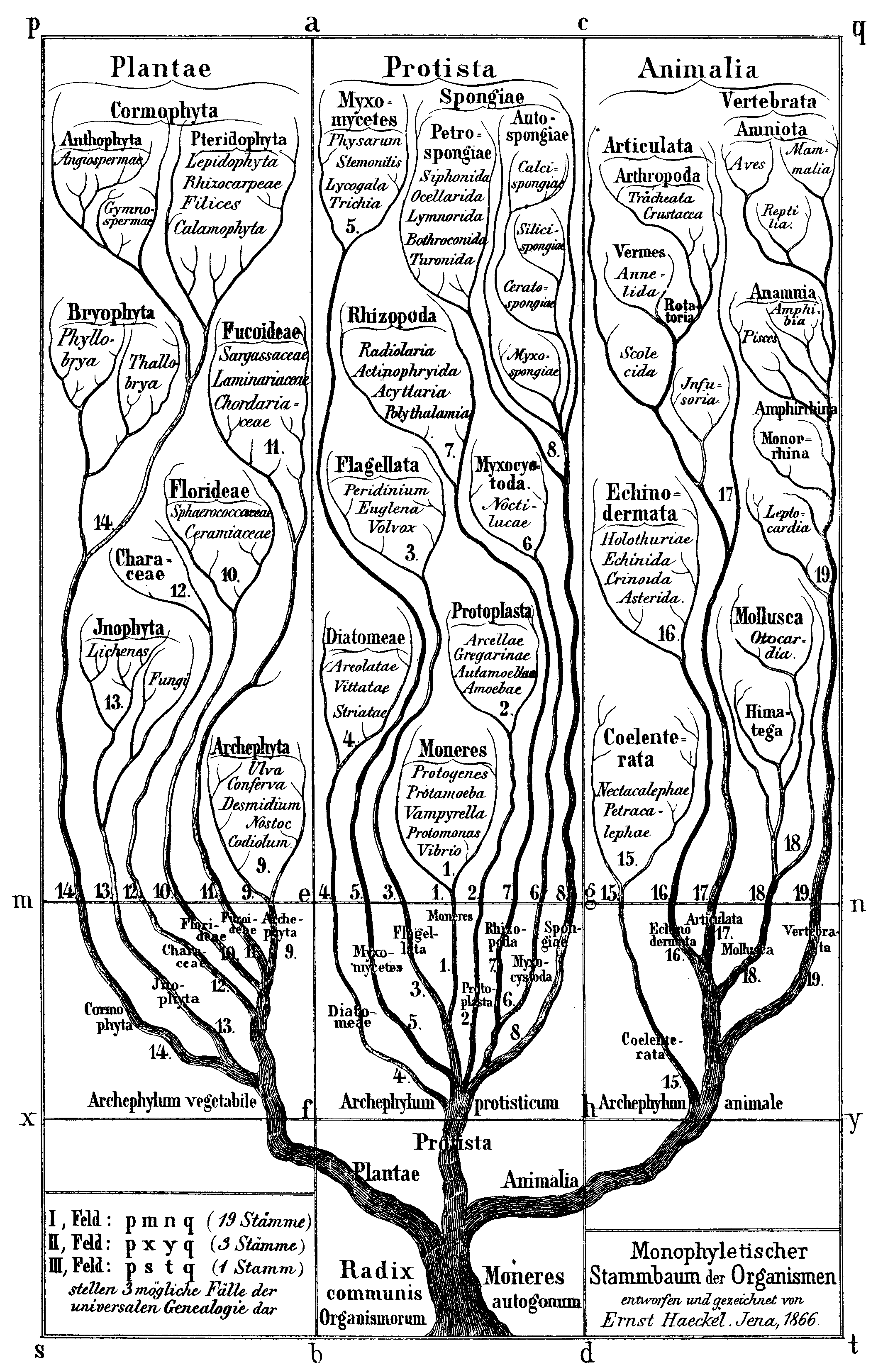
Nostoc with algae and not with bacteria (kingdom "Monera")]] Historically, bacteria were first classified as plants constituting the class Schizomycetes, which along with the Schizophyceae (blue-green algae/Cyanobacteria) formed the phylum Schizophyta, then in the phylum Monera in the kingdom Protista by Haeckel in 1866, comprising Protogens, Protamaeba, Vampyrella, Protomonae, and Vibrio, but not Nostoc and other cyanobacteria, which were classified with algae, later reclassified as the Prokaryotes by Chatton.
The cyanobacteria were traditionally classified by morphology into five sections, referred to by the numerals I–V. The first three – Chroococcales, Pleurocapsales, and Oscillatoriales – are not supported by phylogenetic studies. The latter two – Nostocales and Stigonematales – are monophyletic as a unit, and make up the heterocystous cyanobacteria.
The members of Chroococales are unicellular and usually aggregate in colonies. The classic taxonomic criterion has been the cell morphology and the plane of cell division. In Pleurocapsales, the cells have the ability to form internal spores (baeocytes). The rest of the sections include filamentous species. In Oscillatoriales, the cells are uniseriately arranged and do not form specialized cells (akinetes and heterocysts). In Nostocales and Stigonematales, the cells have the ability to develop heterocysts in certain conditions. Stigonematales, unlike Nostocales, include species with truly branched trichomes.
Formerly, some bacteria, like Beggiatoa, were thought to be colorless Cyanobacteria.
Like other bacteria, cyanobacterial taxonomy was traditionally based on morphology. Unlike the Prokaryotic Code which sets the nomenclatural starting point at 1980, the Botanical Code (International Code of Nomenclature for algae, fungi, and plants [ICNafp], which most cyanobacteria taxa are publsihed under) uses a much earlier date of 1753, producing a much longer list of legitimate names. It also does not require live cultures to be kept, instead relying on preserved herbarium specimens, which has slightly slowed the coverage of molecular phylogeny to individual species. The limited (but growing) collection of molecular data has identified numerous disagreements between morphological classification and the natural history of taxa, leading to several overhauls on the taxonomy. Two recent, nomenclaturally legetimate, overhauls include the "polyphasic" (mainly 16S supplemented by morphology) approach of Komarek et al. (2014) and the "phylogenomic and polyphasic" (mainly 16S grafted onto a phylogenomic backbone) approach of Strunecký et al. (2023).
The Code question
The nomenclature of cyanobacteria remains mainly based on the Botanical Code as of 2021. Despite occasional proposals to forgo the historical baggage and start anew under the Prokaryotic Code, most researchers were unwilling to take on the clerical work of re-documenting almost every taxon under a different code. As of 2022, the following cyanobacterial taxa are validly published under the International Code of Nomenclature of Prokaryotes (ICNP):
- The phylum Cyanobacteriota
- The families Prochloraceae and Prochlorotrichaceae
- The genera Cyanobacterium, Halospirulina, Planktothricoides, Prochlorococcus, Prochloron, and Prochlorothrix
The Botanical Code has long recognized names validly published under the Prokaryotic Code as valid. In 2022, the Prokaryotic Code was amended to reciprocate and accept names from the botanical side.
Current taxonomy
The currently accepted taxonomy as of 2025 is based on National Center for Biotechnology Information (NCBI). More authoritative sources include List of Prokaryotic names with Standing in Nomenclature (LPSN) and AlgaeBase. The 2023 summary by Strunecký et al. is also useful.
- Class Cyanophyceae
- Order Acaryochloridales Miyashita et al. 2003 ex Strunecký & Mareš 2022 (syn. "Thermosynechococcales")
- Family Thermosynechococcaceae
- Order Aegeococcales Strunecký & Mareš 2022
- Order Chroococcales (synonyms Pleurocapsales)
- Order Chroococcidiopsidales
- Order Coleofasciculales
- Order Desertifilales
- Order Geitlerinematales Strunecký & Mareš 2022
- Order Gloeobacterales
- Order Gloeomargaritales Moreira et al. 2016
- Order Gomontiellales
- Order Graniferales
- Order Leptolyngbyales (synonym Phormidesmiales) Strunecký & Mareš 2022
- Order Nodosilineales Strunecký & Mareš 2022
- Order Nostocales (synonym Stigonematales)
- Order Oculatellales (synonym Elainellales) Strunecký & Mareš 2022
- Order Oscillatoriales
- Order Pelonematales
- Order Prochlorotrichales Strunecký & Mareš 2022 (PCC-9006)
- Family Prochlorococcaceae Komárek & Strunecky 2020 {"PCC-6307"}
- Order Sarmaellales
- Order Spirulinales
- Order Synechococcales Hoffmann, Komárek & Kastovsky 2005
- Order Pseudanabaenales Hoffmann, Komárek & Kastovsky 2005 nom.nud.
- Order Thermostichales Komárek & Strunecký 2020
- Order Acaryochloridales Miyashita et al. 2003 ex Strunecký & Mareš 2022 (syn. "Thermosynechococcales")
- Class Vampirovibrionophyceae
- Order Vampirovibrionales
Phylogeny
Notes:
- The botanical and bacteriological communities disagree on the name and scope of this phylum or division. Specifically, the bacteriological community prefer the name Cyanobacteriota not necessarily including the non-photosynthetic Vampirovibrionophyceae, while the botanical community prefers the name Cyanobacteria and the inclusion of Vampirovibrionophyceae. Some bacteriologists refer to Vampirovibrionophyceae as a phylum Melainabacteria or Melainobacteriota.In the dedrograms below, botanical (ICNafp) names are put above the line, and bacteriological (ICNP) names below the line if it differs from the botanical. In addition, a popular bacteriological synonym for Cyanobacteriota s.s. is Cyanobacteriia.
- The discovery and study of non-photosynthetic lineages related to typical photosynthetic cyanobacteria (Cyanophyceae) is still very active. The treatment of these groups may change.
- The GTDB tree contains a lot of links to non-existent pages because GTDB re-assigns the boundaries of taxonomic levels based on genomic divergence. The type genus of these invented taxa can be inferred from the name.
- For example, Cyanobacteriales is formed from Cyanobacterium (ICNP) and includes important genera such as Nostoc. It corresponds to the sum of the following orders in the 2023 taxonomy: Desertifilales, Geitlerinematales, Oscillatoriales, Spirulinales, Coleofasciculales, Chroococales, Gomontiellales, Chroococcidiopsidales, Nostocales.
| 16S rRNA based LTP_12_2021 | GTDB 08-RS214 by Genome Taxonomy Database |
|---|---|
| 1={{clade |
Example of different circumscriptions among sources:
- LPSN uses Cyanobacteriota s.l. with two classes, with the botanical -phyceae class suffix.
- GTDB uses Cyanobacteriota s.l. with three classes, the added one being Sericytochromatia. The bacteriological class suffix -ia is used, hence Cyanobacteriia and Vampirovibrionia.
- NCBI uses Cyanobacteriota s.s. In addition, its Cyanobacteriota/Melainabacteria group includes not only Cyanobacteriota s.l., but also "Margulisiibacteriota" and "Ca. Adamsella". (In GTDB, "Ca. Adamsella" is nested in Gastranaerophilales.)
- AlgaeBase uses Cyanobacteria with only Cyanophyceae.
- Strunecký et al. (2023) uses Cyanobacteria with two botanical classes.
Relation to humans
Biotechnology
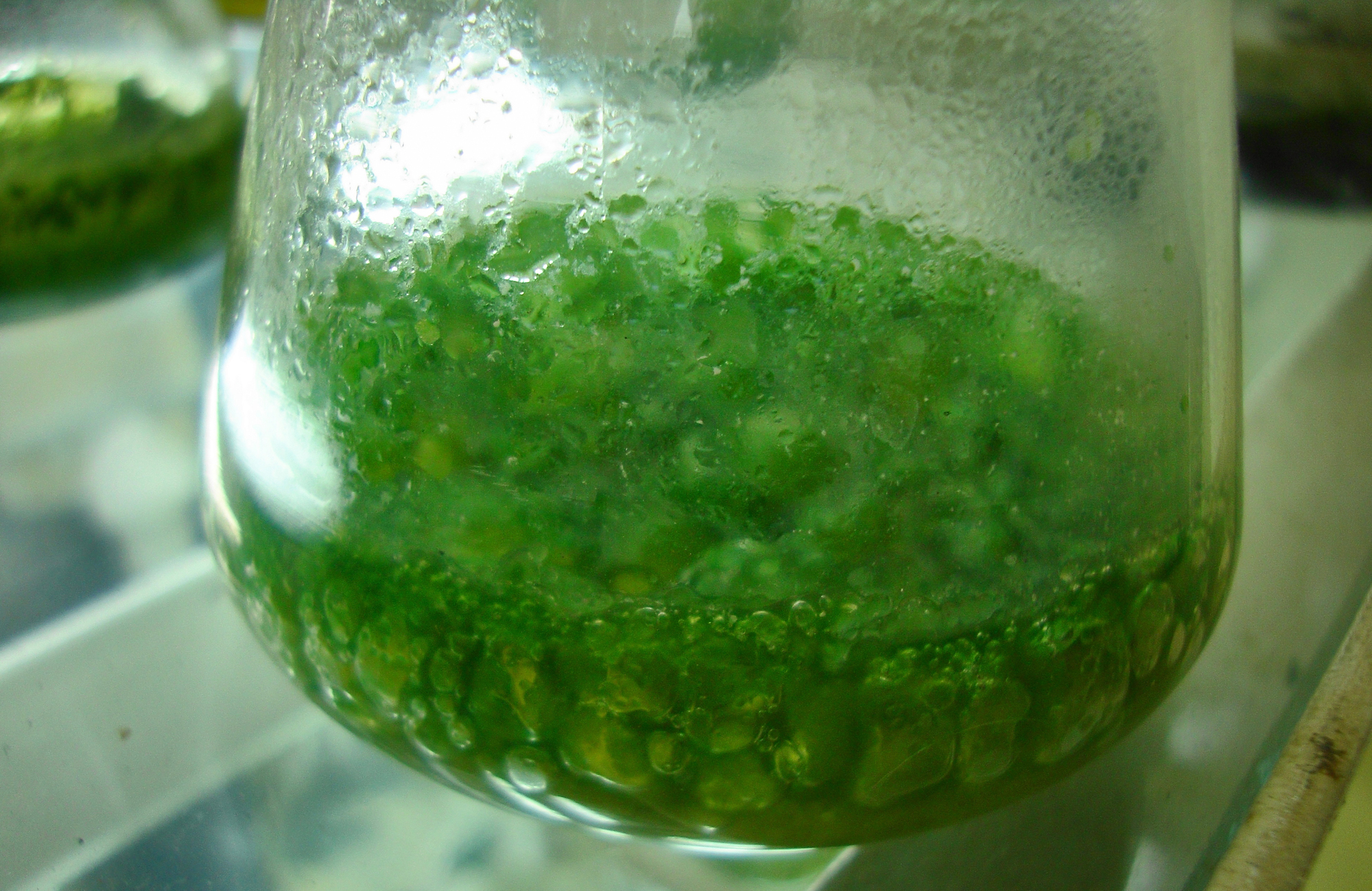
The unicellular cyanobacterium Synechocystis sp. PCC6803 was the third prokaryote and first photosynthetic organism whose genome was completely sequenced. It continues to be an important model organism. Crocosphaera subtropica ATCC 51142 is an important diazotrophic model organism. The smallest genomes of a photosynthetic organism have been found in Prochlorococcus spp. (1.7 Mb) and the largest in Nostoc punctiforme (9 Mb). Those of Calothrix spp. are estimated at 12–15 Mb, as large as yeast.
Recent research has suggested the potential application of cyanobacteria to the generation of renewable energy by directly converting sunlight into electricity. Internal photosynthetic pathways can be coupled to chemical mediators that transfer electrons to external electrodes. In the shorter term, efforts are underway to commercialize algae-based fuels such as diesel, gasoline, and jet fuel. Cyanobacteria have been also engineered to produce ethanol and experiments have shown that when one or two CBB genes are being over expressed, the yield can be even higher.
Cyanobacteria may possess the ability to produce substances that could one day serve as anti-inflammatory agents and combat bacterial infections in humans. Cyanobacteria's photosynthetic output of sugar and oxygen has been demonstrated to have therapeutic value in rats with heart attacks. While cyanobacteria can naturally produce various secondary metabolites, they can serve as advantageous hosts for plant-derived metabolites production owing to biotechnological advances in systems biology and synthetic biology.
Spirulina's extracted blue color is used as a natural food coloring.
Researchers from several space agencies argue that cyanobacteria could be used for producing goods for human consumption in future crewed outposts on Mars, by transforming materials available on this planet.
Human nutrition
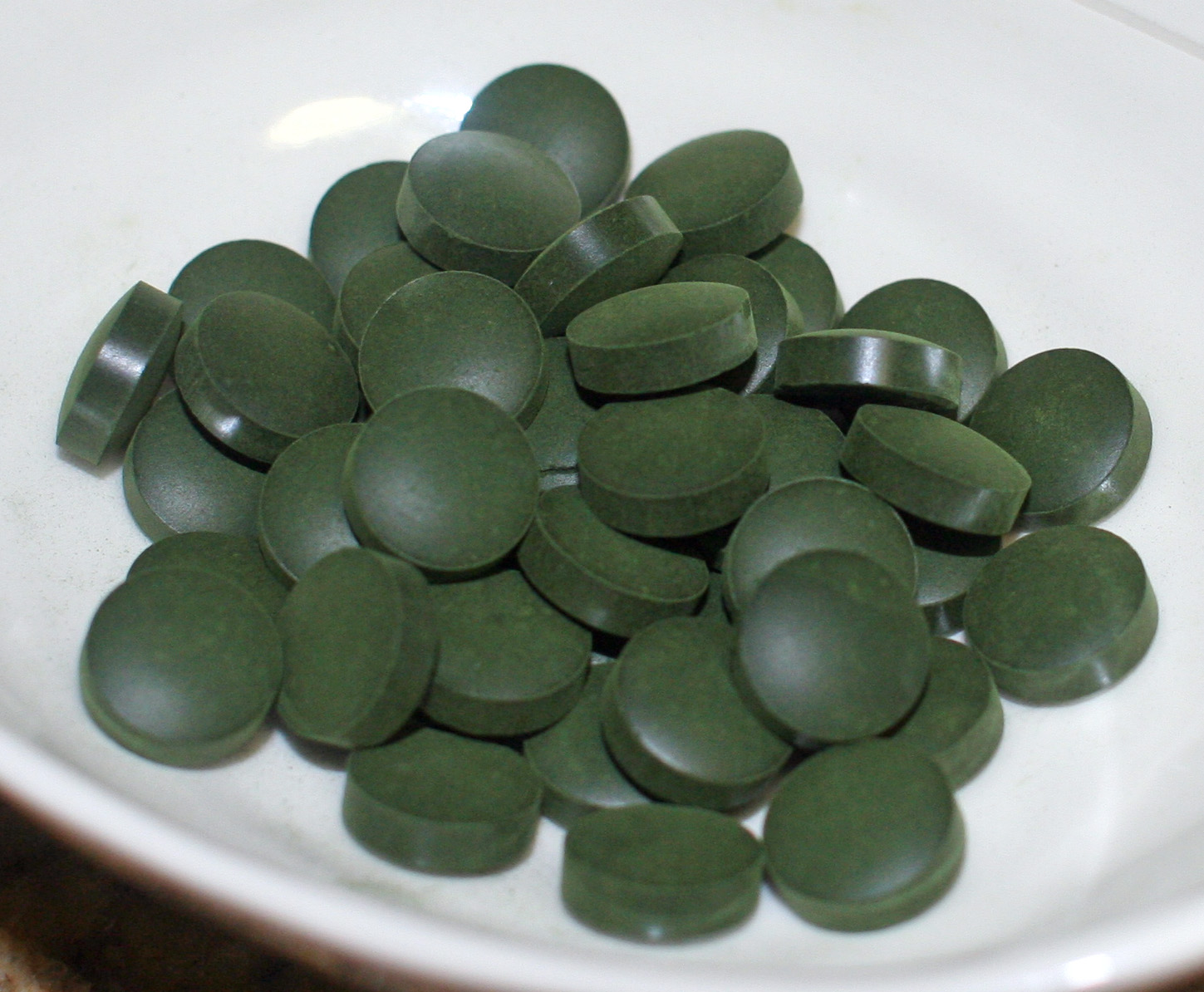
Some cyanobacteria are sold as food, notably Arthrospira platensis (Spirulina), Aphanizomenon flos-aquae (Klamath Lake AFA), and others.
Some microalgae contain substances of high biological value, such as polyunsaturated fatty acids, amino acids, proteins, pigments, antioxidants, vitamins, and minerals. Edible blue-green algae reduce the production of pro-inflammatory cytokines by inhibiting NF-κB pathway in macrophages and splenocytes. Sulfate polysaccharides exhibit immunomodulatory, antitumor, antithrombotic, anticoagulant, anti-mutagenic, anti-inflammatory, antimicrobial, and even antiviral activity against HIV, herpes, and hepatitis.
Health risks
Main article: Cyanotoxin
Some cyanobacteria can produce neurotoxins, cytotoxins, endotoxins, and hepatotoxins (e.g., the microcystin-producing bacteria genus microcystis), which are collectively known as cyanotoxins.
Specific toxins include anatoxin-a, guanitoxin, aplysiatoxin, cyanopeptolin, cylindrospermopsin, domoic acid, nodularin R (from Nodularia), neosaxitoxin, and saxitoxin. Cyanobacteria reproduce explosively under certain conditions. This results in algal blooms which can become harmful to other species and pose a danger to humans and animals if the cyanobacteria involved produce toxins. Several cases of human poisoning have been documented, but a lack of knowledge prevents an accurate assessment of the risks, and research by Linda Lawton, FRSE at Robert Gordon University, Aberdeen and collaborators has 30 years of examining the phenomenon and methods of improving water safety.
Recent studies suggest that significant exposure to high levels of cyanobacteria producing toxins such as BMAA can cause amyotrophic lateral sclerosis (ALS). People living within half a mile of cyanobacterially contaminated lakes have had a 2.3 times greater risk of developing ALS than the rest of the population; people around New Hampshire's Lake Mascoma had an up to 25 times greater risk of ALS than the expected incidence. BMAA from desert crusts found throughout Qatar might have contributed to higher rates of ALS in Gulf War veterans.
Chemical control
Several chemicals can eliminate cyanobacterial blooms from smaller water-based systems such as swimming pools. They include calcium hypochlorite, copper sulphate, Cupricide (chelated copper), and simazine. The calcium hypochlorite amount needed varies depending on the cyanobacteria bloom, and treatment is needed periodically. According to the Department of Agriculture Australia, a rate of 12 g of 70% material in 1000 L of water is often effective to treat a bloom. Copper sulfate is also used commonly, but no longer recommended by the Australian Department of Agriculture, as it kills livestock, crustaceans, and fish. Cupricide is a chelated copper product that eliminates blooms with lower toxicity risks than copper sulfate. Dosage recommendations vary from 190 mL to 4.8 L per 1000 m2. Ferric alum treatments at the rate of 50 mg/L will reduce algae blooms. Simazine, which is also a herbicide, will continue to kill blooms for several days after an application. Simazine is marketed at different strengths (25, 50, and 90%), the recommended amount needed for one cubic meter of water per product is 25% product 8 mL; 50% product 4 mL; or 90% product 2.2 mL.
Climate change
Climate change is likely to increase the frequency, intensity and duration of cyanobacterial blooms in many eutrophic lakes, reservoirs and estuaries. Bloom-forming cyanobacteria produce a variety of neurotoxins, hepatotoxins and dermatoxins, which can be fatal to birds and mammals (including waterfowl, cattle and dogs) and threaten the use of waters for recreation, drinking water production, agricultural irrigation and fisheries.
Climate change favours cyanobacterial blooms both directly and indirectly. Increased thermal stratification of lakes and reservoirs enables buoyant cyanobacteria to float upwards and form dense surface blooms, which gives them better access to light and hence a selective advantage over nonbuoyant phytoplankton organisms. Protracted droughts during summer increase water residence times in reservoirs, rivers and estuaries, and these stagnant warm waters can provide ideal conditions for cyanobacterial bloom development.
The capacity of the harmful cyanobacterial genus Microcystis to adapt to elevated CO2 levels was demonstrated in both laboratory and field experiments. Microcystis spp. take up CO2 and and accumulate inorganic carbon in carboxysomes, and strain competitiveness was found to depend on the concentration of inorganic carbon. As a result, climate change and increased CO2 levels are expected to affect the strain composition of cyanobacterial blooms.
Gallery
File:Lago de coatepeque de color.jpg|Cyanobacteria activity turns Coatepeque Caldera lake a turquoise color File:2010 Filamentous Cyanobacteria Bloom near Fiji.jpg|Cyanobacterial bloom near Fiji File:Sinilevää Köyliönjärvessä 3.jpg|Cyanobacteria in Lake Köyliö. File:Video- The Cyanobacteria- Oscillatoria and Gleocapsa.webm| Video – Oscillatoria and Gleocapsa – with oscillatory movement as filaments of Oscillatoria orient towards light
Notes
References
References
- (2022). "Validation of the names Cyanobacterium and Cyanobacterium stanieri, and proposal of Cyanobacteriota phyl. nov". International Journal of Systematic and Evolutionary Microbiology.
- {{lpsn. phylum/cyanobacteriota. Cyanobacteriota
- (2017-03-31). "On the origins of oxygenic photosynthesis and aerobic respiration in Cyanobacteria". Science.
- (September 1985). "A Phylogenetic Definition of the Major Eubacterial Taxa". Systematic and Applied Microbiology.
- (2008). "UV-protectants in cyanobacteria". [[Plant Science (journal).
- (December 2015). "Origin of marine planktonic cyanobacteria". Scientific Reports.
- (2016). "The Marine Microbiome: An Untapped Source of Biodiversity and Biotechnological Potential". [[Springer Science+Business Media]].
- {{OEtymD. cyan
- {{LSJ. ku/anos. κύανος. ref
- "Life History and Ecology of Cyanobacteria". [[University of California Museum of Paleontology]].
- "Taxonomy Browser – Cyanobacteria". [[National Center for Biotechnology Information]].
- (1992). "Algae". [[Oxford University Press]].
- (November 2023). "The geologic history of primary productivity". Current Biology.
- (2012). "Ecology of Cyanobacteria II: Their Diversity in Space and Time". [[Springer Science+Business Media]].
- (18 March 2016). "Bacteria". Basic Biology.
- (2008). "The Cyanobacteria: Molecular Biology, Genomics, and Evolution". [[Horizon Scientific Press]].
- (February 2013). "Organization and flexibility of cyanobacterial thylakoid membranes examined by neutron scattering". The Journal of Biological Chemistry.
- (2018). "Cyanobacterial Farming for Environment Friendly Sustainable Agriculture Practices: Innovations and Perspectives". [[Frontiers in Environmental Science]].
- (27 July 2019). "Long Term Diversity and Distribution of Non-photosynthetic Cyanobacteria in Peri-Alpine Lakes". Frontiers in Microbiology.
- (11 January 2016). "Living Bacteria Are Riding Earth's Air Currents".
- (2012). "Ecology of Cyanobacteria II". Springer.
- (5 July 2012). "Ecology of Cyanobacteria II: Their Diversity in Space and Time". Springer Science & Business Media.
- (2011). "Modeling filamentous cyanobacteria reveals the advantages of long and fast trichomes for optimizing light exposure". PLOS ONE.
- (2006-07-30). "A Primeval Tide of Toxins". [[Los Angeles Times]].
- (1995). "The ecology of 'Nostoc'". Journal of Phycology.
- (2012). "Ecology of Cyanobacteria II". Springer.
- (2014). "Physiology and molecular biology of aquatic cyanobacteria". Frontiers in Microbiology.
- (February 2019). "Revisiting the distribution of oceanic N2 fixation and estimating diazotrophic contribution to marine production". Nature Communications.
- (June 2009). "Toxins produced in cyanobacterial water blooms - toxicity and risks". Interdisciplinary Toxicology.
- (May 2013). "Harmful cyanobacterial blooms: causes, consequences, and controls". Microbial Ecology.
- (July 1998). "Primary production of the biosphere: integrating terrestrial and oceanic components". Science.
- (October 2022). "α-cyanobacteria possessing form IA RuBisCO globally dominate aquatic habitats". Springer Science and Business Media LLC.
- (April 2011). "Nitrogen fixation by marine cyanobacteria". Trends in Microbiology.
- (September 2012). "Unicellular cyanobacterium symbiotic with a single-celled eukaryotic alga". Science.
- (March 2006). "Niche partitioning among Prochlorococcus ecotypes along ocean-scale environmental gradients". Science.
- (June 2009). "Ecological genomics of marine picocyanobacteria". Microbiology and Molecular Biology Reviews.
- (June 2013). "Present and future global distributions of the marine Cyanobacteria Prochlorococcus and Synechococcus". Proceedings of the National Academy of Sciences of the United States of America.
- (September 2011). "Nitrogen fixation and transfer in open ocean diatom-cyanobacterial symbioses". The ISME Journal.
- (1990). "Laboratory Culture and Preliminary Characterization of the Nitrogen-Fixing Rhizosolenia-Richelia Symbiosis". Marine Ecology.
- (October 1999). "Host specificity in the Richelia-diatom symbiosis revealed by hetR gene sequence analysis". Environmental Microbiology.
- (December 2007). "Patterns and implications of gene gain and loss in the evolution of Prochlorococcus". PLOS Genetics.
- (2013-06-11). "Present and future global distributions of the marine Cyanobacteria Prochlorococcus and Synechococcus". Proceedings of the National Academy of Sciences.
- (March 1999). "Prochlorococcus, a marine photosynthetic prokaryote of global significance". Microbiology and Molecular Biology Reviews.
- (12 June 2008). "The Most Important Microbe You've Never Heard Of". NPR.
- (February 2014). "Bacterial solutions to multicellularity: a tale of biofilms, filaments and fruiting bodies". Nature Reviews. Microbiology.
- (March 2014). "Branching and intercellular communication in the Section V cyanobacterium Mastigocladus laminosus, a complex multicellular prokaryote". Molecular Microbiology.
- (November 2016). "The multicellular nature of filamentous heterocyst-forming cyanobacteria". FEMS Microbiology Reviews.
- (April 2014). "Genetic characterization of the hmp locus, a chemotaxis-like gene cluster that regulates hormogonium development and motility in Nostoc punctiforme". Molecular Microbiology.
- (May 2017). "A Putative O-Linked β-''N''-Acetylglucosamine Transferase Is Essential for Hormogonium Development and Motility in the Filamentous Cyanobacterium Nostoc punctiforme". Journal of Bacteriology.
- (2014). "Genetic characterization of the ''HMP'' locus, a chemotaxis-like gene cluster that regulates hormogonium development and motility in ''N'' ''ostoc punctiforme''". Molecular Microbiology.
- (2017). "Cyanobacterial nitrogenases: phylogenetic diversity, regulation and functional predictions". Genetics and Molecular Biology.
- (2001). "An overview of the genome of Nostoc punctiforme, a multicellular, symbiotic cyanobacterium". Photosynthesis Research.
- (December 1998). "Heterocyst formation in Anabaena". Current Opinion in Microbiology.
- (June 1992). "Oxygen relations of nitrogen fixation in cyanobacteria". Microbiological Reviews.
- "Text Book of Botany Diversity of Microbes And Cryptogams". Rastogi Publications.
- (2015-10-29). "Differences between Bacteria and Cyanobacteria". Microbiology Notes.
- (March 1994). "Gas vesicles". Microbiological Reviews.
- (2007). "Nitrogen-fixation strategies and Fe requirements in cyanobacteria". Limnology and Oceanography.
- (2010). "Azolla-Anabaena as a Biofertilizer for Rice Paddy Fields in the Po Valley, a Temperate Rice Area in Northern Italy". [[International Journal of Agronomy]].
- (June 2021). "Probing the biogenesis pathway and dynamics of thylakoid membranes". Nature Communications.
- (2010). "Bacterial microcompartments". Annual Review of Microbiology.
- (September 2013). "Functions, compositions, and evolution of the two types of carboxysomes: polyhedral microcompartments that facilitate CO2 fixation in cyanobacteria and some proteobacteria". Microbiology and Molecular Biology Reviews.
- (October 2007). "Analysis of carboxysomes from Synechococcus PCC7942 reveals multiple Rubisco complexes with carboxysomal proteins CcmM and CcaA". The Journal of Biological Chemistry.
- (December 2001). "Biogenesis and origin of thylakoid membranes". Biochimica et Biophysica Acta (BBA) - Molecular Cell Research.
- (February 2014). "Quantitative analysis of extracted phycobilin pigments in cyanobacteria-an assessment of spectrophotometric and spectrofluorometric methods". Journal of Applied Phycology.
- (2001). "Photosynthesis and Respiration in Cyanobacteria. eLS.". [[John Wiley & Sons]], Ltd.
- (2015). "How the Earth Turned Green: A Brief 3.8-Billion-Year History of Plants". The [[University of Chicago Press]].
- (2016). "Cyanobacteria in Sulfidic Spring Microbial Mats Can Perform Oxygenic and Anoxygenic Photosynthesis Simultaneously during an Entire Diurnal Period". Frontiers in Microbiology.
- (September 1993). "The phycobilisome, a light-harvesting complex responsive to environmental conditions". Microbiological Reviews.
- "Colors from bacteria {{!}} Causes of Color".
- (2009). "Encyclopedia of Microbiology". Elsevier.
- (May 2010). "Chromatic adaptation and the evolution of light color sensing in cyanobacteria". Proceedings of the National Academy of Sciences of the United States of America.
- (2006). "Responding to color: the regulation of complementary chromatic adaptation". Annual Review of Plant Biology.
- (January 1992). "Multiple evolutionary origins of prochlorophytes, the chlorophyll b-containing prokaryotes". Nature.
- (January 1992). "Multiple evolutionary origins of prochlorophytes within the cyanobacterial radiation". Nature.
- (February 1986). "Adaptation to Hydrogen Sulfide of Oxygenic and Anoxygenic Photosynthesis among Cyanobacteria". Applied and Environmental Microbiology.
- (2014). "Molecular Mechanisms of Photosynthesis". [[Wiley-Blackwell]].
- (January 2012). "The Neoproterozoic oxygenation event: Environmental perturbations and biogeochemical cycling". [[Earth-Science Reviews]].
- (2013). "The Prokaryotes". Springer, Berlin, Heidelberg.
- (December 2011). "The tricarboxylic acid cycle in cyanobacteria". Science.
- (December 2015). "Phosphoketolase pathway contributes to carbon metabolism in cyanobacteria". Nature Plants.
- (2023-09-19). "Heterotrophy among Cyanobacteria". ACS Omega.
- (2016-12-01). "Global genetic capacity for mixotrophy in marine picocyanobacteria". The ISME Journal.
- (2012-09-01). "Chemoheterotrophic Growth of the Cyanobacterium Anabaena sp. Strain PCC 7120 Dependent on a Functional Cytochrome c Oxidase". Journal of Bacteriology.
- (April 2016). "Unexpected capacity for organic carbon assimilation by Thermosynechococcus elongatus, a crucial photosynthetic model organism". FEBS Letters.
- (2018-06-26). "Heterotroph Interactions Alter Prochlorococcus Transcriptome Dynamics during Extended Periods of Darkness". mSystems.
- (2006-01-17). "Fermentation in cyanobacteria1". FEMS Microbiology Reviews.
- (1987). "Diseases of Echinodermata. I. Agents microorganisms and protistans". Diseases of Aquatic Organisms.
- (1980). "Diseases of Marine Animals". John Wiley & Sons.
- (1964). "''Sarcinastrum urosporae'', a Colourless Parasitic Blue-green Alga". Phycologia.
- (May 2016). "Tiny Microbes with a Big Impact: The Role of Cyanobacteria and Their Metabolites in Shaping Our Future". Marine Drugs.
- (February 2007). "Ultrastructural and genetic characteristics of endolithic cyanobacterial biofilms colonizing Antarctic granite rocks". FEMS Microbiology Ecology.
- (2011). ["Mammalogy"]({{google books). Jones and Barlett.
- (30 August 2009). "Photosynthetic viruses keep world's oxygen levels up".
- (1 March 2008). "Summer heatwaves promote blooms of harmful cyanobacteria". [[Global Change Biology]].
- "Linda Lawton – 11th International Conference on Toxic Cyanobacteria".
- (April 2012). "Climate change: links to global expansion of harmful cyanobacteria". Water Research.
- (15 March 2007). "Spatial and temporal distribution of cyanobacterial soil crusts in the Kalahari: Implications for soil surface properties". Geomorphology.
- (1993). "Soil Microstructure in Soils of the Colorado Plateau: The Role of the Cyanobacterium Microcoleus Vaginatus". The Great Basin Naturalist.
- (16 November 2022). "Spatial self-segregation of pioneer cyanobacterial species drives microbiome organization in biocrusts". ISME Communications.
- (December 2003). "The cells that rule the seas". Scientific American.
- (4 Feb 2021). "Algae as New Kids in the Beneficial Plant Microbiome". Frontiers Media SA.
- (1999). "Colonization of wheatpara-nodules by the N2-fixing cyanobacterium ''Nostocsp''. Strain 2S9B". [[New Phytologist]].
- (2000). "Mechanical damage of roots provides enhanced colonization of the wheat endorhizosphere by the dinitrogen-fixing cyanobacterium Nostoc sp. Strain 2S9B". Biology and Fertility of Soils.
- (June 2016). "The mechanisms whereby the green alga Chlorella ohadii, isolated from desert soil crust, exhibits unparalleled photodamage resistance". The New Phytologist.
- (December 2018). "Molecular characterization of eukaryotic algal communities in the tropical phyllosphere based on real-time sequencing of the 18S rDNA gene". BMC Plant Biology.
- (2009). "Endophytic cyanobacteria in a 400-million-yr-old land plant: A scenario for the origin of a symbiosis?". [[Review of Palaeobotany and Palynology]].
- (2009). "Physiological characterization and electron microscopic investigation of cyanobacteria associated with wheat rhizosphere". Folia Microbiologica.
- (2015). "Analysing the colonisation of inoculated cyanobacteria in wheat plants using biochemical and molecular tools". Journal of Applied Phycology.
- (April 2015). "Deciphering the factors associated with the colonization of rice plants by cyanobacteria". Journal of Basic Microbiology.
- (1991). "Colonization of wheat (Triticum vulgare L.) by N2-fixing cyanobacteria: II. An ultrastructural study". [[New Phytologist]].
- (2010). "Association of non-heterocystous cyanobacteria with crop plants". [[Plant and Soil]].
- (November 2013). "Root colonization and phytostimulation by phytohormones producing entophytic Nostoc sp. AH-12". Current Microbiology.
- (2015). "Effect of IAA on in vitro growth and colonization of Nostoc in plant roots". Frontiers in Plant Science.
- (May 2021). "Cyanobiont genetic diversity and host specificity of cyanobiont-bearing dinoflagellate Ornithocercus in temperate coastal waters". Scientific Reports.
- (1997). "Trichodesmium, a Globally Significant Marine Cyanobacterium". Science.
- (July 1998). "Biogeochemical Controls and Feedbacks on Ocean Primary Production". Science.
- (2007). "CO2 control of Trichodesmium N2 fixation, photosynthesis, growth rates, and elemental ratios: Implications for past, present, and future ocean biogeochemistry". [[Limnology and Oceanography]].
- (February 2012). "Novel lineages of Prochlorococcus and Synechococcus in the global oceans". The ISME Journal.
- (2013). "Stress Biology of Cyanobacteria". CRC Press.
- (November 2008). "Globally distributed uncultivated oceanic N2-fixing cyanobacteria lack oxygenic photosystem II". Science.
- (2015). "Marine Protists". Springer.
- (September 2019). "Diversity, Genomics, and Distribution of Phytoplankton-Cyanobacterium Single-Cell Symbiotic Associations". Annual Review of Microbiology.
- (June 2021). "The social life of cyanobacteria". eLife.
- (May 2018). "High pCO2-induced exopolysaccharide-rich ballasted aggregates of planktonic cyanobacteria could explain Paleoproterozoic carbon burial". Nature Communications.
- (August 2018). "Cyanobacterial blooms". Nature Reviews. Microbiology.
- (June 2021). "Biosynthesis of a sulfated exopolysaccharide, synechan, and bloom formation in the model cyanobacterium ''Synechocystis'' sp. strain PCC 6803". eLife.
- (2012). "Oxygen-Dependent Morphogenesis of Modern Clumped Photosynthetic Mats and Implications for the Archean Stromatolite Record". Geosciences.
- (October 2019). "Factors Controlling Floc Formation and Structure in the Cyanobacterium ''Synechocystis'' sp. Strain PCC 6803". Journal of Bacteriology.
- (March 2020). "Blue-/Green-Light-Responsive Cyanobacteriochromes Are Cell Shade Sensors in Red-Light Replete Niches". iScience.
- (2021). "Cell Death in Cyanobacteria: Current Understanding and Recommendations for a Consensus on Its Nomenclature". Frontiers in Microbiology.
- (January 2015). "Essential versus accessory aspects of cell death: recommendations of the NCCD 2015". Cell Death and Differentiation.
- (April 2019). "Axenic Biofilm Formation and Aggregation by ''Synechocystis'' sp. Strain PCC 6803 Are Induced by Changes in Nutrient Concentration and Require Cell Surface Structures". Applied and Environmental Microbiology.
- (March 2015). "Appendages of the cyanobacterial cell". Life.
- (December 2015). "Evidence that a modified type IV pilus-like system powers gliding motility and polysaccharide secretion in filamentous cyanobacteria". Molecular Microbiology.
- (September 2019). "DNA-uptake pili of Vibrio cholerae are required for chitin colonization and capable of kin recognition via sequence-specific self-interaction". Nature Microbiology.
- (1990). "A computer model of buoyancy and vertical migration in cyanobacteria". [[Journal of Plankton Research]].
- (March 2021). "Pili allow dominant marine cyanobacteria to avoid sinking and evade predation". Nature Communications.
- (2006). "Cell death in lake phytoplankton communities". [[Freshwater Biology]].
- (2006). "What is the role and nature of programmed cell death in phytoplankton ecology?". European Journal of Phycology.
- (2007). "Patterns of cell death in freshwater colonial cyanobacteria during the late summer bloom". [[Phycologia]].
- (2004). "The demise of the marine cyanobacterium, Trichodesmium SPP., via an autocatalyzed cell death pathway". [[Limnology and Oceanography]].
- (December 2019). "Programmed Cell Death-Like and Accompanying Release of Microcystin in Freshwater Bloom-Forming Cyanobacterium ''Microcystis'': From Identification to Ecological Relevance". Toxins.
- (2020). "Oxidative Stress, Programmed Cell Death and Microcystin Release in ''Microcystis aeruginosa'' in Response to ''Daphnia'' Grazers". Frontiers in Microbiology.
- (2001). "An overview of the genome of Nostoc punctiforme, a multicellular, symbiotic cyanobacterium". Photosynthesis Research.
- (2000-01-01). "The Ecology of Cyanobacteria". Springer Netherlands.
- (1993). "Marine cyanophages infecting oceanic and coastal strains of Synechococcus: abundance, . morphology, cross-infectivity and growth characteristics". [[Marine Ecology Progress Series]].
- (January 2014). "Molecular architecture of tailed double-stranded DNA phages". Bacteriophage.
- (1990). "Viral mortality of marine bacteria and cyanobacteria". [[Nature (journal).
- (2012). "Handbook of Cyanobacteria". CRC Press.
- (June 2007). "Molecular analysis of genes in Nostoc punctiforme involved in pilus biogenesis and plant infection". Journal of Bacteriology.
- (December 2015). "Motility in cyanobacteria: polysaccharide tracks and Type IV pilus motors". Molecular Microbiology.
- (October 1985). "A cyanobacterium capable of swimming motility". Science.
- (2012). "On the mysterious propulsion of Synechococcus". PLOS ONE.
- (January 2020). "Tree of motility - A proposed history of motility systems in the tree of life". Genes to Cells.
- (1982). "The biology of cyanobacteria". University of California Press, Berkeley and Los Angeles.
- (October 1985). "A cyanobacterium capable of swimming motility". Science.
- (2001). "Bacterial gliding motility: multiple mechanisms for cell movement over surfaces". Annual Review of Microbiology.
- (1981). "Taxonomy of the gliding bacteria". Annual Review of Microbiology.
- (October 1998). "The junctional pore complex, a prokaryotic secretion organelle, is the molecular motor underlying gliding motility in cyanobacteria". Current Biology.
- (2000). "Gliding motility in cyanobacterial: observations and possible explanations". Archives of Microbiology.
- (March 1999). "The role of an alternative sigma factor in motility and pilus formation in the cyanobacterium Synechocystis sp. strain PCC6803". Proceedings of the National Academy of Sciences of the United States of America.
- (2011). "Modeling filamentous cyanobacteria reveals the advantages of long and fast trichomes for optimizing light exposure". PLOS ONE.
- (1993). "Effects of tropical solar radiation on the motility of filamentous cyanobacteria". FEMS Microbiology Ecology.
- (May 1994). "Diel Migrations of Microorganisms within a Benthic, Hypersaline Mat Community". Applied and Environmental Microbiology.
- (September 2006). "Vertical migration of phototrophic bacterial populations in a hypersaline microbial mat from Salins-de-Giraud (Camargue, France)". FEMS Microbiology Ecology.
- (September 1987). "Diel Vertical Movements of the Cyanobacterium Oscillatoria terebriformis in a Sulfide-Rich Hot Spring Microbial Mat". Applied and Environmental Microbiology.
- (1987). "EFFECTS OF UV-B IRRADIATION ON PHOTOMOVEMENT IN THE DESMID, Cosmarium cucumis". Photochemistry and Photobiology.
- (June 1988). "Photomovement in motile microorganisms--II". Photochemistry and Photobiology.
- (2003). "CRC Handbook of Organic Photochemistry and Photobiology". CRC Press.
- (1962). "DER EINFLUSS DES LICHTES AUF DIE BEWEGUNG DER CYANOPHYCEEN: III. Mitteilung: PHOTOPHOBOTAXIS VON PHORMIDIUM UNCINATUM". Planta.
- (1979). "Investigations on the phototactic orientation of Anabaena variabilis". Archives of Microbiology.
- (2007). "The term stromatolite: towards an essential definition". [[Lethaia]].
- (November 2019). "Nano−porous pyrite and organic matter in 3.5-billion-year-old stromatolites record primordial life". Geology.
- (January 2013). "Evolution of multicellularity coincided with increased diversification of cyanobacteria and the Great Oxidation Event". Proceedings of the National Academy of Sciences of the United States of America.
- (July 1987). "Early Archean (3.3-billion to 3.5-billion-year-old) microfossils from Warrawoona Group, Australia". Science.
- (August 2000). "Atmospheric influence of Earth's earliest sulfur cycle". Science.
- (6 February 2010). "First breath: Earth's billion-year struggle for oxygen". [[New Scientist]].
- (April 2003). "A complex microbiota from snowball Earth times: microfossils from the Neoproterozoic Kingston Peak Formation, Death Valley, USA". Proceedings of the National Academy of Sciences of the United States of America.
- (1991). "Calcareous Algae and Stromatolites". Springer.
- (1981). "Phanerozoic Stromatolites". Springer.
- (2018). "First record of Cyanobacteria in Cambrian Orsten deposits of Sweden". [[Palaeontology (journal).
- (30 March 2017). "How do plants make oxygen? Ask cyanobacteria". Science X.
- (2019-05-20). "Claypool continued: Extending the isotopic record of sedimentary sulfate". Chemical Geology.
- (August 2019). "A productivity collapse to end Earth's Great Oxidation". Proceedings of the National Academy of Sciences of the United States of America.
- (2008). "The Cyanobacteria: Molecular Biology, Genomics and Evolution". Caister Academic Press.
- (2013). "The number, speed, and impact of plastid endosymbioses in eukaryotic evolution". Annual Review of Plant Biology.
- (2019). "An Expanded Ribosomal Phylogeny of Cyanobacteria Supports a Deep Placement of Plastids". Frontiers in Microbiology.
- (August 2008). "The origin of plastids". Philosophical Transactions of the Royal Society of London. Series B, Biological Sciences.
- (July 2005). "Monophyly of primary photosynthetic eukaryotes: green plants, red algae, and glaucophytes". Current Biology.
- (September 2012). "The revised classification of eukaryotes". The Journal of Eukaryotic Microbiology.
- (February 2012). "Cyanophora paradoxa genome elucidates origin of photosynthesis in algae and plants". Science.
- (February 2017). "An Early-Branching Freshwater Cyanobacterium at the Origin of Plastids". Current Biology.
- (1883). "Über die Entwicklung der Chlorophyllkörner und Farbkörper". Bot. Zeitung.
- (2002). "Molecular Biology of the Cell". Garland Science.
- (1905). "Über Natur und Ursprung der Chromatophoren im Pflanzenreiche". Biol Centralbl.
- (March 1967). "On the origin of mitosing cells". Journal of Theoretical Biology.
- (January 1978). "Origins of prokaryotes, eukaryotes, mitochondria, and chloroplasts". Science.
- (August 2015). "Genomic perspectives on the birth and spread of plastids". Proceedings of the National Academy of Sciences of the United States of America.
- (October 2010). "Early evolution of photosynthesis". Plant Physiology.
- (2014). "Primary endosymbiosis and the evolution of light and oxygen sensing in photosynthetic eukaryotes". Frontiers in Ecology and Evolution.
- (April 2000). "Membrane heredity and early chloroplast evolution". Trends in Plant Science.
- (March 2008). "Chromatophore genome sequence of Paulinella sheds light on acquisition of photosynthesis by eukaryotes". Current Biology.
- (October 2004). "Diversity and evolutionary history of plastids and their hosts". American Journal of Botany.
- (January 2009). "The puzzle of plastid evolution". Current Biology.
- (December 1998). "Plastid evolution: origins, diversity, trends". Current Opinion in Genetics & Development.
- (2007). "The origin and establishment of the plastid in algae and plants". Annual Review of Genetics.
- (2003). "Genomics and chloroplast evolution: what did cyanobacteria do for plants?". Genome Biology.
- (December 2015). "Origin of marine planktonic cyanobacteria". Scientific Reports.
- (January 2004). "Dating the rise of atmospheric oxygen". Nature.
- (December 2011). "Isotopic evidence for massive oxidation of organic matter following the great oxidation event". Science.
- (2002). "The age of the Gunflint Formation, Ontario, Canada: Single zircon U–Pb age determinations from reworked volcanic ash". Canadian Journal of Earth Sciences.
- (June 2006). "The oxygenation of the atmosphere and oceans". Philosophical Transactions of the Royal Society of London. Series B, Biological Sciences.
- (October 2014). "Earth history. Low mid-Proterozoic atmospheric oxygen levels and the delayed rise of animals". Science.
- (February 2014). "The rise of oxygen in Earth's early ocean and atmosphere". Nature.
- (September 2012). "Ocean oxygenation in the wake of the Marinoan glaciation". Nature.
- (January 2007). "Late-Neoproterozoic deep-ocean oxygenation and the rise of animal life". Science.
- (December 2006). "Oxidation of the Ediacaran ocean". Nature.
- (March 2014). "A neoproterozoic transition in the marine nitrogen cycle". Current Biology.
- (November 2011). "The Cambrian conundrum: early divergence and later ecological success in the early history of animals". Science.
- (2011). "Ferruginous Conditions: A Dominant Feature of the Ocean through Earth's History". Elements.
- (August 2002). "Proterozoic ocean chemistry and evolution: a bioinorganic bridge?". Science.
- (June 1974). "Genetic transformation of the blue-green bacterium, Anacystis nidulans". Archiv für Mikrobiologie.
- (October 1980). "Transformation in Agmenellum quadruplicatum". Proceedings of the National Academy of Sciences of the United States of America.
- (1982). "Transformation in the cyanobacterium Synechocystis sp. 6803". [[FEMS Microbiology Letters]].
- (January 2018). "Sex in microbial pathogens". Infection, Genetics and Evolution.
- (2016). "Comparative Genomics of DNA Recombination and Repair in Cyanobacteria: Biotechnological Implications". Frontiers in Microbiology.
- (1857). "Bericht über die Verhandlungen der 33. Versammlung deutscher Naturforscher und Ärzte, gehalten in Bonn von 18 bis 24 September 1857". [[Botanische Zeitung]].
- (1867). "Generelle Morphologie der Organismen". Reimer, Berlin.
- (1925). "''Pansporella perplexa'': amœbien à spores protégées parasite des daphnies réflexions sur la biologie et la phylogénie des protozoaires". Annales des sciences naturelles: Zoologie.
- (March 2004). "Polyphyly of true branching cyanobacteria (Stigonematales)". International Journal of Systematic and Evolutionary Microbiology.
- (November 2014). "Phylogenetic analysis and molecular signatures defining a monophyletic clade of heterocystous cyanobacteria and identifying its closest relatives". Photosynthesis Research.
- (2014). "Taxonomic classification of cyanoprokaryotes (cyanobacterial genera) 2014, using a polyphasic approach". [[Preslia]].
- (1963). ["Farblose Algen: Ein Beitrag zur Evolutionsforschung"]({{google books). Gustav Fischer Verlag.
- (October 2021). "Trends in Free‐access Genomic Data Accelerate Advances in Cyanobacteria Taxonomy". Journal of Phycology.
- (February 2023). "An updated classification of cyanobacterial orders and families based on phylogenomic and polyphasic analysis". Journal of Phycology.
- (Dec 2019). "Cyanophyceae". [[McGraw Hill Education]].
- (September 2004). "A proposal for further integration of the cyanobacteria under the Bacteriological Code". International Journal of Systematic and Evolutionary Microbiology.
- (2023-05-01). "International Code of Nomenclature of Prokaryotes. Prokaryotic Code (2022 Revision)". International Journal of Systematic and Evolutionary Microbiology.
- (17 January 2023). "Proposal of names for 329 higher rank taxa defined in the Genome Taxonomy Database under two prokaryotic codes.". FEMS Microbiology Letters.
- "Cyanobacteria". [[National Center for Biotechnology Information]] (NCBI) taxonomy database.
- ""Cyanobacteria"". [[List of Prokaryotic names with Standing in Nomenclature]] (LPSN).
- (February 2023). "An updated classification of cyanobacterial orders and families based on phylogenomic and polyphasic analysis". Journal of Phycology.
- "GTDB - Tree".
- "The LTP".
- "LTP_all tree in newick format".
- "LTP_12_2021 Release Notes".
- "GTDB release 08-RS214".
- "bac120_r214.sp_label".
- "Taxon History".
- "Taxonomy Browser".
- (June 1996). "Sequence analysis of the genome of the unicellular cyanobacterium Synechocystis sp. strain PCC6803. II. Sequence determination of the entire genome and assignment of potential protein-coding regions". DNA Research.
- (April 2007). "Sll1330 controls the expression of glycolytic genes in Synechocystis sp. PCC 6803". Biochemical and Biophysical Research Communications.
- (June 2019). "Taxonomic resolution of the genus Cyanothece (Chroococcales, Cyanobacteria), with a treatment on Gloeothece and three new genera, Crocosphaera, Rippkaea, and Zehria". Journal of Phycology.
- (August 2003). "Genome divergence in two Prochlorococcus ecotypes reflects oceanic niche differentiation". Nature.
- (August 2003). "Genome sequence of the cyanobacterium Prochlorococcus marinus SS120, a nearly minimal oxyphototrophic genome". Proceedings of the National Academy of Sciences of the United States of America.
- (1979). "Genome Size of Cyanobacteria". Journal of General Microbiology.
- (August 2011). "Renewable energy from Cyanobacteria: energy production optimization by metabolic pathway engineering". Applied Microbiology and Biotechnology.
- (July 2022). "3D-printed hierarchical pillar array electrodes for high-performance semi-artificial photosynthesis". Nature Materials.
- [http://www.thehindu.com/sci-tech/science/article477049.ece "Blue green bacteria may help generate 'green' electricity"], ''The Hindu'', 21 June 2010
- (2010-09-14). "Joule wins key patent for GMO cyanobacteria that create fuels from sunlight, CO2 and water: Biofuels Digest".
- (February 1999). "Ethanol synthesis by genetic engineering in cyanobacteria". Applied and Environmental Microbiology.
- (20 November 2018). "Engineering photoautotrophic carbon fixation for enhanced growth and productivity". Sustainable Energy & Fuels.
- (June 2021). "Engineered cyanobacteria with additional overexpression of selected Calvin-Benson-Bassham enzymes show further increased ethanol production". Metabolic Engineering Communications.
- (May 2012). "Honaucins A-C, potent inhibitors of inflammation and bacterial quorum sensing: synthetic derivatives and structure-activity relationships". Chemistry & Biology.
- (19 June 2017). "Need to Fix a Heart Attack? Try Photosynthesis". [[Smithsonian (magazine).
- (November 2020). "Current Status and Future Strategies to Increase Secondary Metabolite Production from Cyanobacteria". Microorganisms.
- (July 2014). "Nature's palette: the search for natural blue colorants". Journal of Agricultural and Food Chemistry.
- (2016). "Sustainable life support on Mars – the potential roles of cyanobacteria". International Journal of Astrobiology.
- (February 2006). "Commercial applications of microalgae". Journal of Bioscience and Bioengineering.
- (December 2011). "Microalgae: a novel ingredient in nutrition". International Journal of Food Sciences and Nutrition.
- (April 2013). "Edible blue-green algae reduce the production of pro-inflammatory cytokines by inhibiting NF-κB pathway in macrophages and splenocytes". Biochimica et Biophysica Acta (BBA) - General Subjects.
- (2012). "Advances in Food and Nutrition Research".
- (1995). "[Cyanobacteria, their toxins and health risks]". Médecine Tropicale.
- (2008-05-30). "Blue-Green Algae (Cyanobacteria) and Their Toxins - Drinking Water".
- (2009-12-03). "Harmful Bloom in Lake Atitlán, Guatemala".
- (January 2014). "Freshwater harmful algal blooms: toxins and children's health". Current Problems in Pediatric and Adolescent Health Care.
- "Professor Linda Lawton".
- (2009). "A cluster of amyotrophic lateral sclerosis in New Hampshire: a possible role for toxic cyanobacteria blooms". Amyotrophic Lateral Sclerosis.
- (2009). "Cyanobacteria and BMAA exposure from desert dust: a possible link to sporadic ALS among Gulf War veterans". Amyotrophic Lateral Sclerosis.
- (2006). "Toxic Algae Blooms". agric.wa.gov.au.
- (1978). "Reduction of toxic algae in farm dams by ferric alum". Techn. Bull..
- (April 2008). "Climate. Blooms like it hot". Science.
- (July 2012). "Spatial variation of phytoplankton composition, biovolume, and resulting microcystin concentrations in the Nyanza Gulf (Lake Victoria, Kenya)". Hydrobiologia.
- (2018). "Public health responses to toxic cyanobacterial blooms: Perspectives from the 2016 Florida event". Water Policy.
- (September 2019). "Scientists' warning to humanity: microorganisms and climate change". Nature Reviews. Microbiology.
- (July 1997). "The selective advantage of buoyancy provided by gas vesicles for planktonic cyanobacteria in the Baltic Sea". The New Phytologist.
- (March 2017). "Impacts of the 2014 severe drought on the Microcystis bloom in San Francisco Estuary". Harmful Algae.
- (August 2016). "Rapid adaptation of harmful cyanobacteria to rising CO2". Proceedings of the National Academy of Sciences of the United States of America.
This article was imported from Wikipedia and is available under the Creative Commons Attribution-ShareAlike 4.0 License. Content has been adapted to SurfDoc format. Original contributors can be found on the article history page.
Ask Mako anything about Cyanobacteria — get instant answers, deeper analysis, and related topics.
Research with MakoFree with your Surf account
Create a free account to save articles, ask Mako questions, and organize your research.
Sign up freeThis content may have been generated or modified by AI. CloudSurf Software LLC is not responsible for the accuracy, completeness, or reliability of AI-generated content. Always verify important information from primary sources.
Report