From Surf Wiki (app.surf) — the open knowledge base
Culemborg

| Field | Value | |
|---|---|---|
| <!-- Name and transliteration --> | name | Culemborg |
| settlement_type | City and municipality | |
| <!-- Images, nickname, motto --> | image_skyline | Martktplein culemborg.JPG |
| image_caption | Culemborg market square | |
| image_flag | Culemborg flag correct.svg | |
| flag_size | 100x67px | |
| image_shield | Coat of arms of Culemborg.svg | |
| shield_size | 100x80px | |
| shield_alt | ||
| image_map | Map - NL - Municipality code 0216 (2009).svg | |
| map_alt | Highlighted position of Culemborg in a municipal map of Utrecht | |
| map_caption | Location in Gelderland | |
| coordinates | ||
| subdivision_type | Country | |
| subdivision_name | Netherlands | |
| subdivision_type1 | Province | |
| subdivision_name1 | Gelderland | |
| government_footnotes | {{cite web | |
| url | https://www.culemborg.nl/marinka-mulder | |
| title | Marinka Mulder | |
| language | nl | |
| publisher | Gemeente Culemborg | |
| access-date | 21 December 2025 | |
| governing_body | Municipal council | |
| leader_party | PvdA | |
| leader_title | Mayor | |
| leader_name | Marinka Mulder | |
| <!-- Geographic information --> | unit_pref | Metric |
| <!-- for references: use <ref>tags --> | area_footnotes | |
| <!-- square kilometers --> | area_total_km2 | |
| area_land_km2 | ||
| area_water_km2 | ||
| elevation_footnotes | {{cite web | |
| url | http://www.ahn.nl/postcodetool | |
| title | Postcodetool for 4101BK | |
| language | nl | |
| author | ||
| work | Actueel Hoogtebestand Nederland | |
| publisher | Het Waterschapshuis | |
| access-date | 23 June 2014}} | |
| elevation_m | 5 | |
| elevation_max_footnotes | tags -- | |
| elevation_min_footnotes | tags -- | |
| elevation_min_m | ||
| population_footnotes | ||
| population_total | ||
| population_as_of | ||
| population_density_km2 | ||
| population_demonym | Culemborger, | |
| timezone | CET | |
| utc_offset | +1 | |
| timezone_DST | CEST | |
| utc_offset_DST | +2 | |
| postal_code_type | Postcode | |
| postal_code | 4100–4107 | |
| area_code_type | Area code | |
| area_code | 0345 | |
| website |
|access-date = 21 December 2025 |access-date = 23 June 2014}} Blauwlap
Culemborg () is a municipality and a city in the centre of the Netherlands, in the province of Gelderland. The city had a population of 29,386 on 1 January 2022 and is situated just south of the Lek river. Direct train lines run from the railway station towards the cities of Utrecht and Den Bosch, via the near railway bridge.
Etymology
The oldest example of the name is Culenburgh from 1281. Throughout the centuries several spellings have been used: Kulenborch (1305), Culenborgh (1353), Colemborch (1363), Culemborch (1472). The former part of the name (which today would be kuil) refers to a hole or pit, while the later refers to the castle that was built there around 1270.
History
Culemborg, formerly also spelled Kuilenburg or Kuylenburgh, received city rights in 1318. Despite its Dutch character, Culemborg was not legally part of the Netherlands until the 18th century, and was instead part of a fiefdom in the Holy Roman Empire. The fiefdom (later county) had gained the right of toll collection and the right of asylum: it was a so-called 'Vrijstad' (free city). In practice, this meant that people who had fled to Culemborg from other cities (for example due to bankruptcy) could evade their creditors in Culemborg. The creditors would not be allowed entry into the city. This did not mean that criminals could escape justice in Culemborg: the manor had its own justice system which could sentence criminals. In Amsterdam, the phrase '''Naar Culemborg gaan''' (Going to Culemborg) became synonymous with going bankrupt.
In Joan Blaeu's map of 1649, Culemborg remains entirely enclosed by walls behind its city moat-like encircling canals. The moated castle stands outside the city walls. Houses present a united front along streets and the two canals that cut the city in three sections, but they all face gardens behind, and market gardens are plentiful within the city walls.
In the beginning of the 18th century, Culemborg effectively lost its independence as it was incorporated into the Nijmegen Quarter, although it regained some sovereign rights. Later, it was given to stadholder Willem IV. To this day, the Dutch king Willem-Alexander remains count of Culemborg. In 1795, the city was occupied by French forces, who left the castle in such a despicable state it was demolished after the French had left. A few years later it was completely incorporated in the Bataafse Republiek, and losing its sovereign rights.
In 1868, a railway bridge was built over the river Lek which was the longest bridge in Europe for a few years. Just upstream of it is a reaction ferry.
In 1991, a fireworks explosion occurred in a factory, resulting in 2 deaths and over 20 injuries.
In 1995, Culemborg was one of the cities which was temporarily evacuated because of the risk of flooding.
Between 1994 and 2009 the city of Culemborg developed the innovative ecological neighbourhood EVA Lanxmeer. Close collaboration with inhabitants and experimental sustainable design has made the neighbourhood an international best practice.
Transportation
Culemborg is served by Culemborg railway station, which offers trains to Utrecht (city) 4x per hour and 2x per hour to 's-Hertogenbosch and Tiel each. The railway station also provides a bus hub, offering buses to the various neighbouring cities and villages (namely Buren, Beusichem and Nieuwegein).
The near railway bridge has been built in the 1860s and at the time it had some important records.
Topography

Dutch topographic map of the municipality of Culemborg, June 2015
Economy
Dough processing company Rademaker BV, founded in 1977, moved to Culemborg in 1981 and still has their headquarters here.
Centraal Boekhuis, trading under CB since 2012, is the main distributor of books in The Netherlands and has been based in Culemborg since 1973.
Windmills
There are two traditional windmills in Culemborg, De Hoop and Johanna. The base of a third mill, De Koornvriend, also survives.
Notable residents
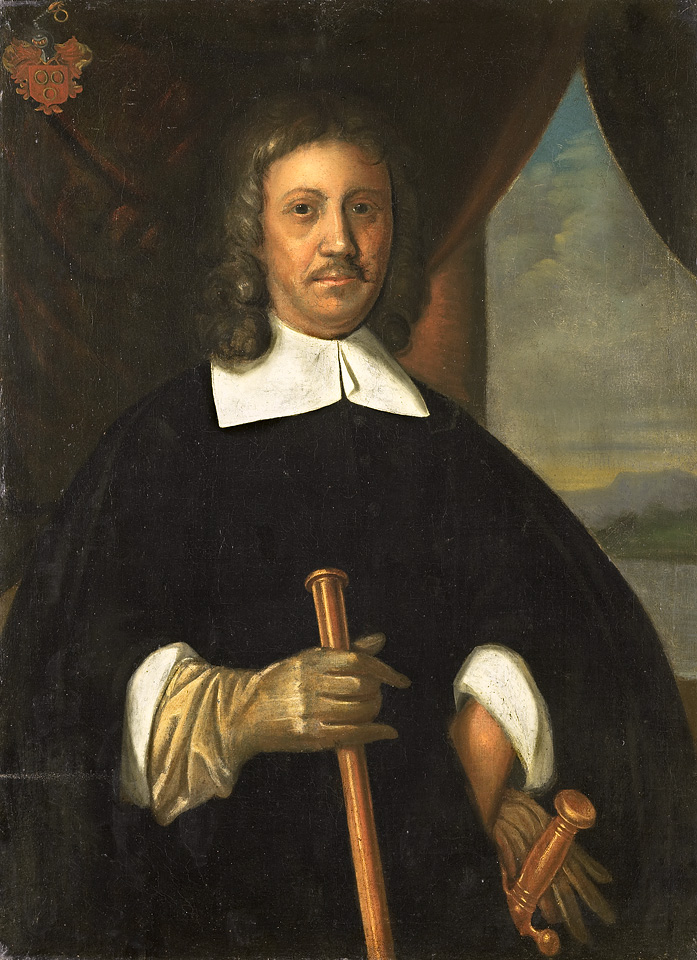
- Anthony van Diemen (1593–1645), Governor-General of the Dutch East Indies
- Jan van Riebeeck (1619–1677) colonial administrator, founded Cape Town (South Africa)
- Roelof de Man (1634 - 1663), bookkeeper and second-in-charge to Jan van Riebeeck at founding of Cape Town (South Africa)
- Otto van Rees (1823–1892), minister and Governor-General of the Dutch East Indies
- Rudi Martinus van Dijk (1932–2003) a Dutch and Canadian composer of orchestral, chamber and vocal music
- Wilhelmina Cooper (1939–1980), fashion model, founded Wilhelmina Models, New York
- Farid Azarkan (born 1971), politician and leader of Denk
- Jelka van Houten (born 1978), actress
Sport
- Elly van Hulst (born 1959), middle distance runner, competed at the 1984 and 1988 Summer Olympics
- Patrick Pothuizen (born 1972), football player with over 450 club appearances
- Michiel Elijzen (born 1982) a Dutch former professional road bicycle racer
Gallery
File:Culemborg, de Binnenpoort RM11554 foto11 2015-08-06 13.21.jpg|Town gate: de Binnenpoort File:Culemborg, by Jan Weissenbruch.jpg|Culemborg, 1880 File:Culemborg, molen de Hoop RM451862 foto3 2015-08-06 13.14.jpg|Windmill: molen de Hoop File:Culemborg, Netherlands - panoramio (18).jpg|Culemborg - panorama
References
References
- tags -->. dataref
- {{Dutch municipality population. dataref
- [http://www.etymologiebank.nl/trefwoord/culemborg Culemborg], Etymologiebank.nl, geraadpleegd op 10 augustus 2019. [https://web.archive.org/web/20190810143701/http://www.etymologiebank.nl/trefwoord/culemborg Gearchiveerd] op 10 augustus 2019.
- (4 August 2016). "Geschiedenis".
- "De Koornvriend, Culemborg". Molendatabase.
- {{cite EB1911
- Heller, Albert. (12 December 2020). "Denk-leider Farid Azarkan wil 500 agenten die discriminatie aanpakken: '27 procent van de Nederlanders heeft ermee te maken'". [[DPG Media]].
- [https://www.imdb.com/name/nm0887206/ IMDb Database] retrieved 27 December 2019
This article was imported from Wikipedia and is available under the Creative Commons Attribution-ShareAlike 4.0 License. Content has been adapted to SurfDoc format. Original contributors can be found on the article history page.
Ask Mako anything about Culemborg — get instant answers, deeper analysis, and related topics.
Research with MakoFree with your Surf account
Create a free account to save articles, ask Mako questions, and organize your research.
Sign up freeThis content may have been generated or modified by AI. CloudSurf Software LLC is not responsible for the accuracy, completeness, or reliability of AI-generated content. Always verify important information from primary sources.
Report