From Surf Wiki (app.surf) — the open knowledge base
Cuisine of the Southwestern United States
Food eaten in the southwestern United States

Food eaten in the southwestern United States
The cuisine of the Southwestern United States is food styled after the cooking of the Oasisamerican Native Americans, Hispanos of New Mexico, caballero, cowboys, hillbillies, and Mexican Americans.
One such style within the Southwest is New Mexican cuisine, named after the state of New Mexico and the Southwest's historical naming convention of Nuevo México. It is most popular in the states of New Mexico, Colorado, Arizona, Southern Nevada and Utah. This cuisine is known for its use of New Mexico chile; the majority of the crop is grown in Hatch, New Mexico. A hallmark of New Mexican cuisine is smothering dishes with either red chile, green chile, or both (a combination referred to as "Christmas"). Beyond chiles, it incorporates flavors such as piñon, and dishes such as breakfast burritos, biscochitos, and sopapillas. Another popular variety is the Tejano foods from Texan cuisine, called Tex-Mex, which includes dishes like fajitas and from Texan barbecue. Additionally, parts of Arizona’s Southwestern cuisine are often called Sonoran, named after the Mexican state of Sonora and the Sonoran Desert that covers a third of the state, and include dishes like Sonoran hot dogs.
A number of casual dining and fast food restaurants specializing in Southwestern cuisine have become popular in the United States. Several brands specialize in Southwestern foods for grocers.
History
When New Mexico was still part of New Spain and the Republic of Mexico, regional ingredients were more limited, with few imports supplementing locally grown food. This gave New Mexican cuisine its unique palate.
All cooking was done at home by women who toasted whole spices and ground corn by hand using metates. Hunters made "jerky", in the style of New Mexican carne seca, with game meats, fish and wild birds. Fruits and vegetables were sun-dried in preparation for the winter.
Food was slow-cooked in iron or copper pots over open fires, and the only imported items were non-perishables from New Spain—coffee, sugar and spices.
The expansion of the railway system allowed the importation of milled flour and corn meal, sugar, lemons, oranges and other ingredients from "the States".
Traditional ways of cooking were eventually replaced by iron stoves. The basic chile, beans and corn dishes from Mexican cuisine evolved over time and in modern form often substitute extremely hot peppers and condiments for the subtle, balanced spicing of authentic Mexican cuisine. Native Americans and Hispanos developed the earliest forms of New Mexico chile to supplement this taste.
By the early 20th-century tostadas, "chile joints" and home-cooked "chile suppers" and tamale vendors had become part of the cultural landscape.
Characteristics
The staple ingredients of Southwestern cuisine are corn, squash and beans. Called the "three sisters", they have been staples of North-American agriculture since ancient times. Beans are served whole or refried, and both styles can be used as filling for tostadas, tacos, burritos and similar dishes. Many bean varieties are consumed but the pinto bean is the most iconic bean of southwestern cuisine.
Southwestern food is distinguished by the use of chile peppers as the primary seasoning, first brought to Santa Fe with the arrival of the Spanish from Mexico.
Chile peppers are used as a topping for virtually every dish from pizza to bagels, or just fried tempura and eaten whole. Most dishes, from burritos to scrambled eggs, are served with plentiful amounts of chile sauce.
States
Arizona

The cuisine of Arizona is influenced by its location and proximity to Mexico and reflects a blend of Hispanic, Native American and pioneer culinary traditions. The O'odham peoples cultivated crops like maize and tepary beans around the Sonoran Desert area located at the base of the Tucson Mountains.
Local dishes include raspado, huevos rancheros and tamales. The Sonoran hot dog is an Arizona specialty served with pinto beans, guacamole, jalapeños, salsa and layered with other southwestern flavors.
Tucson, Arizona became the first American city to receive the designation of "City of Gastronomy" by UNESCO.
Restaurants use local ingredients, many grown with heirloom seeds distributed by non-profit organizations like Native Seeds/SEARCH. Salads and salsas are made with cholla cactus, gathered and dried at the San Xavier Indian Reservation.
California
Main article: Santa Maria-style barbecue

Santa Maria-style barbecue is a regional traditional cuisine rooted in the Santa Maria Valley in Santa Barbara County on the Central Coast of California. It originated during the mission era of California when local rancheros and vaqueros would host Spanish-style feasts during spring. They barbecued meat over earthen pits filled with hot coals of local coastal live oak. Meals are often accommodated with pinquitos, small pink beans that are considered endemic to the Santa Maria Valley.
Colorado
The traditional Cuisines of Colorado is similar to the cuisine of New Mexico: being influenced by its ties to the colonial Spanish, Mexican, Native American and the American Chuckwagon. Emphasis on wild game such as Bison, Elk, Trout, and Rocky mountain oyster accompanied with local products such as Paliside peaches and Olathe sweet corn sets them apart from the cuisine of New Mexico. Furthermore, varietal differences between the heirloom crops of local Hispano populations in southern Colorado also exist, with the Garcia bolita beans (as opposed to the New Mexican bolita) and the New Mexico chile pepper from Hatch, New Mexico, as well as peppers from Pueblo, Colorado. Due to this there exists a friendly rivalry between Colorado and New Mexico over who grows the best chile. The Pueblo chili tends to accompany itself to traditional dishes like that of the Slopper and Coloradoan green chili.
Nevada
The indigenous cuisine of Nevada is mainly New Mexican as well as Utah influenced Mormon foodways, these remain popular with Nevadans. New Mexican restaurants have success in the state, take for example the Las Vegas Valley area with Carlito's Burritos and former Garduño's locations, like Carlito's Burritos offer New Mexico green chile roasts in early Autumn. This native food style is also greatly influenced by the myriad of buffets and global restaurants in the Las Vegas area, leading to a distinctive culinary scene.
Other foods such as Basque cuisine also have a presence in the area, with many Basque restaurants in Las Vegas, and a Basque festival in Elko. There are some California influences, like the Picon Punch beverage not often found outside Nevada in modern times.
New Mexico
Main article: New Mexican cuisine
The most prevalent cuisine type of New Mexico is that of the cuisine originating in the historical region of Santa Fe de Nuevo México, with New Mexican cuisine continuing to be a blend of traditional foods of the Puebloans and Hispanos of New Mexico with modern American and Mexican influences.
Texas
Main article: Tex-Mex
Tex-Mex cuisine was first created from the early Tejano people in Texas as a mix of native Mexican and Spanish foods. This type of southwestern cuisine is heavy on cheese, beans, and meat. Dishes include heavy usage of the Chiltepin pepper. Popular dishes include enchiladas, fajita, menudo, and chili con carne.
Utah
Main article: Mormon foodways

Potatoes were the first crop planted by the pioneers when they arrived in the Salt Lake Valley in 1847 with seeds from the eastern states. According to William Clayton the first settlers in Utah also planted turnips, oats, corn, buckwheat and beans. Peach pits and apple seeds were planted at the insistence of Brigham Young.
Veterans of the Mexican–American War brought back seeds from California, introducing club wheat and the California pea to the state.
In modern times Utah is not noted for its culinary traditions except its fry sauce, a mix of ketchup and mayonnaise.
Southwestern dishes

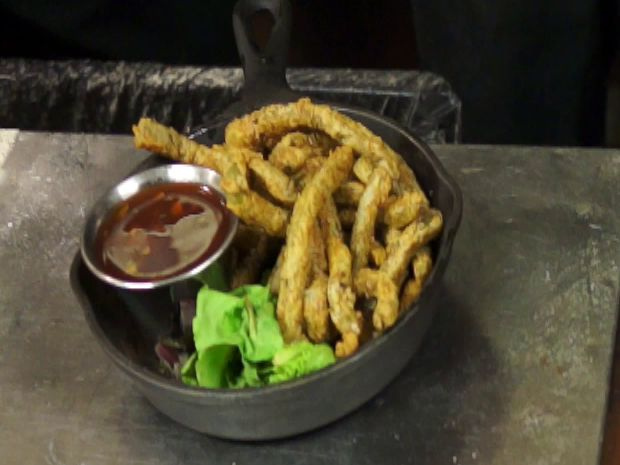
- Albondigas de pollo
- California burrito
- Arizona cheese crisp
- Burrito
- Cactus fries
- Chili con carne
- Chili con queso
- Chile relleno
- Chimichanga
- Enchilada casserole
- Enchiladas
- Fajitas
- Flan
- Huevos rancheros
- Jalapeño poppers
- King Ranch chicken
- Menudo
- Nachos
- New Mexico breakfast burrito
- Pozole
- Quesadilla
- Rice and beans
- Salsa
- Slopper
- Sopapillas
- Tacos
- Tamale pie
- Taquitos
- Tostadas
References
References
- [https://archive.today/20121125103736/http://ed101.bu.edu/StudentDoc/current/ED101fa10/jferraro/Southwestern_Food.html "Native Americans."] (cached version). [http://ed101.bu.edu Ed101.bu.edu] {{webarchive. link. (2011-08-24 . Accessed July 2011.)
- McElhiney, Brian. (September 12, 2024). "Mesilla Kitchen’s hefty portions bring big taste of New Mexico to Okinawa".
- Lawrence, Katie. (March 10, 2023). "Southwestern Restaurants In Arizona: Los Dos Molinos In Phoenix".
- Stapleton, Susan. (April 21, 2020). "Seven Outstanding Breakfast Burritos to Order for Takeout and Delivery in Las Vegas".
- (October 27, 2024). "Beehive Cheese: Cheddar and change happening at Uintah creamery".
- Aliseda, Andrea. (September 18, 2023). "A Cherished New Mexican Tradition Comes to Brooklyn".
- Romero, Leah. (February 6, 2025). "‘Red or Green Chile Month’ proposal advances • Source New Mexico".
- Doumani, Sophia. (January 13, 2025). "Tex-Mex Sports Bar 'El Tejano' brings bold flavors and big screens to Boise".
- (September 30, 2021). "Best Sonoran Hot Dog 2021".
- Alpers, Jackie. (July 3, 2024). "These Sonoran Hot Dogs Are Our Editors' Favorite Sandwich Recipe of Summer".
- Stewart-Howard, Stephanie. (May 25, 2012). "Sopapillas in Franklin".
- Neudorf, Samantha. (January 4, 2014). "America's 15 best Tex-Mex chain restaurants". [[USA Today]].
- McDowell, Erin. (April 21, 2025). "We tried and ranked every Chili's burger from worst to best, and the winner was inspired by the Southwest".
- (October 15, 2025). "70 years, one family and all the red and green you can eat".
- Culler, Kelly. (April 13, 2021). "New Mexico Chiles: History, Legend and Lore". Arcadia Publishing.
- Rubino, Joe. (March 22, 2020). "Built around New Mexico’s Hatch chile, 505 Southwestern is Denver based and wants Colorado Rockies fans to know it".
- Fergusson, Erna. (1934). "Mexican Cookbook". University of New Mexico Press.
- (23 January 2019). "A Cheat Sheet to Southwestern Food".
- "What Makes Tucson Deserving of the Title of the United States' First Capital of Gastronomy".
- Mercuri, Becky. (2007). "The Great American Hot Dog Book:Recipes and Side Dishes from Across America". Gibbs Smith.
- "About".
- (August 23, 2016). "Tucson Becomes an Unlikely Food Star". The New York Times.
- "Santa Maria Style Barbecue".
- "Advantages Of Custom Homes".
- "Journeying through a History of Colorado Food".
- Ryan. "Colorado Cuisine: From Traditional Food to Porno-Molecular Gastronomy". Savage Minds.
- (2021-09-01). "9 Colorado Famous Foods".
- Annie. (2015-06-04). "11 Foods And Drinks Everyone in Colorado Absolutely LOVES".
- "Garcia Bolita".
- (2019-08-31). "The Heart of Pueblo Chile".
- (4 September 2019). "Hatch or Pueblo? New Mexico Fires up Chile Rivalry with Ad Blasting Colorado".
- (2014-01-30). "Old Fashioned Colorado Green Chili".
- Rinella, Heidi Knapp. (August 6, 2020). "Sprouts won't roast Hatch chile this year, but Carlito's Burritos will".
- (October 5, 2017). "Garduños at Fiesta Rancho".
- Arrascaeta, Christina. (February 5, 2020). "Three Nevada Restaurants Are Among The Top 100 Places To Eat In America This Year".
- (August 10, 2017). "The origin of the Picon punch, a quintessential Western cocktail". Reno Gazette-Journal.
- Galloway, Lindsey. (February 27, 2012). "The backbone of New Mexican cuisine".
- Pruitt, Sarah. (September 3, 2020). "Tracing the History of Tex-Mex". [[History Channel.
- Cheney, Brock. "Plain by Wholesome: Foodways of the Mormon Pioneers". University of Utah Press.
- (November 6, 2020). "Utah ranks 47th for states with the best food scenes, travel site says". KUTV.
This article was imported from Wikipedia and is available under the Creative Commons Attribution-ShareAlike 4.0 License. Content has been adapted to SurfDoc format. Original contributors can be found on the article history page.
Ask Mako anything about Cuisine of the Southwestern United States — get instant answers, deeper analysis, and related topics.
Research with MakoFree with your Surf account
Create a free account to save articles, ask Mako questions, and organize your research.
Sign up freeThis content may have been generated or modified by AI. CloudSurf Software LLC is not responsible for the accuracy, completeness, or reliability of AI-generated content. Always verify important information from primary sources.
Report