From Surf Wiki (app.surf) — the open knowledge base
Cubans
Nationality

Nationality
| Field | Value | ||
|---|---|---|---|
| group | Cubans | ||
| Cubanos | |||
| image | Map of the Cuban Diaspora in the World.svg | ||
| population | Cubans: ~14 million (2024) | ||
| Diaspora: ~4.3 million | |||
| popplace | Cuba 9,748,007 (2024) | ||
| region1 | USA | ||
| pop1 | 2,948,426 (2024) | ||
| ref1 | |||
| region2 | Spain | ||
| pop2 | 252,290 (2024) | ||
| ref2 | |||
| region6 | Chile | ||
| pop6 | 21,205 (2023) | ||
| region9 | Uruguay | ||
| pop9 | 11,862 (2023) | ||
| ref9 | |||
| region4 | Italy | ||
| pop4 | 44,959 (2025) | ||
| ref4 | |||
| region5 | Mexico | ||
| pop5 | 25,976 (2020) ** | ||
| region7 | Canada | ||
| pop7 | 19,545 (2021) | ||
| ref7 | |||
| region10 | Venezuela | ||
| pop10 | 10,769 (2020) | ||
| ref10 | |||
| region12 | Puerto Rico | ||
| pop12 | 10,228 (2024) | ||
| ref12 | |||
| region8 | GER | ||
| pop8 | 16,116 (2020) | ||
| ref8 | |||
| region13 | Costa Rica | ||
| pop13 | 6,908 (2020) | ||
| ref13 | |||
| region14 | France | ||
| pop14 | 5,466 (2020) | ||
| ref14 | |||
| region15 | Switzerland | ||
| pop15 | 3,574 (2020) | ||
| ref15 | |||
| region16 | Dominican Republic | ||
| pop16 | 3,402 (2020) | ||
| ref16 | |||
| region17 | Peru | ||
| pop17 | 3,170 (2020) | ||
| ref17 | |||
| region11 | Ecuador | ||
| pop11 | 10,768 (2022) | ||
| ref11 | |||
| region18 | Sweden | ||
| pop18 | 2,992 (2020) | ||
| ref18 | |||
| region3 | Brazil | ||
| pop3 | 65,976 (2024) | ||
| ref3 | |||
| pop20 | 2,412 (2020) | ||
| ref20 | |||
| region21 | United Kingdom | ||
| pop21 | 2,333 (2020) | ||
| ref21 | |||
| region22 | Russian Federation | ||
| pop22 | 2,224 (2020) | ||
| ref22 | |||
| region19 | Colombia | ||
| pop19 | 2,534 (2020) | ||
| ref19 | |||
| region23 | Panama | ||
| pop23 | 2,194 (2020) | ||
| ref23 | |||
| region24 | Bolivia | ||
| pop24 | 1,971 (2020) | ||
| ref24 | |||
| region25 | Belgium | ||
| pop25 | 1,926 (2020) | ||
| ref25 | |||
| region26 | Portugal | ||
| pop26 | 1,858 (2020) | ||
| ref26 | |||
| region27 | South Africa | ||
| pop27 | 1,846 (2020) | ||
| ref27 | |||
| pop28 | 1,825 (2020) | ||
| ref28 | |||
| region29 | Guinea | ||
| pop29 | 1,714 (2020) | ||
| ref29 | |||
| region30 | Netherlands | ||
| pop30 | 1,501 (2020) | ||
| ref30 | |||
| pop31 | 1,185 (2020) | ||
| ref31 | |||
| pop33 | 1,050 (2024) | ||
| region32 | Argentina | ||
| pop32 | 1,116 (2020) | ||
| ref32 | |||
| <ref>https://serviciomigraciones.cl/estudios-migratorios/estimaciones-de-extranjeros/ {{Webarchive | url | https://web.archive.org/web/20230709225215/https://serviciomigraciones.cl/estudios-migratorios/estimaciones-de-extranjeros/ | date=9 July 2023 }} Estimacion de Poblacion Extranjera en Chile, al 31 de diciembre de 2019. Source: INE de Chile. Retrieved 26 August 2022. |
| languages | Cuban Spanish, Lucumí, English (Miami accent), Spanglish, Cubonics | ||
| rels | Majority: | ||
| Roman Catholicism | |||
| Minority: | |||
| Irreligion, Protestantism, Santería, Ifá, Palo, Judaism, Islam. | |||
| related_groups | Puerto RicansFloridanosSpaniardsAfricansTaínoCanarians Catalans GaliciansAndalusiansPortugueseFrench Latinos |
Cubanos Diaspora: ~4.3 million Trinidad and Tobago
Jamaica Haiti Australia Roman Catholicism Minority: Irreligion, Protestantism, Santería, Ifá, Palo, Judaism, Islam. Cubans () are the citizens and nationals of Cuba. The Cuban people have varied origins with the most spoken language being Spanish. The larger Cuban diaspora includes individuals that trace ancestry to Cuba and self-identify as Cuban but are not necessarily Cuban by citizenship. The United States has the largest Cuban population in the world after Cuba.
The modern nation of Cuba, located in the Caribbean, emerged as an independent country following the Spanish-American War of 1898, which led to the end of Spanish colonial rule. The subsequent period of American influence, culminating in the formal independence of Cuba in 1902, initiated a complex process of national identity formation. This identity is characterized by a blend of Indigenous Taíno, African, and Spanish cultural elements, reflecting a unique multicultural heritage. The Cuban Revolution of 1959, which brought Fidel Castro to power, marked a significant turning point as it transformed the political landscape, reinforced a sense of national identity centered around revolutionary and socialist ideals and led to the continuing Cuban exodus, establishing the Cuban Diaspora.
Racial and ethnic groups
Main article: Demographics of Cuba
Census
The population of Cuba was 11,167,325 inhabitants in 2012. The largest urban populations of Cubans in Cuba (2012) are to be found in Havana (2,106,146), Santiago de Cuba (506,037), Holguín (346,195), Camagüey (323,309), Santa Clara (240,543) and Guantánamo (228,436). According to Cuba's Oficina Nacional de Estadisticas ONE 2012 Census, the population was 11,167,325 including: 5,570,825 men and 5,596,500 women.
| Year | White / % | Mulatto/ | |||
|---|---|---|---|---|---|
| Mestizo / % | Black / % | East Asian (Amarillo) / % | Total | ||
| 1774 | 56.2 | / 43.8 | 171,620 | ||
| 1861 | 56.8 | / 43.2 | 1,396,530 | ||
| 1899 | 67.9 | TBD | |||
| 1943 | 74.3 | 15.6 | |||
| 2002 | 7,271,926 | 65.0 | 2,658,675 | 24.86 | 1,126,894 |
| 2012 | 64.1 | 26.6 |
Source.
White or European
Main article: White Cubans, Spanish immigration to Cuba

In the 2012 Census of Cuba, 64.1% of the inhabitants self-identified as white. Based on genetic testing (2014) in Cuba, the average European, African and Native American ancestry in those auto-reporting to be white were 86%, 6.7%, and 7.8%. The majority of the European ancestry comes from Spain. During the 18th, 19th and early part of the 20th century especially, large waves of Asturians, Galicians, Canary Islanders and Catalans emigrated from Spain to Cuba. Other European nationalities with significant influx include: Scots, Poles, French, Italians, English, Irish and Germans. Europeans with lesser influx were Russians, Romanians, Portuguese and Greeks. Central and Eastern European influence was mostly during the Cold War years and immigration from the British Isles was mostly to Havana and Pinar del Rio Province. There is a small remnant of Jewish as well as Levantine peoples, mainly Lebanesse and Syrians. Though there are other Whites or Europeans in Cuba, the majority of White or European ancestry comes from Spain.
Multiracial
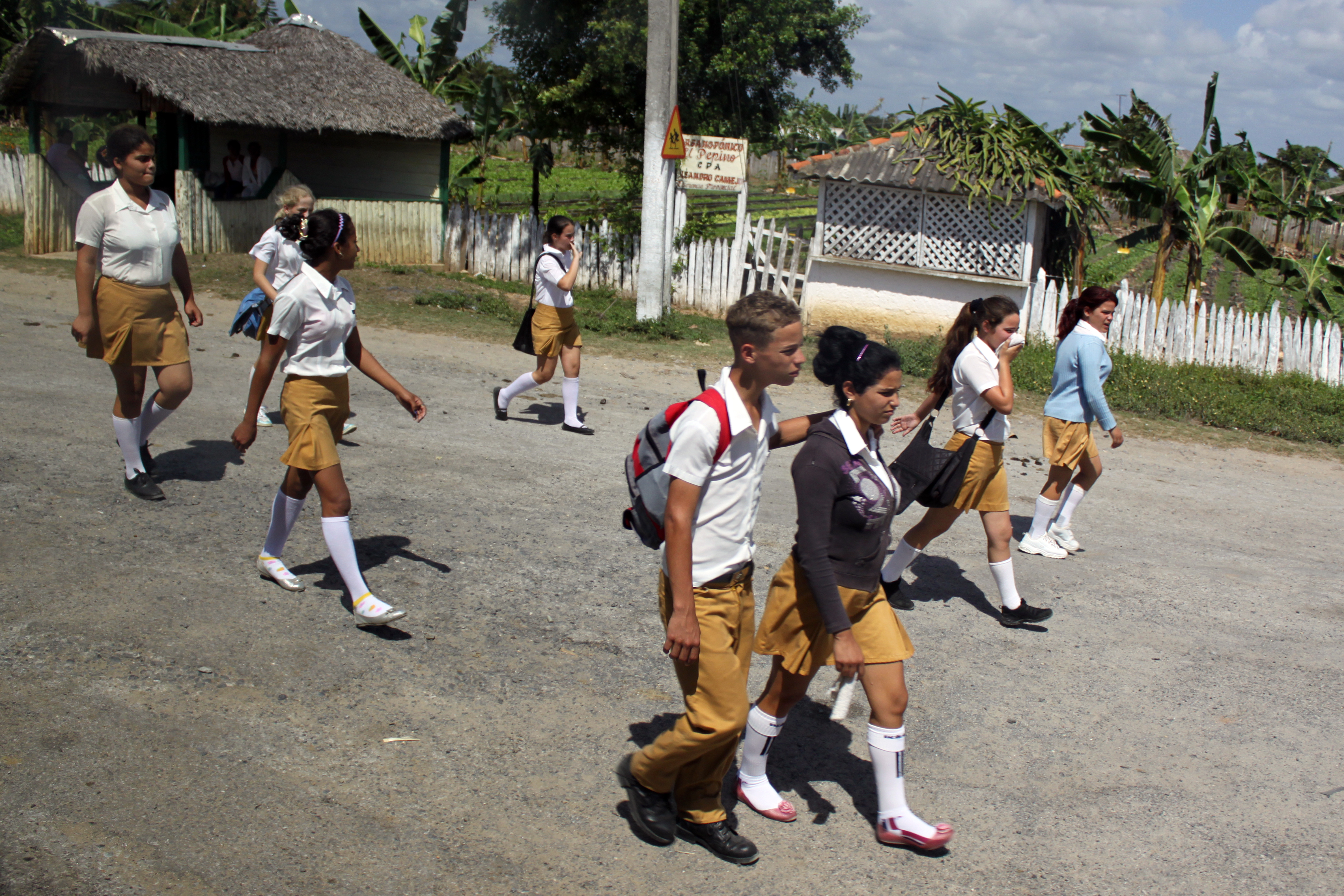
In the 2012 Census of Cuba, 26.6% (2.97 million) of the Cubans self-identified as mulatto or mestizo.
Black or African
Main article: Afro-Cubans
The Afro-Cuban population was 9.3% in the 2012 Census of Cuba. Just about 1.3 million Cubans described themselves as black. Thus a significant proportion of those living on the island affirm some sub-Saharan African ancestry.
Based on genetic testing in 2014, the average African, European and Native American ancestry in those self-reporting to be "negro (Black)" was 65.5% "African", 29% "European" ancestry and 5.5% "Native American" or other ancestry.
Although Afro-Cubans can be found throughout Cuba, Eastern Cuba has a higher concentration of Blacks than other parts of the island. Havana has the largest population of blacks of any city in Cuba.
East Asian
Main article: Chinese Cubans, Japanese Cubans, Filipino Cubans, Koreans in Cuba
Officially called amarilla (yellow in English) in the Cuban census, Cubans of East Asian origins made up 1.02% of the population in the 2002 Census of Cuba. They are primarily made up of ethnic Chinese who are descendants of indentured laborers who came in the 19th century to build railroads and work in mines. Historically, Chinese descendants in Cuba were once classified as "white".
Amerindian
The number of people identifying as Taíno has not been formally recorded. Most of them live on the eastern part of the island, notably in Granma, Guantánamo, and Las Tunas.
The intermixing between European settlers and the native Taíno was prevalent in the early colonial era. Their mixed-race descendants have been historically undercounted.
According to a 2018 genome-wide data study, the eastern region of the island had an average Native American ancestry contribution of 10%, as compared to an average of 5% in the rest of the island.
Additionally, many North American Indigenous living in Spanish missions in Georgia and Florida were evacuated to Spanish Cuba along with the fleeing Spanish settlers following the loss of Spanish Florida. As a result, descendants of the Calusa, Tequesta, Timucua and other now-extinct indigenous peoples of Florida have been assimilated into the mainstream Cuban population. They comprise part of Cuba's Amerindian genetic makeup.
Intermarriage between diverse groups is so frequent as to be the rule.
Arabs
Main article: Arab Cubans
Population changes
Cuba's birth rate (9.88 births per thousand population in 2006) is one of the lowest in the Western Hemisphere. Its overall population increased from around 7 million in 1961 to 11 million today, but the rate of increase slowed over time and has recently turned to a decrease, with the Cuban government in 2006 reporting the first drop in the population since the Mariel boatlift. Immigration and emigration have had noticeable effects on the demographic profile of Cuba during the 20th century. Between 1900 and 1930, close to a million Spaniards migrated to the island.
Since 1959, over two million Cubans have left the island, primarily to Miami, Florida, where a vocal, well-educated and economically successful exile community exists.
Genetics
An autosomal study from 2014 found the genetic ancestry in Cuba to be 72% European, 20% African and 8% Amerindian. Of note, there is high variability between regions within Cuba, with individuals from Western provinces having higher European ancestry on average, and those in the Eastern region having more African and Native American genetic contribution. Cuban genealogy has become a rising interest for Cubans in the last 15 years.
A 1995 study done on the population of Pinar del Río, found that 50% of the Mt-DNA lineages (female lineages) could be traced back to Europeans, 46% to Africans and 3% to Americans. This figure is consistent with both the historical background of the region, and the current demographics of it. According to another study in 2008, regarding the geographical origin attributed to each mtDNA haplogroup, 55% of the sequences found in Cubans are of West Eurasian origin (namely, Europe and the Middle East) and 45% of African origin Regarding Y-chromosome haplogroups (male lineages), 78.8% of the sequences found in Cubans are of West Eurasian origin, 19.7% of African origin and 1.5% of East Asian origin. Among the West Eurasian fraction, the vast majority of individuals belong to West European haplogroup R1b. The African lineages found in Cubans have a Western (haplogroups E1, E2, E1b1a ) and Northern (E1b1b-M81 ) African origin. The North African haplogroup E1b1b1b (E-M81), is found at a frequency of 6.1%.
According to Fregel et al. (2009), the fact that autochthonous male E-M81 and female U6 lineages from the Canaries have been detected in Cuba and Iberoamerica, demonstrates that Canary Islanders with indigenous Guanche ancestors actively participated in the American colonization.
Cuban diaspora
The United States has the largest number of Cubans outside Cuba. As of 2024, the United States Census Bureau's American Community Survey showed a total population of 1,688,798 Cuban immigrants. As of 2015, 68% of Cuban-born residents of the United States have naturalized automatically losing their Cuban citizenship. Significant populations of Cubans exist in the cities of Hialeah and Miami in Florida (995,439 Cubans in this state in 2017) and in Texas (60,381), New Jersey (44,974), California (35,364), New York (26,875), and Illinois (22,541)
The second largest Cuban diaspora is in Spain. As of 2019, there were 151,423 Cubans in Spain. Smaller numbers of Cubans live in Brazil, Uruguay, Italy*, Mexico*, and Canada.
After the founding of the republic in 1902, a considerable migration (over 1 million) arrived from the Iberian Peninsula to the island, between them were more than a few former Spanish soldiers who participated in the wars, and yet it never created an obstacle for the respect and affection of Cubans, who have always been proud of their origins. In December 2008, Spain began accepting citizenship applications from the descendants of people who went into exile after its brutal 1936-39 Civil War, part of a 2007 law meant to address the painful legacy of the conflict. This new Historical Memory Law has granted to more than 140,000 Cubans of Spanish ancestry the Spanish citizenship, and there were 143,048 Cubans with Spanish citizenship in Cuba and 93,004 in Spain on January 1, 2019. Under the law, the descendants had until December 2011 to present themselves at the Spanish embassy in their home country and turn in documentation that proves their parents or grandparents fled Spain between 1936 and 1955. They did not need to relinquish their current citizenship.
History
Main article: History of Cuba
The first people known to have inhabited Cuba was the Siboney, an Amerindian people. They were followed by another Amerindian people, the Taíno who were the main population both of Cuba and other islands in The Antilles when Christopher Columbus first sighted the island in 1492. He claimed the islands for Spain and Cuba became a Spanish colony. It was to remain so until 1902 apart from a brief occupation by Britain in 1762, before being returned in exchange for Florida.
Towards the end of the 19th century, Spain had lost most of its American possessions and a series of rebellions had shaken Cuba. This, combined with calls for annexation of Cuba in the United States, led to the Spanish–American War, and in 1902 Cuba gained formal independence.
During the first decades of the 20th century, USA interests were dominant and in Cuba, leading to large influence over the island. This ended in 1959 when de facto leader Fulgencio Batista was ousted by revolutionaries led by Fidel Castro. Quickly deteriorating relations with the US led to Cuba's alliance with the Soviet Union and Castro's transformation of Cuba into a declared socialist republic. Cuban soldiers were sent overseas to fight in the Angolan Civil War and Ogaden War in the 1970s-1980s. Castro remained in power until 2008, first as Prime Minister then from 1976 as President of the Council of State. Fidel was succeeded by his brother Raúl Castro as First Secretary of the Communist Party of Cuba in 2011. Miguel Díaz-Canel succeeds the brothers Fidel and Raúl Castro as First Secretary of the Communist Party, making him the first non-Castro leader of Cuba since the revolution in 2021. Miguel Mario Díaz-Canel y Bermúdez (Spanish: [mi.ˈɣel ˈdi.as kaˈnel]; born 20 April 1960) is a politician and engineer who is the third first secretary of the Communist Party of Cuba.
File:Enumerators, city of Habana.jpg|Cuban enumerators for the 1899 census of Havana. File:Royal Palm Hotel (Havana), entrance.jpg|Royal Palm Hotel Havana, entrance. c. 1930 File:Cuban transport.jpg|Public transportation in Cuba during the Special Period (1991–2000)
Culture and traditions
Main article: Culture of Cuba
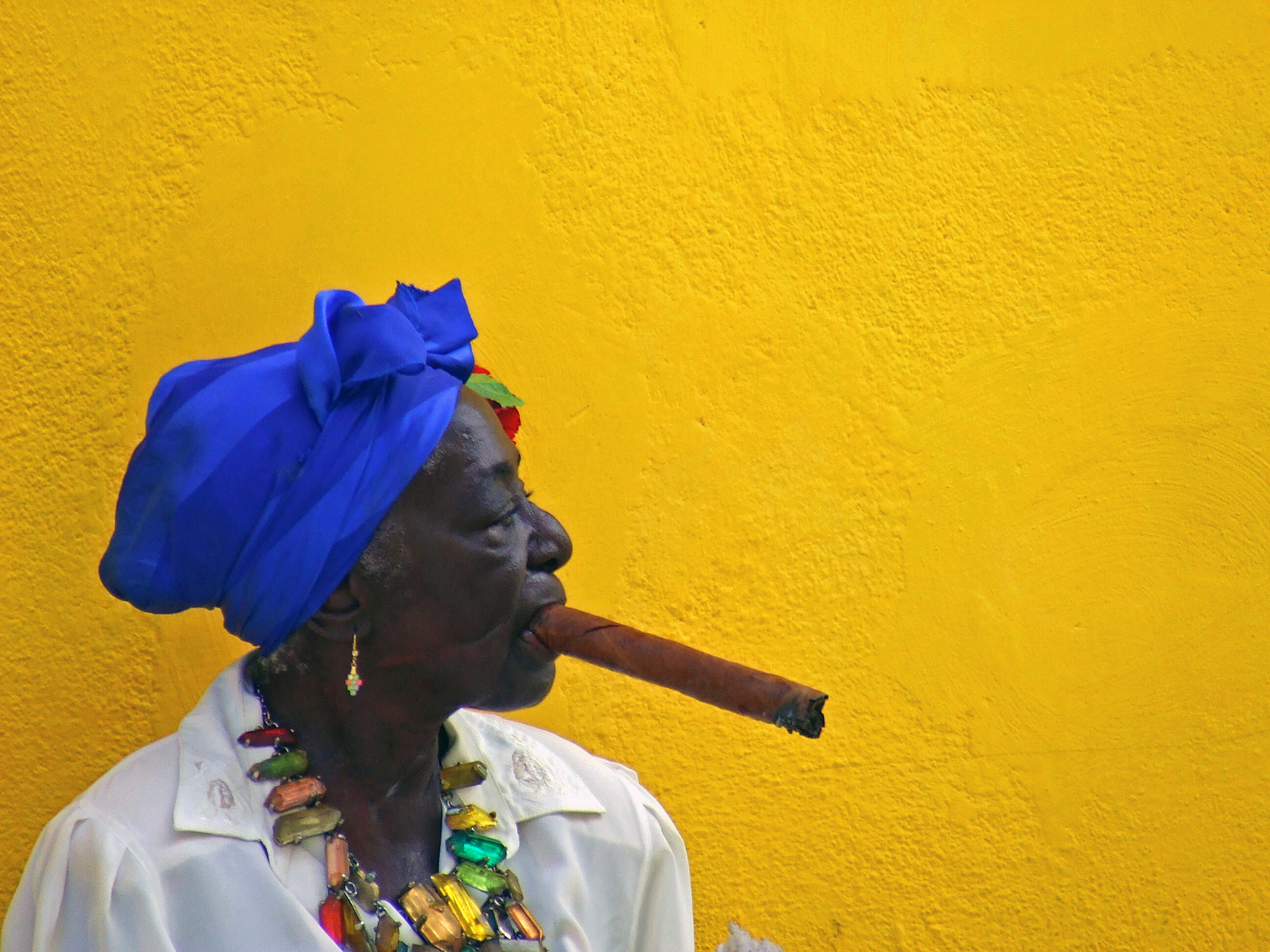
The culture of Cuba reflects the island's influences from various cultures, primarily European (Spanish), Taino and African.
One of the most distinctive parts of Cuban culture is Cuban music and dancing, being well-known far outside the country. Well known Hispanic music styles such as mambo, salsa, rumba, cha-cha-chá, bolero, and son originated in Cuba. The origins of much of Cuban music can be found in the mix of Spanish and West African music, while American musical elements such as trombones and big band were also significant elements in the formation of Cuban music. Cuban literature includes some of the most well-known names of the islands, such as writer and independence hero José Martí in the late 19th century. More contemporary Cuban authors include Daína Chaviano, Pedro Juan Gutiérrez, Antonio Orlando Rodríguez, Zoé Valdés and Leonardo Padura Fuentes.
The Spanish language is spoken by virtually all Cubans on the island itself. Cuban Spanish is characterized by the reduction of several consonants, a feature that it shares with other dialects of Caribbean Spanish as well as the Canary Islands. Many Cuban-Americans, while remaining fluent in Spanish, use American English as one of their daily languages.
Religion
Main article: Religion in Cuba
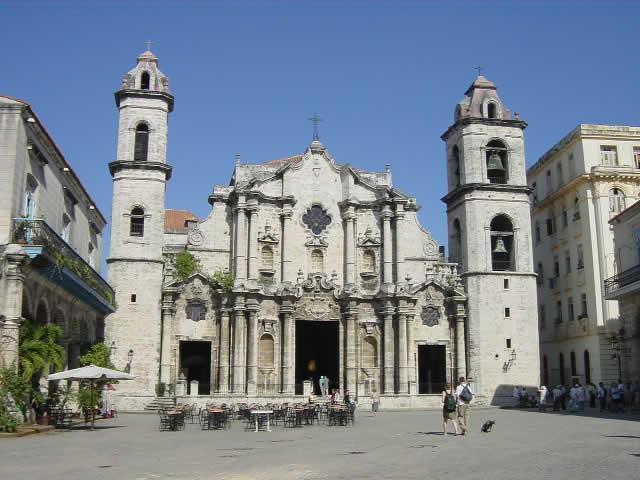
Cuba's prevailing religion is Roman Catholicism, although in some instances it is profoundly modified and influenced through syncretism. A common syncretic religion is Santería, which combined the Yoruba religion of the African slaves with some Catholicism; it shows similarities to Brazilian Umbanda and has been receiving a degree of official support.
The Roman Catholic Church estimates that 60 percent of the population is Catholic, with 10 percent attending mass regularly, while independent sources estimate that as few 1.5 percent of Catholics do so.
Membership in Protestant churches is estimated to be five percent and includes Baptists, Pentecostals, Seventh-day Adventists, Presbyterians, Episcopal Church of Cuba|Episcopalians, Methodists, Religious Society of Friends (Quakers), and Lutherans. Other groups include the Greek Orthodox Church, the Russian Orthodox Church, Jehovah's Witnesses, Hindus, Muslims, Buddhists, Jews, Baháʼís, and the Church of Jesus Christ of Latter-day Saints.
Cuba is home to a variety of syncretic religions of largely African cultural origin. According to a US State Department report, some sources estimate that as much as 80 percent of the population consults with practitioners of religions with West African roots, such as Santeria or Yoruba. Santería developed out of the traditions of the Yoruba, one of the African peoples who were imported to Cuba during the 16th through 19th centuries to work on the sugar plantations. Santería blends elements of Christianity and West African beliefs and as such made it possible for the slaves to retain their traditional beliefs while appearing to practice Catholicism. La Virgen de la Caridad del Cobre (Our Lady of Charity) is the Catholic patroness of Cuba, and is greatly revered by the Cuban people and seen as a symbol of Cuba. In Santería, she has been syncretized with the goddess Ochún. The important religious festival "La Virgen de la Caridad del Cobre" is celebrated by Cubans annually on 8 September. Other religions practised are Palo Monte, and Abakuá, which have large parts of their liturgy in African languages.
Symbols
The flag of Cuba is red, white, and blue; and was first adopted by Narciso López on a suggestion by the poet Miguel Teurbe Tolón. The design incorporates three blue stripes, representing the three provinces of the time (Oriente, Centro, and Occidente), and two white stripes symbolizing the purity of the patriotic cause. The red triangle stands for the blood shed to free the nation. The white star in the triangle stands for independence.
References
References
- http://amp.miamiherald.com/news/nation-world/world/americas/cuba/article290249799.html. {{Bare URL inline. (August 2024)
- http://www.onei.gob.cu/node/13815 {{Webarchive. link. (14 March 2020 . (in Spanish). Retrieved 2 July 2022)
- "Basic Facts".
- (2022). "HISPANIC OR LATINO ORIGIN BY SPECIFIC ORIGIN".
- "Instituto Nacional de Estadística. (National Statistics Institute)".
- https://www.cnediles.gub.uy/admin/adjuntos/511-24.pdf. Revisado 21 diciembre 2025.
- https://demo.istat.it/app/?!=RCS&I=en. Revisado 23 diciembre 2025.
- link. (2 February 2023 . Retrieved 18 January 2023.)
- (7 May 2021). "Canada Census Profile 2021". Statistics Canada Statistique Canada.
- https://countryeconomy.com/demography/migration/emigration/cuba {{Webarchive. link. (22 August 2023 . Data source: UN. Retrieved 22 August 2023.)
- (2022). "Place of Birth for the Foreign-Born Population in Puerto Rico".
- (31 December 2022). "Number of foreigners in Germany from 2019 to 2022, by country of origin".
- https://www.primicias.ec/noticias/sociedad/censo-ecuador/inmigrantes-extranjeros-paises/. Retrieved 20 September 2024.
- [https://www.nepo.unicamp.br/observatorio/bancointerativo/numeros-imigracao-internacional/sincre-sismigra/ Immigrants in Brazil (2024, in Portuguese)]
- (26 March 2013). "Table QS213EW: 2011 Census: Country of birth (expanded), regions in England and Wales". Office for National Statistics.
- "Country of birth (detailed)". National Records of Scotland.
- "Country of Birth - Full Detail: QS206NI". Northern Ireland Statistics and Research Agency.
- https://serviciomigraciones.cl/estudios-migratorios/estimaciones-de-extranjeros/ {{Webarchive. link. (9 July 2023 Estimacion de Poblacion Extranjera en Chile, al 31 de diciembre de 2019. Source: INE de Chile. Retrieved 26 August 2022.)
- "Estimaciones de extranjeros". Extranjeria.cl.
- (18 October 2021). "Central America :: Cuba — The World Factbook - Central Intelligence Agency".
- "Cifras censales comparadas, 1899 - 1953".
- Fernandez, Nadine T.. (18 February 2010). "Romance: Interracial Couples in Contemporary Cuba". Rutgers University Press.
- "2012 Official Census - Province, City and ethnic group".
- "Official 2012 Census".
- "El Color de la Piel según el Censo de Población y Viviendas".
- (24 July 2014). "Cuba: Exploring the History of Admixture and the Genetic Basis of Pigmentation Using Autosomal and Uniparental Markers". PLOS Genetics.
- (19 June 2015). "Cuba - World Directory of Minorities & Indigenous Peoples".
- (19 June 2015). "Afro-Cubans".
- "El Color de la Piel según el Censo de Población y Viviendas".
- "Report on the Census of Cuba, Census of Cuba 1899".
- (30 July 2018). "Exploring Cuba's population structure and demographic history using genome-wide data.". Scientific Reports.
- (17 September 2007). "Political Disaffection in Cuba's Revolution and Exodus". Cambridge University Press.
- (17 May 2007). "Population, birth rate falling in Cuba: Official". thepeninsulaqatar.com.
- Quiñones, Rolando García. "International Migrations in Cuba: persisting trends and changes". Technical Corporation.
- Padgett, Tim. (July 17, 2023). "Cubans look to genealogy as a way off the island".
- (2008). "Genetic origin, admixture, and asymmetry in maternal and paternal human lineages in Cuba". BMC Evolutionary Biology.
- (2009). "Demographic history of Canary Islands male gene-pool: replacement of native lineages by European". BMC Evolutionary Biology.
- https://data.census.gov/table/ACSDT1Y2022.B05006?q=B05006%20Place%20of%20Birth%20for%20the%20Foreign-Born%20Population%20in%20the%20United%20States. Retrieved 8 August 2024.
- (January 18, 2018). "Naturalization rate among U.S. immigrants up since 2005, with India among the biggest gainers". [[Pew Research Center]].
- "Constitución de la República de Cuba, 1992". [[United Nations High Commissioner for Refugees.
- "U.S. Census website". United States Census Bureau.
- https://www.ine.es/jaxiT3/Tabla.htm?t=68522. Retrieved 10 January 2025.
- (2023). "Hispanic Groups Population in USA by ORIGIN".
- Government of Canada, Statistics Canada. (February 8, 2017). "Census Profile, 2016 Census - Canada [Country] and Canada [Country]".
- Espinosa Chepe, Oscar. (2007-12-01). "Cuba and Spain – Relations and Contradictions".
- (29 December 2008). "500,000 New Citizens for Spain?".
- (30 December 2008). "Over 400 Cubans line up for Spanish citizenship".
- "Caribbean Music and Dance- Cuba".
- (19 April 2018). "Raul Castro to lead Cuba's Communist Party until 2021". France 24.
- (19 December 2016). "World Music: A Global Journey". Taylor & Francis.
- (2017). "Cuban Spanish Dialectology: Variation, Contact, and Change". Georgetown University Press.
- "RELIGION IN CUBA".
- "Cuba - Spanish, Haitian Creole, Sign Language | Britannica".
- (October 2009). "International Religious Freedom Report 2009: Cuba". US State Department.
- "Comunidades de Fe en Cuba: Primera parte de la serie de fondo de WOLA sobre la religión en Cuba".
- "La Pampa - Cada uno en lo suyo, con coincidencias y discrepancias".
- Carlos Márquez Sterling. (1975). "Historia de la isla de Cuba".
This article was imported from Wikipedia and is available under the Creative Commons Attribution-ShareAlike 4.0 License. Content has been adapted to SurfDoc format. Original contributors can be found on the article history page.
Ask Mako anything about Cubans — get instant answers, deeper analysis, and related topics.
Research with MakoFree with your Surf account
Create a free account to save articles, ask Mako questions, and organize your research.
Sign up freeThis content may have been generated or modified by AI. CloudSurf Software LLC is not responsible for the accuracy, completeness, or reliability of AI-generated content. Always verify important information from primary sources.
Report