From Surf Wiki (app.surf) — the open knowledge base
Cryogenic rocket engine
Type of rocket engine which uses liquid fuel stored at very low temperatures
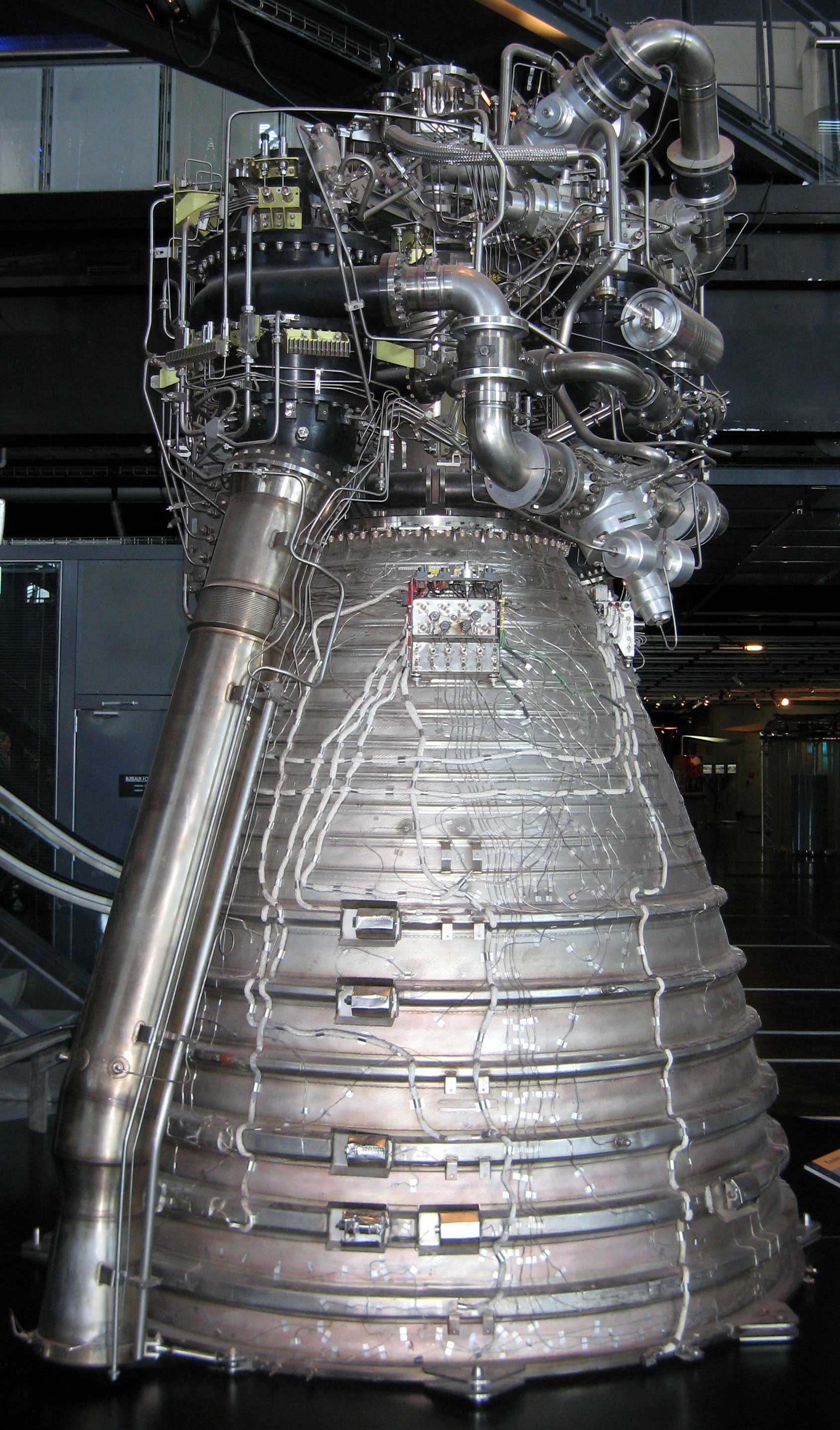
Type of rocket engine which uses liquid fuel stored at very low temperatures
A cryogenic rocket engine is a rocket engine that uses a cryogenic fuel and oxidizer; that is, both its fuel and oxidizer are gases which have been liquefied and are stored at very low temperatures.{{cite book|author=Bilstein, Roger E.
Rocket engines burning cryogenic propellants remain in use today on high performance upper stages and boosters. Upper stages are numerous. Boosters include ESA's Ariane 6, ISRO's GSLV, LVM3, JAXA's H-II, NASA's Space Launch System. The United States, Russia, India, Japan, France and China are the only countries that have operational cryogenic rocket engines.
Cryogenic propellants
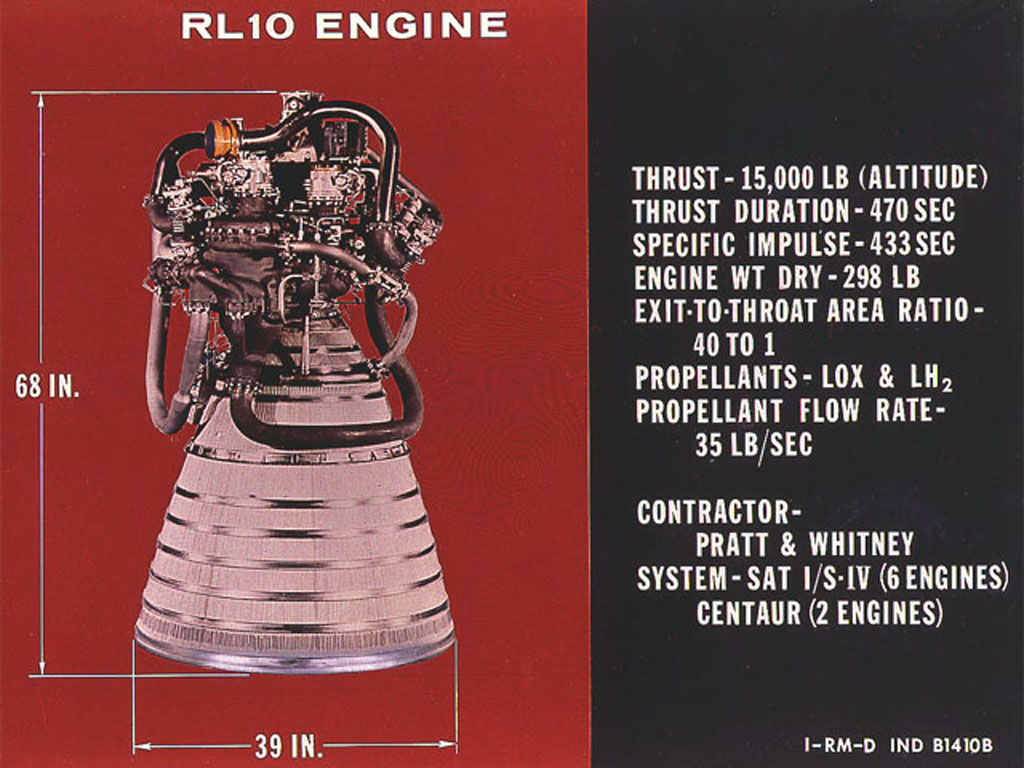
Rocket engines need high mass flow rates of both oxidizer and fuel to generate useful thrust. Oxygen, the simplest and most common oxidizer, is in the gas phase at standard temperature and pressure, as is hydrogen, the simplest fuel. While it is possible to store propellants as pressurized gases, this would require large, heavy tanks that would make achieving orbital spaceflight difficult if not impossible. On the other hand, if the propellants are cooled sufficiently, they exist in the liquid phase at higher density and lower pressure, simplifying tankage. These cryogenic temperatures vary depending on the propellant, with liquid oxygen existing below -183 C and liquid hydrogen below -253 C. Since one or more of the propellants is in the liquid phase, all cryogenic rocket engines are by definition liquid-propellant rocket engines.{{cite book
Various cryogenic fuel-oxidizer combinations have been tried, but the combination of liquid hydrogen (LH2) fuel and the liquid oxygen (LOX) oxidizer is one of the most widely used. Both components are easily and cheaply available, and when burned have one of the highest enthalpy releases in combustion,{{cite book|author=Biswas, S.
Components and combustion cycles
The major components of a cryogenic rocket engine are the combustion chamber, pyrotechnic initiator, fuel injector, fuel and oxidizer turbopumps, cryo valves, regulators, the fuel tanks, and rocket engine nozzle. In terms of feeding propellants to the combustion chamber, cryogenic rocket engines are almost exclusively pump-fed. Pump-fed engines work in a gas-generator cycle, a staged-combustion cycle, or an expander cycle. Gas-generator engines tend to be used on booster engines due to their lower efficiency, staged-combustion engines can fill both roles at the cost of greater complexity, and expander engines are exclusively used on upper stages due to their low thrust.
LOX+LH2 rocket engines by country

Currently, six countries have successfully developed and deployed cryogenic rocket engines:
| Country | Engine | Cycle | Use | Status |
|---|---|---|---|---|
| RL-10 | Expander | Upper stage | Active | |
| J-2 | Gas-generator | lower stage | Retired | |
| SSME (aka RS-25) | Staged combustion | Booster | Active | |
| RS-68 | Gas-generator | Booster | Retired | |
| BE-3 | Combustion tap-off | New Shepard | Active | |
| BE-7 | Dual Expander | Blue Moon (spacecraft) | Active | |
| J-2X | Gas-generator | Upper stage | Developmental | |
| RD-0120 | Staged combustion | Booster | Retired | |
| KVD-1 | Staged combustion | Upper stage | Retired | |
| RD-0146 | Expander | Upper stage | Developmental | |
| Vulcain | Gas-generator | Booster | Active | |
| HM7B | Gas-generator | Upper stage | Retired | |
| Vinci | Expander | Upper stage | Active | |
| CE-7.5 | Staged combustion | Upper stage | Active | |
| CE-20 | Gas-generator | Upper stage | Active | |
| YF-73 | Gas-generator | Upper stage | Retired | |
| YF-75 | Gas-generator | Upper stage | Active | |
| YF-75D | Expander cycle | Upper stage | Active | |
| YF-77 | Gas-generator | Booster | Active | |
| LE-7 / 7A | Staged combustion | Booster | Active | |
| LE-5 / 5A / 5B | Gas-generator(LE-5) | |||
| Expander bleed(5A/5B) | Upper stage | Active | ||
| LE-9 | Expander bleed | Booster | Active |
Comparison of first stage cryogenic rocket engines
| model | SSME/RS-25 | LE-7A | RD-0120 | Vulcain 2 | RS-68 | YF-77 | Country of origin | Cycle | Length | Diameter | Dry weight | Propellant | Chamber pressure | Isp (vac.) | Thrust (vac.) | Thrust (SL) | Used in |
|---|---|---|---|---|---|---|---|---|---|---|---|---|---|---|---|---|---|
| Staged combustion | Staged combustion | Staged combustion | Gas-generator | Gas-generator | Gas-generator | ||||||||||||
| 4.24 m | 3.7 m | 4.55 m | 3.00 m | 5.20 m | 2.6 m | ||||||||||||
| 1.63 m | 1.82 m | 2.42 m | 1.76 m | 2.43 m | 1.5 m | ||||||||||||
| 3,177 kg | 1,832 kg | 3,449 kg | 1,686 kg | 6,696 kg | 1,054 kg | ||||||||||||
| LOX/LH2 | LOX/LH2 | LOX/LH2 | LOX/LH2 | LOX/LH2 | LOX/LH2 | ||||||||||||
| 18.9 MPa | 12.0MPa | 21.8 MPa | 11.7 MPa | 9.7 MPa | 10.1 MPa | ||||||||||||
| 453 sec | 440 sec | 454 sec | 433 sec | 409 sec | 428 sec | ||||||||||||
| 2.278MN | 1.098MN | 1.961MN | 1.120MN | 3.37MN | 0.7MN | ||||||||||||
| 1.817MN | 0.87MN | 1.517MN | 0.800MN | 2.949MN | 0.518MN | ||||||||||||
| Space Shuttle | |||||||||||||||||
| Space Launch System | H-IIA | ||||||||||||||||
| H-IIB | Energia | Ariane 5 | Delta IV | Long March 5 |
Comparison of upper stage cryogenic rocket engines
| RL-10 | HM7B | Vinci | KVD-1 | CE-7.5 | CE-20 | YF-73 | YF-75 | YF-75D | RD-0146 | ES-702 | ES-1001 | LE-5 | LE-5A | LE-5B | Country of origin | Cycle | Thrust (vac.) | Mixture ratio | Nozzle ratio | Isp (vac.) | Chamber pressure :MPa | LH2 TP rpm | LOX TP rpm | Length m | Dry weight kg |
|---|---|---|---|---|---|---|---|---|---|---|---|---|---|---|---|---|---|---|---|---|---|---|---|---|---|
| Expander | Gas-generator | Expander | Staged combustion | Staged combustion | Gas-generator | Gas-generator | Gas-generator | Expander | Expander | Gas-generator | Gas-generator | Gas-generator | Expander bleed cycle | ||||||||||||
| (Nozzle Expander) | Expander bleed cycle | ||||||||||||||||||||||||
| (Chamber Expander) | |||||||||||||||||||||||||
| 66.7 kN (15,000 lbf) | 62.7 kN | 180 kN | 69.6 kN | 73 kN | 186.36 kN | 44.15 kN | 83.585 kN | 88.36 kN | 98.1 kN (22,054 lbf) | 68.6 kN (7.0 tf) | 98 kN (10.0 tf) | 102.9 kN (10.5 tf) | r121.5 kN (12.4 tf) | 137.2 kN (14 tf) | |||||||||||
| 5.5:1 or 5.88:1 | 5.0 | 5.8 | 5.05 | 5.0 | 5.2 | 6.0 | 5.2 | 6.0 | 5.5 | 5 | 5 | ||||||||||||||
| 40 | 83.1 | 100 | 40 | 80 | 80 | 40 | 40 | 140 | 130 | 110 | |||||||||||||||
| 433 | 444.2 | 465 | 462 | 454 | 442 | 420 | 438 | 442.6 | 463 | 425 | 425 | 450 | 452 | 447 | |||||||||||
| 2.35 | 3.5 | 6.1 | 5.6 | 5.8 | 6.0 | 2.59 | 3.68 | 4.1 | 5.9 | 2.45 | 3.51 | 3.65 | 3.98 | 3.58 | |||||||||||
| 90,000 | 42,000 | 65,000 | 125,000 | 41,000 | 46,310 | 50,000 | 51,000 | 52,000 | |||||||||||||||||
| 18,000 | 16,680 | 21,080 | 16,000 | 17,000 | 18,000 | ||||||||||||||||||||
| 1.73 | 1.8 | 2.2~4.2 | 2.14 | 2.14 | 1.44 | 2.8 | 2.2 | 2.68 | 2.69 | 2.79 | |||||||||||||||
| 135 | 165 | 550 | 282 | 435 | 558 | 236 | 245 | 265 | 242 | 255.8 | 259.4 | 255 | 248 | 285 |
References
References
- The liquefaction temperature of oxygen is 89 [[kelvin]]s, and at this temperature it has a density of 1.14 kg/L. For hydrogen it is 20 K, just above [[absolute zero]], and has a density of 0.07 kg/L.
- "Le-7A|エンジン|H-Iiaロケット|ロケット|Jaxa 宇宙輸送技術部門".
- "Le-5B|エンジン|H-Iiaロケット|ロケット|Jaxa 宇宙輸送技術部門".
- "Le-9|エンジン|H3ロケット|ロケット|Jaxa 宇宙輸送技術部門".
- without nozzle 48.52kN (4.9 tf)
- without nozzle 66.64kN (6.8 tf)
- without nozzle 286.8
- without nozzle 291.6
This article was imported from Wikipedia and is available under the Creative Commons Attribution-ShareAlike 4.0 License. Content has been adapted to SurfDoc format. Original contributors can be found on the article history page.
Ask Mako anything about Cryogenic rocket engine — get instant answers, deeper analysis, and related topics.
Research with MakoFree with your Surf account
Create a free account to save articles, ask Mako questions, and organize your research.
Sign up freeThis content may have been generated or modified by AI. CloudSurf Software LLC is not responsible for the accuracy, completeness, or reliability of AI-generated content. Always verify important information from primary sources.
Report