From Surf Wiki (app.surf) — the open knowledge base
Crossed fingers
Hand gesture
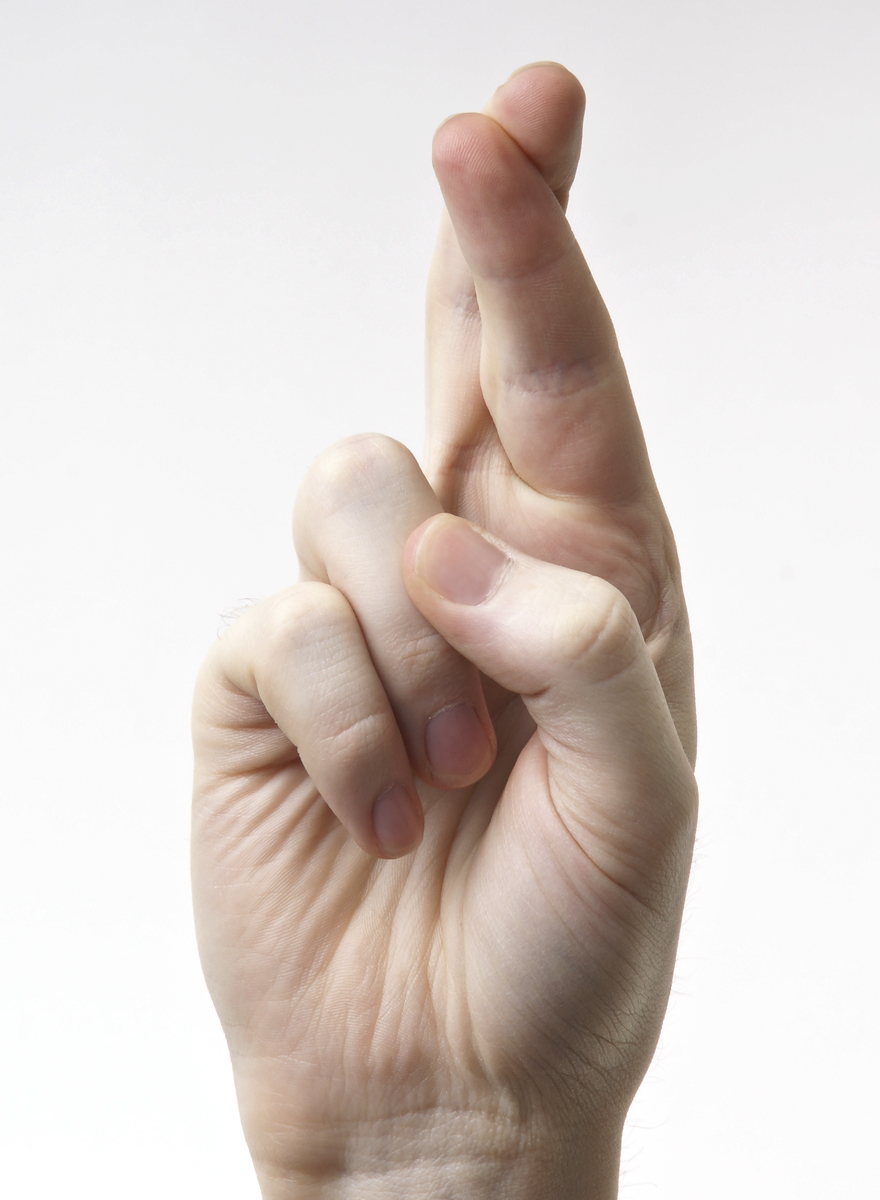
Hand gesture
To cross one's fingers is a hand gesture commonly used to wish for luck. Early Christians used the gesture to implore the protection of the Holy Cross. The gesture is referred to by the common expressions "cross your fingers", "keep your fingers crossed", or just "fingers crossed".
The use of the gesture is often considered by children as an excuse for telling a white lie. By extension, a similar belief is that crossing one's fingers invalidates a promise being made.
Origin
The crossed fingers gesture is believed to have originated with its resemblance to the Cross of Christ. It gained traction, especially in 16th-century England, where people crossed their fingers to ward off evils and ill health.
The practice of crossing fingers for luck or protection against misfortune is deeply ingrained in the cultural fabric of the UK and parts of Scandinavia. This tradition is less familiar in mainland Europe. Its earliest documented reference is from 1912, linked to the superstition surrounding ladders. Remarkably, the crossed fingers gesture persists in school playgrounds, where it serves as a symbolic shield against perceived threats.
Crossed fingers remain a widely recognized and practised symbol, showing the enduring nature of cultural superstitions and protective rituals. The symbol is used as the logo of the UK National Lottery.
Related gestures
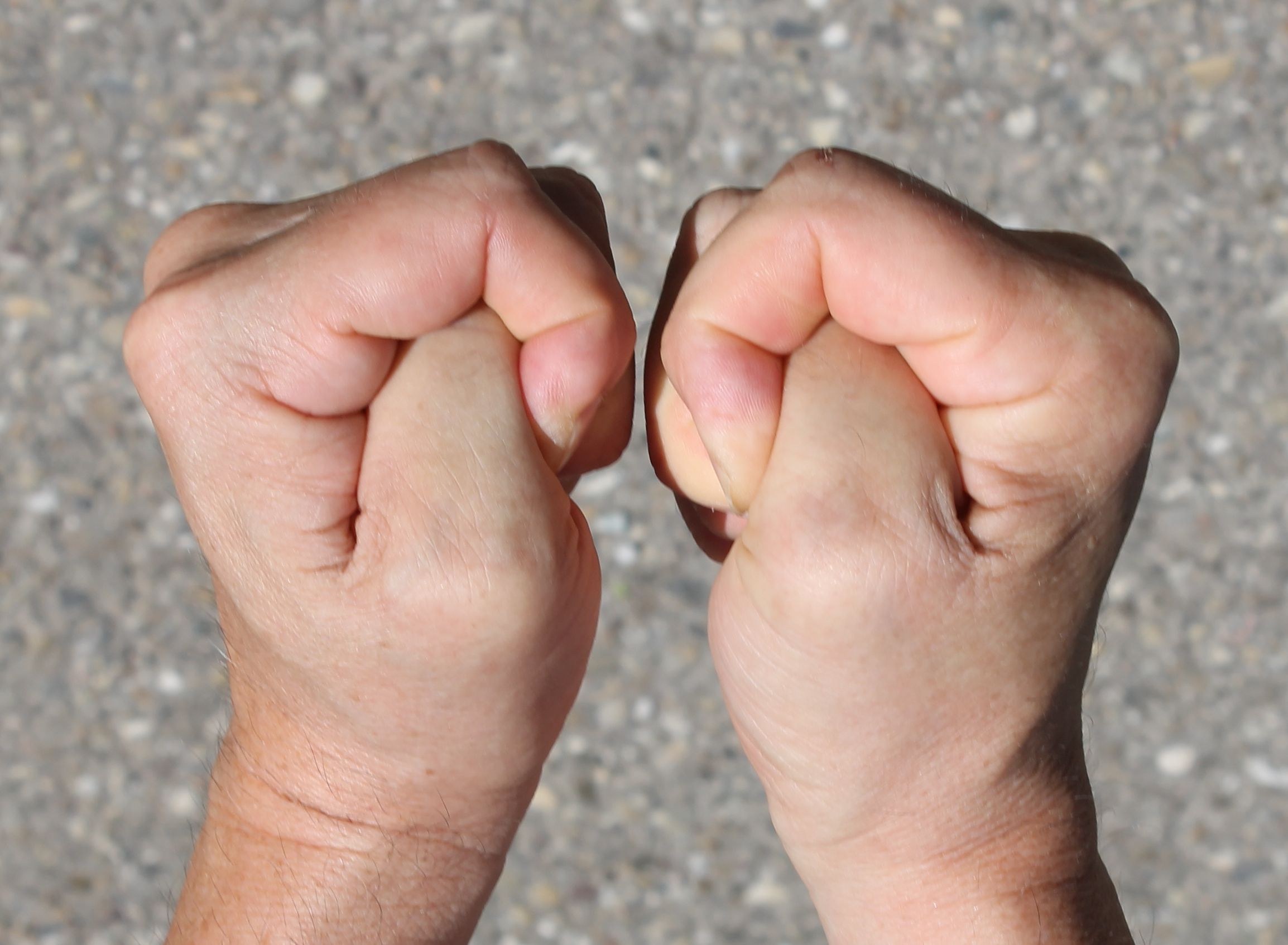
In Vietnam the gesture is considered rude, especially to another person. Referring to female genitals, it is comparable to the middle finger in American culture.
In German-speaking countries, as well as Sweden and Latvia, the gesture is a sign of lying. Instead, wishing for luck is gestured by holding one’s thumbs. The same gesture is used in many Slavic countries such as Poland, the Czech Republic, Slovakia, Bulgaria and ex-Yugoslav republics. In South Africa, Afrikaans speakers also have the related phrase "duim vashou" meaning "holding thumbs tightly".
In pre-Christian Western Europe, a related gesture had two people crossing their index fingers to form a cross, which represented perfect unity; this gesture was used to make wishes.
References
References
- ''Orange Coast Magazine''. Emmis Communications. May 1990. pg. 177. "In early Christian days, a believer confronted by evil or hostile influences implored the power of the Holy Cross for protection by twisting his middle finger over his forefinger and holding the remaining fingers down with his thumb."
- ''Field Guide to Gestures.'' Quirk Books. 2003. pg. 201. "Children are a big proponent of this gesture, though they usually use it when telling white lies, believing that having the fingers crossed behind the back makes it okay to fib."
- de Lint, Charles. (2007). "Widdershins". Macmillan.
- (2006). "FYI - Bean Counters Have Sexy Ideas Too: Histories and Mysteries of Words Used in the Office". Three Winged Creations.
- (1994). "How Does Olive Oil Lose Its Virginity?: Answers to the Enigmatic Questions of Contemporary Life". Quill.
- (29 May 2015). "Things not to do in Vietnam #1: "Crossed fingers"".
- (29 May 2011). "Vietnamese body language and what it means".
- [[:pl:Trzymanie kciuków. Polish-language Wikipedia: trzymanie kciuków]]
- "Držati (nekom) palčeve. - Idioms".
- Panati, Charles. (1989). "Panati's Extraordinary Origins of Everyday Things". Harper & Row.
This article was imported from Wikipedia and is available under the Creative Commons Attribution-ShareAlike 4.0 License. Content has been adapted to SurfDoc format. Original contributors can be found on the article history page.
Ask Mako anything about Crossed fingers — get instant answers, deeper analysis, and related topics.
Research with MakoFree with your Surf account
Create a free account to save articles, ask Mako questions, and organize your research.
Sign up freeThis content may have been generated or modified by AI. CloudSurf Software LLC is not responsible for the accuracy, completeness, or reliability of AI-generated content. Always verify important information from primary sources.
Report