From Surf Wiki (app.surf) — the open knowledge base
Croatian Defence Council
1992–1996 military of the Croatian Republic of Herzeg-Bosnia

1992–1996 military of the Croatian Republic of Herzeg-Bosnia
| Field | Value | |
|---|---|---|
| name | Croatian Defence Council | |
| native_name | Hrvatsko vijeće obrane | |
| native_name_lang | hr | |
| image | Logo of Croatian Defence Council.svg | |
| image_size | 150 | |
| leaders | Milivoj Petković | |
| Bruno Stojić | ||
| Vladimir Šoljić | ||
| Slobodan Praljak | ||
| Ante Roso | ||
| Tihomir Blaškić | ||
| dates | 1992–1996 | |
| allegiance | Herzeg-Bosnia | |
| headquarters | Mostar | |
| size | 50,000 (1995) | |
| allies | [[File:Logo of the Army of the Republic of Bosnia and Herzegovina.svg | 11px]] ARBiH (1991–1992, 1994–1995) |
| [[File:Seal of the Armed Forces of Croatia.png | 11px]] HV | |
| battles | *Yugoslav Wars | |
| flag | [[File:Flag of the Croatian Defence Council.svg | 175px]] |
Bruno Stojić Vladimir Šoljić Slobodan Praljak Ante Roso Tihomir Blaškić
- [[File:Emblem of the Army of Republika Srpska.svg|22px]] VRS
- [[File:Srpska vojska Krajine, oficirski emblem. 1993-1995.png|22px]] RSK
- [[File:Logo of the Army of the Republic of Bosnia and Herzegovina.svg|22px]] ARBiH (1992–1994)
- Croatian War
- Bosnian War
- Croat–Bosniak War
- Operation Storm
The Croatian Defence Council (, HVO) was the armed wing of Croatian Republic of Herzeg-Bosnia. It existed in the Republic of Bosnia and Herzegovina between 1991 and 1996. The HVO was the main military force of the Croats of Bosnia and Herzegovina.
In the initial stage of the Bosnian War, the HVO fought alongside the Army of the Republic of Bosnia and Herzegovina (ARBiH) against the Army of Republika Srpska, but in the latter stage of the conflict clashed against radical islamists, particularly in the Mostar area. The European Community Monitoring Mission estimated the strength of the HVO in the beginning of 1993 at 45,000–55,000. In July 1993, the Central Intelligence Agency estimated the HVO forces at 40,000 to 50,000 men.
The HVO was incorporated into the Army of the Federation of Bosnia and Herzegovina (VFBiH) in December 1995 by following the agreement made after signing the Dayton Accords. In December 2005, the HVO was reorganised as the 1st Infantry Guard Regiment of the Armed Forces of Bosnia and Herzegovina, after VFBiH and Army of Republika Srpska were united into a single armed force.
History
The HVO was established on 8 April 1992 in Grude by the political leadership of Croats, mainly members of Croatian Democratic Union, as the official military formation of Herzeg-Bosnia. On 15 May 1992, the HVO Department of Defence was established. By then, the HVO Main Staff, Main Logistics Base, Military Police, and Personnel Administration were also formed.
Armed conflict erupted between Herzeg-Bosnia (with Croatian support) and the Republic of Bosnia and Herzegovina, following a shift by the HVO toward territorial expansion and the establishment of Croat-controlled areas, often accompanied by displacement and violence against non-Croat populations. However, in Bihać, and Usora, the HVO and ARBiH still worked together. In March 1994, the Washington Agreement was signed, which ended fighting between the HVO and ARBiH.
Commanders
- April 1992 – July 1993, Brigadier general Milivoj Petković;
- July – November 1993, Mayor general Slobodan Praljak;
- November 1993 – April 1994, Lieutenant general Ante Roso;
- April 1994 – August 1994, Major general Milivoj Petković;
- August 1994 – November 1995, Major general Tihomir Blaškić
Organization
The main HVO headquarters was located in Mostar, and was divided into four corps-status operational zones: South-Eastern Herzegovina, North-Western Herzegovina, Central Bosnia, and Bosnian Posavina. In comparison, the first three zones were grouped more or less together, with two enclaves, Usora, which was defended by the 110th Usora Brigade, and Žepče, which was defended by the , Posavina was completely isolated in northern Bosnia on the right bank of the Sava river around Orašje and was entirely dependent on support from Croatia. There was also the in the Bihać enclave which liaised with the ARBiH 5th corps. Each OZ controlled 8-14 infantry brigades, a military police battalion and an MP "Light Assault Battalion".

The HVO also included the {{ill|Ante Bruno Bušić Brigade|hr| 1. gardijska brigada Ante Bruno Bušić
Guard brigades
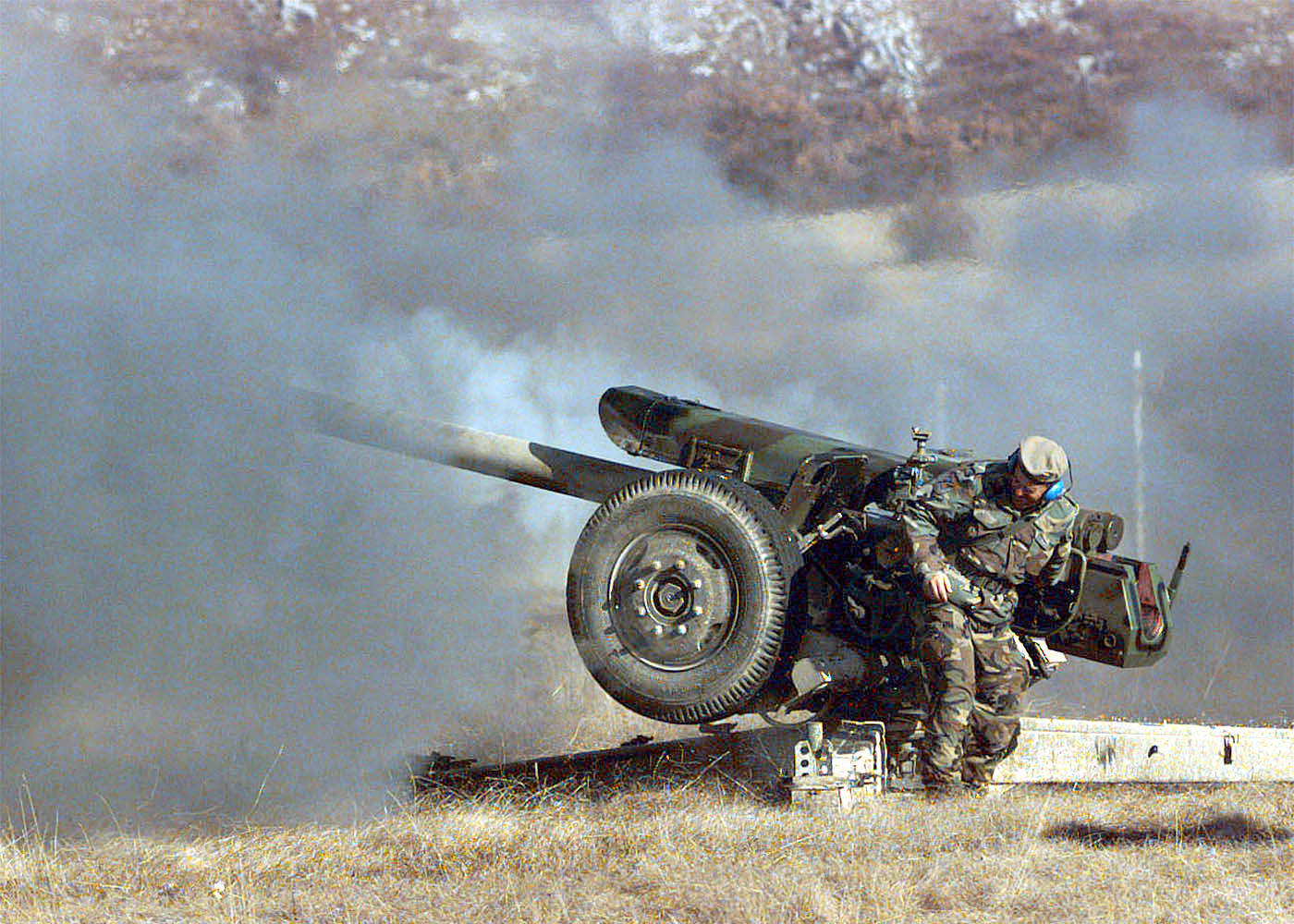
The Guards brigades were the sections of the HVO which handled its heavy weapons. The HVO had around 50 tanks, 400 artillery pieces, and 200 armoured troop carriers. A brigade numbered a few hundred to several thousand men, but most had 2,000–3,000.
Other brigades
Reservists staffed 38 infantry brigades, 19 had names and/or numbers, and 19 only had names. The names commemorate famous or infamous figures from Croatian and Bosnian history. Each brigade had three or four battalions plus supporting elements. Two, the 107th and 109th were later transferred en masse to the ARBiH due to their Muslim majorities, as did the Muslim contingent of the 108th Brčko Brigade, who went on to form the ARBiH's 108 Motorised Brigade. The 107th became the ARBiH 107th "Chivalrous" Brigade while the 109th became the 109th Mountain Brigade.
1993 restructuring
In 1993, General Ante Roso restructured the HVO along the lines of the Croatian Army (HV). The four OZs were designated as Corps Districts Mostar, Tomislavgrad, Vitez and Orašje. Orašje included a much reduced Bosanska Posavina. Four Guards Brigades were formed, each composed of full-time professional soldiers. Twenty-nine brigades were reformed as three-battalion strong Home Defence Regiments, usually with the same name and depot. Four brigades were disbanded. The military police were reduced to one Light Assault Brigade at Mostar.
Eight HVO units served with the ARBiH, while one HVO brigade was forcibly incorporated into the ARBiH. The Sarajevo King Tvrtko Brigade became part of the ARBiH's 1st Corps.
Equipment

Zastava M57 || || Socialist Federal Republic of Yugoslavia|
HVO aviation
The HVO Air Forces and Anti-aircraft Artillery was formed in 1992 and consisted of the 11th Combined Squadron, which operated helicopters and transports, and the 121st Observation Squadron, which operated various civilian light aircraft in an observation and communications role. There was also the 14th Anti-aircraft Missile Unit, which operated several different SAM systems.
References
References
- "Ustroj Hrvatskog vijeća obrane (HVO) 1995".
- Stallaerts, Robert. (2010). "Historical Dictionary of Croatia". Scarecrow Press.
This article was imported from Wikipedia and is available under the Creative Commons Attribution-ShareAlike 4.0 License. Content has been adapted to SurfDoc format. Original contributors can be found on the article history page.
Ask Mako anything about Croatian Defence Council — get instant answers, deeper analysis, and related topics.
Research with MakoFree with your Surf account
Create a free account to save articles, ask Mako questions, and organize your research.
Sign up freeThis content may have been generated or modified by AI. CloudSurf Software LLC is not responsible for the accuracy, completeness, or reliability of AI-generated content. Always verify important information from primary sources.
Report