From Surf Wiki (app.surf) — the open knowledge base
Criticism
Practice of judging the merits and faults of something
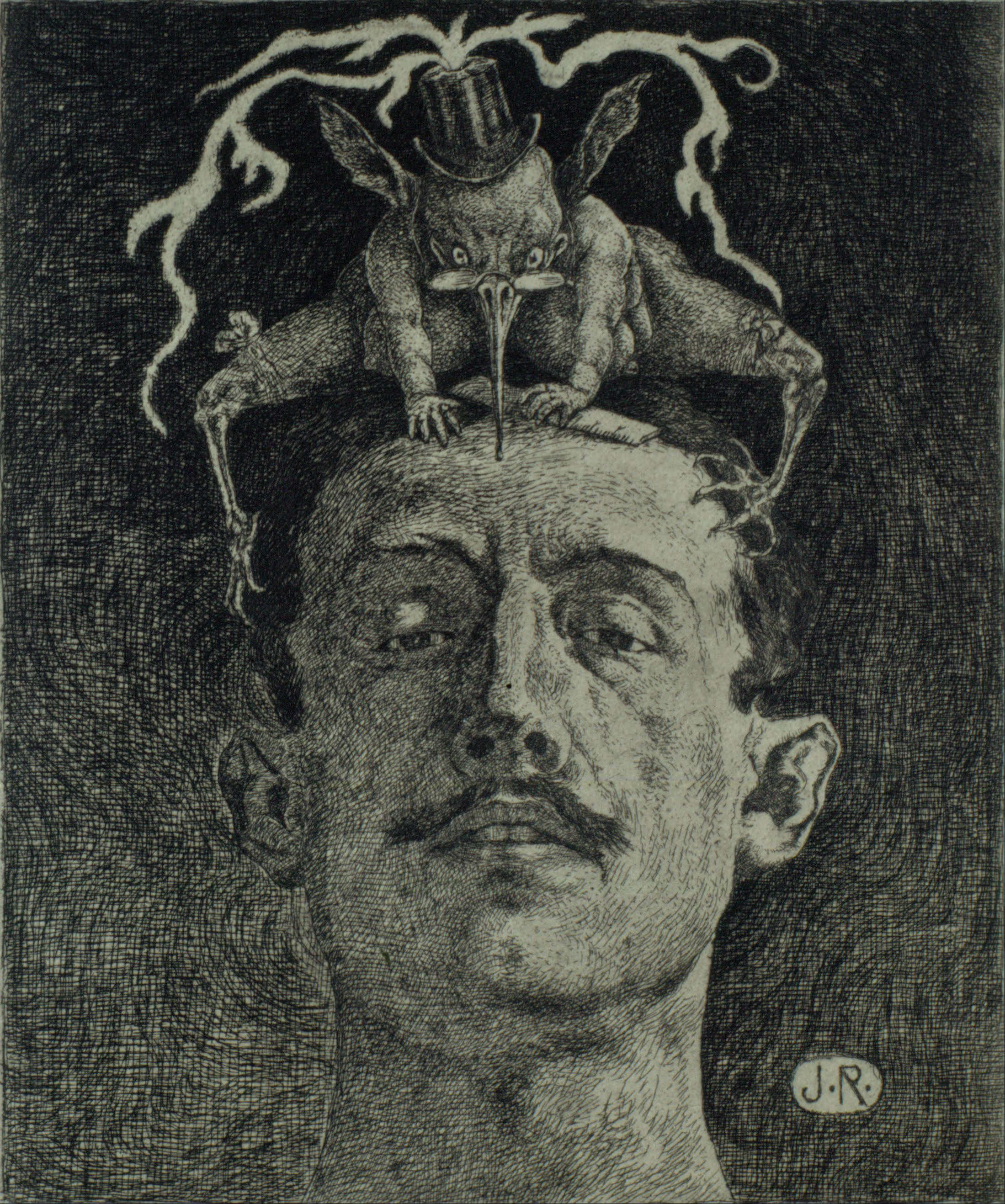
Practice of judging the merits and faults of something
Criticism is the construction of a judgement about the negative or positive qualities of someone or something. Criticism can range from impromptu comments to a written detailed response. Criticism falls into several overlapping types including "theoretical, practical, impressionistic, affective, prescriptive, or descriptive".
Criticism may also refer to an expression of disapproval of someone or something. When criticism of this nature is constructive, it can make an individual aware of gaps in their understanding and it can provide distinct routes for improvement. Research supports the notion that using feedback and constructive criticism in the learning process is very influential.
In French, German, or Italian, no distinction is drawn between the terms critique and criticism. The two words both translate as critique, Kritik, and critica, respectively. In the English language, philosopher Gianni Vattimo suggests that "criticism" is used more frequently to denote literary criticism or art criticism while "critique" refers to more general writing such as Immanuel Kant's Critique of Pure Reason. Another distinction that is sometimes made is that "critique" is never personalized nor ad hominem and is presented in a way that encourages rebuttal or expansion of the ideas expressed. Nonetheless, the distinctions are subtle and ambiguous at best.
The term "brickbat" is sometimes used to mean "an unfavourable criticism, unkind remark or sharp put-down". The term originated in the 17th century, derived from the practice of throwing bricks as projectiles at a person who was disapproved of.
In some contexts, such as literary criticism and art criticism, the word "criticism" is used as a neutral word that is synonymous with "evaluation."
By field
Criticism of religion
Criticism of science
Critical theory
Critical theory criticizes power structures. The critical legal studies include criticism of the distinction between political argument and legal argument (popularized by the phrase the personal is political), rule of law and separation of powers. See also criticism of Critical theory.
Postmodernism
Postmodernism criticizes rationalism and objective reality. See also criticism of postmodernism.
Criticism of criticism
Journalist and writer H. L. Mencken argued that "criticism is little more than a branch of homiletics. They judge a work of art, not by its clarity and sincerity, not by the force and charm of its ideas, not by the technical virtuosity of the artist, not by his originality and artistic courage, but simply and solely by his orthodoxy."
References
References
- "Criticism". Cambridge Dictionary}}.
- "Criticism". Oxford Dictionary}}.
- (July 2016). "Deconstructing constructive criticism: The nature of academic emotions associated with constructive, positive, and negative feedback". Learning and Individual Differences.
- (2017-01-02). "Supporting Learners' Agentic Engagement With Feedback: A Systematic Review and a Taxonomy of Recipience Processes". Educational Psychologist.
- Shute, Valerie J.. (2008-03-01). "Focus on Formative Feedback". Review of Educational Research.
- (March 1996). "The effects of feedback interventions on performance: A historical review, a meta-analysis, and a preliminary feedback intervention theory.". Psychological Bulletin.
- (2014-06-27). "The Power of Feedback".
- (October 2012). "Teacher beliefs about feedback within an assessment for learning environment: Endorsement of improved learning over student well-being". Teaching and Teacher Education.
- [[Gianni Vattimo]] [https://books.google.com/books?id=i7QOAAAAQAAJ&pg=PA57 ''Postmodern criticism: postmodern critique''] in David Wood (1990) ''Writing the future'', pp. 57–58
- Tharoor, Shashi. (7 February 2020). "Shashi Tharoor's Word Of The Week: Brickbat".
- "brickbat". Online Etymology Dictionary.
- (May 31, 2016). "Common Errors in English Usage: criticism".
- "Critical theory".
- [https://doi.org/10.1017/S0008197300105318 Price, David Andrew. "Taking rights cynically: a review of critical legal studies." The Cambridge Law Journal 48.2 (1989): 271-301.]
- [https://heinonline.org/HOL/P?h=hein.journals/uwolr24&i=81 Belliotti, Raymond A. "The rule of law and the critical legal studies movement." UW Ontario L. Rev. 24 (1986): 67.]
- (2004). "Adult Education and the Postmodern Challenge: Learning Beyond the Limits". [[Routledge]].
- "Criticism of Criticism of Criticism".
This article was imported from Wikipedia and is available under the Creative Commons Attribution-ShareAlike 4.0 License. Content has been adapted to SurfDoc format. Original contributors can be found on the article history page.
Ask Mako anything about Criticism — get instant answers, deeper analysis, and related topics.
Research with MakoFree with your Surf account
Create a free account to save articles, ask Mako questions, and organize your research.
Sign up freeThis content may have been generated or modified by AI. CloudSurf Software LLC is not responsible for the accuracy, completeness, or reliability of AI-generated content. Always verify important information from primary sources.
Report