From Surf Wiki (app.surf) — the open knowledge base
Cricket in South Africa
none

none
South Africa Women South Africa U-19 Men South Africa U-19 Women South Africa A Men
- First Class Cricket
- CSA 4-Day Domestic Series
- CSA Provincial Competitions
- List A Cricket
- CSA One-Day Cup
- CSA Provincial Competitions
- CSA Women's One-Day Cup
- T20 Cricket
- CSA T20 Challenge
- CSA Provincial T20 Cup
- CSA Women's T20 Challenge
- Women's T20 Super League
- SA20
- Men's national team
- Men's U-19 national team
- Under-19 Cricket World Cup:Champions (2014)
- Women's national team
- Women's U-19 national team
- Under-19 Women's T20 World Cup: Group Stage (2023)
Cricket is the third most popular sport in South Africa (behind football and rugby union). Traditionally played by English-speaking Whites, Indians, Coloureds and more recently, the Black community, the sport is now listed in the top two most popular among all race groups. Since the end of apartheid, a higher proportion of white players have come from Afrikaans-speaking backgrounds as well.
Like other Commonwealth cricket playing nations, the sport was first introduced in South Africa by the British in the early 19th Century, with the game becoming firmly established by the 1880s. Governed by Cricket South Africa, both the professional and amateur game possess a high standard of domestic cricket, with the season running from October to March each year.
South Africa is one of the world's leading cricket-playing nations and is one of the 12 countries sanctioned by the International Cricket Council to play Test Cricket. In 2012, South Africa became the first team to top the ICC rankings in all three formats of the game.
In 2003, the country hosted the Cricket World Cup, and in 2007, the inaugural World Twenty20. Along with Namibia and Zimbabwe, South Africa will jointly host the upcoming 2027 Cricket World Cup.
History
Emergence
In 1814, the Cape Colony was formally ceded to Britain by the Dutch after two previous occupations by British forces during the French Revolutionary and Napoleonic Wars. It is believed that cricket was first introduced to South Africa during the first occupation, an expedition led by General Sir James Craig. An accompanying officer, Charles Anguish, had been an early member of the Marylebone Cricket Club (MCC), playing 32 first-class matches before he departed for the Cape in 1795. It is supposed that Anguish organised inter-military matches upon his arrival. The earliest definite reference to cricket is dated to 1808, during the second occupation. The Cape Town Gazette and African Advertiser carried a notice that:"A grand match at cricket will be played for 1,000 dollars aside on Tuesday, January 5, 1808, between the officers of the artillery mess, having Colonel Austen of the 60th Regiment, and the officers of the Colony, with General Clavering. The wickets are to be pitched at 10 o'clock."The first club known to have been formally established was at Port Elizabeth in 1843, with the land allocated still in use today as St George's Park. In 1876, Port Elizabeth presented the 'Champions Bat', a competition between towns in the Cape; initially Cape Town, Grahamstown, King William's Town and Port Elizabeth itself, the rudimental beginnings of domestic cricket in South Africa.
The years 1888 and 1889 are pivotal ones for the emergence of modern cricket in South Africa. Two major venues were presented, Newlands in Cape Town and the Old Wanderers in Johannesburg, and an English team arrived for the first overseas tour of South Africa. In March 1889, two matches were played between England and South African XI, in what retrospectively would be determined to be both the inaugural Test played by South Africa, and the inaugural first-class match played in South Africa. South Africa lost both matches but became the world's third Test nation.
In December 1889, first-class domestic cricket began, albeit on a challenge only footing, when Port Elizabeth Cricket Club hosted Natal at St George's Park. Sir Donald Currie, the founder of the Castle Shipping Line who had sponsored the English tour, donated a trophy for the domestic champions. The 'Currie Cup' was first awarded to Kimberley at the end of the 1889-90 season. From the 1892-93 season, first-class cricket gradually emerged into the more familiar province-based competition in a championship format.
In 1907, Abe Bailey, the President of the South African Cricket Association, wrote a letter to the Marylebone Cricket Club's secretary, Sir Francis Lacey, and suggested the formation of an 'Imperial Cricket Board'. Responsible for the formulation of rules, regulation and overall governance of international matches played between Australia, England and South Africa. Although Australia initially rejected the arrangement Bailey continued his lobbying, and during Australia's tour of England in 1909, he eventually received agreement. On 15 June 1909, representatives from Australia, England and South Africa met at Lord's and founded the Imperial Cricket Conference. Subsequent meetings were held that agreed on rules amongst the nations and the first Tri-Test series was to be held in England in 1912.
1910–1960
The South African War, as well as the First World War, disrupted cricket and led to its suspension. After the Armistice in 1918, South African cricket resumed and continuously toured and received visits from England and Australia. Although having a somewhat disappointing period during the 1920s, in the final pre-war decade South Africa became a consistently high-quality and competitive team. During this time, cricket in South Africa began to spread outside the British settler diaspora, particularly in the Afrikaner and Indian communities. However, cricket remained strictly, although not legally, segregated with various national bodies governing cricket for the different racial groups. First-class domestic and international cricket was white only, and would only play other white Test nations (India and the West Indies joined the ICC in 1926).
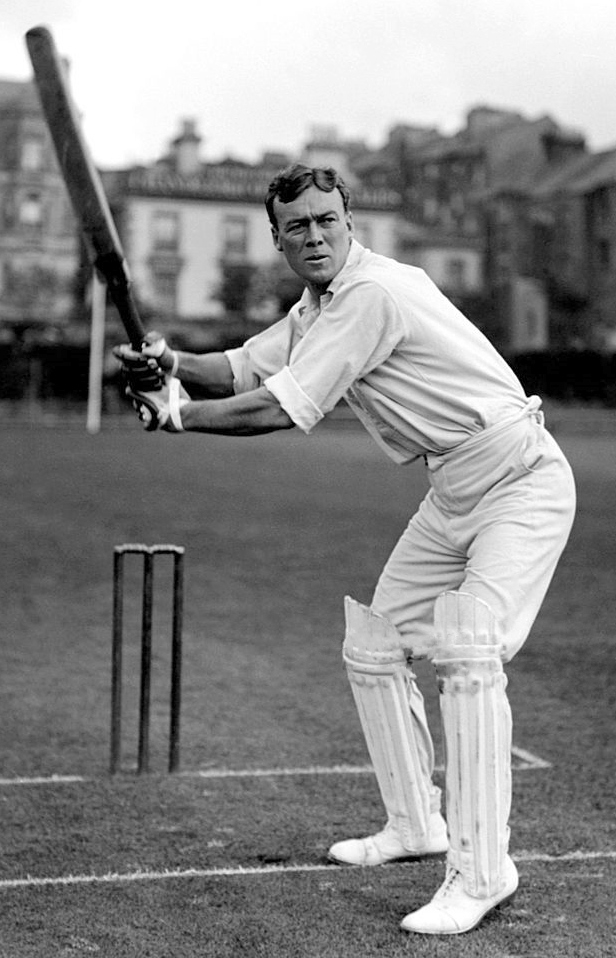
Suspended once again during the Second World War, cricket in South Africa resumed after 1945. The introduction of apartheid (separation of racial groups by strict legal enforcement) following the 1948 General Election did not immediately affect the sport, and it continued to prosper and welcome visiting teams.
International isolation 1961–1991
South Africa left the Commonwealth after a successful 1960 South African republican referendum on 31 May 1961, and by extension, they also left the ICC as membership was entwined. Despite the rules being changed to allow "associate members" in 1964, South Africa did not reapply but continued to play against Australia, England and New Zealand without much difficulty.
As decolonisation accelerated, and international moral public opinion began to change away ideas of racial, particularly white, superiority, South Africa became increasingly isolated. The anti-apartheid movement demanded that South Africa face boycotts, including in sport. Within the ICC, non-white members, particularly India, protested loudly about the discrimination their own diaspora received in South Africa, including the policies of apartheid which now legally barred non-whites from playing Test cricket for South Africa and the refusal of accepting touring teams that fielded non-whites. In 1970, the ICC banned South Africa from participating in internationally recognised cricket. This decision, arguably when South Africa was the strongest team in the world, cut short the Test careers of hugely talented players, such as Graeme Pollock, Barry Richards and Mike Procter. Many promising players later emigrated in order to play, whilst others never played Test cricket despite strong domestic first-class records.
The effect of the international boycott had significant impacts on the domestic game and cricket development. Standards, attendances and participation fell, along with South Africa missing out on the revolutionary changes to the game. The beginnings of limited-overs matches, including the new World Cup, cost South Africa financially, as well as evolutionary. Although South Africa tried to desegregate cricket in 1976 with the formation of a non-racial governing body, the South African Cricket Union (SACU), the ICC maintained their ban.
Throughout the 1980s, ‘Rebel Tours' were sponsored in which international, although not official, teams would tour South Africa playing Test and limited-overs. Between 1982 and 1990, seven tours were staged by four teams; Australia, England, the West Indies and Sri Lanka. Players joining ‘rebel tours' ran considerable risks to their own careers and reputations, with many facing a limited or lifetime ban from cricket upon their return. As an incentive, at a time when cricketers were not paid a great deal, the SACU offered substantial amounts of money to rebel teams.
International return
In July 1991, as South Africa negotiated a political way toward majority rule, the ICC reinstated South Africa as a Test nation and authorised the playing of international matches. By November, South Africa had played its first ODI, and first sanctioned match since 1970, against India in Calcutta, before playing their first Test match against the West Indies in April 1992. During the rest of the decade and early 21st Century, the national side gained a reputation as "chokers" and underachievers due to reaching the semi-finals of the World Cup four times but failing to progress, despite having hugely talented players, such as Hansie Cronje, as well as favourable win percentages. In 1998, South Africa won the inaugural ICC Knockout Trophy in Bangladesh - the tournament was later rebranded as the Champions Trophy. Also in 1998, South Africa defeated Australia in the final of the Commonwealth Games played in Malaysia. Although South Africa had spent 22 years away from ICC regulated cricket, the national side quickly re-confirmed their place as a highly competitive side, with particular notoriety in fast bowling.
Domestically, cricket in South Africa responded to the political changes that had happened with the election of the ANC in 1994, and the return of South Africa to the Commonwealth of Nations on 1 June 1994 as a Commonwealth republic, particularly the changing of team names in the Castle Cup (formerly Currie). Orange Free State become Free State (1995–96), Eastern Transvaal became Easterns (1995–96), Western Transvaal became North West (1996–97), Transvaal became Gauteng (1997–98), Northern Transvaal became Northerns (1997–98) and Natal became KwaZulu-Natal (1998–99). The competition itself changed name for sponsorship reasons, first becoming the Castle Cup in 1990-91, before being the SuperSport Series in 1996-97.
21st Century
In the 21st Century, cricket in South Africa has evolved and significantly diversified. In 2004-05, the format of South African domestic cricket changed entirely and broke with the past. The former 11 provincial teams were replaced by six, fully professional, franchise teams. Cape Cobras, the Eagles (later the Knights), the Warriors, the Lions, the Titans and the Dolphins were created and represented the highest form of domestic cricket, both in first-class and limited-overs. In 2021, domestic cricket returned to the more traditional provincial based format, with 15 first class teams across two divisions.
In July 2006, Ashwell Prince at the age of 29, became the first non-white man to captain the South African cricket team when he deputised for Graeme Smith. Racial quotas were first introduced and later rescinded in 2007, although were re-established in 2016, despite being highly controversial, particularly criticised by the Institute of Race Relations in South Africa. A South African team must now have an average minimum of six non-white players, of which two must be black African, in matches over the season. This has led to some highly capable white players emigrating from South Africa claiming they were disadvantaged by discrimination. Kevin Pietersen, who was born in Pietermaritzburg, left South Africa to play for England, later becoming one of the world's best batsman.
Since readmission in 1991, South Africa has been a consistently strong team and the equal of any Test nation. The early 2010s saw a period of Test dominance, achieving top position in the ICC rankings in 2012. Eight days later, in August 2012, South Africa became the first team to top the rankings in all three formats of the game. The top spot was later regained by South Africa in 2014 after losing it to Australia earlier in the year.
In 2025, South Africa finally ended their long wait for a major global title by winning the ICC World Test Championship, shedding the 'choker' label. Defeating Australia by five wickets, South Africa scored the joint-second highest run chase in Test Cricket at Lord's.
South African women
The South African Women's Team made their Test debut in 1960 against England, becoming the fourth team to play at such a level. The ICC boycott on South African cricket also affected the women's game, with the team not playing an international fixture until 1997. Only 12 ICC Women's Tests have been played by South Africa, winning only once, and the last being played in 2014. As the game has developed, the ODI and T20 have become far more popular and financially rewarding, pushing Women's Test cricket to the edge of viability. Playing their first ODI against Ireland in 1997, South Africa have a 50% win rate, being semi-finalists twice, in the 2000 and 2017 World Cup. In T20, the team first competed in Australia in 2007, and have since played over 100 matches and six World Cups. Being semi-finalists twice, in 2014 and 2020, the team are currently ranked fifth by the ICC, with a win rate of 44%.
Administration
Main article: Cricket South Africa
Cricket South Africa (CSA) is the governing body for professional and amateur cricket in South Africa. In 1991, the separate South African Cricket Union and the South African Cricket Board merged to form the United Cricket Board of South Africa (UCB), ending enforced racial separation governance in South African cricket. Cricket South Africa was formed in 2002 and initially ran parallel to the UCB, before becoming the sole governing body in 2008. As an affiliate of the South African Sports Confederation and Olympic Committee (SASCOC), a full member of the International Cricket Council (ICC) and African Cricket Association, CSA administers all levels of cricket in South Africa, including the national teams in all three formats for both men and women. CSA organises and manages visiting tours to South Africa, as well as administering domestic cricket. A large part of CSA's effort is investing in youth and grassroots development, particularly in deprived areas.
In recent years, Cricket South Africa has faced a huge amount of internal upheaval and disorganisation that has significantly damaged the reputation of South African cricket at home and abroad, as well as even threatening ICC membership. In December 2019, CEO Thabang Moroe was suspended pending the outcome of an independent forensic audit, before being dismissed in August 2020 for "serious misconduct". In September 2020, the South African Sports Confederation and Olympic Committee (Sascoc) announced that they had suspended Cricket South Africa due to "maladministration and malpractices", and had taken over cricket operations in the country. It was later announced that the acting CEO, Kugandrie Govender, would herself be suspended, pending the outcome of a hearing into allegations of misconduct.
Since the first reports came to light of the severe mismanagement, the organisation has come under heavy criticism from sponsors, players, and the wider cricket community over governance issues. The International Cricket Council has announced it could suspend South Africa due to government interference in the sport, which is against ICC rules.
National teams
| National teams of South Africa | [[File:Cricket pictogram.svg | 30px]] | [[File:Cricket pictogram.svg | 30px]] | South Africa (Men's) | South Africa (Women's) | [[File:Cricket pictogram.svg | 30px]] | [[File:Cricket pictogram.svg | 30px]] | South Africa U-19 (Men's) | South Africa U-19 (Women's) | [[File:Cricket pictogram.svg | 30px]] | South Africa A Men |
|---|
The South Africa national cricket team is governed by the Cricket South Africa (CSA) and is a member of the Africa Cricket Association (ACA). Since 1909, the CSA has been affiliated with ICC, the international governing body for world cricket. In 1997, the CSA became one of the founding members of the ACA.
Performance
The following list includes the performance of all of South Africa's national teams at major competitions.
Men's senior team
Main article: South Africa national cricket team
The South African senior national team had several successes and is considered the best team in Africa, and one of the best in world cricket.
| Tournament | Appearance in finals | Last | |
|---|---|---|---|
| appearance | Best | ||
| performance | |||
| ICC World Test Championship | 1 out of 3 | 2023–25 | |
| ICC Men's Cricket World Cup | 0 out of 13 | 2023 | |
| ICC Men's T20 World Cup | 1 out of 9 | 2024 | |
| ICC Champions Trophy | 1 out of 8 | 2025 | |
| Commonwealth Games | 1 out of 1 | 1998 |
Women's senior team
Main article: South Africa women's national cricket team
| Tournament | Appearance in finals | Last | |
|---|---|---|---|
| appearance | Best | ||
| performance | |||
| ICC Women's Cricket World Cup | 0 out of 12 | 2022 | |
| ICC Women's T20 World Cup | 2 out of 9 | 2024 | |
| Women's Cricket World Cup Qualifier | 2 out of 5 | 2017 | |
| Commonwealth Games | 0 out of 1 | 2022 |
Men's U-19 team
Main article: South Africa national under-19 cricket team
| Tournament | Appearance in finals | Last | |
|---|---|---|---|
| appearance | Best | ||
| performance | |||
| ICC Under-19 Cricket World Cup | 3 out of 15 | 2024 |
Women's U-19 team
Main article: South Africa women's national under-19 cricket team
| Tournament | Appearance in finals | Last | |
|---|---|---|---|
| appearance | Best | ||
| performance | |||
| Under-19 Women's T20 World Cup | 1 out of 2 | 2025 |
Organisation of cricket in modern South Africa
International cricket
Men's national team
Main article: South Africa national cricket team
- Test: Having hosted and played their first international first-class game against England in 1888-89, South Africa developed into a competitive team by the start of the 20th century. Arguably the best team in the world in 1970 when the ICC imposed an international ban due to apartheid, since readmittance in 1991 South Africa have reasserted themselves as a strong team. Although previously holding the number one position in the international rankings, as of 2025, the Proteas are currently ranked second in the ICC Rankings.

- ODI: Playing their first One Day International against India soon after readmittance in 1991, South Africa have reached the ODI World Cup Semi-Finals four times, most recently in 2015, but never progressed further. The team's wider fortunes have also fluctuated and as of 2025, currently sit sixth in the ICC ODI Rankings.
- T20I: South Africa played their first T20I against New Zealand in 2005. Much like the other national squads, the T20I teams' fortunes have varied and have been close to silverware, coming second in 2024, and reaching the semi-finals three times. As of 2025, they are sixth in the ICC T20I Rankings.
Women's national team
Main article: South Africa women's national cricket team
-
Test: Making their debut in 1960 against England, the women's team did not play any international fixtures between 1972 and 1997. Despite being the oldest form of women's cricket in South Africa, the Proteas have played just 14 Test matches, with the most recent being in 2024 and winning only one against the Netherlands in 2007. T20 has taken on a far more prominent and financially rewarding role, almost ending women's Test cricket as a viable entity.
-
ODI: The women's team played their first One Day International against Ireland in 1997, and have a current win rate of roughly 50% over nearly 200 matches. Playing in six Women's World Cups, the Proteas have been semi-finalists twice, in 2000 and 2017, although never progressing further. South Africa are currently third in the ICC World ODI rankings.
-
T20I: The Proteas' first T20I was in 2007 against Australia, and have since played over 100 matches. Competing in 6 Women's T20 World Cups, South Africa have been semi-finalists in 2014 and in 2020. Ranked fifth in the ICC table, South Africa have a T20I win rate of 44%.
Domestic cricket
Men's domestic cricket
First class competitions
- CSA 4-Day Domestic Series
- Three-Day Competition
Limited overs competitions
- CSA One-Day Cup
- One-Day Competition
Twenty20 competitions
- SA20
- CSA T20 Challenge
- CSA Provincial T20 Cup
South Africa's first-class competition began in 1889–1890, initially on a challenge only basis rather than a structured championship. Sir Donald Currie, who had sponsored the first English tour of South Africa earlier that year, donated a trophy for the domestic champions, the Currie Cup. From the 1892-93 season, first-class domestic cricket in South Africa gradually emerged into the more familiar province-based champion season. This competition format, with occasional changes and additions, survived until the 2004/05 season when the domestic structure was remodelled across all three formats to introduce six, entirely professional, franchise teams. The eleven provincial Currie Cup teams, as well as South Western Districts and KwaZulu-Natal Inland, continued to compete separately in the Provincial Three-Day Challenge, which remained a first-class competition, although on a semi-professional level and no longer the top level of red-ball cricket in South Africa.
In 2021, Cricket South Africa announced a return to the traditional province based domestic structure. 15 first-class teams now play in two divisions, determined by promotion and relegation.
Eight teams make up the first division, with 16 contracted players each, and seven teams the second division, with 11 contracted players each, taking the total to 205.
CSA believes that the new format will provide more opportunities for players to compete at a high standard just below international cricket, in turn providing a wider talent pool for the national selectors. It is hoped that wider selection of teams at the highest domestic level will help increase playing opportunities of all races, particularly those currently underrepresented.
South Africa's major domestic competitions are the CSA 4-Day Series (four day first-class competition) and the Momentum One Day Cup (List A one-day competition). Division 1 will take part in the Mzanzi Super League (T20 competition), whilst Division 2 compete in a separate T20 tournament.
Women's domestic cricket
Limited overs competitions
- CSA Women's One-Day Cup
Twenty20 competitions
- CSA Women's T20 Challenge
- Women's T20 Super League
For women, CSA Provincial Cricket is currently the top level of cricket in South Africa, however, it remains semi-professional. Since 2017, South African women have played in the Women's T20 Super League. Further developing the women's game at a high level, CSA has said that the competition will allow top performing players from across the under-19s and provincial cricket to continue and improve domestic standards, as well as ultimately strengthening the national limited-over sides. As of 2021, there have not been any reports to indicate women's domestic cricket will be affected by the restructuring announced for the men's game.
Recreational and development
CSA, the sports governing body in South Africa, devotes considerable resources towards youth participation and development. As the vast majority of South African schools do not have the financially expensive, but necessary, cricket support infrastructure in place, CSA provides multiple regional and district programs, often via their Performance Centres. The KFC Mini-Cricket programme is usually the first introduction to cricket that many school children, both boys and girls, will enjoy. Running between the ages of four and thirteen, more than 126,000 school children have participated in this programme, while the number of coaches and schools involved have increased to nearly 14,000 and 7,000 respectively.
National inter-provincial competitions are played at under-13, under-15, under-17 and under-19 levels for boys, and at under-15 and under-19 levels for girls. Through the Talent Acceleration Programme, the best players, particularly those who are disadvantaged, can be selected without any bias against their background. Multiple financial initiatives are available that provide support to deprived young cricketers. From Youth to International progression, CSA nourishes potential talent through various Provincial and Regional Academies, as well as the National Academy and the High-Performance Centre.
Stadiums
Main article: List of cricket grounds in South Africa
| Ground Name | City | Location | First Used | Last Used | First-Class Games | List A Games | Twenty20 Games | Notes |
|---|---|---|---|---|---|---|---|---|
| Boland Bank Park | Paarl | Boland | 1994–95 | 2010–11 | 82 | 111 | 4 | Hosted eight ODIs |
| Buffalo Park | East London | Border | 1988–89 | 2010–11 | 122 | 144 | 12 | Hosted Test and ODI matches |
| St George's Park | Port Elizabeth | Eastern Province | 1888–89 | 2010–11 | 343 | 215 | 30 | Hosted Test, ODI and Twenty20 International matches. |
| Willowmoore Park | Benoni | Easterns | 1923–24 | 2010–11 | 115 | 107 | 4 | Hosted 18 ODIs. |
| Springbok Park | Bloemfontein | Free State | 1989–90 | 2010–11 | 133 | 162 | 22 | Hosted Test, ODI and Twenty20 International matches. |
| Ellis Park | Johannesburg | Gauteng | 1946–47 | 1955–56 | 39 | 0 | 0 | Hosted six Tests between 1948 and 1954. No longer used for cricket. |
| New Wanderers Stadium | Johannesburg | Gauteng | 1956–57 | 2010–11 | 344 | 265 | 45 | Hosted Test, ODI and Twenty20 International matches. |
| Old Wanderers | Johannesburg | Gauteng | 1890–91 | 1945–46 | 113 | 0 | 0 | Hosted 22 Tests before being replaced by the New Wanderers Stadium. |
| De Beers Diamond Oval | Kimberley | Griqualand West | 1973–74 | 2010–11 | 153 | 124 | 9 | Hosted 10 ODIs and a Twenty20 International. |
| Kingsmead | Durban | KwaZulu Natal | 1922–23 | 2010–11 | 354 | 229 | 54 | Hosted Test, ODI and Twenty20 International matches. |
| Lord's | Durban | KwaZulu Natal | 1897–98 | 1921–22 | 22 | 0 | 0 | Hosted four Test matches between 1910 and 1921. Replaced by Kingsmead (see above) as Durban's Test venue. |
| City Oval | Pietermaritzburg | KZN Inland | 1894–95 | 2010–11 | 71 | 33 | 0 | Hosted two matches in the 2003 World Cup. |
| Moses Mabhida Stadium | Durban | KwaZulu Natal | 2010–11 | 2 | 0 | 0 | Hosted one Twenty20 International in 2011 between South Africa and India. | |
| Senwes Park | Potchefstroom | North West | 1994–95 | 2010–11 | 70 | 92 | 7 | Hosted one Test match between South Africa and Bangladesh in 2002. Also hosted 16 ODIs. |
| Centurion Park | Centurion | Northerns | 1986–87 | 2010–11 | 137 | 189 | 41 | Hosted Test, ODI and Twenty20 International matches. |
| Newlands | Cape Town | Western Province | 1893–94 | 1908–09 | 422 | 216 | 38 | Hosted Test, ODI and Twenty20 International matches. |
International competitions hosted
| ICC Women's T20 World Cup | 2023 Women's T20 World Cup | **** | Runners-up | 3 (in 3 cities) | Newlands Cricket Ground | [[File:Panoramic view of Newlands Cricket Stadium, 21 July 2018.jpg | 120px]] |
|---|
Performance in international competitions
A red box around the year indicates tournaments played within South Africa
Men's team
ICC World Test Championship
| Year | League stage | Final Host | Final | Final Position | Pos | Matches | Ded | PC | Pts | PCT | P | W | L | D | T |
|---|---|---|---|---|---|---|---|---|---|---|---|---|---|---|---|
| 2019–21 | 5/9 | 13 | 5 | 8 | 0 | 0 | 6 | 600 | 264 | 44 | ENG Rose Bowl, England | DNQ | 5th | ||
| 2021–23 | 3/9 | 15 | 8 | 6 | 1 | 0 | 0 | 180 | 100 | 55.6 | ENG The Oval, England | DNQ | 3rd | ||
| 2023–25 | 1/9 | 13 | 9 | 3 | 1 | 0 | 0 | 144 | 100 | 69.44 | ENG Lord's, England | Won | 1st |
ICC Cricket World Cup
| World Cup record | Host and Year | Round | Position | P | W | L | T | NR | Squad |
|---|---|---|---|---|---|---|---|---|---|
| ENG 1975 | Not eligible, South Africa were banned due to apartheid | ||||||||
| ENG 1979 | |||||||||
| ENG WAL 1983 | |||||||||
| IND PAK 1987 | |||||||||
| AUS NZL 1992 | Semi-finals | 3/9 | 9 | 5 | 4 | 0 | 0 | Squad | |
| IND PAK SRI 1996 | Quarter-final | 5/12 | 6 | 5 | 1 | 0 | 0 | Squad | |
| England IRL NED SCO Wales1999 | Semi-finals | 3/12 | 11 | 7 | 4 | 0 | 0 | Squad | |
| RSA ZIM KEN 2003 | Group Stage | 8/14 | 6 | 3 | 2 | 0 | 1 | Squad | |
| WIN 2007 | Semi-finals | 4/16 | 11 | 6 | 5 | 0 | 0 | Squad | |
| IND SRI BAN 2011 | Quarter-final | 6/14 | 7 | 5 | 2 | 0 | 0 | Squad | |
| AUS NZL 2015 | Semi-finals | 4/14 | 8 | 5 | 3 | 0 | 0 | Squad | |
| ENG WAL 2019 | Group Stage | 7/10 | 9 | 3 | 5 | 0 | 1 | Squad | |
| IND 2023 | Semi-finals | 3/14 | 10 | 7 | 3 | 0 | 0 | Squad | |
| SA ZIM NAM 2027 | Qualified as co-hosts | ||||||||
| IND BAN 2031 | Qualification to be decided | ||||||||
| Total | 0 Titles | - | 77 | 46 | 29 | 0 | 2 | - |
ICC T20 World Cup
| T20 World Cup record | Host and Year | Round | Position | P | W | L | T | NR | Squad | |
|---|---|---|---|---|---|---|---|---|---|---|
| RSA 2007 | Super 8s | 5/12 | 5 | 4 | 1 | 0 | 0 | Squad | ||
| ENG 2009 | Semi-finals | 3/12 | 6 | 5 | 1 | 0 | 0 | Squad | ||
| WIN 2010 | Super 8s | 6/12 | 5 | 2 | 3 | 0 | 0 | Squad | ||
| SRI 2012 | Super 8s | 8/12 | 5 | 2 | 3 | 0 | 0 | Squad | ||
| BAN 2014 | Semi-finals | 4/16 | 5 | 3 | 2 | 0 | 0 | Squad | ||
| IND 2016 | Semi-finals | 5/16 | 4 | 2 | 2 | 0 | 0 | Squad | ||
| UAE OMA 2021 | Super 12s | 5/16 | 5 | 4 | 1 | 0 | 0 | Squad | ||
| AUS 2022 | Super 12s | 5/16 | 5 | 2 | 2 | 1 | 0 | Squad | ||
| USA 2024 | **Runners-up** | 2/20 | 9 | 8 | 1 | 0 | 0 | **Squad** | ||
| IND SL 2026 | TBD | |||||||||
| AUS NZ 2028 | TBD | |||||||||
| ENG WAL IRE SCO 2030 | TBD | |||||||||
| Total | 0 Titles | - | 49 | 32 | 16 | 0 | 1 | - |
ICC Champions Trophy
| Champions Trophy record | Host and Year | Round | Position | P | W | L | T | NR | Squad |
|---|---|---|---|---|---|---|---|---|---|
| Bangladesh 1998 | Champions | 1/9 | 3 | 3 | 0 | 0 | 0 | Squad | |
| Kenya 2000 | Semi-finals | 4/11 | 2 | 1 | 1 | 0 | 0 | Squad | |
| Sri Lanka 2002 | Semi-finals | 4/12 | 3 | 2 | 1 | 0 | 0 | Squad | |
| England 2004 | Group stage | 6/12 | 2 | 1 | 1 | 0 | 0 | Squad | |
| India 2006 | Semi-finals | 3/12 | 4 | 2 | 2 | 0 | 0 | Squad | |
| South Africa 2009 | Group stage | 7/8 | 3 | 1 | 2 | 0 | 0 | Squad | |
| England WAL 2013 | Semi-final | 4/8 | 4 | 1 | 2 | 1 | 0 | Squad | |
| England WAL 2017 | Group stage | 5/8 | 3 | 1 | 2 | 0 | 0 | Squad | |
| PAK UAE 2025 | Semi-final | 3/8 | 4 | 2 | 1 | 1 | 0 | Squad | |
| India 2029 | TBD | ||||||||
| Total | 1 Titles | - | 24 | 12 | 11 | 1 | 0 | - |
Commonwealth Games
| Commonwealth Games record | Year | Round | Position | P | W | L | T | NR | Squad |
|---|---|---|---|---|---|---|---|---|---|
| MAS 1998 | Champions | 1/16 | 5 | 5 | 0 | 0 | 0 | Squad | |
| Total | 1 Title | - | 5 | 5 | 0 | 0 | 0 | - |
Women's team
ICC Women's Cricket World Cup
| World Cup record | Year | Round | Position | Played | Won | Lost | Tie | NR | Total | 0 Title | - | 49 | 19 | 26 | 0 | 4 | |||||||
|---|---|---|---|---|---|---|---|---|---|---|---|---|---|---|---|---|---|---|---|---|---|---|---|
| ENG 1973 | Not eligible, South Africa were banned due to apartheid | ||||||||||||||||||||||
| IND 1978 | |||||||||||||||||||||||
| NZL 1982 | |||||||||||||||||||||||
| AUS 1988 | |||||||||||||||||||||||
| ENG 1993 | |||||||||||||||||||||||
| IND 1997 | Quarter-finals | 5/11 | 6 | 3 | 3 | 0 | 0 | ||||||||||||||||
| NZL 2000 | Semi-finals | 4/8 | 8 | 4 | 4 | 0 | 0 | ||||||||||||||||
| RSA 2005 | Group Stage | 7/8 | 7 | 1 | 4 | 0 | 2 | ||||||||||||||||
| AUS 2009 | Group Stage | 8/8 | 3 | 0 | 3 | 0 | 0 | ||||||||||||||||
| IND 2013 | Super 6s | 7/8 | 9 | 2 | 7 | 0 | 0 | ||||||||||||||||
| ENG 2017 | Semi-finals | 4/8 | 8 | 4 | 3 | 0 | 1 | ||||||||||||||||
| NZL 2022 | Semi-finals | 3/8 | 8 | 5 | 2 | 0 | 1 | ||||||||||||||||
| IND 2025 |
ICC Women's T20 World Cup
| T20 World Cup record | Year | Round | Position | Played | Won | Lost | Tie | NR |
|---|---|---|---|---|---|---|---|---|
| ENG 2009 | Group Stage | 7/8 | 3 | 0 | 3 | 0 | 0 | |
| WIN 2010 | Group Stage | 6/8 | 3 | 0 | 3 | 0 | 0 | |
| SL 2012 | Group Stage | 7/8 | 3 | 1 | 2 | 0 | 0 | |
| BAN 2014 | Semi-finals | 4/10 | 5 | 3 | 2 | 0 | 0 | |
| IND 2016 | Group Stage | 7/10 | 4 | 1 | 3 | 0 | 0 | |
| UAE 2018 | Group Stage | 6/10 | 4 | 2 | 2 | 0 | 0 | |
| AUS 2020 | Semi-finals | 2/10 | 5 | 4 | 0 | 0 | 1 | |
| RSA 2023 | Runners-up | 2/10 | 6 | 3 | 3 | 0 | 0 | |
| UAE 2024 | Runners-up | 2/10 | 6 | 4 | 2 | 0 | 0 | |
| ENG 2026 | ||||||||
| Total | 0 Title | - | 39 | 18 | 20 | 0 | 1 |
ICC Women's Championship
| Women's Championship record | Year | Round | Position | GP | W | L | D | T | NR | Total | 0 Title | - | 66 | 30 | 29 | 0 | 1 | 6 | ||||||||
|---|---|---|---|---|---|---|---|---|---|---|---|---|---|---|---|---|---|---|---|---|---|---|---|---|---|---|
| 2014-16 | Group Stage | 6/8 | 21 | 8 | 12 | 0 | 0 | 1 | ||||||||||||||||||
| 2017-20 | Group Stage | 3/8 | 21 | 10 | 6 | 0 | 1 | 4 | ||||||||||||||||||
| 2022-25 | Group Stage | 4/10 | 24 | 12 | 11 | 0 | 0 | 1 |
ICC Women's Cricket World Cup Qualifier
| Women's Cricket World Cup Qualifier record | Year | Round | Position | GP | W | L | D | T | NR | Total | 1 Title | - | 20 | 17 | 3 | 0 | 0 | 0 | ||||||||
|---|---|---|---|---|---|---|---|---|---|---|---|---|---|---|---|---|---|---|---|---|---|---|---|---|---|---|
| 2003 | Did not participate, already qualified for World Cup | |||||||||||||||||||||||||
| 2008 | Champions | 1/8 | 5 | 5 | 0 | 0 | 0 | 0 | ||||||||||||||||||
| 2011 | Group Stage | 4/10 | 6 | 4 | 2 | 0 | 0 | 0 | ||||||||||||||||||
| 2017 | Runners-up | 2/10 | 9 | 8 | 1 | 0 | 0 | 0 | ||||||||||||||||||
| 2021 | Did not participate, already qualified for World Cup |
Commonwealth Games
| Commonwealth Games record | Year | Round | Position | GP | W | L | T | NR |
|---|---|---|---|---|---|---|---|---|
| ENG 2022 | Group Stage | 5/8 | 3 | 1 | 2 | 0 | 0 | |
| Total | 0 Title | - | 3 | 1 | 2 | 0 | 0 |
Men's U-19 team
U-19 World Cup
| South Africa's U19 World Cup record | Year | Result | Pos | № | Pld | W | L | T | NR | Total | 75 | 50 | 22 | 0 | 3 |
|---|---|---|---|---|---|---|---|---|---|---|---|---|---|---|---|
| AUS 1988 | Ineligible – not an ICC member | ||||||||||||||
| Semi-finals | 3rd | 16 | 6 | 5 | 1 | 0 | 0 | ||||||||
| LKA 2000 | First round | 9th | 16 | 8 | 5 | 0 | 0 | 3 | |||||||
| NZL 2002 | Runner-up | 2nd | 16 | 8 | 5 | 3 | 0 | 0 | |||||||
| BAN 2004 | Second round | 7th | 16 | 6 | 3 | 3 | 0 | 0 | |||||||
| LKA 2006 | First round | 11th | 16 | 5 | 2 | 3 | 0 | 0 | |||||||
| MYS 2008 | Runner-up | 2nd | 16 | 6 | 4 | 2 | 0 | 0 | |||||||
| NZL 2010 | Quarter-finals | 7th | 16 | 6 | 5 | 1 | 0 | 0 | |||||||
| AUS 2012 | Semi-finals | 3rd | 16 | 6 | 5 | 1 | 0 | 0 | |||||||
| UAE 2014 | Champions | 1st | 16 | 6 | 6 | 0 | 0 | 0 | |||||||
| BAN 2016 | First round | 11th | 16 | 6 | 3 | 3 | 0 | 0 | |||||||
| NZL 2018 | Quarter-finals | 5th | 16 | 6 | 4 | 2 | 0 | 0 | |||||||
| Quarter-finals | 8th | 16 | 6 | 3 | 3 | 0 | 0 | ||||||||
| WIN 2022 | Qualified | ||||||||||||||
| Qualified |
Women's U-19 team
Under-19 Women's World Cup
Popularity
Cricket traditionally has been the most popular South African sport for English-speaking whites, as well as the Indian community, although the latter was not able to compete at the top level during the apartheid era. While the popularity remains high, a larger proportion of white players now come from Afrikaner-speaking backgrounds, such as Hansie Cronje, AB de Villiers, Quinton de Kock, Heinrich Klaasen and Francois du Plessis, since 1991. As the colour bar was removed from South African sport, from the late 1990s cricket has grown at a substantial rate in other racial groups, particularly black African. Omar Henry became the first Coloured person to play a Test match for South Africa in 1992, with Makhaya Ntini being the first black African in 1998. Originally seen as a game for "white gentlemen" only, the country has since spawned skillful cricketers who are people of colour, such as Vernon Philander, Kagiso Rabada, Keshav Maharaj, Tabraiz Shamsi, Reeza Hendricks and Lungi Ngidi.
Attendances
The average attendance per top-flight league season and the cricket club with the highest average attendance:
| Season | League average | Best club | Best club average |
|---|---|---|---|
| 2024 | 16,467 | Joburg Super Kings | 24,852 |
References
Notes
Bibliography
- Brown, Geoff and Hogsbjerg, Christian. Apartheid is not a Game: Remembering the Stop the Seventy Tour campaign. London: Redwords, 2020. .
References
- "Full Scorecard of South Africa vs England 1st Test 1888/89 - Score Report".
- Oates, Tim. "History of South African Sport: VI. Cricket".
- (2009-07-06). "International Cricket Council - The ICC - About The Organisation - History".
- "South Africa Cricket Team Records & Stats".
- "Story Of Cricket".
- "The Rebel Tours".
- "Rebels take a step too far".
- "South Africa choke on their lines again".
- (2025-06-14). "South Africa ignore Australia's 'choke' sledges at Lord's to win ICC World Test Championship final".
- (2007-11-07). "South Africa remove racial quotas".
- (2020-12-03). "Big read {{!}} Proteas face stricter transformation targets".
- "'A diplomat he is not' - Your views on Pietersen".
- "Amla ton leads SA to third No. 1 spot".
- (2025-06-14). "Australia vs South Africa: Proteas win World Test Championship final at Lord's".
- (2025-06-26). "2025 World Test Championship: South Africa's Remarkable Triumph at Lord's".
- Joseph, Brown. "Corporate Information".
- "Explainer - What South Africa's cricket crisis is all about".
- "South African cricket governance crisis: Who, what, where, when and why?".
- Mnganga, Tholakele. "CSA interim board suspends acting CEO Kugandrie Govender".
- (11 September 2020). "Pietersen on CSA crisis: This horror show is finishing cricket".
- "ICC Men's Test Team Rankings".
- "ICC Men's ODI Team Rankings".
- "ICC Men's T20I Team Rankings".
- "Records {{!}} Women's Test matches {{!}} Team records {{!}} Results summary".
- "Records {{!}} Women's One-Day Internationals {{!}} Team records {{!}} Results summary".
- "Records {{!}} Women's Twenty20 Internationals {{!}} Team records {{!}} Results summary".
- "South Africa's new domestic structure: 2 tiers, 15 first-class teams, 205 contracted players".
- "South Africa's T20 tournament to be called Mzansi Super League".
- (2020-10-09). "South Africa domestic cricket season to start in November".
- Ballal, Juili. (2020-12-06). "Cricket South Africa prepares for 3rd Edition of Women Super League T20".
- "Cricket Services".
- "KFC Mini Cricket".
- "Cricket Operations".
- "ICC World Test Championship 2019–2021 Table". ESPN Cricinfo.
- "Prudential World Cup 1975".
- "Prudential World Cup 1979".
- "Prudential World Cup 1983".
- "Reliance World Cup 1987/88".
- "Reliance World Cup 1987/88".
- "Wills World Cup 1995/96".
- "World Cup 1999".
- "ICC World Cup 2002/03".
- "World Cup 2007".
- "ICC Cricket World Cup 2010/11".
- "ICC Cricket World Cup 2014/15".
- "ICC Cricket World Cup 2019".
- "USA to stage T20 World Cup: 2024–2031 ICC Men's tournament hosts confirmed".
- "USA to stage T20 World Cup: 2024–2031 ICC Men's tournament hosts confirmed".
- "USA to stage T20 World Cup: 2024–2031 ICC Men's tournament hosts confirmed".
- "ICC World Twenty20 2007/08".
- "ICC World T20, 2009".
- "ICC World T20, 2010".
- "ICC World T20 2012".
- "ICC World Twenty20 2014".
- "ICC World T20, 2016".
- "ICC Men's T20 World Cup 2021/22".
- "USA to stage T20 World Cup: 2024–2031 ICC Men's tournament hosts confirmed".
- "USA to stage T20 World Cup: 2024–2031 ICC Men's tournament hosts confirmed".
- "USA to stage T20 World Cup: 2024–2031 ICC Men's tournament hosts confirmed".
- "USA to stage T20 World Cup: 2024–2031 ICC Men's tournament hosts confirmed".
- "USA to stage T20 World Cup: 2024–2031 ICC Men's tournament hosts confirmed".
- "Wills International Cup 1998/99".
- "ICC KnockOut, 2000".
- "ICC Champions Trophy 2002/03".
- "2004 Champions Trophy".
- "ICC Champions Trophy 2006/07".
- "ICC Champions Trophy 2009/10".
- "ICC Champions Trophy 2013".
- "ICC Champions Trophy 2017".
- "USA to stage T20 World Cup: 2024–2031 ICC Men's tournament hosts confirmed".
- "Commonwealth Games 1998/99".
- (10 April 2005). "ICC Women's World Twenty20, 2012/13". ESPNcricinfo.
- Advance To [[2017 Women's Cricket World Cup Qualifier]].
- Advance To [[2022 Women's Cricket World Cup]]
- Advance To [[2025 Women's Cricket World Cup]]
This article was imported from Wikipedia and is available under the Creative Commons Attribution-ShareAlike 4.0 License. Content has been adapted to SurfDoc format. Original contributors can be found on the article history page.
Ask Mako anything about Cricket in South Africa — get instant answers, deeper analysis, and related topics.
Research with MakoFree with your Surf account
Create a free account to save articles, ask Mako questions, and organize your research.
Sign up freeThis content may have been generated or modified by AI. CloudSurf Software LLC is not responsible for the accuracy, completeness, or reliability of AI-generated content. Always verify important information from primary sources.
Report