From Surf Wiki (app.surf) — the open knowledge base
CR Flamengo
Brazilian football club
Brazilian football club
| Field | Value |
|---|---|
| clubname | Flamengo |
| image | Clube de Regatas do Flamengo logo.svg |
| image_size | 180px |
| fullname | Clube de Regatas do Flamengo |
| nickname | Rubro-Negro (Scarlet and Black) |
| Mengão (Big Mengo) | |
| Malvadão (The Evil One) | |
| Urubu (Vulture) | |
| O Mais Querido (The Most Beloved) | |
| founded | (rowing club) |
| (football department) | |
| alt | An escutcheon with horizontal red and black stripes, with a monogram of the letters CRF in its upper-left part |
| stadium | Maracanã |
| capacity | 78,838 |
| coordinates | |
| chrtitle | President |
| chairman | Luiz Eduardo Baptista |
| mgrtitle | Head coach |
| manager | Filipe Luís |
| league | Campeonato Brasileiro Série A |
| Campeonato Carioca | |
| season | 2025 |
| 2025 | |
| position | Série A, 1st of 20 |
| Carioca, 1st of 12 | |
| website | |
| current | CR Flamengo season |
| pattern_la1 | _flamengo26h |
| pattern_b1 | _flamengo26h |
| pattern_ra1 | _flamengo26h |
| pattern_sh1 | _flamengo26h |
| pattern_so1 | _flamengo26hl |
| leftarm1 | 000000 |
| body1 | FF0000 |
| rightarm1 | 000000 |
| shorts1 | FFFFFF |
| socks1 | FF0000 |
| pattern_la2 | _flamengo25a |
| pattern_b2 | _flamengo25a |
| pattern_ra2 | _flamengo25a |
| pattern_sh2 | _flamengo25a |
| pattern_so2 | _flamengo25al |
| leftarm2 | FFFFFF |
| body2 | FFFFFF |
| rightarm2 | FFFFFF |
| shorts2 | 000000 |
| socks2 | FFFFFF |
| pattern_la3 | _flamengo25t |
| pattern_b3 | _flamengo25t |
| pattern_ra3 | _flamengo25t |
| pattern_sh3 | _flamengo25t |
| pattern_so3 | _flamengo25tl |
| leftarm3 | F7F0E7 |
| body3 | F7F0E7 |
| rightarm3 | F7F0E7 |
| shorts3 | F7F0E7 |
| socks3 | F7F0E7 |
| American | true |
Mengão (Big Mengo) Malvadão (The Evil One) Urubu (Vulture) O Mais Querido (The Most Beloved) (football department) Campeonato Carioca 2025 Carioca, 1st of 12 Clube de Regatas do Flamengo (; ), more commonly referred to as simply Flamengo, is a Brazilian multi-sports club based in Rio de Janeiro, in the neighborhood of Gávea. It was founded and named after the Flamengo neighborhood in 1895 and is best known for its professional football team. Flamengo is one of two clubs to have never been relegated from the top division, along with São Paulo, and the most popular football club in Brazil with more than 46.9 million fans, equivalent to 21.9% of the population that supports a team in Brazil.
The club was first established in 1895 specifically as a rowing club in the Flamengo neighborhood and did not play its first official football match until 1912. Flamengo's traditional uniform features red and black striped shirts with white shorts, and red and black striped socks. Flamengo has typically played its home matches in the Maracanã Stadium (which also often host the Brazil national team) since its completion in 1950. Since 1969, the vulture (Portuguese: urubu) has been the mascot of Flamengo.
Flamengo is Brazil's richest and most valuable football club with an annual revenue of R$1.2 billion (€218 million) and a valuation of over R$5,096 billion (€800 million). Flamengo is the non-European football club with the most followers on social media, with 65 million followers across all platforms as of 2 December 2025, and also the most successful Brazilian team of the 21st century so far. The club is also one of the most successful in Brazilian football, having amassed a considerable array of national and international titles.
The clubs's training center, officially known as "Ninho do Urubu" ("Vulture's Nest"), is located in Vargem Grande, Rio de Janeiro. It serves as the primary training facility for the Flamengo football club, housing its professional teams and youth academy. Flamengo's youth academy is one of the most prolific in Brazil and in the world, having developed a number of Brazilian internationals such as Zico, Zizinho, Vinícius Júnior, Lucas Paquetá, Júlio César, Adriano, Mário Zagallo, Júnior and Leonardo.
Flamengo has also been well represented in the Brazil national team; at the 1938 FIFA World Cup, forward Leônidas da Silva, a Flamengo player at the time, was the Golden Boot winner with 7 goals and won the Golden Ball, thus becoming the first Brazilian player ever to win those two awards. Twelve years later at the 1950 World Cup, Zizinho, a midfielder for Flamengo, also won the Golden Ball after he was voted best player; 4 out of the 10 top scorers for Brazil have all been Flamengo players at one point in their careers, seven players have won the World Cup whilst playing for Flamengo, and Flamengo player Mário Zagallo scored Brazil's third goal in the 1958 World Cup final.
History
Main article: History of CR Flamengo
Establishment of the club (1895–1912)
Flamengo was founded on 17 November 1895, by a group of rowers gathered at club member Nestor de Barros's manor on Flamengo Beach in Rio de Janeiro. In the late 19th century, rowing was the elite, upper middle class sport in the region and the group hoped to impress the young women of the city's high society by establishing a rowing club. Previously, they could only afford a used boat named Pherusa, which had to be completely rebuilt before it could be used in competition. The team debuted on 6 October 1895, when they sailed off the Caju Point toward Flamengo Beach. However, strong winds turned over the boat and the rowers nearly drowned. They were rescued by a fishing boat named Leal (Loyal). Later as the Pherusa was undergoing repairs, it was stolen and never found again. The group saved money to buy a new boat, the Etoile, renamed Scyra.
On the night of 17 November, the group gathered at Nestor de Barros's manor on Flamengo beach and founded the Grupo de Regatas do Flamengo (English: Flamengo Rowing Group) and elected its first board and president (Domingos Marques de Azevedo). The name was changed a few weeks later to its current title of Clube de Regatas do Flamengo (Flamengo Rowing Club). The founders decided that the anniversary of the club's foundation should be commemorated on 15 November to coincide with Republic Proclamation Day, a national holiday.
Flamengo's football team was only established after a group of ten dissatisfied players from Fluminense broke away from that club following a board dispute. The players decided to join Flamengo because Alberto Borgerth, the team's captain, was also a rower for Flamengo. Also, establishing a land sports department at Flamengo was preferable to joining football rivals Botafogo or the all-English club Paissandu. The new members were admitted on 8 November 1911. A motion against the club taking part in football tournaments was put to a vote but was defeated, and as a result the members officially established the club's new football department on 24 December 1911.
Football in the amateur era (1912–1933)
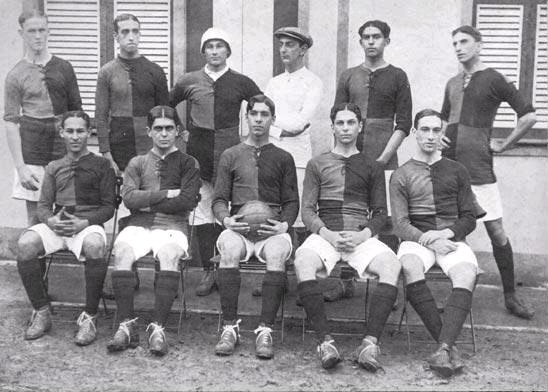
The new team trained on and gradually gained the support of the locals, who closely watched their practice matches. The first official match was played on 3 May 1912, and marked, to this day, the largest margin of victory in the club's history, as they defeated Mangueira 16–2. Flamengo's first ever match against Fluminense, the start of the Fla-Flu rivalry, was played on 7 July of that year and was won by Fluminense by a score of 3–2. That same year, Flamengo finished as runners-up of the Campeonato Carioca, the Rio de Janeiro State Championship. The team's first uniform was nicknamed the "papagaio vintém", due to its similarity to a particular type of kite.
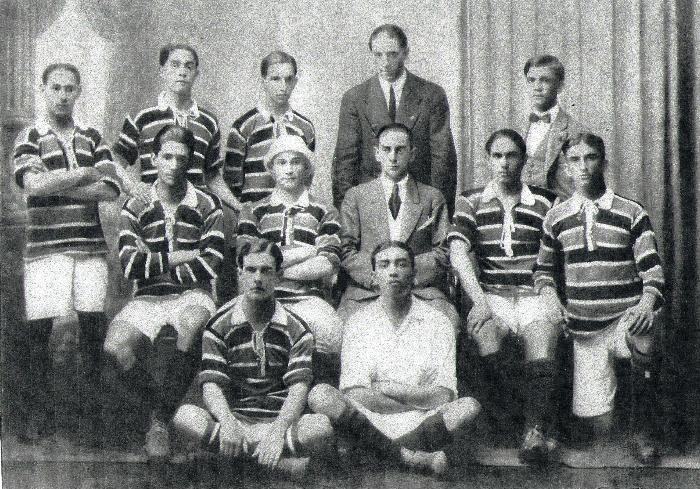
In 1914 the club won the Campeonato Carioca for the first time, dressed in a red, black, and white-striped shirt nicknamed the "cobra coral" (coral snake) was worn until 1916. Flamengo won the Campeonato Carioca again the following year, in 1915, and secured their first back-to-back championship; something they also did with their titles in 1920 and 1921.
In 1925, the team won the Campeonato Carioca and five other tournaments, a record at the time. In 1927 the prominent Rio newspaper Jornal do Brasil, in partnership with a mineral water company, held a mail-in contest to find "the most beloved club in Brazil." Though Flamengo enjoyed their largest increase in fan support after the club professionalized in the 1930s, they still defeated popular rivals Vasco da Gama in the vote. This was the first of many times that Flamengo would be polled as the nation's most popular club, originating the nickname "O mais querido do Brasil" ("the most beloved of Brazil"). In 1933 the team went on its first tour outside Brazil (to Montevideo and Buenos Aires) and on 14 May of the same year played its final match as an amateur team, defeating River Futebol Clube by a score of 16–2. After this, the club's football department became professional.
Early professional era (1934–1955)

Local advertiser José Bastos Padilha was elected club president in 1934 and served until 1937. Under his tenure, the club massively improved its popularity in both Rio de Janeiro and the entirety of Brazil. For publicity, he organized a contest for students in schools to create phrases describing Flamengo, from which the phrase uma vez Flamengo, Flamengo até morrer ("Once you are Flamengo, you are Flamengo 'til you die") was developed and would later be adopted as part of the club's anthem. In 1936 Padilha signed excellent players such as Domingos da Guia and Leônidas da Silva (who would go on to be the leading goalscorer in the 1938 FIFA World Cup as a Flamengo player). These beloved players endeared Flamengo to the public and it is believed that by this time Flamengo was the most popular club in the country. In 1937 Flamengo hired Hungarian coach Izidor "Dori" Kürschner, who introduced the WM system to Brazil and other innovations from Europe such as training without the use of the ball and playing a more defensive, controlled style. Padilha facilitated the construction of Flamengo's new stadium and current training center, the Estádio da Gávea. The stadium was inaugurated on 4 September 1938, when Vasco da Gama defeated Flamengo 2–0 and Kürschner was promptly fired.
In 1938, the five-year split in Rio de Janeiro football over the dispute between professionalism and amateurism was resolved with the merger of the two competing leagues (Flamengo had been a member of the professional LCF – Liga Carioca de Football). In 1939, after twelve years without winning any titles, Flamengo conquered the state championship with a team that would become the basis of the three-time state champions in the 1940s.
In 1941, the group played its first international competition, the Hexagonal Tournament of Argentina. In 1942, the first organized supporters group in all of Brazil, Charanga Rubro-Negra, was founded in support of Flamengo. Flamengo's popularity grew incidentally during World War II when Brazil's allies, the United States, installed two high-powered antennas in Natal and Belém in the north of Brazil to intercept enemy radio signals. They also allowed residents in the North and Northeast regions to receive the radio broadcasts of football matches. As Rio de Janeiro was the national capital at the time and Flamengo was highly successful in the war years with Zizinho and Domingos da Guia, nationwide support increased. In 1944, Flamengo completed their first tricampeonato Carioca: three consecutive Rio de Janeiro state titles (winning the 1942, 1943, and 1944 competitions). The key player of this squad was Zizinho, a player developed at Flamengo and considered the first ever "idol" of the club. Zizinho was transferred to Bangu just before the start of the 1950 World Cup in Brazil, where he scored twice and the Seleção finished runners-up. From 1953 to 1955, Flamengo once again won the Rio de Janeiro State League three consecutive times.
Zico and the world champions (1974–1983)
Main article: 1981 Clube de Regatas do Flamengo season
Flamengo won their 18th Campeonato Carioca state championship in 1978. The following five years would come to represent the club's most glorious era. Brazilian stars like Júnior, Carpegiani, Adílio, Cláudio Adão and Tita were led by Zico to become state champions three times in a row – the club's third tri-championship. This run of sustained excellent play pushed Flamengo towards its first Brazilian Championship in 1980. As national champions, the club qualified to play in the South American continental tournament, the 1981 Copa Libertadores, for the first time.
The 1981 season is a benchmark year in Flamengo's history. They advanced through the semi-final group stage of the Copa Libertadores with four victories in four matches. In the final they encountered Chilean club Cobreloa, also a debutante club in the tournament. In the first final at the Maracanã, Flamengo prevailed (2–1) with two goals from Zico. At the National Stadium in Santiago the following week, the Brazilian team received a violent reception on the field and fell 1–0 from a free kick. Equal on goals, a third match was played at the neutral venue of the Estadio Centenario in Montevideo. Zico scored twice in the first half, sealing the game and the championship. Flamengo were crowned champions of South America on 23 November and qualified for the Intercontinental Cup, a single match to be played in Tokyo's Olympic Stadium against European Champions' Cup winner Liverpool F.C..
On 13 December 1981, Zico, Tita, and Nunes took the field for the most important match in the club's history. Two goals by Nunes and one by Adílio (all in the first half) along with a brilliant midfield performance by Zico earned Flamengo the title of first Brazilian World Champions since Pelé's Santos, shutting out Liverpool 3–0.
The following two years were also marked with success. One more Rio de Janeiro State Championship in 1981 and two back-to-back Brazilian Championships – 1982 and 1983 – closed Flamengo's "Golden Age."
National success and the return of Zico (1984–1994)
Main article: 1987 Campeonato Brasileiro Série A
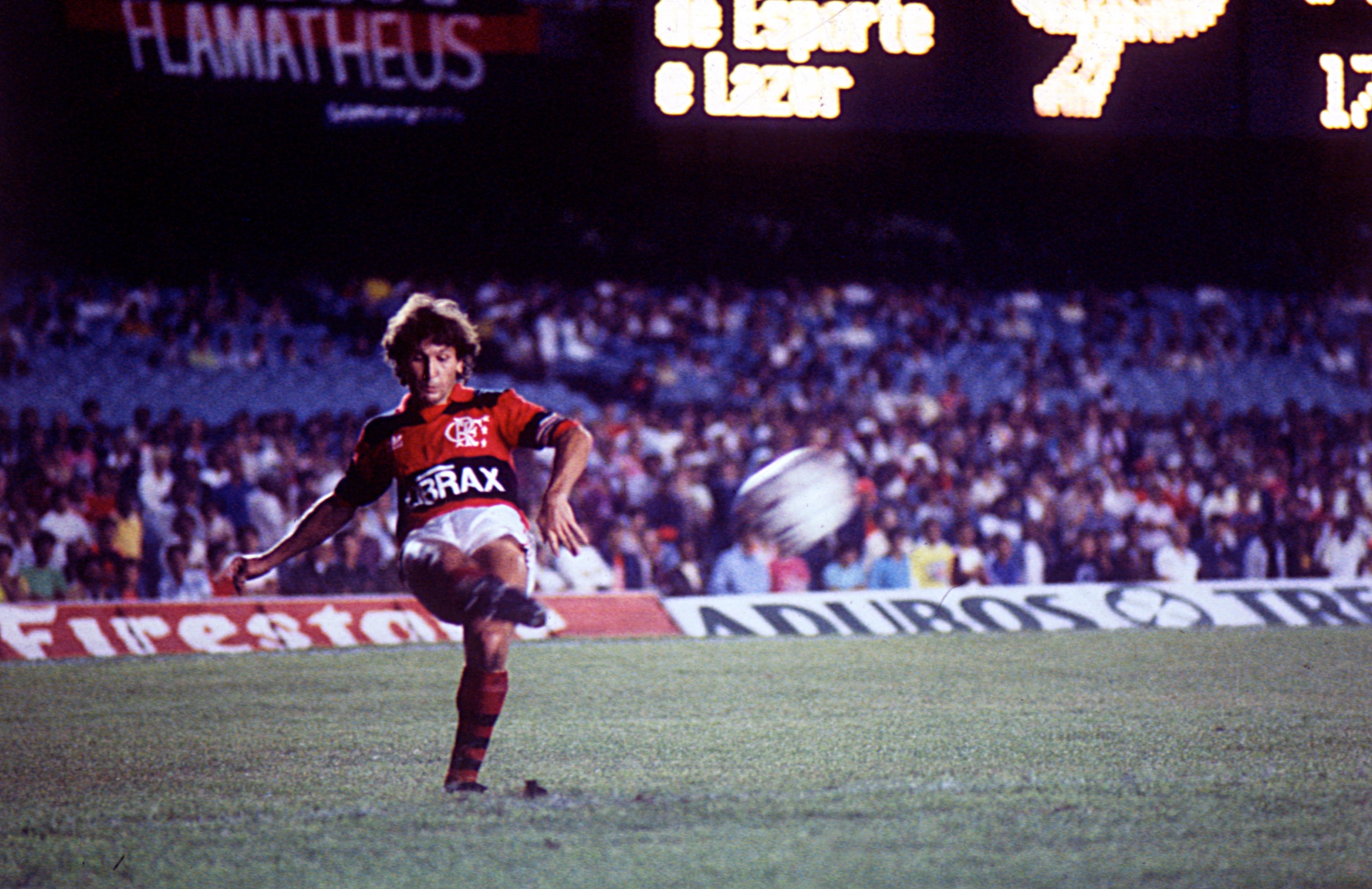
After spending two years in Italy playing for Udinese, Zico returned to Flamengo in 1986 and won his last state championship. Only one month after returning, he suffered a severe knee injury after a violent tackle from Bangu defender Marcio Nunes, which interrupted his career for several months and affected his form in the 1986 FIFA World Cup.
In 1987, Zico was a major contributor to Flamengo's victory in the first edition of the Copa União. That year, the CBF was experiencing serious financial and institutional crises and was unable to secure sponsorship to organize the national championship as in years prior. As a result, the thirteen biggest clubs in Brazil (which included Flamengo) reacted and created a new entity named the Club of 13 to organize a championship of their own. The CBF originally supported the decision by the Club of 13, but were pressured by other clubs to create a larger national tournament. As a result, CBF placed three additional clubs into the Copa União, regarded the Copa União as the "Green Module," and organized a second "Yellow Module" of 16 other teams. CBF then decided that for the 1987 Brazilian Championship, the winners and runners-up of both modules would face each other in a knockout-style cup to determine the national champion and qualification for the Copa Libertadores, although this decision was made after the beginning of the championship, without Club of 13 agreement. With strong performances from Zico, Zé Carlos, Renato Gaúcho and Bebeto, Flamengo conquered the Copa União with major victories over Internacional and Atlético Mineiro. However, there was a dispute over whether Flamengo and Internacional of the Green Module would dispute the quadrangular against Sport Recife and Guarani of the Yellow Module. The Club of 13 clubs had agreed to not participate in the final set up by the CBF, since it was decided while the matches were already being played, but Eurico Miranda, a representative of Vasco, Flamengo's archi-rival and member of the Club of 13, had already signed an agreement with CBF regarding the final, without the board consent. Flamengo still did not participate in the final under the understanding that it would only determine the entrants of the Copa Libertadores and not the Brazilian national champion. CBF officially recognized Sport as the sole champion in 1987 and they qualified to the Copa Libertadores. In 2011, CBF retroactively declared Flamengo champion of 1987. However, Sport later appealed the decision to a Common Justice Tribunal, which is prohibited by FIFA, and CBF ultimately declared Sport as the sole champion of that year, pending appeals from Flamengo, all of which were unsuccessful, and a few years later Sport was officially declared as the champion of the 1987 season.
Throughout his career at Flamengo, Zico scored 508 goals and was the top scorer in club history before retiring in 1990.
Even without its biggest star, the early years of the post-Zico era were successful for Flamengo. They achieved national victory in the second edition of the Copa do Brasil in 1990, defeating Goiás in the finals. In 1992, Flamengo won their fifth Campeonato Brasileiro, defeating Botafogo across two legs in the final (3–0, 2–2). The team's key player was again Júnior at 38 years old.
Mediocre campaigns and relegation escapes (1995–2005)
After winning the Brazilian League title in 1992, the club entered a major financial crisis and domestic and international achievements became less frequent, although the team still won trophies ranked less in importance. In 1993, Flamengo lost the Supercopa Libertadores finals to Sao Paulo. In 1995, the year of Flamengo's centenary, radio sports broadcaster Kléber Leite became chairman of the club and signed striker Romário, the current FIFA World Player of the Year, from Barcelona. He joined Sávio and later Edmundo to become, as the supporters called, "the attack of dreams". Even with Romário and other stars, Flamengo's centennial year did not yield major trophies, and the club struggled in the league, finishing 21st of 24. Flamengo only won the Taça Guanabara, the first phase of the state league, and finished runners-up of 1995 Supercopa Libertadores. However, in 1996, Flamengo went undefeated in the Campeonato Carioca. Sávio was the top scorer and best player in Flamengo's victorious 1996 Copa de Oro campaign. The Copa de Oro was Flamengo's first international success since 1981, their third overall international title.
In 1997 Flamengo finished trophyless for one of the few times in its history, but overall had a good season, finishing fifth in the Serie A, finishing runner-up to Grêmio in the Copa do Brasil on away goals, and finishing runner-up in the Torneo Rio-Sao Paulo. 1998 was another trophyless season, but far worse than 1997; Mengão finished 11th in the Serie A, were knocked out of the Copa do Brasil with a 5–0 loss to Vitoria, and failed to advance out of the group stages of the Copa Mercosur, although top scorer Romario continued to show individual brilliance with 35 goals from 40 appearances.
In 1999, Edmundo dos Santos Silva was elected club president, and brought with him a massive contract with sports marketing company ISL. Despite a mediocre campaign in that year's Campeonato Brasileiro, finishing 12th, the club lifted the 1999 Copa Mercosur at Estádio Palestra Itália after beating Palmeiras 7–6 on aggregate in an exciting two legged final, and were successful at the regional level, winning the Campeonato Carioca over rivals Vasco, who had won the 1998 Copa Libertadores.
2000 was also a mediocre year for the club, being knocked out of the Copa Mercosur by River Plate in the quarter-finals, and exiting the Copa do Brasil with a heavy 8–2 aggregate loss to Santos. However the club were successful at the regional level again, beating Vasco 5–1 on aggregate for a back-to-back championship.
In 2001 league play, Flamengo avoided relegation to the Série B by beating Palmeiras 2–0 on the final matchday. Despite near relegation, the club had a decent season overall; they won the 2001 Copa dos Campeões inter-state title, finished runner up in the 2001 Copa Mercosur to San Lorenzo on penalties, and beat Vasco again in the state league with a late free-kick goal by Dejan Petković. With the state title, the club became tricampeão (three-time champion) for the fourth time in its history (1999-2000-2001) .
In 2002, ISL went bankrupt, for reasons unrelated to their contract with Flamengo, and the club was left without its wealthy partner. In the same year, Edmundo Santos Silva was removed from his role as president in a controversial manner amidst accusation of impropriety. Lacking the funds to make key signings, Flamengo failed to field competitive teams and narrowly avoided relegation in the 2002, 2004, and 2005 campaigns, with the 2005 season being one of the worst in Flamengo's history; the club only escaped relegation after the arrival of coach Joel Santana, who directed the team to six wins and three draws in nine matches played under his command. Twice in this low period, the team reached back-to-back Copa do Brasil finals, in 2003 and 2004, ultimately falling to Cruzeiro and Santo André respectively. This Flamengo has also evaded massive taxes in the .
End of title drought (2006–2018)

In 2006, Flamengo reached the Copa do Brasil final for a fifth time, finally managing to conquer the title after losing three previous finals, this time beating rivals Vasco da Gama. From 2007 to 2009 Flamengo completed their fifth tricampeonato in the Campeonato Carioca, and became sole owners of the record for most Carioca titles with 31 (Fluminense had 30 at the time).
On 9 March 2007, Flamengo received a commemorative date on the Rio de Janeiro official calendar. Governor Sérgio Cabral Filho declared 17 November (the day the club was founded) "Flamengo Day".
In the 2007 Copa Libertadores, after a near-perfect group stage where the club was undefeated, expectations were high for the team. However, the club was eliminated by Uruguayan minnows Defensor Sporting in the first knockout round. In the Campeonato Brasileiro, Flamengo spent most of the season in mid table hoping for at least a top ten finish but in the last five matchdays climbed to second place before being defeated by Náutico 1–0 in the final round and ultimately ending the season third, which was good enough for a spot in the following year's Copa Libertadores.
In the 2008 Copa Libertadores, Flamengo began their campaign by topping their group. After defeating Club América 4–2 at Estadio Azteca, in what was Flamengo's first tournament tie against a Mexican club, Flamengo looked to be one of the strongest sides in the competition. However, Flamengo polemically lost the second leg at home 3–0 and were eliminated in the round of 16 again, in what was Joel Santana's final match with the club. In the Brasileirao, Flamengo finished fifth, and in 2009 despite being in tenth place in midseason, Flamengo won the league title for the first time since 1992. With this victory Flamengo became five-time league champions, seventeen seasons after their last title. The 2009 championship team finished the season with 67 points, the lowest winning point total in Brazil since the current league format was established in 2003. Flamengo were champions despite spending only two rounds at the top of the league: the final two, and the title was won after a dramatic 2–1 comeback victory against Grêmio in the final round.

The blockbuster signing of 2011 was 30-year-old superstar Ronaldinho from A.C. Milan. He was joined by Argentine Darío Bottinelli and Fluminense idol Thiago Neves. Flamengo won the Campeonato Carioca outright in an undefeated campaign, but captured no other trophies that season: eliminations in the Copa do Brasil by Ceará, a heavy 5–0 loss in the Sudamericana by Universidad de Chile, and a fourth-place finish in the league left fans feeling that a strong roster had been squandered. The season saw the retirement of Serbian club idol Dejan Petković as well. In 2012 Ronaldinho sued Flamengo claiming lack of payment for four months and canceled his contract with the club, Thiago Neves returned to Fluminense after a drawn-out negotiation with contract-holders Al-Hilal, and defender Alex Silva was loaned to Cruzeiro after threatening Flamengo with a lawsuit. Vágner Love and Ibson returned for a 2012 campaign that yielded no trophies and a group-stage exit from the Copa Libertadores.
At the end of 2012, Flamengo elected Eduardo Bandeira de Mello as club president for three years. The goal of his term was to improve the club's finances, after an independent audit assessed Flamengo's debt at R$750 million. After a typical series of managerial changes, Jayme de Almeida was appointed as interim manager during which he fought off relegation and won the 2013 Copa do Brasil final against Atlético Paranaense. It was Flamengo's third Copa title, after 1990 and 2006.
Flamengo's Copa do Brasil title-defense fell short to Atlético Mineiro in the semi-final. However, by 2014, Flamengo was the only club that successfully reduced their debt over the year (down to R$600 million) and recorded the highest annual profit. In 2015 after an inconsistent start to the Carioca and national league seasons, multiple managers were dismissed and Flamengo failed to qualify for the Libertadores. However, Flamengo had signed Paolo Guerrero and Ederson and were the most valuable club in Brazil with debt now reduced to R$495 million. As a result, president Bandeira was re-elected. The club signed fan-favorite Diego in the mid-season and mounted a strong campaign, but could not catch Palmeiras in 2016.
2017 was characterized as the year Flamengo played two major finals at the end of the season but failed to win either. After going undefeated in the 2017 Campeonato Carioca, they were eliminated in the Copa Libertadores group stage, failing to win a single match away from home but qualifying for the Copa Sudamericana in third place. In the Copa do Brasil, the club reached the final where they lost in a penalty shootout to Cruzeiro. Less than three months later, they reached an unprecedented Copa Sudamericana final. They lost away to Independiente and drew at home 1–1, losing the title. After the match, a group of Flamengo supporters rioted outside the hotel where Independiente were staying. CONMEBOL punished the club with two closed-door home matches in the following Copa Libertadores. In the league, the club finished sixth and qualified for the following year's Libertadores.
Nine years after their last Campeonato Brasileiro victory, Flamengo made a title run but fell just short. In 2018 they spent the most rounds as league leader (thirteen) and broke their points record from 2016 (72), but finished runners-up behind Palmeiras. In the Libertadores they finished runner-up behind eventual champion River Plate and qualified to the round of 16, where they were eliminated by Cruzeiro. That season, the club recorded their two highest outgoing transfer fees in history: 18-year-old winger Vinícius Júnior moved to Real Madrid in July for €46 million, and 20-year-old midfielder Lucas Paquetá transferred to A.C. Milan for a reported €35 million at the end of the year. Both were products of Flamengo's youth academy.
New glory (2019–present)
2019 season
On the morning of 8 February 2019 a fire erupted at Flamengo's Ninho do Urubu training center, popular name for Centro de Treinamento George Helal (Vulture's Nest training center) (Flamengo training ground fire). The fire resulted in the deaths of ten academy players between the ages of 14 and 17 training with the club. Three others were injured. The cause of the fire was a malfunctioning air-conditioning unit that caught fire in the room of one of the victims close to 5:00 am. President Rodolfo Landim described it as "the worst tragedy the club has ever experienced in its 123 years." The governor of the state of Rio de Janeiro declared a three-day period of mourning following the tragedy. Since then, Flamengo fans sing in memory of those kids, usually referred to as the "Garotos do Ninho". It happens every tenth minute of Flamengo home games, since 10 kids died in the tragedy.

The 2019 season marked the most successful one in the club's footballing history. At the end of 2018, Rodolfo Landim was elected club president for a three-year term. Flamengo paid the most expensive incoming transfer fee for a player in Brazilian football history, signing Giorgian de Arrascaeta from Cruzeiro for R$63 million (€14.5 million). In January the club signed forward Bruno Henrique from Santos and secured the loan of striker Gabriel Barbosa from Inter Milan.
After advancing out of the Copa Libertadores group stage, manager Abel Braga resigned and Flamengo hired Portuguese manager Jorge Jesus. Europe-based players Rafinha, Filipe Luís, Pablo Marí and Gerson were added to play alongside Flamengo's other record signings. After qualifying to their first Copa Libertadores semi-final since 1984, Flamengo defeated Grêmio 5–0 in their home leg at the Maracanã to advance their first Copa Libertadores final since 1981. For the first time in Copa Libertadores history, the final was played as a single match in a neutral venue. On 23 November 2019, at the Estadio Monumental in Lima, Peru against defending champions River Plate, Flamengo trailed 0–1 in the final minutes before Gabriel scored twice to secure the 2–1 victory.
Less than 24 hours later, Flamengo became champions of the Campeonato Brasileiro Série A for the first time since 2009 with four matches in hand after a loss by Palmeiras to Grêmio in the 34th round. Flamengo became only the second Brazilian club to win their state championship (2019 Campeonato Carioca), Campeonato Brasileiro, and Copa Libertadores in the same season, after Pelé's 1962 Santos team. Flamengo's 2019 campaign under Jorge Jesus' leadership broke a number of records in the Campeonato Brasileiro's 20-team double round-robin era (2006–present): most points (90), most wins (28), most goals scored (86), best goal differential (+49), longest undefeated streak (24 matches), most points clear of runners-up (16) and most goals by a single player (25 from Gabriel Barbosa).
Flamengo participated in the FIFA Club World Cup for the first time in the club's history in 2019 in Qatar. The club defeated Al Hilal SFC 3–1 in the semi-final, but lost 0–1 to Liverpool in the final.

2020 season
Main article: 2020 Clube de Regatas do Flamengo season
After winning the revived Supercopa do Brasil against Athletico Paranaense, then the Recopa Sudamericana against Copa Sudamericana champions Independiente del Valle, and the 2020 Campeonato Carioca, in July 2020 Jorge Jesus departed from Flamengo to return to Benfica, having won five titles in Brazil. Jesus's successor was former Pep Guardiola assistant Domènec Torrent, but his tenure was brief and he was replaced with Rogério Ceni in November 2020. Ceni led Flamengo to a second consecutive Campeonato Brasileiro championship, finishing one point ahead of Internacional.
2021 season
Main article: 2021 Clube de Regatas do Flamengo season
In 2021 Ceni led Flamengo to a third consecutive Campeonato Carioca, but was released after four losses in Flamengo's first ten Campeonato Brasileiro Série A matches. The club signed Renato Gaúcho as manager, who brought strong results in league play and took Flamengo back to the Copa Libertadores Final against Palmeiras, but lost 2–1 in extra time on 27 November 2021. He and the club parted ways after.
2022 season
In 2022, after a difficult start to the year under manager Paulo Sousa (runners-up in the Campeonato Carioca and Supercopa do Brasil), Dorival Júnior returned to Flamengo and brought another wave of glory. The team advanced to the finals of the Copa do Brasil against Corinthians. In the second leg in the Maracanã, tied 1–1 on aggregate, Flamengo were victorious in the penalty shootout with Rodinei scoring the winner. This was Flamengo's fourth Copa do Brasil championship and first since 2013. Later that month on 29 October 2022, Flamengo faced Athletico Paranaense in Guayaquil, Ecuador for the final of the Copa Libertadores. Gabriel Barbosa scored the only goal of the match and Flamengo claimed their second Copa Libertadores in four years, and third overall.
Team image
Crest
Flamengo's crest has changed slightly throughout the club's history. Most of the changes has been changes to the interlocked letters monogram, with the latest redesign being unveiled in 2018.
The club uses three crests in different situations: the full crest is used as the club's official logo, the rowing crest is used for all rowing related uniforms and equipment, and the white "CRF" monogram is typically the only component of the crest worn on the primary football uniform. It remarkably resembles the "RFC" monogram traditionally used by Scottish club Rangers F.C..
Beginning in 1980, Flamengo wore three white stars aligned vertically along the side of their monogram crest to indicate their three state league tri-championships (1942–43–44, 1953–54–55, and 1978–79–79 Special). When Nike became Flamengo's kit provider in 2000, their first kit featured the full shield crest with three stars above it for the first time. After the fourth state league tri-championship (1999-2000-2001) and to commemorate the 20th anniversary of the 1981 Copa Libertadores and Intercontinental Cup championships, a fourth white star and a gold star were introduced above the crest. Since 2005 the club uses only the gold star above the "CRF" monogram crest on their shirts.
| [[File:Clube de Regatas do Flamengo logo.svg | 130px | thumbnail | ]] | [[File:Flamengo-RJ (1980-2018).svg | thumbnail | 130px | ]] | [[File:Flamengo-RJ (Rowing; 2018).svg | thumbnail | 130px | ]] | [[File:Flamengo rowing shield.svg | thumbnail | 130px | ]] |
|---|
Uniforms
At the 1895 meeting which established the Flamengo rowing club, the club's official colors were decided as blue and gold to symbolized the sky of Rio de Janeiro and the riches of Brazil. The team adopted a uniform of thick blue and gold horizontal stripes. However Flamengo failed to win a single regatta in their first year and gained the nickname of "bronze club." The team colors were perceived as bad luck, and the colored fabric was expensive to import from England. One year after the club's establishment, the official colors were replaced with the current red and black.
In 1912, at the request of the Flamengo rowing team (who opposed the use of their same uniform by the newly established football team), the football players dressed in shirts divided into red and black quarters which became known as the papagaio de vintém uniform, named after a particular style of kite. However the shirt became synonymous with bad luck and was replaced in 1913 by a shirt with red and black horizontal stripes and thinner white bands. This uniform was nicknamed the cobra coral due to its similarity to the pattern of a coral snake. This was the uniform worn when Flamengo won their first Campeonato Carioca title in 1914. The white bands were removed from the shirt in 1916 as the pattern was very similar to the flag of Germany at the time, who Brazil was allied against in World War I. The rowing team permitted the football team to use their same uniform, and Flamengo's traditional football uniform of a red and black striped shirt, white shorts and red-black socks was born.
In 1938, Flamengo manager Dori Kürschner suggested the creation of a secondary white uniform to "improve the visibility in night matches." The new uniform was approved by the club, and Flamengo became a pioneer of secondary uniforms in Brazil. The white shirt had two red and black stripes across the chest until 1979 when it was changed to a plain white chest with stripes on the sleeves. This was the shirt worn by the team that won the 1981 Intercontinental Cup.
Beginning in the 1990s the club began to experiment with their second and third alternative uniforms, sometimes wearing all black or all red shirts. In 1995 for the club's centenary, a "papagaio de vintém" shirt was worn in friendlies. In 2010 uniform supplier Olympikus introduced a blue and gold alternative uniform which paid homage to Flamengo's original colors and regatta uniform, however it was not well received by fans who likened it to the uniform worn by the fictional satirical team "Tabajara" on the popular comedy program Casseta & Planeta Urgente. In the first half of the 2009 season, the team wore a uniform without sponsorship for the first time in 25 years. Flamengo have continued to traditionally wear red and black striped shirts with white shorts as their primary uniform.
| {{Football kit | pattern_la = _red_hoops | pattern_b = _red_hoops_redvneck | pattern_ra = _red_hoops | pattern_sh = _blanco | pattern_so = _hoops_red | leftarm = 000000 | body = FF0000 | rightarm = 000000 | shorts = FFFFFF | socks = 000000 | title = Traditional primary uniform | {{Football kit | pattern_la = _red_hoops | pattern_b = _redshoulders | pattern_ra = _red_hoops | pattern_sh = _blanco | pattern_so = _hoops_red | leftarm = 000000 | body = FFFFFF | rightarm = 000000 | shorts = FFFFFF | socks = 000000 | title = Traditional secondary uniform | {{Football kit | pattern_la = _flamengo15t | pattern_b = _flamengo15t | pattern_ra = _flamengo15t | pattern_sh = _flamengo15t | pattern_so = _flamengo15tl | leftarm = FF0000 | body = FF0000 | rightarm = FF0000 | shorts = FF0000 | socks = FF0000 | title = 2015 "papagaio de vintém" kit | {{Football kit | pattern_la = | pattern_b = _fla10T | pattern_ra = | pattern_sh = | pattern_so = _flamengo10tl | leftarm = 0000FF | body = FFFFFF | rightarm = 0000FF | shorts = 0000FF | socks = FFFFFF | title = 2010 blue and gold alternative kit |
|---|
Kit suppliers and shirt sponsors
The following is a list of Flamengo's sponsors and uniform suppliers.
| Period | Kit manufacturer | Main sponsor | Secondary sponsor(s) | ||
|---|---|---|---|---|---|
| 1912–60 | none | none | none | ||
| 1961–70 | Athleta | ||||
| 1971 | Penalty | ||||
| 1972–78 | Athleta | ||||
| 1979 | Doria | ||||
| 1980 | Penalty | ||||
| 1981–84 | Adidas | ||||
| 1984–92 | Petrobras | ||||
| 1992–00 | Umbro | ||||
| 2000–05 | Nike | ||||
| 2006–08 | Petrobras (sleeves) | ||||
| 2009 | none | none | |||
| Olympikus | Olympikus | Bozzano (sleeves) | |||
| Ale Combustíveis | |||||
| 2010 | Batavo | date=August 2017 | bot=InternetArchiveBot | fix-attempted=yes }} (in Portuguese). Flamengo.com.br. 12 February 2010. Retrieved 12 February 2010. (sleeves) | |
| 2011 | Procter & Gamble | {{collapsible list | {{smalldiv | ||
| 2012 | none | {{collapsible list | {{smalldiv | ||
| 2013 | Adidas | Caixa | {{collapsible list | {{smalldiv | |
| 2014 | {{collapsible list | {{smalldiv | |||
| 2015 | {{collapsible list | {{smalldiv | |||
| 2016 | {{collapsible list | {{smalldiv | |||
| 2017 | {{collapsible list | {{smalldiv | |||
| 2018 | {{collapsible list | {{smalldiv | |||
| 2019 | Banco BS2 | {{collapsible list | {{smalldiv | ||
| 2020 | {{collapsible list | {{smalldiv | |||
| Banco BRB | {{collapsible list | {{smalldiv | |||
| 2020 | {{collapsible list | {{smalldiv | Sportsbet.io (shoulder) | ||
| TIM (numbers) | |||||
| Total (lower back) | |||||
| Orthopride (socks) | |||||
| Kodilar (training uniform) | |||||
| 2021 | {{collapsible list | {{smalldiv | |||
| 2022 | {{collapsible list | {{smalldiv | |||
| 2023 | {{collapsible list | {{smalldiv | |||
| 2024 | PixBet | {{collapsible list | {{smalldiv | ||
| 2025 | {{collapsible list | {{smalldiv | |||
| 2025 | Betano | {{collapsible list | {{smalldiv | ||
| 2026 | {{collapsible list | {{smalldiv |
Uniform deals
| Uniform supplier | Period | Contract | |||
|---|---|---|---|---|---|
| announcement | Contract | ||||
| duration | Value | Notes | |||
| 1980–1992 | 13 years | Undisclosed | |||
| 1993–1999 | 7 years | Undisclosed | |||
| 2000–2008 | 6 July 2000 – 30 June 2009 (9 years) | Undisclosed | |||
| 2009–2013 | 1 July 2009 – 30 March 2013 (5 years) | Total R$170 million | |||
| 2013–2022 | 1 May 2013 – 30 April 2023 (10 years) | Total US$175.24 million | |||
| 2022–2024 | 18 January 2022 – 30 April 2025 (4 years) | Total R$276 million | |||
| 2024–present | 29 April 2024 – 31 December 2029 (5 years) | Total R$350 million |
Scarlet-Black Nation

Since the early 1990s, surveys have shown that Flamengo is consistently the most supported club in Brazil with an estimated more than 40 million fans. In a 2019 survey, 20 percent of adult football fans in Brazil consider themselves supporters of Flamengo, with high levels of support in all states of the country, including the North and Northeast regions, in addition to Rio de Janeiro. Flamengo supporters are known as Nação Rubro-Negra (en: Scarlet-Black Nation).
The first organized supporters group in all of Brazil, Charanga Rubro-Negra (Scarlet-Black Charanga Band), was founded in support of Flamengo in 1942. Since then, a large number of additional organized supporters groups have formed around Flamengo, notably Torcida Jovem-Fla (Young-Fla), Urubuzada (Vultures), Flamanguaça (FlaBooze), and Raça Rubro-Negra (Scarlet-Black Race).
In 2007 Flamengo supporters were declared as part of the cultural heritage of the city of Rio de Janeiro, along with bossa nova and Bola Preta, the oldest Carnival block in Rio.
In the 1983 Campeonato Brasileiro Série A final, Flamengo played against Santos in the Maracanã in front of an official crowd of 155,523 with some estimates of over 160,000 people in attendance.
The largest attendance for a football match in the world's history was the derby between Flamengo and Fluminense in 1963, with 194,603 spectators. Flamengo matches in the Maracanã have broken the 150,000 attendance mark thirteen times.
In July 2020, their YouTube channel FLATV passed Liverpool F.C. as the club with the third-most subscriptions for a football channel only behind Barcelona and Real Madrid. Flamengo's channel reached over 5 million subscriptions.
Mascot
Flamengo's first mascot was Popeye the Sailor Man, a comic book and cartoon character from the 1940s. The idea for the mascot came from Argentine cartoonist Lorenzo Molas, who saw in Popeye the strength and persistence of Flamengo, in addition to its obvious connection with the sea. However, such a mascot was never very popular among the club's supporters.
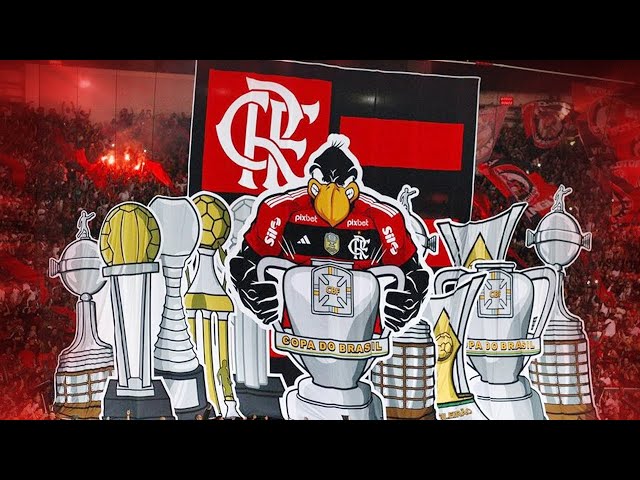
In the 1960s, rival fans began to call Flamengo fans urubus (English: "vultures"), a racist allusion to the large mass of Afro-descendant and poor supporters. Such an offensive nickname was never well received by Flamengo fans, until 31 May 1969. It was on a Sunday, when a Scarlet-Black fan decided to take a vulture to a game between Flamengo and Botafogo at Maracanã. At the time, the two clubs were playing the classic with the greatest post-Garrincha rivalry. And Flamengo hadn't beaten the rival for four years. In the stands, Botafogo fans shouted, as always, that Flamengo was a urubu team.
The vulture was released in the stands with a Flamengo's flag tied to its feet and, when it landed on the field, just before the game started, the crowd cheered and shouted: É urubu, é urubu. (English: "it's a vulture, it's a vulture"). Flamengo won the game 2–1 and, from there, the new mascot was consecrated, taking Popeye's place. The cartoonist Henfil, tried to humanize him in his sports cartoons in newspapers and magazines, and the Urubu became a popular mascot.
In 2000, Flamengo's mascot received an official design and a name: Samuca. However, this name did not become popular among the supporters, who continue to call him simply Urubu.
On 25 May 2008, debuted at Maracanã in a match between Flamengo and Internacional, valid for the 2008 Campeonato Brasileiro Série A. Since then, they have been present in several Flamengo games and events.
Anthem
Flamengo has two anthems: the official one, called Hymno Rubro-Negro (English: "Scarlet-Black Anthem"), which was created in 1920 with lyrics and music by Paulo Magalhães (former goalkeeper of the club), recorded in 1932 by singer Castro Barbosa and registered in 1937 at the Instituto Nacional de Música, with the refrain "Flamengo! Flamengo! Tua glória é lutar, Flamengo! Flamengo! Campeão de terra e mar" (in English: "Flamengo! Flamengo! Your glory is to fight, Flamengo! Flamengo! Champion of land and sea"); and the popular one, with lyrics and music by Lamartine Babo, recorded for the first time by Gilberto Alves in 1945. The latter is the best known and the one that sings the glories of the club, whose refrain is "Uma vez Flamengo, sempre Flamengo" (English: "Once you are Flamengo, always Flamengo").
Stadiums
Rua Paysandu
Flamengo's first official home ground was the Estádio da Rua Paysandu ('Paysandu Street Stadium'). The ground formerly belonged to Paissandu Atlético Clube before they ceased playing football in 1914. The owners of the ground, the Guinle family, rented the field to Flamengo where they played their home matches from 1915 to 1932. Between 1912 and 1915 (and later between 1932 and 1938), the club played all their matches on the grounds of Botafogo or Fluminense. The first Flamengo match at Rua Paysandu was played on 31 October 1915, in the Campeonato Carioca against Bangu. Crowds of 15,000 watched Flamengo face Fluminese at the park in 1918 and 1919.
Estádio da Gávea
:

Flamengo's home stadium is nominally the Estádio da Gávea (officially named the Estádio José Bastos Padilha at Flamengo's Gávea Headquarters), which was inaugurated on 4 September 1938, and has a capacity of 4,000 people. The stadium is named after José Bastos Padilha, Flamengo's president at the time of the stadium's construction, from 1933 to 1937. Even though Flamengo no longer play their matches at Gávea, the site serves as the club's administrative headquarters. Since the 1990s, the stadium has been used almost exclusively for the club's youth and women's teams' matches, and as the training ground for the senior team. Most matches are played at the significantly larger Maracanã Stadium, considered by supporters as the real Flamengo home ground. Gávea Stadium is not actually located in the neighborhood of Gávea but rather in Leblon.
During the 2014 FIFA World Cup, the Dutch National Team used the Estádio da Gávea and all of its facilities as their training ground in preparation for the competition.
Maracanã
Main article: Maracanã Stadium

Since its construction for the 1950 World Cup, the Maracanã has primarily served as the home ground for the four biggest Rio de Janeiro clubs. The stadium was officially completed in 1965, 17 years after construction began. In 1963, more than 194,000 people attended a match between Flamengo and Fluminense at the Maracanã. The capacity of the stadium allowed Flamengo to have the largest support of any clubs in Brazil for much of the 20th century. In 1989 Zico scored his final goal in the historic stadium, setting the current unbroken record for goals in the Maracanã at 333. An upper stand in the stadium collapsed on 19 July 1992, in the second match of the finals of 1992 Campeonato Brasileiro Série A between Botafogo and Flamengo, leading to the death of three spectators and injuring 50 others. Following the disaster, the stadium's capacity was greatly reduced as it was converted to an all-seater stadium in the late 1990s. Following its 50th anniversary in 2000, the stadium underwent renovations which would increase its full capacity to around 103,000. After years of planning and nine months of closure between 2005 and 2006 (during which Flamengo played their home matches at Volta Redonda's Estádio Raulino de Oliveira and Portuguesa's Estádio Luso Brasileiro), the stadium was reopened in January 2007 with an all-seated capacity of 87,000. For the 2014 World Cup and 2016 Olympics and Paralympics, a major reconstruction project was initiated in 2010. The original seating bowl, with a two-tier configuration, was demolished, giving way to a new one-tier seating bowl.
The stadium is officially under the management of Brazilian conglomerate Odebrecht as of 2013. This has resulted in unfavorable rental agreements for Flamengo who do not officially administer the stadium and often owe rental fees for matches in excess of their ticket revenue, even for matches with high attendance. The most recent rental agreement was signed in 2018 and is valid through 2020. In April 2019, Flamengo and Fluminense came to an agreement with the state and the operators of the Maracanã to serve as joint-managers of the venue for the following six months, a deal which allowed the clubs to pay a fixed monthly fee and receive a higher share of matchday revenue than was granted under the previous deal.
Ilha do Urubu
Main article: Estádio Luso Brasileiro

In 2017, Flamengo played their home matches at the Estádio Luso Brasileiro of Portuguesa while disputing their stadium situation with the Rio de Janeiro state government and Complexo Maracanã Entretenimento S.A. (composed of Odebrecht, IMX, AEG), the operator of the Maracanã Stadium. A three-year agreement was signed with Portuguesa over management of Estádio Luso Brasileiro, named Ilha do Urubu ("Vulture's Island") by Flamengo supporters in a poll. The park was renovated to fit 20,500 spectators. Flamengo started playing at the arena in March 2017, but after several delays and administrative issues and a new contract with the Maracanã, Flamengo broke their lease with the Ilha do Urubu in July 2018.
New Stadium
Main article: New CR Flamengo Stadium
In December 2024, it was reported that Flamengo released the design of their new stadium, an 80,000 capacity state-of-the-art stadium to be constructed at the Gasômetro area. The stadium is estimated to cost approximately €500 million and once completed, will become the largest stadium in Brazil. Scheduled for completion by November 2029 or earlier, the sports arena includes a North Stand dedicated for its most passionate supporters, luxury seating, a 360 degrees internal LED screen, a massive external display and a total of 6,200m2 of LED surfaces.
Rivalries
Rivalry with Botafogo
The match became known as the Clássico da Rivaldade ('Rivalry Classic') in the 1960s, is the traditional Brazilian derby between Botafogo and Flamengo, both from Rio de Janeiro. The first confrontation between Rio de Janeiro rivals Flamengo and Botafogo occurred in 1913. Flamengo's mascot of the vulture originated during the 1 June 1969, match against Botafogo when Flamengo supporters released a vulture onto the field in response to the racist cheers of urubu (vulture) from Botafogo and other teams' supporters. Flamengo's top scorer in the derby is Zico and Botafogo's top scorer is Heleno de Freitas.
Rivalry with Fluminense
Main article: Fla–Flu
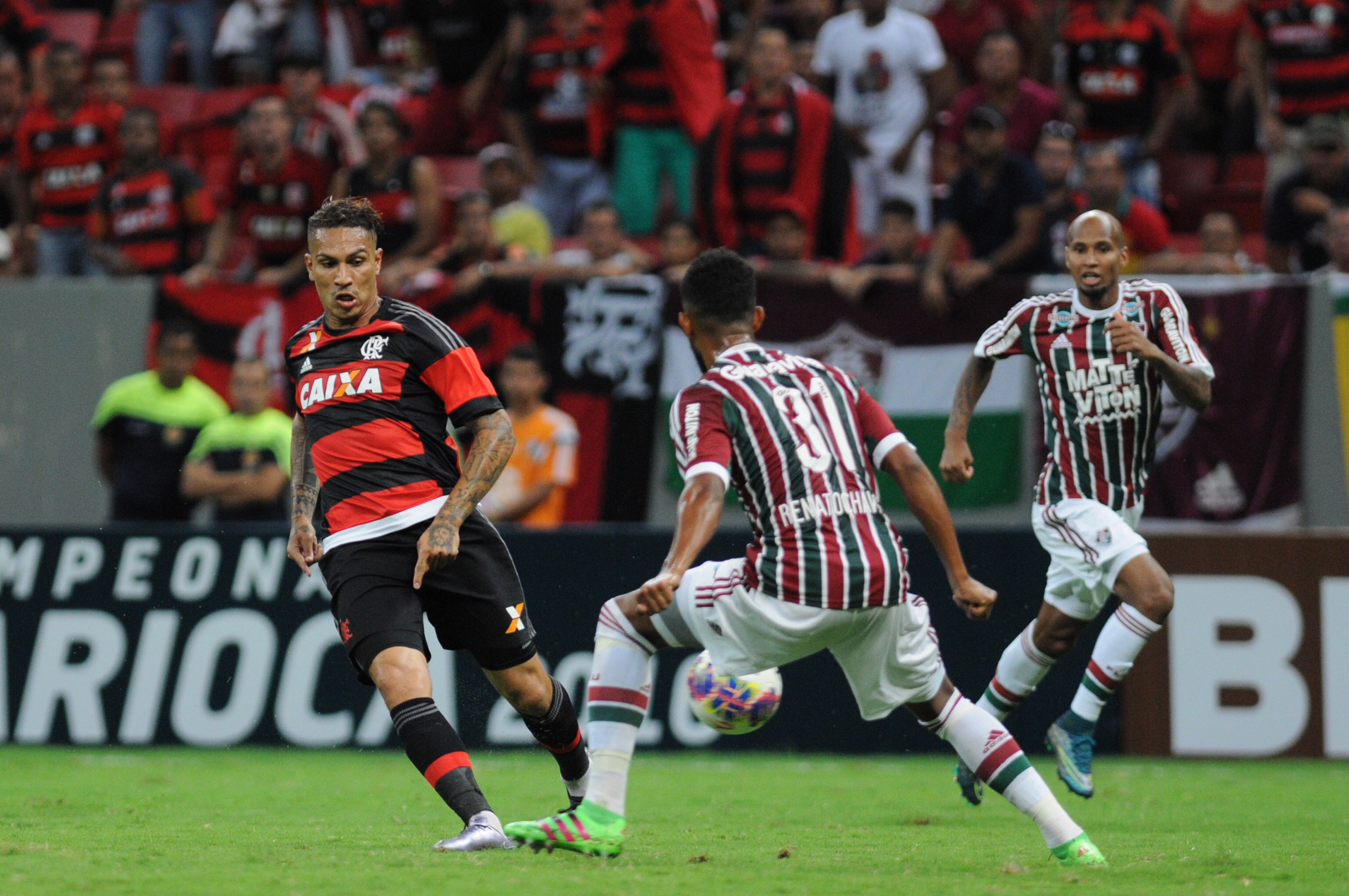
The Fla-Flu or Clássico das Multidões ('Derby of the Crowds') is the traditional Brazilian derby between Flamengo and Fluminense, both from Rio de Janeiro. It is considered by football experts and much of the sports media as one of the greatest classics in the world. According to writer Nelson Rodrigues, the classic was generated by resentment. On the tricolor side, the fact that their starting players deserted and went to form Flamengo's football department, and on the red-black side, the fact that Fluminense still won the first match, circumstances that would have been fundamental in generating the derby mystique.
The rivalry between these two clubs began in October 1911, when a group of dissatisfied players from Fluminense left their club and joined rowing club of Flamengo, establishing the football department at their new club. The first Fla–Flu ever was played the following year on 7 July. Fluminense won the match 3–2, with 800 people in attendance.
Over time Flamengo and Fluminense became powerhouses of Brazilian football, although with common origins, the clubs became very distinct and in some cases antagonistic. Soon Flamengo became the most popular team in Brazil, with fans mainly in the working and lower classes across the country. While Fluminense becomes a club linked to the rich class of Rio de Janeiro, especially in the south of the city.
In 1950, the Maracanã Stadium was built to host the FIFA World Cup, although the four big clubs of Rio de Janeiro play in the stadium, Flamengo and Fluminense are the teams that played the most matches there and currently manage the stadium, which belongs to the state of Rio de Janeiro. The Fla-Flu holds the world record for attendance in games between clubs: 194,603 spectators were present at the Maracanã stadium, in the final of the 1963 Campeonato Carioca, won by Flamengo after a goalless draw.
Flamengo and Fluminense are the two most successful teams in the Campeonato Carioca: as of 2025 Flamengo have 39 state league titles and Fluminense have 34. Since 2012, Fla-Flu has been considered an Intangible Heritage of Rio de Janeiro, being the only football derby to deserve this honor.
Rivalry with Vasco da Gama
Main article: Clássico dos Milhões
.jpg)
The Clássico dos Milhões ('Derby of Millions') is the traditional Brazilian derby between Flamengo and Vasco da Gama, both from Rio de Janeiro. Although the rivalries against Botafogo and Fluminense are more traditional, Vasco is the club most hated by Flamengo supporters and vice versa, with the derby between them being considered one of the biggest rivalries in Brazilian football and in football worldwide. The derby's name originated in the 1920s and refers to the two largest fanbases in the state of Rio de Janeiro. Both clubs were established in the late 19th century as regatta rowing clubs. The first football match between the clubs was played in 1923 when Vasco entered the top division of the Campeonato Carioca.
From the 1972 to 2001, the matchup was elevated as the most important of Flamengo's rivalries and became one of the biggest rivalries in all of Brazil. In this span, Flamengo and Vasco played in or won the final of each of the phases of the state championship nearly every year, frequently facing one another. This also coincided with the beginnings of the national Campeonato Brasileiro and the growth in popularity of both clubs nationwide. The most iconic matches between Flamengo and Vasco featured the idols of both clubs challenging each other: Zico of Flamengo (1971–83; 85–89) and Roberto Dinamite of Vasco da Gama (1971–79; 80–93).
Some of the great players in Brazilian football played for both teams, and with hectic transfers in the 1980s and 1990s. Bebeto revealed by Flamengo, was seen as Zico's successor, but left the red-black team and went to play for Vasco in 1989. Romário revealed for Vasco's youth teams, when he returned to Brazil in 1995, recently champion of the 1994 FIFA World Cup and elected best player of the year by FIFA, he chose to play for Flamengo. Other players like Andrade, Edmundo, Felipe, Jean, Jorginho, Juninho Paulista, Dejan Petković and Tita.
Interstate Rivalries
Rivalry with Atlético Mineiro
Main article: Flamengo–Atlético Mineiro football rivalry
Flamengo has an inter-state rivalry with Atlético Mineiro of Minas Gerais, developed in the 1980s from numerous controversial encounters between the two clubs in that decade's Campeonato Brasileiro and Copa Libertadores editions. It maintained its high intensity through the following years, and is considered one of the biggest interstate rivalries in Brazilian football.
Rivalry with Palmeiras
Main article: Flamengo–Palmeiras football rivalry
The rivalry with Palmeiras of São Paulo has become increasingly intense over the course of the 21st century. The two clubs have already decided five official titles between them, including two Copa Libertadores, and they are the two most successful teams in South American football over the past decade. The rivalry extends beyond the pitch, with numerous clashes and exchanges of barbs between club officials. A considerable part of the Brazilian sports press claims that Flamengo and Palmeiras are the main protagonists of a “Spanish-style” dominance of Brazilian football, in which the two clubs share the major titles and polarize public attention.
Players
Main article: List of Clube de Regatas do Flamengo players
First-team squad
– Do not add new players before their signing is officially announced by the club. – Do not add clubnumber until it is official. – This is Wikipedia. Any unconfirmed and unsourced signing must be removed as per guidelines. – Also, please list ONLY players who are fully featured with the first team squad (see link below)!
Youth players with first team numbers
Main article: CR Flamengo (youth)
The following players have previously made appearances or have appeared on the substitutes bench for the first team.
Out on loan
Retired numbers
Main article: Retired numbers in association football
- 12 – Brazil Club Supporters (the 12th Man) – Number dedicated to the rubro-negro fans.(*)
(*) In spite of having its number "12" retired, Flamengo has to re-issue it for CONMEBOL competitions such as Copa Libertadores, where rosters must be numbered from 1 to 50 consecutively.
Management team
| Position | Name | Coaching staff | Medical staff |
|---|---|---|---|
| Head coach | BRA Filipe Luís | ||
| Assistant head coach | ESP Iván Palanco | ||
| Assistant head coach | BRA Márcio de Moraes Torres | ||
| Assistant head coach | BRA Rodrigo Caio | ||
| Goalkeepers trainer | BRA Rogério Maia | ||
| Goalkeepers trainer | BRA Thiago Eller | ||
| Performance analyst | BRA Wellington Sales | ||
| Performance analyst | BRA Eduardo Coimbra | ||
| Performance analyst | BRA Arthur Souza | ||
| Performance analyst | BRA Victor Saad | ||
| Head of scouting | UKR Andrii Fedchenkov | ||
| Health and high performance manager | BRA Fernando Sassaki | ||
| Fitness coach | BRA Diogo Linhares | ||
| Fitness coach | BRA Arthur Peixoto | ||
| Fitness coach | BRA Júnior Bezerra | ||
| Doctor | BRA Marcelo Soares | ||
| Doctor | BRA Fernando Bassan | ||
| Physiotherapist | BRA Laniyan Neves |
Honours


Official tournaments
| Worldwide | Competitions | Titles | Seasons | Intercontinental Cup | 1 | FIFA Challenger Cup | FIFA Derby of the Americas | Continental | Competitions | Titles | Seasons | Copa Libertadores | 4 | Recopa Sudamericana | 1 | Copa Mercosur | Copa de Oro | National | Competitions | Titles | Seasons | Campeonato Brasileiro Série A | 8 | Copa União(1) | Copa do Brasil | 5 | Supercopa do Brasil | Copa dos Campeões | Inter-state | Competitions | Titles | Seasons | Torneio Rio–São Paulo | 1 | State | Competitions | Titles | Seasons | title=Rio de Janeiro State – List of Champions | url=http://www.rsssfbrasil.com/tablesrz/rjcamp.htm | url-status=dead | archive-url=https://web.archive.org/web/20100216133727/http://www.rsssfbrasil.com/tablesrz/rjcamp.htm | archive-date=16 February 2010 | access-date=16 March 2010 | publisher=Rec.Sport.Soccer Statistics Foundation}} | Copa Rio | 1 |
|---|---|---|---|---|---|---|---|---|---|---|---|---|---|---|---|---|---|---|---|---|---|---|---|---|---|---|---|---|---|---|---|---|---|---|---|---|---|---|---|---|---|---|---|---|---|---|---|
| 1981 | |||||||||||||||||||||||||||||||||||||||||||||||
| 1 | 2025 | ||||||||||||||||||||||||||||||||||||||||||||||
| 1 | 2025 | ||||||||||||||||||||||||||||||||||||||||||||||
| 1981, 2019, 2022, 2025 | |||||||||||||||||||||||||||||||||||||||||||||||
| 2020 | |||||||||||||||||||||||||||||||||||||||||||||||
| 1 | 1999 | ||||||||||||||||||||||||||||||||||||||||||||||
| 1 | 1996 | ||||||||||||||||||||||||||||||||||||||||||||||
| 1980, 1982, 1983, 1992, 2009, 2019, 2020, 2025 | |||||||||||||||||||||||||||||||||||||||||||||||
| 1 | 1987 | ||||||||||||||||||||||||||||||||||||||||||||||
| 1990, 2006, 2013, 2022, 2024 | |||||||||||||||||||||||||||||||||||||||||||||||
| 3 | 2020, 2021, 2025 | ||||||||||||||||||||||||||||||||||||||||||||||
| 1 | 2001 | ||||||||||||||||||||||||||||||||||||||||||||||
| 1961(2) | |||||||||||||||||||||||||||||||||||||||||||||||
| 39 | 1914, 1915, 1920, 1921, 1925, 1927, 1939, 1942, 1943, 1944, 1953, 1954, 1955, 1963, 1965, 1972, 1974, 1978, 1979 (Special), 1979, 1981, 1986, 1991, 1996, 1999, 2000, 2001, 2004, 2007, 2008, 2009, 2011, 2014, 2017, 2019, 2020, 2021, 2024, 2025 | ||||||||||||||||||||||||||||||||||||||||||||||
| 1991 |
- shared record
(1) This championship was organized by the "Club of Thirteen," independently of the Brazilian Football Confederation (CBF), which organized a tournament for 16 of the clubs that were left out (including Guarani de Campinas, runner-up in 1986), called the Yellow Module, and which insisted on semifinals between the top two finishers of the Copa União (Flamengo and Internacional-RS) and those of the Yellow Module (Sport Recife and Guarani). Flamengo and Internacional did not participate, and the CBF registered Sport Recife and Guarani for the Copa Libertadores. From 2019 onwards, the CBF began to include the tournament among the Brazilian titles on its official website, but with different names: "Brasileiro" and "Copa União."
(2) In 1940 the competition was interrupted with Flamengo and Fluminense in the lead, without the CBD making the title official, however, the clubs and newspapers at the time considered the result definitive and declared the Flamengo and Fluminense as the legitimate champions of the competition.{{cite web |url=https://rsssfbrasil.com/tablesr/rjsp1940.htm |title=Torneio Rio-São Paulo 1940
Other tournaments
International
- Lima International Tournament (1): 1952
- Juan Domingo Peron Tournament (1): 1953
- Torneio Internacional do Rio de Janeiro (4): 1954, 1955, 1970, 1972
- Israel International Tournament (1): 1958
- Torneo Hexagonal de Lima (1): 1959
- South American Octagonal Tournament (1): 1961
- Tunisia International Tournament (1): 1962
- Colombia International Tournament (1): 1964
- Orange Trophy (2): 1964, 1986
- Mohammed V Cup (1): 1968
- Torneio Quadrangular Internacional de Goiás (1): 1975
- Trofeo Ciudad de Palma de Mallorca (1): 1978
- Ramón de Carranza Trophy (2): 1979, 1980
- Trofeo Ciudad de Santander (1): 1980
- Naples International Tournament (1): 1981
- Punta del Este Cup (1): 1981
- Air Gabon Tournament (1): 1987
- Angola International Tournament (1): 1987
- Kirin Cup (1): 1988
- Trofeo Colombino (1): 1988
- Hamburg Port Cup (1): 1989
- Marlboro Cup (1): 1990
- Freedom Cup (1): 1993
- SEE'94 Tournament (1): 1994
- Florida Cup (1): 2019
National and Inter-state
- Torneio Triangular de Curitiba (1): 1953
- Taça dos Campeões Estaduais Rio–São Paulo (1): 1955
- Torneio Quadrangular de Vitória (1): 1965
- Torneio Gilberto Alves (1): 1965
- Torneio do Povo (1): 1972
- Torneio da Uva (1): 1975
- Torneio Elmo Serejo (1): 1976
- Torneio Quadrangular de Varginha (1): 1990
- Taça Brahma dos Campeões (1): 1992
- Copa Rede Bandeirantes (1): 1997
- Copa dos Campeões Mundiais (1): 1997
- Super Series Manaus (1): 2015
- Troféu Osmar Santos (2): 2019, 2025
- Troféu João Saldanha (3): 2019, 2020, 2025
State
- Taça Guanabara (25): 1970, 1972, 1973, 1978, 1979, 1980, 1981, 1982, 1984, 1988, 1989, 1995, 1996, 1999, 2001, 2004, 2007, 2008, 2011, 2014, 2018, 2020, 2021, 2024, 2025
- Taça Rio (9): 1983, 1985, 1986, 1991, 1996, 2000, 2009, 2011, 2019
- Other Campeonato Carioca rounds (7): 1974, 1978, 1979, 1979, 1979, 1981, 1987
- Torneio Extra (1): 1934
- Torneio Aberto (1): 1936
- Torneio Relâmpago (1): 1943
- Campeonato da Capital do Rio de Janeiro Copa Rio stage (2): 1991, 1993
- Torneio Super Clássicos (3): 2013, 2014, 2015
- Torneio Início (6): 1920, 1922, 1946, 1951, 1952, 1959
Runners-up
- FIFA Intercontinental Cup (1): 2025
- FIFA Club World Cup (1): 2019
- Copa Libertadores (1): 2021
- Copa Sudamericana (1): 2017
- Recopa Sudamericana (1): 2023
- Supercopa Libertadores (2): 1993, 1995
- Copa Mercosur (1): 2001
- Campeonato Brasileiro Série A (3): 1964, 2018, 2021
- Copa do Brasil (5): 1997, 2003, 2004, 2017, 2023
- Supercopa do Brasil (3): 1991, 2022, 2023
- Torneio Rio–São Paulo (3): 1957, 1958, 1997
- Campeonato Carioca (35): 1912, 1913, 1919, 1922, 1923, 1924, 1932, 1936, 1937, 1938, 1940, 1941, 1952, 1958, 1961, 1962, 1966, 1968, 1969, 1973, 1977, 1982, 1983, 1984, 1987, 1988, 1989, 1992, 1994, 1995, 1998, 2010, 2013, 2022, 2023
- Copa Rio (1): 1993
Youth team
- U20 Intercontinental Cup (2): 2024, 2025
- U-20 Copa Libertadores (2): 2024, 2025
- Campeonato Brasileiro Sub-20 (2): 2019, 2023
- Supercopa do Brasil Sub-20 (1): 2019
- Campeonato Brasileiro Sub-17 (2): 2019, 2021
- Copa do Brasil Sub-17 (2): 2018, 2021
- Supercopa do Brasil Sub-17 (1): 2021
- Copa São Paulo de Futebol Júnior (4): 1990, 2011, 2016, 2018
- Taça Belo Horizonte de Juniores (3): 1986, 2003, 2007
- Copa Macaé de Juvenis (2): 1999, 2006
- Copa Votorantim Sub-15 (2): 2015, 2017
Awards
- IFFHS The World's Club Team of the Year: 2022
Records
Main article: Clube de Regatas do Flamengo records and statistics
CONMEBOL club coefficient ranking
| Rank | Team | Points |
|---|---|---|
| 1 | BRA Palmeiras | 9828,6 |
| 2 | BRA Flamengo | 9303,1 |
| 3 | ARG River Plate | 8762,8 |
| 4 | ARG Boca Juniors | 7360 |
| 5 | URU Peñarol | 6029,4 |
Average attendance
Below is Flamengo's average home match average attendance in Campeonato Brasileiro league matches since the current league format was adopted in 2003.
| Season | Division | Matches | Total attendance | Avg. attendance | Main home stadium | Total | 418 | 13,354,174 | 31,948 |
|---|---|---|---|---|---|---|---|---|---|
| 2003 | Série A | 23 | 253,460 | 11,020 | Maracanã | ||||
| 2004 | Série A | 23 | 239,361 | 10,407 | Raulino de Oliveira | ||||
| 2005 | Série A | 21 | 286,797 | 13,657 | Arena Petrobras | ||||
| 2006 | Série A | 19 | 298,509 | 15,711 | Maracanã | ||||
| 2007 | Série A | 19 | 798,285 | 42,015 | Maracanã | ||||
| 2008 | Série A | 19 | 830,984 | 43,736 | Maracanã | ||||
| 2009 | Série A | 19 | 761,406 | 40,074 | Maracanã | ||||
| 2010 | Série A | 19 | 359,955 | 18,945 | Engenhão | ||||
| 2011 | Série A | 19 | 371,374 | 19,546 | Engenhão | ||||
| 2012 | Série A | 19 | 265,164 | 13,956 | Engenhão | ||||
| 2013 | Série A | 19 | 500,650 | 26,350 | Maracanã | ||||
| 2014 | Série A | 19 | 575,126 | 30,270 | Maracanã | ||||
| 2015 | Série A | 19 | 598,538 | 31,502 | Maracanã | ||||
| 2016 | Série A | 19 | 483,781 | 25,462 | Kléber Andrade | ||||
| 2017 | Série A | 19 | 314,812 | 16,569 | Ilha do Urubu | ||||
| 2018 | Série A | 19 | 936,759 | 49,303 | Maracanã | ||||
| 2019 | Série A | 19 | 1,126,406 | 59,284 | Maracanã | ||||
| 2020 | Série A | 0 | – | – | Maracanã | ||||
| 2021 | Série A | 9 | 160,194 | 17,199 | Maracanã | ||||
| 2022 | Série A | 19 | 1,037,387 | 54,599 | Maracanã | ||||
| 2023 | Série A | 19 | 1.092.515 | 57,501 | Maracanã | ||||
| 2024 | Série A | 19 | 1.034.489 | 54,447 | Maracanã | ||||
| 2025 | Série A | 19 | 1.188.406 | 62,548 | Maracanã |
Domestic results
Below are Flamengo's results in domestic competitions since the previous nationwide organized competitions (1959), before the first official Brazilian national championship tournament in 1971.
| Domestic results (1959–1970) | Season | Pos | G | W | D | L | GF | GA | Pts | Top league scorer | Goals | CC | CdB |
|---|---|---|---|---|---|---|---|---|---|---|---|---|---|
| 1959 | DNQ | – | – | – | – | – | – | – | 6th | – | |||
| 1960 | DNQ | – | – | – | – | – | – | – | 4th | – | |||
| 1961 | DNQ | – | – | – | – | – | – | – | 2nd | – | |||
| 1962 | DNQ | – | – | – | – | – | – | – | 2nd | – | |||
| 1963 | DNQ | – | – | – | – | – | – | – | 1st | – | |||
| 1964 | 2nd | – | – | – | – | – | – | – | 3rd | – | |||
| 1965 | DNQ | – | – | – | – | – | – | – | 1st | – | |||
| 1966 | DNQ | – | – | – | – | – | – | – | 2nd | – | |||
| 1967 | 11th | – | – | – | – | – | – | – | 6th | – | |||
| DNQ | – | – | – | – | – | – | – | ||||||
| 1968 | 15th | – | – | – | – | – | – | – | 3rd | – | |||
| DNQ | – | – | – | – | – | – | – | ||||||
| 1969 | 16th | – | – | – | – | – | – | – | 2nd | – | |||
| 1970 | 6th | – | – | – | – | – | – | – | 5th | – |
| Domestic results (1971–1980) | Season | Pos | G | W | D | L | GF | GA | Pts | Top league scorer | Goals | CC | CdB |
|---|---|---|---|---|---|---|---|---|---|---|---|---|---|
| 1971 | 14th | 19 | 4 | 10 | 5 | 13 | 17 | 18 | 4th | – | |||
| 1972 | 12th | 28 | 10 | 10 | 8 | 24 | 25 | 30 | 1st | – | |||
| 1973 | 24th | 28 | 14 | 4 | 13 | 31 | 34 | 26 | 2nd | – | |||
| 1974 | 6th | 28 | 14 | 6 | 4 | 41 | 15 | 34 | 1st | – | |||
| 1975 | 7th | 28 | 13 | 5 | 10 | 34 | 28 | 38 | 4th | – | |||
| 1976 | 5th | 21 | 14 | 3 | 4 | 48 | 15 | 41 | 5th | – | |||
| 1977 | 9th | 19 | 9 | 6 | 4 | 31 | 11 | 31 | 2nd | – | |||
| 1978 | 16th | 26 | 13 | 7 | 6 | 33 | 26 | 34 | 1st | – | |||
| 1979 | 12th | 10 | 7 | 2 | 1 | 21 | 6 | 16 | 1st | – | |||
| 1st | |||||||||||||
| 1980 | 1st | 22 | 14 | 6 | 2 | 46 | 20 | 34 | 3rd | – |
| Domestic results (1981–1990) | Season | Pos | G | W | D | L | GF | GA | Pts | Top league scorer | Goals | CC | CdB |
|---|---|---|---|---|---|---|---|---|---|---|---|---|---|
| 1981 | 6th | 19 | 9 | 7 | 3 | 30 | 19 | 25 | Nunes | 16 | 1st | – | |
| 1982 | 1st | 23 | 15 | 6 | 2 | 48 | 27 | 36 | Zico | 21 | 2nd | – | |
| 1983 | 1st | 26 | 14 | 7 | 5 | 57 | 30 | 35 | 2nd | – | |||
| 1984 | 5th | 22 | 11 | 7 | 4 | 32 | 20 | 29 | 2nd | – | |||
| 1985 | 9th | 26 | 11 | 8 | 7 | 40 | 23 | 30 | 3rd | – | |||
| 1986 | 13th | 28 | 12 | 8 | 8 | 34 | 19 | 32 | 1st | – | |||
| 1987 | 3rd | 19 | 9 | 6 | 4 | 22 | 15 | 24 | 2nd | – | |||
| 1988 | 6th | 25 | 11 | 8 | 6 | 32 | 20 | 30 | 2nd | – | |||
| 1989 | 9th | 18 | 6 | 7 | 5 | 16 | 13 | 19 | 2nd | SF | |||
| 1990 | 11th | 19 | 7 | 6 | 6 | 24 | 18 | 20 | 4th | W |
| Domestic results (1991–2000) | Season | Pos | G | W | D | L | GF | GA | Pts | Top league scorer | Goals | CC | CdB |
|---|---|---|---|---|---|---|---|---|---|---|---|---|---|
| 1991 | 9th | 19 | 7 | 5 | 7 | 20 | 24 | 19 | 1st | DNP | |||
| 1992 | 1st | 27 | 12 | 8 | 7 | 44 | 31 | 32 | 2nd | DNP | |||
| 1993 | 8th | 20 | 6 | 8 | 6 | 23 | 24 | 20 | 3rd | SF | |||
| 1994 | 14th | 25 | 7 | 9 | 9 | 24 | 27 | 23 | 2nd | DNP | |||
| 1995 | 21st | 23 | 5 | 9 | 9 | 23 | 32 | 24 | 2nd | SF | |||
| 1996 | 13th | 23 | 9 | 3 | 11 | 24 | 31 | 30 | W | SF | |||
| 1997 | 5th | 31 | 14 | 8 | 9 | 37 | 32 | 36 | 5th | RU | |||
| 1998 | 11th | 23 | 9 | 6 | 8 | 37 | 34 | 33 | 2nd | R16 | |||
| 1999 | 12th | 21 | 9 | 2 | 10 | 30 | 33 | 29 | 1st | QF | |||
| 2000 | 15th | 24 | 9 | 6 | 9 | 42 | 37 | 33 | 1st | QF |
| Domestic results (2001–2010) | Season | Pos | G | W | D | L | GF | GA | Pts | Top league scorer | Goals | CC | CdB |
|---|---|---|---|---|---|---|---|---|---|---|---|---|---|
| 2001 | 24th | 27 | 8 | 5 | 14 | 25 | 38 | 29 | 1st | QF | |||
| 2002 | 18th | 25 | 8 | 6 | 11 | 38 | 39 | 30 | 8th | DNP | |||
| 2003 | 8th | 46 | 18 | 12 | 16 | 66 | 73 | 66 | Edílson | 13 | 3rd | RU | |
| 2004 | 17th | 46 | 13 | 15 | 18 | 51 | 53 | 54 | Dimba | 7 | 1st | RU | |
| 2005 | 15th | 42 | 14 | 13 | 15 | 56 | 60 | 55 | Renato Abreu | 12 | 8th | 3R | |
| 2006 | 11th | 38 | 15 | 7 | 16 | 44 | 48 | 52 | Obina | 11 | 11th | W | |
| 2007 | 3rd | 38 | 17 | 10 | 11 | 55 | 49 | 61 | Ibson, Souza, Juan Maldonado | 6 | 1st | DNP | |
| 2008 | 5th | 38 | 18 | 10 | 10 | 67 | 48 | 64 | Ibson | 11 | 1st | DNP | |
| 2009 | 1st | 38 | 19 | 10 | 9 | 58 | 44 | 67 | Adriano | 19 | 1st | QF | |
| 2010 | 14th | 38 | 9 | 17 | 12 | 41 | 44 | 44 | Dejan Petković, Diego Maurício | 5 | 2nd | DNP |
| Domestic results (2011–2020) | Season | Pos | G | W | D | L | GF | GA | Pts | Top league scorer | Goals | CC | CdB |
|---|---|---|---|---|---|---|---|---|---|---|---|---|---|
| 2011 | 4th | 38 | 15 | 16 | 7 | 59 | 47 | 61 | Deivid | 15 | 1st | QF | |
| 2012 | 11th | 38 | 12 | 14 | 12 | 39 | 46 | 50 | Vágner Love | 13 | 3rd | DNP | |
| 2013 | 16th | 38 | 12 | 13 | 13 | 43 | 46 | 49 | Hernane | 16 | 2nd | W | |
| 2014 | 10th | 38 | 14 | 10 | 14 | 46 | 47 | 52 | Eduardo da Silva | 8 | 1st | SF | |
| 2015 | 12th | 38 | 15 | 4 | 19 | 45 | 53 | 49 | Alan Patrick | 7 | 3rd | R16 | |
| 2016 | 3rd | 38 | 20 | 11 | 7 | 52 | 35 | 71 | Paolo Guerrero | 9 | 4th | 2R | |
| 2017 | 6th | 38 | 15 | 11 | 12 | 49 | 38 | 56 | Diego Ribas | 10 | 1st | RU | |
| 2018 | 2nd | 38 | 21 | 9 | 8 | 59 | 29 | 72 | Lucas Paquetá | 10 | 3rd | SF | |
| 2019 | 1st | 38 | 28 | 6 | 4 | 86 | 37 | 90 | Gabriel Barbosa | 25 | 1st | QF | |
| 2020 | 1st | 38 | 21 | 8 | 9 | 68 | 48 | 71 | Gabriel Barbosa | 14 | 1st | QF |
| Domestic results (2021–) | Season | Pos | G | W | D | L | GF | GA | Pts | Top league scorer | Goals | CC | CdB |
|---|---|---|---|---|---|---|---|---|---|---|---|---|---|
| 2021 | 2nd | 38 | 21 | 8 | 9 | 69 | 36 | 71 | Michael | 14 | 1st | SF | |
| 2022 | 5th | 38 | 18 | 8 | 12 | 60 | 39 | 62 | Gabriel Barbosa, Pedro | 11 | 2nd | W | |
| 2023 | 4th | 38 | 19 | 9 | 10 | 56 | 42 | 66 | Pedro | 13 | 2nd | RU | |
| 2024 | 3rd | 38 | 20 | 10 | 8 | 61 | 42 | 70 | Pedro | 11 | 1st | W | |
| 2025 | 1st | 38 | 23 | 10 | 5 | 78 | 27 | 79 | Giorgian de Arrascaeta | 18 | 1st | R16 |
;Key
International results
Below are Flamengo's results in official international competitions since the club's first qualification to the Copa Libertadores in 1981. Group stage match results are listed with the home match first.
| Competition | Pld | W | D | L | GF | GA | GD | Win% | Copa Libertadores | Copa Sudamericana | Recopa Sudamericana | Copa Mercosur† | Supercopa Libertadores† | Copa de Oro† | Intercontinental Cup† | FIFA Intercontinental Cup | FIFA Club World Cup | Total |
|---|
† Defunct competitions
| International competitive match results | Season | Competition | Round | Opponent | Results | Competition result |
|---|---|---|---|---|---|---|
| 1981 | Copa Libertadores | Group stage | BRA Atlético Mineiro | 2–2, 2–2, 0–0 (N)* | Champions | |
| PAR Cerro Porteño | 5–2, 4–2 | |||||
| PAR Olimpia | 1–1, 0–0 | |||||
| Semi-finals | COL Deportivo Cali | 3–0, 1–0 | ||||
| BOL Jorge Wilstermann | 4–1, 2–1 | |||||
| Finals | CHI Cobreloa | 2–1 (H), 0–1 (A), 2–0 (N)* | ||||
| Intercontinental Cup | Final | ENG Liverpool | 3–0 (N) | Champions | ||
| 1982 | Copa Libertadores | Semi-finals | URU Peñarol | 0–1, 0–1 | Semi-finals | |
| ARG River Plate | 4–2, 3–0 | |||||
| 1983 | Copa Libertadores | Group stage | BRA Grêmio | 1–3, 1–1 | Group stage | |
| BOL Blooming | 7–1, 0–0 | |||||
| BOL Bolívar | 5–2, 1–3 | |||||
| 1984 | Copa Libertadores | Group stage | BRA Santos | 4–1, 5–0 | Semi-finals | |
| COL América de Cali | 4–2, 1–1 | |||||
| COL Junior | 3–1, 2–1 | |||||
| Semi-finals | BRA Grêmio | 3–1, 1–5, 0–0 (N)* | ||||
| VEN Universidad de Los Andes | 2–1, 3–0 | |||||
| 1988 | Supercopa Libertadores | First round | ARG Estudiantes | 1–1 (A), 3–0 (H) | Quarter-finals | |
| Quarter-finals | URU Nacional | 0–3 (A), 0–2 (H) | ||||
| 1989 | Supercopa Libertadores | First round | ARG Argentinos Juniors | 0–1 (H), 1–2 (A) | First round | |
| 1990 | Supercopa Libertadores | First round | ARG Argentinos Juniors | 1–3 (A), 3–1 (3–4p) (H) | First round | |
| 1991 | Supercopa Libertadores | First round | ARG Estudiantes | 1–1 (H), 2–0 (A) | Quarter-finals | |
| Quarter-finals | ARG River Plate | 0–1 (A), 2–1 (3–4p) (H) | ||||
| Copa Libertadores | Group stage | BRA Corinthians | 1–1, 2–0 | Quarter-finals | ||
| URU Bella Vista | 1–1, 2–2 | |||||
| URU Nacional | 4–0, 1–0 | |||||
| Round of 16 | VEN Deportivo Táchira | 3–2 (A), 5–0 (H) | ||||
| Quarter-finals | ARG Boca Juniors | 2–1 (H), 0–3 (A) | ||||
| 1992 | Supercopa Libertadores | First round | BRA Grêmio | 1–1 (A), 1–0 (H) | Semi-finals | |
| Quarter-finals | ARG Estudiantes | 1–0 (H), 1–1 (A) | ||||
| Semi-finals | ARG Racing | 3–3 (H), 0–1 (A) | ||||
| 1993 | Supercopa Libertadores | First round | PAR Olimpia | 0–1 (A), 3–1 (H) | Runners-up | |
| Quarter-finals | ARG River Plate | 1–2 (A), 1–0 (6–5p) (H) | ||||
| Semi-finals | URU Nacional | 2–1 (H), 3–0 (A) | ||||
| Finals | BRA São Paulo | 2–2 (H), 2–2 (3–5p) (A) | ||||
| Copa Libertadores | Group stage | COL América de Cali | 1–3, 1–2 | Quarter-finals | ||
| COL Atlético Nacional | 3–1, 1–0 | |||||
| BRA Internacional | 3–1, 0–0 | |||||
| Round of 16 | VEN Minervén | 8–2 (H), 1–0 (A) | ||||
| Quarter-finals | BRA São Paulo | 1–1 (H), 0–2 (A) | ||||
| 1994 | Supercopa Libertadores | Round of 16 | ARG Estudiantes | 0–0 (H), 0–2 (A) | Round of 16 | |
| 1995 | Supercopa Libertadores | First round | ARG Vélez Sarsfield | 3–2 (A), 3–0 (H) | Runners-up | |
| Quarter-finals | URU Nacional | 1–0 (A), 1–0 (H) | ||||
| Semi-finals | BRA Cruzeiro | 1–0 (A), 3–1 (H) | ||||
| Finals | ARG Independiente | 0–2 (A), 1–0 (H) | ||||
| 1996 | Copa de Oro | Semi-finals | ARG Rosario Central | 2–1 (N) | Champions | |
| Finals | BRA São Paulo | 3–1 (N) | ||||
| Supercopa Libertadores | First round | ARG Independiente | 0–0 (A), 1–0 (H) | Quarter-finals | ||
| Quarter-finals | CHI Colo-Colo | 1–1 (H), 0–1 (A) | ||||
| 1997 | Supercopa Libertadores | Group stage | BRA São Paulo | 3–2, 0–1 | Group stage | |
| PAR Olimpia | 3–3, 1–0 | |||||
| ARG Vélez Sarsfield | 0–1, 3–0 | |||||
| 1998 | Copa Mercosul | Group stage | PAR Cerro Porteño | 2–0, 3–2 | Group stage | |
| ARG Vélez Sarsfield | 2–0, 0–1 | |||||
| ARG Boca Juniors | 0–2, 0–3 | |||||
| 1999 | Copa Mercosul | Group stage | PAR Olimpia | 2–1, 1–3 | Champions | |
| CHI Colo-Colo | 2–2, 4–0 | |||||
| CHI Universidad de Chile | 7–0, 0–2 | |||||
| Quarter-finals | ARG Independiente | 1–1 (A), 4–0 (H) | ||||
| Semi-finals | URU Peñarol | 3–0 (H), 2–3 (A) | ||||
| Finals | BRA Palmeiras | 4–3 (H), 3–3 (A) | ||||
| 2000 | Copa Mercosul | Group stage | ARG River Plate | 1–2, 1–1 | Quarter-finals | |
| CHI Universidad de Chile | 2–0, 4–0 | |||||
| ARG Vélez Sarsfield | 2–0, 1–1 | |||||
| Quarter-finals | ARG River Plate | 1–2 (H), 3–4 (A) | ||||
| 2001 | Copa Mercosul | Group stage | URU Nacional | 2–0, 1–4 | Runners-up | |
| ARG San Lorenzo | 2–1, 2–1 | |||||
| PAR Olimpia | 2–0 (w/o), 2–0 | |||||
| Quarter-finals | ARG Independiente | 0–0 (A), 4–0 (H) | ||||
| Semi-finals | BRA Grêmio | 2–2 (H), 0–0 (4–1p) (A) | ||||
| Finals | ARG San Lorenzo | 0–0 (H), 1–1 (3–4p) (A) | ||||
| 2002 | Copa Libertadores | Group stage | PAR Olimpia | 0–0, 0–2 | Group stage | |
| CHI Universidad Católica | 1–3, 1–2 | |||||
| COL Once Caldas | 4–1, 0–1 | |||||
| 2003 | Copa Sudamericana | First stage | BRA Internacional | 1–3 (A) | First stage | |
| BRA Santos | 0–3 (H) | |||||
| 2004 | Copa Sudamericana | First stage | BRA Santos | 0–0 (A), 2–2 (5–4p) (H) | First stage | |
| 2007 | Copa Libertadores | Group stage | BOL Real Potosí | 1–0, 2–2 | Round of 16 | |
| VEN Unión Maracaibo | 3–1, 2–1 | |||||
| BRA Paraná Clube | 1–0, 1–0 | |||||
| Round of 16 | URU Defensor | 0–3 (A), 2–0 (H) | ||||
| 2008 | Copa Libertadores | Group stage | PER Coronel Bolognesi | 2–0, 0–0 | Round of 16 | |
| PER Cienciano | 2–1, 3–0 | |||||
| URU Nacional | 2–0, 0–3 | |||||
| Round of 16 | MEX América | 4–2 (A), 0–3 (H) | ||||
| 2009 | Copa Sudamericana | First stage | BRA Fluminense | 0–0 (A), 1–1 (H) | First stage | |
| 2010 | Copa Libertadores | Group stage | CHI Universidad Católica | 2–0, 2–2 | Quarter-finals | |
| VEN Caracas | 3–2, 3–1 | |||||
| CHI Universidad de Chile | 2–2, 1–2 | |||||
| Round of 16 | BRA Corinthians | 1–0 (H), 1–2 (A) | ||||
| Quarter-finals | CHI Universidad de Chile | 2–3 (H), 2–1 (A) | ||||
| 2011 | Copa Sudamericana | Second stage | BRA Atlético Paranaense | 1–0 (H), 1–0 (A) | Round of 16 | |
| Round of 16 | CHI Universidad de Chile | 0–4 (H), 0–1 (A) | ||||
| 2012 | Copa Libertadores | First stage | BOL Real Potosí | 1–2 (A), 2–0 (H) | Group stage | |
| Group stage | ARG Lanús | 3–0, 1–1 | ||||
| ECU Emelec | 1–0, 2–3 | |||||
| PAR Olimpia | 3–3, 2–3 | |||||
| 2014 | Copa Libertadores | Group stage | MEX León | 2–3, 1–2 | Group stage | |
| ECU Emelec | 3–1, 2–1 | |||||
| BOL Bolívar | 2–2, 0–1 | |||||
| 2016 | Copa Sudamericana | Second stage | BRA Figueirense | 2–4 (A), 3–1 (H) | Round of 16 | |
| Round of 16 | CHI Palestino | 1–0 (A), 1–2 (H) | ||||
| 2017 | Copa Libertadores | Group stage | ARG San Lorenzo | 4–0, 1–2 | Group stage | |
| CHI Universidad Católica | 3–1, 0–1 | |||||
| BRA Atlético Paranaense | 2–1, 1–2 | |||||
| Copa Sudamericana | Second stage | CHI Palestino | 5–2 (A), 5–0 (H) | Runners-up | ||
| Round of 16 | BRA Chapecoense | 0–0 (A), 4–0 (H) | ||||
| Quarter-finals | BRA Fluminense | 1–0 (A), 3–3 (H) | ||||
| Semi-finals | COL Junior | 2–1 (H), 2–0 (A) | ||||
| Finals | ARG Independiente | 1–2 (A), 1–1 (H) | ||||
| 2018 | Copa Libertadores | Group stage | ARG River Plate | 2–2, 0–0 | Round of 16 | |
| ECU Emelec | 2–0, 2–1 | |||||
| COL Santa Fe | 1–1, 0–0 | |||||
| Round of 16 | BRA Cruzeiro | 0–2 (H), 1–0 (A) | ||||
| 2019 | Copa Libertadores | Group stage | BOL San José | 6–1, 1–0 | Champions | |
| ECU LDU Quito | 3–1, 1–2 | |||||
| URU Peñarol | 0–1, 0–0 | |||||
| Round of 16 | ECU Emelec | 0–2 (A), 2–0 (4–2p) (H) | ||||
| Quarter-finals | BRA Internacional | 2–0 (H), 1–1 (A) | ||||
| Semi-finals | BRA Grêmio | 1–1 (A), 5–0 (H) | ||||
| Final | ARG River Plate | 2–1 (N) | ||||
| FIFA Club World Cup | Semi-finals | KSA Al-Hilal | 3–1 (N) | Runners-up | ||
| Final | ENG Liverpool | 0–0 (0–1 a.e.t) (N) | ||||
| 2020 | Recopa Sudamericana | Final | ECU Independiente del Valle | 2–2 (A), 3–0 (H) | Champions | |
| Copa Libertadores | Group stage | COL Junior | 3–1, 2–1 | Round of 16 | ||
| ECU Independiente del Valle | 4–0, 0–5 | |||||
| ECU Barcelona | 3–0, 2–1 | |||||
| Round of 16 | ARG Racing | 1–1 (A), 1–1 (3–5p) (H) | ||||
| 2021 | Copa Libertadores | Group stage | ECU LDU Quito | 2–2, 3–2 | Runners-up | |
| ARG Vélez Sarsfield | 0–0, 3–2 | |||||
| CHI Unión La Calera | 4–1, 2–2 | |||||
| Round of 16 | ARG Defensa y Justicia | 1–0 (A), 4–1 (H) | ||||
| Quarter-finals | PAR Olimpia | 4–1 (A), 5–1 (H) | ||||
| Semi-finals | ECU Barcelona | 2–0 (H), 2–0 (A) | ||||
| Final | BRA Palmeiras | 1–1 (1–2 a.e.t) (N) | ||||
| 2022 | Copa Libertadores | Group stage | CHI Universidad Católica | 3–0, 3–2 | Champions | |
| PER Sporting Cristal | 2–1, 2–0 | |||||
| ARG Talleres | 3–1, 2–2 | |||||
| Round of 16 | COL Deportes Tolima | 1–0 (A), 8–1 (H) | ||||
| Quarter-finals | BRA Corinthians | 2–0 (A), 1–0 (H) | ||||
| Semi-finals | ARG Vélez Sarsfield | 4–0 (A), 2–1 (H) | ||||
| Final | BRA Athletico Paranaense | 1–0 (N) | ||||
| 2023 | FIFA Club World Cup | Semi-finals | KSA Al Hilal | 2–3 (N) | 3rd place | |
| Third place match | EGY Al Ahly | 4–2 (N) | ||||
| Recopa Sudamericana | Final | ECU Independiente del Valle | 0–1 (A), 1–0 (4–5p) (H) | Runners-up | ||
| Copa Libertadores | Group stage | ARG Racing | 2–1, 1–1 | Round of 16 | ||
| ECU Aucas | 2–0, 1–2 | |||||
| CHI Ñublense | 2–0, 1–1 | |||||
| Round of 16 | PAR Olimpia | 1–0 (H), 1–3 (A) | ||||
| 2024 | Copa Libertadores | Group stage | BOL Bolívar | 4–0, 1–2 | Quarter-finals | |
| COL Millonarios | 3–0, 1–1 | |||||
| CHI Palestino | 2–0, 0–1 | |||||
| Round of 16 | BOL Bolívar | 2–0 (H), 0–1 (A) | ||||
| Quarter-finals | URU Peñarol | 0–1 (H), 0–0 (A) | ||||
| 2025 | Copa Libertadores | Group stage | ECU LDU Quito | 2–0, 0–0 | Champions | |
| VEN Deportivo Táchira | 1–0, 1–0 | |||||
| ARG Central Córdoba | 1–2, 1–1 | |||||
| Round of 16 | BRA Internacional | 1–0 (H), 2–0 (A) | ||||
| Quarter-finals | ARG Estudiantes | 2–1 (H), 0–1 (4–2p) (A) | ||||
| Semi-finals | ARG Racing | 1–0 (H), 0–0 (A) | ||||
| Final | BRA Palmeiras | 1–0 (N) | ||||
| FIFA Club World Cup | Group stage | TUN Espérance de Tunis | 2–0 (N) | Round of 16 | ||
| ENG Chelsea | 3–1 (N) | |||||
| USA Los Angeles FC | 1–1 (N) | |||||
| Round of 16 | GER Bayern Munich | 2–4 (N) | ||||
| Intercontinental Cup | Derby of the Americas | MEX Cruz Azul | 2–1 (N) | Runners-up | ||
| Challenger Cup | EGY Pyramids | 2–0 (N) | ||||
| Final | FRA Paris Saint-Germain | 1–1 (1–1 a.e.t) (1–2p) (N) |
(H) – Home; (A) – Away; (N) – Neutral
- Tiebreaker match
** Both matches played at the same stadium
Current board of directors
| Office | Name |
|---|---|
| President | Brazil Luiz Eduardo Baptista |
| Vice-president | Brazil Flávio Willeman |
| Vice-president of administration | Brazil Ricardo Campelo Trevia de Almeida |
| Vice-president of communications and marketing | Brazil Gustavo Carvalho de Oliveira |
| Vice-president of Olympic sports | Brazil Guilherme de Lima Kroll |
| Vice-president of finance | Brazil Rodrigo Tostes Solon de Pontes |
| Vice-president of Fla-Gávea | Brazil Getúlio Brasil Nunes |
| Vice-president of football | Brazil Marcos Teixeira Braz |
| Vice-president of the presidential cabinet | Brazil Marcelo Conti Baltazar |
| Vice-president of heritage | Brazil Artur Rocha Neto |
| Vice-president of historic heritage | Brazil Luis Fernando Fadigas de Almeida |
| Vice-president of planning | Brazil Bernardo Amaral do Amaral |
| Vice-president of external relations | Brazil Adalberto Ribeiro da Silva Neto |
| Vice-president of rowing | Brazil Raul Bagattini |
| Vice-president of the general secretary | Brazil Paulo Cesar dos Santos Pereira Filho |
| Vice-president of information technology | Brazil Alexandre de Souza Pinto |
Other sports
Men's basketball
Main article: Flamengo Basketball
Flamengo basketball won the Rio de Janeiro City Championship in 1919 and have since grown to be one of the most successful and supported basketball teams in the country. The club have won six Brazilian Championships, a record 44 Rio de Janeiro State Championships, the 1953 South American Championship of Champions Clubs, and the 2009 South American League.
In 2014, Flamengo won the League of the Americas without a single loss, defeating Pinheiros in the final. This qualified Flamengo to their first Intercontinental Cup against EuroLeague champions Maccabi Tel Aviv. Flamengo won and became the second Brazilian basketball team in history to be world champions. Flamengo, Real Madrid and Barcelona are the only clubs to have won the Intercontinental Cups in both football and basketball.
Flamengo hosted and participated in the 2019 FIBA Intercontinental Cup, falling to BCL champions AEK Athens in the final.
Honours
-
Novo Basquete Brasil (NBB): 7 :: 2009, 2012–13, 2013–14, 2014–15, 2015–16, 2018–19, 2020–21
-
Campeonato Brasileiro de Basquete: 1 :: 2008
-
South American Championship of Champions Clubs: 1 :: 1953
-
FIBA South American League (LSB): 1 :: 2009 (I)
-
FIBA Americas League / Champions League: 3 :: 2014, 2020–21, 2024–25
Women's football
Main article: Clube de Regatas do Flamengo (women)
Between 1995 and 2001, the Flamengo women's football team competed in the Campeonato Carioca. In 2002 the women's Carioca tournament was not organized, and the club ceased operation of the team. Flamengo attempted to re-established their women's professional football department in 2011 through a partnership with the city of Guarujá where the team trained and hoped to sign Marta, but the team never materialized. In 2015 president Eduardo Bandeira de Mello succeeded in establishing the football team through a partnership with the Brazilian Navy. In their first season, the team won the women's Campeonato Carioca state championship and have won it every season from 2015 to 2019. In 2016 Flamengo won the Campeonato Brasileiro de Futebol Feminino for the first time against Rio Preto, become the only club outside the state of São Paulo to win the tournament since its creation in 2013. Flamengo also competed in the 2016 and 2017 Copa do Brasil de Futebol Feminino before the cancellation of the competition in favor of the Campeonato Brasileiro.
Honors
-
Campeonato Brasileiro de Futebol Feminino Série A1: 1 :: 2016
-
Campeonato Carioca de Futebol Feminino: 8 :: 2015, 2016, 2017, 2018, 2019, 2021, 2023, 2024
-
Copa Rio de Futebol Feminino: 1 :: 2023
Women's basketball
The Flamengo women's basketball team won back-to-back Brazilian championships in 1954 and 1955. Ten years later with some of the same players, the program won back-to-back Brazilian titles again in 1964 and 1965. Flamengo players Norminha, Angelina, Marlene and Delei were champions of the 1967 Pan American Games in Winnipeg with the Brazil women's national basketball team.
In 1966 Flamengo won the Inter-club Basketball World Championship. The team was led by Angelina, considered one of the best players of her time.
Rowing
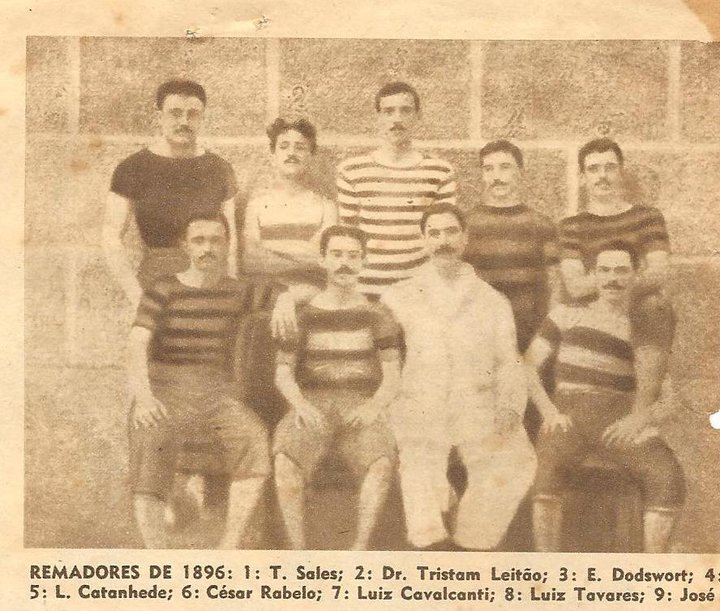
The "Flamengo Regatta Group", later renamed the "Flamengo Regatta Club", was established in 1895 as Flamengo's first ever organized athletic department, forming the basis of the club's history and identity to this day. The first regatta victory came in 1898 in the Nautical Championship of Brazil, and the first title was won in 1900, the Regatta of the IV Centenary of the Discovery of Brazil, for which the club was awarded the Jug Tropon trophy. In 1905 the club won a classic event, the South American Cup. By 1908, Flamengo had already won 43 gold, 126 silver and 141 bronze medals. The success of the rowing club made the team famous even before the founding of the football department in 1911. Great rowers such as Everardo Paes de Lima, Arnaldo Voigt, Alfredo Correia ("Boca Larga"), Ângelo Gammaro ("Angelú") and Antônio Rebello Junior ("Engole Garfo") came through Flamengo, the latter three being considered Brazilian sports heroes for completing the Rio-Santos crossing in 1932.
From 1931 to 1937 Flamengo were seven-time champions of Rio de Janeiro, and were four-time repeat state champions from 1940 to 1943. In 1963 the "Buck era" began, which revolutionized Flamengo rowing. The coach brought in athletes from other states and renovated the club's facilities to better accommodate the boats. Buck coached the Brazil national team, directing the team in several international competitions. In the early 1980s, Flamengo won the state championship and won again in 1992. The club has won the men's Brazil Trophy 10 times, and the female once, in addition to 45 Carioca state titles.
Water polo
Water polo is the second oldest sport practiced by the club, after rowing. The team played their first game on 27 May 1913, in Rio de Janeiro, and defeated Clube Internacional de Regatas, 3–2. Flamengo only opened its water sports facility in 1965. Prior to that, athletes played and trained in the Rodrigo de Freitas Lagoon or in the sea. Flamengo's first polo championship in Rio de Janeiro came in 1985 and was the start of a run of nine consecutive championships through 1993. In 1985 the club won the South American Club Championship and the Brazil Trophy (also won four consecutive times). A female water polo team was established in 1987, winning the Brazil Trophy in 1987 and 1991 and the state championship in 1995.
American football
The club launched their American football team in 2013, forming a partnership with the Rio de Janeiro Emperors. The Emperors were established in 2008 and had previously partnered with Fluminense from 2010 to 2013. The team officially goes by the name of the Flamengo Emperors and compete in the BFA (Brasil Futebol Americano).
Tennis
Flamengo began playing tennis championships in 1916 and became three-time Rio champions soon after (1916–18), even with their athletes training at other clubs. Until 1932 the club practiced tennis on their football field at the Rua Paysandu. In 1963 the club inaugurated their own facilities and courts. The biggest idol of Flamengo's tennis department is Thomas Koch.
E-sports
Main article: Flamengo eSports
In 2017 the club announced they would be entering the increasingly popular e-sports leagues the following year, beginning with a League of Legends department and eventually establishing a PES team. Because the competitive League of Legends center of Brazil is at the Riot Games studio in São Paulo, Flamengo established a permanent "gaming office" for the team in the city. Flamengo announced that they would not be partnering with an existing team but rather would have their own team. In October 2017 they announced the purchase of Merciless Gaming, a team in the second division of the Brazilian League of Legends championship.
Additional sports departments
- Artistic gymnastics
- Auto racing (Flamengo Superleague Formula team)
- Beach soccer
- Bocce
- CP football
- Futsal
- Indoor soccer
- Judo
- Swimming
- Synchronized swimming
- Volleyball
Notes
References
References
- "THE MARACANÃ STADIUM".
- (7 March 2024). "Qual é a maior torcida do Brasil em 2024".
- "Flamengo arrecada R$ 1,2 bi como europeu, mas só atinge elite com Liga".
- (9 December 2025). "Flamengo lidera lista de clubes mais valiosos do Brasil".
- (2 December 2025). "Digital Ranking of Brazilian Clubs".
- Gabriel, Alexandre. (12 April 2023). "Vasco tem perdido espaço como maior rival de flamenguistas, mostra pesquisa".
- (20 April 2022). "Colunistas opinam: Palmeiras já superou Vasco como maior rival do Flamengo?".
- (8 November 2023). "Flamengo x Palmeiras é a maior rivalidade interestadual? Colunistas debatem".
- (8 February 2019). "Fire at Flamengo's centre kills 10 youth players".
- (17 November 1895). "Fundado o Clube de Regatas do Flamengo". History Channel.
- (8 September 2017). "Flamengo: o mais querido há 90 anos {{!}} Blog Memória EC".
- Frigols, Matheus. (15 November 2015). "Fla 120 anos: o "Mais Querido do Brasil" e a Segunda Guerra Mundial".
- "Rio de la Plata trip of CR Flamengo (Rio de Janeiro) 1933". Rec.Sport.Soccer Statistics Foundation.
- Rodrigues, Gerson. "Flamengo 16x2 River {{!}} futebolnacional.com.br".
- "CR Flamengo (Rio de Janeiro) trip to Argentina 1941". Rec.Sport.Soccer Statistics Foundation.
- "Charanga Rubro-Negra: a primeira torcida organizada do Brasil".
- "Os Tricampeonatos Estaduais – Flamengo".
- (14 July 2013). "When Flamengo and Zico ruled the world". WorldSoccer.
- (21 April 2012). "Esquadrão Imortal – Flamengo 1980–1983 – Imortais do Futebol".
- (27 October 2012). "Zico: "Mario Soto jugó con una piedra en la mano" en la final de la Libertadores 1981".
- (14 August 2018). "Las otras 12 ocasiones en las que Santiago recibió una final de Libertadores".
- (26 August 2013). "Flamengo da era Zico é campeão do mundo ao vencer Liverpool em 1981".
- (21 April 2012). "Esquadrão Imortal – Flamengo 1980–1983". Imortais do futebol.
- "Jornal do Brasil – Google News Archive Search".
- "CBF reconhece título do Fla".
- (15 June 2011). "CBF volta a reconhecer Sport como único campeão brasileiro de 1987".
- (17 April 2018). "Flamengo perde em última instância e Sport é o campeão brasileiro de 1987".
- "Players records". Flaestatística.
- (10 January 1995). "Flamengo anuncia contratação de Romário". Folha de São Paulo.
- (27 August 1995). "'Ataque dos sonhos' faz a estréia hoje no Flamengo". Folha de São Paulo.
- (25 June 1995). "Campeonato Carioca 1995, Fase Final". futpédia.
- (19 February 2016). "Sávio: o ataque dos sonhos do Fla "não podia dar certo"". band.com.br.
- (16 August 1996). "Flamengo Campeão da Copa Ouro de 1996". Baú do Futebol.
- "Flamengo e ISL assinam contrato". Diário de Cuiabá.
- (2 December 2001). "Em 2001, Flamengo vence o Palmeiras em Juiz de Fora e escapa do rebaixamento". globoesporte.com.
- (7 September 2002). "Edmundo: escândalos e títulos no Fla".
- [https://duploexpresso.com/wp-content/uploads/2020/06/BANESTADO-CC5-VOLUME-III-.pdf BANESTADO-CC5-VOLUME-III]
- [https://duploexpresso.com/?p=113655 BANESTADOleaks: "a lista", finalmente!]
- "Flamengo tem currículo de vexames na Libertadores e pode, sim, cair".
- (5 July 2008). "Flamengo 0 – 3 América".
- (5 August 2008). "Fla perde por 3 a 0 e está fora da Libertadores – Flamengo".
- "Títulos". NetFla.com.br.
- (6 December 2009). "Na cabeça de Angelim, Flamengo encontra o alívio e conquista o hexa".
- (31 May 2012). "Ronaldinho leaving Flamengo over unpaid salaries". Canadian Broadcasting Corporation.
- "Flamengo admite susto com a dívida, reconhece longo caminho e volta a recorrer à ajuda de torcedor". ESPN.
- (July 2025). "Flamengo tem o maior lucro da história do futebol brasileiro". ESPN.
- "Agora é oficial: Flamengo tem lucro maior do que o do Barcelona". ESPN.
- (19 July 2016). "Final feliz: após 12 anos, Diego volta ao Brasil e é o novo reforço do Fla".
- (13 December 2017). "Após confusão no hotel do Independiente, Conmebol abrirá processo contra o Fla".
- (June 2017). "Real Madrid sign 16-year-old Vinícius Júnior from Flamengo for £39.6m". The Guardian.
- (10 October 2018). "Dono de 70%, Fla vende Paquetá ao Milan-ITA e ficará com R$ 100 milhões". UOL.
- (4 January 2019). "AC Milan Complete Lucas Paqueta Transfer, Player to Be Introduced on Tuesday". Bleacher Report.
- (19 February 2019). "Tragedy in the Vulture's Nest: What happened at Flamengo?". ESPN.
- (8 February 2019). "Young players die in fire at top Rio club".
- (8 February 2019). "Incêndio deixa dez mortos no Ninho do Urubu, centro de treinamento do Flamengo".
- (8 February 2019). "Rodolfo Landim vê incêndio como maior tragédia na história do Flamengo".
- (8 February 2019). "A fire at the training ground of the Brazilian football club Flamengo leaves 10 dead". CNN.
- (8 January 2019). "Fla fecha com Arrascaeta em maior compra da história do futebol brasileiro". UOL.
- (11 January 2019). "Gabriel Barbosa é apresentado no Ninho do Urubu: "Realização de um sonho"".
- (11 January 2019). "Flamengo oficializa o empréstimo de Gabigol por uma temporada".
- (29 May 2019). "Aplaudido, Abel Braga se despede dos jogadores e deixa o Flamengo oficialmente".
- (1 June 2019). "Jorge Jesus é o novo técnico do Flamengo". Clube de Regatas do Flamengo.
- (10 June 2019). "Flamengo oficializa a contratação do lateral-direito Rafinha por dois anos".
- (12 July 2019). "Flamengo se acerta com a Roma, e Gérson é o sétimo reforço para 2019".
- "Flamengo vs. River Plate – Football Match Report – November 23, 2019 – ESPN".
- "Ficou marcado na história {{!}} Flamengo".
- (22 December 2019). "Firmino writes Liverpool into Club World Cup history". Fédération Internationale de Football Association.
- (27 November 2021). "Palmeiras vence Flamengo na prorrogação e é tricampeão da Libertadores".
- (29 October 2022). "Flamengo 1 Athletico Paranaense 0". BBC Sport.
- "Redesign Flamengo". redesignfla.com.
- (6 May 2017). "A evolução do Manto Sagrado do Flamengo".
- Frigols, Matheus. (15 November 2015). "Do azul e ouro para o rubro-negro: a troca que conquistou o mundo".
- (28 October 2013). "História da camisa do Flamengo".
- (6 August 2019). "Estreia com derrota do uniforme cor cinza revive a "maldição das terceiras camisas" do Flamengo".
- (19 July 2017). "De volta às origens: Entenda por que o Fla lançará uniforme azul e dourado".
- [http://www.eusouflamengo.com/uniformes.php Flamengo's uniforms since 1980] {{Webarchive. link. (30 January 2009 {{in lang). pt
- "Flamengo's official website (bottom of the page)".
- "Flamengo Trikot-Historie".
- [http://mkt.flamengo.com.br/novaera/flipping Flamengo/Olympikus Hotsite] {{webarchive. link. (7 July 2009)
- link. (30 January 2010 (in Portuguese). Flamengo.com.br. 26 January 2010. Retrieved 26 January 2010.)
- (26 January 2010). "Patrocínio é aprovado, e uniforme do Fla já estampará nova marca na quarta-feira". Globoesporte.com.
- (August 2017)
- (12 August 2011). "Executiva diz que Fla deve agradecer a Ronaldo por novo patrocínio". Globoesporte.com.br.
- (21 December 2012). "Flamengo announce record Adidas deal". SportsPro.
- (8 May 2013). "Record deal sees Caixa become new Flamengo short Sponsor". Sports Business Insider.
- (18 October 2016). "Fla fecha patrocínio para exibir marca de curso de línguas na barra da camisa". globoesporte.com.
- (30 December 2016). "Fla fecha patrocínio que renderá cerca de R$200 milhões ao clube em 6 anos". globoesporte.com.
- (3 January 2017). "Flamengo strike lucrative shirt deal with Carabao". SportsPro.
- (29 June 2017). "Flamengo fecha patrocínio que renderá mais de R$2 milhões até o fim do ano". globoesporte.com.
- (28 December 2016). "Fla renova patrocinador e vai receber R$6 milhões por espaço na camisa". globoesporte.com.
- (22 March 2019). "Flamengo receberá R$ 10 por conta aberta em banco patrocinador; entenda contrato".
- (17 January 2020). "Total fecha patrocínio com o Clube de Regatas do Flamengo".
- (1 July 2020). "Flamengo diz que não será S/A e estima receita em R$ 50 milhões por ano com BRB". Globoesporte.com.
- (27 April 2021). "Flamengo acerta com novo patrocinador para sua camisa". Globoesporte.com.
- (18 May 2021). "Com 74% de aceitação, Conselho Deliberativo do Flamengo aprova contrato com a Havan". Lance!.
- (17 May 2021). "Flamengo acerta com novo patrocinador para o futebol". Lance!.
- (30 March 2021). "A MOSS é a nova patrocinadora oficial do Flamengo". moss.earth.
- (15 September 2021). "Flamengo To Launch Fan Token On Socios.Com". socios.com.
- (21 December 2021). "Enquanto busca técnico na Europa, Flamengo engorda orçamento com marketing; confira valor do uniforme". Globoesporte.com.
- (26 August 2022). "Flamengo acerta patrocínio de R$ 20 milhões para a barra da camisa". Fla Resenha.
- (7 February 2022). "Flamengo fecha patrocínio para a meia e receberá R$ 6 milhões em contrato válido por 18 meses". ge.globo.
- "Licences {{!}} PES". konami.com.
- (6 October 2022). "Flamengo fecha parceria global com a MoonPay". flamengo.com.br.
- (9 January 2023). "Flamengo convoca Conselho para votação de três patrocínios". ge.globo.
- (21 July 2023). "Flamengo fecha patrocínio com empresa do ramo do petróleo". ge.globo.
- (2 January 2023). "Pixbet é nova patrocinadora master do Flamengo". Clube de Regatas do Flamengo.
- (18 August 2025). "Flamengo anuncia maior patrocínio do futebol brasileiro". ge.globo.
- (18 August 2025). "Nota Oficial – Novo parceiro master". Flamengo.com.br.
- (18 August 2025). "Flamengo vai receber 142 milhões de euros de patrocinador de Sporting, Benfica e FC Porto". A Bola.
- (30 July 2025). "Flamengo fecha parceria com Hapvida e Solutions lança benefícios para torcedores em todo o Brasil". Clube de Regatas do Flamengo.
- (16 December 2025). "Flamengo fecha com a Wap, nova parceira para o uniforme". Flamengo.com.br.
- (6 July 2000). "Flamengo assina contrato de cinco anos com a Nike". Estadão.
- (6 July 2000). "Flamengo assina com a Nike". Record.
- (31 May 2008). "Flamengo assina com Olympikus por cerca de R$170 milhões". Estadão.
- (27 May 2009). "Fla assina com nova fornecedora de material esportivo". Terra.
- (20 December 2012). "Flamengo approve €150 million Adidas kit deal". sambafoot.com.
- (21 December 2012). "Flamengo announce record Adidas deal". sportspromedia.com.
- (7 January 2022). "Flamengo fecha novo contrato com Adidas para receber 'bolada' até 2025, diz site". ESPN.
- (29 April 2024). "Flamengo renova com fornecedora de material esportivo; veja detalhes do novo contrato". ge.globo.
- (4 December 2007). "Torcida do Flamengo é Patrimônio Cultural da Cidade do Rio de Janeiro | Diário do Rio de Janeiro". Diariodorio.com.
- "Os mascotes". Flaestatistica.com.
- (July 2023). "Surgimento do mascote Samuca". MSN Esportes.
- "A história de Urubu e Urubinha". Flamengo.com.br.
- "Fotos de Uruba e Urubinha". Flamengo.com.br.
- "Os hinos oficial e popular". Flaestatistica.com.
- (14 June 2017). "Reduto da Nação! Lembre estádios que já foram a casa do Flamengo".
- [http://www.flamengo.com.br/flapedia/Est%C3%A1dio_da_g%C3%A1vea Estádio da Gávea] (in Portuguese). ''Flapédia''.
- (7 June 2014). "Orange crush: Netherlands and Flamengo fans rub shoulders as Dutch open training to public". Fox News Channel.
- [http://www.flamengo.com.br/flapedia/Campeonato_Brasileiro_2008 Campeonato Brasileiro 2008] @Flapédia {{in lang. pt
- [http://www.flamengo.com.br/flapedia/Jogos_do_Flamengo_em_2008 Jogos do Flamengo em 2008] @Flapédia {{in lang. pt
- "Sports Disasters".
- (10 November 2017). "Maracana – Rio de Janeiro – the Stadium Guide".
- [http://m.folha.uol.com.br/esporte/2017/04/1873008-grupo-frances-acerta-compra-da-gestao-do-maracana.shtml?mobile# Grupo francês acerta compra da gestão do Maracanã]
- (February 2019). "Flamengo acumula prejuízos mesmo com casa cheia e negocia soluções para viabilizar Maracanã".
- (5 April 2019). "Flamengo e Fluminense são os escolhidos pelo Governo do Rio para administrar o Maracanã".
- Pereira, Mauro Cezar. "Flamengo anuncia que Estádio Luso-Brasileiro será sua casa em 2017". ESPN Brasil.
- (5 June 2017). "Torcida do Flamengo escolhe 'Ilha do Urubu' como nome da nova casa".
- (3 January 2017). "Alçapão do Fla terá setor sem cadeira e torcida a seis metros do campo". globoesporte.com.
- (6 July 2018). "Fim da Ilha do Urubu! Flamengo rescinde contrato com a Portuguesa".
- (12 December 2024). "Flamengo release designs for planned new 80,000 capacity stadium".
- "Urubu faz 40 anos como símbolo do Fla".
- Livro "Fla-Flu... E as Multidões Despertaram", de Nélson Rodrigues e Mário Filho (Edição Europa, 1987).
- Soldo, Ivan. "Top 20 Greatest Football Derbies In The World".
- (21 March 2016). "Tim Vickery's Notes from South America: brief history of the Flamengo-Fluminense derby". WorldSoccer.
- (13 November 2020). "Fla v Flu – The Divide In Rio De Janeiro".
- (16 March 2025). "Flamengo chega ao 39° título carioca e se distancia ainda mais do Fluminense; veja lista".
- "Lei Ordinária 6810 2014 de Rio de Janeiro RJ".
- Leite, Fabricia. (26 April 2023). "O mais odiado: pesquisa confirma Flamengo como maior rival para torcedores de outros clubes".
- (2 September 2023). "Torcida do Flamengo surpreendeu e elegeu quase 10 times do futebol brasileiro que mais odeia – Portal da Torcida".
- (26 April 2023). "Pesquisa Atlas: Palmeiras é o clube com imagem mais positiva do país, e Flamengo tem a mais negativa".
- (17 July 2001). "The Vasco-Flamengo Rivalry". WorldSoccer.
- (18 November 2014). "Atlético e Flamengo revivem clássico dos anos 80". [[ESPN]].
- Leandro, Stein. (29 October 2014). "Como os timaços de Fla e Galo criaram a maior rivalidade interestadual do Brasil".
- (29 September 2015). "Clube Atlético Mineiro – Flapédia". Flapédia.
- (31 October 2025). "'Espanholização' com Flamengo e Palmeiras é realidade; quanto tempo vai durar?". [[ESPN]].
- (6 November 2025). "Flamengo x Palmeiras, a nova maior rivalidade do Brasil". [[FIFA]].
- (29 November 2025). "Por que Flamengo x Palmeiras se coloca como a maior rivalidade brasileira". [[Universo Online]].
- "Lista de Jugadores Copa Libertadores 2012" (Flamengo roster included)".
- "Comissão Técnica – Flamengo".
- "Rio de Janeiro State – List of Champions". [[Rec.Sport.Soccer Statistics Foundation]].
- (25 February 2008). "Com bicampeonato, Flamengo quebra tabu de 38 anos no Brasileirão Assaí".
- (5 July 2012). "1940 Rio-São Paulo Tournament: The divided trophy of Fla and Flu is forgotten".
- (7 April 2024). "Títulos".
- "Ranking CONMEBOL 2026". CONMEBOL.
- "Conselhos – Flamengo".
- (11 June 2016). "Flamengo é campeão nacional de basquete pela 6ª vez".
- "¡Flamengo es el Campeón de América!".
- "De volta ao topo".
- "Campeões mundiais no basquete e futebol: Fla se iguala a Real e Barça". ESPN.
- CostaRio, Felippe. (10 July 2015). "Fla anuncia parceira com a Marinha para disputar o Brasileiro feminino".
- Fonseca, Laura. (2 March 2011). "Flamengo cria time feminino de futebol e sonha com Marta".
- (20 May 2016). "Flamengo vence Rio Preto fora de casa e é campeão do Brasileirão feminino".
- "Fla-Estatística.com – Esportes Oímpicos – Basquete".
- (13 June 2017). "Luluzinha Entrevista Felipe Castro, Presidente do Flamengo Imperadores".
- (18 July 2017). "Fla no e-sport: quais os desafios do clube ao entrar neste novo cenário".
- "Flamengo negocia compra de vaga da Merciless no Circuito Desafiante de LoL".
This article was imported from Wikipedia and is available under the Creative Commons Attribution-ShareAlike 4.0 License. Content has been adapted to SurfDoc format. Original contributors can be found on the article history page.
Ask Mako anything about CR Flamengo — get instant answers, deeper analysis, and related topics.
Research with MakoFree with your Surf account
Create a free account to save articles, ask Mako questions, and organize your research.
Sign up freeThis content may have been generated or modified by AI. CloudSurf Software LLC is not responsible for the accuracy, completeness, or reliability of AI-generated content. Always verify important information from primary sources.
Report