From Surf Wiki (app.surf) — the open knowledge base
County Wexford
County in Ireland
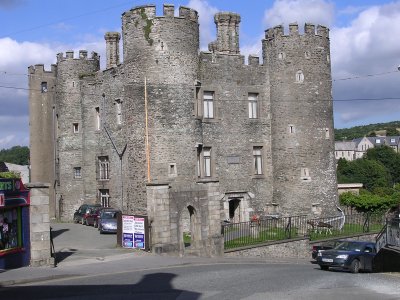
County in Ireland
| Field | Value |
|---|---|
| name | County Wexford |
| native_name | Contae Loch Garman |
| settlement_type | County |
| native_name_lang | ga |
| image_shield | County Wexford Coat of Arms.png |
| nickname | The Model County |
| motto | Exemplar Hiberniae(Latin) |
| "An example to Ireland" | |
| "Sampla na hÉireann" | |
| map_caption | Location in Ireland |
| coordinates | |
| subdivision_type | Country |
| subdivision_name | Ireland |
| subdivision_type1 | Province |
| subdivision_name1 | Leinster |
| subdivision_type2 | Region |
| subdivision_name2 | Southern |
| leader_title | Local authority |
| leader_name | Wexford County Council |
| leader_title2 | Dáil constituency |
| leader_name2 | |
| leader_title3 | EP constituency |
| leader_name3 | South |
| area_footnotes | |
| area_total_km2 | 2367 |
| area_rank | 13th |
| seat_type | County town |
| seat | Wexford |
| blank_name_sec1 | Vehicle index |
| mark code | |
| blank_info_sec1 | WX |
| population_total | 163527 |
| population_density_km2 | auto |
| population_rank | 14th |
| population_as_of | 2022 |
| population_footnotes | |
| website | |
| timezone | WET |
| utc_offset | ±0 |
| timezone_DST | IST |
| utc_offset_DST | +1 |
| established_title | Established |
| established_date | 1210 |
| area_code_type | Telephone area codes |
| area_code | 051, 052, 053, 056 (primarily) |
| postal_code_type | Eircode routing keys |
| postal_code | Y21, Y25, Y34, Y35 (primarily) |
| elevation_max_m | 794 |
| elevation_max_point | Mount Leinster |
| mapframe | yes |
| mapframe-zoom | 7 |
| iso_code | IE-WX |
"An example to Ireland" "Sampla na hÉireann" mark code](vehicle-registration-plates-of-ireland) | mapframe-zoom = 7 County Wexford () is a county in Ireland. It is in the province of Leinster and is part of the Southern Region. Named after the town of Wexford, it was based on the historic Gaelic territory of Hy Kinsella (Uí Ceinnsealaigh), whose capital was Ferns. Wexford County Council is the local authority for the county. The population of the county was 163,527 at the 2022 census.
History
Main article: History of County Wexford
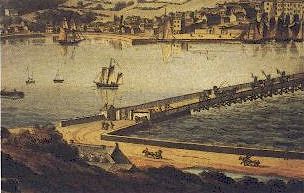
The county is rich in evidence of early human habitation. Portal tombs (sometimes called dolmens) exist at Ballybrittas (on Bree Hill){{cite web |access-date = 16 May 2008 |url-status = dead |archive-url = https://web.archive.org/web/20091002033558/http://www.megalithomania.com/show/image/2148/Ballybrittas.htm |archive-date = 2 October 2009 |access-date = 16 May 2008 |url-status = dead |archive-url = https://web.archive.org/web/20090331011243/http://www.megalithomania.com/show/image/7881/Newbawn.htm |archive-date = 31 March 2009
County Wexford was one of the earliest areas of Ireland to be Christianised, in the early 5th century. Later, from 819 onwards, the Vikings invaded and plundered many Christian sites in the county. Vikings settled at Wexford town near the end of the 9th century.
In 1169, Wexford was the site of the invasion of Ireland by Normans at the behest of Diarmuid Mac Murrough, King of Uí Cheinnsealaig and king of Leinster (Laigin). This was followed by the subsequent colonisation of the country by the Cambro-Normans.
The native Irish began to regain some of their former territories in the 14th century, especially in the north of the county, principally under Art MacMurrough Kavanagh. Under Henry VIII, [[Dissolution of the monasteries| the great religious houses were dissolved]], 1536–41; in County Wexford this included Glascarrig Priory, Clonmines Priory, Tintern Abbey, and Dunbrody Abbey.
On 23 October 1641, a major rebellion broke out in Ireland, and County Wexford produced strong support for Confederate Ireland. Oliver Cromwell and his English Parliamentarian Army arrived in 1649 in the county and captured it. The lands of the Irish and Anglo-Normans were confiscated and given to Cromwell's soldiers as payment for their service in the Parliamentarian Army. At Duncannon, in the south-west of the county, James II, after his defeat at the Battle of the Boyne, embarked for Kinsale and then to exile in France.
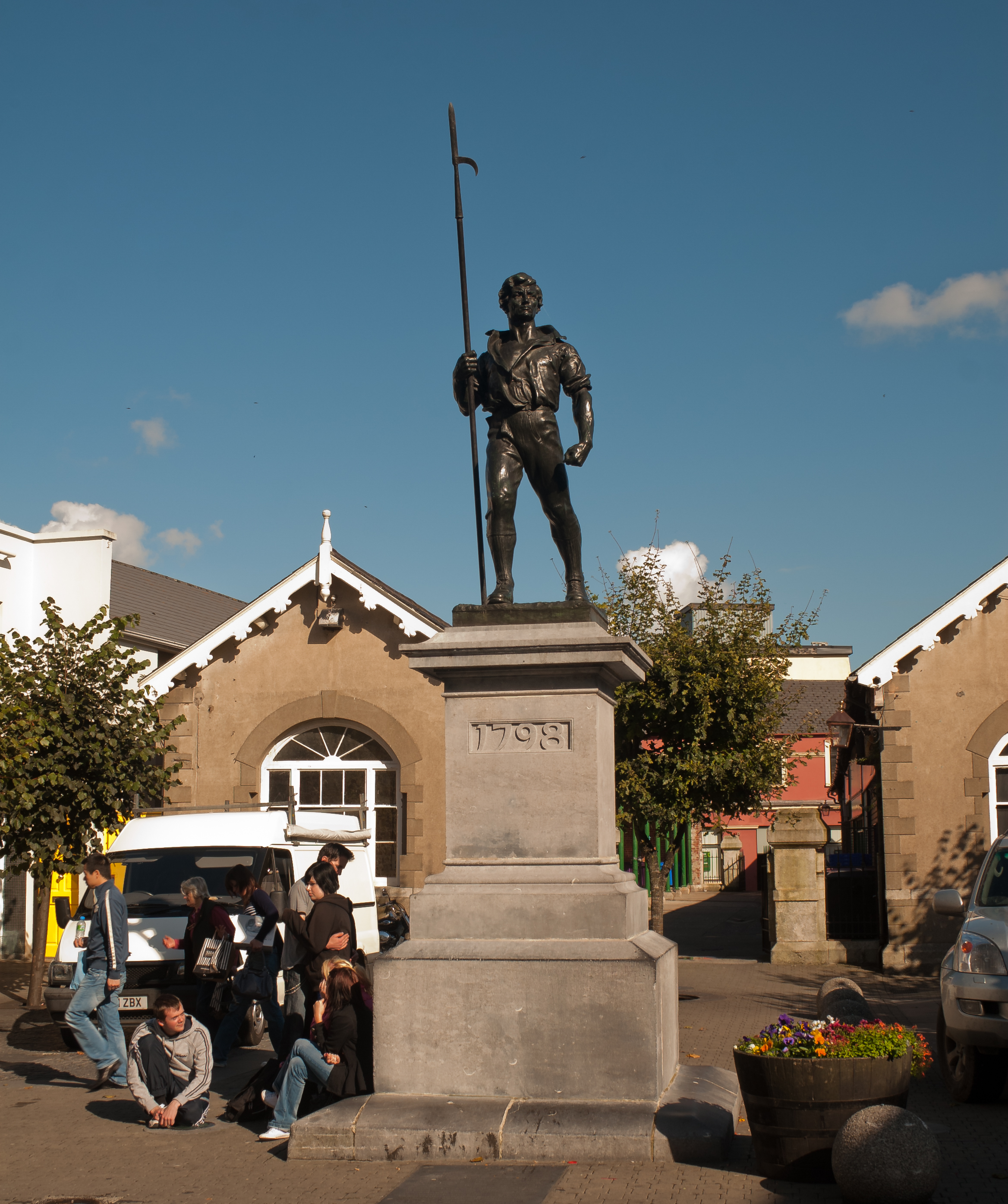
County Wexford was the most important area in which the Irish Rebellion of 1798 was fought, during which significant battles occurred at The Battle of Oulart Hill during the 1798 rebellion. Vinegar Hill (Enniscorthy) and New Ross. The famous ballad "Boolavogue" was written in remembrance of the Wexford Rising. At Easter 1916, a small rebellion occurred at Enniscorthy town, on cue with that in Dublin. During World War II, German planes bombed Campile.{{cite web |access-date = 21 May 2008 |url-status = dead |archive-url = https://web.archive.org/web/20111003231330/http://www.wexfordpeople.ie/news/bombing-of-campile-remembered-992708.html |archive-date = 3 October 2011
Geography and subdivisions
Wexford is the 13th-largest of Ireland's thirty-two traditional counties in area, and 9th-largest in terms of population. It is the largest of Leinster's 12 counties in size, and fourth-largest in terms of population. The county is located in the south-east corner of the island of Ireland. It is bounded by the sea on two sides—on the south by the Atlantic Ocean and on the east by St. George's Channel and the Irish Sea. The River Barrow forms its western boundary. The Blackstairs Mountains form part of the boundary to the north, as do the southern edges of the Wicklow Mountains. The adjoining counties are Waterford to the south-west, Kilkenny to the west, Carlow to the north-west and Wicklow in the north.
Towns and villages
|1500|4550 |1510|4344 |1550|5010 |1580|6224 |1585|9870 |1600|12343 |1610|3456 |1653|13004 |1659|11680 |1668|13351 |1672|15339 |1680|29875 |1690|36310 |1700|48660 |1705|52399 |1710|68980 |1715|71445 |1720|79880 |1725|83455 |1735|88611 |1745|87222 |1755|84114 |1765|81396 |1771|84233 |1775|87222 |1781|90566 |1788|104760 |1790|125881 |1801|120688 |1811|131970 |1813|128455 |1816|141389 |1821|155377 |1821|170806 |1831|182713 |1841|202033 |1851|180158 |1861|143954 |1871|132666 |1881|123854 |1891|111778 |1901|104104 |1911|102273 |1926|95848 |1936|94245 |1946|91855 |1951|90032 |1956|87259 |1961|83308 |1966|83437 |1971|86351 |1979|96421 |1981|99081 |1986|102552 |1991|102069 |1996|104371 |2002|116596 |2006|131749 |2011|145320 |2016|149722 |2022|163527 ||footnote={{cite book |editor2-first= L. A.|title= Irish Population, Economy, and Society: Essays in Honour of the Late K. H. Connell | author-link = Joel Mokyr | last2 = Ó Gráda | first2 = Cormac | author2-link = Cormac Ó Gráda | title = New Developments in Irish Population History, 1700–1850 | journal = The Economic History Review | volume = 37 | issue = 4 | hdl-access = free | url-access = subscription }}
- County Town: Wexford
- Market Town: Gorey
- Adamstown
- Arthurstown
- Ballindaggin
- Ballycanew
- Ballycullane
- Ballyedmond
- Ballyfad
- Ballygarrett
- Ballyhack
- Ballywilliam
- Bannow
- Barntown
- Blackwater
- Bree
- Bridgetown
- Broadway
- Bunclody
- Camolin
- Campile
- Castlebridge
- Castletown
- Cleariestown
- Clohamon
- Clonroche
- Coolgreany
- Courtown
- Craanford
- Crossabeg
- Cullenstown
- Curracloe
- Duncannon
- Duncormick
- Enniscorthy
- Ferns
- Fethard-on-Sea
- Foulkesmill
- Gorey
- Hollyfort
- Inch
- Killinierin
- Kilmore
- Kilmore Quay
- Kilmuckridge
- Kiltealy
- Monamolin
- Monaseed
- Murrintown
- Monageer
- Newbawn
- New Ross
- Oulart
- Oylegate
- Poulpeasty
- Rathangan
- Rosslare
- Rosslare Harbour
- Raheen
- Rathnure
- Saltmills
- Taghmon
- Watch House Village
- Wellingtonbridge
- Wexford
Mountains and hills

Largely low-lying fertile land is the characteristic landscape of the county. The highest point in the county is Mount Leinster at 795 m, in the Blackstairs Mountains in the north-west on the boundary with County Carlow.
Other high points:
- Black Rock Mountain, 599 m, located near the Wexford-Carlow border, within County Wexford.
- Croghan Mountain (or Croghan Kinsella) on the Wexford-Wicklow border – 606 m
- Annagh Hill, 454 m, near the Wicklow border
- Slieveboy, 420 m
Notable hills include: Carrigbyrne Hill; Camross (or Camaross) Hill, 181 m; Carrigmaistia, 167 m; Bree Hill, 179 m; Gibbet Hill; Vinegar Hill; Slievecoiltia; Forth Mountain, 237 m; and Tara Hill.

Rivers and lakes
The major rivers are the Slaney and the Barrow. At 192 km in length, the river Barrow is the second-longest river on the island of Ireland. Smaller rivers of note are the Owenduff, Pollmounty, Corrock, Urrin, Boro, Owenavorragh (also spelt Ounavarra), Sow and Bann rivers.
There are no significant fresh-water lakes in the county. Small seaside lakes or lagoons exist at two locations – one is called Lady's Island Lake and the other Tacumshin Lake.
The Wexford Cot is a flat-bottomed boat used for fishing on the tidal mudflats in Wexford. A canoe-shaped punt fitted with a gun, called a float in Wexford, is used traditionally to shoot game birds in the North Slob mud flats.
Islands
The Saltee Islands lie 5 km offshore from Kilmore Quay, while the smaller Keeragh Islands are 1.5 km offshore from Bannow.
Climate

County Wexford, sometimes dubbed Ireland's "sunny southeast", has in general a higher number of hours of sunshine recorded daily than in the rest of the country. |publication-date = 2020 |access-date = 24 July 2022 This has resulted in Wexford becoming one of the most popular places in Ireland in which to reside. The county has a mild, but changeable, oceanic climate with few extremes. The North Atlantic Drift, a continuation of the Gulf Stream, moderates winter temperatures. There is a meteorological station located at Rosslare Harbour. January and February are generally the coldest months, with temperatures ranging from 4 – on average. July and August are generally the warmest months, with average temperatures ranging from 13 – in coastal areas and 12 – in inland areas. The prevailing winds blow from the south-west. Precipitation falls throughout the year. Mean annual rainfall is 800 –. Generally, the county receives less snow than more northerly parts of Ireland. Heavy snowfalls are relatively rare, but can occur. The one exception is Mount Leinster, visible from a large portion of the county, and frequently covered with snow during the winter months. Frost is frequent in winter months, less so in coastal areas.
Soil
An ice sheet covered most, but not all, of the county during the last Ice age. As the ice retreated, County Wexford would have been one of the first areas to be covered with glacial drift (a mixture of boulders, clay, sand and gravel) that blanketed the existing bedrock. This has led to high-quality soils, suitable for a wide range of agriculture. A very detailed soil survey of the county was published in 1964 as part of the 'National Soil Survey of Ireland'. It classifies each area of the county according to its specific soil type.
Most of the county is covered with soils called brown earths, described as well-drained and having a wide use-range. After that, gleys (poorly to imperfectly drained with a limited use-range) are the next major soil type, primarily located in the south-east of the county and east of Gorey (along the coast). Gleys are dotted elsewhere around the county in small areas, and where they occur they generally form bogland. The last major soil type, brown podzolics, occur mainly near the edges of the Blackstairs Mountain range and around Bunclody and in the baronies of East Shelmalier and South Ballaghkeen. Though there are areas covered with other soil types, these are of limited extent.
Flora
Common species of tree include oak, ash, sycamore, alder, blackthorn, hawthorn, beech and birch. Less common (but plentiful) species include wild cherry and Scots pine (also called red deal). Elm is now far less common, due to the devastating effects of Dutch elm disease. Gorse (or furze) is very common. A priority habitat in Wexford is the grey dune, on which many native wild flora grow, including bee orchid and pyramidal orchid. Despite the designation of much of this habitat as a Special Area of Conservation, it remains threatened by destruction for agricultural intensification. There is very little natural forest in the county. Most natural trees and vegetation grow on hedgerows.
Fauna
South-eastern Wexford is an important site for wild birds—the north side of Wexford Harbour, the North Slob, is home to 10,000 Greenland white-fronted geese each winter (roughly one third of the entire world's population), while in the summer Lady's Island Lake is an important breeding site for terns, especially the roseate tern. The grey heron is also seen.
Throughout the county pheasant, woodpigeon and feral pigeons are widespread. Mute swan, mallard, kingfisher, and owls (the long-eared owl, the short-eared owl, and the barn owl) are less common – but plentiful. Red grouse, once common, is now extremely scarce. The species has been in decline for some decades. Threats include habitat degradation, disease, predation and over-hunting. Red grouse in Ireland are now considered threatened. The corncrake, also once very common, is now almost never seen. Smaller birds—such as crows, swallows, robins, wrens and so on—are very common. The first magpies in Ireland were recorded by Robert Leigh, of Rosegarland, County Wexford, as having appeared in the County of Wexford about 1676. Land mammals include badger, rabbit, otter, hedgehog, red fox, mink, bats, squirrels (red and grey), rats (brown and black – both introduced species), and mice (wood (or field) and house). Two types of hare—the Irish (or mountain) hare and the less common brown (or European) hare—are found. Hare is not nearly as common as rabbit. The stoat (Mustela erminea hibernica) is also reasonably common. Locally the stoat is just as often incorrectly called a weasel.
Only two types of seal are found on County Wexford's coast—Atlantic grey seals are very plentiful in coastal areas; the slightly smaller common (or harbour) seal is less common, yet plentiful. The small tortoiseshell butterfly (reddish-orange colour, with black markings) is the most common species of butterfly in the county. Various types of moth are also common. The common frog – the only type of frog found – is plentiful.
Governance and politics

Local government
Wexford County Council has thirty-four members. The council has three representatives on the Southern Regional Assembly, where it is part of the South-East strategic planning area.
National politics
County Wexford is represented by the Dáil constituency of Wexford (5 seats).
The county is part of the European Parliament constituency of South (5 seats).
Demographics
In 2022, the county had a total population of 163,919 people. 83.8% of the population stated their religion as Roman Catholic, 7.1% other religions, and 7.5% stated they had no religion. Between 2006 and 2011, the population increased by 10%, slowing to 3% between 2011 and 2016.
Urban areas and populations
| Town | Population (2022) |
|---|---|
| Wexford | 21,524 |
| Enniscorthy | 12,310 |
| Gorey | 11,517 |
| New Ross | 8,610 |
Culture
Since 1951, an opera festival, Wexford Festival Opera, takes place every year in the Theatre Royal in Wexford town and runs for several weeks. In 2008, a new Opera House replaced the old one on the same site, once called the Wexford Opera House, but in 2014 being designated as Ireland's National Opera House. It consists of two theatres, the O'Reilly Theatre and the Jerome Hynes Theatre.
There is a renowned singing tradition in County Wexford. Having an abundance of traditional songs, many of which relate to the rebellion of 1798, the county has for many years had a strong presence in the Irish traditional singing scene. Noted singers include All-Ireland Fleadh Champions Paddy Berry, Seamus Brogan and Niall Wall. Paddy Berry has also collected and published a number of songs from Wexford.
Beaches in Curracloe, County Wexford were used to film the opening scenes of the movie Saving Private Ryan, which depicted the D-day assault on Omaha Beach. The Count of Monte Cristo, directed by Kevin Reynolds, was partly filmed in the village of Duncannon in 2000 – Duncannon Fort being used for one of the main scenes.{{cite news | access-date = 18 July 2008 | archive-date = 23 July 2012 | archive-url = https://web.archive.org/web/20120723014138/http://www.wexfordpeople.ie/news/count-of-monte-cristo-comes-to-duncannon-992630.html | url-status = live
Media
Two radio stations are based in the county: South East Radio and Beat 102-103.
The county's main newspapers include Wexford People, New Ross Standard, Gorey Guardian, and Enniscorthy Echo.
Places of interest
The scenic Bannow Drive, popular amongst tourists, is a signposted route through four Wexford villages: Duncormick, Cullenstown, Bannow and Wellingtonbridge.
Ballyteigue Burrow, located near Duncormick, is one of the finest protected sand dune systems in Ireland. Rich in wildflowers, wildlife and butterflies, this 9 km (6 mile) coastal stretch is a protected nature reserve by the golden sands of Ballyteigue Bay, with spectacular scenery.
The Hook Peninsula is noted for its many beaches and spectacular scenery. It features the medieval Hook Head lighthouse and the historic townland of Loftus Hall.
Popular beaches are located at Courtown, Curracloe, Carnsore Point, Duncannon and Rosslare Strand.
Other places of interest include:
- Ferns Castle and Abbey
- Enniscorthy Castle and Museum
- Vinegar Hill
- National 1798 Visitor Centre
- Boolavogue
- The Browne-Clayton Monument
- Oulart Hill
- Castleboro House{{cite web |url-status = dead |archive-url = https://web.archive.org/web/20110125110414/http://www.abandonedireland.com/castleboro.html |archive-date = 25 January 2011
- The Seven 'Castles' of Clonmines
- Johnstown Castle
- Dollar Bay
- Loftus Hall – Abandoned Haunted House (the first Hall was built on this site in 1350) www.loftushall.ie
- Ballyteigue Castle
- Bannow Church (dates from the 13th century)
- Selskar Abbey, Wexford town
- Irish National Heritage Park (Ferrycarrig)
- Tacumshin windmill (southeast County Wexford)
- St. Mary's Church, New Ross
- Dunbrody Abbey
- Tintern Abbey{{cite web |access-date = 16 May 2008 |url-status = live |archive-url = https://web.archive.org/web/20080509145457/http://www.dunbrodyabbey.com/ |archive-date = 9 May 2008
- Slade Castle
- Ballyhack Castle
- J.F. Kennedy homestead and park
- Slieve Coilte
- Wells House and Gardens
- Duncannon Fort
- Saltee Islands
Economy
Agriculture

The economy is chiefly agricultural. Cattle, sheep, pig rearing and some horse breeding are the main types of husbandry practised. Poultry rearing, once popular, has very much declined. Wheat, barley, rapeseed, and oats are grown, as are potatoes. Sugar beet is no longer grown due to the withdrawal of EU subsidies. The numbers involved in farming have been declining for many years and many of the seasonal workers are now eastern Europeans. Mushrooms are also grown indoors. Tomatoes are grown under glass, for example at Campile.
Wexford strawberries are famous and can be bought in shops and wayside stalls throughout the summer. Every year, near the end of June, a 'Strawberry Fair' Festival takes place in the town of Enniscorthy, and a Strawberry Queen is crowned. Dairy farming forms an important part of the agricultural industry. Locally produced milk is on sale in many supermarkets. Wexford Irish Cheddar is a brand, and Carrigbyrne, a full-flavoured soft cheese, is produced near New Ross.
Forestry
Evergreen tree species are extensively cultivated, especially in more recent years—Norway spruce and Sitka spruce are the most common varieties planted. These are generally sown on poorer quality soils (mainly in bogs and on hills or mountainsides). A small amount of deciduous trees are also planted, though these require better soils.
Mining
Silver was once mined at Clonmines—primarily in Tudor times. Lead was mined at Caim, 1818 – c. 1850—this mine also contains zinc; the two are usually found together. Copper ore (malachite) is found at Kerloge, just south of the town of Wexford. Iron is found in small quantities at Courtown Harbour. The county is not noted for mineral reserves. No significant mining activity is currently practised, with the exception of quarrying for stone. In 2007, a significant oil find was made 60 km off Hook Head in County Wexford.{{cite news |access-date = 10 May 2008 |archive-date = 20 May 2011 |archive-url = https://web.archive.org/web/20110520035051/http://www.independent.ie/breaking-news/national-news/business/irish-firm-reports-significant-oil-find-off-hook-head-1139280.html |url-status = live
Energy
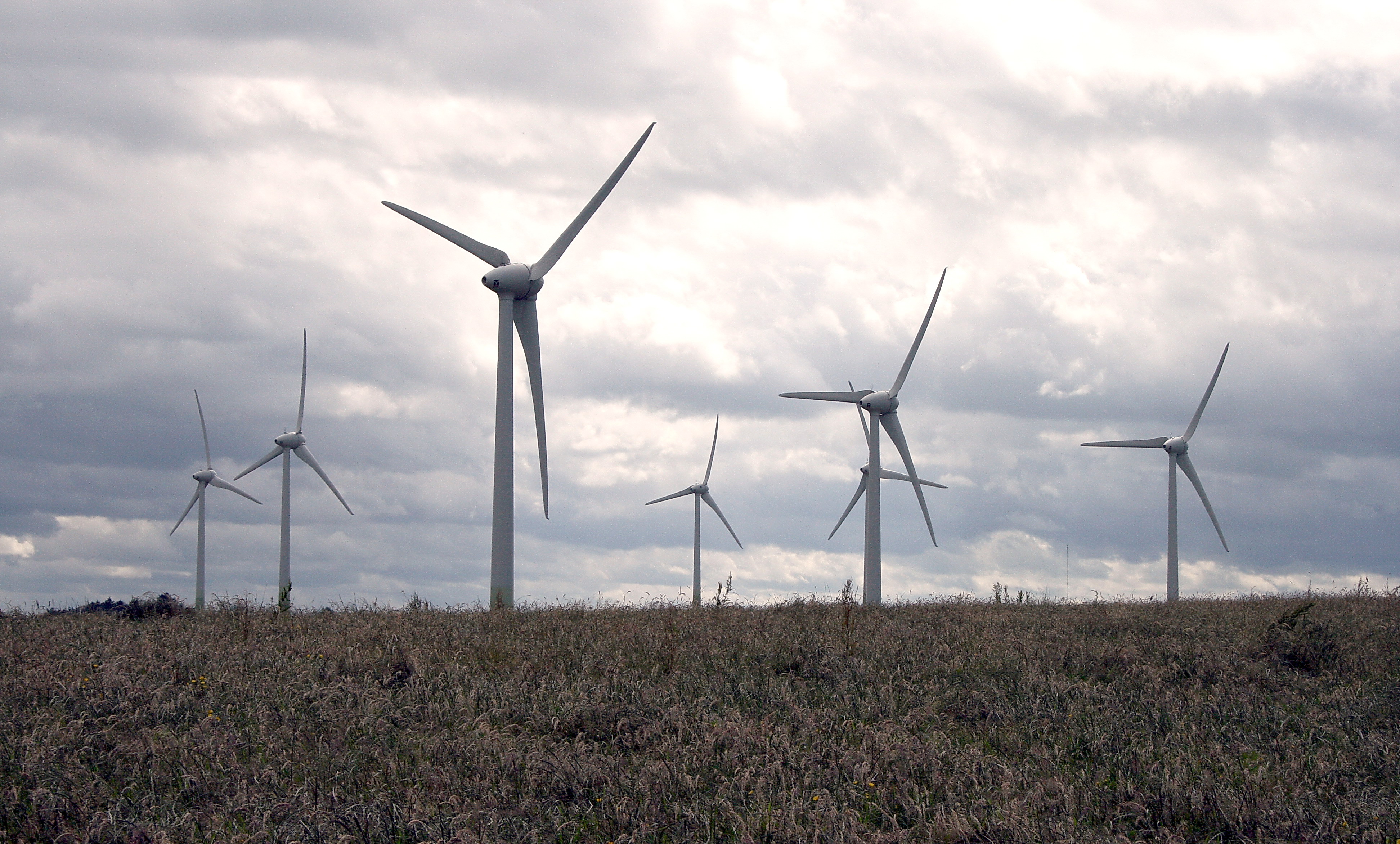
Carnsore Point made the national headlines in the late 1970s after a proposal was made to build a nuclear energy plant there; the plans were abandoned after extensive protests from the public, due to environmental and health concerns.{{cite news | access-date = 19 May 2008 | archive-date = 30 March 2009 | archive-url = https://web.archive.org/web/20090330072710/http://www.wexfordpeople.ie/news/remembering-carnsore-crusade-989861.html | url-status = live Great Island Power Station opened in 1967 and was operated by the Electricity Supply Board (ESB) until it was sold to Endesa in January 2009.{{cite news |access-date = 1 November 2011 |url-status = live |archive-url = https://web.archive.org/web/20110305005918/http://www.irishtimes.com/newspaper/finance/2011/0226/1224290925445.html |archive-date = 5 March 2011 |access-date = 1 November 2011 |url-status = dead |archive-url = https://web.archive.org/web/20120425125916/http://greatislandpowerproject.com/project-description.html |archive-date = 25 April 2012 |access-date=10 May 2008 |archive-url = https://web.archive.org/web/20080418143808/http://www.esb.ie/main/about_esb/powerstations/greatisland/home/index.jsp |archive-date = 18 April 2008}}{{cite web |access-date = 10 May 2008 |url-status = live |archive-url = https://web.archive.org/web/20090330160026/http://www.newrossstandard.ie/news/no-more-smoke-from-chimneys-1364731.html |archive-date = 30 March 2009 |access-date = 1 November 2011 |url-status = live |archive-url = https://web.archive.org/web/20120402051008/http://www.newrossstandard.ie/news/great-island-pipeline-plan-2922497.html |archive-date = 2 April 2012
Transport
- Bus: Wexford and Dublin are linked by Bus Éireann route 2 and Wexford Bus routes 740 and 740A. While route 5 operates Waterford-New Ross-Enniscorthy-Dublin. There are numerous local bus routes radiating from Wexford town to places such as Kilmore Quay, Lady's Island, Kilmuckridge.
- Rail: The Rosslare–Dublin railway line runs through the county, serving Rosslare Europort, Rosslare Strand, Wexford, Enniscorthy and Gorey. Four trains run in each direction daily (three at weekends), with additional commuter services from Gorey. The Rosslare–Limerick railway line which traverses the southern part of the county is now mothballed but being maintained (it served stations at Bridgetown, Wellington Bridge, Ballycullane and Campile).
- Ferry: Rosslare Europort, located at Rosslare Harbour, operates a busy ferry service. There are regular sailings to Wales (Pembroke and Fishguard) and France (Cherbourg and in the summer months to Roscoff) for passengers and vehicles. There is also ferry service in operation between Ballyhack and Passage East (County Waterford), crossing the Barrow estuary.
Sport and events
Gaelic games
Main article: Wexford GAA
In recent years the county Football team has been making rapid advances. Camogie, a women's version of hurling, is also played, and Wexford won the All Ireland in 2007, 2010, 2011 and 2012. Wexford Park is the county's main GAA pitch, holding 25,000 supporters. Also, handball is played on a limited basis; there are a number of handball alleys located throughout the county.
As a county, Wexford are most noted for hurling have won the Leinster Senior Hurling Championships a total of 21 times, first in 1890 and most recently in 2019.
In the All Ireland Senior Hurling Championships, Wexford have won 6 times, first in 1910 and most recently in 1996, beating Limerick in the final.
Football
Wexford Youths F.C., formed 2007, renamed as Wexford FC in 2017, is the major football club in the county, currently playing in the League of Ireland First Division.
Golf

There are numerous golf clubs in the county – including Rosslare (a Links course), and Enniscorthy. Two more are located near Gorey – Ballymoney Golf Club and Courtown Golf Club – are 18 hole golf courses. Bunclody Golf and Fishing Club, boasting Europe's only golf lift, is situated just inside County Carlow. There are also a few others. New Ross Golf Club, however, is actually located in County Kilkenny – about 1 km (1,000 yards) from New Ross town.
There are also many par-3 courses in the county, such as Scarke Golf Course & Driving Range, located about 2 km east of New Ross, the 'Abbey Par 3' course, at Winningtown, Fethard-on-Sea, Blackwater Par 3 Golf Course, Kilnew, Blackwater, located a few kilometres northeast of Wexford town, Garrylough Golf Course and Driving Range, Screen, and Rathaspeck Manor Golf Course, Rathaspeck, near Rosslare (there are also few Par-4 holes on this course). There are also a number of other Par-3 courses in the county.

Fishing
Maritime activity takes at various locations in County Wexford, including at Kilmore Quay and Slade Harbour. Common fish species include herring, mackerel, cod, monkfish, whiting, bass, perch, gurnard, haddock, mullet, pollock, John Dory, sole, conger eel, shad, salmon, trout, pike, carp, and tench. Shellfish include mussels, cockles, periwinkles, clams, and oysters.
Racing
Wexford Racecourse (horse racing) is in Wexford town and there is a Greyhound Racing track at Enniscorthy.
People
- Bunny Ahearne – president of the International Ice Hockey Federation
- Michael Balfe – 19th-century composer, grew up in Wexford
- John Banville – novelist (2005 Booker Prize and 2013 Austrian State Prize for European Literature)
- Major G. E. H. Barrett-Hamilton – zoologist, grew up in Kilmanock
- John Barry – Commander United States Navy
- Paddy Berry – singer, song collector and folklorist
- Wallis Bird – musician
- Des Bishop – New York-raised comedian, went to school in County Wexford
- Jim Bolger ONZ – former Prime Minister of New Zealand.
- Jim Bolger (racehorse trainer) – horse trainer.
- Myles Byrne – participant in the Irish Rebellion of 1798
- Thomas Cloney – participant in the Irish Rebellion of 1798
- John Henry Colclough – participant in the Irish Rebellion of 1798
- Eoin Colfer – best-selling writer of children's literature
- Brendan Corish – Irish Labour Party leader and Tánaiste
- Richard Corish – Trade Unionist
- Gordon D'Arcy- Rugby player, Leinster & Ireland
- Tadhg Furlong- Rugby player, Leinster & Ireland
- Francis Danby – 19th-century painter
- Chris de Burgh – Argentinian-born singer-songwriter, based in County Wexford
- Pádraic Delaney – actor
- John Doran (British Army officer)
- Anne Doyle – RTÉ newsreader
- Kevin Doyle – football player
- Mary Fitzgerald (trade unionist)
- Nicholas French – former RC Bishop of Ferns
- Nicholas Furlong – writer, journalist and historian
- Eileen Gray – 20th-century Irish furniture designer and architect and a pioneer of the Modern Movement in architecture, raised in Enniscorthy
- Anna Maria Hall (Mrs. S.C. Hall) – 19th-century novelist, raised in Bannow
- John Harrison – recipient of the Victoria Cross
- Beauchamp Bagenal Harvey – participant in the Irish Rebellion of 1798
- Edward Hay – writer of a history of the Irish Rebellion of 1798
- Herbert Hore – historian
- William Kehoe – iron founder
- Bridget Murphy (Kennedy) – great-grandmother of John F. Kennedy (former president of the United States).
- Patrick Kennedy – great-grandfather of John F. Kennedy (former president of the United States).
- Father John Murphy – participant in the Irish Rebellion of 1798.
- Col Joshua Nunn – veterinarian and barrister
- Aidan O'Brien – horse trainer
- Joseph O'Brien (jockey) – son of Aidan O'Brien and horse trainer, formerly jockey
- Thomas O'Connor (rancher) – Irish rancher and landowner
- Michael O'Hanrahan – Irish rebel executed for fighting in the 1916 Easter Rising.
- Chris O'Neill – animator/musician and online entertainer
- Nicky Rackard – hurling player
- John Redmond – 19th- 20th-century nationalist politician
- Billy Roche – playwright
- Dick Roche – politician
- Patrick Roche – politician
- James Ryan – politician and Irish Revolutionary
- Martin Storey – hurling player
- Colm Tóibín – novelist (2006 International Dublin Literary Award)
- Maverick Sabre – singer/songwriter
- Joseph Whitty - Irish Republican died on Hunger Strike
Twinning
Main article: List of twin towns and sister cities in the Republic of Ireland
County Wexford is twinned with the following places:
- Mexico Yanga, Veracruz, Mexico
References
Bibliography
- Byrne, Francis J. Irish Kings and High Kings. Dublin, 1973–2001
- Carlyle, Thomas. "Oliver Cromwell's Letters and Speeches". Vol. 1. New York: Wiley & Putnam, 1845
- Colfer, Billy. The County of Wexford. County Wexford: Foillsitheoirí Cois Sláine, n.d. – 1980 or 1981.
- Giraldus Cambrensis. Expugnatio Hibernica – The Conquest of Ireland. Dublin: R.I.A., 1978
- Ordnance Survey Ireland (OSi). Discovery Series 77 – Co Wexford (part). Scale 1: 50,000. Dublin: OSI, Phoenix Park, 1997.
- The Times Atlas of the World – Reference Edition. London: Times Books, 1995–2002.
- Whelan, K.(ed) & W. Nolan (assoc. ed.). Wexford: History and Society. Dublin: Geography Publications, 1987
References
- "Stats Facts about your County – Wexford". Central Statistics Office.
- (23 June 2022). "Census of Population 2022 – Preliminary Results". [[Central Statistics Office (Ireland)]].
- "County Wexford – Topographical Dictionary of Ireland (1837)".
- Byrne, ''Irish Kings and High Kings'', pp 130–164.
- Stout, Geraldine. "Essay 1: Wexford in Prehistory 5000 B.C. to 300 AD" in ''Wexford: History and Society'', pp 1 – 39.
- [[Annals of the Four Masters]] (A.F.M.){{circular reference. (September 2021)
- "Census 2016 Sapmap Area: County Wexford". [[Central Statistics Office (Ireland)]].
- For 1653 and 1659 figures from Civil Survey Census of those years, Paper of Mr Hardinge to Royal Irish Academy 14 March 1865.
- "Server Error 404 – CSO – Central Statistics Office".
- "HISTPOP.ORG – Home".
- (2010-09-27). "NISRA – Northern Ireland Statistics and Research Agency (c) 2015". Nisranew.nisra.gov.uk.
- ''The Times Atlas of the World'', p. 107 (Map – Ireland).
- OSI, ''Discovery Series 77''.
- "FAQ – Longest Rivers in Ireland". Ordnance Survey Ireland (OSi) Website.
- [http://rowingforpleasure.blogspot.ie/2009/08/wexford-cot.html Wexford Cot] {{webarchive. link. (22 December 2015 Rowing for Pleasure)
- [http://www.bbc.co.uk/programmes/b00vm5dr Wexford to Killiney] {{webarchive. link. (31 October 2015 Coast, Series 4, Episode 6, www.bbc.co.uk)
- Éireann, Met. "Met Éireann – The Irish Weather Service".
- "Climate – 30 Year Averages – Rosslare MET Station – monthly and annual mean and extreme values (1961–1990)". MET ÉIREANN Website.
- (1 January 2010). "30 Year Averages, 1978–2007 Rosslare". Met.ie.
- (2 January 1979). "Temperature – Climate – Met Éireann – The Irish Meteorological Service Online". Met.ie.
- "Climate – Wind". MET ÉIREANN Website.
- "Climate – Rainfall – & Map (Mean Annual Rainfall (mm) 1961–90)". MET ÉIREANN Website.
- Gardiner, M.J. & Pierce Ryan. ''Soils of County Wexford''. Dublin: An Foras Talúntais, 1964.
- [http://www.bto.org/birdtrack/bird_recording/red_list_ireland.htm] {{webarchive. link. (7 June 2007)
- "Teagasc – Environment". Client.teagasc.ie.
- Herbert F. Hore (ed.), ''"A Chorographic Account of the Southern part of the County of Wexford, written Anno 1684, by Robert Leigh. Esq., of Rosegarland, in that County"'' in ''"The Journal of the Kilkenny and South-East of Ireland Archaeological Society"'' (Dublin, 1859), p. 467.
- See William Thompson, ''"The Natural History of Ireland"'', Vol. 1 – (London, 1849), p. 328, for further details – other historical accounts mentioned here confirm Leigh's statement.
- {{Cite Irish legislation. (2014). (16 December 2014)
- {{cite Irish legislation. (2017). (30 May 2022)
- {{cite Irish legislation. (2019). (12 March 2019)
- (2016). "Population and Actual and Percentage Change 2011 to 2016 by County and City, Sex, Aggregate Town or Rural Area, CensusYear and Statistic". [[Central Statistics Office (Ireland).
- Galvin, Paul. "As a Kerryman I feel empathy with Wexford and its strong sense of identity". [[The Times]].
- (6 July 2019). "Sinéad Kissane: 'Did Wexford's pride in their history and identity help reboot their success?'".
- "Wexford Festival Opera". wexfordopera.com.
- (11 October 2011). "Forgotten films ... in familiar settings". [[Irish Independent]].
- "South East Radio – Wexford". southeastradio.ie.
- "Beat 102 103 – Beat Homepage".
- "Ferns Castle". Heritage Ireland website.
- "National 1798 Visitor Centre". National 1798 Visitor Centre Website.
- "Bus Éireann – View Ireland Bus and Coach Timetables & Buy Tickets".
- "Bus Éireann – View Ireland Bus and Coach Timetables & Buy Tickets".
- [http://www.rosslaregolf.com/ Rosslare Golf Club] {{webarchive. link. (11 May 2008 (18 holes).)
- [http://www.enniscorthygc.ie/ Enniscorthy Golf Club] {{webarchive. link. (14 September 2008 (18 holes).)
- [http://www.courtowngolfclub.com/ Courtown Golf Club website] {{webarchive. link. (15 May 2008 .)
- "Wexford Golf Club Bunclody". bunclodygfc.ie.
- link. (29 November 2007 on New Ross Golf Club website.)
- [http://www.scarkegolf.com/ Scarke Golf Course & Driving Range website] {{webarchive. link. (28 May 2008 .)
- [http://www.blackwatergolfpar3.com/ Blackwater Par 3 Golf Course website] {{webarchive. link. (12 May 2008 .)
- "Wexford Racecourse".
- "Enniscorthy Greyhound Track". Irish Greyhound Board website.
- [[Jim Bolger]]{{circular reference. (September 2021)
- [[Jim Bolger (racehorse trainer)]]{{circular reference. (September 2021)
- "ARAM – Eileen Gray".
- [http://www.ricorso.net/rx/az-data/index.htm Anna Maria Hall biography] {{webarchive. link. (5 October 2016 on Ricorso)
- Tucker, David. (3 April 2013). "Wexford's Chris a web sensation". [[Enniscorthy Guardian]].
- "Llegan funcionarios de Irlanda a Yanga". El Informante de Veracruz.
This article was imported from Wikipedia and is available under the Creative Commons Attribution-ShareAlike 4.0 License. Content has been adapted to SurfDoc format. Original contributors can be found on the article history page.
Ask Mako anything about County Wexford — get instant answers, deeper analysis, and related topics.
Research with MakoFree with your Surf account
Create a free account to save articles, ask Mako questions, and organize your research.
Sign up freeThis content may have been generated or modified by AI. CloudSurf Software LLC is not responsible for the accuracy, completeness, or reliability of AI-generated content. Always verify important information from primary sources.
Report