From Surf Wiki (app.surf) — the open knowledge base
County commission
Governing body
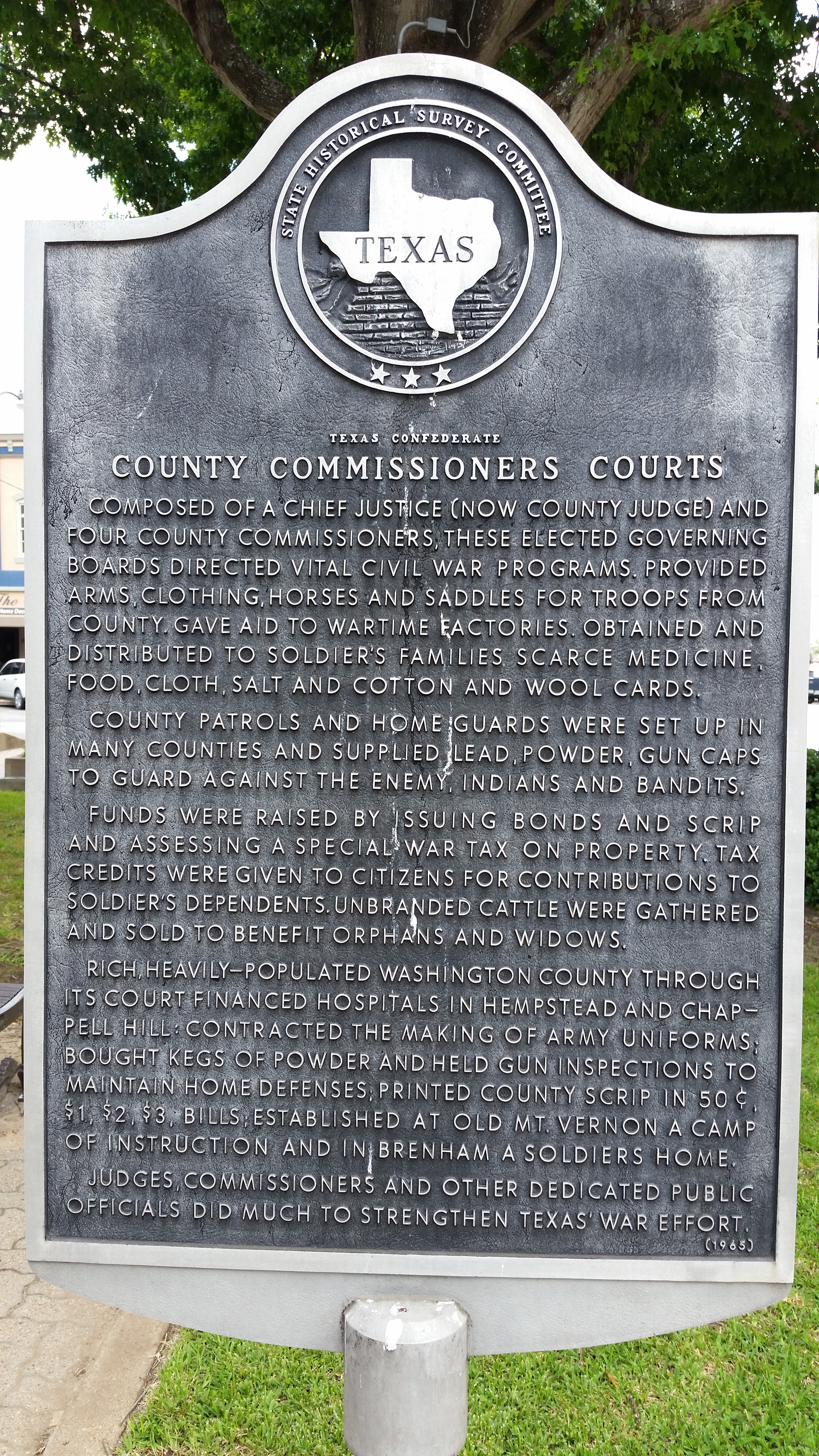
Governing body
A county commission (or a board of county commissioners) is a group of elected officials (county commissioners) collectively charged with administering the county government in some states of the United States. A county usually has three to five members of the county commission. In some counties within Georgia a sole commissioner holds the authority of the commission.
In parts of the United States, alternative terms such as county board of supervisors or county council may be used in lieu of, but generally synonymous to, a county commission. However, in some jurisdictions there may be distinct differences between a county commission and other similarly titled bodies. For example, a county council may differ from a county commission by containing more members or by having a council-manager form of government. In Indiana, every county, except Marion County which is consolidated with the city of Indianapolis, has both a county commission and a county council, with the county commission having administrative authority and the county council being responsible for fiscal matters.
Each commission acts as the executive of the local government, levying local taxes, administering county governmental services such as correctional institutions, courts, public health oversight, property registration, building code enforcement, and public works (e.g. road maintenance). The system has been supplanted in large part, as disparate sparsely settled regions become urbanized and establish tighter local governmental control, usually in municipalities, though in many of the more rural states, the county commission retains more control, and even in some urbanized areas, may be responsible for significant government services.
Various counties nationwide have explored expanding from three members to five.
History
Origin
William Penn, colonial founder of Pennsylvania originated the system of county commissions in the United States.
On February 28, 1681, King Charles II of England granted a charter for a proprietary colony to William Penn to repay a debt of £16,000 (around £2,100,000 in 2008 currency, adjusting for retail inflation) owed to William's father, Admiral William Penn. This was one of the largest land grants to one individual ever made in history. Penn established a local colonial government with two innovations that were copied by other colonies in the British America: the county commission, and freedom of religious conviction.
Spread and development
As local governments were established on the frontier, the growth of township governments provided services more efficiently to rural areas than the county government. These townships were led by an elected leader called a Supervisor.
Several states replaced the directly elected County Commission with a representative system of the Supervisors of the townships. These became known as the Board of Supervisors. Western States started using this title for their county boards even when they are directly elected like a traditional commission.
New Jersey previously referred to county commissioners as freeholders, but its practice ended in 2021.
County boards by state
| State | County board Title | Notes |
|---|---|---|
| Alabama | County Commission | |
| Alaska | Board of Supervisors | |
| Arizona | Board of Supervisors | |
| Arkansas | Quorum Court | |
| California | Board of Supervisors | |
| Colorado | Board of County Commissioners | |
| Connecticut | County Commission | Abolished in 1961; Connecticut's counties now exist only for historic convention and statistical reporting. |
| Delaware | County Council | |
| Florida | Board of County Commissioners | |
| Georgia | County Commission | A commission of one member, known a sole commissioner for some counties in Georgia |
| Hawaii | County Council | |
| Idaho | Board of Commissioners | |
| Illinois | Board of Commissioners | |
| Indiana | Board of County Commissioners | |
| Iowa | Board of Supervisors | |
| Kansas | Board of County Commissioners | |
| Kentucky | Fiscal Court | |
| Louisiana | Police Jury | |
| Maine | Board of County Commissioners | |
| Maryland | Board of County Commissioners | |
| Massachusetts | Board of County Commissioners | |
| Michigan | Board of Commissioners | |
| Minnesota | Board of Commissioners | |
| Mississippi | Board of Supervisors | |
| Missouri | Commissioners' Court | |
| Montana | County Commission | |
| Nebraska | Board of Commissioners | |
| Nevada | Board of County Commissioners | |
| New Hampshire | Board of County Commissioners | |
| New Jersey | Board of County Commissioners | formerly known as the Board of Chosen Freeholders |
| New Mexico | Board of County Commissioners | |
| New York | ||
| North Carolina | Board of County Commissioners | |
| North Dakota | Board of County Commissioners | |
| Ohio | Board of County Commissioners | |
| Oklahoma | Board of County Commissioners | |
| Oregon | Board of County Commissioners | |
| Pennsylvania | Board of Commissioners | |
| Rhode Island | ||
| South Carolina | County Council | |
| South Dakota | Board of Commissioners | |
| Tennessee | Board of Commissioners | |
| Texas | Commissioners' Court | |
| Utah | County Commission | |
| Vermont | Assistant Judges | |
| Virginia | Board of Supervisors | |
| Washington | County Council | |
| West Virginia | County Commission | |
| Wisconsin | Board of Supervisors | |
| Wyoming | Board of County Commissioners |
References and footnotes
References
- Kelly, John. (2010-03-23). "What does a county board of commissioners do?".
- (2016-04-22). "Unravelling local government: County commissioners vs. county council".
- (28 February 2018). "Senate passes 5 county commissioners bill with 'tweak' {{!}} The Spokesman-Review".
- (2018-08-01). "Editorial: What's better than three commissioners? Five.".
- Devine, Jacqueline. (2018-03-09). "Board of County Commissioners turns down motion to increase board from 3 members to 5".
- [https://avalon.law.yale.edu/17th_century/pa01.asp Charter for the Province of Pennsylvania-1681]. This charter, granted by [[Charles II (England)]] to William Penn, constituted him and his heirs as proprietors of the province, which, in honor of his father, Admiral [[William Penn (Royal Navy officer). William Penn]], (whose cash advances and services were thus requited) was called Pennsylvania. To perfect his title, William Penn purchased, on 1682-08-24, a quit-claim from the [[James II (England). Duke of York]] to the lands west of the [[Delaware River]] embraced in his patent of 1664
- (1916). "Pennsylvania Society of Colonial Governors, Volume 1".
- "Measuring Worth". Measuring Worth.
- (March 28, 2006). "Quakers and the political process". Pym.org.
- (2020-08-21). "'Freeholder' Title Abolished In New Jersey".
- MICHELLE BRUNETTI. (21 August 2020). "Murphy signs bill into law to change "freeholder" title to "commissioner"".
- "Part 21. County Commissioners - Table of Contents, Title 7, Chapter 4, MCA".
This article was imported from Wikipedia and is available under the Creative Commons Attribution-ShareAlike 4.0 License. Content has been adapted to SurfDoc format. Original contributors can be found on the article history page.
Ask Mako anything about County commission — get instant answers, deeper analysis, and related topics.
Research with MakoFree with your Surf account
Create a free account to save articles, ask Mako questions, and organize your research.
Sign up freeThis content may have been generated or modified by AI. CloudSurf Software LLC is not responsible for the accuracy, completeness, or reliability of AI-generated content. Always verify important information from primary sources.
Report