From Surf Wiki (app.surf) — the open knowledge base
Country rock (geology)
Rock types native to a specific area
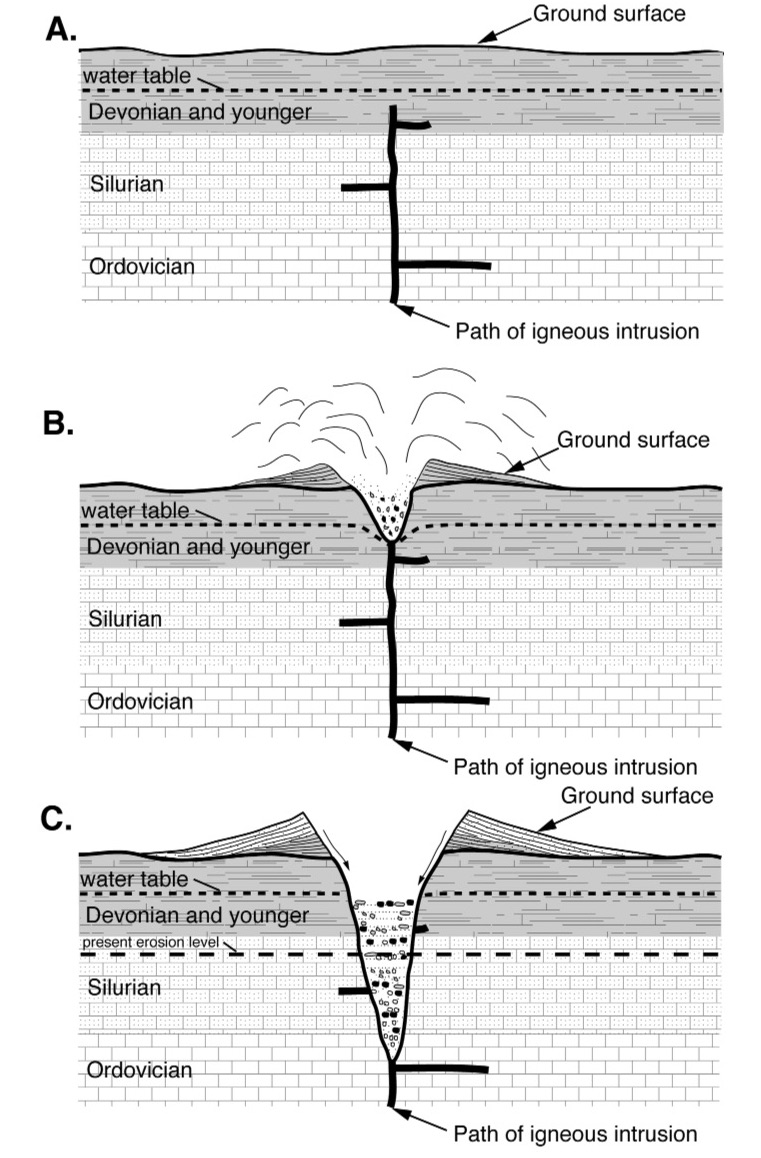
Rock types native to a specific area
Country rock in geology is the rock native to an area, in contrast to any intrusion of viscous geologic material, commonly magma, or perhaps rock salt (in salt domes) or unconsolidated sediments.
Magma is typically less dense than the rock it intrudes, widening and filling existing cracks, sometimes melting the already-existing country rock.
The term "country rock" is similar to, and in many cases interchangeable with, the terms basement and wall rocks.
Country rock can denote the widespread lithology of a region in relation to the rock which is being discussed or observed.
Geologic settings
Settings in geology when the term country rock is used include:
Igneous intrusions
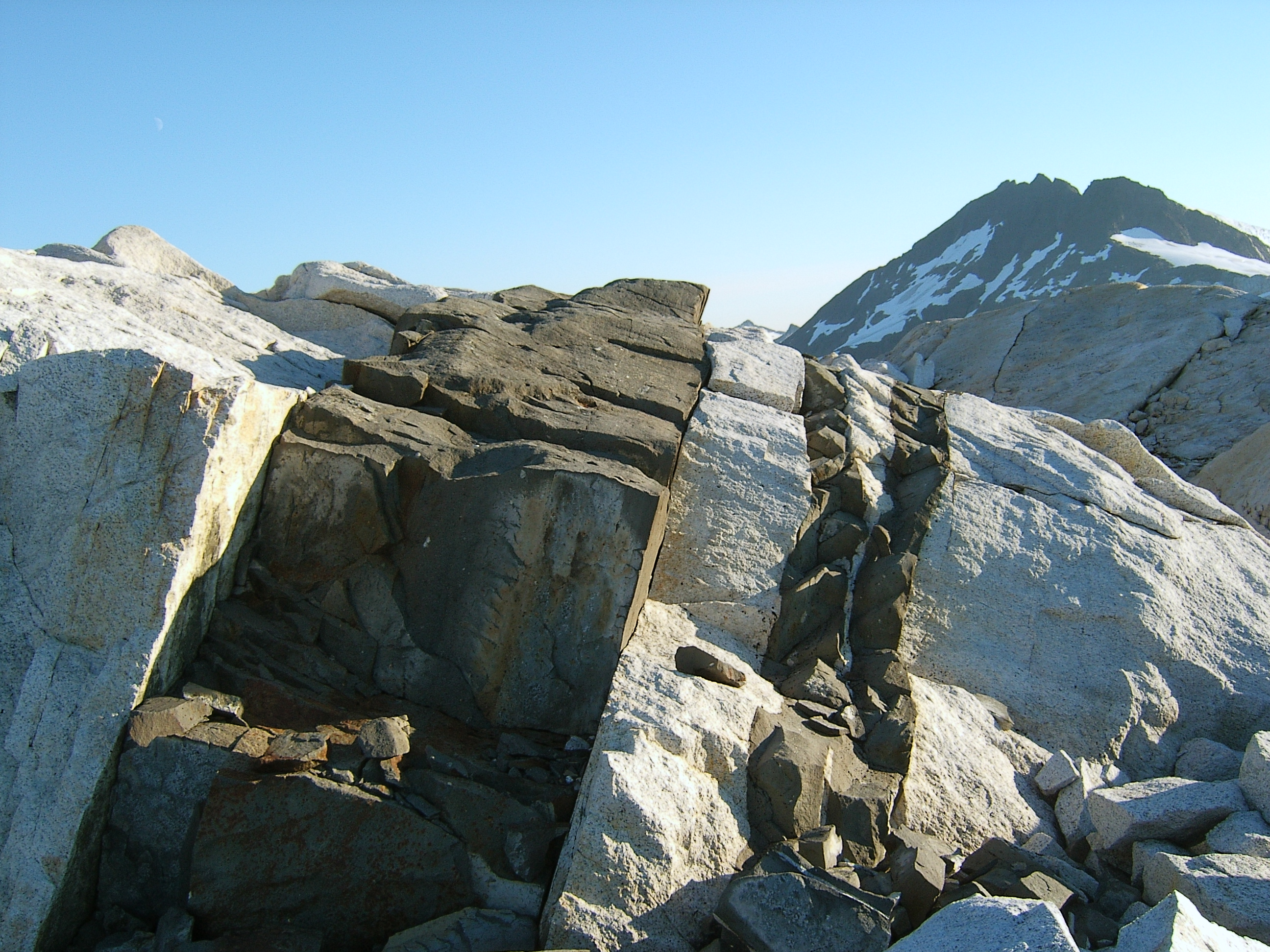
When describing a pluton or dike, the igneous rock can be described as intruding the surrounding country rock, the rock into which the pluton has intruded.Newfoundland and Labrador, Glossary of Geological Terms Accessed June 2018.
When country rock is intruded by a dike, perpendicular to the bedding plane, it is called discordant intrusion, while a parallel intrusion by a sill indicates a sub-parallel or concordant intrusion.
Most intrusions into country rock are via magma. Usually, country rock is intruded by an igneous body of rock which formed when magma forced upward through fractures, or melted through overlying rock. Magma then cooled into solid rock, different from the surrounding country rock. Sometimes, a fragment of country rock will break off and become incorporated into the intrusion, and is called a xenolith, from Greek, ξένος, xenos, "strange,", and λίθος, lithos, the ancient Greek word for "stone."
The heat of the intrusions usually changes the country rock, often to contact metamorphic rock. Commonly, hornfels is produced, or skarn.
Alluvial settings
When describing recent alluvium, the material that has arrived through volcanic, glacial or fluvial action can be described as a veneer on the (older) country rock.
References
References
- "Country rock - encyclopedia.com". encyclopedia.com.
- Earle, Steven. (September 2015). "3.5 Intrusive Igneous Bodies". 3.5 Intrusive Igneous Bodies.
- (2008). "Hydraulic fracturing as a possible mechanism of dyke-sill transitions and horizontal discordant intrusions in trachytic tabular bodies of Arraial do Cabo, State of Rio de Janeiro, Brazil". Geofísica Internacional.
- Granyia. (June 6, 2017). "BATHOLITH…, LOPOLITH…, SILL OR DIKE? – INTRUSIONS (2)". Volcano Hotspot.
- Khoso, Sultan Ahmed }}{{Dead link. (July 2020). "Intrusive Igneous Rock Structures". miningstudents.
- "Country rock". encyclopedia.com.
This article was imported from Wikipedia and is available under the Creative Commons Attribution-ShareAlike 4.0 License. Content has been adapted to SurfDoc format. Original contributors can be found on the article history page.
Ask Mako anything about Country rock (geology) — get instant answers, deeper analysis, and related topics.
Research with MakoFree with your Surf account
Create a free account to save articles, ask Mako questions, and organize your research.
Sign up freeThis content may have been generated or modified by AI. CloudSurf Software LLC is not responsible for the accuracy, completeness, or reliability of AI-generated content. Always verify important information from primary sources.
Report