From Surf Wiki (app.surf) — the open knowledge base
Counties of Sweden
Administrative subdivisions of Sweden
Administrative subdivisions of Sweden
| Field | Value |
|---|---|
| name | Counties of Sweden |
| sv | |
| map | SverigesLän2007mKod.svg |
| category | Unitary state |
| territory | Sweden |
| current_number | 21 |
| population_range | Least: Gotland, 61,001 |
| Most: Stockholm, 2,415,139 | |
| area_range | Smallest: Blekinge, |
| Largest: Norrbotten, | |
| government | Administrative board |
| government1 | Regional council |
| subdivision | Municipality |
sv Most: Stockholm, 2,415,139 Largest: Norrbotten, The counties of Sweden () are the first-level administrative subdivisions of Sweden. There are twenty-one counties; however, the number of counties has varied over time, due to territorial changes and to divisions or mergers of existing counties.
This level of administrative unit was first established in the 1634 Instrument of Government on Lord Chancellor Count Axel Oxenstierna's initiative, and superseded the landskap, in order to introduce a more efficient administration of the realm. The county borders often follow the provincial borders, but the Crown often chose to make slight relocations to suit its purposes.
In every county there is a county administrative board (länsstyrelse) headed by a governor (landshövding), appointed by the government, as well as a separate regional council (region). In the county of Gotland however, the county's only municipality has adopted regional responsibilities. The aims of the county administrative board are to supervise local state administration (that is not otherwise assigned to other government agencies), and to coordinate political goals with the central government. The regional council is the elected regional political assembly that oversees the municipal affairs of the county, primarily in regard to public healthcare, public transport, and culture.
Beginning in the 2000s, many major government agencies have reorganised from a county-based subdivisional structure into larger geographical or functional areas. This include the Swedish Tax Agency (1 January 2004), the Swedish Social Insurance Agency (1 January 2005), the Swedish Public Employment Service (1 January 2008), and the Swedish Police Authority (1 January 2015).
List of counties
| ISO | NUTS | CoA | County (Län) | Administrative centre | Governor | Area | Population | ||||||
|---|---|---|---|---|---|---|---|---|---|---|---|---|---|
| (2021-12-31) | Density | km2 | sq mi | per km2 | per sq mi | ||||||||
| SE-AB | [[File:Stockholm län vapen.svg | 20px]] | Stockholms län vapenflagga.svg Stockholm | Stockholm | Cecilia Skingsley | 6,519.3 km2 | 2,415,139 | 370 /km2 | |||||
| SE-C | [[File:Uppland vapen.svg | 20px]] | Uppsala län vapenflagga.svg Uppsala | Uppsala | Stefan Attefall | 8,207.2 km2 | 395,026 | 48.1 /km2 | |||||
| SE-D | [[File:Södermanland vapen.svg | 20px]] | Södermanlands län vapenflagga.svg Södermanland | Nyköping | Johanna Sandwall (acting) | 6,102.3 km2 | 301,801 | 49.5 /km2 | |||||
| SE-E | [[File:Östergötland vapen.svg | 20px]] | Östergötlands län vapenflagga.svg Östergötland | Linköping | 10,602.0 km2 | 469,704 | 44.3 /km2 | ||||||
| SE-F | [[File:Jönköping län vapen.svg | 20px]] | Jönköpings län vapenflagga.svg Jönköping | Jönköping | Brittis Benzler | 10,495.1 km2 | 367,064 | 35.0 /km2 | |||||
| SE-G | [[File:Kronoberg vapen.svg | 20px]] | Kronobergs län vapenflagga.svg Kronoberg | Växjö | Maria Arnholm | 8,466.0 km2 | 203,340 | 24.0 /km2 | |||||
| SE-H | [[File:Kalmar län vapen.svg | 20px]] | Kalmar län vapenflagga.svg Kalmar | Kalmar | Allan Widman | 11,217.8 km2 | 247,175 | 22.0 /km2 | |||||
| SE-I | [[File:Gotland vapen.svg | 20px]] | Gotlands län vapenflagga.svg Gotland | Visby | Charlotte Petri Gornitzka | 3,151.4 km2 | 61,001 | 19.4 /km2 | |||||
| SE-K | [[File:Blekinge vapen.svg | 20px]] | Blekinge län vapenflagga.svg Blekinge | Karlskrona | Ulrica Messing | 2,946.4 km2 | 158,937 | 53.9 /km2 | |||||
| SE-M | [[File:Skåne län vapen.svg | 20px]] | Skåne län vapenflagga.svg Skåne | Malmö, Kristianstad | Anneli Hulthén | 11,034.5 km2 | 1,402,425 | 127 /km2 | |||||
| SE-N | [[File:Halland vapen.svg | 20px]] | Hallands län vapenflagga.svg Halland | Halmstad | Anders Thornberg | 5,460.7 km2 | 340,243 | 62.3 /km2 | |||||
| SE-O | [[File:Västra Götaland vapen.svg | 20px]] | Västra Götalands län vapenflagga.svg Västra Götaland | Gothenburg, Vänersborg | Sten Tolgfors | 23,948.8 km2 | 1,744,859 | 72.9 /km2 | |||||
| SE-S | [[File:Värmland vapen.svg | 20px]] | Värmlands län vapenflagga.svg Värmland | Karlstad | 17,591.0 km2 | 283,196 | 16.1 /km2 | ||||||
| SE-T | [[File:Örebro län vapen.svg | 20px]] | Örebro län vapenflagga.svg Örebro | Örebro | Lena Rådström Baastad | 8,545.6 km2 | 306,792 | 35.9 /km2 | |||||
| SE-U | [[File:Västmanland vapen.svg | 20px]] | Västmanlands län vapenflagga.svg Västmanland | Västerås | 5,145.8 km2 | 278,967 | 54.2 /km2 | ||||||
| SE-W | [[File:Dalarna vapen.svg | 20px]] | Dalarnas län vapenflagga.svg Dalarna | Falun | Helena Höij | 28,188.8 km2 | 288,387 | 10.2 /km2 | |||||
| SE-X | [[File:Gävleborg län vapen.svg | 20px]] | Gävleborgs län vapenflagga.svg Gävleborg | Gävle | Carina Ståhl Herrstedt | 18,198.9 km2 | 287,767 | 15.8 /km2 | |||||
| SE-Y | [[File:Västernorrland län vapen.svg | 20px]] | Västernorrlands län vapenflagga.svg Västernorrland | Härnösand | Carin Jämtin | 21,683.8 km2 | 244,193 | 11.3 /km2 | |||||
| SE-Z | [[File:Jämtland län vapen.svg | 20px]] | Jämtlands län vapenflagga.svg Jämtland | Östersund | 49,341.2 km2 | 132,054 | 2.68 /km2 | ||||||
| SE-AC | [[File:Västerbotten län vapen.svg | 20px]] | Västerbottens län vapenflagga.svg Västerbotten | Umeå | Helene Hellmark Knutsson | 55,186.2 km2 | 274,563 | 4.98 /km2 | |||||
| SE-BD | [[File:Norrbotten län vapen.svg | 20px]] | Norrbottens län vapenflagga.svg Norrbotten | Luleå | 98,244.8 km2 | 249,693 | 2.54 /km2 |
Map
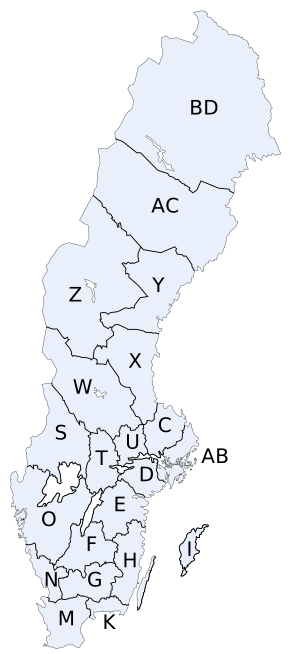
With county codes, which were official until 1974.
- AB: Stockholm County
- C: Uppsala County
- D: Södermanland County
- E: Östergötland County
- F: Jönköping County
- G: Kronoberg County
- H: Kalmar County
- I: Gotland County
- K: Blekinge County
- M: Skåne County
- N: Halland County
- O: Västra Götaland County
- S: Värmland County
- T: Örebro County
- U: Västmanland County
- W: Dalarna County
- X: Gävleborg County
- Y: Västernorrland County
- Z: Jämtland County
- AC: Västerbotten County
- BD: Norrbotten County
Each county region contains a number of municipalities (kommuner), the existence of which is partly at the discretion of the central government. Since 2004 their number has been 290, thus an average of 13.8 municipalities per county.
Until 1968, the City of Stockholm had its own "county code" A, which is still used interchangeably with AB in some contexts, and County of Stockholm had county code B. L was for Kristianstad County and M was for Malmöhus County but since they were merged to form Skåne County, M is usually used. O used to stand for Gothenburg and Bohus County but has been used for Västra Götaland County since it was merged with Skaraborg County (R) and Älvsborg County (P).
History
Older subdivisions
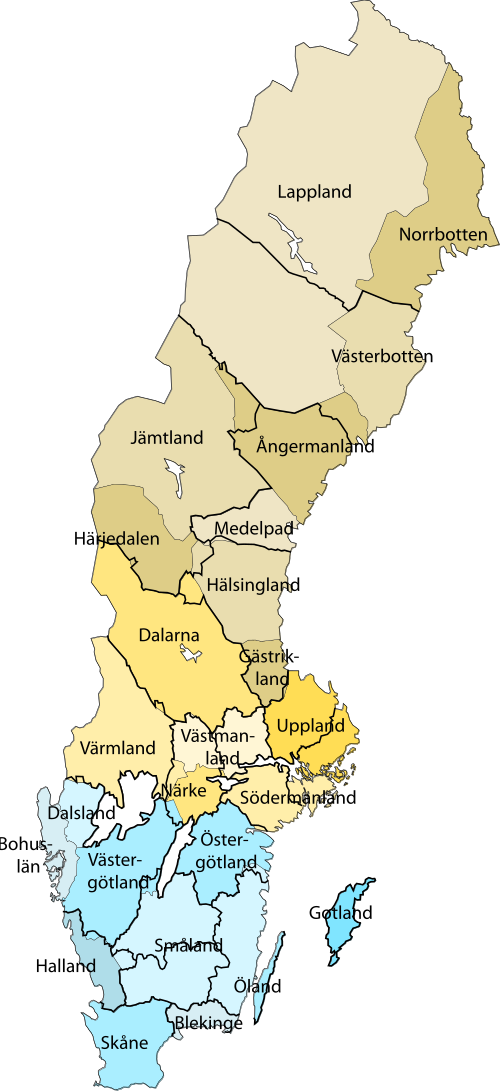
Sweden's provinces, or landskap, and the "lands", or landsdelar, lack political importance today but are common denominations culturally and historically. The provinces had their own laws and justice systems and could have large cultural and religious differences. The province of Småland (literally small land) historically was several provinces with its own laws. Here burial tradition in the era before the Viking Age could differ significantly from province to province. The province of Norrbotten is a relatively recent creation; it was part of Västerbotten which extended all the way to Österbotten in today's Finland before 1809. Finnish and Swedish Lapland formed a single province until 1809.
Historically, the provinces were grouped in three lands: Götaland, being southern and western Sweden; Svealand being eastern and south-eastern, and Norrland being the entire northern half. The names of the first two refer to ancient tribes, and the third is a geographical reference. They are still commonly used as geographical references. The boundaries have changed over time, with the most significant in 1658 (the cession of provinces from Denmark-Norway to Sweden) and 1812 (due to the loss of Finland to Russia in 1809). In 1812, some provinces were moved from Götaland to Svealand.
Finland
After the Finnish War, Sweden was forced to cede the counties in Finland to Russia following the Treaty of Fredrikshamn in (1809). However, the counties were upheld in Finland until a reform in 1997. They are still in use in Sweden, 370 years later.
The counties in Finland established in 1634 were: Turku and Pori County, Nyland and Tavastehus County, Viborg and Nyslott County, Ostrobothnia County and Kexholm County. Over time the number of subdivisions in Finland increased to twelve, until a reorganization in 1997 reduced their number to six provinces, while keeping the administrative model intact. The counties in Finland were abolished in 2010.
Abolished counties
Abolished counties in current-day Sweden proper were:
- Skaraborg County + Gothenburg and Bohus County + Älvsborg County (merged as Västra Götaland County in 1998)
- Kopparberg County (became Dalarna County in 1997)
- Malmöhus County + Kristianstad County (merged as Skåne County in 1997)
- Norrland County (in 1645 divided into Västerbotten County, Hudiksvall County and Härnösand County)
- Nyköping County, Gripsholm County and Eskilstunahus County (united in 1683 to become Södermanland County)
- Närke and Värmland County (became Örebro County)
- Härnösand County (1645–1654, formed Västernorrland County)
- Hudiksvall County (1645–1654, formed Gävleborg County)
- Office of the Governor of Stockholm (1634–1967, united with Stockholm County)
- Svartsjö County (1786–1809, united with Stockholm County)
- Öland County (1819–1826, united with Kalmar County)
Counties in Swedish-ruled Finland were:
- Turku and Pori County (1634–1809)
- Nyland and Tavastehus County (1634–1809)
- Ostrobothnia County (1634–1775)
- Viborg and Nyslott County (1634–1721)
- Kexholm County (1634–1721)
- Kymmenegård and Nyslott County (1721–1747)
- Savolax and Kymmenegård County (1747–1775)
- Vasa County (1775–1809)
- Oulu County (1775–1809)
- Kymmenegård County (1775–1809)
- Savolax and Karelia County (1775–1809)
Proposed regions

Under the aegis of the Swedish government, Ansvarskommittén has been investigating the possibilities of merging the current 21 counties into 6 to 9 larger regions. These proposals are from their final report, delivered in 2007:
- Norra Sverige: Norrbotten County + Västerbotten County + Jämtland County + Västernorrland County + Nordanstig and Hudiksvall
- Bergslagen: the rest of Gävleborg County + Dalarna County + Örebro County + Värmland County
- Mälardalen: Stockholm County + Uppsala County + Södermanland County + Västmanland County + Gotland County
- Västra Götaland: Västra Götaland County + Halland County
- Östra Götaland: Östergötland County + Jönköping County + Kronoberg County + Kalmar County
- Södra Götaland: Skåne County + Blekinge County
- Norra Sverige: Norrbotten County + Västerbotten County + Örnsköldsvik
- Mellannorrland: Jämtland County + Västernorrland County (except Örnsköldsvik) + Nordanstig and Hudiksvall
- Dalarna-Gävleborg: Dalarna County + Gävleborg County (except Nordanstig and Hudiksvall)
- Västra Svealand: Värmland County + Örebro County
- Mälardalen: Stockholm County + Uppsala County + Södermanland County + Västmanland County + Gotland County
- Västra Götaland: Västra Götaland County + Halland County
- Östergötland: Östergötland County + Västervik
- Småland: Jönköping County + Kronoberg County + Kalmar County (except Västervik)
- Södra Götaland: Skåne County + Blekinge County
A model for this comes from the merger of some counties into Skåne County and Västra Götaland County in 1997 and 1998, respectively, which is now considered a success.
The counties are discussing the proposal. An obstacle is that Stockholm County does not want to merge with any other county, while its neighbours want to merge with Stockholm. After this discussion the following proposal has in 2016 emerged:
- Norrbotten, Västerbotten, Västernorrland and Jämtland county
- Dalarna, Gävleborgs, Södermanlands, Uppsala, Västmanland and Örebro county
- Östergötland, Jönköping, Kalmar and Kronoberg county
- Gotland and Stockholm county
- Halland, Värmland and Västra Götaland county
- Blekinge and Skåne county The main difference is that the proposed Bergslagen is divided to other counties, and Stockholm is on its own (plus the small Gotland which has air connections to Stockholm)
Riksområden
Main article: National Areas of Sweden

The counties in Sweden correspond to the third level of division in the European Union's system of Nomenclature of Territorial Units for Statistics. For the purpose of creating regions corresponding to the second level, counties have been grouped into eight Riksområden, or National Areas: Stockholm, East Middle Sweden, North Middle Sweden, Middle Norrland, Upper Norrland, Småland and the islands, West Sweden and South Sweden.
References
References
- (2022-02-22). "Folkmängd i riket, län och kommuner 31 december 2021 och befolkningsförändringar 2021".
- (2007-03-23). "Regional utveckling och regional samhällsorganisation".
This article was imported from Wikipedia and is available under the Creative Commons Attribution-ShareAlike 4.0 License. Content has been adapted to SurfDoc format. Original contributors can be found on the article history page.
Ask Mako anything about Counties of Sweden — get instant answers, deeper analysis, and related topics.
Research with MakoFree with your Surf account
Create a free account to save articles, ask Mako questions, and organize your research.
Sign up freeThis content may have been generated or modified by AI. CloudSurf Software LLC is not responsible for the accuracy, completeness, or reliability of AI-generated content. Always verify important information from primary sources.
Report