From Surf Wiki (app.surf) — the open knowledge base
Council of Australian Governments
Defunct Australian intergovernmental forum
Defunct Australian intergovernmental forum
| Field | Value | |
|---|---|---|
| name | COAG | |
| full_name | Council of Australian Governments | |
| successor | National Cabinet | |
| formation | ||
| dissolved | ||
| type | Governmental organisation | |
| purpose | Management of matters of national importance to Australia | |
| region | Australia | |
| membership | {{plainlist | |
| }}<ref name | "COAG-about" / |
- Premiers and chief ministers of the Australian states and territories
- Prime Minister of Australia
- President of the Australian Local Government Association
The Council of Australian Governments (COAG) was the primary intergovernmental forum in Australia from 1992 to 2020. Comprising the federal government, the governments of the six states and two mainland territories and the Australian Local Government Association, it managed governmental relations within Australia's federal system within the scope of matters of national importance.
On 29 May 2020, Prime Minister Scott Morrison announced that COAG would be replaced by a new structure based on the National Cabinet implemented during the COVID-19 pandemic.
History
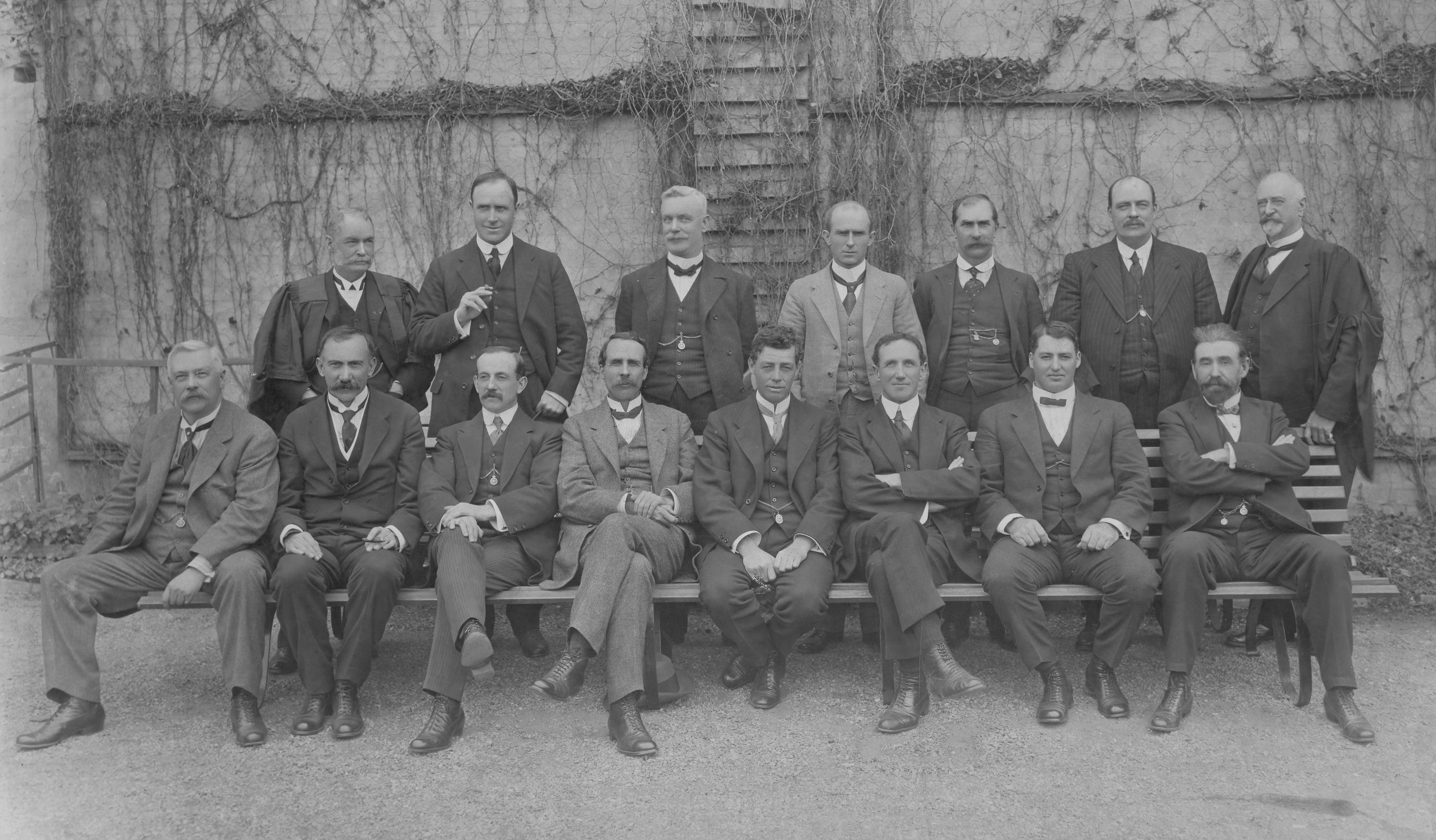
COAG grew out of the Premiers' Conferences, which had been held for many decades. These were limited to the premiers of the six states and the Prime Minister. A related organisation is the Loan Council, which coordinates borrowing by the federal and state and territorial governments of Australia.
COAG was established in May 1992 after agreement by the then Prime Minister (Paul Keating), premiers and chief ministers, and it first met in December 1992. It was chaired by the Prime Minister. It met to debate and co-ordinate government activities between the federal and state or territorial governments and between the state and territorial governments themselves as well as issues affecting local government.
COAG differed from the United States' National Governors Association or Canada's Council of the Federation, because these bodies only include state/provincial representatives, whereas COAG also included federal and local representatives.
At a COAG meeting on 13 March 2020, it was announced that a new National Cabinet was being formed of the Prime Minister and the premiers and chief ministers of the states and territories to coordinate the response to the COVID-19 pandemic in Australia.
On 29 May 2020, Prime Minister Scott Morrison announced that COAG would be replaced by a new structure based on the National Cabinet.
Final membership
| Name | Office held | In office since | Party | |
|---|---|---|---|---|
| Scott Morrison MP | Prime Minister of Australia | |||
| Gladys Berejiklian MP | Premier of New South Wales | |||
| Daniel Andrews MP | Premier of Victoria | |||
| Annastacia Palaszczuk MP | Premier of Queensland | |||
| Mark McGowan MLA | Premier of Western Australia | |||
| Steven Marshall MP | Premier of South Australia | |||
| Peter Gutwein MHA | Premier of Tasmania | |||
| Andrew Barr MLA | Chief Minister of the Australian Capital Territory | |||
| Michael Gunner MLA | Chief Minister of the Northern Territory | |||
| Mayor David O'Loughlin | President of the Australian Local Government Association | November 2016 |
COAG and state finances
Australia is believed to be the first federation to have introduced a formal system of horizontal fiscal equalisation (HFE) which was introduced in 1933 to compensate States which have a lower capacity to raise revenue. Many federations use fiscal equalisation to reduce the inequalities in the fiscal capacities of sub-national governments arising from the differences in their geography, demography, natural endowments and economies. However the level of equalisation sought varies. In Australia, the objective is full equalisation.
Full equalisation means that, after HFE, each of the six states, the Australian Capital Territory and the Northern Territory would have the capacity to provide services and the associated infrastructure at the same standard, if each state or territory made the same effort to raise revenue from its own sources and operated at the same level of efficiency.
Currently the funds distributed to achieve HFE are the revenues raised from the Goods and Services Tax (GST), currently about AUD50bn a year. The distribution of GST required to achieve HFE is decided by the Federal Treasurer each year, on the basis of advice provided by the Commonwealth Grants Commission (CGC).
Achieving HFE does not mean that the states and territories are directed how to raise revenue or how to spend their funds. GST revenue grants from the Commonwealth are unencumbered and available for any purpose. Accordingly, HFE equalises fiscal capacity, not fiscal policies which remain for the states and territories to decide for themselves. It does not result in the same level of services or taxes in all states and territories, direct that the states and territories must achieve any specified level of service in any area, nor impose actual budget outcomes in accordance with the Commission's calculations.
At its meeting on 13 December 2013, COAG agreed to streamline the COAG council system and refocus on COAG's priorities over the next 12 to 18 months. The reforms led to a removal of the distinction between standing and select councils.
List of councils
At its dissolution, there were twelve COAG councils:
- Federal Financial Relations Council
- Disability Reform Council
- Transport and Infrastructure Council
- Energy Council
- Skills Council
- Council of Attorneys-General
- Education Council
- Health Council
- Joint Council on Closing the Gap
- Indigenous Affairs Council
- Australian Data and Digital Council
- Women’s Safety Council
The COAG Reform Council was established in 2010 as an independent body to advise on reforms of national significance. It was disestablished in 2014.
Criticism
In 2012 a group of 20 environmental organisations released a joint communiqué denouncing the establishment of the COAG Business Advisory Forum and wanted wider representation on the Forum. The groups also opposed the weakening of environmental regulations.
After the forum's abolition in early 2020, journalist Annabel Crabb wrote that, after initial utility in the 1990s, COAG had become a "sclerotic nightmare" producing "communiques of impenetrable bureaucratese". She suggested that the meetings in Canberra had produced a performative element in which state premiers sought to boost their profile at the expense of actual reforms.
References
References
- Council of Australian Governments. "About the Council of Australian Governments".
- "About COAG".
- Hitch, Georgia. (2020-05-29). "'COAG is no more': National Cabinet here to stay, PM says".
- (13 March 2020). "Advice on coronavirus".
- Australian Local Government Association. (2010). "President: Australian Local Government Association".
- "Commonwealth Grants Commission".
- "COAG Meeting 13 December 2013. Archived copy".
- "Council of Australian Governments".
- (2014-06-12). "On the demise of the COAG Reform Council, who will hold governments accountable for health outcomes? - Croakey". Croakey.
- (5 June 2012). "Australian Groups Protest Business 'Attack' on Environmental Laws". Environment News Service.
- Crabb, Annabel. (7 June 2020). "In hoping to reform the Federation, Morrison has sailed into treacherous waters". ABC News.
This article was imported from Wikipedia and is available under the Creative Commons Attribution-ShareAlike 4.0 License. Content has been adapted to SurfDoc format. Original contributors can be found on the article history page.
Ask Mako anything about Council of Australian Governments — get instant answers, deeper analysis, and related topics.
Research with MakoFree with your Surf account
Create a free account to save articles, ask Mako questions, and organize your research.
Sign up freeThis content may have been generated or modified by AI. CloudSurf Software LLC is not responsible for the accuracy, completeness, or reliability of AI-generated content. Always verify important information from primary sources.
Report