From Surf Wiki (app.surf) — the open knowledge base
Cottontail rabbit
Genus of mammals

Genus of mammals
(=Lepus sylvaticus floridanus J. A. Allen, 1890)
Cottontail rabbits comprise the genus Sylvilagus, which is in the family Leporidae. They are found in the Americas.
The genus is widely distributed across North America, Central America, and northern and central South America, though most species are confined to particular regions. Most species live in nests called forms, and all have altricial young. They often live on the edges of fields, farms, and other open spaces far from highly populated areas, but sometimes they make their nests in yards and parks near more people. An adult female averages three litters per year, which can be born in any season. Occurrence and litter size depend on several factors, including time of the year, weather, and location. The average litter size is four, but can range from as few as two to as many as eight, most of which do not survive to adulthood. Females can begin reproducing when they are only six months old.
Cottontail rabbits show a greater resistance to myxomatosis than European rabbits.
Etymology
The generic name Sylvilagus is derived from Latin sylva (woods) and lagus (hare), together meaning "hare of the woods".
Evolution
Cottontails are one of several species of Sylvilagus. Their closest relative is Brachylagus, the pygmy rabbit. They are more distantly related to the European and other rabbits, and more distantly still to the hares. The cladogram is based on nuclear and mitochondrial gene analysis.
Lifespan
The lifespan of a cottontail averages about two years, depending on the location. Almost every living carnivorous creature comparable to or larger in size than these lagomorphs is a potential predator, including such diverse creatures as domestic dogs, cats, humans, snakes, coyotes, mountain lions, foxes, and, if the cottontail is showing signs of illness, even squirrels. The cottontail's most frequent predators are various birds of prey. They can also be parasitized by botfly species, including Cuterebra fontinella. Newborns are particularly vulnerable to these attacks. Cottontails use burrows vacated by other animals, and the burrows are used for long enough periods that predators can learn where they reside and repeatedly return to prey on them. Though cottontails are prolific animals that can have multiple litters in a year, few of the resulting offspring survive to adulthood. Those that do survive grow very quickly and are full-grown adults at three months.
Eating mechanics
In contrast to rodents, which generally sit on their hind legs and hold food with their front paws while feeding, cottontail rabbits eat while on all fours. These rabbits typically use their noses only to move and adjust the position of the food that they place directly in front of their front paws on the ground. The cottontail turns the food with its nose to find the cleanest part of the vegetation (free of sand and inedible parts) to begin its meal. The only time a cottontail uses its front paws while feeding is when vegetation is above its head on a living plant, when it lifts its paw to bend the branch to bring the food within reach.
Cottontails are rarely found foraging for food on windy days, because the wind interferes with their hearing capabilities. Hearing incoming predators before they get close enough to attack is their primary defense mechanism.
File:Juvenile Cottontail Rabbit.jpg| Juvenile cottontail standing in anticipation of food File:15 for Dinner.jpg|Cottontails are very sociable animals within their peer group. File:Cottontail age comparison-2.jpg|Male desert cottontail at 8 weeks, and the same cottontail at 16 months of age
Species
The subgenera were described in the 19th century based on limited morphological data that have been shown to not be of great use, nor to depict phylogenetic relationships. Molecular studies (limited in scope to the mitochondrial 12S gene) have shown that the currently accepted subgeneric structure,
| Subgenus | Image | Common name | Scientific name | Distribution | Microlagus | Sylvilagus | Tapeti | ||
|---|---|---|---|---|---|---|---|---|---|
| [[File:Sylvilagus bachmani 01035t.JPG | 120px]] | Brush rabbit | Sylvilagus bachmani | West Coast of North America, from the Columbia River in Oregon to the southern tip of the Baja California Peninsula; isolated subspecies, San Jose brush rabbit, on San José Island in the Gulf of California | |||||
| [[File:Joshua Tree NP - Cottontail - 1d.jpg | 120px]] | Desert cottontail | Sylvilagus audubonii | Western United States from eastern Montana to West Texas, California, and in Northern and Central Mexico | |||||
| [[File:Sylvilagus cunicularius2.jpg | 120px]] | Mexican cottontail | Sylvilagus cunicularius | Mexico from the state of Sinaloa to Oaxaca and Veracruz | |||||
| [[File:Tochtli-Rabbit-Conejo.jpg | 120px]] | Eastern cottontail | Sylvilagus floridanus | Eastern and south-central United States, southern Canada, eastern Mexico, Central America and northernmost South America | |||||
| [[File:Sylvilagus graysoni.jpg | 120px]] | Tres Marias cottontail | Sylvilagus graysoni | Tres Marias Islands, Mexico | |||||
| [[File:Sylvilagus nuttallii (29723452411).jpg | 120px]] | Mountain cottontail | Sylvilagus nuttallii | Intermountain west of Canada and the United States | |||||
| [[File:Sylvilagus obscurus 1.jpg | 120px]] | Appalachian cottontail or Allegheny cottontail | Sylvilagus obscurus | Eastern United States | |||||
| [[File:Sylvilagus robustus imported from iNaturalist photo 64270774 on 9 September 2021.jpg | frameless | 120x120px]] | Robust cottontail | Sylvilagus holzneri | Southwestern United States and adjacent Mexico | ||||
| [[File:New England cottontail rabbit animal sylvilagus transitionalis.jpg | 120px]] | New England cottontail | Sylvilagus transitionalis | New England, specifically from southern Maine to southern New York | |||||
| [[File:Sylvilagus brasiliensis andinus (12687595295).jpg | frameless | 119x119px]] | Andean tapeti | Sylvilagus andinus | Venezuela south to Peru | ||||
| Bogota tapeti | Sylvilagus apollinaris | Colombia | |||||||
| [[File:Swamp Rabbit (Sylvilagus aquaticus).jpg | 120px]] | Swamp rabbit | Sylvilagus aquaticus | Southern United States | |||||
| [[File:Sylvilagus brasiliensis1.jpg | 120px]] | Common tapeti | Sylvilagus brasiliensis | Brazil (Venezuela to Argentina when the many unclassified populations are included) | |||||
| Ecuadorian tapeti | Sylvilagus daulensis | Ecuador | |||||||
| Dice's cottontail | Sylvilagus dicei | Costa Rica and Panama | |||||||
| Fulvous tapeti | Sylvilagus fulvescens | Colombia | |||||||
| Central American tapeti | Sylvilagus gabbi | Mexico to Panama | |||||||
| Northern tapeti | Sylvilagus incitatus | San Miguel Island, Panama | |||||||
| Omilteme cottontail | Sylvilagus insonus | Guerrero, Mexico | |||||||
| Nicefor's tapeti | Sylvilagus nicefori | Colombia | |||||||
| [[File:Marsh Rabbit.jpg | 120px]] | Marsh rabbit | Sylvilagus palustris | Southeastern United States | |||||
| Suriname tapeti | Sylvilagus parentum | Western Suriname | |||||||
| Colombian tapeti | Sylvilagus salentus | Colombia | |||||||
| Santa Marta tapeti | Sylvilagus sanctaemartae | Colombia | |||||||
| Western tapeti | Sylvilagus surdaster | Ecuador | |||||||
| Coastal tapeti | Sylvilagus tapetillus | Rio de Janeiro, Brazil | |||||||
| Venezuelan lowland rabbit | Sylvilagus varynaensis | Western Venezuela |

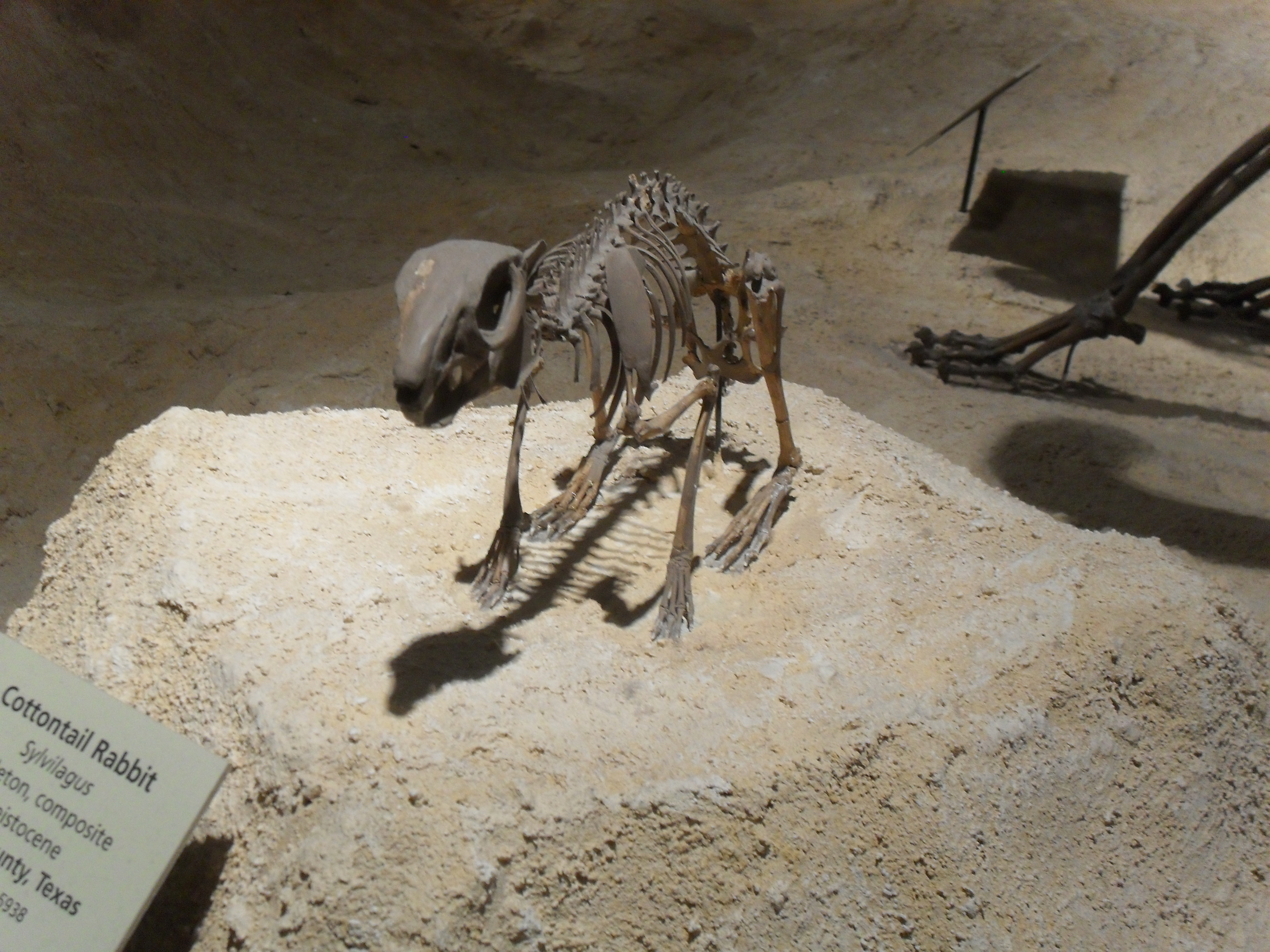
Prehistoric species
- Sylvilagus hibbardi (early- to mid-Pleistocene)
- Sylvilagus leonensis - dwarf cottontail (late Pleistocene)
- Sylvilagus webbi] (Pleistocene)
References
References
- {{MSW3 Lagomorpha
- "Creature feature: The prolific eastern cottontail rabbit".
- (2025-05-13). "Eastern Cottontail Rabbit".
- (2006). "Poxviridae". A Concise Review of Veterinary Virology.
- Cervantes, Fernando A.. (1997-10-24). "Sylvilagus insonus". Mammalian Species.
- (October 2019). "Taxonomy of the ''Sylvilagus brasiliensis'' complex in Central and South America (Lagomorpha: Leporidae)". Journal of Mammalogy.
- (2015). "Ecological correlates to cranial morphology in Leporids (Mammalia, Lagomorpha)". PeerJ.
- (2024). "Molecular time estimates for the Lagomorpha diversification". PLOS ONE.
- "''Sylvilagus floridanus''".
- "Small mammals".
- (22 April 2008). "Rabbits and Hares".
- (February 9, 2017). "A prolegomenon to the systematics of South American cottontail rabbits (Mammalia, Lagomorpha, Leporidae: ''Sylvilagus''): designation of a neotype for ''S. brasiliensis'' (Linnaeus, 1758), and restoration of ''S. andinus'' (Thomas, 1897) and ''S. tapetillus'' Thomas, 1913". Museum of Zoology, University of Michigan.
This article was imported from Wikipedia and is available under the Creative Commons Attribution-ShareAlike 4.0 License. Content has been adapted to SurfDoc format. Original contributors can be found on the article history page.
Ask Mako anything about Cottontail rabbit — get instant answers, deeper analysis, and related topics.
Research with MakoFree with your Surf account
Create a free account to save articles, ask Mako questions, and organize your research.
Sign up freeThis content may have been generated or modified by AI. CloudSurf Software LLC is not responsible for the accuracy, completeness, or reliability of AI-generated content. Always verify important information from primary sources.
Report