From Surf Wiki (app.surf) — the open knowledge base
Corruption in Bangladesh
none

none
Corruption in Bangladesh has been a continuing problem. According to all major ranking institutions, Bangladesh routinely finds itself among the most corrupt countries in the world.
As of 2001, corruption in the public sector was "endemic, chronic and all pervasive". In Transparency International's 2024 Corruption Perceptions Index, which scored 180 countries on a scale from 0 ("highly corrupt") to 100 ("very clean"), Bangladesh scored 23. When ranked by score, Bangladesh ranked 151st among the 180 countries in the Index, where the country ranked first is perceived to have the most honest public sector. For comparison with regional scores, the best score among the countries of the Asia Pacific region was 84, the average score was 44 and the worst score was 16. For comparison with worldwide scores, the best score was 90 (ranked 1), the average score was 43, and the worst score was 8 (ranked 180). Introducing the 2020 Corruption Perceptions Index, Executive Director Iftekharuzzaman of Transparency International Bangladesh commented, "Of the eight South Asian countries, Bangladesh remains second lowest both in score and rank — better than only Afghanistan."
The Anti Corruption Commission was formed in 2004, but is considered to be largely ineffective in investigating and preventing corruption because of governmental control over it. The Anti Corruption Commission chairman has admitted that corruption is rampant in Bangladesh.
Like many other developing and emerging countries, corruption is a part of life in Bangladesh. Regular citizens routinely pay bribes for basic services and to skip queues, and officials rely on bribes to make a living.
Causes of corruption
After splitting from Pakistan in 1971, Bangladesh was ruled by a series of civilian and military governments. Riots surrounding the 2014 elections resulted in hundreds of deaths and Freedom House changed the country's "political rights" rating from 3 to 4 (with 1 being best, 7 worst). This was only one incident, however, in a modern history of highly fatal political violence.
The country's score for rule of law on the Worldwide Governance Indicators declined from 28.6 (on a scale of 0–100) in 2011 to 22.7 in 2013. Although, Bangladesh has experienced notable social and economic progress since around the turn of the century, it remained one of the world's poorest nations in 2015, with 76.5% of the population living on less than US$2 a day.
Corruption by sector
As of 2001, bribery, misappropriation of funds, excessive lobbying, delays in performing services, pilferage, neglect of duties, abuse of power, and patronage were rampant throughout the public sector. This included law enforcement, customs, tax authorities, banking, education, health care, the judiciary, and utilities.
A 2012 study found that 97% of MPs were involved in illegal activities, with 77% abusing their positions on local election boards, 75% abusing development projects for their own benefit, including accepting commissions in exchange for approving projects or programs, 53% being involved in outright criminal acts, 69% influencing procurement decisions, and 62% influential local elections.
Fully 45% of Bangladeshis view political parties as corrupt, while 41% regard the parliament as corrupt. Only the police and the judiciary are viewed as more corrupt. Many politicians are regarded as out-and-out criminals, while the parties also "are believed to harbour criminals and terrorists," according to Transparency International Bangladesh. The parties routinely exchange party funds for favours or pay them out because of extortion. They also improperly use state funds to buy jobs, licenses, and contracts for party members and other purposes. Party finances are largely non-transparent; despite regulations requiring reporting to the election commission, reports are scanty or absent and non-compliance is rarely punished. Also, both the parliament and the political parties are under the influence of business, with 56% of MPs now being business people.
Politicians
Bangladesh Awami League
On 9 April 2012, Railway Minister Suranjit Sengupta's assistant personal secretary, general manager of the eastern region, and commandant of security were driving to Suranjit's residence with 7.4 million taka of bribe money, when the driver Azam Khan turned them in.
In 2012, World Bank alleged that Syed Abul Hossain was one of the corruption conspirators in the Padma Bridge Scandal. He resigned from his office on 23 July 2012. Former state minister for foreign affairs and MP of Awami League Abul Hasan Chowdhury was also involved in that corruption plot. Another person involved in this case was Mujibur Rahman Chowdhury. He is the nephew of Sheikh Hasina, a member of parliament, and also a civil contractor. SNC-Lavalin admitted to bribing him in order to obtain contracts Soon after the case emanated, Sheikh Hasina disavowed her nephew and campaigned for his opponent during the 2014 Bangladeshi general election.
On 29 August 2012, Anti Corruption Commission of Bangladesh said that they have the information that Syed Modasser Ali, adviser to the prime minister Sheikh Hasina, allegedly influenced Sonali Bank authorities into granting scam loan to the controversial Hallmark Group.
On 24 April 2013, a commercial building named Rana Plaza in Savar, Dhaka, Bangladesh collapsed due to structural failure. That building was owned by Sohel Rana, a Jubo League (youth wing of Bangladesh Awami League) leader.
On 27 April 2014, the incident named Narayanganj Seven murder occurred. The main plotter of that incident, Nur Hossain, was the vice-president of Siddhirganj Awami League.
On 15 October 2015, Awami League MP Manjurul Islam Liton was arrested for shooting a 9-year-old boy named Shahadat Hossain Shoura.
On 10 April 2016, Bangladesh Supreme Court Appellate Division upheld 13-year jail to former minister of Disaster Management and Relief Mofazzal Hossain Chowdhury Maya rejecting his review plea seeking acquittal in graft case.
In November 2016, Awami League MP Abdur Rahman Bodi was sentenced to three years of prison and fined US$1 million for illegally amassing and hiding wealth of US$100 million.
On 13 July 2017, Gazi Tarique Salman, a civil servant (UNO) was harassed by police, local administration, and local Awami League leader Obaidullah Saju.
Even though Swiss National Bank (SNB)'s data published on 29 June 2017 shows that Bangladesh has BDT 4423,00,00,00,000 in Swiss banks which is an increase by 20% since 2013–14, Bangladesh's minister of finance Abul Mal Abdul Muhit said that "Media exaggerated rise of Bangladeshi deposit in Swiss banks"
Bangladesh's anti-corruption commissioner filed cases against former Prime Minister Sheikh Hasina and 49 ex-ministers for siphoning more than $150 billion to various countries, including India, Hong Kong, Switzerland, Luxembourg, Singapore, Malaysia, UAE, Australia, UK, USA, and New Zealand. Former Prime Minister Sheikh Hasina, her son Sajeeb Wazed and niece Tulip Siddiq accused of embezzling more than $5 billion from the Rooppur Nuclear Power Plant project that costs Bangladeshi tax payers $12.65 billion.
Al Jazeera's Investigation Exposed Bangladesh's Minister Saifuzzaman Chowdhury's exclusive property portfolio in Dubai, London, New York, San Francisco, and New Jersey. According to undercover video recordings of the Al Jazeera investigation unit, Former Prime Minister Sheikh Hasina knew all along about Mr Chowdhury's corruption.
Bangladesh Nationalist Party
In 2007, Military backed caretaker government charged Harris Chowdhury, former Political Secretary of Prime Minister Khaleda Zia, of acquiring his wealth through corruption. Chowdhury was charged with involvement in the Murder of former finance minister, Shah AMS Kibria, in 2005. He was also charged with involvement in 15 August 2004 Dhaka grenade attack and Zia Charitable Trust corruption case. On 21 December 2014, an arrest warrant was issued against him. His properties were confiscated by the directives of Bangladesh High Court. Harris Chowdhury is a fugitive from 2007.
On 22 July 2007, Wadud Bhuiyan received 20-years' of prison sentence for illegally amassing more than a million dollar of cash and property.
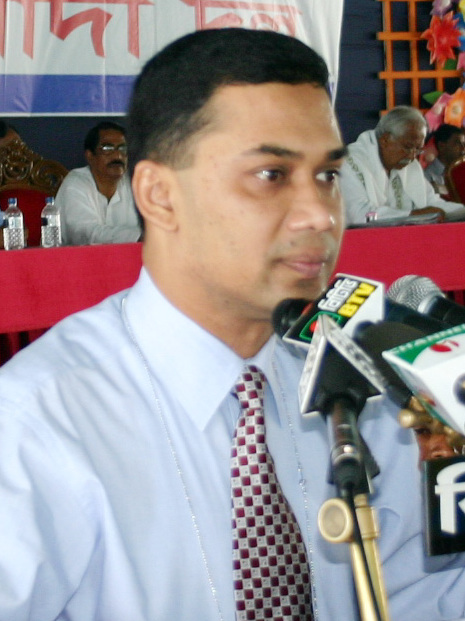
On 16 October 2008, it has been reported that the Interpol found the trace of a deposit of BD taka 141.5 million with a bank in Hong Kong of former foreign minister M Morshed Khan. Both he and his son Faisal Morshed Khan have been convicted in several cases relating to corruption, hiding wealth information, land grabbing and criminal activities after the caretaker government came to power in January 2007. Both of them are fugitive from 2007. On 5 June 2016, High Court ordered freezing of Morshed Khan, his wife and son's Hong Kong bank accounts.
On 3 November 2008, a leaked US Embassy cable said that the Embassy in Dhaka believed Tarique Rahman was "guilty of egregious political corruption that has had a serious adverse effect on US national interests".
On 24 June 2011, Niko Resources, a Calgary-based oil and gas company, has pleaded guilty to bribing Bangladeshi minister AKM Mosharraf Hossain with a luxury SUV and a trip to New York and Calgary, and will pay a $9.5-million fine.
The Anti-Corruption Commission filed the case with Gulshan Police Station on 16 August 2011 against Hafiz and his wife for laundering US$1.75 million to Singapore. On 23 August 2015 Bangladesh Supreme Court scrapped his acquittal from High Court.
On 4 July 2014, Bangladesh Supreme Court sentenced former minister of civil aviation Mir Mohammad Nasiruddin and his son Mir Helal Uddin to thirteen years' of prison in two separate corruption cases.
On 15 November 2014, Prof AKM Shafiul Islam Lilon of Department of Social Science of Rajshahi University was hacked to death by Jubo Dal (youth wing of Bangladesh Nationalist Party) leader Anwar Hossain Ujjal.
Jatiya Party (Ershad)

Known in Bangladesh as "Sugar Zafar", Kazi Zafar Ahmed, because of his alleged role in the hijacking of a multimillion-dollar aid shipment of sugar, he was sentenced to 15 years' jail in absentia on corruption charges by a Dhaka court in November 1999.
On 20 November 2000, Hussain Muhammad Ershad was convicted and sentenced for Janata Tower Case. As a result, he was declared ineligible to contest the general election of 2001. Ershad is also the main accused of the murder case of Major General Muhammad Abul Manzoor.
On 10 November 2002, the dead body of a prominent model named Syeda Tania Mahbub Tinni was found under the Buriganga Bridge which was later found to be perpetrated by former student cadre and MP of Jatiyo Party, Golam Faruk Ovi. Golam Faruk Ovi is a fugitive and believed to be hiding in Canada.
Student politics
Main article: Student politics of Bangladesh
In public universities and colleges the student wings of ruling political parties dominate the campuses and residential halls through crime and violence to gain various unauthorised facilities. They control the residential halls to manage seats in favour of their party members and loyal pupils. They eat and buy for free from restaurants and shops inside their campus. They extort and grab tenders to earn illicit money. They take money from job seekers and put pressure on university administrations to appoint them. In government colleges they take money from freshmen candidates and put pressure on teachers and officials to get acceptance for them. Some of them have been involved in robbery and extortion.
Government

Corruption abounds in Bangladeshi government offices. Many officials receive salaries without having any actual assigned work. Officials are recruited and promoted for reasons that are not objectively clear. Solicitation of bribes is common. In a 2013 survey, 76% of respondents said corruption was a problem in the public sector, and 39% said they had paid a bribe during the previous 12 months. Bribes were especially common when dealing with the police (72%), the judiciary (63%), land services (44%), and registry and permit services (33%). Bribes were paid to obtain a service (58%), to speed up service (33%), to express thanks (7%), or to obtain cheaper services (3%). These numbers, though unimpressive, mark a significant improvement over 2010.
In 2010, then president Zillur Rahman pardoned twenty convicted murderers of Shabbir Ahmed Gamma. In July 2011, he again pardoned Awami League leader and convicted murderer Biplob.
Prime examples of government corruption are 2011 Bangladesh share market scam.
Padma Bridge Scandal, occurred in 2011, was the largest political scandal in Bangladesh that involved the ruling Bangladesh Awami League's government who allegedly sought a large amount money from the Canadian construction company SNC-Lavalin in exchange for awarding them the construction contract.
On 10 December 2012, some hackers hacked and posted the seventeen hours' of Skype call of chief justice Nizamul Huq on YouTube where he suggested that he was under pressure from the government to reach a quick verdict in the ongoing 1971 war crime cases against the country's senior opposition leaders.
Public services
The public sectors are among the country's most corrupt. In few countries is bribery more common in connection with public utilities. Nearly six out of ten firms report that they have to offer bribes, "gifts," or facilitation payments in exchange for licenses or public utility concessions or to "get things done." Unclear, contradictory regulations abound, and are often exploited by officials seeking informal payments. Engineer Delwoar Hossain of Gazipur City Corporation was killed on 21 May 2020. According to his relatives, one investigation agency, and Transparency International Bangladesh (TIB) Delwoar was murdered for his stance against corruption.
Foreign affairs
SBS Bangla news reported that corrupt officials at Bangladesh high commission, Canberra, issued the visa to 2000 Rohingya refugees. Australian Federal Police is investigating the matter related to fake passports issued to Rohingya refugees by Bangladeshi officials. Bangladesh Police interrogated deported Rohingya refugees. During questioning, Rohingya refugees told authorities that one Bangladeshi official at the High Commission in Canberra issued the visa.
Some 54,000 Rohingya refugees travelled to Middle Eastern countries and illegally acquired Bangladeshi passports from the Bangladeshi consulate based in Middle East. Some 30,000 Rohingya refugees received work permits from Saudi Arabia. According to German public broadcaster, Deutsche Welle, corrupt consulate officials issued Bangladeshi passports to 54,000 Rohingya refugees. Saudi authorities have demanded the Bangladesh government repatriate Rohingya refugees who hold Bangladeshi passports.
Land administration
Corruption is widespread in the Bangladeshi land administration. Most companies expect to make informal payments in exchange for construction permits. In a country where land is scarce, title disputes are common, and title registration takes much longer than is the average in South Asia. The collapse of an eight-story factory in April 2013 was the result of substantial building code violations, and highlighted the role of corruption in the issuance of permits and licenses and in safety inspections.
Tax administration
The Bangladeshi tax system is highly corrupt. In no country is it more common to be charged irregular payments in connection with taxation. More than forty percent of firms surveyed expected to present tax officials with gifts. Because the National Board of Revenue is poorly administered, tax collectors are able to collude with taxpayers, accepting personal payments in exchange for lower tax rates.
Public procurement
The awarding of government contracts in Bangladesh very frequently involves nepotism, fraud, bribery, and favouritism. Nearly half of companies surveyed expect to make irregular payments to secure government contracts. The Public Procurement Act, Public Procurement Rules, and other legislation are intended to guarantee above-board conduct in this sector, but they are at best poorly enforced.
Judiciary
The Bangladeshi judicial system is inefficient and under the influence of the executive branch. Political appointments, promotions, and firings are routine, and it can be difficult to enforce contracts and resolve disputes. Prosecutors, who earn only $37.50 a month, are especially susceptible to bribery.
In 2010, Judiciary of Bangladesh was ranked as the most corrupt institution of the country. The most prominent aspect of the judiciary of Bangladesh is, it is not an independent institution of the state in that both judiciary and the executive branch of the government are overlapped. Bangladesh's Judicial system is infested by partisanship, governmental or political influence, judicial corruption, delays in verdicts, and abuse of power.
Judges
On 3 March 2007, University of Chittagong revoked the LLB certificate of the judge Faisal Mahmud Faizee and seventy others for tampering with their mark-sheets, asking them to immediately return their certificates.
On 26 July 2014, it has been reported that three senior judges, AKM Ishtiaque Hussain, Md Mizanur Rahman, Salauddin Mohammad Akram, would lose their jobs because of various types of corruptions.
On 14 August 2016, Bangladesh Ministry of Law said that they have started the process of dismissing four judges, SM Aminul Islam, Ruhul Amin Khandaker, Sirajul Islam and Moinul Haque, for grave corruptions.
Impunity
Main article: List of unresolved murder cases in Bangladesh, List of journalists killed in Bangladesh, Attacks by Islamic extremists in Bangladesh
Bangladesh has a huge backlog of unresolved cases both civil and criminal. Political clout is believed to be the main factor behind most of the unsolved murder cases.
According to Global Impunity Index of CJP published on 27 October 2016, Bangladesh occupies 11th position in the list where journalists are slain and killers go free.
Politics of trial
In Bangladesh, generally the government files politically motivated cases against the opposition, and these cases get withdrawn or quashed when the opposition takes control of the government in turn.
Civil cases
Law enforcement
Main article: Forced disappearance in Bangladesh}}{{See also, Rapid Action Battalion#Enforced disappearances, Rapid Action Battalion
Bangladesh Police
Low salaries and poor training make the police susceptible to bribery as well. The force is characterised by political patronage and a culture of impunity. International businesses have said that the Bangladeshi police force is one of the world's least reliable.
In 2002, Transparency International Bangladesh revealed that Bangladesh Police is one of the most corrupt public institutions in Bangladesh. In 2013, they again published the same assessment. Asian Human Rights Commission revealed that people of Bangladesh pay more to police than to the government. Police force benefits from political patronage and culture of impunity. Police is involved in blackmailing, extortion, torture, rape, and killing.
Rapid Action Battalion
Law enforcement agencies like Rapid Action Battalion are involved in extrajudicial killing, murder, abduction, and rampant human rights abuse. Brother of Former Army Chief of Staff General Aziz has admitted on camera of the use of Rapid Action Battalion to torture innocent civilian who refused to pay extortion money to him. The recording of the admission was released by Al Jazeera News. Gowher Rizvi, the foreign affairs advisor to the Prime Minister acknowledged that there are corrupt practices amongst all law enforcing agencies and government is looking into the matter.
Bangladesh Rapid Action Battalion's whistleblowers told German broadcaster DW News that Rapid Action Battalion's service members were involved in various crimes, including extrajudicial killings, extortion and corruption. DW News released verified audio tapes of the victim's family members calling the victim while the victim was shot several times in his chest.
The Rapid Action Battalion was also involved in the suppression of freedom of speech and victimising opposition leaders from the Bangladesh Nationalist Party under the instruction of Prime Sheikh Hasina and the Home Minister. Bangladesh army officers who are seconded to the infamous counterterrorism force are involved in a competition to kill innocent people to get credit from their superiors.
According to the German public broadcaster Deutsche Welle, officers who committed serious crimes and corruption are currently deployed in the UN peacekeeping mission in Africa, violating the UN charter. The U.S. Treasury sanctioned the Bangladesh Rapid Action Battalion for corruption and violation of human rights.
Bangladesh military
Although, Bangladesh military are uniformed soldiers, they are also involved in large scale corruption. Bangladesh military officers are known to receiving illicit loans from the Trust Bank and VDP bank. The Bangladesh Rifles (BDR) mutiny was partly fueled by resentment among the BDR troops over the corruption of army officers who led them for many years were personally profiting from consumer goods sold by the organization.
Transparency International reports that the purpose of military intervention is to hide rampant corruption since the military take over in January 2007.
According to Government Defence Integrity Index (GDI), the defence sector of Bangladesh scored 25, which is a very high risk of corruption. Transparency International reported that Bangladesh's annual military budget had reached US$4.8 billion, increasing the magnitude of corruption.
In October 2002, more than 10,000 people were detained without charges in operation by Bangladesh Army, dubbed Clean Heart, including the Bangladesh Nationalist Party and the Awami League party members.
The Bangladesh Army wields effective power over Bangladesh's democratic institutions while remaining in the background to gain financial benefits from the business the politicians afford to the military. The Director General of Defence Procurement (DGDP) found to be colluding with the business arm of Bangladesh military controlled conglomerate Sena Kallyan Sanstha (SKS) to divert defence budget to military's private businesses. Bangladesh has launched another conglomerate, the Army Welfare Trust to divert funds to private businesses. The Awami League Government afforded these business to Bangladesh Military as a sweetener to use military to suppress voters during elections.
In 2012, Defence Adviser Maj Gen (Retd) Tarique Ahmed Siddique was involved in bribery of BDT 7 million carried by a government vehicle. The vehicle with the money was confiscated by the Border Guard Bangladesh. Maj Gen (Retd) Tarique Ahmed Siddique called the then chief of army staff, General Md Abdul Mubeen to release the vehicle and the money. Intelligence sources reported that the Army chief was paid a large some of the money to release the vehicle.
The Prime Minister of Bangladesh, Sheikh Hasina was prosecuted for receiving a facilitator payment of $4 million to buy eight MiG-29 aircraft for Bangladesh Air Force from Russia. Bangladesh's Bureau of Anti-Corruption charged Prime Minister Sheikh Hasina for buying a navy frigate from South Korea at an unusually high price while in office. Bureau of Anti-Corruption filed two corruption charges against Prime Minister Sheikh Hasina for misappropriating $126 million from two defence deals in 1998.
Former Army Chief of Staff, General Moyeen U Ahmed took loans more than the permitted amount as a customer of the military controlled Trust Bank and left the country without repaying the loans.
According to a report by AA newspaper, Bangladesh Army officers and Bangladesh's ruling Awami League party members operate almost 60 illegal casinos and money laundering dens worth $120 million in the capital city Dhaka. Law enforcement agencies reportedly investigated the corruption and misdeeds of Bangladesh Army officers involved in the casino scandal in Bangladesh. According to Washington-based Global Financial Integrity, around $6 billion was siphoned off from Bangladesh in a single year 2015 by ruling party members and the military.
The Bangladesh government has discharged Lt. General (retired) Chowdhury Hasan Sarwardi for blowing the lid on corrupt practices among high-ranking military officers of the Bangladesh Army posted in Director General of Defence Procurement (DGDP).
Al Jazeera news exposed corruption of former Army Chief of Bangladesh, General Aziz and the United Nations called on Bangladesh government for a full investigation into evidence of corruption by Bangladesh army. Former Army Chief of Staff General Aziz was accepting bribes from law enforcement officers in order to place them in the positions of power that will allow them to collect more bribes and make financial gains. A recording of General Aziz's admission to the corruption was released by Al Jazeera news. The U.S. State Department blacklisted former chief of the Bangladesh Army General Aziz Ahmed due to his involvement in significant corruption.
High-ranking army officers at the Directorate General Defense Purchase (DGDP) received grease payment for procuring arms from Chinese Norinco and Russian Rosoboronexport.
Bangladesh Anti-Corruption Commission decided on 4 September 2024 to initiate an inquiry against former army chief retired General Aziz Ahmed over allegations of amassing a huge amount of illegal wealth at home and abroad. On September 4, the Bangladesh Bank's Financial Intelligence Unit audited Lt Gen Mujibur Rahman, Lt Gen Mohammad Saiful Alam, and Major General Ziaul Ahsan's bank accounts. It also froze the accounts of their spouses, children, and businesses.
Energy and power
Banking
_(cropped).jpg)
In 2015, it was revealed that some Bangladeshi accounts of HSBC were involved in money laundering activities. HSBC was also involved in tax evasion activities.
In 2020, it was found that Prashanta Kumar Halder had stolen 15 billion taka from International Leasing and Financial Services Limited, 22 billion from FAS Finance & Investment Limited, 30 billion from People's Leasing And Financial Services Limited, and 25 billion taka from Reliance Finance Limited. He was being investigated by Bangladesh Financial Intelligence Unit and the Anti Corruption Commission.
Health and hygiene
A 2012 Survey by Transparency International Bangladesh showed that 40.2% of the people fell victim to the irregularities and corruptions in public hospitals. Doctors, nurses and other professionals working in government-run public hospitals have long been accused of demanding bribes for services which are supposed to be provided free of cost. The survey also alleged that the recruitment, transfer and promotion process of personnel in this sector is also corrupted. Although the allegations were rejected by the Government Health Ministry.
The survey reported that there is lack of regulation from the government in the private health care sector. The medical practitioners in these sector earn money by driving up health care costs and commission agreements with diagnostic centres.
According to patients, even in emergency needs, they were unable to access services unless a bribe is paid first.
Business
Companies have been reported to be subjected to expensive and useless license and permit requirements. In 2014–2015, business executives said corruption was the second largest obstacle to doing business in Bangladesh. Business people are often expected to bribe public officials, often in connection with annual taxes. Fully 48% of companies have been asked to pay bribes, and most firms seeking licenses are asked for bribes, with 55% of construction permits, 77% of import licenses, 56% of water connection arrangements and 48% of electricity connection arrangements involving bribes.
Politicians are involved in giving contracts to foreign companies by taking bribes or kickbacks in closed-door negotiations. Major public contracts are often said to involve corruption. Fully 49% of companies said they had to present "gifts" to win state contracts, with those "gifts" averaging a value of 3% of the contract value.
Business owners do not obey proper safety codes of the buildings and workplaces. As a result, several large accidents occurred and killed hundreds. The garment industry is also rife with corruption, with leaders in the industry obtaining tax concessions, gaining special access to infrastructure, and ignoring with impunity official safety and security regulations. Because of this brand of corruption, the Rana Plaza factory complex collapsed, killing over 1200. Owing to corruption, the builders had been able to ignore many construction regulations.
Various international sources provided $2.9 billion to build the Padma Multilateral Purpose Bridge near Dhaka in 2011. After the World Bank learned in 2012 of "a high-level corruption conspiracy among politicians, businessmen, and private individuals" in connection with the bridge, support for the project was withdrawn by several of the sources.
Transparency International attributes the ubiquity and high level of corruption in Bangladesh to the power of business interests over the political parties and parliament.
Transportation
Road safety
Traffic is heavy and chaotic in urban areas, specially in big cities. Streets are extremely congested and the usual traffic and safety rules are not applied or obeyed. Most drivers are untrained, unlicensed and uninsured. Over the years, road accidents have risen to a disastrous level. Bangladesh Jatri Kalyan Samity, assessed that 8,589 people had died in road accidents across the country in 2014. 5,000 people died in road accidents in 2015. According to World Bank statistics, annual fatality rate from road accidents is found to be 85.6 fatalities per 10,000 vehicles. Chaos in the street is usually caused by reckless driving and jaywalking which leads to fatal accidents. Police, Ministers, Lawmakers, VIPs have the tendency to break traffic laws by driving on the reverse sides of the roads.
Effect of corruption
Money in Swiss banks
According to the data published by Swiss National Bank (SNB) on 29 June 2017, BDT 4,42,300,00,00,000 (four lakh forty-two thousand three hundred crore) in Swiss banks which has been increased by 20% since 2013-14 .
Foreign investment
According to the US report on the Bangladesh's investment climate, Corruption is common in public procurement, tax and customs collection, and regulatory authorities. Corruption, including bribery and raises the costs.
Anti-corruption
Anti Corruption Commission
Main article: Anti Corruption Commission Bangladesh
Anti Corruption Commission Bangladesh (ACC) was formed through an act promulgated on 23 February 2004 that came into force on 9 May 2004. The commission is often criticised for being ineffective and a wastage of resources due to the influence of the government over it. The Anti-Corruption Commission of Bangladesh is crippled by the 2013 amendment of the Anti Corruption Commission Act introduced by the ruling Awami League government, which makes it necessary for the commission to obtain permissions from the government to investigate or file any charge against government bureaucrats or politicians.
In 2015, the ACC investigated the case of Padma Bridge Scandal. Even though the World Bank continuously pressed the government to take actions against the perpetrators, after 53 days' of investigation, ACC found nobody to be guilty. On the basis of ACC's report, Dhaka district judge court acquitted all the seven government officials who were believed to be involved in the corruption plot. Before that, ACC even exonerated Syed Abul Hossain and ex-state minister for foreign affairs Abul Hasan Chowdhury from the allegation of involvement in the corruption conspiracy.
Transparency International Bangladesh
Transparency International Bangladesh (TIB) is an independent, non-government, non-partisan and non-profit organisation which is a fully accredited national chapter of Berlin-based Transparency International in Bangladesh. TIB undertakes research and surveys to investigate the magnitude and impact of corruption and suggest necessary moves for establishing a transparent system of governance, politics and business. The reports and researches published by TIB regarding corruptions are routinely rejected and overlooked by the Government and other responsible wings.
Corruption Perceptions Index score of Bangladesh over time
The following table is depicting the comparison of Corruption Perceptions Index scores of various countries in South Asia as scored by Transparency International. Countries in the Index are scored from 0 to 100, where a low score indicates a perception that the country's public sector is very corrupt and a high score, very honest.
The global Corruption Perceptions Index of 2016, published on 25 January 2017 indicates that, even though Bangladesh gained one point in the scoring, it slipped six positions in the worldwide ranking to 145th of the 180 countries in the Index. In this ranking, the country whose public sector is perceived to be the most honest is ranked 1, and the country whose public sector is perceived to be the most corrupt, 180. Bangladesh's downward ranking change despite its upward scoring change was because countries worldwide had been able to reduce corruption more than Bangladesh. According to the report, India and Sri Lanka both plunged in the worldwide ranking. The biggest improver was Pakistan as it scored two more points than the 2015 score and also progressed one step upward in the worldwide ranking.
| Years | Afghanistan | Bangladesh | Bhutan | India | Myanmar | Nepal | Pakistan | Sri Lanka |
|---|---|---|---|---|---|---|---|---|
| 2012 | 8 | 26 | 63 | 36 | 15 | 27 | 27 | 40 |
| 2013 | 8 | 27 | 63 | 36 | 21 | 31 | 28 | 37 |
| 2014 | 12 | 25 | 65 | 38 | 21 | 29 | 29 | 38 |
| 2015 | 11 | 25 | 65 | 38 | 22 | 27 | 30 | 37 |
| 2016 | 15 | 26 | 65 | 40 | 28 | 29 | 32 | 36 |
| 2017 | 15 | 28 | 67 | 40 | 30 | 31 | 32 | 38 |
| 2018 | 16 | 26 | 68 | 41 | 29 | 31 | 33 | 38 |
| 2019 | 16 | 26 | 68 | 41 | 29 | 34 | 32 | 38 |
| 2020 | 19 | 26 | 68 | 40 | 28 | 33 | 31 | 38 |
| 2021 | 16 | 26 | 68 | 40 | 28 | 33 | 28 | 37 |
| 2022 | 24 | 25 | 68 | 40 | 23 | 34 | 27 | 36 |
| 2023 | 20 | 24 | 68 | 39 | 20 | 35 | 29 | 34 |
| 2024 | 17 | 23 | 72 | 38 | 16 | 34 | 27 | 32 |
Corruption Perceptions Index ranking of Bangladesh over time
| Corruption in Bangladesh: Transparency International Ranking, 2001–2024 | Year | Score | Ranking when most honest is ranked first | Ranking when most corrupt is ranked first | No. of countries included | Ref |
|---|---|---|---|---|---|---|
| 2012 | 26 | 144 | 32 | 176 | ||
| 2013 | 27 | 136 | 41 | 177 | ||
| 2014 | 25 | 145 | 30 | 175 | ||
| 2015 | 25 | 139 | 29 | 168 | ||
| 2016 | 26 | 145 | 31 | 176 | ||
| 2017 | 28 | 143 | 47 | 180 | ||
| 2018 | 26 | 149 | 31 | 180 | ||
| 2019 | 26 | 146 | 34 | 180 | ||
| 2020 | 26 | 146 | 34 | 180 | ||
| 2021 | 26 | 147 | 33 | 180 | ||
| 2022 | 25 | 147 | 33 | 180 | ||
| 2023 | 24 | 149 | 31 | 180 | ||
| 2024 | 23 | 151 | 29 | 180 | ||
| Source: Compiled from the TI Corruption Perception Index |
Notes
References
References
- (2001). "Dissecting Public Sector Corruption in Bangladesh: Issues and Problems of Control". Public Organization Review.
- (11 February 2025). "The ABCs of the CPI: How the Corruption Perceptions Index is calculated".
- Mohamed, Ilham. (11 February 2025). "CPI 2024 for Asia Pacific: Leaders failing to stop corruption amid an escalating climate crisis".
- "Corruption Perceptions Index 2024: Bangladesh".
- (2021-01-28). "Bangladesh slips 2 steps in corruption index, second-worst in South Asia". [[Dhaka Tribune]].
- (21 May 2014). "ACC largely ineffective". The Daily Star.
- "Anti Corruption Commission and Political Government: An Evaluation of Awami League Regime (2009–2012) {{!}} Government and Politics, JU".
- "ACC chair admits rampant bribery, corruption in Bangladesh". [[New Age (Bangladesh)]].
- "Political and Administrative Corruption: Concepts, Comparative Experiences and Bangladesh Case".
- McDevitt, Andy. (31 March 2015). "Bangladesh: Overview of corruption and anti-corruption with a focus on the health sector". [[Transparency International]].
- McDevitt, Andy. (31 March 2015). "Bangladesh: Overview of corruption and anti-corruption with a focus on the health sector". [[Transparency International]].
- Khan, Mohammad Mohabbat. (July 2003). "State of Governance in Bangladesh". Taylor & Francis.
- Majumder, Srabanti. (13 April 2012). "Slap on the ugly face of corrupt Suranjit". [[Weekly Blitz]].
- (6 October 2012). "Tk 74 lakh was going to house of Suranjit". The Daily Star.
- (11 July 2014). "Failed company to get $0.78b Padma job". [[The Daily Star (Bangladesh).
- (23 August 2012). "Zillur accepts Abul Hossain's resignation". bdnews24.
- (27 June 2012). "Names should not be disclosed now". The Daily Star.
- (21 June 2012). "Padma bridge bribe was ready for 6". The Daily Star.
- (26 December 2013). "Hasina: Do not vote for Padma scam accused". [[Dhaka Tribune]].
- (30 August 2012). "Adviser's shadow in Hallmark scam". The Daily Star.
- (17 January 2017). "Nur Hossain: From trucker's helper to mafia don". The Daily Star.
- (15 October 2015). "Ruling party lawmaker arrested for shooting 9-year-old in Bangladesh". The Indian Express.
- "13-yr jail to minister Maya upheld". banglanews24.com.
- (10 April 2016). "Court upholds Maya's 13-year jail sentence in corruption case". Daily Sun.
- (10 April 2016). "SC upholds minister Maya's jail term". The Financial Express.
- "SC upholds Maya's jail term". The Daily Ittefaq.
- (10 April 2016). "Graft case: 13-yr jail term for Maya remains". The Daily Star.
- "Maya's 13-yr jail upheld". The New Nation.
- (2 November 2016). "Bangladesh lawmaker jailed for amassing illegal wealth". Fox News.
- Sarker, Sujit. (3 November 2016). "Bangladesh's ruling party lawmaker jailed for 3 years". Asia News Network.
- "Local administration also harassed UNO over Bangabandhu portrait". Dhaka Tribune.
- "Case Against UNO: AL suspends Barisal leader". The Daily Star.
- (30 June 2017). "Bangladeshis' deposits in Swiss banks rise 20% in 2016". bdnews24.com.
- (27 July 2017). "Bangladesh black money in Swiss banks--a reality check". The Financial Express.
- (11 July 2017). "Media exaggerated rise of Bangladeshi deposit in Swiss banks: Muhith". bdnews24.com.
- Kallol, Asif Showkat. (11 July 2017). "Muhith: Reports on money laundering in Swiss banks are exaggerated". Dhaka Tribune.
- "Should Bangladesh Ban Sheikh Hasina's Awami League?".
- "Rosatom rejects allegations of Hasina's embezzling $5b from RNPP". Jagonews24.
- "The Minister's Millions".
- (2024-09-19). "Former minister Saifuzzaman owns 360 houses in UK alone". Prothom Alo.
- "Deputy speaker blames failure to try policemen's killers for Liton murder, seeks security for MPs". bdnews24.com.
- (13 November 2014). "Khaleda's ex-political secretary Harris Chowdhury implicated in Kibria murder". bdnews24.com.
- (21 December 2014). "Arrest warrants for Harris Chowdhury, BNP mayors in Kibria murder". bdnews24.com.
- "Court orders impounding of assets of 10 fugitives in explosives case over ex-minister Kibria murder". bdnews24.com.
- "Absconder Harris Chowdhury hiding along with Khairuzzaman". Dhaka Times 24.
- "Former Bangladesh lawmaker gets 20 years for graft". Lanka Business Online.
- (16 October 2008). "Interpol finds Morshed Khan's Tk 14.15cr stashed in HK bank". The Daily Star.
- (5 June 2016). "HC orders freezing of Morshed Khan, his wife and son's Hong Kong bank accounts". bdnews24.com.
- (9 September 2011). "Tarique symbol of violent politics". The Daily Star.
- "Niko Resources pleads guilty in Bangladesh bribery case". The Globe and Mail.
- "StAR – Stolen Asset Recovery Initiative – Corruption Cases – Niko Resources Ltd.". World Bank.
- "RCMP warn of crackdown on execs who bribe to win foreign business". CBC News.
- (16 October 2014). "SC stays case against BNP MP Hafiz Ibrahim, wife". The Daily Star.
- "SC scraps acquittal of ex-BNP MP Hafiz Ibrahim". The Daily Observer.
- (4 July 2014). "SC scraps Mir Nasir, son's acquittal". The Daily Star.
- "Jubo Dal leader surrenders in RU prof Shafiul murder case". Dhaka Tribune.
- "Bangladesh ex-PM in refugee row". BBC News.
- "Safe haven here for corrupt ex-Bangladeshi PM". The Sydney Morning Herald.
- "The World Today – Former Bangladeshi PM living in Aust accused of fraud". Australian Broadcasting Corporation.
- (23 February 2014). "The murder of Major General Abul Manzur, Bir Uttam". The Daily Star.
- "New findings on Murder of Major General Manzur". Prothom Alo.
- (20 October 2010). "Nasim testifies in Manzur murder case". bdnews24.com.
- (24 July 2010). "Ovi finally charged in model Tinni murder case". bdnews24.com.
- "61 Bangladeshis face Interpol 'Red Alert'". The Daily Observer.
- Anam, Tahmima. (23 November 2014). "Dhaka's Unruly Campus Partisans". The New York Times.
- "Student politics and its ugly side".
- (17 August 2010). "Violent student politics wreck Bangladesh campus life". Dawn.
- (24 June 2015). "JnU, Kabi Nazrul College Chhatra League activists clash over extortion of money from students". bdnews24.com.
- (1 May 1994). "Political Parties and Political Violence". Research Directorate, Immigration and Refugee Board, Canada.
- (6 February 2010). "Admission trade nets Tk 1cr in 3 colleges". The Daily Star.
- "Chhatra League vs. Chhatra League". Prothom Alo.
- (28 January 2010). "BCL men fight over 'admission trade'". The Daily Star.
- (13 April 2014). "Muggers in action in city". The Daily Star.
- (2 September 2015). "Dhaka University expels student on charge of mugging a man". bdnews24.com.
- (15 November 2012). "Zillur too merciful". The Daily Star.
- (5 May 2014). "26 removed from death row". bdnews24.com.
- (14 August 2012). "Hallmark loan scam under ACC probe". The Daily Star.
- (31 October 2013). "Sonali Bank vs Hall Mark Group: An analysis". The Financial Express.
- "The minister has a Hallmark moment". The Sunday Guardian.
- Allchin, Joseph. (11 April 2016). "Bangladesh's Other Banking Scam". The New York Times.
- "Banking sector 'still reels from post-Sonali Bank scam'". Prothom Alo.
- "Padma Bridge Chronology". The Daily Observer.
- (26 July 2012). "Timeline: The WB, Padma bridge & Abul Hossain". E-Bangladesh.
- (11 December 2012). "Bangladesh war crimes chief judge resigns over hacked calls". Dawn.
- "The Global Anti-Corruption Coalition".
- (29 May 2020). "Gazipur Engineer Killing: Colleague confesses to plotting murder". The Daily Star.
- "Bangladesh official in Canberra linked to alleged supply of fake visas to Rohingya refugees". SBS News.
- "Police investigate fake visas linked to Bangladesh High Commission". SBS Your Language.
- "Saudi to Bangladesh: Issue passports to Rohingya or face consequences".
- "KSA wants Bangladesh to issue passports to 54,000 Rohingyas: FM". New Age.
- (2021-06-13). "Bangladesh seeks Saudi Arabia's help in repatriation of Rohingya".
- (15 January 2021). "Rohingya: Why Bangladesh is in a diplomatic fix over Saudi repatriation". Deutsche Welle.
- (16 October 2020). "Issue passports to Rohingya or face 'consequences', says Saudi Arabia to Bangladesh". WION.
- (2020-09-23). "Dhaka, Riyadh in dispute over issuing passports for Rohingyas in Saudi Arabia". Dhaka Tribune.
- (10 July 2013). "Politicians, judiciary most corrupt in Bangladesh". Zee News.
- Hossain Mollah, Md Awal. (2012). "Independence of judiciary in Bangladesh: an overview". International Journal of Law and Management.
- (17 March 2015). "BNP-Jamaat-backed lawyers sweep Supreme Court Bar Association elections". bdnews24.com.
- (25 March 2016). "Pro-AL panel wins Supreme Court Bar polls". New Age.
- "BNP-backed panel re-elected in Supreme Court Bar Association polls".
- (12 March 2014). "Government's undue influence over Judiciary in Bangladesh". Times of Assam.
- "Overview of corruption and anti-corruption in Bangladesh". U4.
- Hossain, Syed Emran. (6 September 2012). "Delay in justice: An abysmal crisis". The Financial Express.
- "Bangladesh, Where the Judiciary Can Be an Obstacle to Justice (Text)". Youthmedia Europe.
- "The Daily Star Web Edition Vol. 5 Num 981". The Daily Star.
- (26 July 2014). "3 senior judges to lose job for corruption, indiscipline – New Age". New Age.
- "4 judges to lose job for corruption".
- (1 April 2016). "Bangladesh judiciary plans evening courts to clear huge case backlog in districts". bdnews24.com.
- "Political clout behind most unsolved murder cases". Dhaka Tribune.
- "Getting Away With Murder – Committee to Protect Journalists".
- (10 March 2014). "Withdrawal of political cases: Rule of law stripped away". The Daily Star.
- "Corruption in Bangladesh". Business Anti Corruption Portal.
- "Police, then judiciary most corrupt public institutions in South Asia, reveals TI survey".
- (9 July 2013). "Political parties, cops most corrupt". The Daily Star.
- "Bangladesh: People pay more to the police than to their government — Asian Human Rights Commission".
- (11 January 2016). "Police officer 'tried to blackmail Bangladesh Bank official' threatening Yaba taint". bdnews24.com.
- "Police extort money from Bangladeshi expatriate". Dhaka Tribune.
- "Bangladesh: Police attack, torture, and kill villagers to facilitate land grab — Asian Human Rights Commission".
- (13 June 2015). "Bangladesh police man charged in alleged gang rape of police woman". GlobalPost.
- Keck, Zachary. "Bangladesh Police Kill Protestors, Charge Families With Murders".
- (21 July 2014). "Bangladesh: Disband Death Squad". Human Rights Watch.
- "Bangladesh: Chains of Corruption Strangle Nation — Asian Human Rights Commission".
- (10 December 2014). "RAB reveals how Narayanganj seven murders were written". bdnews24.com.
- (9 February 2016). "Narayanganj 7 Murders: 35 including Noor Hossain, 25 RAB men indicted – New Age". New Age.
- (10 May 2011). "Crossfire". Human Rights Watch.
- Shay, Christopher. (19 June 2011). "Has Bangladesh's Elite Police Force Gone Too Far?". Time.
- "Bangladesh police 'death squad' under fire". Sunday Times.
- (2021-02-05). "UN: Grave Allegations Involving Visiting Bangladesh Army Chief". Human Rights Watch.
- (2021-02-03). "Bangladesh documentary implicates top officials in bribery scheme". Deutsche Welle.
- (February 2021). "All the Prime Minister's Men {{!}} Al Jazeera Investigations".
- (4 March 2023). "'Death squad': Inside Bangladesh's Rapid Action Battalion". Deutsche Welle.
- "Bangladeshi who spoke to DW about police brutality, arrested". DW News.
- "How the elite police force RAB terrorizes the people of Bangladesh". DW Documentary.
- DW Documentary. (2024-05-21). "Why is a 'death squad' from Bangladesh allowed to go on UN missions? {{!}} DW Documentary".
- Nations, United. "Maintain International Peace and Security".
- (2024-05-16). "Treasury Sanctions Perpetrators of Serious Human Rights Abuse on International Human Rights Day".
- (10 March 2018). "The Trouble with Bangladesh's Military".
- "Bangladesh army's advancing business interests". BBC News.
- "Bangladesh Assessment-Defense Anti-Corruption Index- TI - Transparency International Bangladesh (TIB)".
- (29 January 2013). "70% of governments fail to protect against corruption in the defence...".
- "Bangladesh: Overview of corruption and anti-corruption efforts".
- "Home".
- (2023-06-02). "Budget 2023-24: Tk 420.95b proposed for defence ministry". Prothom Alo.
- (2021-11-17). "Bangladesh defence sector at high risk of corruption: TI". Prothom Alo.
- (2003-02-18). "Troops resume Dhaka crime fight".
- Ghoshal, Baladas. (2009). "The Anatomy of Military Interventions in Asia: The Case of Bangladesh". India Quarterly.
- (2021-02-01). "Investigative documentary blows the lid off corruption at the heart of Bangladesh government".
- "Corruption cases against Hasina, ex-ministers ready". Gulf News.
- (2021-04-21). "The Bangladesh army's increasing role in civilian affairs".
- "International rights organisations seek UN probe into alleged corruption in Bangladesh military". New Age.
- "Bangladesh army funded to forget its role as neutral referee". Financial Times.
- "Bangladesh: Chief of army staff into the corruption business". Sri Lanka Guardian.
- "Gang close to Bangladesh PM extracts bribes for state contracts". Al Jazeera.
- "Bangladesh Ex-PM Charged with Corruption - 2003-08-04". Voice of America.
- (2003-08-30). "Former Bangladesh PM Hasina Faces Graft Case". Tehran Times.
- "Bangladesh files new graft charge against Hasina". Gulf News.
- (20 October 2007). "Moeen rubbishes allegations of taking Tk 1 crore in bank loan". bdnews24.com.
- "ANALYSIS - Paradox of rise & fall of casino empires in Bangladesh". Anadolu Agency.
- "Army chief hails ongoing anti-corruption drive". UNB.
- "Army chief hails crackdown on illegal casinos". Daily Sun.
- (2020-02-21). "The general and the casino don".
- . (2019-10-01). ["Over Tk 1 crore seized from Salim's house, office"](https://www.thedailystar.net/city/online-casino-business-in-bangladesh-raid-going-on-salim-house-1807864). *The Daily Star*.
- (2019-09-24). "Army chief lauds casino raids". Dhaka Tribune.
- Thorne, Will. "The gangster, the general and the prime minister of Bangladesh". Al Jazeera.
- "This was a failing of the government". Prothom Alo.
- Bergman, David. "Bangladesh's army chief and a tale of revenge". Al Jazeera.
- "UN calls for Bangladesh army probe after Al Jazeera investigation". Al Jazeera.
- "UN Calls for Probe into Allegations against Bangladesh Army Chief".
- "UN for probe into allegations of corruption in Bangladesh military". New Age.
- (21 May 2024). "US Puts Former Bangladesh Army Chief on Visa Blacklist for Graft". Bloomberg.
- Clifford Chance. "Grease, gift or graft? Boundaries of business courtesies in China".
- (2024-09-04). "ACC decides to investigate ex-army chief". New Age BD.
- "Petition filed to ACC seeking probe into graft allegations against Gen Aziz". Dhaka Tribune.
- "BFIU freezes bank accounts of former DGFI chief Md Saiful Alam, family". Dhaka Tribune.
- (2025-10-29). "S Alam files arbitration claim over 'hundreds of millions' lost: Financial Times".
- (10 February 2015). "Bangladeshi accounts linked to HSBC tax scandal – New Age". New Age.
- "Tax evasion scandal: Bangladesh Bank to inspect HSBC's local office".
- Khan, Mahbubur Rahman. (2020-09-27). "Swindle by PK Halder: So far, it is Tk 10,200cr". The Daily Star.
- Azad, Abid. (7 November 2014). "TIB: Health sector sickened with bribery and corruption". Dhaka Tribune.
- (12 February 2013). "Bangladeshi health sector corruption hits poor hardest". The New Humanitarian.
- (21 August 2009). "Bangladesh: The Blowback of Corruption". WGBH Educational Foundation..
- (29 June 2012). "World Bank Statement on Padma Bridge".
- "In Bangladesh, corruption kills hundreds".
- (2 July 2015). "Traffic congestion remains a perennial problem in the capital city, causing waste of hundreds of hours in the streets. How to address the terrible problem?". New Age.
- "Traffic congestion eats Ctg people's heart out". Dhaka Tribune.
- (12 January 1999). "Traffic congestion a regular feature on Rajshahi roads". The Daily Star.
- "Traffic congestion intensifies in Khulna". The Independent.
- Hobbes, Michael. (3 July 2014). "Welcome to the Traffic Capital of the World".
- "What traffic rules?". Dhaka Tribune.
- (14 July 2015). "Traffic rule enforcement can make a difference". New Age.
- (22 November 2010). "Untrained drivers rule routes". The Daily Star.
- (30 May 2014). "Reckless driving, fake licence major causes". New Age.
- Rahman, Tashmina. (3 January 2012). "Road Accidents in Bangladesh: An Alarming Issue".
- Kelly, Annie. (10 December 2012). "Traffic tragedies threaten to overwhelm Bangladesh's emergency wards". The Guardian.
- "Study: Road accidents killed one per hour in 2014". Dhaka Tribune.
- (31 December 2015). "'5,000' people died in road accidents in 2015: Nischa". bdnews24.com.
- "Transport – Road Safety". World Bank.
- (24 September 2015). "Chaos in the street, caused by both reckless driving and jaywalking, often leads to fatal accidents. How to stop it?". New Age.
- "Traffic accidents : Are the drivers solely to blame?". The Independent.
- (9 November 2014). "Pedestrians often cross city roads through unauthorised points, avoiding nearby footbridges. How to solve the problem?". New Age.
- (8 March 2014). "Police and VIPs break traffic rules". The Daily Star.
- (22 June 2015). "Lawmakers break traffic laws most often in Bangladesh, says road transport minister Obaidul Quader". bdnews24.com.
- (1 September 2014). "People obey law, influentials break". The Daily Star.
- (3 September 2015). "Corruption still a serious impediment to investment". The Daily Star.
- Syeda Naushin Parnini. (2011). "Governance Reforms and Anti-Corruption Commission in Bangladesh". The Romanian Journal of Political Science.
- (11 August 2005). "BD's anti-corruption body made ineffective". Dawn.
- Iftekhar Zaman, Executive Director of Transparency International Bangladesh. (14 November 2013). "Anti-corruption Commission (Amendment) Bill Unconstitutional, discriminatory, self-defeating".
- (26 October 2014). "All Padma bridge graft accused acquitted". The Daily Star.
- (27 October 2014). "Padma Bridge graft case: All acquitted". The Financial Express.
- "Vision & Mission – Transparency International Bangladesh (TIB)".
- "BGMEA rejects TIB report terming it baseless". Prothom Alo.
- (17 January 2016). "BKMEA rejects TIB report on apparel industry".
- (15 July 2016). "Passport dept rejects TIB survey on public service". New Age.
- (22 December 2016). "FBUTA rejects TIB report on public univs". The Daily Star.
- (25 January 2022). "Corruption Perceptions Index".
- Transperency, International. (25 January 2017). "CORRUPTION PERCEPTIONS INDEX 2016". Transparency International.
- "Corruption on the Rise in Thailand, Bangladesh: Index".
- (27 January 2016). "Bangladesh 13th most corrupt country: TI". The Daily Star.
- "India in red zone on transparency list". The Hindu.
- "Sri Lanka becomes more corrupt".
- "Pakistan leaves China, India behind in reducing corruption". The News International.
- (27 January 2016). "Pakistan only Saarc country to improve Corruption Perceptions Index score: TI". Dawn.
- (25 January 2022). "Corruptions Perceptions Index 2021 for Afghanistan".
- (25 January 2022). "Corruptions Perceptions Index 2021 for Bangladesh".
- (25 January 2022). "Corruptions Perceptions Index 2021 for Bhutan".
- (25 January 2022). "Corruptions Perceptions Index 2021 for India".
- (25 January 2022). "Corruptions Perceptions Index 2021 for Myanmar".
- (25 January 2022). "Corruptions Perceptions Index 2021 for Nepal".
- (25 January 2022). "Corruptions Perceptions Index 2021 for Pakistan".
- (25 January 2022). "Corruptions Perceptions Index 2021 for Sri Lanka".
- (31 January 2023). "Corruptions Perceptions Index 2022 for Afghanistan".
- (31 January 2023). "Corruptions Perceptions Index 2022 for Bangladesh".
- (31 January 2023). "Corruptions Perceptions Index 2022 for Bhutan".
- (31 January 2023). "Corruptions Perceptions Index 2022 for India".
- (31 January 2023). "Corruptions Perceptions Index 2022 for Myanmar".
- (31 January 2023). "Corruptions Perceptions Index 2022 for Nepal".
- (31 January 2023). "Corruptions Perceptions Index 2022 for Pakistan".
- (31 January 2023). "Corruptions Perceptions Index 2022 for Sri Lanka".
- (30 January 2024). "Corruptions Perceptions Index 2023 for Afghanistan".
- (30 January 2024). "Corruptions Perceptions Index 2023 for Bangladesh".
- (30 January 2024). "Corruptions Perceptions Index 2023 for Bhutan".
- (30 January 2024). "Corruptions Perceptions Index 2023 for India".
- (30 January 2024). "Corruptions Perceptions Index 2023 for Myanmar".
- (30 January 2024). "Corruptions Perceptions Index 2023 for Nepal".
- (30 January 2024). "Corruptions Perceptions Index 2023 for Pakistan".
- (30 January 2024). "Corruptions Perceptions Index 2023 for Sri Lanka".
- "Corruptions Perceptions Index 2024 for Afghanistan".
- "Corruptions Perceptions Index 2024 for Bhutan".
- "Corruptions Perceptions Index 2024 for India".
- "Corruptions Perceptions Index 2024 for Myanmar".
- "Corruptions Perceptions Index 2024 for Nepal".
- "Corruptions Perceptions Index 2024 for Pakistan".
- "Corruptions Perceptions Index 2024 for Sri Lanka".
- "Administrative Culture and Incidence of Corruption in Bangladesh: A Search for the Potential Linkage". International Journal of Public Administration.
This article was imported from Wikipedia and is available under the Creative Commons Attribution-ShareAlike 4.0 License. Content has been adapted to SurfDoc format. Original contributors can be found on the article history page.
Ask Mako anything about Corruption in Bangladesh — get instant answers, deeper analysis, and related topics.
Research with MakoFree with your Surf account
Create a free account to save articles, ask Mako questions, and organize your research.
Sign up freeThis content may have been generated or modified by AI. CloudSurf Software LLC is not responsible for the accuracy, completeness, or reliability of AI-generated content. Always verify important information from primary sources.
Report