From Surf Wiki (app.surf) — the open knowledge base
Cornet (rank)
Military rank

Military rank
Cornet is a military rank formerly used by the armed forces of some countries.
Etymology
A cornet or "cornet of horse" was in the 17th and 18th centuries a term for a group of cavalry (typically 100–300 men), so-called because it was accompanied by a cornet player (a trumpet-like instrument, from Old French cornet (14c.), Latin cornū, "horn"). Later "cornet" came to refer to the fifth commissioned officer in a cavalry troop, who carried the colours; it never referred to the cornet player himself. An alternative etymology claims that the term is derived from a cornette, a woman's headdress, with a strip of lace hanging down from a headdress against the cheeks; later it referred to the pennon of a cavalry troop.
By country
Denmark
By 1717, the ranks of Fendrich and Cornet of the Royal Life Guards were officer ranks placed in the Eight class in the Danish order of precedence, normal Fendrichs and Cornets were placed in the Ninth class. The rank was reintroduced in 1910–1951 as an enlisted rank.
The Netherlands
The rank Kornet in the Dutch armed forces is used for last year (most senior) officer cadets who pursue a career in the Royal Marechaussee (gendarmerie/policing), or in the cavalry and artillery branches of the Royal Netherlands Army. Cadets of the same seniority in other branches of the Army or in the Royal Netherlands Air Force are designated the rank Vaandrig and those with the Royal Netherlands Navy Adelborst.
South Africa
Main article: Field cornet
The rank of field cornet (veldkornet) was used for the senior officer of a ward or sub-district in the independent republican states of the Transvaal and Oranje-Vrystaat in late 19th century South Africa. They were elected by the commandos of their ward for periods of three years. In the case of large wards, an assistant field cornet could also be chosen. The rank was reminiscent of the Dutch use in cavalry troops that the commandos most closely resembled. In apartheid-era South Africa, the rank of field cornet was used in the South African Army from 1960 to 1968.
United Kingdom
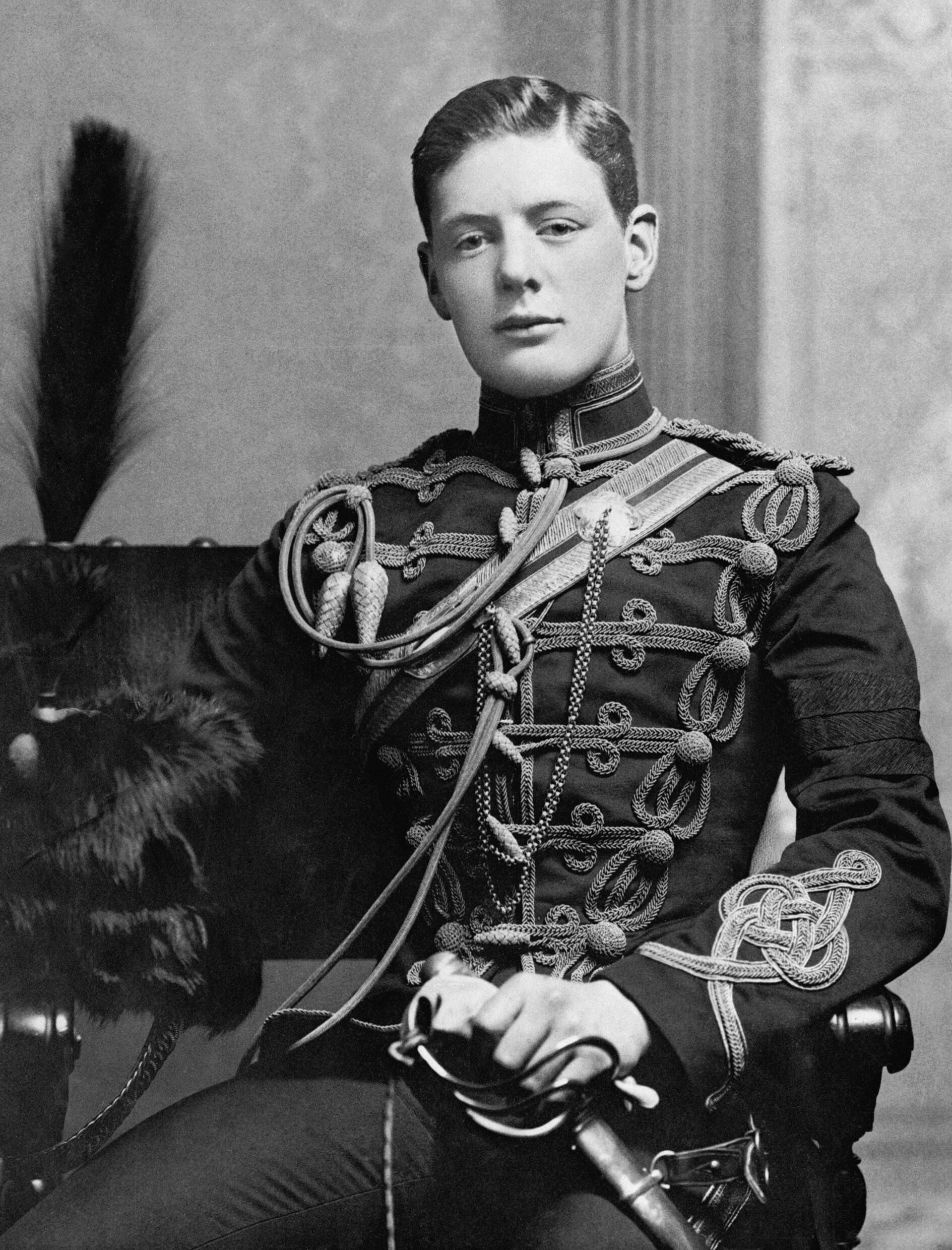
Cornet was originally the lowest grade of commissioned officer in a British cavalry troop, the modern equivalent being a second lieutenant. Although obsolete, the term is still used as an internal title of address when referring to a second lieutenant within the British Army regiments of the Blues and Royals and Queen's Royal Hussars.
The rank was in use by the time of the English Civil War. Among famous cornets in that conflict were George Joyce, Robert Stetson, and Ninian Beall. It was abolished along with the purchase of commissions in the Army Reform Act of 1871, replaced by second lieutenant.
United States
General Alexander Macomb was initially commissioned a cornet in a career in which he eventually became Commanding General of the United States Army.
The ranks of ensign and cornet were abolished in the US Army in 1815.
Traditional duties
The subaltern rank of cornet was the equivalent of the contemporary infantry rank of ensign; today both have been supplanted by the rank of second lieutenant. The cornet carried the troop standard, known as a "guidon".
References
References
- (November 12, 1855). "On the Uses and Application of Cavalry in War from the Text of Bismark: With Practical Examples Selected from Ancient and Modern History". T. & W. Boone.
- O'Sullivan, Harold. (1990). "Military Operations in County Louth in the Run-up to Cromwell's Storming of Drogheda". Journal of the County Louth Archaeological and Historical Society.
- "Definition of cornet | Dictionary.com".
- "Cornet | Definition of Cornet by Oxford Dictionary on Lexico.com also meaning of Cornet".
- Johnson, Samuel. (November 12, 1818). "A Dictionary of the English Language: In which the Words are Deduced from Their Originals; and Illustrated in Their Different Significations, by Examples from the Best Writers: Together with a History of the Language, and an English Grammar". Longman, Hurst, Rees, Orme, and Brown.
- "Holberg og rangvæsenet".
- (2010). "Danske Uniformer 1910–1920 del 1". Devantier.
- "The Project Gutenberg e-Book of History of the War in South Africa, Vol. 1 of 4; Author: Sir Frederick Maurice.".
- "A dictionary of South African English on historical principles". Dictionary Unit for South African English - Rhodes University.
- Duxbury, G. R.. (June 1968). "Changes in Ranks and Designations in the South African Defence Force". The South African Military History Society.
- {{London Gazette. (19 February 1895)
- "The Armed Forces (Forms of Address)". Debretts.
- (1937). "Colonel Ninian Beall". Records of the Columbia Historical Society, Washington, D.C..
- [http://www.history.army.mil/books/CG&CSA/Macomb-A.htm Bell, William Gardner, ''Commanding Generals and Chiefs of Staff, 1775–2005: Portraits & Biographical Sketches of the United States Army's Senior Officer'' (Washington, D.C.: Center of Military History, U.S. Army, 2006)] {{Webarchive. link. (22 April 2021 . {{ISBN). 0-16-072376-0.
- p.973 Tucker, Spencer C. ''The Encyclopedia of the Wars of the Early American Republic, 1783–1812: A Political, Social, and Military History [3 volumes]: A Political, Social, and Military History'' ABC-CLIO, 11 Jun 2014
This article was imported from Wikipedia and is available under the Creative Commons Attribution-ShareAlike 4.0 License. Content has been adapted to SurfDoc format. Original contributors can be found on the article history page.
Ask Mako anything about Cornet (rank) — get instant answers, deeper analysis, and related topics.
Research with MakoFree with your Surf account
Create a free account to save articles, ask Mako questions, and organize your research.
Sign up freeThis content may have been generated or modified by AI. CloudSurf Software LLC is not responsible for the accuracy, completeness, or reliability of AI-generated content. Always verify important information from primary sources.
Report