From Surf Wiki (app.surf) — the open knowledge base
Corn oil
Oil from the seeds of corn
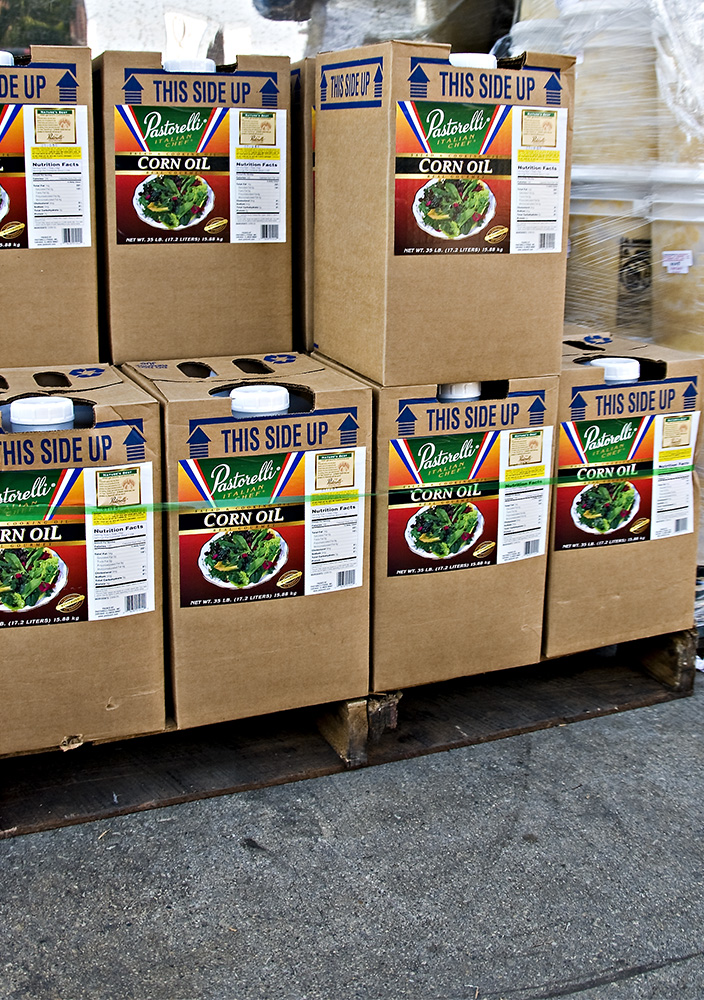
Oil from the seeds of corn
| Field | Value |
|---|---|
| image | Corn oil (mais).jpg |
| cookbook | Corn Oil |
Corn oil (North American) or maize oil (British) is oil extracted from the germ of corn (maize). Its main use is in cooking, where its high smoke point makes refined corn oil a valuable frying oil. It is also a key ingredient in some margarines. Corn oil is generally less expensive than most other types of vegetable oils.
Corn oil is also a feedstock used for biodiesel. Other industrial uses for corn oil include soap, salve, paint, erasers, rustproofing for metal surfaces, inks, textiles, nitroglycerin, and insecticides. It is sometimes used as a carrier for drug molecules in pharmaceutical preparations. Due to its low cost, corn oil is also one of the most popular choices for use in egg addling, an avian population control method in which a bird's egg is coated with oil to prevent the embryo from receiving oxygen.
Production
Almost all corn oil is expeller-pressed, then solvent-extracted using hexane or 2-methylpentane (isohexane). The solvent is evaporated from the corn oil, recovered, and re-used. After extraction, the corn oil is then refined by degumming and/or alkali treatment, both of which remove phosphatides. Alkali treatment also neutralizes free fatty acids and removes color (bleaching). Final steps in refining include winterization (the removal of waxes), and deodorization by steam distillation of the oil at 232 - under a high vacuum.
| Country | Production, 2018 |
|---|---|
| (tonnes) | |
| 1 | |
| 2 | |
| 3 | |
| 4 | |
| 5 | |
| 6 | |
| 7 | |
| 8 | |
| 9 | |
| 10 | |
| Source : FAOSTAT |
Constituents and comparison
- Of the saturated fatty acids, 80% are palmitic acid (lipid number of C16:0), 14% stearic acid (C18:0), and 3% arachidic acid (C20:0).
- Over 99% of the monounsaturated fatty acids are oleic acid (C18:1 cis-9)
- 98% of the polyunsaturated fatty acids are the omega-6 linoleic acid (C18:2 n-6).{{cite web |access-date = 2008-03-23 |archive-url = https://web.archive.org/web/20080706021024/http://www.csuchico.edu/agr/grassfedbeef/health-benefits/index.html |archive-date = 2008-07-06 |url-status = dead
References
References
- "The Use of Egg Addling in Wildlife Damage Management".
- McGlashen, Andy. (6 February 2020). "Without Solid Science, Government Plans to Expand Cormorant Killing Methods".
- Corn Refiners Association. [http://www.corn.org/wp-content/uploads/2009/12/CornOil.pdf Corn Oil] {{Webarchive. link. (2019-04-12 5th Edition. 2006)
- "Faostat".
- (2007). "Modulation of prostate cancer genetic risk by omega-3 and omega-6 fatty acids". The Journal of Clinical Investigation.
This article was imported from Wikipedia and is available under the Creative Commons Attribution-ShareAlike 4.0 License. Content has been adapted to SurfDoc format. Original contributors can be found on the article history page.
Ask Mako anything about Corn oil — get instant answers, deeper analysis, and related topics.
Research with MakoFree with your Surf account
Create a free account to save articles, ask Mako questions, and organize your research.
Sign up freeThis content may have been generated or modified by AI. CloudSurf Software LLC is not responsible for the accuracy, completeness, or reliability of AI-generated content. Always verify important information from primary sources.
Report