From Surf Wiki (app.surf) — the open knowledge base
Coprolalia
Involuntary utterance of socially inappropriate words
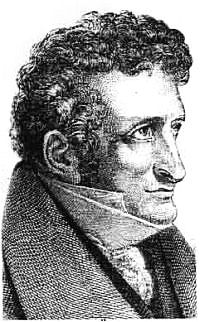
Involuntary utterance of socially inappropriate words
Coprolalia ( ) is involuntary swearing or the involuntary utterance of obscene words or socially inappropriate and derogatory remarks. The word comes from the Greek κόπρος (grc), meaning "dung, feces", and λαλιά (grc) "speech", from λαλεῖν (grc) "to talk".
Coprolalia is an occasional characteristic of tic disorders, in particular Tourette syndrome, although it is not required for a diagnosis of Tourette's and only about 10% of individuals with Tourette's exhibit coprolalia. It is not unique to tic disorders; it may also present itself as a neurological disorder.
Coprolalia is one type of coprophenomenon. Other coprophenomena include the related symptoms of copropraxia, involuntary actions such as performing obscene or forbidden gestures, and coprographia, making obscene writings or drawings.
Characteristics
Coprolalia encompasses the uncontrollable utterance of words and phrases that are culturally taboo or generally unsuitable for acceptable social use, when used out of context. The term is not used to describe contextual swearing. It is usually expressed out of social or emotional context, and may be spoken in a louder tone or different cadence or pitch than normal conversation. It can be a single word, or complex phrases. A person with coprolalia may repeat the word mentally rather than saying it out loud; these subvocalizations can be very distressing.
Coprolalia is an occasional characteristic of Tourette syndrome, although it is not required for a diagnosis of Tourette's. Typically, symptoms of coprolalia follow the development of phonic or motor tics by four to seven years. The severity of symptoms tends to peak during adolescence and subside during adulthood.
It may occur after traumatic brain injury such as stroke in other neurological conditions such as choreoacanthocytosis, seizures, and Lesch–Nyhan syndrome; and rarely in persons with dementia or obsessive-compulsive disorder in the absence of tics.
Brain regions implicated
The neural mechanisms underlying the presence of coprolalia alone are poorly understood. Current research is designed to locate the brain regions that are active during an involuntary tic. Individuals with Tourette Syndrome (TS) exhibit the symptoms of coprolalia, so researchers can study subjects with TS to deduce an etiology for phonic tics. Patterns of neural activity were tracked by using Positron Emission Tomography (PET) scans. The activity of the frontal operculum and Broca's area (Brodmann’s area 44 and 45), may be responsible for the initiation of these vocal tics. Both of these brain areas are responsible for planning and producing speech, which are active during coprolalic vocal tic episodes.
Limbic system structures such as the posterior cingulate cortex are also activated during coprolalic vocal tics. This region of the brain is responsible for emotional processing, so its increase in activation could reveal insights as to how taboo words may be organized differently than the neurolinguistic aspect of the brain.
Prevalence in Tourette syndrome
Only about 10% of people with Tourette's exhibit coprolalia,
There is a low number of epidemiological studies on Tourette syndrome due to ascertainment bias affecting clinical studies. Studies on people with Tourette's often "came from tertiary referral samples, the sickest of the sick". Further, the criteria for Tourette's syndrome changed in 2000 when the impairment criterion was removed from the DSM-IV-TR for all tic disorders. This resulted in an increase of diagnoses in milder cases. Additionally, many clinical studies suffer from small sample size. These factors combine to render older estimates of coprolalia occurrences outdated.
An international, multi-site database of 3,500 individuals with Tourette syndrome drawn from clinical samples found 14% of people with Tourette's accompanied by comorbid conditions had coprolalia, while only 6% of those with uncomplicated ("pure") Tourette's had coprolalia. The same study found that the chance of having coprolalia increased linearly with the number of comorbid conditions: individuals with four or five other conditions—in addition to tics—were four to six times more likely to have coprolalia than persons with only Tourette's.
Management
Botulinum toxin (botox) may be injected near the vocal cords. This does not prevent the vocalizations, but the partial paralysis that results may help control the volume of any outbursts. Botox injections result in more generalized relief of tics than the vocal relief expected.
In deaf individuals
Coprolalia has also been documented in deaf individuals. Non-verbal phonic tics are referred to as "signing phonic tics" in deaf individuals. Coprolalia in signing individuals is characterized by uncontrollable fingerspelling of obscene and inappropriate words and phrases, the production of intercourse related signs, flicking middle fingers, or compulsive repetition of signs. TS is extremely understudied in the deaf community, often being misdiagnosed as schizophrenia. Researchers are still studying the relationship between deafness and Tourette's syndrome to combat misdiagnosis.
Cases of deaf people with Tourette's swearing in sign language have been described.
Society and culture
The entertainment industry often depicts those with Tourette syndrome as being social misfits whose only tic is coprolalia, which has furthered stigmatization and the public's misunderstanding of those with Tourette's. The coprolalic symptoms of Tourette's are also fodder for radio and television talk shows.
References
References
- [http://dictionary.reference.com/browse/coprolalia Coprolalia.] Dictionary.com, Accessed 30 October 2006.
- Singer HS. (March 2005). "Tourette's syndrome: from behaviour to biology". Lancet Neurol.
- Singer C. (May 1997). "Tourette syndrome. Coprolalia and other coprophenomena". Neurol Clin.
- (March 2009). "Coprophenomena in Tourette syndrome". Dev Med Child Neurol.
- Schapiro NA. (2002). "'Dude, you don't have Tourette's:' Tourette's syndrome, beyond the tics". Pediatr Nurs.
- "Linguistics 210 Semantics". Semantic features and Tourette's Syndrome.
- [[Tourette Association of America]]. [https://tourette.org/resource/understanding-coprolalia/ Understanding Coprolalia – A misunderstood symptom]. Accessed 12 October 2021.
- Singer, Carlos. (1997-05-01). "Coprolalia and Other Coprophenomena". Neurologic Clinics.
- (November 2007). "Contemporary encephalitis lethargica presenting with agitated catatonia, stereotypy, and dystonia-parkinsonism". Mov. Disord..
- (November 2007). ["Choreoacanthocytosis in a Mexican family"](https://jamanetwork.com/journals/jamaneurology/fullarticle/794754 ). Arch. Neurol..
- (1992). "Intractable seizures, compulsions, and coprolalia: a pediatric case study". J Neuropsychiatry Clin Neurosci.
- Jinnah HA. [http://www.emedicine.com/neuro/topic630.htm Lesch-Nyhan Syndrome.] eMedicine.com (August 29, 2006). Accessed 28 October 2006.
- (2000-08-01). "A Functional Neuroanatomy of Tics in Tourette Syndrome". Archives of General Psychiatry.
- "Basal Ganglia: What It Is, Function & Anatomy". Cleveland Clinic.
- but it tends to attract more attention than any other symptom.[https://web.archive.org/web/20050208082423/http://www.tsa-usa.org/what_is/Faqs.html Tourette Syndrome FAQ.] Tourette Syndrome Association. Accessed 6 October 2006.
- (December 2008). "Charcot's contribution to the study of Tourette's syndrome". Arq Neuropsiquiatr.
- Swerdlow NR. (September 2005). "Tourette syndrome: current controversies and the battlefield landscape". Curr Neurol Neurosci Rep.
- . ["What is DSM-IV-TR?"](http://www.psychnet-uk.com/x_new_site/DSM_IV/misc_pages/what_is_dsm_iv_tr.html).
- (July 2000). "An international perspective on Tourette syndrome: selected findings from 3,500 individuals in 22 countries". Dev Med Child Neurol.
- (July 1996). "Botulinum toxin injection into vocal cord in the treatment of malignant coprolalia associated with Tourette's syndrome". Mov. Disord..
- Jankovic J. (May 1994). "Botulinum toxin in the treatment of dystonic tics". Mov. Disord..
- (August 2000). "Botulinum toxin in the treatment of tics". Arch. Neurol..
- (January 2005). "Gilles de la Tourette's syndrome and its impact in the UK". Postgrad Med J.
- (2015-10-01). "Gilles de la Tourette syndrome in a cohort of deaf people". Asian Journal of Psychiatry.
- Burd, Larry. (2014-08-27). "Language and Speech in Tourette Syndrome: Phenotype and Phenomenology". Current Developmental Disorders Reports.
- (March 2000). "Sign language tics in a prelingually deaf man". Mov. Disord..
- (December 2001). "Gilles de la Tourette syndrome in a child with congenital deafness". Eur Child Adolesc Psychiatry.
- (March 2014). "Tourette syndrome in film and television". The Canadian Journal of Neurological Sciences.
- (2012). "Public perception of Tourette syndrome on YouTube". Journal of Child Neurology.
- Holtgren B. (January 11, 2006). "Truth about Tourette's not what you think". [[The Cincinnati Enquirer]].
- [https://web.archive.org/web/20011006192716/http://tsa-usa.org/drlaura.html Oprah and Dr. Laura – Conflicting Messages on Tourette Syndrome. Oprah Educates; Dr. Laura Fosters Myth of TS as "Cursing Disorder".] Tourette Syndrome Association (May 31, 2001). Accessed 6 October 2001.
* [http://www.tsa-usa.org/news/DrPhil.htm Letter of response to Dr. Phil.] {{webarchive. link. (August 31, 2008 Tourette Syndrome Association. Accessed 8 May 2006.
* [http://tsa-usa.org/news/Garrison-Keillor.htm Letter of response to Garrison Keillor radio show.] Tourette Syndrome Association. Accessed 8 May 2006.)
This article was imported from Wikipedia and is available under the Creative Commons Attribution-ShareAlike 4.0 License. Content has been adapted to SurfDoc format. Original contributors can be found on the article history page.
Ask Mako anything about Coprolalia — get instant answers, deeper analysis, and related topics.
Research with MakoFree with your Surf account
Create a free account to save articles, ask Mako questions, and organize your research.
Sign up freeThis content may have been generated or modified by AI. CloudSurf Software LLC is not responsible for the accuracy, completeness, or reliability of AI-generated content. Always verify important information from primary sources.
Report