From Surf Wiki (app.surf) — the open knowledge base
Cooling, Kent
Village in Kent, England
Village in Kent, England
| Field | Value |
|---|---|
| country | England |
| official_name | Cooling |
| civil_parish | Cooling |
| population | 216 |
| population_ref | (2011) |
| unitary_england | Medway |
| lieutenancy_england | Kent |
| region | South East England |
| coordinates | |
| constituency_westminster | Rochester and Strood |
| post_town | ROCHESTER |
| postcode_district | ME3 |
| postcode_area | ME |
| dial_code | 01634 |
| os_grid_reference | TQ755760 |
| static_image_name | The Horseshoe and Castle, Cooling - geograph.org.uk - 1403382.jpg |
| static_image_caption | The Horseshoe and Castle pub |
Cooling is a village and civil parish on the Hoo Peninsula, overlooking the North Kent Marshes, 6 miles north northwest of Rochester, England. According to the 2001 census the parish had a population of 209, which increased to 216 at the 2011 Census.
Cooling was recorded in the Domesday Book when it was held by Bishop Odo of Bayeux (half-brother of William the Conqueror). The most notable surviving feature of the village is Cooling Castle, built on the edge of the marshes during the 12th century to defend the neighbouring port of Cliffe from the threat of French raiders.
Notable buildings
Main article: Cooling Castle
Cooling Castle, located at the west end of the village, was built by Sir John Cobham in the 1380s following a French raid on the Thames Estuary. In the early 15th century it was a home for Sir John Oldcastle. In January 1554 it was attacked and badly damaged in a brief siege by Sir Thomas Wyatt during his unsuccessful rebellion against Queen Mary. The castle was subsequently abandoned. A farmhouse and outbuildings were constructed within the ruins. Today the outer gatehouse of the castle can be seen from the side of the road between Cooling and Cliffe.
Main article: St James' Church, Cooling
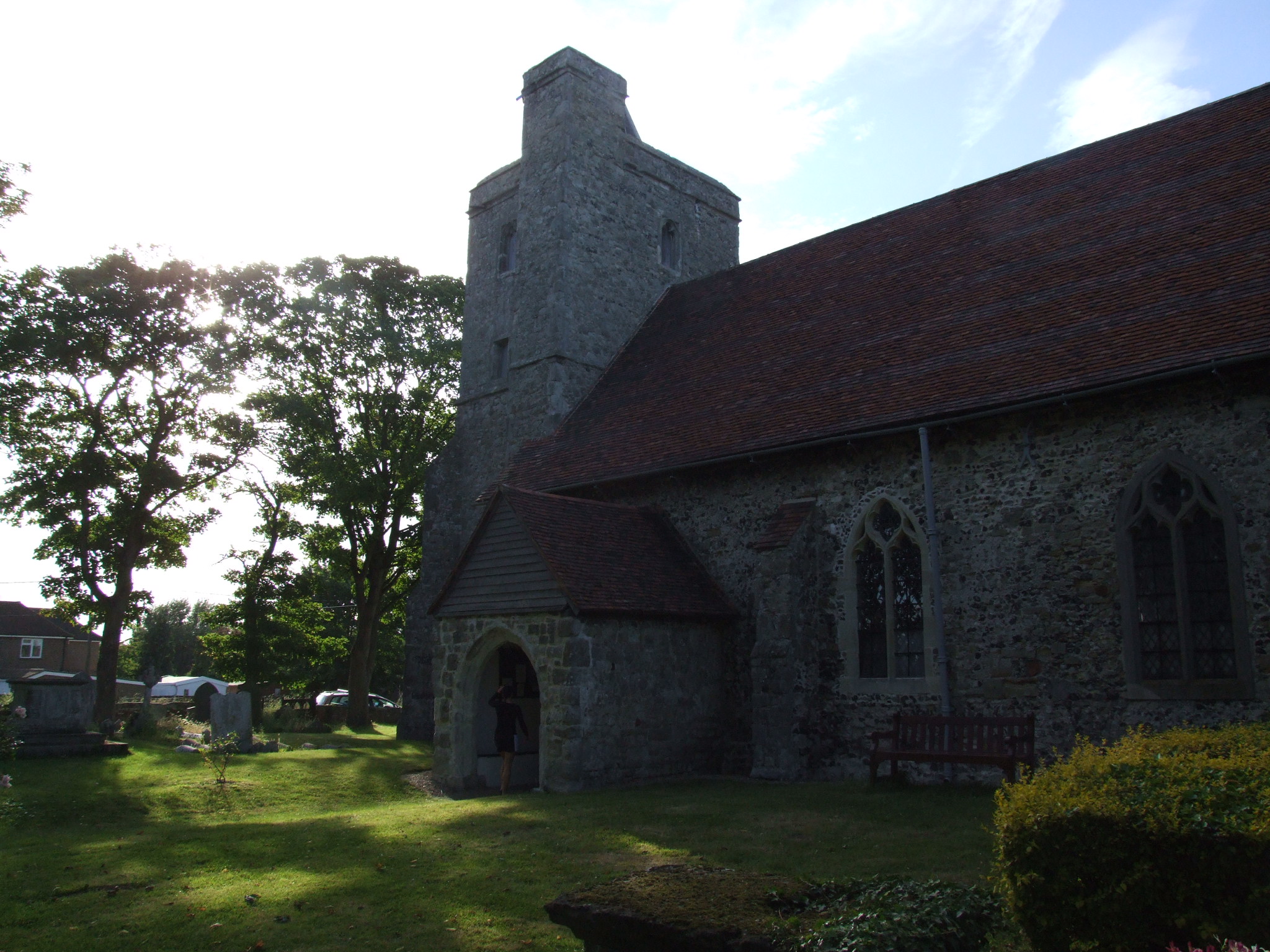
The parish church of St James dates from the late 13th century. Although it has long been classified 'redundant', and no longer used for regular worship, Jools Holland married Christabel (former Countess of Durham) there in August 2007. The church is maintained by the Churches Conservation Trust and is open to visitors daily. In the churchyard are a group of children's gravestones which are widely considered to have inspired Charles Dickens' description of the churchyard in the opening scene of the novel Great Expectations.
References
References
- "Civil Parish population 2011". Office for National Statistics.
- [http://domesdaymap.co.uk/place/TQ7575/cooling/domesdaymap.co.uk]{{dead link. (August 2017)
- "St James, Cooling". Churches Conservation Trust.
- 978-0-14-143956-3
This article was imported from Wikipedia and is available under the Creative Commons Attribution-ShareAlike 4.0 License. Content has been adapted to SurfDoc format. Original contributors can be found on the article history page.
Ask Mako anything about Cooling, Kent — get instant answers, deeper analysis, and related topics.
Research with MakoFree with your Surf account
Create a free account to save articles, ask Mako questions, and organize your research.
Sign up freeThis content may have been generated or modified by AI. CloudSurf Software LLC is not responsible for the accuracy, completeness, or reliability of AI-generated content. Always verify important information from primary sources.
Report