From Surf Wiki (app.surf) — the open knowledge base
Control-Alt-Delete
Computer keyboard shortcut that triggers a reboot or system security function

Computer keyboard shortcut that triggers a reboot or system security function
the keyboard combination
Control-Alt-Delete (often abbreviated to Ctrl+Alt+Del and sometimes called the "three-finger salute" or "Security Keys") is a computer keyboard command on IBM PC compatible computers, invoked by pressing the Delete key while holding the Control and Alt keys: . The function of the key combination differs depending on the context but it generally interrupts or facilitates interrupting a function. For instance, in pre-boot environment (before an operating system starts) or in MS-DOS, Windows 3.0 and earlier versions of Windows or OS/2, the key combination reboots the computer. Starting with Windows 95, the key combination invokes a task manager or security related component that facilitates ending a Windows session or killing a frozen application.
History
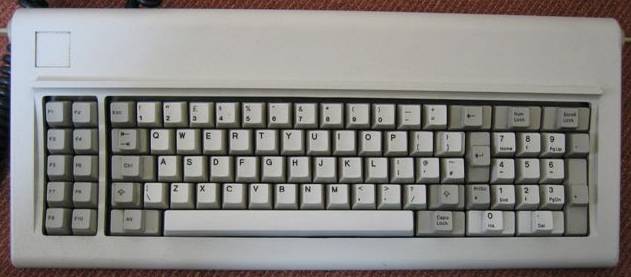
The soft reboot function via keyboard was originally designed by David Bradley.{{cite news |access-date=2018-10-30 |archive-date=2020-07-28 |archive-url=https://web.archive.org/web/20200728074112/https://www.computerworld.com/article/2540049/unsung-innovators--david-bradley--inventor-of-the--three-finger-salute-.html |url-status=live , but found it was too easy to bump the left side of the keyboard and reboot the computer accidentally. According to his own account, Mel Hallerman, who was the chief programmer of the project, therefore suggested switching the key combination to as a safety measure, a combination impossible to press with just one hand on the original IBM PC keyboard.
The feature was originally conceived only as a development feature for internal use and not intended to be used by end users, as it triggered the reboot without warning or further confirmation—it was meant to be used by people writing programs or documentation so that they could reboot their computers without powering them down. Bill Gates (former Microsoft CEO) remembered it as "just something we were using in development and it wouldn't be available elsewhere". The feature, however, was detailed in IBM's technical reference documentation to the original PC and thereby revealed to the general public.
Bradley viewed this work as just one small task out of many: "It was five minutes, 10 minutes of activity, and then I moved on to the next of the 100 things that needed to get done." In a March 2018 email, one of Bradley's co-workers confirmed the command was invented in 1981 in Boca Raton, Florida.
Bradley is also known for his good-natured jab at Gates at the celebration of the 20th anniversary of the IBM PC on August 8, 2001 at The Tech Museum: "I have to share the credit. I may have invented it, but I think Bill made it famous."; he quickly added it was a reference to Windows NT logon procedures ("Press Ctrl + Alt + Delete to log on").
During a question and answer presentation on 21 September 2013, Gates said "it was a mistake", referring to the decision to use Ctrl+Alt+Del as the keyboard combination to log into Windows. Gates stated he would have preferred a single button to trigger the same actions, but could not get IBM to add the extra button into the keyboard layout.
BIOS
By default, when the operating system is running in real mode (or in a pre-boot environment, when no operating system is started yet), this keystroke combination is intercepted by the BIOS. The BIOS reacts by performing a soft reboot (also known as a warm reboot). Examples of such operating systems include DOS, Windows 3.0 in Standard Mode as well as earlier versions of Windows.
Windows
DOS-based Windows{{Anchor|Local}}

In Windows 9x and Windows 3.0 running in 386 Enhanced mode, the keystroke combination is recognized by the Windows keyboard device driver. According to the value of the option in the section of system.ini, Windows performs one of several actions in response. If (default):
- Windows 3.1x displays a blue screen that allows the user to press Enter to end a task that has stopped responding to the system (if such a task exists) or press Control+Alt+Delete again to perform a soft reboot. The text of this rudimentary task manager was written by Steve Ballmer.
- Windows 9x temporarily halts the entire system and displays the Close Program dialog box, a window which lists currently running processes and allows the user to end them (by force, if necessary). The user can press Control+Alt+Delete again to perform a soft reboot.
If , Windows performs a soft reboot.
Windows NT family


The Windows NT family of operating system, whose members do not have "NT" in their names since Windows 2000, reserve Ctrl+Alt+Delete for the operating system itself. Winlogon, a core component of the operating system,{{cite book
;Invoking Windows Security: When a user is logged onto a Windows computer, pressing Ctrl+Alt+Delete invokes Windows Security. It is a graphical user interface that allows user to lock the system, switch user, log off, change the password, invoke Windows Task Manager, or end the Windows session by shutting down, rebooting or putting the computer into sleep or hibernation; clicking "Cancel" or pressing the Escape key returns the user to where they were.
:The key combination always invokes Windows Security in all versions and editions of Windows NT family except Windows XP. (See below.) Prior to Windows Vista, Windows Security was a dialog box, did not allow user switching and showed the logon date and time, name of user account into which the user has logged on and the computer name. Starting with Windows Vista, Windows Security became full-screen.
;Secure attention: Login spoofing is a social engineering trick in which a malicious computer program with the appearance of a Windows login dialog box prompts for user's account name and password to steal them. To thwart this attack, Windows NT implements an optional security measure in which Ctrl+Alt+Delete acts as a secure attention key combination. Once the protection is activated, Windows requires the user to press Ctrl+Alt+Delete each time before logging on or unlocking the computer. Since the key combination is intercepted by Windows itself and malicious software cannot mimic this behavior, the trick is thwarted. Unless the Windows computer is part of a Windows domain network, the secure attention protection is disabled by default and must be enabled by the user.
;Windows XP behavior: Windows XP introduces Welcome Screen, a redesigned logon interface. The Welcome Screen of Windows XP, however, does not support the secure attention scenario. It may be disabled in favor of the classic plain logon screen, either explicitly by the user or as a consequence of the Windows XP computer becoming part of a Windows domain network. With that in mind, Windows XP uses the Ctrl+Alt+Delete in the following unique scenarios:
- At a logon prompt, the key combination dismisses Welcome Screen and invokes classic logon user interface.
- When a user is logged on to a Windows XP computer and Welcome Screen is enabled, pressing the key combination invokes Windows Task Manager instead of Windows Security. :Windows Vista and the next versions of Windows NT did not inherit any of the above.
OS/2
In OS/2, this keystroke combination is recognized by the OS/2 keyboard device driver, which notifies the session manager process. The normal session manager process in OS/2 versions 2.0 and later is the parent Workplace Shell process, which displays the "system is rebooting" window and triggers a soft reboot. If it is pressed twice in succession OS/2 triggers an immediate soft reboot, without waiting for the session manager process.
In both cases, the system flushes the page cache, cleanly unmounts all disc volumes, but does not cleanly shut down any running programs (and thus does not save any unsaved documents, or the current arrangements of the objects on the Workplace Shell desktop or in any of its open folders).
Mac
Ctrl+Alt+Delete is not a keyboard shortcut on macOS. Instead, brings up the Force Quit panel. restarts the computer.
The original Mac OS X Server had an Easter egg in which pressing (as the Option key is the equivalent of Alt key on a Mac keyboard) would show an alert saying "This is not DOS!".
Linux

In the GNOME desktop environment for Linux, is a shortcut for logging out.
On Ubuntu Server, it is used to reboot a computer without logging in.
Equivalents on various platforms
| Platform | Key combination | Function |
|---|---|---|
| Amiga | Perform a hardware reboot by sending a reset signal to system via keyboard MCU (+ possible extra keycode + max 10s delay if "reset warning" is supported and in use). | |
| BIOS | Perform a soft reboot without memory initialization by jumping to IPL reset vector, after broadcasting a pending shutdown event (on AT compatible machines). | |
| DOS + KEYB | QEMM]]) can intercept and turn this into a quick reboot. If more than one task is running under multitaskers like DR-DOS , this will only kill the currently running foreground task. | |
| DOS + K3PLUS or FreeKEYB | Perform a soft reboot with memory initialization (aka "cold reboot") by jumping to IPL reset vector, after broadcasting a pending shutdown event (on AT compatible machines) and flushing disk caches. | |
| Perform a hard reboot by triggering the chipset's reset logic, after broadcasting a pending shutdown event and flushing disk caches. | ||
| Windows 3.x | Close unresponsive applications. Performs a soft reboot if pressed twice. | |
| Windows 9x | Bring up "Close Program" dialog box (a simplistic task manager). Performs a soft reboot if pressed twice. | |
| Windows NT family | Bring up the Windows Task Manager{{cite web | |
| website=Microsoft.com | ||
| Used in Terminal Services to send the command to the remote session / application: | url=https://www.instructables.com/id/List-of-Windows-keyboard-shortcuts | |
| , (twice) | Causes a user-initiated crash (disabled by default; must be enabled with registry editing){{cite web | website=Microsoft Learn |
| OS/2 | Bring up the Window List (unblocking the synchronous input queue){{cite web | |
| Perform a soft reboot | ||
| , (twice) | Halt the system and begin a system dump to floppy disk | |
| TOS (1.4 and higher), MiNT | Perform soft reboot without memory initialization (warm boot) | |
| Perform soft reboot with memory initialization (cold boot) | ||
| Linux | Signal the init process (usually configured to soft reboot){{cite web | |
| Magic SysRq key: Depending on the function key, performs a certain low-level function. Examples: sync (flush caches), reboot (forced soft reboot), unmount (remount filesystems readonly), etc. | ||
| macOS | Force quit applications | |
| Quit all applications and restart | ||
| Quit all applications and shut down | ||
| Show restart, sleep or shutdown dialog | ||
| Immediately restarts computer. | ||
| BeOS | and click an application's entry in the Deskbar | Kills application{{cite web |
| Xfce | + click on window | Kills application (invokes xkill) |
| Lock the screen and invoke the screensaver | ||
| X Window System | Immediately kills the X server (the key combination can be disabled). When using an X Display Manager, it will usually start the X server again. | |
| BBC Micro running Acorn MOS | ||
| Amstrad PCW on CP/M |
| Platform | Key combination | Function |
|---|---|---|
| TI-30XIIS | Restarts the calculator and clears RAM | |
| TI-80, TI-81, TI-82, TI-83, TI-84 | , , | Shows ROM version number. [Enter] enters self test mode |
| TI-85, TI-86 | , , , | Shows ROM version number. [Enter] enters self test mode |
| TI-89 | Restarts the calculator and clears RAM | |
| Force break without restarting RAM | ||
| , , | Enter self test mode | |
| Natural display Casio calculators | Restarts the calculator and clears RAM and EEPROM. Continue pressing Shift to advance through self-test mode. | |
| TI-99/4A | Resets machine back to startup screen. | |
| Voyage 200 | Restarts the calculator and clears RAM | |
| HP-48 | Restarts RPL, clearing the Stack and PICT, closing IO, and returning to the HOME directory (but not purging the memory) | |
| As above, but also purges the memory | ||
| Scientific Atlanta Explorer DHCT | ||
| Samsung cable boxes | (on settop box; not remote) | Reboots box |
| Foxtel Set-top-boxes | (on box; except UEC 720) | Power cycles the machine. |
| (on box; UEC 720) | ||
| (on box; iQ2) | ||
| C64 | Warm starts the machine, does not work if CPU has crashed or NMI is blocked in hardware or rerouted. | |
| Amazon Fire TV | (on remote) | Reboots the device |
| Platform | Key combination | Function |
|---|---|---|
| VMware | Send the command to the virtual machine. | |
| Microsoft Virtual PC | Send the command to the virtual machine. | |
| Windows Virtual PC for Windows 7 | Send the command to the virtual machine. | |
| Oracle VM VirtualBox | Send the command to the virtual machine. |
Cultural adoption

As computers became ubiquitous, so too, has the jargon. Control-Alt-Delete can also mean "dump," or "do away with".
The keystrokes are well known and infamous for escaping from problems in pop culture. For example, in the Billy Talent song "Perfect World", part of the lyrics include the sequence and associate it with resetting their memory and escaping from a situation: "Control-Alt-Deleted. Reset my memory."
Notes
References
References
- Jarvis, Craig. (5 March 2018). "Oops. NC needs to delete ctrl+alt+delete from list of state's inventions". [[News & Observer]].
- link. (2020-07-28 , video clip from IBM PC 20th Anniversary, Aug 8, 2001 (posted to YouTube on Jan 7, 2011))
- "Is Ctrl-Amiga-Amiga something special?".
- admin. (2023-02-28). "Cómo causar manualmente BSOD en Windows: 6 formas paso a paso".
- (2 August 2014). "XFCE4 Keyboard Shortcuts".
- (March 1986). "IBM Personal Computer AT Technical Reference". [[IBM Corporation]].
- Phoenix Technologies, Ltd.. (1989). "System BIOS for IBM PC/XT/AT Computers and Compatibles — The Complete Guide to ROM-Based System Software". [[Addison Wesley Publishing Company]], Inc..
- (3 December 2007). "Unsung innovators: David Bradley, inventor of the "three-finger salute"". [[Computerworld]].
- "CTRL-ALT-DEL: The Three Finger Salute". Togaware.
- (15 August 2011). "Happy 30th Birthday to the IBM PC". [[CBS Interactive]].
- "Thank this guy for 'control-alt-delete'". [[Indianapolis Star]].
- (30 September 1996). "The Art of Assembly Language Programming".
- (24 January 2005). "Why is Control-Alt-Delete the secure attention sequence (SAS)?". [[MSDN Blogs]].
- (28 January 2010). "Enable Press Ctrl+Alt+Del Secure Logon On Windows 7 or Vista". My Digital Life.
- (10 December 2010). "How to enable or disable the CTRL+ALT+DELETE sequence for logging on to Windows XP, to Windows Vista, and to Windows 7". Microsoft.
- (7 May 2007). "How to change the logon window and the shutdown preferences in Windows XP". Microsoft.
- (15 January 2006). "Using CTRL+ALT+DEL key combination to open Windows Security opens Task Manager". Microsoft.
- (30 July 2001). "Windows 3.1 Resource Kit SYSTEM.INI 386ENH Section A–L". Microsoft's KnowledgeBase article 83435.
- (6 May 1998). "Is this possible?".
- (11 January 2004). "Lost Ctrl-Alt-Del function on W98, 2nd".
- (27 September 2013). "If Bill Gates really thinks ctrl-alt-del was a mistake, he should have fixed it himself". [[Condé Nast Publications.
- "Mac OS X Server Easter Egg - This is not DOS".
- (10 May 1995). "K3PLUS v6 - Der ultimative Ersatz für den DOS-Standard-Tastaturtreiber KEYB GR".
- (13 October 1997). "FreeKEYB - Enhanced DOS keyboard and console driver".
- (1988). "Das OS/2-Buch". Osborne / [[McGraw-Hill]] Book Company GmbH.
- (1993). "Das große Buch zu OS/2 Version 2". [[Data Becker]].
- (1995). "OS/2 Warp Version 3 für Insider". SAMS Publishing.
- "Mac keyboard shortcuts". [[Apple, Inc.]].
- "Mac OS X 10.4 or earlier: Computer stops responding". [[Apple, Inc.]].
- "FOXTEL Set-Top Unit Reboot".
- [http://www.wordspy.com/words/Ctrl-Alt-Delete.asp Wordspy] {{Webarchive. link. (2007-11-15 cites the earliest such use as Chris Miksanek's 18 December 1995 Computerworld column titled, "Ctrl-Alt-Delete those holiday trinkets".)
- "Billy Talent – 'Perfect World' Lyrics".
- (26 September 2013). "Bill Gates: Control-Alt-Delete a mistake". [[CNN]].
- (2 September 2014). "Who wrote the text for the Ctrl+Alt+Del dialog in Windows 3.1?". [[Microsoft]].
- (January 1982). "A Closer Look at the IBM Personal Computer". [[BYTE]].
- "Useful keyboard shortcuts". Canonical.
- "Console Security". Canonical.
- (3 April 2002). "[fd-dev] Ctrl+Alt+Del". freedos-dev.
- (27 April 2000). "FreeMiNT-Portal - mint.doc".
- (13 March 2004). "Rebooting from user-space".
- "Control Alt Delete at the Melbourne Fringe".
This article was imported from Wikipedia and is available under the Creative Commons Attribution-ShareAlike 4.0 License. Content has been adapted to SurfDoc format. Original contributors can be found on the article history page.
Ask Mako anything about Control-Alt-Delete — get instant answers, deeper analysis, and related topics.
Research with MakoFree with your Surf account
Create a free account to save articles, ask Mako questions, and organize your research.
Sign up freeThis content may have been generated or modified by AI. CloudSurf Software LLC is not responsible for the accuracy, completeness, or reliability of AI-generated content. Always verify important information from primary sources.
Report