From Surf Wiki (app.surf) — the open knowledge base
Contributing property
Key component of a place listed on the National Register of Historic Places
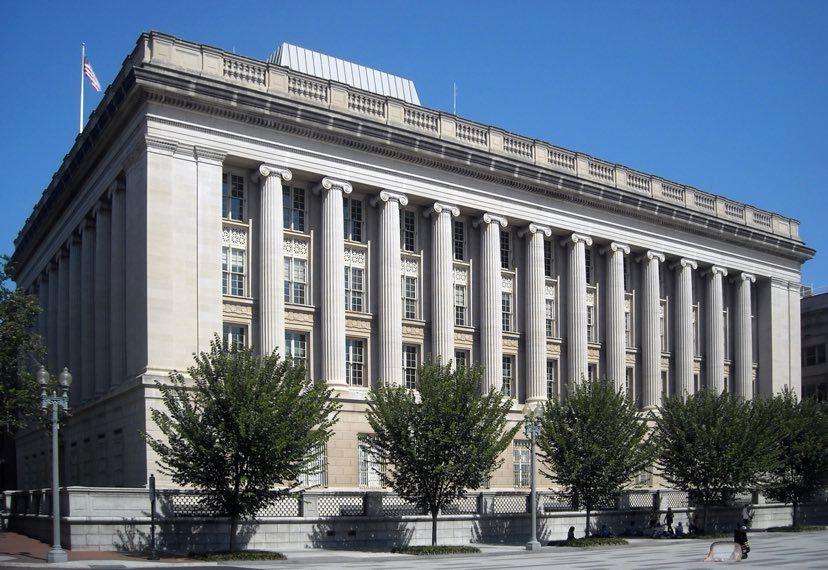
Key component of a place listed on the National Register of Historic Places
In the law regulating historic districts in the United States, a contributing property or contributing resource is any building, object, or structure which adds to the historical integrity or architectural qualities that make the historic district significant. Government agencies, at the state, national, and local level in the United States, have differing definitions of what constitutes a contributing property but there are common characteristics. Local laws often regulate the changes that can be made to contributing structures within designated historic districts. The first local ordinances dealing with the alteration of buildings within historic districts was enacted in Charleston, South Carolina in 1931.
Properties within a historic district fall into one of two types of property: contributing and non-contributing. A contributing property, such as a 19th-century mansion, helps make a historic district historic, while a non-contributing property, such as a modern medical clinic, does not. The contributing properties are key to a historic district's historic associations, historic architectural qualities, or archaeological qualities. A property can change from contributing to non-contributing and vice versa if significant alterations take place.
History
According to the National Park Service, the first instance of law dealing with contributing properties in local historic districts was enacted in 1931 by the city of Charleston, South Carolina; it designated the "Old and Historic District."{{cite web | access-date = 23 April 2007 | url-status = dead | archive-url = https://web.archive.org/web/20070609180638/http://www.cr.nps.gov/hps/workingonthepast/earlymodels.htm | archive-date = June 9, 2007 :However, the archived copy [see above] which is at an "archive dot org" web page, will not reflect updates, if and when the publisher -- nps dot gov -- makes changes to their web site. Therefore, in case such new changes do exist, if those new changes might be of interest, then here is a new ["cite"] link, to allow checking the new version of that web page. That new location (or "URL") was found on March 26, 2023, using a "search" feature of the "nps dot gov" web site. It is: | access-date = 26 March 2023 | url-status = live | archive-url = https://web.archive.org/web/20230326184824/https://www.nps.gov/crps/tps/workingonthepast/earlymodels.htm | archive-date = March 26, 2023
The Columbia Law Review gave dates of 1925 for the New Orleans laws and 1924 for Charleston. The same publication claimed that these two cities were the only cities with historic district zoning until Alexandria, Virginia adopted an ordinance in 1946. The National Park Service appears to refute this.
In 1939, the city of San Antonio, Texas, enacted an ordinance to protect the area of La Villita, the original Mexican village marketplace. The United States Congress adopted legislation in 1950 that declared the Georgetown neighborhood in Washington, D.C. a historic district and protected. By 1965, 51 American communities had adopted preservation ordinances. In 1976 the National Historic Preservation Act was passed by Congress. By 1998, more than 2,300 U.S. towns, cities and villages had enacted historic preservation ordinances.
Definition

Contributing properties are defined through historic district or historic preservation zoning laws, usually at the local level. Zoning ordinances pertaining to historic districts are designed to maintain a district's historic character by controlling demolition and alteration to existing properties. In historic preservation law, a contributing property is any building, structure, object or site within the boundaries of the district that contributes to its historic associations, historic architectural qualities or archaeological qualities of a historic district. It can be any property, structure or object that adds to the historic integrity or architectural qualities that make the historic district, either local or federal, significant. Another key aspect of a contributing property is historic integrity. Significant alterations to a property can sever its physical connections with the past, lowering its historic integrity. Contributing properties are integral parts of the historic context and character of a historic district. A property listed as a contributing member of a historic district meets National Register criteria and qualifies for all benefits afforded a property or site listed individually on the National Register of Historic Places.
Each property within a National Register historic district — contributing or non-contributing — is classified as one of four property types: building, object, structure, or site.
Contributing versus non-contributing

The difference between contributing property and non-contributing property can at times be ambiguous. In particular, American historic districts nominated to the National Register of Historic Places before 1980 have few records of non-contributing structures. State Historic Preservation Offices conduct surveys to determine the historical character of structures in historic districts. Districts nominated to the National Register of Historic Places after 1980 usually list those structures considered non-contributing.
As a general rule, a contributing property helps make a historic district historic. A well-preserved 19th-century mansion will generally contribute to a district, while a modern gas station generally will not. Historic buildings identified as contributing properties can become non-contributing properties within historic districts if major alterations have taken place. Sometimes, an act as simple as re-siding a historic home can damage its historic integrity and render it non-contributing. In some cases, damage to the historic integrity of a structure is reversible, while other times the historic nature of a building has been so "severely compromised" as to be irreversible. For example, in the East Grove Street District in Bloomington, Illinois, contributing properties include the Queen Anne-style George H. Cox House (1886) and the Arts and Crafts-style H.W. Kelley House (1906), and non-contributing properties include the Italianate-style George Brand House (1886), whose original exterior has been covered with a sun room and asbestos siding, and a 1950s physician's office built in a style radically different from the surrounding neighborhood.
References
Citations
Sources
- Morrison, Jacob H. Historic Preservation Law, New Orleans: Pelican Pub. Co., 1957. Further editions published in 1965, 1972 and 1974. , .
References
- (1963). "The Police Power, Eminent Domain, and the Preservation of Historic Property". Columbia Law Review Association, Inc..
- Pyke, John S.. (1971). "Architectural Controls and the Individual Landmark". Duke University School of Law.
- For a catalog of early historic district zoning ordinances, see "Further reading" number one, Morrison, J. ''Historic Preservation Law'', pp. 6-9, 12-15, 126, 1965 ed.
- Hughes, L. Keith. (1975). "Use of Zoning Restrictions to Restrain Property Owners from Altering or Destroying Historic Landmarks". Duke University School of Law.
- (2008-07-25). "Maine Historic Preservation Commission: Architectural Survey: Preservation Planning: Local Preservation Planning: Local Option Property Tax Reimbursement".
- "ORDINANCE NO. 2001-02".
- (2009-05-31). "National Register Historic Districts Questions and Answers".
- "Iowa City Historic Preservation Handbook".
- "Historic Districts".
- (October 1997). "How to Apply the National Register Criteria for Evaluation". [[National Park Service]].
- "East Grove Street District".
This article was imported from Wikipedia and is available under the Creative Commons Attribution-ShareAlike 4.0 License. Content has been adapted to SurfDoc format. Original contributors can be found on the article history page.
Ask Mako anything about Contributing property — get instant answers, deeper analysis, and related topics.
Research with MakoFree with your Surf account
Create a free account to save articles, ask Mako questions, and organize your research.
Sign up freeThis content may have been generated or modified by AI. CloudSurf Software LLC is not responsible for the accuracy, completeness, or reliability of AI-generated content. Always verify important information from primary sources.
Report