From Surf Wiki (app.surf) — the open knowledge base
Continuous tone image
Image in which each point can transition smoothly between shades

Image in which each point can transition smoothly between shades
A continuous-tone image is one in which each color at any point in the image can transition smoothly between shades, rather than being represented by discrete elements such as halftones or pixels.
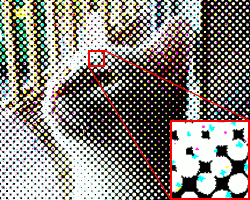
Examples of continuous-tone images are natural phenomena, images produced with dye-based processes, images produced with certain analog printmaking processes (intaglio, block printing, stone lithography), and paintings. Halftone prints (as produced with inkjet and offset printers), traditional film, and digital screens are not truly continuous-tone since they rely on discrete elements (halftones, grains, or pixels) to create an image. However, the term applies when the appearance is so smooth that the breaks or gaps between tonal values are imperceptible.
TV, computer and phone displays are effectively continuous. Purely analog video signals can provide infinite tone variations according to their gamut.
References
References
- McCulloch, Joseph. (2008). "Understanding Continuous Tone and Halftone Printing".
- (2001). "Why Art Cannot Be Taught: A Handbook for Art Students". University of Illinois Press.
- (2012). "Dye Sublimation: An Overview". Journal of Imaging Science and Technology.
- (2015). "The Printmaking Primer: A Beginner's Guide to Printmaking Techniques". RIT Press.
- (2018). "Digital Media: A Practical Guide for Artists and Designers". Wiley.
- (2013). "The Science of Image Processing: An Overview". Springer.
This article was imported from Wikipedia and is available under the Creative Commons Attribution-ShareAlike 4.0 License. Content has been adapted to SurfDoc format. Original contributors can be found on the article history page.
Ask Mako anything about Continuous tone image — get instant answers, deeper analysis, and related topics.
Research with MakoFree with your Surf account
Create a free account to save articles, ask Mako questions, and organize your research.
Sign up freeThis content may have been generated or modified by AI. CloudSurf Software LLC is not responsible for the accuracy, completeness, or reliability of AI-generated content. Always verify important information from primary sources.
Report