From Surf Wiki (app.surf) — the open knowledge base
Contamination
Presence of an unwanted element
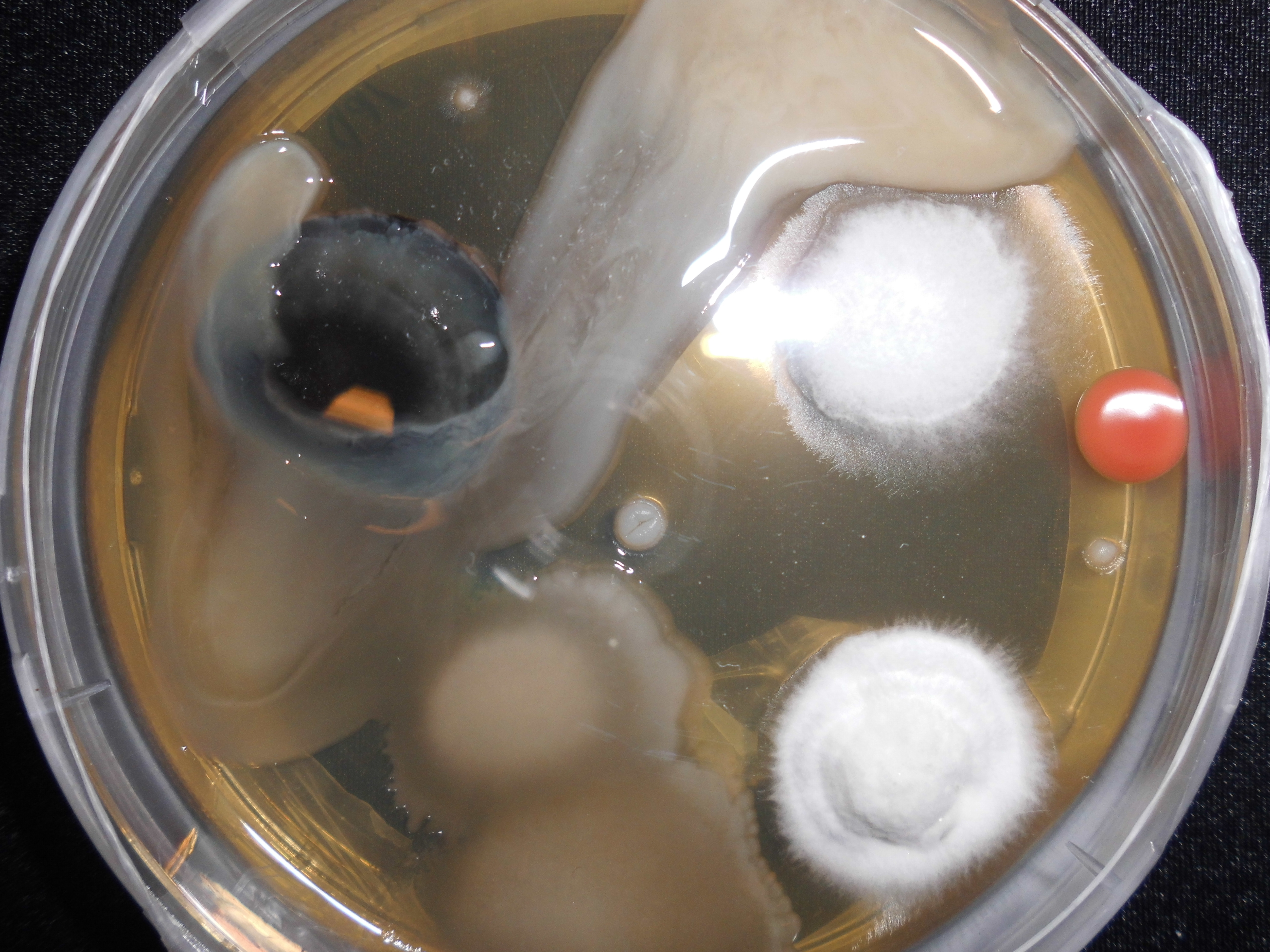
Presence of an unwanted element
Contamination is the presence of a constituent, impurity, or some other undesirable element that renders something unsuitable, unfit or harmful for the physical body, natural environment, workplace, etc.
Types of contamination
Within the sciences, the word "contamination" can take on a variety of subtle differences in meaning, whether the contaminant is a solid or a liquid, as well as the variance of environment the contaminant is found to be in. A contaminant may even be more abstract, as in the case of an unwanted energy source that may interfere with a process. The following represent examples of different types of contamination based on these and other variances.
Chemical contamination
In chemistry, the term "contamination" usually describes a single constituent, but in specialized fields the term can also mean chemical mixtures, even up to the level of cellular materials. All chemicals contain some level of impurity. Contamination may be recognized or not and may become an issue if the impure chemical causes additional chemical reactions when mixed with other chemicals or mixtures. Chemical reactions resulting from the presence of an impurity may at times be beneficial, in which case the label "contaminant" may be replaced with "reactant" or "catalyst." (This may be true even in physical chemistry, where, for example, the introduction of an impurity in an intrinsic semiconductor positively increases conductivity.) If the additional reactions are detrimental, other terms are often applied such as "toxin", "poison", or pollutant, depending on the type of molecule involved. Chemical decontamination of substance can be achieved through decomposition, neutralization, and physical processes, though a clear understanding of the underlying chemistry is required. Contamination of pharmaceutics and therapeutics is notoriously dangerous and creates both perceptual and technical challenges.
Environmental contamination
In environmental chemistry, the term "contamination" is in some cases virtually equivalent to pollution, where the main interest is the harm done on a large scale to humans, organisms, or environments. An environmental contaminant may be chemical in nature, though it may also be a biological (pathogenic bacteria, virus, invasive species) or physical (energy) agent. Environmental monitoring is one mechanism available to scientists to detect contamination activities early before they become too detrimental.
Agricultural contamination
Main article: Biocontainment of genetically modified organisms
Another type of environmental contaminant can be found in the form of genetically modified organisms (GMOs), specifically when they come in contact with organic agriculture. This sort of contamination can result in the decertification of a farm. This sort of contamination can at times be difficult to control, necessitating mechanisms for compensating farmers where there has been contamination by GMOs. A Parliamentary Inquiry in Western Australia considered a range of options for compensating farmers whose farms had been contaminated by GMOs but ultimately settled on recommending no action.Paull, John (2019) Contamination of Farms by Genetically Modified Organisms (GMOs): Options for Compensation , Journal of Organics, 6(1):31–46.
Food, beverage, and pharmaceutical contamination
Main article: Food contaminant, List of medicine contamination incidents
In food chemistry and medicinal chemistry, the term "contamination" is used to describe harmful intrusions, such as the presence of toxins or pathogens in food or pharmaceutical drugs. Another important concept is cross-contamination, which refers to the unintentional transfer of contaminants between samples, surfaces, or environments, potentially causing misleading results or safety hazards.
Radioactive contamination
In environments where nuclear safety and radiation protection are required, radioactive contamination is a concern. Radioactive substances can appear on surfaces, or within solids, liquids, or gases (including the human body), where their presence is unintended or undesirable, and processes can give rise to their presence in such places. Several examples of radioactive contamination include:
- residual radioactive material remaining at a site after the completion of decommissioning of a site where there was a nuclear reactor, such as a power plant, experimental reactor, isotope reactor, or a nuclear powered ship or submarine
- ingested or absorbed radioactive material that contaminates a biological entity, whether unintentionally or intentionally (such as with radiopharmaceuticals
- escape of elements after nuclear accident, such as the contamination of Iodine-131 and Caesium-137 after the nuclear disaster in Chernobyl, Ukraine.
Note that the term "radioactive contamination" may have a connotation that is not intended. The term refers only to the presence of radioactivity and gives no indication itself of the magnitude of the hazard involved. However, radioactivity can be measured as a quantity in a given location or on a surface, or on a unit area of a surface, such as a square meter or centimeter.
Like environmental monitoring, radiation monitoring can be employed to catch contamination-causing activities before much harm.
Interplanetary contamination
Interplanetary contamination occurs when a planetary body is biologically contaminated by a space probe or spacecraft, either deliberately or unintentionally. This can work both on arrival to the foreign planetary body and upon return to Earth.
Contaminated evidence
Main article: Contaminated evidence
In forensic science, evidence can become contaminated. Contamination of fingerprints, hair, skin, or DNA—from first responders or from sources not related to the ongoing investigation, such as family members or friends of the victim who are not suspects—can lead to wrongful convictions, mistrials, or dismissal of evidence.
Contaminated samples
In the biological sciences, accidental introduction of "foreign" material can seriously distort the results of experiments where small samples are used. In cases where the contaminant is a living microorganism, it can often multiply to dominate the sample and render it useless, as in contaminated cell culture lines. A similar affect can be seen in geology, geochemistry, and archaeology, where even a few grains of a material can distort results of sophisticated experiments.
Food contaminant detection method
The conventional food contaminant test methods may be limited by complicated/tedious sample preparing procedure, long testing time, sumptuous instrument, and professional operator. However, some rapid, novel, sensitive, and easy to use and affordable methods were developed including:
- Cyanidin quantification by naphthalimide-based azo dye colorimetric probe.
- Lead quantification by modified immunoassay test strip based on a heterogeneously sized gold amplified probe.
- Microbial toxin by HPLC with UV-Vis or fluorescence detection and competitive immunoassays with ELISA configuration.
- Bacterial virulence genes detection reverse-transcription polymerase chain reaction (RT-PCR) and DNA colony hybridization.
- Pesticide detection and quantification by strip-based immunoassay, a test strip based on functionalized AuNPs, and test strip, surface-enhanced raman spectroscopy (SERS).
- Enrofloxacin (chickens antibiotic) quantification by a Ru(phen)3 2+- doped silica fluorescent nanoparticle (NP) based immunochromatographic test strip and a portable fluorescent strip reader.
- Nitrite quantification by The PRhB-based electrochemical sensors and Ion selective electrodes (ISEs).
References
References
- {{cite Merriam-Webster. contaminate
- Donovan, R.P.. (2001). "Contamination-Free Manufacturing for Semiconductors and Other Precision Products". CRC Press.
- Ramstorp, M.. (2008). "Introduction to Contamination Control and Cleanroom Technology". John Wiley & Sons.
- Moudgil, H.K.. (2014). "Textbook of Physical Chemistry". PHI Learning.
- Alters, S.. (2000). "Biology: Understanding Life". Jones & Bartlett Learning.
- Midcalf, B.. (2004). "Pharmaceutical Isolators: A Guide to Their Application, Design and Control". Pharmaceutical Press.
- (January 2020). "Chemical Impurities: An Epistemological Riddle with Serious Side Effects". International Journal of Environmental Research and Public Health.
- Vallero, D.A.. (2010). "Environmental Contaminants: Assessment and Control". Elsevier.
- Paull, J.. (2014). "Editorial: Organic Versus GMO Farming: Contamination, What Contamination?". Journal of Organic Systems.
- Paull, J.. (2018). "Compensation for GMO contamination". International Sustainable Development Research Society Newsletter.
- Bohrer, D.. (2012). "Sources of Contamination in Medicinal Products and Medical Devices". John Wiley & Sons.
- Rose, M.. (2014). "Encyclopedia of Meat Sciences". Elsevier.
- (2008). "Microbial Food Contamination". CRC Press.
- Ogbede, J.U., Giaever, G. & Nislow, C. A genome-wide portrait of pervasive drug contaminants. Sci Rep 11, 12487 (2021). https://doi.org/10.1038/s41598-021-91792-1 {{Webarchive. link. (2021-12-04)
- Alyosffi, Eshtiaq A.. (2025). "Bacterial Contamination of Circulating Yemeni Banknotes in Sana’a City: Evidence from a Cross-Sectional Study". Medical and Pharmaceutical Journal.
- International Atomic Energy Agency. (2007). "IAEA Safety Glossary: Terminology Used in Nuclear Safety and Radiation Protection, 2007 Edition". International Atomic Energy Agency.
- International Atomic Energy Agency. (2010). "Programmes and Systems for Source and Environmental Radiation Monitoring, Safety Reporsts Series No. 64". International Atomic Energy Agency.
- Chatzis, I.. (26 July 2017). "Decommissioning and Environmental Remediation: IAEA Conference to Start on Monday". International Atomic Energy Agency.
- Stanford Environmental Health and Safety. (29 June 2017). "Radiation Protection Guidance for Hospital Staff".
- von Wehrden, Henrik. (28 December 2011). "Consequences of nuclear accidents for biodiversity and ecosystem services". Conservation Letters.
- Cockell, C.S.. (2005). "Planetary protection—A microbial ethics approach". Space Policy.
- Taupin, J.M.. (2013). "Introduction to Forensic DNA Evidence for Criminal Justice Professionals". CRC Press.
- Geddes, L.. (11 January 2012). "How DNA Contamination Can Affect Court Cases". New Scientist.
- Abzalov, M.. (2016). "Applied Mining Geology". Springer.
- (2015-11-01). "Rapid testing methods for food contaminants and toxicants". Journal of Integrative Agriculture.
- (2014-08-15). "A phenothiazine-based colorimetric chemodosimeter for the rapid detection of cyanide anions in organic and aqueous media". RSC Advances.
- (April 2013). "Rapid and Highly Sensitive Detection of Lead Ions in Drinking Water Based on a Strip Immunosensor". Sensors.
- (2014-05-16). "Fungi and mycotoxins in cocoa: From farm to chocolate". International Journal of Food Microbiology.
- Maragos, Chris. (December 2009). "Fluorescence Polarization Immunoassay of Mycotoxins: A Review". Toxins.
- (April 2014). "Recent Developments in Antibody-Based Assays for the Detection of Bacterial Toxins". Toxins.
- (2010-05-15). "Strip-based immunoassay for rapid detection of thiabendazole". Biosensors and Bioelectronics.
- (2010-07-01). "Development of colloidal carbon-based immunochromatographic strip for rapid detection of carbaryl in fruit juices". European Food Research and Technology.
- (2014-08-01). "4-Amino-3-mercaptobenzoic acid functionalized gold nanoparticles: Synthesis, selective recognition and colorimetric detection of cyhalothrin". Sensors and Actuators B: Chemical.
- (2013-05-21). "Fluorescent Ru(phen) 3 2+ -Doped Silica Nanoparticles-Based ICTS Sensor for Quantitative Detection of Enrofloxacin Residues in Chicken Meat". Analytical Chemistry.
- (2013-05-01). "A facile one-step redox route for the synthesis of graphene/poly (3,4-ethylenedioxythiophene) nanocomposite and their applications in biosensing". Sensors and Actuators B: Chemical.
- (2012-02-01). "A critical evaluation of on-farm rapid tests for measuring nitrate in leafy vegetables". Scientia Horticulturae.
This article was imported from Wikipedia and is available under the Creative Commons Attribution-ShareAlike 4.0 License. Content has been adapted to SurfDoc format. Original contributors can be found on the article history page.
Ask Mako anything about Contamination — get instant answers, deeper analysis, and related topics.
Research with MakoFree with your Surf account
Create a free account to save articles, ask Mako questions, and organize your research.
Sign up freeThis content may have been generated or modified by AI. CloudSurf Software LLC is not responsible for the accuracy, completeness, or reliability of AI-generated content. Always verify important information from primary sources.
Report