From Surf Wiki (app.surf) — the open knowledge base
Conservative liberalism
Political ideology representing the conservative wing of the liberal movement
Political ideology representing the conservative wing of the liberal movement
Conservative liberalism, also referred to as right-liberalism, is a variant of liberalism combining liberal values and policies with conservative stances, or simply representing the right wing of the liberal movement. In the case of modern conservative liberalism, scholars sometimes see it as a less radical variant of classical liberalism; it is also referred to as an individual tradition that distinguishes it from classical liberalism and social liberalism. Ordoliberalism is an influential component of conservative-liberal thought, particularly in its German, British, Canadian, French, Italian, and American manifestations.
In general, liberal conservatism and conservative liberalism have different philosophical roots. Historically, liberal conservatism refers mainly to the case where conservatives embrace the elements of classical liberalism, and conservative liberalism refers to classical liberals who support a laissez-faire economy as well as socially conservative principles. Since conservatives gradually accepted classical liberal institutions, there is very little to distinguish liberal conservatives from conservative liberals. Neoconservatism has also been identified as an ideological relative or twin to conservative liberalism, and some similarities exist also between conservative liberalism and national liberalism.
Overview
Conservative liberalism emerged in late 18th-century France and the United Kingdom, when the moderate bourgeoisie supported the monarchy within the liberal camp. Representatively, Doctrinaires, which existed during the Bourbon Restoration was a representative conservative-liberal party. Radicalism, the leftward flank of liberalism during the late 18th and early 19th centuries that is referred to as classical radicalism, emerged as an opposition against the moderateness of these conservative liberals. Whiggism, or Whig liberalism, in the United Kingdom also forms early conservative liberalism and is distinguished from the Radicals (radical liberalism).
.png)
According to Robert Kraynak, a professor at Colgate University, rather than "following progressive liberalism (i.e. social liberalism), conservative liberals draw upon pre-modern sources, such as classical philosophy (with its ideas of virtue, the common good, and natural rights), Christianity (with its ideas of natural law, the social nature of man, and original sin), and ancient institutions (such as common law, corporate bodies, and social hierarchies). This gives their liberalism a conservative foundation. It means following Socrates, Plato, Aristotle, St. Augustine, St. Thomas Aquinas, and Edmund Burke rather than Locke or Kant; it usually includes a deep sympathy for the politics of the Greek polis, the Roman Republic, and Christian monarchies. But, as realists, conservative liberals acknowledge that classical and medieval politics cannot be restored in the modern world. And, as moralists, they see that the modern experiment in liberty and self-government has the positive effect of enhancing human dignity as well as providing an opening (even in the midst of mass culture) for transcendent longings for eternity. At its practical best, conservative liberalism promotes ordered liberty under God and establishes constitutional safeguards against tyranny. It shows that a regime of liberty based on traditional morality and classical-Christian culture is an achievement we can be proud of, rather than merely defensive about, as trustees of Western civilization."
In the European context, conservative liberalism should not be confused with liberal conservatism, which is a variant of conservatism combining conservative views with liberal policies in regards to the economy, social and ethical issues. The roots of conservative liberalism are to be found at the beginning of the history of liberalism. Until the two world wars, the political class in most European countries from Germany to Italy was formed by conservative liberals. The events such as World War I occurring after 1917 brought the more radical version of classical liberalism to a more conservative (i.e. more moderate) type of liberalism. Conservative liberal parties have tended to develop in those European countries where there was no strong secular conservative party and where the separation of church and state was less of an issue. In those countries, where the conservative parties were Christian democratic, this conservative brand of liberalism developed.
Political stance

Conservative liberalism is generally a liberal ideology that contrasts with social liberalism. Conservative liberalism, along with social liberalism and classical liberalism, is mentioned as the main liberal ideology of European politics. While there are conservative liberals who are located on the right-wing political position, conservative liberalism is often used to describe liberalism close to the political centre to the centre-right of the political spectrum.
Social, classical and conservative liberalism
Social liberalism is a combination of economic Keynesianism and cultural liberalism. Classical liberalism is economic liberalism that partially embraces cultural liberalism. Conservative liberalism is an ideology that highlights the conservative aspect of liberalism, so it can appear in a somewhat different form depending on the local reality. Conservative liberalism refers to ideologies that show relatively conservative tendencies within the liberal camp, so it has some relative meaning. In the United States, conservative liberals mean de facto classical liberals; in Europe, Christian democrats and ordoliberals can also be included. Christian democracy is a mainstream European conservative ideology, so there are cases where it supports free markets, such as Röpke.
By country
France
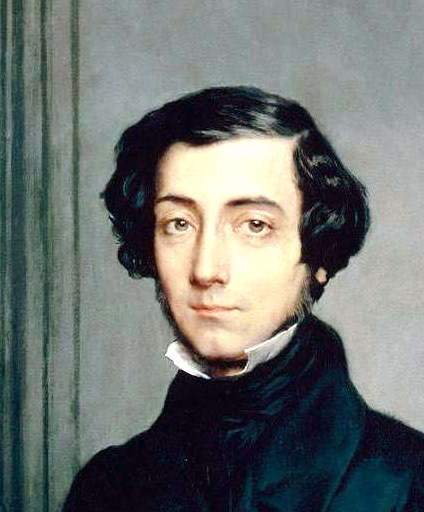
Alexis de Tocqueville and Adolphe Thiers were representative French conservative liberals. They were classified as centre-left liberals (progressive-Orléanists) during the July Monarchy alone; after the French Revolution of 1848, the now French Second Republic entered and they were relegated to conservative liberals.
Germany
Before World War II, conservative liberalism or right-liberalism () was often used in a similar sense to national-liberalism (). National Liberal Party during the German Empire and German People's Party during the Weimar Republic are representative. "Right-liberalism" and "national liberalism" are used in similar meanings in Germany. According to the German Wikipedia, most of the national liberals during the Weimar Republic joined the CDU, a liberal-conservative party. For this reason, the terms "conservative liberalism" are not often used in Germany.
Ordoliberalism is more a variant of conservative liberalism than classical liberalism, which is economic liberalism that embraces cultural liberalism, or social liberalism, in principle because it is influenced by the notion of social justice based on traditional Catholic teachings. After the war, Germany pursued economic growth based on the social market economy, which is deeply related to ordoliberalism.
United Kingdom
In the United Kingdom, David Hume, Adam Smith, and Edmund Burke have been identified as conservative liberals.
United States
In the United States, liberal usually refers to a social liberal form. As such, those referred to as conservative liberals in Europe are often simply referred to as conservatives in the United States. Milton Friedman and Irving Kristol are mentioned as representative conservative liberal scholars. Political scientists evaluate all politicians in the United States as liberals in the academic sense. In general, rather than the Democratic Party, which is close to social liberalism, the Republican Party is evaluated as a conservative-liberal party. In the case of the Democratic Party, the Blue Dog Coalition is evaluated as close to conservative-liberal in fiscal policy, and as moderate to liberal on cultural issues. Conservative liberals in Europe, such as Finland's Centre Party, sometimes criticize cultural liberalism.
Peter Lawler, a professor at Berry College, argued that American neoconservatives might be classified as conservative liberals:
[I]n America today, responsible liberals—who are usually called neoconservatives—see that liberalism depends on human beings who are somewhat child-centered, patriotic, and religious. These responsible liberals praise these non-individualistic human propensities in an effort to shore up liberalism. One of their slogans is "conservative sociology with liberal politics." The neoconservatives recognize that the politics of free and rational individuals depends upon a pre-political social world that is far from free and rational as a whole.
Notable thinkers
- David Hume (1711–1776)
- Adam Smith (1723–1790)
- Edmund Burke (1729–1797)
- Marquis de Lafayette (1757–1834)
- François Guizot (1787–1874)
- Adolphe Thiers (1797–1877)
- Alexis de Tocqueville (1805–1859)
- William Ewart Gladstone (1809–1898)
- Camillo Benso (1810–1861)
- Stanley Baldwin (1867–1947)
- Winston Churchill (1874–1965)
- Gustav Stresemann (1878–1929)
- Paul Reynaud (1878–1966)
- Joseph Schumpeter (1883–1950)
- Walter Eucken (1891–1950)
- Robert Menzies (1894–1978)
- Ludwig Erhard (1897–1977)
- Wilhelm Ropke (1899–1966)
- Friedrich Hayek (1899–1992)
- Michael Oakeshott (1901–1990)
- Ayn Rand (1905–1982)
- Raymond Aron (1905–1983)
- Milton Friedman (1912–2006)
- Erik von Kuehnelt-Leddihn (1919–1999)
- Irving Kristol (1920–2009)
- Helmut Schoeck (1922–1993)
- Francis Fukuyama (born 1952)
List of conservative-liberal parties or parties with conservative-liberal factions
Current parties
- Argentina: Republican Proposal, Union of the Democratic Centre, Christian Democratic Party
- Australia: Liberal Party of Australia
- Belgium: Open Flemish Liberals and Democrats,
- Brazil: Progressive Party, Social Democratic Party (factions), Liberal Party, New Party
- Bulgaria: National Movement for Stability and Progress
- Canada: British Columbia United, Coalition Avenir Québec, Saskatchewan Party
- Chile: Evópoli
- Croatia: Croatian Social Liberal Party
- Czech Republic: Mayors and Independents, TOP 09, Civic Democratic Party, ANO 2011
- Denmark: Venstre–Liberal Party of Denmark
- Estonia: Estonian Reform Party
- El Salvador: Nuevas Ideas, GANA
- Faroe Islands: Union Party,
- Finland: National Coalition Party, Centre Party
- France: The Republicans, Horizons, The Centrists
- Germany: Free Democratic Party
- Ghana: New Patriotic Party
- Greece: New Democracy
- Greenland: Feeling of Community
- Hungary: Hungarian Civic Alliance
- Iceland: Independence Party
- Ireland: Fianna Fáil,
- Israel: Likud, Telem, New Hope
- Italy: Forza Italia
- Japan: Liberal Democratic Party
- Latvia: Unity
- Lithuania: Liberals' Movement, Freedom and Justice
- Luxembourg: Democratic Party
- Mexico: National Action Party
- Moldova: Liberal Party, Liberal Reformist Party
- Netherlands: People's Party for Freedom and Democracy, JA21
- New Zealand: New Zealand National Party
- Norway: Progress Party
- Philippines: Liberal Party (factions), Laban ng Demokratikong Pilipino
- Poland: Civic Coalition
- Portugal: Social Democratic Party
- Romania: National Liberal Party
- Russia: Democratic Choice
- Serbia: People's Party
- Slovakia: Freedom and Solidarity
- Slovenia: Slovenian Democratic Party
- South Africa: Democratic Alliance
- South Korea: Minsaeng Party, Democratic Party of Korea (factions)
- Spain: People's Party, Catalan European Democratic Party, Basque Nationalist Party
- Switzerland: FDP.The Liberals
- Sweden: Liberals
- Thailand: Democrat Party
- Turkey: Good Party
- Ukraine: Civil Position
- United Kingdom: Conservative Party
- United States: Republican Party
Historical parties
- Austria: Constitutional Party, Federation of Independents, Freedom Party of Austria
- Belarus: Belarusian Peasant Party
- Belgium: People's Party
- Brazil: National Democratic Union
- Canada: Liberal-Conservative Party
- Chile: National Party
- Czech Republic: Civic Democratic Alliance, Public Affairs
- El Salvador: National Coalition Party
- France: Feuillant, Thermidorians, Doctrinaires, Resistance Party, Union for the New Republic/Union of Democrats for the Republic/Rally for the Republic, Independent Republicans/Republican Party/Liberal Democracy, Union for French Democracy Republican Party, Union for a Popular Movement, Agir
- Germany: National Liberal Party, German People's Party
- Iceland: Liberal Party (1927), Liberal Party (1998)
- Ireland: Progressive Democrats
- Israel: General Zionists, Liberal Party
- Italy: Italian Liberal Party, Italian Liberal Right, Forza Italia, Civic Choice
- Japan: New Party Sakigake
- Latvia: Latvian Way, Latvia's First Party/Latvian Way
- Lithuania: National Resurrection Party, Liberal and Centre Union
- Mexico: Liberal Party
- Netherlands: Liberal State Party, Party of Freedom
- New Zealand: United Party
- Norway: Frisinnede Venstre
- Poland: Liberty, League of the Right of the Republic, Liberal Democratic Congress, Poland Together
- Romania: Democratic Liberal Party, Liberal Reformist Party
- Russia: Democratic Choice of Russia
- Serbia: Serbian Progressive Party
- Slovakia: Democratic Party
- South Korea: Korea Democratic Party, Democratic Nationalist Party, Democratic Party (1955), New Democratic Party, Reunification Democratic Party, Democratic Party (1990), United Democratic Party (1995), National Congress for New Politics, Democratic Party (South Korea, 2000), People Party (2016), Party for Democracy and Peace, New Alternatives
- Spain: Liberal Party, Democratic Convergence of Catalonia
- Switzerland: Free Democratic Party, Liberal Party
- Turkey: Motherland Party
- United Kingdom: Whigs, Liberal Unionist Party, National Liberal Party
- United States: Whig Party
Notes
References
Bibliography
References
- Nelson, Keith L.. (2019). "The Making of Détente: Soviet-American Relations in the Shadow of Vietnam". [[Johns Hopkins University Press]].
- Orlowski, Paul. (2011-06-21). "Teaching About Hegemony: Race, Class and Democracy in the 21st Century". [[Springer Science+Business Media]].
- (2001). "Representative Government in Modern Europe: Institutions, Parties, and Governments". [[McGraw Hill Education]].
- Allen, R. T.. "Beyond Liberalism: The Political Thought of F. A. Hayek and Michael Polanyi". Transaction Publishers.
- (August 2016}}{{cite web). "Content".
- Kenneth Dyson. (2021). "Conservative Liberalism, Ordo-liberalism, and the State: Discipling Democracy and the Market". Oxford University Press.
- Johnston, Larry. (2007). "Politics: An Introduction to the Modern Democratic State". University of Toronto Press.
- Roger Scruton. "Liberal Conservatism, Not Conservative Liberalism".
- (1998). "Telos". Telos Press.
- (1998). "Peasant and Indian: Political Identity and Indian Autonomy in Chiapas, Mexico, 1970–1996". University of Texas at Austin.
- (2014). "France 1814–1914". [[Routledge]].
- (2013). "In Defence of Modernity: Vision and Philosophy in Michael Oakeshott". Imprint Academic.
- (1986). "The New York Times Book Review". New York Times Company.
- Kraynak, Robert. (December 2005). "Living with liberalism".
- [https://books.google.com/books?id=1wiNKcJzwYQC&dq=Beyond%20Liberalism&pg=PA2 R.T. Allen, ''Beyond Liberalism'', p. 13.]
- (2011). "Europe, A Political Profile: An American Companion to European Politics, Volume 1". [[ABC-CLIO]].
- (2019). "Liberal Parties in Europe". Routledge.
- (2011). "The Modern World-System IV: Centrist Liberalism Triumphant, 1789–1914". University of California Press.
- (2019). "Liberal Parties in Europe". Routledge.
- (2011). "Revolution and the Republic: A History of Political Thought in France Since the Eighteenth Century". Oxford University Press.
- (1983). "The Republican Experiment, 1848–1852". Cambridge University Press.
- Klein, Daniel B.. (2021-03-01). "Conservative liberalism: Hume, Smith, and Burke as policy liberals and polity conservatives". Journal of Economic Behavior & Organization.
- Adams, Ian. (2001). "Political Ideology Today". Manchester University Press.
- (2020). "Educating for Social Justice: Field Notes from Rural Communities". Brill.
- "Centrist Democrats are back. But these are not your father's Blue Dogs.".
- "Väyrynen ryöpyttää keskustan liberaaleja". Kaleva.fi.
- Lawler, Peter. (2002). "Liberal Conservatism, Not Conservative Liberalism". [[The Intercollegiate Review]].
- (1992). "Politicians, Peasants and Priests: Conditions for the Emergence of Liberal Dominance in Western Europe, 1815–1914". University of California.
- (2017). "The Reception of Edmund Burke in Europe". [[Bloomsbury Publishing]].
- (1945). "The Educational Leader". Kansas State College.
- (2021). "Conservative Liberalism, Ordo-liberalism, and the State: Disciplining Democracy and the Market". Oxford University Press.
- (2005). "Liberalism". [[Polity]].
- (1996). "In Defense of Decadent Europe". [[Transaction Publishers]].
- (2021). "Populism and Neoliberalism". [[Routledge]].
- (1976). "Toward a Planned Society: From Roosevelt to Nixon". Oxford University Press.
- (1997). "At the Edge of International Relations: Postcolonialism, Gender, and Dependency". Pinter.
- Pion-Berlin, David. (1997). "Through Corridors of Power: Institutions and Civil-military Relations in Argentina". Pennsylvania State University Press.
- (August 1983). "Quién es quién. Los partidos políticos argentinos". Corbière, Emilio J..
- (6 July 2014). "Documento Final del Congreso Ideológico Nacional del PDC". Partido Demócrata Cristiano.
- (2013). "The Welfare State as Crisis Manager: Explaining the Diversity of Policy Responses to Economic Crisis". Palgrave Macmillan.
- "Parties and Elections in Europe".
- Barbara Happe. (2003). "Poverty and Democracy: Self-Help and Political Participation in Third World Cities". Zed Books.
- Caroline Close. (2019). "Liberal Parties in Europe". Taylor & Francis.
- [http://www.nsd.uib.no/european_election_database/country/czech_republic/parties.html NSD, European Election Database, Czech Republic]
- Rudolf Andorka. (1999). "A Society Transformed: Hungary in Time-space Perspective". Central European University Press.
- (2009). "Euroscepticism and European Integration". CPI/PSRC.
- (2013). "Origin, Ideology and Transformation of Political Parties: East-Central and Western Europe Compared". Ashgate Publishing, Ltd..
- Alari Purju. (2003). "Doing Business with Estonia". GMB Publishing Ltd.
- Tom Lansford. (2014). "Political Handbook of the World 2014". Sage Publications.
- Stephen George. (1991). "Politics and Policy in the European Community (Comparative European Politics)". University Press.
- Jörg Arnold. (2006). "Totalitarian and Authoritarian Regimes in Europe: Legacies and Lessons from the Twentieth Century". Berghahn Books.
- "Fidesz".
- "Wahl auf der grünen Insel | DW | 20.05.2002".
- Hilo Glazer, [https://www.haaretz.com/.premium-from-peace-activist-to-likud-s-youngest-mk-1.5403286 How Likud's Youngest MK Went From the Peace Camp to the Right], ''Haaretz'', Sep 29, 2015
- Anshel Pfeffer, [https://www.haaretz.com/.premium-likud-primaries-may-backfire-on-pm-1.5265980 How the Likud Primaries Could Backfire on Netanyahu], ''Haaretz'', Nov 25, 2012
- (10 December 2020). "Der Rivale macht Ernst".
- Agnes Blome. (2016). "The Politics of Work-Family Policy Reforms in Germany and Italy". Taylor & Francis.
- Tetsuya Kobayashi. (1976). "Society, Schools, and Progress in Japan". Elsevier Science.
- (1975). "Japan Almanac". [[Mainichi Shimbun.
- (2003). "Japan: Wirtschaft - Gesellschaft - Politik". VS Verlag.
- (16 July 2019). "Beautiful Harmony: Political Project Behind Japan's New Era Name – Analysis". eurasia review.
- (9 July 2022). "Shinzo Abe and the long history of Japanese political violence".
- "NSD, European Election Database, Netherlands".
- (2011). "Government Formation". Taylor & Francis.
- (2011). "Regulating the Risk of Unemployment: National Adaptations to Post-Industrial Labour Markets in Europe". Oxford University Press.
- David Hanley. (1998). "Christian Democracy in Europe". Continuum International Publishing Group.
- (2010). "A Re-Definition of Belonging?: Language and Integration Tests in Europe". Brill.
- (18 December 2020). "Eerdmans en Nanninga doen met 'JA21' mee aan verkiezingen".
- Boersema, Wendelmoet. (2021-03-15). "''Waarom de strijd op rechts nooit een volledig rechts kabinet oplevert''".
- Mart Laar. (2010). "The Power of Freedom – Central and Eastern Europe after 1945". Unitas Foundation.
- Joanna A. Gorska. (2012). "Dealing with a Juggernaut: Analyzing Poland's Policy toward Russia, 1989-2009". Lexington Books.
- Bartek Pytlas. (2016). "Radical Right Parties in Central and Eastern Europe: Mainstream Party Competition and Electoral Fortune". Routledge.
- Diamantino P. Machado. (1991). "The Structure of Portuguese Society: The Failure of Fascism". Greenwood Publishing Group.
- Pather, Raeesa. (24 October 2019). "Will the DA survive Mmusi Maimane's resignation?". [[Al Jazeera English]].
- (2014-03-31). "중도보수' 표방 새정치연합, '세모녀 법'등 민생정치도 '흔들'". 참세상.
- [http://www.hani.co.kr/arti/politics/politics_general/628380.html 새정치민주연합 "성찰적 진보와 합리적 보수 아우를 것"]. ''[[한겨레]]''. (March 16, 2014)
- (2021-11-04). "'더불어민주당 2중대'로서 정의당". 매일노동뉴스.
- Anna Bosco. (2013). "Party Change in Southern Europe". Routledge.
- Siripan Nogsuan Sawasdee. (2012). "Thailand". Palgrave Macmillan.
- Olszański, Tadeusz A.. (17 September 2014). "Ukraine's political parties at the start of the election campaign". OSW—Centre for Eastern Studies.
- (2005). "Postcommunist Belarus". Rowman & Littlefield.
- Walter L. White. (1998). "Introduction to Canadian Politics and Government". Harcourt Brace.
- Tadeusz Buksiński. (2009). "Democracy in Western and Postcommunist Countries: Twenty Years After the Fall of Communism". Peter Lang.
- Frank Chibulka. (2012). "Life in Post-Communist Eastern Europe after EU Membership". Routledge.
- Carol Diane St Louis. (2011). "Negotiating Change: Approaches to and the Distributional Implications of Social Welfare and Economic Reform". Stanford University.
- Carol Diane St Louis. (2011). "Negotiating Change: Approaches to and the Distributional Implications of Social Welfare and Economic Reform". Stanford University.
- Stanley G. Payne. (1996). "A History of Fascism, 1914–1945". University of Wisconsin Pres.
- Helena Waddy. (2010). "Oberammergau in the Nazi Era: The Fate of a Catholic Village in Hitler's Germany". Oxford University Press.
- Stijn van Kessel. (2015). "Populist Parties in Europe: Agents of Discontent?". Palgrave Macmillan UK.
- (2010). "Parties, Elections, and Policy Reforms in Western Europe: Voting for Social Pacts". Routledge.
- (2015). "Europe Managing the Crisis: The Politics of Fiscal Consolidation". Routledge.
- link
- (2019). "Liberal Parties in Europe". Taylor & Francis.
- Emiel Lamberts. (1997). "Christian Democracy in the European Union, 1945/1995: Proceedings of the Leuven Colloquium, 15–18 November 1995". Leuven University Press.
- Daniels, John Richard Sinclair. "An Encyclopaedia of New Zealand". [[Ministry for Culture and Heritage.
- Salvatore Garau. (2015). "Fascism and Ideology: Italy, Britain, and Norway". Routledge.
- Jennifer Lees-Marshment. (2009). "Political Marketing: Principles and Applications". Routledge.
- Jerzy Szacki. (1994). "Liberalism After Communism". Central European University Press.
- Dariusz Skrzypinski. (2016). "Political Communication and European Parliamentary Elections in Times of Crisis: Perspectives from Central and South-Eastern Europe". Palgrave Macmillan UK.
- Nyagulov, Blagovest. (2014). "Early Socialism in the Balkans: Ideas and Practices in Serbia, Romania and Bulgaria". Brill.
- (2003). "The Road to the European Union". Manchester University Press.
- (8 January 2019). "Three conservative opposition parties, 'President Roh, apologize for canceling his pledge to relocate the office to Gwanghwamun'. (Korean)". views&news.
This article was imported from Wikipedia and is available under the Creative Commons Attribution-ShareAlike 4.0 License. Content has been adapted to SurfDoc format. Original contributors can be found on the article history page.
Ask Mako anything about Conservative liberalism — get instant answers, deeper analysis, and related topics.
Research with MakoFree with your Surf account
Create a free account to save articles, ask Mako questions, and organize your research.
Sign up freeThis content may have been generated or modified by AI. CloudSurf Software LLC is not responsible for the accuracy, completeness, or reliability of AI-generated content. Always verify important information from primary sources.
Report