From Surf Wiki (app.surf) — the open knowledge base
Congregational mosque
Type of mosque designated for Friday noon prayers
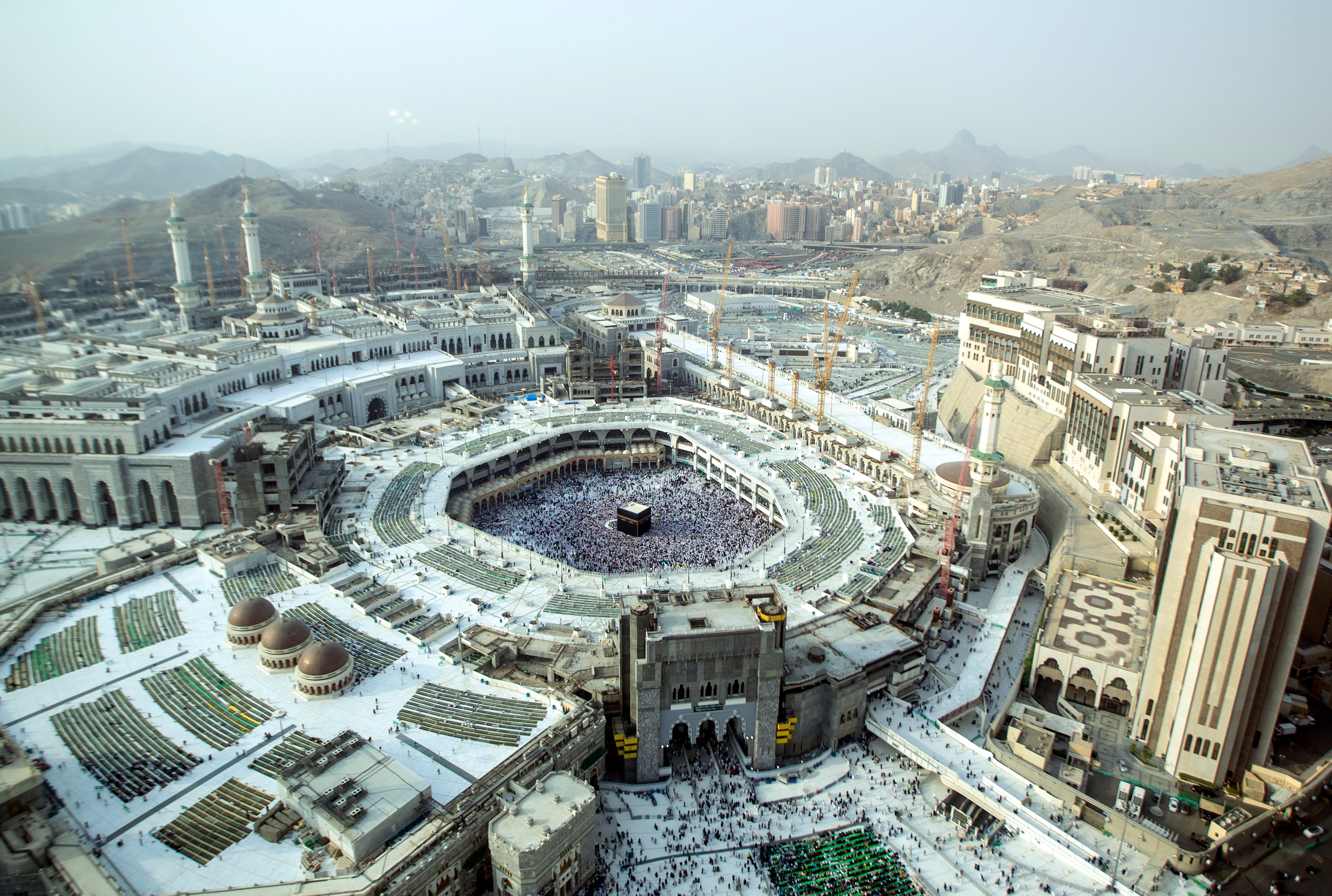
Type of mosque designated for Friday noon prayers
A congregational mosque or Friday mosque (, or simply جَامِع, ; ), or sometimes great mosque or grand mosque (جامع كبير, ; Ulu Cami), is a mosque for hosting the Friday noon prayers known as jumu'ah.See:
- {{Cite book|last=Bearman|first=Peri|title=The Oxford Encyclopedia of Islam and Politics|publisher=Oxford University Press|year=2014|isbn=9780199739356|editor-last=Emad El-Din|editor-first=Shahin|location=|chapter=Masjid Jāmiʿ|quote=The Friday prayer (ṣalāt al-jumʿa), which is mandatory for every adult male Muslim (Shiite Islam makes an exception if no Imam is present), came to be conducted in a large, congregational mosque, known as the masjid jāmiʿ (
It can also host the Eid prayers in situations when there is no musalla or eidgah available nearby to host the prayers. In early Islamic history, the number of congregational mosques in one city was strictly limited. As cities and populations grew over time, it became more common for many mosques to host Friday prayers in the same area. In early centuries, the congregational mosque was also a center of social and public life, hosting various other activities in addition to prayers, such as judicial and educational functions.
Etymology
The full Arabic term for this kind of mosque is masjid jāmi‘ ({{lang|ar|مَسْجِد جَامِع
Historical background
Early functions

Since the early periods of Islam, a functional distinction existed between large central mosques built and controlled by the state versus small local mosques built and maintained by the general population. In the early years of Islam, under the Rashidun caliphs and many of the Umayyad caliphs, each city generally had only one congregational mosque where Friday prayers were held, while smaller mosques for regular prayers were built in local neighbourhoods. In fact, in some parts of the Islamic world such as in Egypt, Friday services were initially not permitted in villages and in other areas outside the main city where the congregational mosque stood.
The ruler or governor of the city usually built his residence (the dar al-imara) next to the congregational mosque, and in this early period the ruler also delivered the khutbah (Friday sermon) during Friday prayers. This practice was inherited from the example of Muhammad and was passed on the caliphs after him. In the provinces, the local governors who ruled on behalf of the caliph were expected to deliver the khutbah for their local community. The minbar, a kind of pulpit from which the khutbah was traditionally given, also became a standard feature of congregational mosques by the early Abbasid period (late eighth century).
Until the 11th century at least, the congregational mosque of a city served many wider civic functions, differing somewhat from the more strictly religious character of mosques today. It hosted judicial activities such as Muslim judges (qadis) announcing their judgments on cases. Its courtyard (sahn) often acted like a public forum for political and scholarly discussions as well as a semi-recreational area that sometimes contained gardens or trees. The courtyard could be occupied by sellers, hawkers, and others conducting business and even animals were sometimes brought inside. The range of informal activities inside the mosque was so diverse that some jurists (ulama) and rulers, such as the Abbasid caliph al-Mu'tadid (), attempted to place restrictions on them. Until the emergence of the madrasa as a distinct institution during the 11th century, the congregational mosque was also the main venue for religious education by hosting halqas (study circles). As it was usually located in the heart of the city and attracted much traffic, the neighbourhood around the congegational mosque also commonly became one of the main market areas in the city.
Proliferation
.jpg)
In later centuries, as the Islamic world became increasingly divided between different political states, as the Muslim population and the cities grew, and as new rulers wished to leave their mark of patronage, it became common to have multiple congregational mosques in the same city. For example, Baghdad, the capital of the Abbasid Caliphate, had just two congregational mosques by the late 9th century: the Great Mosque of al-Mansur, located in the original Round City on the western shore of the Tigris River, and the Mosque of al-Mahdi, in the Rusafa quarter added on the eastern shore of the river. During the 10th century, the number of congregational mosques grew to six, compared to hundreds of other local regular mosques. The Abbasid caliphs, who had by the mid-10th century had lost all political power, retained the privilege of designating congregational mosques in the city and of appointing their preachers. By the 11th century, the Arab writer and traveler Ibn Jubayr notes eleven congregational mosques in the city.
In another example, Fustat, the predecessor of modern Cairo, was founded in the seventh century with just one congregational mosque (the Mosque of Amr ibn al-As), but by the 15th century, under the Mamluks, the urban agglomeration of Cairo and Fustat had 130 congregational mosques. In fact, the city became so saturated with congregational mosques that by the late 15th century its rulers could rarely build new ones. A similar proliferation of congregational mosques occurred in the cities of Syria, Iraq, Iran, and Morocco, as well as in the newly conquered Constantinople (Istanbul) under Ottoman rule.
Architecture
As both a prayer and a community space, mosque buildings allow for religious and social engagement. The Qur'an does not state architectural parameters for a congregational mosque, and as a result there are both differences and similarities between congregational mosques of different regions. As all male members of the community are expected to attend Friday prayers, congregational mosques must be large enough to accommodate them and their size thus varies from community to community. The Qur'an does highlight that the prayer hall has to accommodate the population of the community. Almost all congregational mosques feature a minbar, which is an elevated platform where the Friday sermon is given. The minbar is usually places near the qibla wall (the wall standing in the direction of prayer) and the mihrab.
References
References
- (2018). "The Oxford Illustrated History of the Holy Land". [[Oxford University Press]].
- (2020). "Archive Wars The Politics of History in Saudi Arabia". [[Stanford University Press]].
- Bearman, Peri. (2014). "The Oxford Encyclopedia of Islam and Politics". Oxford University Press.
- "Encyclopaedia of Islam, Three". Brill.
- Bennison, Amira K.. (2014). "The Great Caliphs: The Golden Age of the 'Abbasid Empire". Yale University Press.
- (2018). "Form and Function in the Congregational Mosque". Estetika: The European Journal of Aesthetics.
- (2018). "Form and Function in the Congregational Mosque". Estetika: The Central European Journal of Aesthetics.
- (2009). "The Grove Encyclopedia of Islamic Art and Architecture". Oxford University Press.
- (1991). "Encyclopaedia of Islam, Second Edition". Brill.
- (2009). "The Oxford Encyclopedia of the Islamic World". Oxford University Press.
- (2009). "The Oxford Encyclopedia of the Islamic World". Oxford University Press.
- (1991). "Encyclopaedia of Islam, Second Edition". Brill.
- (2009). "The Oxford Encyclopedia of the Islamic World". Oxford University Press.
- Petersen, Andrew. (1996). "Dictionary of Islamic architecture". Routledge.
- (2009). "The Grove Encyclopedia of Islamic Art and Architecture". Oxford University Press.
- El-Hibri, Tayeb. (2021). "The Abbasid Caliphate: A History". Cambridge History Press.
- Behrens-Abouseif, Doris. (2008). "The City in the Islamic World (Volume 1)". Brill.
- (2020). "The Art of Orientation: An Exploration of the Mosque Through Objects". Hirmer Publisher.
- Uluhanli, Leyla. (2017). "Mosques: Splendors of Islam". Rizzoli.
- (1994). "The Mosque: History, Architectural Development & Regional Diversity". Thames and Hudson.
This article was imported from Wikipedia and is available under the Creative Commons Attribution-ShareAlike 4.0 License. Content has been adapted to SurfDoc format. Original contributors can be found on the article history page.
Ask Mako anything about Congregational mosque — get instant answers, deeper analysis, and related topics.
Research with MakoFree with your Surf account
Create a free account to save articles, ask Mako questions, and organize your research.
Sign up freeThis content may have been generated or modified by AI. CloudSurf Software LLC is not responsible for the accuracy, completeness, or reliability of AI-generated content. Always verify important information from primary sources.
Report