From Surf Wiki (app.surf) — the open knowledge base
Congenital sensorineural deafness in cats
High rates of congenital deafness in white cats

High rates of congenital deafness in white cats

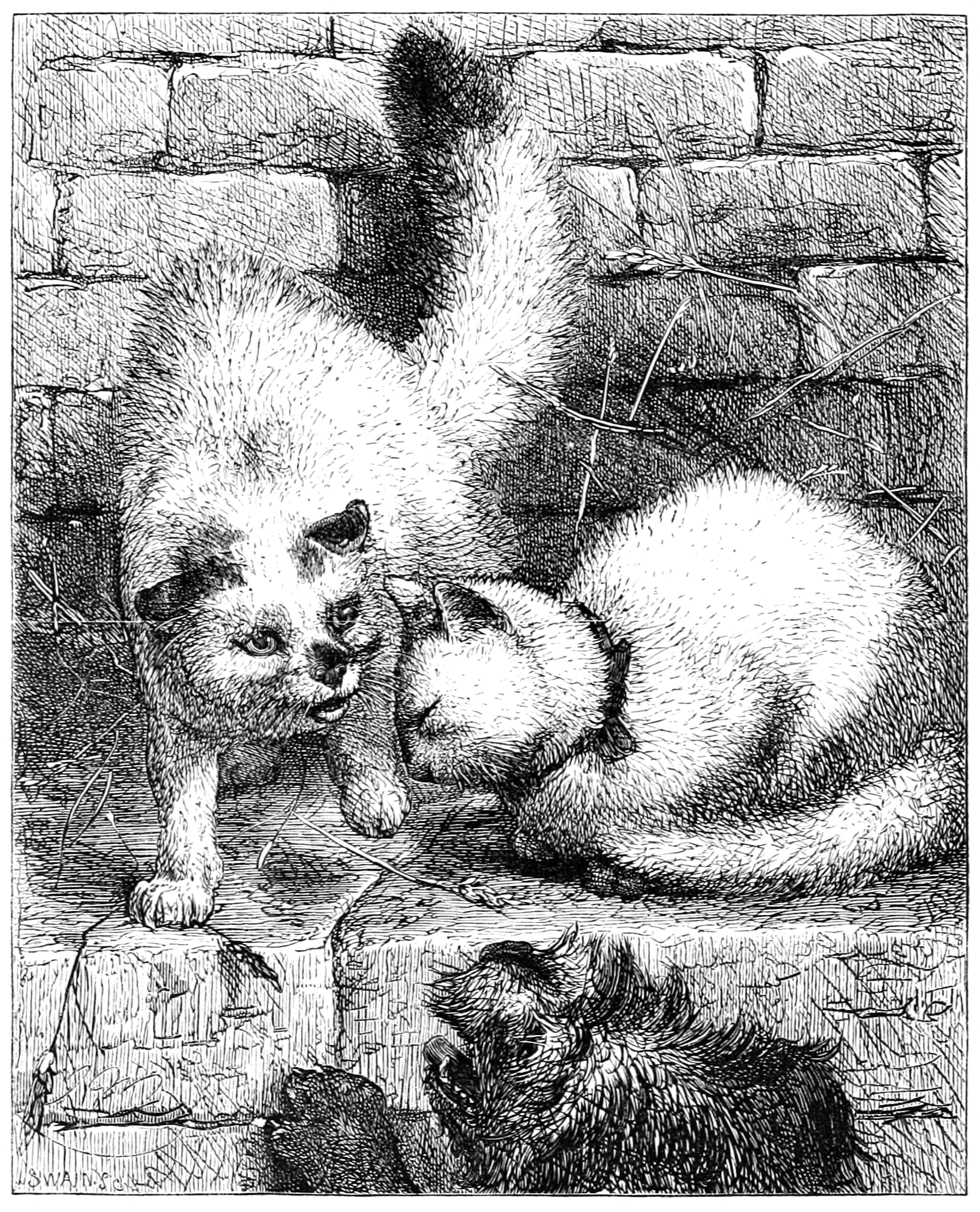
Congenital sensorineural deafness occurs commonly in domestic cats with a white coat. It is a congenital deafness caused by a degeneration of the inner ear. Deafness is far more common in white cats than in those with other coat colours.
Occurrence
Domesticated cats with blue eyes and white coats are often completely deaf. Charles Darwin mentions this phenomenon in his book, On the Origin of Species, to explain correlated variation. Deafness can occur in white cats with yellow, green or blue irises, although it is mostly likely in white cats with blue irises. In white cats with one blue eye and one eye of a different color (odd-eyed cats), deafness is more likely to affect the ear on the blue-eyed side. Approximately 50% of white cats have one or two blue eyes.
According to the ASPCA Complete Guide to Cats, "17 to 20 percent of white cats with non-blue eyes are deaf; 40 percent of "odd-eyed" white cats with one blue eye are deaf; and 65 to 85 percent of blue-eyed white cats are deaf."
In one 1997 study of white cats, 72% of the animals were found to be totally deaf. The entire organ of Corti in the cochlea was found to have degenerated in the first few weeks after birth; however, even during these weeks no brain stem responses could be evoked by auditory stimuli, suggesting that these animals had never experienced any auditory sensations. It was found that some months after the organ of Corti had degenerated, the spiral ganglion of the cochlea also began to degenerate.
BAER-testing (Brainstem Auditory Evoked Response) is used to test deafness in cats.
Genetics
Although few studies have been done to link this to genes known to be involved in human Waardenburg syndrome, a syndrome of hearing loss and depigmentation caused by a genetic disruption to neural crest cell development, such a disruption would lead to this presentation in cats as well. Waardenburg syndrome type 2A (caused by a mutation in MITF) has been found in many other small mammals including dogs, minks and mice, and they all display at least patchy white depigmentation and some degeneration of the cochlea and saccule, as in deaf white cats.
A major gene that causes a cat to have a white coat is a dominant masking gene, an allele of KIT which suppresses pigmentation and hearing. The cat would have an underlying coat colour and pattern, but when the dominant white gene is present, that pattern will not be expressed, and the cat will be deaf. A cat that is homozygous (WW) or heterozygous (Ww) for this gene will have a white coat despite the underlying pattern/colour. A cat that lacks this dominant masking gene (ww) will exhibit a coat colour/pattern. KIT mutations have also led to patchy depigmentation and different coloured irises in humans, and KIT has been found to increase MITF expression, the gene involved in human Waardenburg syndrome type 2A.
Non-deaf blue-eyed white cats
The established link between deafness and blue eyes is found in the link between deafness, blue eyes, and solid white coats. However, it is a common misconception that all white cats with blue eyes are deaf. It is possible to have a cat with a white coat without this gene as an extreme form of white spotting, though this is rare; some small non-white patch usually remains.
Furthermore, there are multiple genes responsible for blue eyes, and several of these genes are not linked to masking, white coats or deafness, such as the dominant blue eye (DBE) gene carried by Ojos Azules. Another example is a mutation in the TYR gene causing point coloration, a form of partial albinism seen in Siamese cats and related breeds. Foreign White cats, a white variation of Siamese, are also not prone to deafness.
In popular culture
- The character Snowkit in the Warriors series book A Dangerous Path has congenital sensorineural deafness. His condition leads to his death as he fails to hear his mother's warning of the appearance of a predator.
References
References
- (13 April 1965). "Observations on the histological features, development and pathogenesis of the inner ear degeneration of the deaf white cat". Proceedings of the Royal Society B: Biological Sciences.
- (June 2010). "Coat color and coat color pattern-related neurologic and neuro-ophthalmic diseases". Can. Vet. J..
- Darwin, Charles. (1909). "On the Origins of Species". P. F. Collier.
- "Ask Elizabeth: White Cats and Blindness/Deafness". Cornell University College of Veterinary Medicine Ithaca, New York.
- (May 1971). "White fur, blue eyes, and deafness in the domestic cat". Journal of Heredity.
- Richards, J.. (1999). "ASPCA Complete Guide to Cats: Everything You Need to Know About Choosing and Caring for Your Pet". Chronicle Books.
- (January 1998). "A model for prelingual deafness, the congenitally deaf white cat—population statistics and degenerative changes". Hearing Research.
- (March 2009). "Brainstem auditory evoked response (BAER) testing in animals". Canadian Veterinary Journal.
- (1979). "The association of Waardenburg syndrome and Hirschsprung megacolon". American Journal of Medical Genetics.
- (1 August 2014). "Association of MITF gene with hearing and pigmentation phenotype in Hedlund white American mink (Neovison vison)". Journal of Genetics.
- Strain, George M.. (2015). "The Genetics of Deafness in Domestic Animals". Frontiers in Veterinary Science.
- (1 October 2014). "Endogenous Retrovirus Insertion in the KIT Oncogene Determines White and White spotting in Domestic Cats". G3: Genes, Genomes, Genetics.
- (13 July 2019). "A novel KIT mutation in a family with expanded syndrome of piebaldism". JAAD Case Reports.
- (31 March 2011). "KIT signaling regulates MITF expression through miRNAs in normal and malignant mast cell proliferation". Blood.
- Strain, George M.. (2011). "Deafness in Dogs and Cats". [[CAB International]].
- Hunter, Erin. (17 March 2015). "A Dangerous Path". Harper Children's.
- Hunter, Erin. (17 March 2015). "A Dangerous Path". Harper Children's.
This article was imported from Wikipedia and is available under the Creative Commons Attribution-ShareAlike 4.0 License. Content has been adapted to SurfDoc format. Original contributors can be found on the article history page.
Ask Mako anything about Congenital sensorineural deafness in cats — get instant answers, deeper analysis, and related topics.
Research with MakoFree with your Surf account
Create a free account to save articles, ask Mako questions, and organize your research.
Sign up freeThis content may have been generated or modified by AI. CloudSurf Software LLC is not responsible for the accuracy, completeness, or reliability of AI-generated content. Always verify important information from primary sources.
Report