From Surf Wiki (app.surf) — the open knowledge base
Confucius Institute
Chinese international educational partnership program

Chinese international educational partnership program
| Field | Value |
|---|---|
| name | Confucius Institute |
| logo | Confucious Institute logo.svg |
| logo_size | 150px |
| type | Cultural promotion organization |
| founded_date | |
| location | 15 Xueyuan Road, Haidian District, Beijing |
| area_served | Worldwide |
| focus | Chinese culture, Chinese language |
| method | Education and advocacy |
| owner | (2020–present) |
| Hanban (before 2020) | |
| homepage | |
| website |
Hanban (before 2020) | Non-profit_slogan =
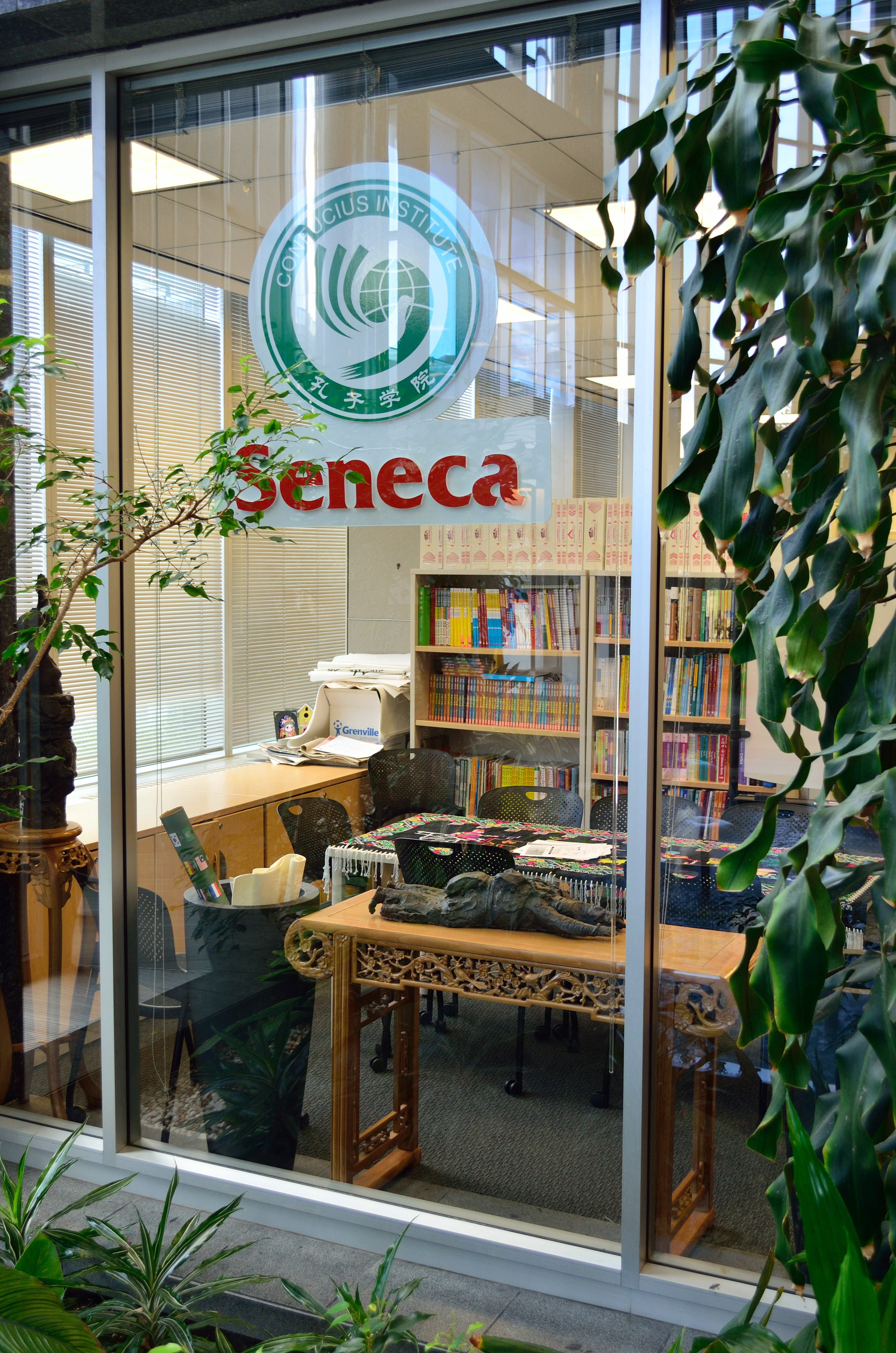
Confucius Institutes (CI; ) are public educational and cultural promotion programs of the state of China. The stated aim of the program is to promote Chinese language and culture, support local Chinese teaching internationally, and facilitate cultural exchanges.
The program is funded and arranged by the (CIEF), a government-organized non-governmental organization (GONGO) under the Ministry of Education of the People's Republic of China. The Confucius Institute program was formerly under Hanban, another organization under the Ministry of Education.
The Confucius Institute program began in 2004 overseen by individual universities. In 2020, the Chinese International Education Foundation was registered and granted exclusive use of Confucius Institute's trademark, and began to operate Confucius Institutes under a brand licensing model. The institutes operate in co-operation with local affiliate colleges and universities around the world, and financing is shared between Hanban and the host institutions. The related Confucius Classroom program partners with local secondary schools or school districts to provide teachers and instructional materials.
Officials from China have compared Confucius Institutes to language and culture promotion organizations such as Britain's British Council, France's Alliance Française, Spain's Instituto Cervantes. Research from the Freeman Spogli Institute and Stanford Institute for Economic Policy Research suggested that Confucius Institute employees have minimal training in politics, face little day-to-day monitoring while teaching abroad and are not screened for political beliefs. They do, however, tend to disseminate political perspectives in keeping with the official political views of the CPC and often prefer not to talk about Chinese political issues at all.
Confucius Institutes have been accused of being used as a form of "soft power" by the Chinese government, which spends approximately $10 billion a year on CIs and related programs to exercise these initiatives. Chinese Communist Party (CCP) general secretary Xi Jinping in 2013 stated that the intentions are to "give a good Chinese narrative". There have been concerns about potential censorship regarding certain content, including discussions on individual freedoms and democracy, the 1989 Tiananmen Square protests and massacre, Taiwan independence, human rights in Tibet, Falun Gong, and persecution of Uyghurs in China. Controversies involving CIs in the United States have led to scrutiny from public officials and legislative action, with Congress restricting federal funding to schools with institutes in 2018 and nearly all of the institutes since closing.
History
The first Confucius Institute opened in 2004 in Seoul, South Korea, after establishing a pilot institute in Tashkent, Uzbekistan in June 2004. The CI in South Korea is no longer active. The second Confucius Institute was opened on the campus of the University of Maryland, College Park, also in November 2004. In 2006, the goal of 1,000 Confucius Institutes by 2020 was being discussed.
Hundreds more have opened since in dozens of countries around the world. All countries in the Cooperation between China and Central and Eastern European (China-CEE) host at least one Confucius Institute, and some (Serbia, Bosnia and Herzegovina, Hungary, and Romania) host multiple of them. In 2001, the first Confucius Institute in Africa opened as a collaboration between University of Nairobi in Kenya and Tianjin Normal University in China.
In April 2007, the first research-based Confucius Institute opened in Waseda University in Japan. In partnership with Peking University, the program promotes research activities of graduate students studying Chinese. In 2007, China's Ministry of Education estimated that 100 million people overseas would be learning Chinese by 2010.
In 2010, the highest concentration of institutes was in the United States, Japan, and South Korea.
From 2006 to 2019, the Chinese government spent more than $150 million on institutes in the U.S. The number of institutes in the U.S. peaked in 2018, at around 100, with the total around the world being about 550. As of 2019, there were 530 Confucius Institutes in dozens of countries on six continents.
In 2022, the Confucius Institute at the University of Karachi was attacked in a suicide bombing.
Name
The Confucius Institute is named after the noted Chinese philosopher Confucius (551–479 BC). Throughout the 20th century, CCP leaders criticized and denounced Confucius as the personification of China's "feudal" traditions, with anti-Confucianism ranging from the 1912 New Culture Movement to the 1973 Criticize Lin, Criticize Confucius campaign during the Cultural Revolution. However, in recent decades, interest in pre-modern Chinese culture has grown in the country, and Confucius in particular has seen a resurgence in popularity. Outside of China, Confucius is a generally recognizable symbol of Chinese culture, removed from the negative associations of other prominent Chinese figures such as chairman Mao Zedong.
"Confucius Institute" is a trademarked brand name, which according to a spokesman for the organisation, "Those who enjoy more brand names will enjoy higher popularity, reputation, more social influence, and will therefore be able to generate more support from local communities." A 2011 crackdown protected "Confucius Institute" from preregistration infringement in Costa Rica.
A China Post article reported in 2014 that "Certainly, China would have made little headway if it had named these Mao Institutes, or even Deng Xiaoping Institutes. But by borrowing the name Confucius, it created a brand that was instantly recognized as a symbol of Chinese culture, radically different from the image of the Communist Party."
Purpose
.jpg)
The stated purpose of Confucius Institutes (CIs) is to promote and teach Chinese culture and language around the world. The director of the CI program, Xu Lin, stated that CIs were started to cater to the sudden uptick in interest of the Chinese language around the world. They also provide Chinese language teaching staff from mainland China. As of 2011, there were 200 such teachers working in the United States. In the Middle East 14 institute, and the main purpose for the local population to participate in the institute activities are learning Chinese to find a job in the local market or to find a job in the growing Chinese market.
Confucius Institutes are also intended by China as cultural diplomacy to use language and culture to promote China's image overseas and create a positive international environment for China. People's Daily has described Confucius Institutes as a form of public diplomacy.
Organization
Confucius Institutes were previously under Hanban, a non-profit government organization affiliated with the Ministry of Education and operated by a committee of party-state officials. The Confucius Institute headquarters in Beijing establishes the guidelines which the separate Confucius Institutes worldwide follows. The headquarters is governed by a council with fifteen members, ten of whom are directors of overseas institutes. The institutes themselves are individually managed under the leadership of their own board of directors, which should include members of the host institution. The current chair of the Confucius Institute Headquarters council is Liu Yandong, a Chinese vice premier and member of the Politburo of the Chinese Communist Party who formerly headed the United Front Work Department. Other leaders of the council are similarly drawn from the CCP and central government agencies, such as the Ministry of Finance, Ministry of Education, and the State Council Information Office (also known as the Office of Overseas Propaganda). The council sets the agenda for the Confucius Institutes and makes changes to the bylaws while other tasks and ongoing management of the Confucius Institute Headquarters are handled by the professional executive leadership headed by the director-general.
The Chinese Government shares the burden of funding Confucius Institutes with host universities, and takes a hands-off approach to management. The institutes function independently within the guidelines established by Hanban and the Confucius Institute Headquarters. Each institute is responsible for drawing up and managing their own budget, which is subject to approval by the headquarters. The Confucius Institute Headquarters provides various restrictions on how their funds may be used, including earmarking funds for specific purposes. Institutes in the United States were generally provided with $100,000 annually from Hanban, with the local university required to match funding.
In addition to their local-partner university, Confucius Institutes operate in co-operation with a Chinese partner university. The Chinese partner university supplies teaching materials, a co-director/dean, and instructors. Many institutes are governed by a board which is composed of several members from the Chinese partner school, with the remaining members affiliated with the local-partner university. Most of the Confucius Institutes in Central Asian countries are partnered with universities in Xinjiang. At most institutes, the director is appointed by the local partner university.
In July 2020, Hanban announced its renaming to Center for Language Education and Cooperation, stating that The Confucius Institute was fully handed over to , a self-described "non-governmental private organization".
Curriculum
The curriculum of Confucius Institutes is based on the institute's role as a language center. All Confucius Institutes teach Chinese language and culture, with their offerings varying across branches. For instance, one branch might focus on business Chinese while another emphasizes everyday Chinese language skills. Courses on culture may also range from cooking to Tai Chi to calligraphy.
In addition to courses (which are sometimes taught for-credit and sometimes not-for-credit), Confucius Institutes typically host extracurricular activities included Chinese New Year Festivals, Mid-Autumn Festivals, tea ceremonies, art exhibitions, musical performances, film screenings, guest lectures, and conferences.
School officials, researchers, and other people interviewed by the U.S. Government Accountability Office (GAO) offered mixed experiences in their autonomy over the curriculum. According to the GAO report, "officials from multiple case study schools noted that U.S. school faculty members make all decisions regarding conference themes, guest speakers, and topics for events at their institute." Further, some schools were able to host conferences and programs that are critical of the CCP. At other schools, officials have raised concerns that the Confucius Institute espouses a sanitized view of Chinese society that avoids contentious topics like human rights abuses and Tibet, and they also express concerns regarding whether the Hanban would sponsor events that discuss views contrary to those of the CCP. At one school, the Confucius Institute Chinese director allegedly removed literature material about Taiwan. At another school, a Hanban representative attempted to exclude information on Taiwan from the program provided to attendees at a conference.
Criticism and controversies
Main article: Criticism of Confucius Institutes
In the short time-frame of their rapid expansion, the institutes have been the subject of much controversy. Criticisms of the institutes have included administrative concerns about finance, academic viability, legal issues, and relations with the Chinese partner university, as well as broader concerns about improper influence over teaching and research, industrial and military espionage, surveillance of Chinese abroad, and undermining Taiwanese influence. There has also been organized opposition to the establishment of a Confucius Institute at University of Melbourne, University of Manitoba, Stockholm University, University of Chicago and many others. More significantly, some universities that hosted Confucius Institutes decided to terminate their contracts. These include Japan's Osaka Sangyo University in 2010; Canada's McMaster University and Université de Sherbrooke, and France's University of Lyon in 2013; the University of Chicago, Pennsylvania State University, and the Toronto District School Board in 2014, the German Stuttgart Media University and University of Hohenheim in 2015, and Vrije Universiteit Brussel and University of Kansas in 2019.
Controversy regarding Confucius Institutes in the US, Australian, and Canadian press includes criticism that unlike other governments' language and culture promotion organizations, the Confucius Institutes operate within established universities, colleges, and secondary schools around the world, providing funding, teachers and educational materials. This has raised concerns over their influence on academic freedom, the possibility of industrial espionage, and concerns that the institutes present a selective and politicized view of China as a means of advancing the country's soft power internationally.
Underlying such opposition is concern by professors and students that a Confucius Institute would interfere with academic freedom and be able to pressure the university to censor speech on topics the CCP objects to. An article in The Chronicle of Higher Education asserts that there is little evidence of meddling from China, although the same article did go on to say the institutes were "distinct in the degree to which they were financed and managed by a foreign government". After interviewing China scholars, journalists and CI directors, a writer for The Diplomat, a publication covering politics, society, and culture in the Indo-Pacific region, also found little support for the concern that CIs would serve as propaganda vehicles, though some of her sources did note that they would face constraints in their curriculum on matters such as Tibet and human rights. An article in The New York Times quotes Arthur Waldron, a professor of international relations at the University of Pennsylvania, saying that the key issue is academic independence. "Once you have a Confucius Institute on campus, you have a second source of opinions and authority that is ultimately answerable to the Chinese Communist Party and which is not subject to scholarly review."
In October 2013, University of Chicago professor Marshall Sahlins published an extensive investigative article criticizing the Confucius Institutes and the universities hosting them. Later, more than 100 faculty members signed a protest against the Confucius Institute at the University of Chicago. In September 2014, the University of Chicago suspended its negotiation for renewal of the agreement with Hanban. Two months later, the Canadian Association of University Teachers urged Canadian universities and colleges to end ties with the Confucius Institute.
In June 2014, the American Association of University Professors issued a statement urging American universities to cease their collaboration with the Confucius Institute unless the universities can have unilateral control of the academia affairs, that the teachers in Confucius Institutes can have the same academic freedom enjoyed by other university faculty members, and that the agreements between universities and Confucius Institutes are available to the community. The AAUP statement was widely noticed by U.S. media and prompted extensive further debate in the U.S.
Two months later, in August 2014, Xu Lin, Director-General of the Hanban and Chief Executive of the CIs worldwide, became embroiled in an incident in Braga, Portugal, when Xu ordered her staff to rip pages referring to Taiwanese academic institutions from the published program for the European Association for Chinese Studies conference in Braga, claiming the materials were "contrary to Chinese regulations"."China's Soft-Power Fail". . Bloomberg View. 7 October 2014. When Roger Greatrex, president of the EACS, learned of this censorship, he ordered that 500 copies of the original program immediately be printed and distributed to participants. He later wrote, "The seizure of the materials in such an unauthorized manner, after the conference had already begun, was extremely injudicious, and has promoted a negative view of the Confucius Institute Headquarters". The EACS letter of protest said this had been "the first occasion in the history of the EACS that its conference materials have been censored." It concluded, "Such interference in the internal organization of the international conference of an independent and democratically organized non-profitable academic organization is totally unacceptable." The Wall Street Journal described Xu's attempted censorship as the "bullying approach to academic freedom".
In September 2014, the University of Chicago closed their CI after pressure from faculty members, blaming Xu's comments that her threatening letter and phone call forced the university to continue hosting the institute. The Business Spectator concludes that the Xu Lin's hardline behavior highlights one of the biggest problems for Beijing's charm offensive. "It still relies on officials like Xu, who still think and act like party ideologues who like to assert their authority and bully people into submission." Less than a week later, Pennsylvania State University also cut ties with the Confucius Institute after coming to the conclusion that "its objectives were not in line with the Institute's".
In December 2014, Stockholm University, the first university in Europe to host a Confucius Institute, announced it was terminating the program. Press coverage of the Braga incident in the Swedish press was said to have influenced the decision. "Generally it is questionable to have, within the framework of the university, institutes that are financed by another country", said the university's chancellor.
In the same month, the United States House Foreign Affairs Subcommittee on Africa, Global Health, Global Human Rights and International Organizations held a hearing entitled "Is Academic Freedom Threatened by China's Influence on U.S. Universities?". Chairman Chris Smith said, "U.S. colleges and universities should not be outsourcing academic control, faculty and student oversight or curriculum to a foreign government", and called for a GAO study into agreements between American universities and China. On 5 December 2014, PRC Ministry of Foreign Affairs spokeswoman Hua Chunying denied the House testimony and said "We have assisted with supplying teachers and textbooks at the request of the U.S. side but have never interfered with academic freedom."
In 2018, U.S. Congress members from Texas wrote a letter to four universities in that state urging them to close their Confucius Institutes. Texas A&M did so shortly after receiving the letter. Throughout 2018 and 2019, all of the institutes in Florida were closed: the University of West Florida, the University of North Florida, the University of South Florida, and Miami Dade College.
A U.S. law passed in 2019 that prohibits universities hosting Confucius Institutes from receiving funding for Chinese language studies from the Department of Defense led to more closures of Confucius Institutes. Unable to obtain a waiver from the Department of Defense, Indiana University, the University of Minnesota, the University of Rhode Island, San Francisco State University, the University of Oregon, Western Kentucky University, Arizona State University, the University of Hawaii at Manoa, and San Diego State University closed their programs in 2019. In 2020, the University of Maryland also announced the closure of its Confucius Institute, the oldest one in the U.S.
On 19 February 2019, Leiden University in the Netherlands promised to end its agreement with Confucius Institute in August 2019. On 30 June 2021, Baruch College, City University of New York, ended its agreement with the Confucius Institute.
In 2020, Sweden ended agreements with all Confucius Institutes in the country. Management consultant Ross Feingold said the closure of the Confucius Institutes was the result of Sweden taking a much tougher view of China, as a result of Swedish national Gui Minhai being imprisoned for 10 years, and also comments by China's ambassador to Sweden, Gui Congyou, who threatened Sweden during an interview with broadcaster Swedish PEN in November 2019 saying that "We treat our friends with fine wine, but for our enemies we got shotguns", over the decision to award Gui Minhai with the Tucholsky Prize, the ambassador later clarified saying that China would impose trade restrictions on Sweden for this award. The embassy has systematically worked to influence the reporting on China by Swedish journalists.
On 13 May 2020, the College Democrats of America and the College Republicans National Committee released a joint-letter calling for "the immediate and permanent closure of all Confucius Institutes in the United States" based on the Human Rights Watch 12 Point Code of Conduct for academic freedom.
On 13 August 2020, U.S. Department of State designated the Confucius Institute U.S. Center as a foreign mission of the PRC. On 8 March 2021, the U.S. Senate passed a bill that would restrict colleges hosting Confucius Institutes from receiving some federal funding.
According to the Hessische/Niedersächsische Allgemeine report on 3 July 2021, the Göttingen Young Union (Junge Union) City Association is striving for the University of Hannover and the University of Göttingen to terminate their cooperation with the Confucius Institute. The Youth League promoted a motion on the grounds that the Confucius Institute is under the control of the CCP and "is aimed at strengthening the propaganda of Beijing's totalitarian ideology and exerting harmful influence on German universities". Yuhan Huang from Kunming, Yunnan Province of China wrote the motion proposal. He came to Germany in 2018 and is a member of the Christian Democratic Union of Germany (CDU), a main German political party, and a member of the Young Union youth organization. He introduced the situation of the Confucius Institute to the members of the organization, and organized related activities in Germany to request the termination of the cooperation between the Confucius Institute and German universities.
On 4 August 2021, the Human Rights Foundation published a report stating that Confucius Institutes "cultivated a climate of intimidation and surveillance within American classrooms" and "Both information censorship and self-censorship are especially prevalent, as educators, researchers, administrators, and students alike are steered away from learning and critically thinking about topics that may be deemed sensitive to the Chinese government such as democracy, 'the three T's', Hong Kong, the Uyghur genocide, and the CCP's other prevailing human rights infringements."
The United States National Defense Authorization Act for Fiscal Year 2021 withheld federal research funds from colleges and universities that had Confucius Institutes.
As of 2022, all of the Confucius Institutes located on SUNY campuses were closed because federal research funding was jeopardized.
According to a June 2022 report by the National Association of Scholars, out of the 118 Confucius Institutes once in the United States, 104 were either shut down or were in the process of closing. However, dozens of closed Confucius Institutes have resurfaced in other forms, with universities adopting similar programs, maintaining close relationships with the defunct Confucius Institutes, transferring Confucius Institutes to new hosts or starting a new Chinese partnership program.
In 2024, Taiwan's Mainland Affairs Council banned its citizens from working at Confucius Institutes due to national security concerns.
Confucius institutes have not been subject to such pushback in southeast Asia. In that region, Thailand in particular has been a major promoter of Chinese language education. With 16 Confucius Institutes as of 2024, Thailand hosts the most Confucius Institutes of any country in Asia.
Political goals
Retired British diplomat and China expert Roger Garside concludes in his submission to the Conservative Party Human Rights Commission that academic freedom is "inherently compromised by permitting a state agency controlled by the Communist Party of China to establish a teaching operation in any school or university".
While Chinese authorities have been cautious not to have CIs act as direct promoters of the party's political viewpoints, a few critics suggest that the Confucius Institutes function in this way. Officials say that one important goal of the institutes is to influence other countries' understanding of China. Peng Ming-min, a Taiwan independence activist and politician, claims that colleges and universities where a Confucius Institute is established have to sign a contract in which they declare their support for Beijing's "One China" policy. As a result, both Taiwan and Tibet become taboos at the institutes.
The CI's soft power goals are seen as an attempt by the PRC to modernize away from Soviet-influenced propaganda of the Maoist era. Other initiatives include Chinese contemporary art exhibitions, television programs, concerts by popular singers, translations of Chinese literature, and the expansion of state-run news channels such as Xinhua News Agency and China Central Television.
Academic and economist Jun Xiang was postulating causal mechanisms within individual cases for a relatively large number of cases in a large-N analysis to examine the Confucius Institute and demonstrate that it is designed to promote China's educational, economic, and political interests altogether.
Hiring policy
The Hanban website stated that Chinese language instructors should be "aged between 22 to 60, physical and mental healthy, no record of participation in Falun Gong and other illegal organizations, and no criminal record."
Human rights lawyer Clive Ansley has argued that the part of the hiring policy that discriminates against Falun Gong believers is in contravention of anti-discrimination laws and human rights codes. Marci Hamilton, Paul R. Verkuil Chair in Public Law at Yeshiva University, called this policy "unethical and illegal in the free world".
In 2013, McMaster University in Canada closed its Confucius Institute due to hiring issues over Falun Gong. Sonia Zhang, a former Confucius Institute teacher at McMaster University who quit after one year and since become a whistleblower, said she "had to sign a contract that excluded Falun Gong practitioners and was trained to give Beijing's line if asked by students about Tibet and other sensitive topics".
References
References
- Penn, Brierley. (15 April 2014). "China Business:A broader education". The New Zealand Herald.
- Mattis, Peter. (2 August 2012). "Reexamining the Confucian Institutes". The Diplomat.
- Jichang, Lulu. (2022-09-01). "Propaganda and beyond: A note on the 2020 Confucius Institute reform".
- (13 February 2019). "China: Agreements Establishing Confucius Institutes at U.S. Universities Are Similar, but Institute Operations Vary". [[U.S. Government Accountability Office]].
- "History". Chinese International Education Foundation.
- "Introduction to the Confucius Institutes".
- (2010). "Teaching and learning Chinese: issues and perspectives". IAP.
- Justin Norrie (2011), [http://www.smh.com.au/national/education/confucius-says-schools-in-but-dont-mention-democracy-20110219-1b09x.html Confucius says school's in, but don't mention democracy] {{Webarchive. link. (4 June 2017 , ''The Sydney Morning Herald'', 20 February 2011.)
- (1 April 2022). "Confucius Institutes: Vehicles of CCP Propaganda?". [[Stanford University]].
- (29 April 2019). "The role of soft power in China's influence in the Pacific islands".
- Wang, Shuai. (2 August 2018). "国际汉语教师如何讲好中国故事". [[People's Daily]].
- "China's Big Bet on Soft Power".
- Gil, Jeffrey. (2019-03-28). "Explainer: what are Confucius Institutes and do they teach Chinese propaganda?".
- Office, U. S. Government Accountability. "China: With Nearly All U.S. Confucius Institutes Closed, Some Schools Sought Alternative Language Support {{!}} U.S. GAO".
- "House Report 118-319 - DHS RESTRICTIONS ON CONFUCIUS INSTITUTES AND CHINESE ENTITIES OF CONCERN ACT".
- (2024-09-10). "Pfluger Bill Ending Chinese Infiltration of Universities Passes U.S. House".
- Fan, Shuhua. (2024). "China under Xi Jinping: A New Assessment". [[Leiden University Press]].
- "FAQ: When was CIM established?".
- (2 October 2006). "Confucius Institute: promoting language, culture and friendliness". Xinhua.
- Arežina, Sanja. (2023). "China and Eurasian Powers in a Multipolar World Order 2.0: Security, Diplomacy, Economy and Cyberspace". [[Routledge]].
- "Signing of Waseda University Confucius Institute Agreement Established as the first Research Confucius Institute in collaboration with Peking University". Waseda University.
- [http://news.xinhuanet.com/english/2007-12/06/content_7212089.htm China to host second Confucius Institute Conference] {{Webarchive. link. (9 December 2007, Xinhua, 6 December 2007.)
- Simon, Tay. (2010). "Asia Alone: The Dangerous Post-Crisis Divide from America". John Wiley and Sons.
- Ford, Will. (24 April 2022). "How Far Does China's Influence at U.S. Universities Go? One Student Tried to Find Out.".
- "HanBan-Confucius Institute/ClassRoom-About Confucius Institute/ClassRoom".
- "Confucius Institutes Worldwide". UCLA Confucious Institute.
- "Confucius Institutes Around the Globe | Confucius Institute | Nebraska".
- (2022-04-27). "Pakistan attack: China condemns killing of tutors in Pakistan blast".
- (2024-10-07). "Two Chinese nationals killed in blast near Pakistan's Karachi airport".
- Basit, Abdul. (2023-12-14). "Women Suicide Bombers and the Changing Trajectories of Pakistan’s Baloch Insurgency".
- Starr (2009), p. 68.
- Melvin, Sheila. (29 August 2007). "Yu Dan and China's Return to Confucius". The New York Times.
- (20 January 2011). "China's Confucius Institutes Rectification of statues". The Economist.
- Starr (2009), p. 69.
- Zhou Wenting, [http://www.chinadaily.com.cn/cndy/2011-07/29/content_13006180.htm Trademark infringement continues despite crackdown] {{Webarchive. link. (24 October 2012 , ''China Daily'' 29 July 2011.)
- [http://www.chinapost.com.tw/commentary/the-china-post/frank-ching/2014/10/01/418395/World-should.htm World should watch for Confucius] {{Webarchive. link. (2 June 2015 , ''China Post'', 1 October 2014)
- (2023). "China's Relations with Africa: a New Era of Strategic Engagement". [[Columbia University Press]].
- (2011). "Teaching and Learning Chinese in Global Contexts". Continuum International Publishing Group.
- Yellinek, Roie. (1 March 2020). "Chinese 'Soft Power Pipelines Diffusion' (SPPD) to the Middle Eastern Arab Countries 2000–2018: A Discursive-Institutional Study". British Journal of Middle Eastern Studies.
- Yellinek, Roie AT EL. (1 November 2020). "Chinese Soft-Power in the Arab world – China's Confucius Institutes as a central tool of influence". Comparative Strategy.
- (13 September 2013). "Hanban offers a wider choice". China Daily.
- (3 June 2013). "Steven Knapp Named to Council of the Confucius Institute Headquarters".
- "Constitution and By-Laws of the Confucius Institutes". Hanban.
- (7 December 2013). "VP calls for development of Confucius Institute".
- Bruce Acker. (22 December 2016). "UBCI named Confucius Institute of the Year".
- "Council Members of the Confucius Institute Headquarters in 2011".
- "About Us: Leadership". Hanban.
- "Confucius Institute Headquarters". Hanban.
- (22 October 2009). "A message from Confucius: New ways of projecting soft power". The Economist.
- "Regulations for the Administration of Confucius Institute Headquarters Funds". Hanban-News.
- Schimdt (2010b).
- "Confucius Institute at Tallinn University". Tallinn University.
- (January 2018). "Board of Directors". University of Buffalo College of Arts and Sciences.
- Sun, Yi. (2024). "China under Xi Jinping: A New Assessment". [[Leiden University Press]].
- "中外语言交流合作中心设立公告".
- ''[[The Economist]]'', [https://www.economist.com/blogs/asiaview/2011/01/china%E2%80%99s_confucius_institutes China’s Confucius Institutes: Rectification of statues] {{Webarchive. link. (19 June 2017, "Asia Banyan", 20 January 2011.)
- (24 July 2019). "University of Queensland faces heat for naming Chinese diplomat Xu Jie as faculty member". South China Morning Post.
- {{ill. Fabrice De Pierrebourg. fr and [[Michel Juneau-Katsuya]], ''Nest of Spies: The Startling Truth About Foreign Agents at Work Within Canada's Borders'', HarperCollins Canada, 2009. {{ISBN. 1554684498. pp 160 – 162
- link. (22 August 2012, ''[[The Vancouver Sun]]'', 2 April 2008.)
- (2009). "Chinese Language Education in Europe: The Confucius Institutes". European Journal of Education.
- link. (4 October 2011 ''University World News'', 2 December 2007.)
- [http://oncampus.macleans.ca/education/2011/04/27/profs-worry-china-preparing-to-spy-on-students/ "Profs worry China preparing to spy on students"]. {{Webarchive. link. (12 December 2011 , ''Maclean's'', 27 April 2011.)
- Starr (2009), p. 6.
- link. (13 August 2009)
- Peter Schmidt (2010a), [http://chronicle.com/article/U-of-Chicagos-Plans-for-M/65737/ "U. of Chicago's Plans for Milton Friedman Institute Stir Outrage on the Faculty"]. {{Webarchive. link. (3 July 2010 , ''[[The Chronicle of Higher Education]]'', 1 June 2010.)
- [http://english.peopledaily.com.cn/90001/90782/7023278.html "Japanese university apologizes for calling Confucius Institute spy agency"]. {{Webarchive. link. (1 June 2013 , ''People's Daily'', 12 June 2010.)
- James Bradshaw and Colin Freeze, [https://www.theglobeandmail.com/news/national/education/mcmaster-closing-confucius-institute-over-hiring-issues/article8372894/ "McMaster closing Confucius Institute over hiring issues"]. {{Webarchive. link. (16 November 2017 , ''The Globe and Mail'', 7 February 2013.)
- Caroline Alphonso and Karen Howlett, [https://www.theglobeandmail.com/news/toronto/toronto-school-board-seeks-end-to-china-deal/article19651681/ "Toronto school board seeks end to China deal"]. {{Webarchive. link. (4 March 2016 , ''The Globe and Mail'', 17 July 2014.)
- [https://www.insidehighered.com/news/2014/09/26/chicago-severs-ties-chinese-government-funded-confucius-institute "Chicago to Close Confucius Institute"]. {{Webarchive. link. (17 August 2019 , ''Inside Higher Ed'', 26 September 2014)
- [http://www.la.psu.edu/news/confucius-institute-update "Confucius Institute update"]. {{Webarchive. link. (24 October 2014 , Penn State College of Liberal Arts, 1 October 2014.)
- [https://www.scmp.com/news/world/article/1628071/toronto-schools-reject-tie-chinas-confucius-institute "Toronto schools reject tie-up with China’s Confucius Institute"]. {{Webarchive. link. (14 December 2014 , ''South China Morning Post'', 30 October 2014.)
- [https://www.insidehighered.com/quicktakes/2015/06/08/german-university-abandons-plans-confucius-institute "German University Abandons Plans for Confucius Institute"]. {{Webarchive. link. (22 December 2015 , ''Inside Higher Ed'', 8 June 2015.)
- [http://www.heraldscotland.com/news/13211073.Worldwide_campaign_launched_against_Confucius_Institutes/ "Worldwide campaign launched against Confucius Institutes"]. {{Webarchive. link. (22 December 2015 , ''The Sunday Herald'', 24 April 2015.)
- (12 December 2019). "Belgian university to shut down Confucius Institute". Taiwan News.
- "KU to End Confucius Institute Program". Office of the Provost, University of Kansas.
- Sahlins, Marshall. (29 October 2013). "China U.". The Nation.
- "Australian universities the latest battleground in Chinese soft power offensive".
- link. (22 August 2012 , ''The Vancouver Sun'', 2 April 2008.)
- Guttenplan, D. D.. (4 March 2012). "Critics Worry About Influence of Chinese Institutes on U.S. Campuses". The New York Times.
- Ulara Nakagawa. [https://thediplomat.com/new-emissary/2011/03/07/confucius-controversy/ "Confucius Controversy"]. {{Webarchive. link. (26 April 2011 , ''[[The Diplomat (magazine)). The Diplomat]]''.
- [[D. D. Guttenplan]] (2012), [https://www.nytimes.com/2012/03/05/us/critics-worry-about-influence-of-chinese-institutes-on-us-campuses.html "Critics Worry About Influence of Chinese Institutes on U.S. Campuses"]. {{Webarchive. link. (30 March 2017 , ''The New York Times'', 4 March 2012.)
- Marshall Sahlins (18 November 2013). [http://www.thenation.com/article/176888/china-u "China U: Confucius Institutes censor political discussions and restrain the free exchange of ideas. Why, then, do American universities sponsor them?"] {{Webarchive. link. (26 June 2015 ''The Nation''.)
- Elizabeth Redden (29 April 2014). [http://www.insidehighered.com/news/2014/04/29/chicago-faculty-object-their-campuss-confucius-institute#sthash.DFh0XAAH.dpbs "Rejecting Confucius Funding"]. {{Webarchive. link. (2 July 2014 . ''Inside Higher Ed''.)
- (25 September 2014). "Statement on the Confucius Institute at the University of Chicago". University of Chicago.
- [http://www.caut.ca/news/2013/12/17/universities-and-colleges-urged-to-end-ties-with-confucius-institutes "Universities and colleges urged to end ties with Confucius Institutes"]. {{webarchive. link. (20 August 2014 Canadian Association of University Teachers, 17 December 2013)
- (June 2014). "Our Partnerships with Foreign Governments: The Case of Confucius Institutes".
- Peter Foster (18 June 2014). [https://www.telegraph.co.uk/news/worldnews/asia/china/10907971/US-professors-urge-Western-universities-to-end-ties-to-Chinas-Confucius-Institutes.html "US professors urge Western universities to end ties to China's Confucius Institutes"]. {{Webarchive. link. (20 May 2018 . ''The Telegraph''.)
- Peter Schmidt (15 June 2014). [http://chronicle.com/article/AAUP-Rebukes-Colleges-for/147153/ "AAUP Rebukes Colleges for Chinese Institutes, and Censures Northeastern Ill"]. {{Webarchive. link. (30 June 2014 . ''The Chronicle of Higher Education''.)
- Carolyn Thompson (24 June 2014). [https://www.washingtonpost.com/national/higher-education/us-professors-troubled-by-confucius-institutes/2014/06/23/d178eeba-fae5-11e3-9f27-09f20b8bfd1a_story.html "US Professors Troubled by Confucius Institutes"]. {{Webarchive. link. (29 June 2014 ''The Washington Post''.)
- [https://www.washingtonpost.com/opinions/the-price-of-confucius-institutes/2014/06/21/4d7598f2-f7b6-11e3-a3a5-42be35962a52_story.html "The price of Confucius Institutes"]. {{Webarchive. link. (17 July 2017 ''Washington Post''. 21 June 2014.)
- [http://www.eacs2014.pt/ "20th Biennial Conference EACS Program"] {{Webarchive. link. (10 August 2014 , original uncensored version.)
- Roger Greatrex (1 August 2014). [http://www.chinesestudies.eu/index.php/433-letter-of-protest-at-interference-in-eacs-conference-in-portugal-july-2014 "Letter of Protest at Interference in EACS Conference in Portugal, July 2014"]. {{webarchive. link. (9 August 2014 . European Association for Chinese Studies.)
- [https://www.wsj.com/articles/beijings-propaganda-lessons-1407430440 "Beijing's Propaganda Lessons: Confucius Institute officials are agents of Chinese censorship"]. {{Webarchive. link. (25 April 2017 . ''The Wall Street Journal'', 7 August 2014.)
- "Chicago to Close Confucius Institute". [[Inside Higher Ed]].
- [http://www.businessspectator.com.au/article/2014/9/29/china/hard-times-chinas-soft-power "Hard times for China's soft power"]. {{Webarchive. link. (2 October 2014 . ''Business Spectator'', 29 September 2014.)
- Belkin, Douglas. (1 October 2014). "Penn State Latest School to Drop China's Confucius Institute". The Wall Street Journal.
- "Stockholm University terminating its Confucius Institute".
- [http://foreignaffairs.house.gov/hearing/subcommittee-hearing-academic-freedom-threatened-chinas-influence-us-universities "Subcommittee Hearing: Is Academic Freedom Threatened by China's Influence on U.S. Universities?"]. {{Webarchive. link. (15 December 2014 , House Committee on Foreign Affairs, 4 December 2014.)
- [http://www.latimes.com/nation/la-na-chinese-influence-20141205-story.html "China's influence threatens American universities, experts say"]. {{Webarchive. link. (4 January 2015 . ''Los Angeles Times'', 4 December 2014.)
- [https://blogs.wsj.com/chinarealtime/2014/12/05/china-says-its-never-interfered-with-u-s-academic-freedom/ "China Says It’s 'Never Interfered With U.S. Academic Freedom{{'"]. {{Webarchive. link. (1 December 2017 . Chinarealtime, ''The Wall Street Journal'', 5 December 2014.)
- Redden, Elizabeth. (9 April 2018). "Closing a Confucius Institute, at Congressmen's Request".
- "More Scrutiny for Confucius Institutes; One to Close". Inside Higher Ed.
- Redden, Elizabeth. (16 August 2018). "North Florida Will Close Confucius Institute". Inside Higher Ed.
- "Colleges move to close Chinese government-funded Confucius Institutes amid increasing scrutiny".
- Atterbury, Andrew. (6 September 2019). "Miami Dade College is shutting down its Confucius Institute".
- (13 August 2018). "The John McCain National Defense Authorization Act for Fiscal Year 2019". United States Congress.
- "3 More Universities Close Confucius Institutes". Inside Higher Ed.
- Fischer, Karin. (28 August 2019). "Another Confucius Institute Closes". The Chronicle of Higher Education.
- Cole, William. (29 July 2019). "University of Hawaii's Confucius Institute closes as FBI raises alarm".
- (19 September 2019). "U.S. colleges face tough choice: Take money from China and lose federal funding". NBC News.
- "Following Federal Pressure, UMD Will Close A Program That Had Chinese Government Support". WAMU.
- (19 February 2019). "Leiden University to end agreement with Confucius Institute".
- "The New York Confucius Institute for Global Finance Closure". City University of New York.
- Moody, Oliver. (21 April 2020). "Swedes axe China-backed Confucius school scheme as relations sour". [[The Times]].
- Hutt, David. (29 April 2020). "Covid-19 trouble brewing behind EU-China ties".
- "China Tries to Put Sweden on Ice". The Diplomat.
- (16 November 2019). "China, Sweden escalate war of words over support for detained bookseller". Reuters.
- "Sweden honors detained political writer Gui Minhai despite Chinese threats". The Japan Times.
- (19 January 2020). "China's large-scale media push: Attempts to influence Swedish media". SVT.
- Allen-Ebrahimian, Bethany. (2020-05-13). "College Democrats and Republicans denounce racism and the Chinese Communist Party".
- (2019-03-21). "China: Government Threats to Academic Freedom Abroad".
- Eckert, Paul. (13 August 2020). "US Designates Confucius Institutes 'Foreign Missions' of China". [[Radio Free Asia]].
- "Designation of the Confucius Institute U.S. Center as a Foreign Mission of the PRC".
- (8 March 2021). "Senate Passes Bill Targeting Confucius Institutes". [[Inside Higher Ed]].
- (8 March 2021). "S.590 – 117th Congress (2021–2022): CONFUCIUS Act". United States Senate.
- (3 July 2021). "Against democratic rules: JU-Stadtverband Göttingen criticizes Confucius Institutes".
- (2021-08-04). "Unraveling China's Attempts to Hinder Academic Freedom: Confucius Institutes".
- Li, Hongshan. (2024). "Fighting on the Cultural Front: U.S.-China Relations in the Cold War". [[Columbia University Press]].
- DeMola, Pete. (27 February 2022). "SUNY campuses quietly close Chinese government-backed programs". Times Union.
- (15 June 2022). "After Confucius Institutes".
- (2024-05-03). "Taiwan bans its citizens from working for China's Confucius Institutes".
- Han, Enze. (2024). "The Ripple Effect: China's Complex Presence in Southeast Asia". [[Oxford University Press]].
- "China's Confucius Institute: An Inquiry by the Conservative Party Human Rights Commission, February 2019".
- [[Peng Ming-min]] (31 May 2011). [http://www.taipeitimes.com/News/editorials/archives/2011/05/31/2003504575 "China picks pockets of academics worldwide"]. {{Webarchive. link. (3 June 2011. ''[[Taipei Times]]'', p. 8.)
- Brady, Anne-Marie. (2011). "China's Thought Management". Routledge.
- Paradise, James F.. (2009-07-01). "China and International Harmony: The Role of Confucius Institutes in Bolstering Beijing's Soft Power". [[Asian Survey]].
- (2019-06-01). "Pursuing Soft Power through the Confucius Institute: a Large-N Analysis". Journal of Chinese Political Science.
- [http://www.chinese.cn/hanban_en/node_9806.htm "Overseas Volunteer Chinese Teacher Program"]. {{Webarchive. link. (22 January 2012. Hanban. Retrieved 16 September 2011.)
- [http://oncampus.macleans.ca/education/2011/08/10/confucius-institutes-break-human-rights-rules/ Confucius Institutes break human rights rules:Profs working in Canada 'must have no record of Falun Gong{{'"]. {{Webarchive. link. (1 April 2012. ''Macleans'', 10 August 2011.)
- (28 March 2012). "Confucius Institutes: Trojan Horses with Chinese Characteristics".
- [https://www.theglobeandmail.com/news/national/education/mcmaster-closing-confucius-institute-over-hiring-issues/article8372894/ "McMaster closing Confucius Institute over hiring issues"]. {{Webarchive. link. (16 November 2017. ''The Globe and Mail'', 7 February 2013.)
- Blackwell, Tom. (March 11, 2020). "Chinese government's Confucius Institute holds sway on Canadian campuses, contracts indicate". National Post.
This article was imported from Wikipedia and is available under the Creative Commons Attribution-ShareAlike 4.0 License. Content has been adapted to SurfDoc format. Original contributors can be found on the article history page.
Ask Mako anything about Confucius Institute — get instant answers, deeper analysis, and related topics.
Research with MakoFree with your Surf account
Create a free account to save articles, ask Mako questions, and organize your research.
Sign up freeThis content may have been generated or modified by AI. CloudSurf Software LLC is not responsible for the accuracy, completeness, or reliability of AI-generated content. Always verify important information from primary sources.
Report