From Surf Wiki (app.surf) — the open knowledge base
Confectionery
Art of making confections or sweet foods
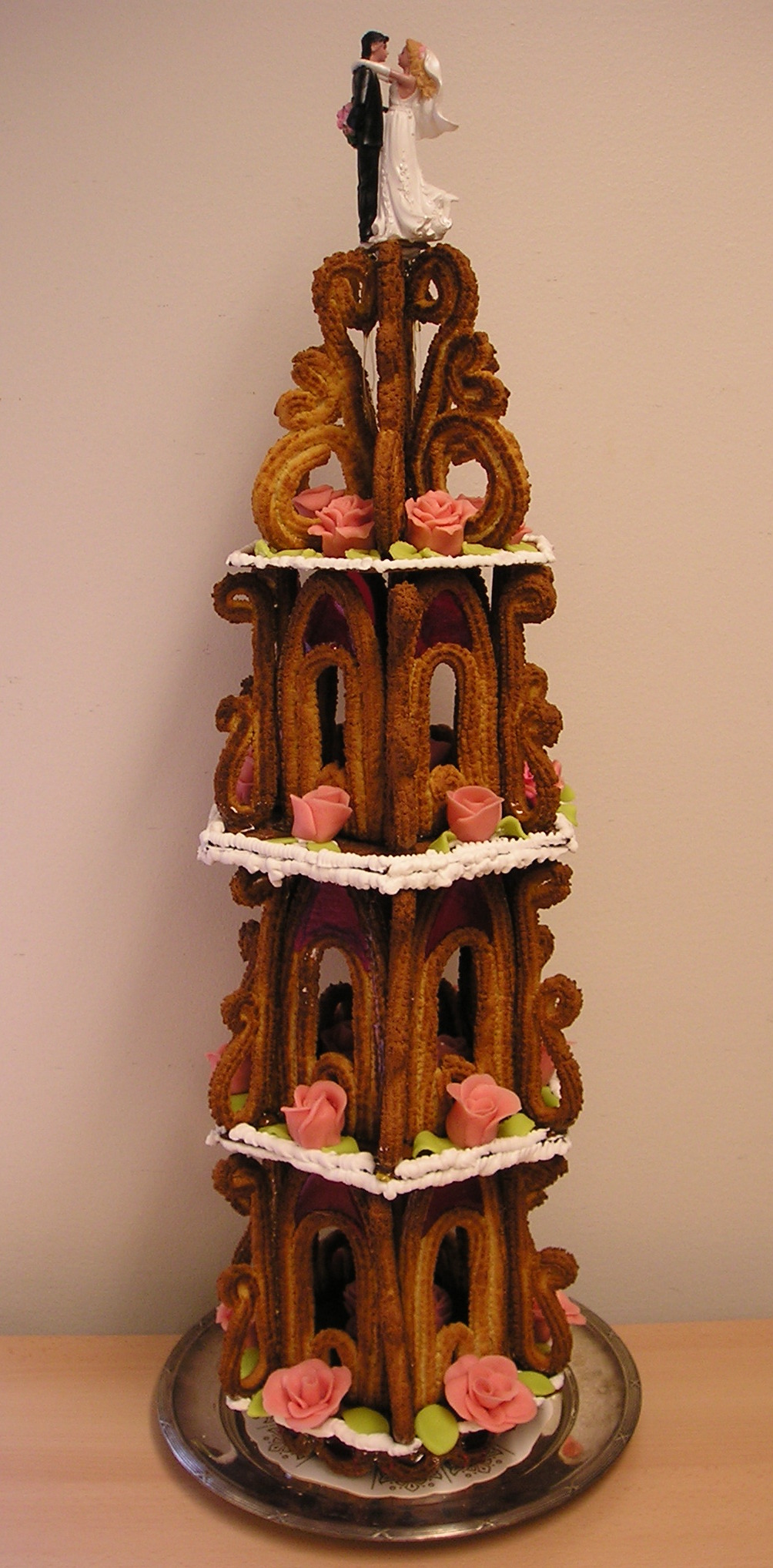
Art of making confections or sweet foods
Confectionery is the art of making confections, or sweet foods. Confections are items that are rich in sugar and carbohydrates, although exact definitions are difficult. In general, however, confections are divided into two broad and somewhat overlapping categories: baker's confections and sugar confections.
Baker's confectionery, also called flour confections, includes principally sweet pastries, cakes, and similar baked goods. Baker's confectionery excludes everyday breads, and thus is a subset of products produced by a baker.
Sugar confectionery (known as candy making in the US) includes candies (also called sweets, short for sweetmeats, in many English-speaking countries), candied nuts, chocolates, chewing gum, bubble gum, pastillage, and other confections that are made primarily of sugar. In some cases, chocolate confections (confections made of chocolate) are treated as a separate category, as are sugar-free versions of sugar confections. The words candy (Canada and US), sweets (UK, Ireland, and others), and lollies (Australia and New Zealand) are common words for some of the most popular varieties of sugar confectionery.
The occupation of confectioner encompasses the categories of cooking performed by both the French patissier (pastry chef) and the confiseur (sugar worker). The confectionery industry also includes specialized training schools and extensive historical records. Traditional confectionery goes back to ancient times and continued to be eaten through the Middle Ages and into the modern era.
Etymology

The oldest recorded use of the word confectionery discovered so far by the Oxford English Dictionary is by Richard Jonas in 1540, who spelled or misspelled it as "confection nere" in a passage "''Ambre, muske, frankencense, and '''confection nere'''''", thus in the sense of "things made or sold by a confectioner".
Also according to the OED, the sense of "the art and business of a confectioner" is first recorded in 1743, and the earliest use in the sense of a "confectioner's shop" dates to 1803.
History

Before sugar was readily available in the ancient western world, confectionery was based on honey. Honey was used in Ancient China, Ancient India, Ancient Egypt, Ancient Greece and Ancient Rome to coat fruits and flowers to preserve them or to create sweetmeats. Between the 6th and 4th centuries BCE, the Persians, followed by the Greeks, made contact with the Indian subcontinent and its "reeds that produce honey without bees". They adopted and then spread sugar and sugarcane agriculture. Sugarcane is indigenous to tropical Indian subcontinent and Southeast Asia.
In the early history of sugar usage in Europe, it was initially the apothecary who had the most important role in the production of sugar-based preparations. Medieval European physicians learned the medicinal uses of the material from the Arabs and Byzantine Greeks. One Middle Eastern remedy for rheums and fevers were little, twisted sticks of pulled sugar called in Arabic ar or ar. These became known in England as alphenics, or more commonly as penidia, penids, pennet or pan sugar. They were the precursors of barley sugar and modern cough drops. In 1390, the Earl of Derby paid "two shillings for two pounds of penydes."

In the cuisine of the Late Ottoman Empire diverse cosmopolitan cultural influences were reflected in published recipes such as European-style molded jellies flavored with cordials. In Europe, Ottoman confections (especially "lumps of delight" (Turkish delight) became very fashionable among European and British high society. An important study of Ottoman confectionery called Conditorei des Orients was published by the royal confectioner Friedrich Unger in 1838.
The first confectionery in Manchester, England was opened by Elizabeth Raffald who had worked six years in domestic service as a housekeeper.
Sweetening agents
Confections are defined by the presence of sweeteners. These are usually sugars, but it is possible to buy sugar-free candies, such as sugar-free peppermints. The most common sweetener for home cooking is table sugar, which is chemically a disaccharide containing both glucose and fructose. Hydrolysis of sucrose gives a mixture called invert sugar, which is sweeter and is also a common commercial ingredient. Finally, confections, especially commercial ones, are sweetened by a variety of syrups obtained by hydrolysis of starch. These sweeteners include all types of corn syrup.
Baker's confectionery
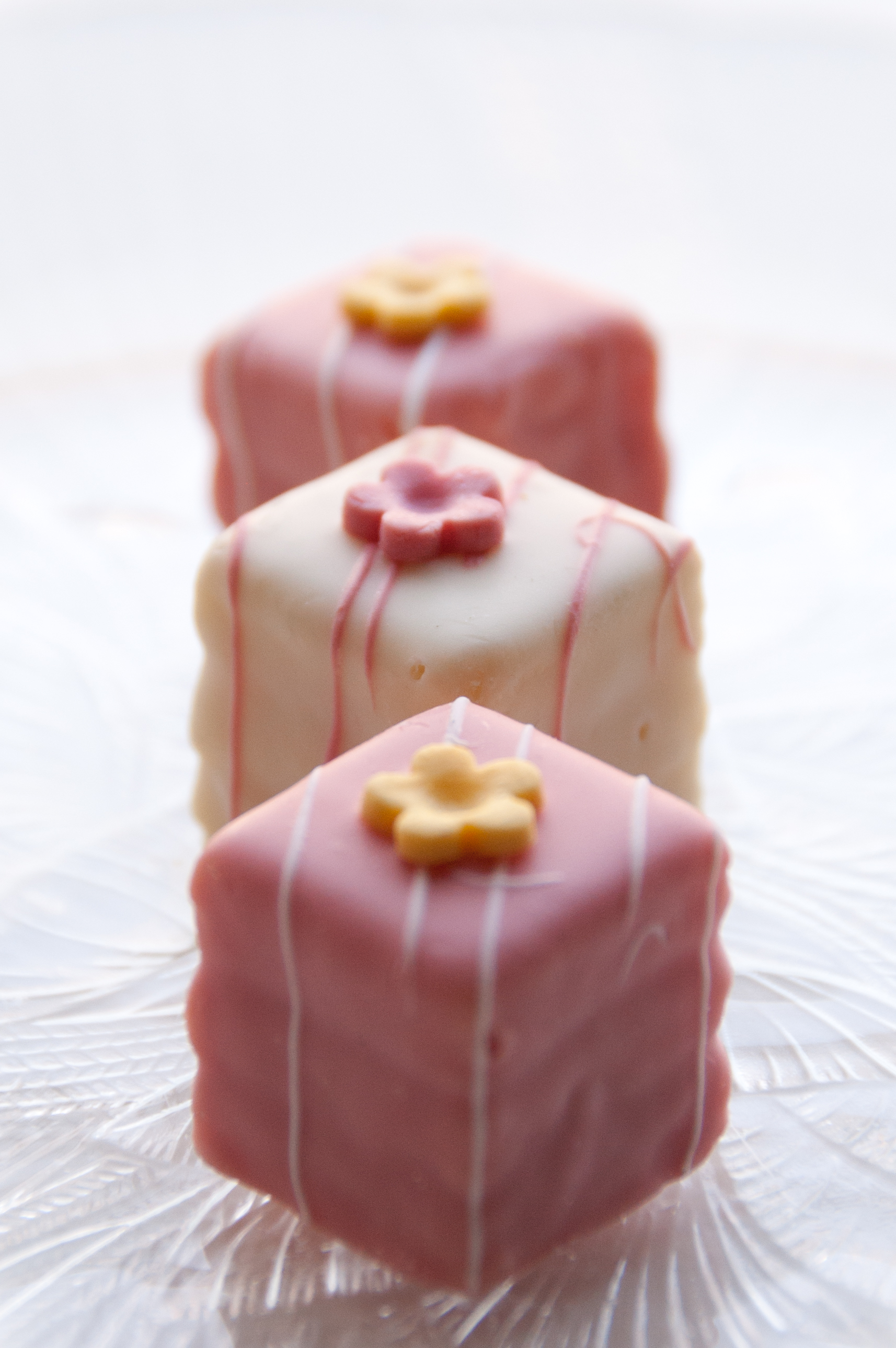
Baker's confectionery includes sweet baked goods, especially those that are served for the dessert course. Baker's confections are sweet foods that feature flour as a main ingredient and are baked. Major categories include cakes, sweet pastries, doughnuts, scones, and cookies. In the Middle East and Asia, flour-based confections predominate.
The definition of which foods are "confectionery" vs "bread" can vary based on cultures and laws. In Ireland, the definition of "bread" as a "staple food" for tax purposes requires that the sugar or fat content be no more than 2% of the weight of the flour, so some products sold as bread in the US would be treated as confectionery there.
Types
Cakes have a somewhat bread-like texture, and many earlier cakes, such as the centuries-old stollen (fruit cake), or the even older king cake, were rich yeast breads. The variety of styles and presentations extends from simple to elaborate. Major categories include butter cakes, tortes, and foam cakes. Confusingly, some confections that have the word cake in their names, such as cheesecake, are not technically cakes, while others, such as Boston cream pie are cakes despite seeming to be named something else.
File:Wesh cakes.jpg|Welsh cakes are cooked on a griddle. File:Korean rice cake-Mujigae tteok-01.jpg|Korean rainbow rice cake is for celebrations. File:Birthday Cake by 'Valentina's Cakes' in Binghamton, New York.jpg|Birthday cakes may be elaborately decorated. File:Pruegeltorte.JPG|European spit cakes are baked around a metal cylinder. File:Pink rose birthday cake (5919553257).jpg|Cake with decorations made from sugar
Pastry is a large and diverse category of baked goods, united by the flour-based doughs used as the base for the product. These doughs are not always sweet, and the sweetness may come from the sugar, fruit, chocolate, cream, or other fillings that are added to the finished confection. Pastries can be elaborately decorated, or they can be plain dough.
File:Choux pastry buns, 2009.jpg|Choux pastry File:Besamelas-(La Rosita).jpg|Empty shells made with puff pastry can be filled with fruit or cream. File:Pumpkin-Pie-Slice.jpg|Pie is made from a pie crust and a sweet filling. File:Baklava - Turkish special, 80-ply.JPEG|Baklava is made with phyllo pastry. File:Moon cake in mid autumn festival.jpg|Mooncake pastries are made to celebrate the Mid-Autumn Festival in East Asia.
Doughnuts may be fried or baked.
File:Glazed-Donut.jpg|Glazed raised doughnut File:Oliebollen bakken (4233801075) (2).jpg|Oliebollen and similar doughnuts are fried in hot fat. File:Christmas doughnut display (15459326042).jpg|Decorated doughnuts File:Apple beignets (5492114879).jpg|Apple fritter with powdered sugar
Scones and related sweet quick breads, such as bannock, are similar to baking powder biscuits and, in sweeter, less traditional interpretations, can seem like a cupcake.
File:Scones Jam Cream.jpg|Scones with jam File:2scones.jpg|Cranberry scones with icing File:Golden-Krust-Rock-Cake.jpg|A sweet rock cake
Cookies are small, sweet baked treats. They originated as small cakes, and some traditional cookies have a soft, cake-like texture. Others are crisp or hard.
File:Breakfast pizzelle, January 2013 (8505127567).jpg|Thin wafer cookies such as pizzelle have been made since the Middle Ages. File:Runde braune Lebkuchen - Flickr - tm-md (7).jpg|Spicy lebkuchen are a German Christmas treat. File:Biscuiteers Polka Dot Heart Product.jpg|Cookies can be elaborately decorated. File:Oreo-Two-Cookies.jpg|Oreos are an example of a mass-produced cookie.
Sugar confectionery

Sugar confections include sweet, sugar-based foods, which are usually eaten as snack food. This includes sugar candies, chocolates, candied fruits and nuts, chewing gum, and sometimes ice cream. In some cases, chocolate confections are treated as a separate category, as are sugar-free versions of sugar confections.
Different dialects of English use regional terms for sugar confections:
- In Britain, Ireland, and some Commonwealth countries, sweets (the Scottish Gaelic word suiteis is a derivative). Candy is used specifically for rock candy and occasionally for (brittle) boiled sweets. Lollies are boiled sweets fixed on sticks.
- In Australia and New Zealand, lollies. Chewy and Chuddy are Australian slang for chewing gum.
- In North America, candy, although this term generally refers to a specific range of confectionery and does not include some items of sugar confectionery (e.g. ice cream). Sweet is occasionally used, as well as treat.
In the US, a chocolate-coated candy bar (e.g. Snickers) would be called a candy bar, in Britain more likely a chocolate bar than unspecifically a sweet.
| American English | British English | |||
|---|---|---|---|---|
| [[File:Vegan Chocolate Fudge.jpg | alt=chocolate fudge | frameless | 200x200px]] | confectionery (formal, uncommon, broad) |
| [[File:Rock-Candy-Sticks.jpg | alt=sugar crystals on a stick | frameless | 200x200px]] | rock candy, rock sugar |
| [[File:Pineapple flavored hard candies in West Bengal, India, photographed by Yogabrata Chakraborty, on March 8, 2023.jpg | alt=several pieces of hard sugar candy in someone's hand | frameless | 200x200px]] | hard candy |
| [[File:Candied orange slices.jpg | frameless | 200x200px]] | candied fruit, glazed fruit | |
| [[File:Picswiss BS-55-16.jpg | alt=Cotton candy being made | frameless | 200x200px]] | cotton candy, fairy floss (archaic) |
| [[File:Haribo Matador Mix Bowl Straight.jpg | alt=assorted candies in a bowl | frameless | 200x200px]] | candy, treat (rare), sweet (rare) |
| [[File:Bakewell Tart (4202808440).jpg | alt=slice of Bakewell tart with sherbet | frameless | 200x200px]] | dessert |
| [[File:Vanilla pudding (1129124791).jpg | alt=vanilla pudding in a bowl, with a cookie | frameless | 200x200px]] | pudding |
| [[File:Milka Alpine Milk Chocolate bar 100g.jpg | alt=milk chocolate bar | frameless | 200x200px]] | chocolate candy bar, chocolate bar (solid blocks of chocolate) |
| [[File:Snickers-broken.JPG | alt=Snickers candy bar, cut in half | frameless | 200x200px]] | candy bar (chocolate coated types) |
| [[File:White-Box-of-Chocolates.jpg | alt=white box with about 20 bite-sized chocolate candies in it | frameless | 200x200px]] | box of chocolates |
Classification

The United Nations' International Standard Industrial Classification of All Economic Activities (ISIC) scheme (revision 4) classifies both chocolate and sugar confectionery as ISIC 1073, which includes the manufacture of chocolate and chocolate confectionery; sugar confectionery proper (caramels, cachous, nougats, fondant, white chocolate), chewing gum, preserving fruit, nuts, fruit peels, and making confectionery lozenges and pastilles. In the European Union, the Statistical Classification of Economic Activities in the European Community (NACE) scheme (revision 2) matches the UN classification, under code number 10.82.
In the United States, the North American Industry Classification System (NAICS 2012) splits sugar confectionery across three categories: National industry code 311340 for all non-chocolate confectionery manufacturing, 311351 for chocolate and confectionery manufacturing from cacao beans, and national industry 311352 for confectionery manufacturing from purchased chocolate.
Ice cream and sorbet are classified with dairy products under ISIC 1050, NACE 10.52, and NAICS 311520. The classification of ice cream has varied widely; for example, in 1930, it was classified as a form of flour confectionery.
Examples


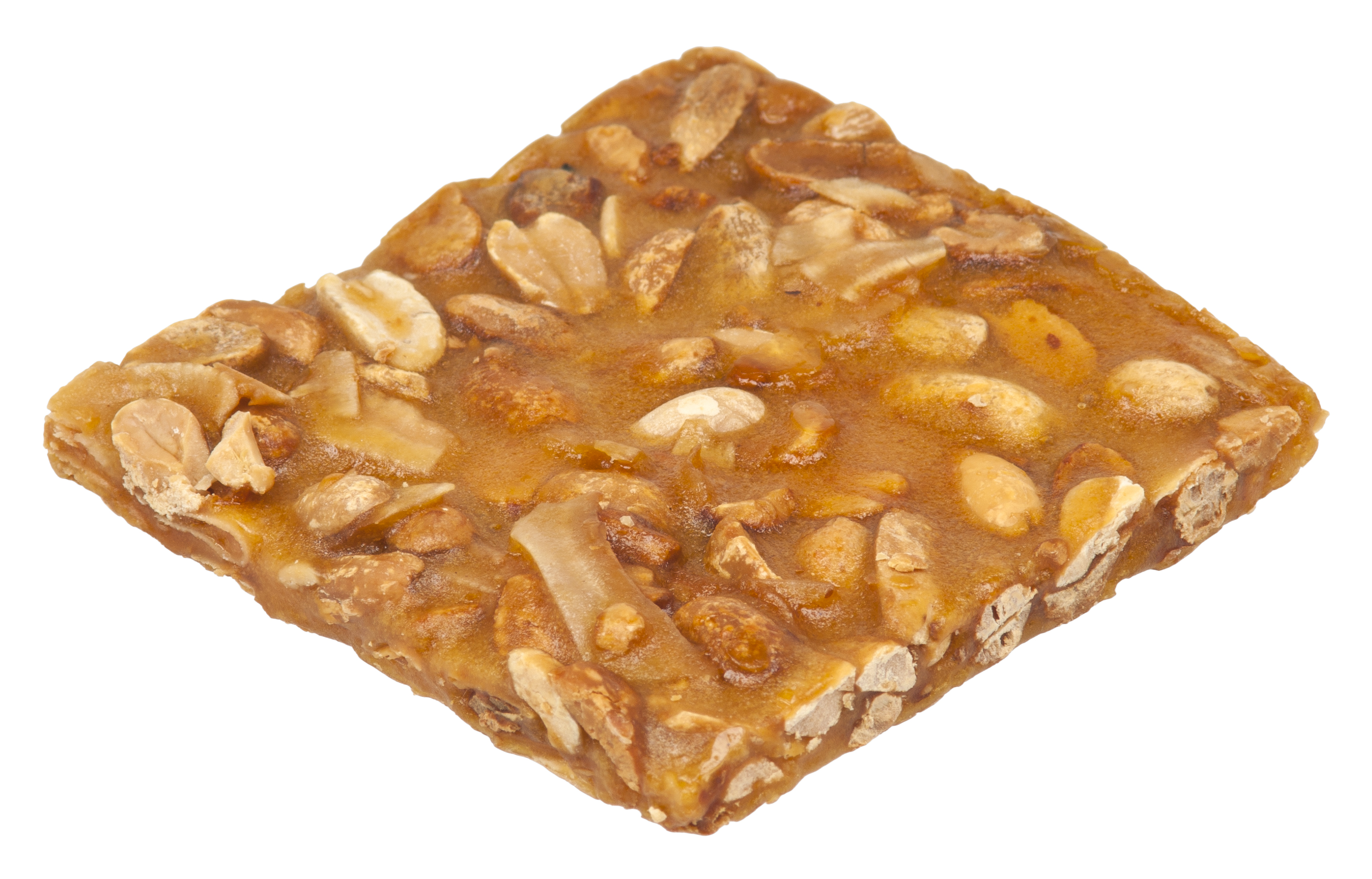
Sugar confectionery items include candies, lollipops, candy bars, chocolate, cotton candy, and other sweet items of snack food. Some of the categories and types of sugar confectionery include the following:
- Chocolates: Bite-sized confectioneries generally made with chocolate, considered different from a candy bar made of chocolate.
- Divinity: A nougat-like confectionery based on egg whites with chopped nuts.
- Dodol: A toffee-like delicacy popular in Indonesia, Malaysia, and the Philippines
- Dragée: Sugar-coated almonds and other types of sugar panned candies.
- Fudge: Made by boiling milk and sugar to the soft-ball stage. In the US, it tends to be chocolate-flavored.
- Halvah: Confectionery based on tahini, a paste made from ground sesame seeds.
- Hard candy: Based on sugars cooked to the hard-crack stage. Examples include lollipops, jawbreakers (or gobstoppers), lemon drops, peppermint drops and disks, candy canes, rock candy, etc. Also included are types often mixed with nuts such as brittle, which is similar to chikkis.
- Ice cream: Frozen, flavored cream, often containing small pieces of chocolate, fruits and/or nuts.
- Jelly candies: Including those based on sugar and starch, pectin, gum, or gelatin such as Turkish delight (lokum), jelly beans, gumdrops, jujubes, gummies, etc.
- Liquorice: Containing extract of the liquorice root, this candy is chewier and more resilient than gums or gelatin candies. For example, Liquorice allsorts. It has a similar taste to star anise.
- Marshmallow: For example, circus peanuts, Flumps.
- Marzipan: An almond-based confection, doughy in consistency.
- Mithai: A generic term for confectionery in the Indian subcontinent, typically made from dairy products and/or some form of flour. Sugar or molasses are used as sweeteners.
- Nougat: Various forms of sweetened paste hardened to a chewy or crunchy consistency, usually flavored with nuts or candied fruit.
- Persipan: similar to marzipan, but made with peaches or apricots instead of almonds.
- Pastillage: A thick sugar paste made with gelatin, water, and confectioner's sugar, similar to gum paste, which is moulded into shapes, which then harden.
- Tablet: A crumbly milk-based soft and hard candy, based on sugars cooked to the soft ball stage. Comes in several forms, such as wafers and heart shapes. Not to be confused with tableting, a method of candy production.
- Taffy (British: chews): A sugar confection that is folded many times above 120 °F (50 °C), incorporating air bubbles thus reducing its density and making it opaque.
- Toffee: A confection made by caramelizing sugar or molasses along with butter. Toffee has a glossy surface and textures ranging from soft and sticky to a hard, brittle material. Its brown color and smoky taste arise from the caramelization of the sugars.
Storage and shelf life
Shelf life is largely determined by the amount of water present in the candy and the storage conditions. High-sugar candies, such as boiled candies, can have a shelf life of many years if kept covered in a dry environment. Spoilage of low-moisture candies tends to involve a loss of shape, color, texture, and flavor, rather than the growth of dangerous microbes. Impermeable packaging can reduce spoilage due to storage conditions.
Candies spoil more quickly if they have different amounts of water in different parts of the candy (for example, a candy that combines marshmallow and nougat), or if they are stored in high-moisture environments. This process is due to the effects of water activity, which results in the transfer of unwanted water from a high-moisture environment into a low-moisture candy, rendering it rubbery, or the loss of desirable water from a high-moisture candy into a dry environment, rendering the candy dry and brittle.
Another factor, affecting only non-crystalline amorphous candies, is the glass transition process. This can cause amorphous candies to lose their intended texture.
Cultural roles
Both baker's and sugar confections are used to offer hospitality to guests.
Confections are used to mark celebrations or events, such as Christmas, Easter, a wedding cake, birthday cake, or Halloween.
The chocolate company Cadbury (under the guidance of Richard Cadbury) was the first to commercialize the connection between romance and confectionery, producing a heart-shaped box of chocolates for Valentine's Day in 1868.
Tourists commonly eat confections as part of their travels. The indulgence in rich, sugary foods is seen as a special treat, and choosing local specialties is popular. For example, visitors to Vienna eat Sachertorte and visitors to seaside resorts in the UK eat Blackpool rock candy. Transportable confections like fudges and tablet may be purchased as souvenirs.
Nutrition
Generally, confections are low in micronutrients and protein but high in calories. They may be fat-free foods, although some confections, especially fried doughs and chocolate, are high-fat foods. Many confections are considered empty calories and ultra-processed foods. Specially formulated chocolate has been manufactured in the past for military use as a high-density food energy source.
Many sugar confections, especially caramel-coated popcorn and the different kinds of sugar candy, are defined in US law as foods of minimal nutritional value.
Risks
Contaminants and coloring agents in confectionery can be particularly harmful to children. Therefore, confectionery contaminants, such as high levels of lead, have been restricted to 1 ppm in the US. There is no specific maximum in the EU.
Candy colorants, particularly yellow colorants such as E102 Tartrazine, E104 Quinoline Yellow WS and E110 Sunset Yellow FCF, have many restrictions around the world. Tartrazine, for example, can cause allergic and asthmatic reactions and was once banned in Austria, Germany, and Norway. Some countries such as the UK have asked the food industry to phase out the use of these colorants, especially for products marketed to children.
References
References
- {{Cite Merriam-Webster. confectionery
- Davidson, Alan. (2014). "The Oxford Companion to Food". Oxford University Press.
- (2009). "Dictionary of Food Science and Technology". Wiley–Blackwell.
- Goldstein, Darra. (2015). "The Oxford Companion to Sugar and Sweets". Oxford University Press.
- Edwards, W.P.. (2000). "The Science of Sugar Confectionery". Royal Society of Chemistry.
- Mark, J.. (2020-11-25). "Food Industries". CRC Press.
- Day, Ivan. "The Art of Confectionery".
- (2023). "Oxford English Dictionary". Oxford University Press.
- Elizabeth Abbot. (2010). "Sugar: A Bitterweet History". Penguin.
- NPCS. (2013). "Confectionery Products Handbook (Chocolate, Toffees, Chewing Gum & Sugar Free Confectionery)". Asia Pacific Business Press.
- Toussaint-Samat, Maguelonne. (2009). "A History of Food". Wiley-Blackwell.
- (2009). "Agribusiness Handbook: Sugar beet white sugar". Food and Agriculture Organization, United Nations.
- J.A. Hill (1902), The Anglo-American Encyclopedia, Volume 7, page 725
- Thomas E. Furia (1973), CRC Handbook of Food Additives, Second Edition, Volume 1, {{ISBN. 978-0849305429, page 7 (Chapter 1, by Thomas D. Luckey)
- Mary Ellen Snodgrass (2004), Encyclopedia of Kitchen History, {{ISBN. 978-1579583804, Routledge, pages 145–146
- (2014). "Sweet treats around the world: an encyclopedia of food and culture".
- (April 2015). "The Oxford Companion to Sugar and Sweets". Oxford University Press.
- Snodgrass, M. E. ''Encyclopedia of Kitchen History'', Fitzroy Dearborn Publishers (2004)
- Terry Richardson, Geert Andersen, "Confectionery" in Ullmann's Encyclopedia of Industrial Chemistry 2005 Wiley-VCH, Weinheim. {{doi. 10.1002/14356007.a07_411
- (2009). "Dictionary of Food Science and Technology". Wiley–Blackwell.
- (1 October 2021). "For Subway, A Ruling Not So Sweet. Irish Court Says Its Bread Isn't Bread". NPR.org.
- (1 April 2015). "The Oxford Companion to Sugar and Sweets". Oxford University Press.
- Edwards, W.P.. (2000). "The Science of Sugar Confectionery". Royal Society of Chemistry.
- (2014). "Definition of chuddy Oxford dictionary (British & World English)".
- (7 February 2000). "Cotton Candy". The Straight Dope.
- (2014). "ISIC Rev.4 code 1073: Manufacture of cocoa, chocolate and sugar confectionery".
- (2014). "Correspondences for ISIC Rev.4 code 1073".
- (2014). "Correspondences for ISIC Rev.4 code 1050".
- Margaret McWilliams. (2006) Nutrition and Dietetics Eighth edition edn. Prentice Hall: Pearson Education Inc.
- (February 2010). "Moisture and shelf life in sugar confections". Crit Rev Food Sci Nutr.
- (8 September 2016). "Guinness World Records 2017". Guinness World Records.
- Cleave, Paul. (2012). "Sugar Heritage and Tourism in Transition". Channel View Publications.
- (13 September 2013). "Foods of Minimal Nutritional Value". [[Food and Nutrition Service]], United States Department of Agriculture.
- (2010-04-20). "Lead in Food {{!}} EFSA".
- (2008-11-12). "Ministers agree food colour ban". [[BBC News]].
This article was imported from Wikipedia and is available under the Creative Commons Attribution-ShareAlike 4.0 License. Content has been adapted to SurfDoc format. Original contributors can be found on the article history page.
Ask Mako anything about Confectionery — get instant answers, deeper analysis, and related topics.
Research with MakoFree with your Surf account
Create a free account to save articles, ask Mako questions, and organize your research.
Sign up freeThis content may have been generated or modified by AI. CloudSurf Software LLC is not responsible for the accuracy, completeness, or reliability of AI-generated content. Always verify important information from primary sources.
Report