From Surf Wiki (app.surf) — the open knowledge base
Communist Party of Nepal (Unified Marxist–Leninist)
Political party in Nepal

Political party in Nepal
| Field | Value | |
|---|---|---|
| name | Communist Party of Nepal | |
| (Unified Marxist–Leninist) | ||
| abbreviation | CPN (UML) | |
| logo | Logo of the Communist Party of Nepal (Unified Marxist–Leninist).png | |
| colorcode | ||
| membership | 650,000 (2025) | |
| chairman | KP Sharma Oli | |
| general_secretary | Shankar Pokhrel | |
| leader1_title | Vice-chairman | |
| leader1_name | Prithvi Subba Gurung | |
| Bishnu Prasad Paudel | ||
| Ram Bahadur Thapa | ||
| Gokarna Bista | ||
| Raghuji Pant | ||
| leader3_title | Deputy General Secretary | |
| leader3_name | Lekh Raj Bhatta | |
| Raghubir Mahaseth | ||
| Yogesh Bhattarai | ||
| leader4_title | Secretary | |
| leader4_name | Mahesh Basnet | |
| Padma Kumari Aryal | ||
| Chhabilal Bishwakarma | ||
| Sher Dhan Rai | ||
| Hikmat Kumar Karki | ||
| Khagaraj Adhikari | ||
| Yam Lal Kandel | ||
| Rajan Bhattarai | ||
| Bhanu Bhakta Dhakal | ||
| spokesperson | Shova Mahesh Basnet | |
| founded | ] | |
| dissolved | 17 May 2018 (first iteration) | |
| newspaper | Nawayug | |
| ideology | Communism | |
| Marxism–Leninism | ||
| People's Multiparty Democracy | ||
| headquarters | Thapathali, Kathmandu | |
| international | IMCWP | |
| website | ||
| country | Nepal | |
| native_name | नेपाल कम्युनिष्ट पार्टी (एकीकृत मार्क्सवादी-लेनिनवादी) | |
| flag | [[File:Flag of the CPN-UML (2021-).svg | 150px]] |
| [[File:Flag of CPN (UML).svg | 150px]] | |
| student_wing | ANNFSU | |
| youth_wing | Youth Federation Nepal | |
| womens_wing | All Nepal Women's Association | |
| wing1_title | Labour wing | |
| wing1 | GEFONT | |
| merger | ||
| position | Centre-left to Left-wing | |
| seats1_title | ECN Status | |
| seats1 | National Party | |
| (2nd largest) | ||
| seats2_title | House of Representatives | |
| seats2 | ||
| (Dissolved) | ||
| seats3_title | National Assembly | |
| seats3 | ||
| seats4_title | Provincial Assemblies | |
| seats4 | ||
| seats5_title | Chief Ministers | |
| seats5 | ||
| seats6_title | Mayors/Chairs | |
| seats6 | ||
| seats7_title | Councillors | |
| seats7 | ||
| symbol | [[File:Nepalese Election Symbol Sun.svgclass=skin-invert | 100px]] |
| colours |
(Unified Marxist–Leninist) Bishnu Prasad Paudel Ram Bahadur Thapa Gokarna Bista Raghuji Pant Raghubir Mahaseth Yogesh Bhattarai Padma Kumari Aryal Chhabilal Bishwakarma Sher Dhan Rai Hikmat Kumar Karki Khagaraj Adhikari Yam Lal Kandel Rajan Bhattarai Bhanu Bhakta Dhakal Marxism–Leninism People's Multiparty Democracy (2nd largest) (Dissolved)
The Communist Party of Nepal (Unified Marxist–Leninist) (CPN (UML)) is a communist political party in Nepal. The party emerged as one of the major parties in Nepal after the end of the Panchayat era. It remained second largest party in the federal parliament until it was dissolved in the aftermath of the 2025 Nepalese Gen Z protests and has urged for its reinstatement or else it will not be taking part in the next election to be scheduled.
Khadga Prasad Oli has been serving as party chairman since the party's ninth general convention in 2014. The party currently holds 79 seats in the House of Representatives, having won 26.95% of the party list votes in the 2022 general election and is the second largest parliamentary group. There have been four prime ministers from the party while the party has led the government six times with the most recent Oli government which was deposed by 2025 Nepalese Gen Z protests.
CPN (UML) was the main opposition in 1991 after the first election following the restoration of multi-party democracy. The party led a minority government under Manmohan Adhikari following the 1994 election. The party joined a coalition government with CPN (Maoist) in 2008 in the first elections after the end of the monarchy in Nepal and led two governments under Madhav Kumar Nepal and Jhala Nath Khanal during the term of the 1st Constituent Assembly. The party also led the first government after the promulgation of the new constitution with KP Sharma Oli serving as prime minister. Oli again served as prime minister following the 2017 election.
The party was formed in January 1991 after the merger of the Communist Party of Nepal (Marxist) and the Communist Party of Nepal (Marxist–Leninist). The party merged with CPN (Maoist Centre) to form the Nepal Communist Party on 17 May 2018 but the new party was dissolved and CPN (UML) was revived by a Supreme Court decision on 8 March 2021. The party claimed to have 650,000 members as of August 2025, down from 855,000 in December 2021.
In 2025, the party faced a wave of criticism, including from many other Nepali communist groups, for accusations of engaging in mass nepotism, brutalizing protesters, backsliding democracy, banning social media and becoming the new elite it once overthrew. Its Chairman, KP Sharma Oli, resigned and dissolved the cabinet, as per protest demands. Later the parliament was dissolved for a fresh mandate.
History
The predecessors of the CPN (UML) were the CPN (Marxist) led by former general secretary of the Communist Party of Nepal, Man Mohan Adhikari, and CPN (Marxist–Leninist), led by Madan Bhandari. CPN (Marxist) was the successor to CPN (Pushpa Lal) which was founded by the founding general secretary of the Communist Party of Nepal, Pushpa Lal Shrestha. CPN (Marxist–Leninist) had its origins in the 1969 Jhapa rebellion. The conflict took its inspiration from the Naxalite movement in India and began after land reform programs were introduced by King Mahendra in 1964.
The two parties were constituents of the United Left Front, which was formed in 1990 to protest against the Panchayat system. The front, along with the Nepali Congress, helped restore multi party democracy in the country after the 1990 revolution. On 6 January 1991, ahead of the 1991 general election, the first parliamentary elections in the country in three decades, the two parties merged to form the Communist Party of Nepal (Unified Marxist–Leninist) with Adhikari serving as the party's first chairman.
Post-Jana Andolan (1991–2002)
In the 1991 election, the party won 69 out of 205 seats in the House of Representatives and was the second largest parliamentary group. Man Mohan Adhikari was elected as the parliamentary party leader and became the Leader of the Opposition. The fifth party congress was held in Kathmandu in January 1993 and People's Multiparty Democracy was adopted as the party line. The congress also elected Adhikari as the party chairman and Madan Bhandari as the general secretary. Later in the year however, Bhandari along with Jibaraj Ashrit died in a vehicle accident in Chitwan and Madhav Kumar Nepal became general secretary. In November 1993, veteran communist leader Tulsi Lal Amatya's group merged with the party.
Following the 1994 election, the party became the largest parliamentary group, winning 88 out of 205 seats and forming the first CPN (UML) government. Man Mohan Adhikari became prime minister and formed a minority government with the support of Rastriya Prajatantra Party and Nepal Sadbhwana Party, which lasted nine months. Adhikari recommended dissolving the House of Representatives, and called for new elections after losing the support of his coalition partners, but the move was dismissed by the Supreme Court after a legal challenge by Nepali Congress. In 1997, the party supported the minority government of Rastriya Prajatantra Party, which lasted for seven months. Following disagreements about the Mahakali treaty, the party faced a split in March 1998. Bam Dev Gautam reconstituted the CPN (Marxist–Leninist) with 46 MPs from the party. In December 1998, the party supported the Nepali Congress–Nepal Sadbhawana Party government which was created to hold the 1999 election.
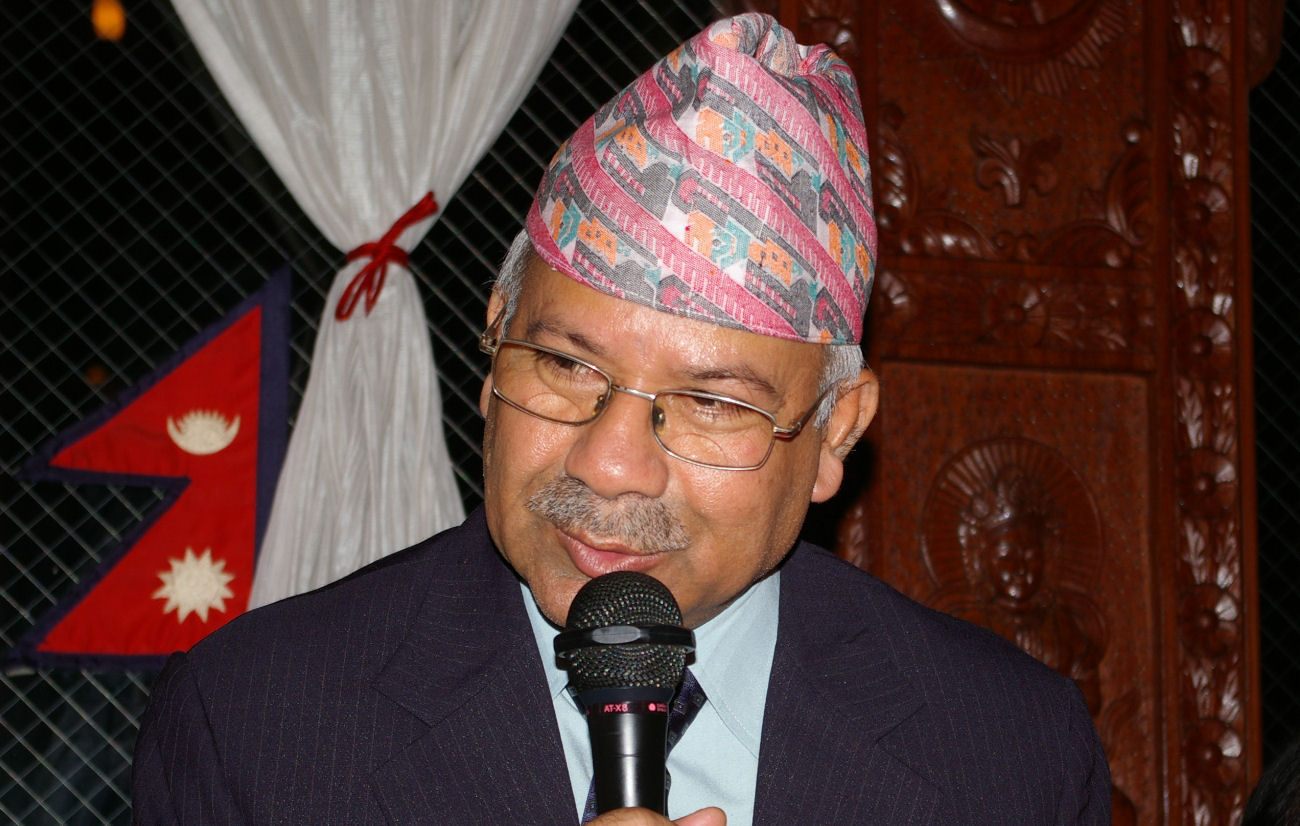
The Nepali Congress formed a majority government following the 1999 election and the CPN (UML) became the main opposition winning 70 seats. Following party chairman Adhikari's death in 1999, general secretary Madhav Kumar Nepal became the leader of the party. CPN (Burma) merged into the party on 28 June 2001 and CPN (Marxist–Leninist) reunified with the party on 15 February 2002. A group led by C. P. Mainali opposed the unification and opted to reconstitute the party. The party held its seventh general convention in February 2003 in Janakpur. Nepal was reelected as the general secretary and the post of party chair, which had remained vacant after the death of Adhikari, was abolished.
Jana Andolan II (2002–2007)
The House of Representatives was dismissed by King Gyanendra on 22 May 2002 on the request of prime minister Sher Bahadur Deuba. After the Deuba government failed to hold elections and to control the Maoist insurgency, he was dismissed by the king in October with the king assuming executive powers to the protest of political parties including CPN (UML). In June 2003, general secretary Nepal was proposed as prime minister by the protesting parties but this was ignored by the king and Surya Bahdur Thapa was appointed instead. After Thapa's resignation in May 2004, Deuba was reappointed as the prime minister. CPN (UML) also joined the cabinet with Bharat Mohan Adhikari serving as deputy prime minister.
On 1 February 2005, King Gyanendra declared a national emergency, placed all leading politicians under house arrest and assumed chairmanship of a 10-member council of ministers. CPN (UML), along with other parties in the dissolved lower house, formed the Seven Party Alliance to end the king's direct rule, reinstate the dissolved House of Representatives and form an all-party government. The alliance also opened talks with the CPN (Maoist) to end their armed insurgency and join mainstream politics. On 22 November 2002, the alliance signed a 12-point agreement with the Maoists to end the insurgency, abolish the monarchy and restore democratic rule to the country. Following the 2006 revolution on 24 April, King Gyanendra restored the House of Representatives and an all-party government was formed under the leadership of Girija Prasad Koirala. Later that year on 21 November, the Comprehensive Peace Accord was signed between the Maoists and the Seven Party Alliance which ended the Civil War.

Constituent Assembly (2008–2017)
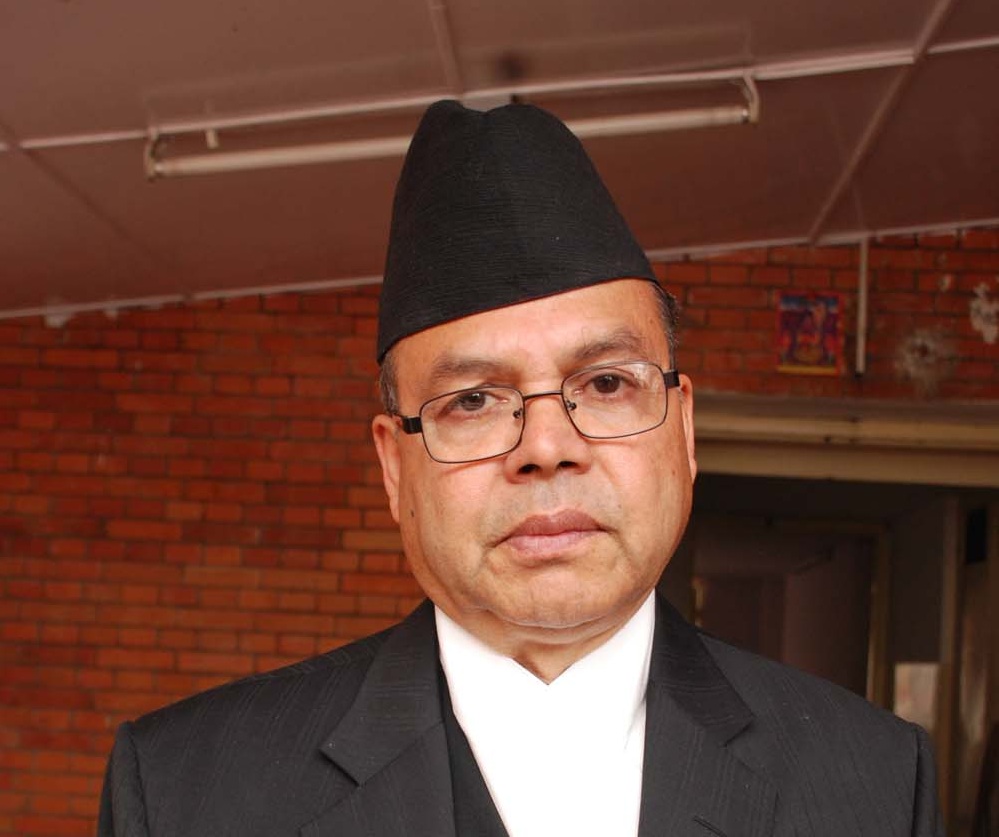
In the 2008 election, the party won 108 out of 575 seats in the Constituent Assembly. The party lost most of their leftist vote to the CPN (Maoist) and general secretary Madhav Kumar Nepal resigned following his defeat in both of his constituencies and was replaced by Jhala Nath Khanal. The party joined the coalition government with CPN (Maoist) following the election. The party's eighth general convention in February 2009 elected Khanal as the party chairman and Ishwor Pokhrel as general secretary. Following the controversial sacking of Army Chief of Staff Rookmangud Katawal, CPN (UML) withdrew its support from the Maoist government. In November 2009, Madhav Kumar Nepal, who was nominated to the Constituent Assembly, became prime minister with the support of Nepali Congress and Madheshi Jana Adhikar Forum, Nepal. His government lasted for seven months before he resigned following a political deadlock amid failure to draft the new constitution. Following seven months of political stalemate party chairman Jhalanath Khanal was elected as prime minister in February 2011 with support from the UCPN (Maoist). He resigned six months later in August after failing to reach consensus on drafting the new constitution and completing the peace process following which the party supported the new UCPN (Maoist) government. In November 2012, ahead of the new election, Ashok Kumar Rai broke away from the party along with other indigenous leaders and formed the Federal Socialist Party, claiming that the party failed to address their concerns during the discussions for promulgation of the constitution.
In the 2013 election, the party became the second largest party winning 175 out of 575 elected seats. The party joined the coalition government under the Nepali Congress following the election with Bamdev Gautam serving as deputy prime minister. At the party's ninth general convention in July 2014, K.P. Sharma Oli became party chair after defeating Madhav Kumar Nepal, while Ishwar Pokhrel was reelected as general secretary. After the new constitution was delivered by the coalition government, party chair K.P. Sharma Oli was elected as prime minister on 12 October 2015 with the support of UCPN (Maoist), Rastriya Prajatantra Party Nepal and other parties. After the Maoists withdrew their support, Oli resigned in July 2016 ahead of a no-confidence vote.

Left alliance and dissolution (2017–2021)
In the 2017 local elections, 14,099 councilors, including 294 municipal mayors and rural chairs, were elected from the party to local governments. Candidates for the party were elected as mayors in major cities, including the two largest cities Kathmandu and Pokhara Lekhnath. The party announced an alliance with the CPN (Maoist Centre) before the 2017 legislative and provincial elections. The party won 121 seats, becoming the largest party in the House of Representatives, and became the largest party in six of Nepal's seven provinces. After the election, the party maintained its alliance with the CPN (Maoist Centre) and formed coalition governments in the centre and six of the seven provinces. The CPN (UML) led governments in Province 1, Province 3, Province 4 and Province 5. In accordance with the agreement Sher Dhan Rai, Dormani Poudel, Prithvi Subba Gurung and Shankar Pokharel were appointed as chief ministers of their respective provinces.
In the 6 February 2018 National Assembly election, the CPN (UML) won 27 of 56 contested seats and became the largest party in both houses. Party chairman Oli was elected the party's parliamentary leader in the House of Representatives and was appointed prime minister on February 15. Bidya Devi Bhandari was re-elected president on March 13. After eight months of planning, the Unification Coordination Committee met to finalize plans for the merger of Nepal's biggest left-wing parties. On 17 May 2018, the party was dissolved and a new party, the Nepal Communist Party was formed from the CPN (UML) and the CPN (Maoist Centre).
Revival (2021-2025)

On 8 March 2021, the Supreme Court ruled that the name Nepal Communist Party belonged to the minor party led by Rishiram Kattel and the merger of the two parties was voided. The following day, the Election Commission formally split the party and the CPN (UML) was revived. Four members of the House of Representatives and one member of the National Assembly for CPN (Maoist Centre) also defected to CPN (UML) during the split but were dismissed as parliamentarians following their defection. KP Sharma Oli lost a no-confidence motion on 9 May 2021 but was reappointed as prime minister four days later after the opposition failed to prove a majority. Chief minister of Gandaki, Prithvi Subba Gurung, resigned before a no-confidence motion and chief Minister of Lumbini, Shankar Pokharel, also lost a no-confidence motion but were similarly reappointed after the opposition failed to prove their majority.
A cabinet meeting chaired by prime minister and party chairman KP Sharma Oli recommended that the president dissolve the House of Representatives on 22 May 2021 after members of his party, led by former prime ministers Madhav Kumar Nepal and Jhala Nath Khanal, supported Nepali Congress leader Sher Bahadur Deuba as the next prime minister. The Supreme Court reinstated the House of Representatives on 12 July 2021 and Oli resigned from his post the next day. Twenty-two members of the CPN (UML) voted for Deuba during his confidence vote, defying the party whip. The party also lost its government in Gandaki and Lumbini Provinces, with Gurung losing a no-confidence motion and Pokharel resigning. Province 1 chief minister, Sher Dhan Rai, and Bagmati chief minister Dormani Poudel were replaced in August of that year after losing support within their parliamentary party. They were replaced by Bhim Acharya and Astalaxmi Shakya respectively who were elected by the parliamentary party.
On 25 August 2021, former prime ministers Madhav Kumar Nepal and Jhala Nath Khanal split from the party along with 55 members of the Central Committee, 25 members of the House of Representatives and seven members of the National Assembly and formed the CPN (Unified Socialist). Other leaders also broke away from the party, with Hridayesh Tripathi forming the People's Progressive Party and former vice-chairman Bam Dev Gautam forming the CPN (Unity National Campaign). Following the split, the party lost its majority in Bagmati and Province 1 and Shakya and Acharya resigned following which the party was in opposition in all seven provinces. The 10th National Convention of the party was held in Chitwan between 26 and 29 November 2021 with KP Sharma Oli being reelected as the party chair.
In the 2022 local elections, 11,929 councillors were elected from the party, including 206 mayors and rural chairs. The party lost their mayoral seats in Kathmandu and Pokhara and failed to win the mayoral elections in any of the six metropolitan cities in the country. The party formed electoral pacts with the People's Socialist Party, Rastriya Prajatantra Party and other minor parties to contest the 2022 general and provincial elections. Former deputy prime minister and Rastriya Prajatantra Party Nepal chair, Kamal Thapa, also contested the election under the party's electoral symbol. At the 2022 general election, the party won 79 seats and became the second largest parliamentary party. The party also emerged as the largest party in provincial assemblies in Province 1, Madhesh and Lumbini at the 2022 provincial elections.
The party backed CPN (Maoist Centre) chairman Pushpa Kamal Dahal's bid to become prime minister and joined a coalition government under him on 26 December 2022, with Bishnu Prasad Paudel joining the cabinet as deputy prime minister. However, the coalition lasted less than two months. In March 2024, the party again supported CPN (Maoist Centre)'s coalition before withdrawing support for the government in July later that year. Party chairman K.P. Sharma Oli was appointed as prime minister for the fourth time with the support of Nepali Congress on 15 July 2024.
Gen-Z protests, 2025-present
Main article: 2025 Nepalese Gen Z protests

Oli's government would be short lived as on 4 September 2025 it issued a mandate to shut down most social media in Nepal such as Facebook, X, YouTube, LinkedIn, Reddit, Signal, and Snapchat, for failing to register under the Ministry of Communication and Information Technology. The government claimed that this was to increase tax revenues on foreign social media companies, however, detractors pointed out the ban came amidst the growing backlash to the "Nepo-Kid" trend, where children of major political parties politicians flaunted their extravagant wealth and lifestyle, mostly gained due to their parents corruption, while the average Nepali struggled economically. Protests against the ban saw a heavy crack-down by the Oli government, with the Nepalese Armed Forces using live ammunition to disperse protesters as they reached the Nepali parliament building, resulting in the death of 19 protesters. This violent crackdown only further emboldened the protesters, resulting in massive protests across the capital, which the government also cracked down on, by the end of September 8, 51 people had been killed by the government and more than 347 where injured.
On September 9 Oli would resign as prime minister and flee to a military barracks for protection as the protests only continued to escalate into a full scale revolution. Protesters vandalized the CPN (UML) headquarters, and burn down the house of former prime ministers and major portfolios of the party. The protests finally end during the night of 11 September going into the early morning of 12 September, as the protesters, president and army reached an agreement where former Supreme Court chief justice Sushila Karki was named interim prime minister until fresh elections could be held on March 5, 2026.
Ideology
The guiding principle of the party is Marxism–Leninism and it supports a socialist economy but within the confines of a parliamentary system of governance. The party had adopted the line of People's Multiparty Democracy which was proposed by Madan Bhandari at the party's 5th National Convention in 1993. Under the proposal the party adopted some liberal democratic ideals of periodic elections with comeptition among political parties, rule of the majority party and the rule of law. The party supports the establishment of a welfare system that guarantees social security and social justice to all citizens.
Symbol
.svg)
Organisation
Central organisation
The National Convention is the supreme body of CPN (UML) and it is organized every five years by the party's Central Committee. The national convention elects the central secretariat and the central committee of the party. The convention also discusses and approves political documents, organisational proposals and amendments to the party constitution.
The Central Committee of the party is the highest decision-making body within general conventions and is responsible to the national convention. The National Convention elects a Central Secretariat consisting of a chair, a senior vice-chair, six vice-chairs, one general secretary, three deputy general secretaries and seven secretaries. The Central Secretariat along with other elected members make up the 301-member Central Committee of the party. The chairs of the seven provincial committees of the party are also ex-officio members of the Central Committee. One-third of the committee is also required to be female. The Central Committee also elects a 99-member Politburo and a 45-member Standing Committee among its members.
When the Central Committee is not in session the Politburo is the highest decision-making body, the Standing Committee follows the Politburo in hierarchy and the Central Secretariat follows the Standing Committee. The National Convention also elects a Central Disciplinary Commission, a Central Accounts Commission and a Central Electoral Commission. A Central Advisory Council can also be formed by the Central Committee if needed.
Provincial and local organisation
Party committees exist at the provincial, district, local, ward and neighborhood level. In addition to this the party has a separate special committee in the Kathmandu Valley which is in the same level as the provincial committees in the party. The provincial committee holds a provincial convention every four years and the rest of the committees hold a convention every three years except for neighborhood committees which hold a convention every two years. The convention elects the leadership and members of the committee which is the supreme decision-making body in between conventions. The party also has organisational committees for areas where the party does not have presence yet.
Electoral performance
Legislative elections
{ "legends": [], "scales": [ { "type": "ordinal", "name": "x", "zero": false, "domain": { "data": "chart", "field": "x" }, "padding": 0.2, "range": "width", "nice": true }, { "type": "linear", "name": "y", "domain": { "data": "chart", "field": "y" }, "zero": true, "range": "height", "nice": true }, { "domain": { "data": "chart", "field": "series" }, "type": "ordinal", "name": "color", "range": [ "#dc241f" ] } ], "version": 2, "marks": [ { "type": "rect", "properties": { "hover": { "fill": { "value": "red" } }, "update": { "fill": { "scale": "color", "field": "series" } }, "enter": { "y": { "scale": "y", "field": "y" }, "x": { "scale": "x", "field": "x" }, "y2": { "scale": "y", "value": 0 }, "width": { "scale": "x", "offset": -1, "band": "true" }, "fill": { "scale": "color", "field": "series", "value": "steelblue" } } }, "from": { "data": "chart" } }, { "type": "text", "properties": { "enter": { "baseline": { "value": "middle" }, "align": { "value": "right" }, "text": { "field": "y" }, "y": { "scale": "y", "offset": 4, "field": "y" }, "dy": { "scale": "x", "mult": 0.5, "band": true }, "x": { "scale": "x", "field": "x" }, "angle": { "value": -90 }, "fontSize": { "value": 11 }, "fill": { "value": "white" } } }, "from": { "data": "chart" } } ], "height": 200, "axes": [ { "type": "x", "title": "Legislative election", "scale": "x", "format": "d", "properties": { "title": { "fill": { "value": "#000000" } }, "grid": { "stroke": { "value": "#000000" } }, "ticks": { "stroke": { "value": "#000000" } }, "axis": { "strokeWidth": { "value": 2 }, "stroke": { "value": "#000000" } }, "labels": { "align": { "value": "right" }, "angle": { "value": -40 }, "fill": { "value": "#000000" } } }, "grid": false }, { "type": "y", "title": "% of party vote", "scale": "y", "properties": { "title": { "fill": { "value": "#000000" } }, "grid": { "stroke": { "value": "#000000" } }, "ticks": { "stroke": { "value": "#000000" } }, "axis": { "strokeWidth": { "value": 2 }, "stroke": { "value": "#000000" } }, "labels": { "fill": { "value": "#000000" } } }, "grid": false } ], "data": [ { "format": { "parse": { "y": "number", "x": "integer" }, "type": "json" }, "name": "chart", "values": [ { "y": 27.98, "series": "y", "x": 1991 }, { "y": 30.85, "series": "y", "x": 1994 }, { "y": 31.66, "series": "y", "x": 1999 }, { "y": 20.33, "series": "y", "x": 2008 }, { "y": 23.66, "series": "y", "x": 2013 }, { "y": 33.25, "series": "y", "x": 2017 }, { "y": 26.95, "series": "y", "x": 2022 } ] } ], "width": 280 }
| Communist Party of Nepal (Unified Marxist-Leninist)}}; color:white" | Election | Communist Party of Nepal (Unified Marxist-Leninist)}}; color:white" | Leader | Communist Party of Nepal (Unified Marxist-Leninist)}}; color:white" | Constituency votes | Communist Party of Nepal (Unified Marxist-Leninist)}}; color:white" | Party list votes | Communist Party of Nepal (Unified Marxist-Leninist)}}; color:white" | Seats | Communist Party of Nepal (Unified Marxist-Leninist)}}; color:white" | Position | Communist Party of Nepal (Unified Marxist-Leninist)}}; color:white" | Resulting government | Communist Party of Nepal (Unified Marxist-Leninist)}}; color:white" | No. | Communist Party of Nepal (Unified Marxist-Leninist)}}; color:white" | % | Communist Party of Nepal (Unified Marxist-Leninist)}}; color:white" | % change | Communist Party of Nepal (Unified Marxist-Leninist)}}; color:white" | No. | Communist Party of Nepal (Unified Marxist-Leninist)}}; color:white" | % | Communist Party of Nepal (Unified Marxist-Leninist)}}; color:white" | % change | Communist Party of Nepal (Unified Marxist-Leninist)}}; color:white" | No. | Communist Party of Nepal (Unified Marxist-Leninist)}}; color:white" | ± |
|---|---|---|---|---|---|---|---|---|---|---|---|---|---|---|---|---|---|---|---|---|---|---|---|---|---|---|---|---|---|
| 1991 | Madan Bhandari | 2,040,102 | 27.98 | 2nd | |||||||||||||||||||||||||
| 1994 | Man Mohan Adhikari | 2,352,601 | 30.85 | 2.87 | 19 | 1st | |||||||||||||||||||||||
| 1999 | Madhav Kumar Nepal | 2,728,725 | 31.66 | 0.81 | 17 | 2nd | |||||||||||||||||||||||
| 2008 | Madhav Kumar Nepal | 2,229,064 | 21.63 | 10.03 | 2,183,370 | 20.33 | 37 | 3rd | |||||||||||||||||||||
| 2013 | Jhala Nath Khanal | 2,492,090 | 27.55 | 5.92 | 2,239,609 | 23.66 | 3.33 | 67 | 2nd | ||||||||||||||||||||
| 2017 | Khadga Prasad Oli | 3,082,277 | 30.68 | 3.13 | 3,173,494 | 33.25 | 9.59 | 54 | 1st | ||||||||||||||||||||
| 2022 | Khadga Prasad Sharma Oli | 3,233,567 | 30.83 | 0.15 | 2,845,641 | 26.95 | 6.30 | 43 | 2nd |
Provincial Assembly
| Communist Party of Nepal (Unified Marxist-Leninist)}}; color:white" | Provincial Assembly | Communist Party of Nepal (Unified Marxist-Leninist)}}; color:white" | Election | Communist Party of Nepal (Unified Marxist-Leninist)}}; color:white" | Party list votes | Communist Party of Nepal (Unified Marxist-Leninist)}}; color:white" | % | Communist Party of Nepal (Unified Marxist-Leninist)}}; color:white" | Seats | Communist Party of Nepal (Unified Marxist-Leninist)}}; color:white" | +/– | Communist Party of Nepal (Unified Marxist-Leninist)}}; color:white" | Status |
|---|---|---|---|---|---|---|---|---|---|---|---|---|---|
| Koshi | 2022 | 665,460 | 35.04 (#1) | 11 | |||||||||
| Madhesh | 351,768 | 16.86 (#2) | 2 | ||||||||||
| Bagmati | 594,521 | 30.69 (#1) | 31 | ||||||||||
| Gandaki | 349,628 | 35.47 (#1) | 5 | ||||||||||
| Lumbini | 570,921 | 30.25 (#1) | 12 | ||||||||||
| Karnali | 183,950 | 31.83 (#1) | 15 | ||||||||||
| Sudurpashchim | 274,675 | 30.64 (#1) | 15 |
| Communist Party of Nepal (Unified Marxist-Leninist)}}; color:white" | Provincial Assembly | Communist Party of Nepal (Unified Marxist-Leninist)}}; color:white" | Seats/Total | Communist Party of Nepal (Unified Marxist-Leninist)}}; color:white" | Party list vote % | Communist Party of Nepal (Unified Marxist-Leninist)}}; color:white" | Election | Communist Party of Nepal (Unified Marxist-Leninist)}}; color:white" | Parliamentary Party leader |
|---|---|---|---|---|---|---|---|---|---|
| Koshi | 38.79 (#1) | 2017 | Sher Dhan Rai | ||||||
| Bhim Acharya | |||||||||
| Madhesh | 16.86 (#2) | 2022 | Saroj Kumar Yadav | ||||||
| Bagmati | 35.81 (#1) | 2017 | Dormani Poudel | ||||||
| Astalaxmi Shakya | |||||||||
| Gandaki | 39.04 (#1) | 2017 | Prithvi Subba Gurung | ||||||
| Lumbini | 33.10 (#1) | 2017 | Shankar Pokharel | ||||||
| Karnali | 34.35 (#1) | 2017 | Yam Lal Kandel | ||||||
| Sudurpashchim | 32.99 (#2) | 2017 | Prakash Bahadur Shah |
Local election
| Communist Party of Nepal (Unified Marxist-Leninist)}}; color:white" | Election | Communist Party of Nepal (Unified Marxist-Leninist)}}; color:white" | Leader(s) | Communist Party of Nepal (Unified Marxist-Leninist)}}; color:white" | Council Head | Communist Party of Nepal (Unified Marxist-Leninist)}}; color:white" | Council Deputy | Communist Party of Nepal (Unified Marxist-Leninist)}}; color:white" | Councillors | Communist Party of Nepal (Unified Marxist-Leninist)}}; color:white" | Position | Communist Party of Nepal (Unified Marxist-Leninist)}}; color:white" | # | Communist Party of Nepal (Unified Marxist-Leninist)}}; color:white" | ± | Communist Party of Nepal (Unified Marxist-Leninist)}}; color:white" | # | Communist Party of Nepal (Unified Marxist-Leninist)}}; color:white" | ± | Communist Party of Nepal (Unified Marxist-Leninist)}}; color:white" | # | Communist Party of Nepal (Unified Marxist-Leninist)}}; color:white" | ± |
|---|---|---|---|---|---|---|---|---|---|---|---|---|---|---|---|---|---|---|---|---|---|---|---|
| 2017 | KP Sharma Oli | 1st | |||||||||||||||||||||
| 2022 | KP Sharma Oli | 90 | 108 | 2,207 | 2nd |
Leadership
Chairmen
- Man Mohan Adhikari, 1991–1999
- Jhala Nath Khanal, 2009–2014
- Khadga Prasad Sharma Oli, 2014–2018, 2021–present

General secretaries
- Madan Bhandari, 1993
- Madhav Kumar Nepal, 1993–2008
- Jhala Nath Khanal, 2008–2009
- Ishwor Pokhrel, 2009–2018, in 2021
- Shankar Pokhrel, 2021–present
Prime Ministers of Nepal
| Communist Party of Nepal (Unified Marxist-Leninist)}}; color:white" | No. | Communist Party of Nepal (Unified Marxist-Leninist)}}; color:white" | Prime Minister | Communist Party of Nepal (Unified Marxist-Leninist)}}; color:white" | Portrait | Communist Party of Nepal (Unified Marxist-Leninist)}}; color:white" | Term in office | Communist Party of Nepal (Unified Marxist-Leninist)}}; color:white" | Legislature | Communist Party of Nepal (Unified Marxist-Leninist)}}; color:white" | Cabinet | Communist Party of Nepal (Unified Marxist-Leninist)}}; color:white" | Constituency | Communist Party of Nepal (Unified Marxist-Leninist)}}; color:white" | Start | Communist Party of Nepal (Unified Marxist-Leninist)}}; color:white" | End | Communist Party of Nepal (Unified Marxist-Leninist)}}; color:white" | Tenure |
|---|---|---|---|---|---|---|---|---|---|---|---|---|---|---|---|---|---|---|---|
| 1 | Man Mohan Adhikari | [[File:Manmohan Adhikari (cropped).jpg | frameless | 158x158px]] | 30 November 1994 | 12 September 1995 | 3rd House of Representatives | Adhikari, 1994 | Kathmandu 3 | ||||||||||
| 2 | Madhav Kumar Nepal | [[File:Madhav Kumar Nepal 2009-09-23.jpg | frameless | 162x162px]] | 25 May 2009 | 6 February 2011 | 1st Constituent Assembly | Madhav Nepal, 2009 | Nominated | ||||||||||
| 3 | Jhala Nath Khanal | [[File:J.n (2).jpg | frameless | 162x162px]] | 6 February 2011 | 29 August 2011 | 1st Constituent Assembly | Khanal, 2011 | Ilam 1 | ||||||||||
| 4 | Khadga Prasad Sharma Oli | [[File:The Prime Minister of Nepal, Mr. K.P. Sharma Oli calls on the Prime Minister, Shri Narendra Modi, in New Delhi on April 06, 2018 (cropped).jpg | frameless | 162x162px]] | 12 October 2015 | 4 August 2016 | Legislature Parliament | Oli, 2015 | Jhapa 7 | ||||||||||
| 15 February 2018 | 13 May 2021 | 1st Federal Parliament | Oli, 2018 | Jhapa 5 | |||||||||||||||
| 13 May 2021 | 13 July 2021 | Oli, 2021 | |||||||||||||||||
| 15 July 2024 | 13 September 2025 | 2nd Federal Parliament | Oli, 2024 |
Chief Ministers
Koshi Province
| Communist Party of Nepal (Unified Marxist-Leninist)}}; color:white" | No. | Communist Party of Nepal (Unified Marxist-Leninist)}}; color:white" | Chief Minister | Communist Party of Nepal (Unified Marxist-Leninist)}}; color:white" | Portrait | Communist Party of Nepal (Unified Marxist-Leninist)}}; color:white" | Term in office | Communist Party of Nepal (Unified Marxist-Leninist)}}; color:white" | Legislature | Communist Party of Nepal (Unified Marxist-Leninist)}}; color:white" | Cabinet | Communist Party of Nepal (Unified Marxist-Leninist)}}; color:white" | Constituency | Communist Party of Nepal (Unified Marxist-Leninist)}}; color:white" | Start | Communist Party of Nepal (Unified Marxist-Leninist)}}; color:white" | End | Communist Party of Nepal (Unified Marxist-Leninist)}}; color:white" | Tenure | [[File:Sherdhan Rai.jpg | center | 129x129px]] | [[File:Rt-Hon Hikmat Kumar Karki.jpg | 120x120px]] |
|---|---|---|---|---|---|---|---|---|---|---|---|---|---|---|---|---|---|---|---|---|---|---|---|---|
| 1 | Sher Dhan Rai | 14 February 2018 | 26 August 2021 | 1st Provincial Assembly | Rai, 2018 | Bhojpur 1(B) | ||||||||||||||||||
| 2 | Bhim Acharya | 26 August 2021 | 1 November 2021 | Acharya, 2021 | Sunsari 1(B) | |||||||||||||||||||
| 3 | Hikmat Kumar Karki | 9 January 2023 | 7 July 2023 | 2nd Provincial Assembly | Karki I, 2023 | Jhapa 5 (A) | ||||||||||||||||||
| 8 September 2023 | 15 October 2023 | Karki II, 2023 | ||||||||||||||||||||||
| 9 May 2024 | Incumbent | Karki II, 2024 |
Bagmati Province
| Communist Party of Nepal (Unified Marxist-Leninist)}}; color:white" | No. | Communist Party of Nepal (Unified Marxist-Leninist)}}; color:white" | Chief Minister | Communist Party of Nepal (Unified Marxist-Leninist)}}; color:white" | Portrait | Communist Party of Nepal (Unified Marxist-Leninist)}}; color:white" | Term in office | Communist Party of Nepal (Unified Marxist-Leninist)}}; color:white" | Legislature | Communist Party of Nepal (Unified Marxist-Leninist)}}; color:white" | Cabinet | Communist Party of Nepal (Unified Marxist-Leninist)}}; color:white" | Constituency | Communist Party of Nepal (Unified Marxist-Leninist)}}; color:white" | Start | Communist Party of Nepal (Unified Marxist-Leninist)}}; color:white" | End | Communist Party of Nepal (Unified Marxist-Leninist)}}; color:white" | Tenure | [[File:DormaniPaudel.png | center | 120x120px]] | [[File:AstaLaxmiShakya.png | center | 119x119px]] |
|---|---|---|---|---|---|---|---|---|---|---|---|---|---|---|---|---|---|---|---|---|---|---|---|---|---|
| 1 | Dormani Poudel | 11 February 2018 | 18 August 2021 | 1st Provincial Assembly | Poudel, 2018 | Makwanpur 1(B) | |||||||||||||||||||
| 2 | Astalaxmi Shakya | 18 August 2021 | 27 October 2021 | Shakya, 2021 | Kathmandu 8(B) |
Gandaki Province
| Communist Party of Nepal (Unified Marxist-Leninist)}}; color:white" | No. | Communist Party of Nepal (Unified Marxist-Leninist)}}; color:white" | Chief Minister | Communist Party of Nepal (Unified Marxist-Leninist)}}; color:white" | Portrait | Communist Party of Nepal (Unified Marxist-Leninist)}}; color:white" | Term in office | Communist Party of Nepal (Unified Marxist-Leninist)}}; color:white" | Legislature | Communist Party of Nepal (Unified Marxist-Leninist)}}; color:white" | Cabinet | Communist Party of Nepal (Unified Marxist-Leninist)}}; color:white" | Constituency | Communist Party of Nepal (Unified Marxist-Leninist)}}; color:white" | Start | Communist Party of Nepal (Unified Marxist-Leninist)}}; color:white" | End | Communist Party of Nepal (Unified Marxist-Leninist)}}; color:white" | Tenure | [[File:PrithviSubbaGurung.png | center | 118x118px]] | [[File:KhagarajAdhikari.png | center | 117x117px]] |
|---|---|---|---|---|---|---|---|---|---|---|---|---|---|---|---|---|---|---|---|---|---|---|---|---|---|
| 1 | Prithivi Subba Gurung | 16 February 2018 | 9 May 2021 | 1st Provincial Assembly | Gurung, 2018 | Lamjung 1(B) | |||||||||||||||||||
| 12 May 2021 | 12 June 2021 | ||||||||||||||||||||||||
| 2 | Khagaraj Adhikari | 9 January 2023 | 27 April 2023 | 2nd Provincial Assembly | Adhikari, 2023 | Kaski 1 (A) | |||||||||||||||||||
| 7 April 2024 | 27 May 2024 | Adhikari, 2024 |
Lumbini Province
| Communist Party of Nepal (Unified Marxist-Leninist)}}; color:white" | No. | Communist Party of Nepal (Unified Marxist-Leninist)}}; color:white" | Chief Minister | Communist Party of Nepal (Unified Marxist-Leninist)}}; color:white" | Portrait | Communist Party of Nepal (Unified Marxist-Leninist)}}; color:white" | Term in office | Communist Party of Nepal (Unified Marxist-Leninist)}}; color:white" | Legislature | Communist Party of Nepal (Unified Marxist-Leninist)}}; color:white" | Cabinet | Communist Party of Nepal (Unified Marxist-Leninist)}}; color:white" | Constituency | Communist Party of Nepal (Unified Marxist-Leninist)}}; color:white" | Start | Communist Party of Nepal (Unified Marxist-Leninist)}}; color:white" | End | Communist Party of Nepal (Unified Marxist-Leninist)}}; color:white" | Tenure | [[File:ShankarPokharel.png | center | 119x119px]] | [[File:LeelaGiri.png | center | 118x118px]] | [[File:No image.svg | center | 118x118px]] |
|---|---|---|---|---|---|---|---|---|---|---|---|---|---|---|---|---|---|---|---|---|---|---|---|---|---|---|---|---|
| 1 | Shankar Pokharel | 15 February 2018 | 2 May 2021 | 1st Provincial Assembly | Pokharel, 2018 | Dang 2(A) | ||||||||||||||||||||||
| 2 May 2021 | 11 August 2021 | |||||||||||||||||||||||||||
| 2 | Leela Giri | 12 January 2023 | 27 April 2023 | 2nd Provincial Assembly | Giri, 2023 | Rupandehi 2(A) | ||||||||||||||||||||||
| 3 | Chet Narayan Acharya | 24 July 2024 | Incumbent | Acharya, 2024 | Arghakhanchi 1(A) |
Karnali Province
| Communist Party of Nepal (Unified Marxist-Leninist)}}; color:white" | No. | Communist Party of Nepal (Unified Marxist-Leninist)}}; color:white" | Chief Minister | Communist Party of Nepal (Unified Marxist-Leninist)}}; color:white" | Portrait | Communist Party of Nepal (Unified Marxist-Leninist)}}; color:white" | Term in office | Communist Party of Nepal (Unified Marxist-Leninist)}}; color:white" | Legislature | Communist Party of Nepal (Unified Marxist-Leninist)}}; color:white" | Cabinet | Communist Party of Nepal (Unified Marxist-Leninist)}}; color:white" | Constituency | Communist Party of Nepal (Unified Marxist-Leninist)}}; color:white" | Start | Communist Party of Nepal (Unified Marxist-Leninist)}}; color:white" | End | Communist Party of Nepal (Unified Marxist-Leninist)}}; color:white" | Tenure | [[File:Yamlalkandel_2022.png | center | 120x120px]] |
|---|---|---|---|---|---|---|---|---|---|---|---|---|---|---|---|---|---|---|---|---|---|---|
| 1 | Yam Lal Kandel | 10 April 2024 | Incumbent | 2nd Provincial Assembly | Kandel, 2024 | Surkhet 2 (A) |
Sudurpashchim Province
| Communist Party of Nepal (Unified Marxist-Leninist)}}; color:white" | No. | Communist Party of Nepal (Unified Marxist-Leninist)}}; color:white" | Chief Minister | Communist Party of Nepal (Unified Marxist-Leninist)}}; color:white" | Portrait | Communist Party of Nepal (Unified Marxist-Leninist)}}; color:white" | Term in office | Communist Party of Nepal (Unified Marxist-Leninist)}}; color:white" | Legislature | Communist Party of Nepal (Unified Marxist-Leninist)}}; color:white" | Cabinet | Communist Party of Nepal (Unified Marxist-Leninist)}}; color:white" | Constituency | Communist Party of Nepal (Unified Marxist-Leninist)}}; color:white" | Start | Communist Party of Nepal (Unified Marxist-Leninist)}}; color:white" | End | Communist Party of Nepal (Unified Marxist-Leninist)}}; color:white" | Tenure |
|---|---|---|---|---|---|---|---|---|---|---|---|---|---|---|---|---|---|---|---|
| 1 | Rajendra Singh Rawal | 12 January 2023 | 9 February 2023 | 2nd Provincial Assembly | Rawal, 2023 | List MP |
Sister organizations
- General Federation of Nepalese Trade Unions
- National Youth Association, Nepal
- All Nepal National Free Students Union
- All Nepal Women's Association
- All Nepal Peasants Association
- All India Nepalese Free Students Union
- Nepal National Teachers Association
- National People's Cultural Forum
- Democratic National Organization of Persons with Disabilities–Nepal
Notes
References
References
- (30 April 2022). "UML National General Convention: KP Oli wins against Bhim Rawal by sweeping majority". [[The Himalayan Times]].
- (9 September 2025). "A Censorship Playbook Fails in Nepal, Sparking Unrest". [[The New York Times]].
- Hachhethu, Krishna. (2006). "Political Parties of Nepal". Social Science Baha.
- "Nepal: Key people and parties". Peace Direct.
- (April 2008). "Healthy turnout, little violence reported in historic poll".
- (2025-09-13). "Nepal's major parties say dissolved parliament must be reinstated".
- "UML will not participate in the elections, Oli gets immunity".
- (15 July 2014). "KP Oli elected UML Chairman — Nepali Headlines,Nepal News, Nepali News, News Nepal".
- (2022-12-07). "Proportional representation votes counted, 7 parties become national parties - OnlineKhabar English News".
- "Nepal's 2 major parties merge to form Nepal Communist Party".
- "Election Commission splits Nepal Communist Party".
- Adhikari, Ashok. (8 December 2021). "जनाधार बलियो बनाउँदै दल". Gorkhapatra.
- (11 October 2023). "एमालेमा एक लाख ६१ हजार नयाँ सदस्य".
- "एमाले पार्टी सदस्य साढे ६ लाख पुग्यो : महासचिव पोखरेल".
- "Draft Climate Deal Fails to Deliver, Sparking Protests".
- Parajulee, Ramjee P.. ''The Democratic Transition in Nepal''. Rowman & Littlefield, 2000. p. 72
- Rai, Dewan. (2018-03-30). "Oli and the Jhapa Rebellion".
- Chhetri, AG. (21 May 2004). "Remembering Madan Bhandari".
- Lansford, Tom. (2015-03-24). "Political handbook of the world 2015". [[CQ Press]].
- (2007). "People's War in Nepal: Genesis and Development". Economic and Political Weekly.
- "कम्युनिस्ट आन्दोलनको समीक्षा".
- Sapkota, Dhakaram. (December 2016). "Samakālīna nētāharusam̐ga manamōhana ādhikārīkō sambandha". Tribhuvan University Journal.
- Whelpton, John, ''A History of Nepal'', Cambridge University Press, 2005, pp. 192-193.
- "This dissolution and those dissolutions: Looking for parallels to Oli's move in history".
- Maharjan, Pancha N. "Problems of Democracy in Nepal". European Bulletin of Himalayan Research.
- (2005-11-05). "Verma's party merges with CPN-UML".
- Krämer, Karl-Heinz. (2003). "Nepal in 2002: Emergency and Resurrection of Royal Power". Asian Survey.
- Krämer, Karl-Heinz. (2004). "NEPAL IN 2003: Another Failed Chance for Peace". Asian Survey.
- (12 October 2003). ""We are the people."".
- Hutt, Michael. (2005). "Nepal and Bhutan in 2004: Two Kings, Two Futures". Asian Survey.
- Dahal, Dev Raj. (January 2005). "Nepal. Looking Back on 2004, Looking Forward to 2005".
- (2005-02-02). "King of Nepal seizes power". The Guardian.
- (2005-11-22). "Nepal: Parties to join hands with Maoists to abolish monarchy".
- Dahal, Dev Raj. (January 2006). "Nepal: Looking Back on 2005, Looking Forward to 2006".
- (2006-04-24). "Nepal's king restores parliament". The Guardian.
- (2006-11-23). "Nepal rejoices as peace deal ends civil war". [[The Guardian]].
- (2008-08-15). "Nepal Elects a Maoist to Be the Prime Minister". The New York Times.
- Singh, Rishi. (2009-03-01). "New UML leadership : Time to move together".
- (May 3, 2009). "Nepal communists quit in protest". BBC News.
- (2009-11-02). "Nepali Parliament Elects New Prime Minister".
- (2010-06-30). "Nepal PM announces resignation 'to end deadlock'". BBC News.
- (2011-02-03). "Nepal: Jhalanath Khanal elected new prime minister". BBC News.
- (2011-08-14). "Nepalese Prime Minister Jhalanath Khanal resigns". BBC News.
- (2011-08-28). "Baburam Bhattarai elected prime minister of Nepal". BBC News.
- (22 November 2012). "Sanghiya Samajbadi Party formed under Rai".
- (2014-02-10). "Sushil Koirala wins vote to be Nepal's prime minister". BBC News.
- "UML 9th GC: Oli elected as UML chairman".
- (2015-10-11). "Nepal Elects K.P. Sharma Oli as New Prime Minister". The New York Times.
- Sharma, Bhadra. (2016-07-24). "Nepal's Prime Minister, K. P. Sharma Oli, Resigns Ahead of a No-Confidence Vote". The New York Times.
- "UML's Shakya elected Kathmandu mayor".
- "UML wins mayor, deputy mayor in Pokhara Lekhnath metropolis".
- (2017-10-03). "CPN-UML and CPN-Maoist Centre form alliance in Nepal". Hindustan Times.
- (2018-01-05). "Nepali Communists win landslide, but face big obstacles to win change". Green Left Weekly.
- "Nepal's CPN-UML emerges as largest party in historical elections".
- "UML to get 4 chief ministers, Maoist Centre 2".
- (16 February 2018). "Rai sworn in as Province 1 chief minister".
- (11 February 2018). "UML PP leader Dor Mani Paudel appointed CM of Province 3".
- (12 February 2018). "Prithvi Subba Gurung appointed as Province 4 CM".
- (14 February 2018). "Shankar Pokharel appointed Province 5 CM".
- (2017-12-09). "Left alliance wins 27 seats, Nepali Congress 5 in Nepal polls". [[The Hindu]].
- "KP Sharma Oli appointed Nepal's new prime minister".
- (2018-03-13). "Bidya Devi Bhandari re-elected Nepal's president". [[Hindustan Times]].
- "UML- Maoist Center unification approved, new party to be registered today itself".
- (2018-05-16). "UML and Maoist Centre to form Nepal Communist Party tomorrow".
- (8 March 2021). "Nepal top court quashes 2018 formation of ruling Nepal Communist Party".
- (6 April 2021). "Maoist Centre expels four parliamentarians".
- "Oli appointed prime minister, days after he lost confidence vote in House".
- "Gandaki Province Chief Minister Prithvi Subba Gurung resigns ahead of no-confidence vote".
- "No-confidence motion filed against Lumbini chief minister for second time".
- SHRESTHA, SANDESH. "Gurung reappointed as Gandaki Province chief minister".
- "Pokhrel reappointed Lumbini chief minister amid protests from opposition parties".
- "In a midnight drama, Nepal President dissolves House and calls polls for November 12 and 19".
- "Court orders President to appoint Congress leader Deuba prime minister by 5pm Tuesday".
- "Oli to address the nation at 2pm before leaving Baluwatar".
- "UML seeks clarification from 22 lawmakers who voted for Deuba during confidence vote".
- diwakar. (2021-06-10). "Gandaki CM Gurung loses the vote of confidence". OnlineKhabar.
- "Kul Prasad KC appointed new CM in Lumbini".
- "Bhim Acharya replaces Sherdhan Rai as Province 1 chief minister".
- "Bagmati Province Chief Minister Poudel resigns".
- "Nepal's largest party splits with faction registering new party".
- (2021-12-14). "Hridayesh Tripathi announces new Janata Pragatishil Party". OnlineKhabar.
- "Bam Dev Gautam to form new party".
- "Bam Dev Gautam quits CPN-UML".
- "Province 1 Chief Minister Bhim Acharya resigns from his post".
- "Asta Laxmi Shakya resigns as chief minister of Bagmati Province".
- "UML General Convention: Who secured how many votes?".
- (December 2021). "Oli elected UML chair yet again as party's general convention concludes".
- "देउवाको क्षेत्रमा एमाले नेतासहित पाँच जनाले लिए उमेदवारी फिर्ता".
- "एमालेको समर्थनमा कमल थापा मकवानपुर-१ मा चुनाव लड्ने".
- "जसपालाई एमालेले २० सिट छाड्ने, राप्रपालाई ५ सिट".
- "NC wins 111 out of 330 Provincial Assembly seats, UML 91".
- "Dahal sworn in as prime minister".
- "PM Dahal reshuffles his cabinet following new alliance with UML".
- "UML withdraws support to Dahal government".
- "Oli becomes prime minister for fourth time, swearing-in today".
- Gurubacharya, Binaj. (4 September 2025). "Nepal blocks Facebook, X, YouTube and others for failing to register with the government".
- (8 September 2025). "A "Nepo Kid" Trend Amid Gen Z-Led Protests Against Nepal's Social Media Ban".
- Das, Pankaj. (8 September 2025). "Huge Gen Z protest in Nepal over social media ban; 19 dead, 150+ injured in firing".
- (8 September 2025). "19 dead in Gen Z protests across Nepal". [[The Kathmandu Post]].
- (9 September 2025). "Nepal PM KP Oli resigns after violent anti-corruption protests: Report". [[Hindustan Times]].
- (9 September 2025). "Houses of Nepal PM Oli, other top leaders torched as unrest escalates".
- "देउवा दम्पतीलाई कुटपिट र लछारपछार गरेर सुरक्षाकर्मीको जिम्मा लगाए प्रदर्शनकारीले". Setopati.
- (12 September 2025). "Nepal ex-chief justice Karki becomes next PM after protests". [[France 24]].
- "Nepal sets March 5 vote, restrictions eased as interim gov't takes charge". [[Al Jazeera English.
- "The ideology debates in CPN-UML and CPN (Unified Socialist)".
- Hachhethu, Krishna. (2006). "Political Parties of Nepal". Social Science Baha.
- (2021). "राजनीतिक प्रतिवेदन". CPN (UML), Central Office.
- "Candidates to get election symbol today".
- (2021). "नेपाल कम्युनिष्ट पार्टी (एकीकृत मार्क्सवादी-लेनिनवादी)को विधान". CPN (UML), Central Office.
- "UML's Rajendra Singh Rawal is the new chief minister in Sudurpaschim Province".
This article was imported from Wikipedia and is available under the Creative Commons Attribution-ShareAlike 4.0 License. Content has been adapted to SurfDoc format. Original contributors can be found on the article history page.
Ask Mako anything about Communist Party of Nepal (Unified Marxist–Leninist) — get instant answers, deeper analysis, and related topics.
Research with MakoFree with your Surf account
Create a free account to save articles, ask Mako questions, and organize your research.
Sign up freeThis content may have been generated or modified by AI. CloudSurf Software LLC is not responsible for the accuracy, completeness, or reliability of AI-generated content. Always verify important information from primary sources.
Report